Most people know the parsley plant as the sprig pushed to the side of the plate. That reputation sells it short. Parsley is a genuinely nutrient-dense plant — a strong source of vitamin K and vitamin C, with antioxidant compounds researchers are still actively studying — and it also carries real cautions, particularly around pregnancy and concentrated extracts. Here’s what the evidence actually supports, what’s still just tradition, and what to watch out for.
What Parsley Actually Is
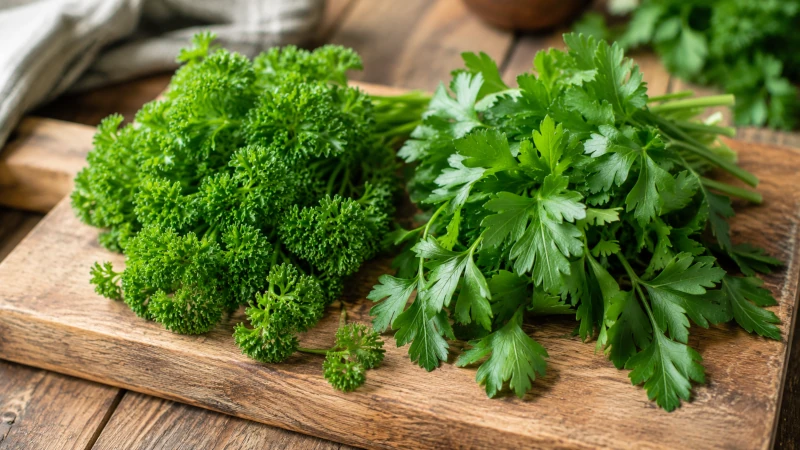
Parsley (Petroselinum crispum) is a Mediterranean herb in the Apiaceae family — the same family as celery, carrot, fennel, and dill, which matters later for allergy purposes. It’s cultivated almost everywhere now, in two common culinary forms: curly parsley and flat-leaf (Italian) parsley, the latter generally considered to have a more robust flavor. A third form, root or Hamburg parsley, is grown for its edible root rather than its leaves. Traditional herbal medicine has used the leaves, root, and seeds, each somewhat differently.
What’s Actually in Parsley
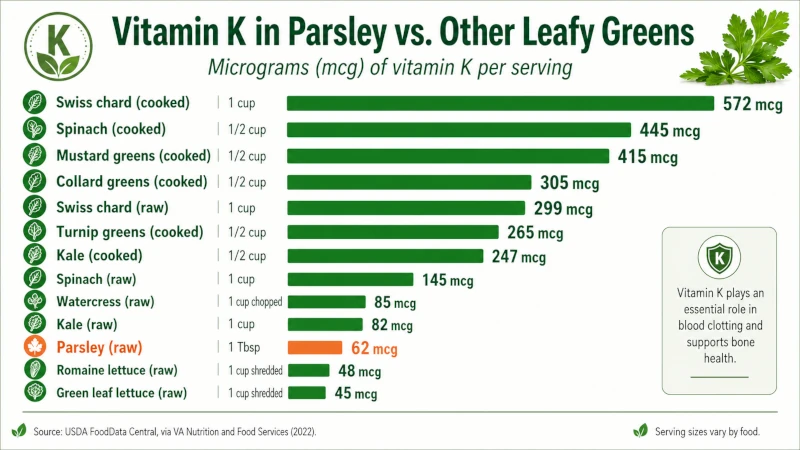
Parsley is a genuinely rich source of vitamins A, C, and K, along with folate and iron [Frontiers in Medicine, 2024]. Vitamin K deserves particular mention: parsley is one of the more concentrated plant sources of it, which is exactly why it matters for people on blood-thinning medication (more on that below) [NIH Office of Dietary Supplements, 2021].
It also contains flavonoids — apigenin, luteolin, and quercetin — compounds with antioxidant and anti-inflammatory activity in lab studies, and human research has confirmed that at least some of the apigenin from parsley is actually absorbed into circulation when eaten [Frontiers in Medicine, 2024]. The essential oil found in parsley leaves, seeds, and root contains myristicin and apiol, compounds that show up repeatedly in both parsley’s traditional uses and its safety warnings.
Health Benefits: What the Research Shows
Antioxidant Activity
This is where parsley’s evidence is strongest, though still mostly early-stage. Its flavonoid content boosts activity of the body’s own antioxidant enzymes in lab and animal studies, and a small human trial found that people eating parsley showed increased excretion of apigenin along with changes in blood antioxidant enzyme activity [Frontiers in Medicine, 2024]. That’s promising, not proof of a specific health outcome — no large human trial has tested whether eating parsley regularly changes disease risk.
Diuretic and Urinary Effects
Parsley has a long tradition as a mild diuretic, and there’s a real mechanism behind it: animal studies show parsley extract inhibits an enzyme (Na+/K+-ATPase) in the kidney that affects sodium and potassium handling, increasing urine output [Frontiers in Medicine, 2024].
The human evidence is thinner and mixed — one small study found no significant difference in urinary parameters among healthy volunteers who drank parsley leaf tea compared to controls [Frontiers in Medicine, 2024]. So the traditional reputation has a plausible biological basis, but it hasn’t been confirmed to do much in actual people drinking actual tea.
Blood Pressure
Traditional use in several cultures includes parsley for high blood pressure, and animal studies back a hypotensive effect — parsley seed extract lowered blood pressure and increased sodium excretion in rats [Frontiers in Medicine, 2024]. No human clinical trials have tested this. If you’re managing blood pressure, parsley isn’t a substitute for proven approaches like magnesium, potassium, and lifestyle changes or prescribed medication — treat it as a nutritious addition to a blood-pressure-conscious diet rather than a treatment.
Bone Health and Blood Clotting
This one is more about parsley’s vitamin K content than parsley specifically. Vitamin K is well-established as necessary for normal blood clotting and plays a role in bone health [NIH Office of Dietary Supplements, 2021]. Because parsley is unusually concentrated in vitamin K for a food eaten in small amounts, it can meaningfully contribute to daily intake — a genuine nutritional plus for most people, and a genuine caution for people on certain blood thinners.
Iron and Anemia
Parsley does contain iron, and its vitamin C content can help with absorption of iron from plant foods generally. But the specific claim that parsley treats or improves anemia rests on animal research — a rat study found parsley extract improved blood parameters in chemically induced anemia — not human trials [Frontiers in Medicine, 2024]. If you’re addressing diagnosed anemia, that needs a doctor’s evaluation and typically iron-rich foods or supplementation guided by bloodwork, not parsley alone.
Cancer-Cell Research (Lab Studies Only)
You’ll see parsley described online as fighting or preventing cancer. What the actual research shows is narrower and important to state precisely: in laboratory studies, parsley extracts and compounds like apigenin have triggered cell death and reduced proliferation in human melanoma and breast cancer cell lines [Frontiers in Medicine, 2024]. That’s cell-culture research, not evidence that eating parsley prevents, treats, or reverses cancer in a living person, and no one should treat it as an alternative to medical cancer care.
The Oxalate Irony: Parsley and Kidney Stones
Here’s a nuance most parsley articles skip entirely. Parsley has a centuries-old reputation as a remedy for kidney stones and urinary complaints, and animal studies do show some protective effects against stone formation in rats [Frontiers in Medicine, 2024].
But parsley itself is also classified as a high-oxalate food — the same UBC-affiliated kidney stone clinic that documents oxalate content lists parsley alongside spinach, Swiss chard, and other leafy greens as containing more than 10 mg of oxalate per half-cup serving, though its oxalate is thought to be less readily absorbed than some other sources [Stone Centre, Vancouver General Hospital]. Oxalate is one of the two main ingredients in the most common type of kidney stone.
In practical terms: a garnish-sized amount of parsley isn’t a meaningful oxalate source for most people. But parsley tea, concentrated juice, or supplements taken specifically to “treat” kidney stones could work against you if you’re prone to calcium oxalate stones — a category that includes roughly three-quarters of people who form stones. If you’ve had a kidney stone before, your best move is understanding which foods actually raise your risk rather than relying on a folk remedy that could cut either way.
How to Use Parsley
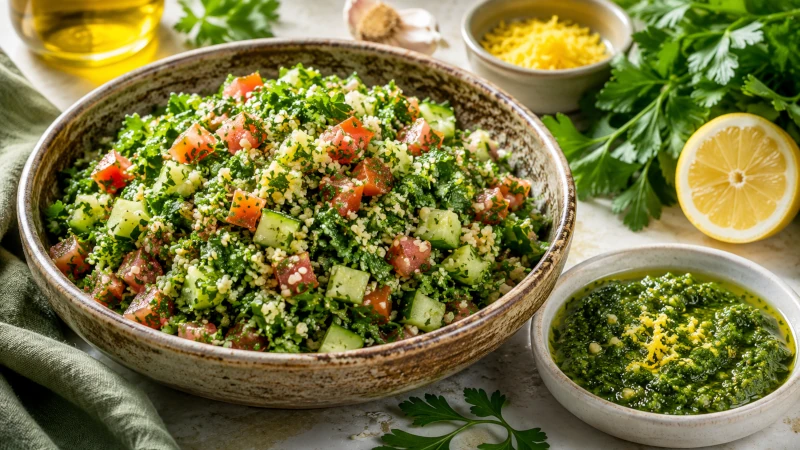
For nearly everyone, the simplest and safest way to get parsley’s nutritional benefits is also the most common one: as food. Fresh parsley works well stirred into salads and grain dishes (tabbouleh is the classic example), blended into sauces like chimichurri or gremolata, or steeped as a mild herbal tea using the fresh or dried leaf.
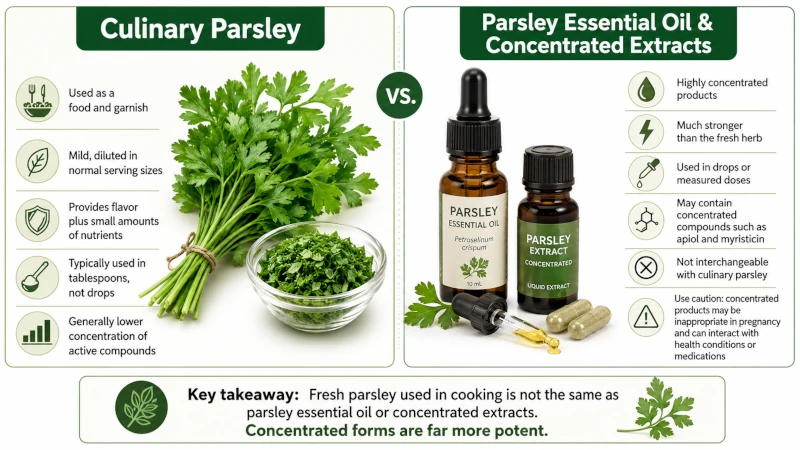
Concentrated forms — parsley essential oil, high-dose tinctures, parsley seed extract, or supplement capsules — are a different matter. These deliver much higher amounts of the same essential oil compounds (myristicin and apiol) that make culinary parsley generally safe but that carry real toxicity concerns at concentrated doses (see below).
There isn’t solid clinical dosing evidence to responsibly recommend specific amounts for tinctures, extracts, or capsules, so if you’re considering any of those, talk to a pharmacist or healthcare provider about an appropriate, well-manufactured product rather than following a generic dosage found online.
Who Should Be Careful With Parsley
Allergies
Because parsley is in the Apiaceae family, people allergic to celery, carrot, or fennel sometimes react to parsley too — this is a recognized cross-reactivity pattern, not a coincidence [LactMed, NIH/NLM, 2024]. If you have a known Apiaceae allergy, introduce parsley cautiously or check with an allergist first.
Pregnancy and Breastfeeding
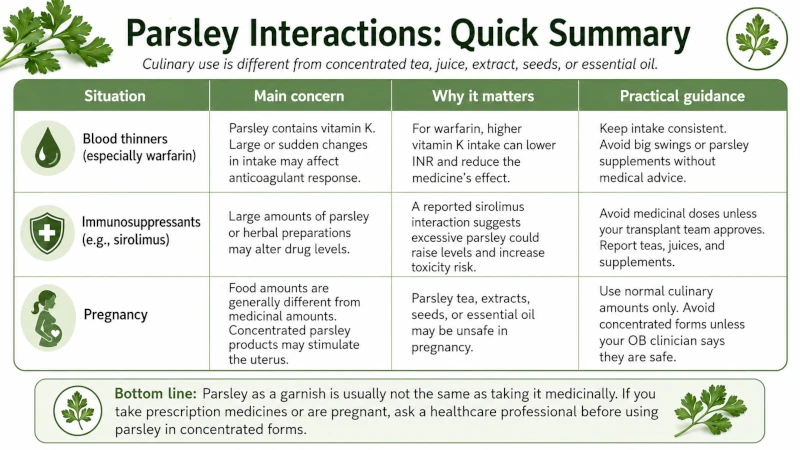
This is the most important safety distinction in this whole article, and it’s about form, not just amount. Parsley as a culinary food is “generally recognized as safe” (GRAS) by the FDA [LactMed, NIH/NLM, 2024]. Concentrated parsley apiole — the compound found in parsley seed and leaf essential oil — is a different story: it’s been documented as an abortifacient in case reports and reviewed by researchers as carrying meaningful pregnancy risk, including uterine effects, at concentrated doses; current guidance is to avoid parsley essential oil and apiole-rich preparations entirely during pregnancy [Dosoky & Setzer, International Journal of Molecular Sciences, 2021].
Reasonable takeaway: cooking with parsley or using it as a garnish is not the same risk category as parsley essential oil, parsley seed extract, or high-dose parsley supplements, and pregnant people should avoid the latter. For breastfeeding, there’s no solid clinical evidence that parsley reliably increases or decreases milk supply, despite it appearing in some traditional lactation formulas on both sides of that claim [LactMed, NIH/NLM, 2024].
Blood Thinners
If you take warfarin (Coumadin) or a similar vitamin K antagonist, the concern isn’t that parsley is dangerous — it’s that sudden changes in vitamin K intake can affect how well your medication works. The standard guidance is to keep your vitamin K intake roughly consistent day to day rather than avoiding vitamin K-rich foods altogether, and to talk to your prescriber before making a big change either direction [NIH Office of Dietary Supplements, 2021].
Immunosuppressant Medications
This is a narrower but documented interaction: a case report described elevated levels of the transplant drug sirolimus in a kidney transplant patient after they consumed large amounts of parsley juice, attributed to parsley compounds affecting the liver enzyme and transport system that clears the drug [Frontiers in Medicine, 2024]. If you’re on sirolimus or a related immunosuppressant, mention parsley intake — especially juice or concentrated forms — to your transplant team.
Sun Sensitivity
Parsley contains bergapten, a compound in the furocoumarin family found in higher concentration in the leaves than the stems. Typical culinary amounts are unlikely to cause a reaction, but handling large quantities of parsley followed by sun exposure has been associated with mild photocontact skin irritation in some people [Frontiers in Medicine, 2024].
| HEALTH DISCLAIMER This article is for general educational purposes and isn’t a substitute for individualized medical advice, diagnosis, or treatment. Parsley’s effects on blood pressure, kidney stones, and anemia are supported mainly by animal or laboratory research rather than human clinical trials — talk to a doctor before relying on parsley for any of these conditions. If you are pregnant, breastfeeding, take blood thinners or immunosuppressant medication, or have a history of kidney stones, talk to a healthcare provider before using parsley beyond typical culinary amounts. |
Frequently Asked Questions
Is it safe to eat parsley every day?
For most healthy adults, yes — culinary amounts of parsley (as a garnish, in salads, or in cooking) are considered generally recognized as safe by the FDA [LactMed, NIH/NLM, 2024]. The cautions in this article apply mainly to concentrated forms (essential oil, high-dose extracts, large amounts of juice), certain medications, and pregnancy.
Can parsley actually help with kidney stones?
The evidence is genuinely mixed, and there’s an important catch: parsley is itself a moderately high-oxalate food, which is one of the two main components of the most common kidney stone type [Stone Centre, Vancouver General Hospital]. Animal research shows some protective effects, but there’s no strong human evidence either way, and if you’re prone to calcium oxalate stones specifically, relying on parsley as a treatment could work against you.
Is parsley safe during pregnancy?
Using parsley as a food — in cooking, as a garnish, in normal culinary amounts — is considered safe. Concentrated parsley preparations, especially parsley essential oil and high-dose extracts or supplements, carry documented pregnancy risk and should be avoided [Dosoky & Setzer, International Journal of Molecular Sciences, 2021].
Does parsley interact with blood thinners like warfarin?
Parsley is high in vitamin K, which can affect how warfarin works. The standard advice isn’t to avoid parsley — it’s to keep your vitamin K intake fairly consistent from day to day and let your prescriber know about any significant dietary changes [NIH Office of Dietary Supplements, 2021].
Does parsley have proven benefits for blood pressure?
Animal studies show a blood-pressure-lowering effect from parsley extract, but this hasn’t been confirmed in human clinical trials [Frontiers in Medicine, 2024]. It’s reasonable to include parsley as part of a generally healthy, blood-pressure-conscious diet, but it shouldn’t replace prescribed treatment.
References
- Alobaidi, S. (2024). Renal health benefits and therapeutic effects of parsley (Petroselinum crispum): a review. Frontiers in Medicine, 11. https://doi.org/10.3389/fmed.2024.1494740
- National Institutes of Health, Office of Dietary Supplements. (2021, updated). Vitamin K — Fact Sheet for Consumers. https://ods.od.nih.gov/factsheets/VitaminK-Consumer/
- National Institute of Child Health and Human Development / NLM Bookshelf. (2024). Parsley. Drugs and Lactation Database (LactMed). https://www.ncbi.nlm.nih.gov/books/NBK501880/
- Dosoky, N.S. & Setzer, W.N. (2021). Maternal Reproductive Toxicity of Some Essential Oils and Their Constituents. International Journal of Molecular Sciences, 22(5), 2380. https://pmc.ncbi.nlm.nih.gov/articles/PMC7956842/
- Stone Centre, Vancouver General Hospital, UBC Department of Urological Sciences. Oxalate and Stone Disease. https://stonecentrevgh.ca/patient-information/dietary-advice-for-kidney-stones/oxalate-and-stone-disease/
