If you are looking for foods that help with depression, the honest starting point is this: no single food cures depression, but a nutrient-dense eating pattern may help support mental health and may ease depressive symptoms in some people, especially alongside standard care such as therapy, lifestyle changes, and, when appropriate, medication. [WHO, 2025] [Marx et al., 2022]
That distinction matters. Depression is a medical condition that can affect sleep, appetite, energy, concentration, and daily functioning, and effective treatments exist. Food works best as one part of a broader recovery plan, not as a replacement for evidence-based care. [WHO, 2025]
The strongest nutrition evidence does not point to one miracle ingredient. It points to overall diet quality. Eating patterns built around vegetables, fruits, legumes, nuts, seeds, whole grains, olive oil, and fish are linked with better mental health than diets high in ultra-processed foods, refined grains, and added sugar. [APA, 2024] [AHA, 2024]
What food can — and can’t — do for depression
A balanced diet can help in practical ways: it may support steadier energy, improve overall diet quality, and reduce the risk of nutrient shortfalls that overlap with fatigue, poor concentration, and low mood. [Marx et al., 2022] [APA, 2024]
What food cannot do is replace treatment for persistent, moderate, or severe depression. If your symptoms last more than two weeks, interfere with daily life, or include hopelessness or thoughts of self-harm, it is important to seek professional support. [WHO, 2025] [NIMH, 2024]
The bigger picture: diet quality matters more than any single food
Researchers increasingly study whole dietary patterns rather than isolated foods. The Mediterranean-style pattern — rich in vegetables, fruits, legumes, whole grains, nuts, fish, and olive oil, with limited red and processed meat — has the clearest supportive evidence for mood. [APA, 2024] [AHA, 2024]
A recent systematic review and meta-analysis of randomized controlled trials found that Mediterranean-style dietary interventions may reduce depressive symptoms in adults. The authors also cautioned that the trials varied in quality and that stronger, longer-term studies are still needed before firm conclusions can be drawn. [Bizzozero-Peroni et al., 2024]
In short, the useful question is not “What food cures depression?” but “Which foods help support mood as part of a healthier overall pattern?”
How the patterns compare:
| Pattern linked with better mood | Pattern linked with worse mood |
| Vegetables, fruits, legumes, whole grains, nuts, seeds, olive oil, fish | Ultra-processed foods, refined grains, sugary drinks and snacks, excess added sugar |
| Minimally processed, fiber-rich, plant-forward | Highly processed, low-fiber, energy-dense |
Foods that help with depression: 18 worth building meals around
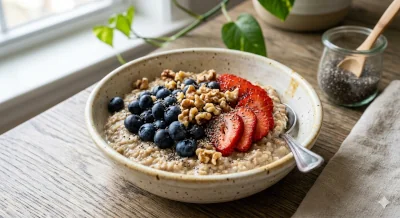
These foods are not antidepressants. They are practical building blocks for the kind of eating pattern that research associates with better mental health. Choose the ones that fit your budget, tastes, and energy levels.
1. Oats and other whole grains
Oats, brown rice, quinoa, and whole-grain bread are minimally processed and fiber-rich, and they fit the whole-food patterns most often linked with better mental health. [APA, 2024] Oatmeal topped with fruit and nuts is an easy breakfast for low-motivation mornings.
2. Beans, lentils, and chickpeas
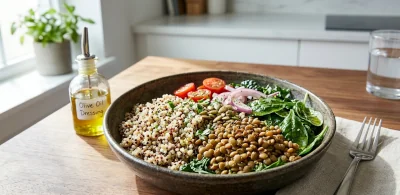
Legumes are among the most practical foods here: affordable, filling, and central to Mediterranean-style eating. [AHA, 2024] They also supply folate, a nutrient that may matter when folate status is low — though it is not a universal fix. [NIH ODS Folate, 2024] Add lentils to soup or chickpeas to salads and grain bowls.
3. Leafy greens and other folate-rich vegetables
Spinach, kale, broccoli, and Brussels sprouts are rich in folate and fit the plant-forward pattern associated with better mood. [APA, 2024] [NIH ODS Folate, 2024] If salads do not appeal, fold cooked greens into eggs, soups, pasta, or rice.
4. Berries, citrus, and other fruit
Fruit appears in nearly every healthy pattern linked with better mental health, and it is often easy to eat when appetite is low. [APA, 2024] Citrus such as oranges adds vitamin C, which helps the body absorb iron from plant foods — a useful pairing with beans and greens. [NIH ODS Iron, 2024] Frozen berries are convenient and do not spoil quickly.
5. Walnuts and almonds
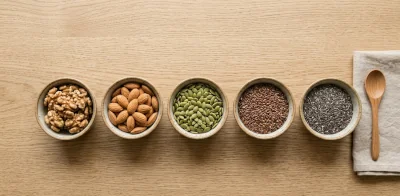
Nuts are a core part of Mediterranean-style eating and add healthy fats, some protein, and texture to simple meals. [AHA, 2024] The evidence supports nuts as part of an overall healthy pattern, not as a standalone treatment.
6. Seeds such as chia, flax, and pumpkin
Seeds make meals more nutrient-dense with almost no preparation. Stir them into oatmeal, yogurt, soups, or smoothies to reinforce a whole-food pattern. [APA, 2024]
7. Fatty fish such as salmon, sardines, and trout
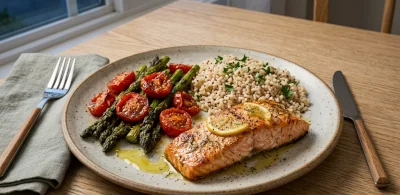
Fish fits the Mediterranean pattern and provides omega-3 fats, which is why it often appears in mental-health nutrition guidance. [AHA, 2024] This does not mean fish cures depression, but it can be a valuable part of a supportive diet. If you do not eat fish, you can still improve diet quality with legumes, nuts, seeds, vegetables, fruit, and whole grains.
8. Extra-virgin olive oil
Olive oil is a signature feature of the Mediterranean diet, the pattern with the clearest supportive evidence for depressive symptoms. [Bizzozero-Peroni et al., 2024] [AHA, 2024] Using it in meals built around vegetables, legumes, and whole grains matters more than focusing on any single “mood food.”
9. Plain yogurt and other fermented dairy
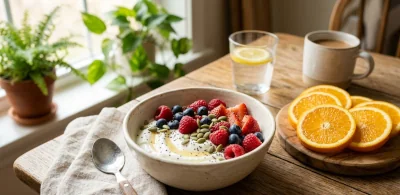
Plain yogurt is a minimally processed, protein-rich choice that fits a whole-food pattern, and it contributes vitamin B12 and calcium. [NIH ODS B12, 2024] Low B12 status can contribute to tiredness, weakness, and, in some people, depression-like symptoms, so dependable food sources are worth including. [NIH ODS B12, 2024]
10. Vitamin B12–rich foods, including shellfish, when intake may be low
Vitamin B12 occurs naturally in fish, shellfish such as clams and oysters, meat, poultry, eggs, and dairy, and is added to some fortified foods. [NIH ODS B12, 2024] Calcium-fortified tofu and fortified plant milks help people who eat little or no animal food cover B12. People who are older, vegan or vegetarian, have certain digestive conditions, or take medicines such as metformin or acid-reducing drugs are at higher risk of deficiency — a good reason to ask a clinician about testing rather than guessing. [NIH ODS B12, 2024]
11. Eggs
Eggs are an easy source of protein and add structure to meals when cooking feels like too much. They also contribute vitamin B12 and choline. [NIH ODS B12, 2024] They are most useful for people with low appetite or limited cooking energy, scrambled with greens or on whole-grain toast.
12. Avocados
Avocados add monounsaturated fats and make simple meals more satisfying, which can help you move away from highly processed convenience foods. [AHA, 2024] Think of avocado as a useful whole food that fits the pattern, not a superfood cure.
13. Fermented foods such as kefir, kimchi, and sauerkraut
Fermented foods are studied for their effect on the gut microbiome, and gut diversity is one proposed reason whole-food and Mediterranean patterns may support mood. [APA, 2024] The direct evidence linking fermented foods to depression is still early and limited, so treat them as a reasonable addition rather than a proven treatment.
14. Lean poultry and other lean proteins
Lean poultry, along with fish and legumes, supplies protein and B vitamins, including B12, that support overall health and steady meals. [NIH ODS B12, 2024] Claims that protein-rich foods boost mood through tryptophan are often overstated; the practical value is reliable, balanced nutrition.
15. Fortified foods and fortified plant milks
Fortified cereals and plant milks are a dependable way to cover vitamin B12 and folate, which matters most for people on vegan or vegetarian diets or with low appetite. [NIH ODS B12, 2024] [NIH ODS Folate, 2024] Check the label, since fortification varies by product.
16. Tomatoes and other antioxidant-rich vegetables
Tomatoes, bell peppers, and similar colorful vegetables add antioxidants and fiber and reinforce the vegetable-rich pattern associated with better mental health. [APA, 2024] They are easy to add raw to salads, roasted alongside other vegetables, or stirred into soups and sauces.
17. Edamame, tempeh, and other whole soy foods
Whole soy foods such as edamame and tempeh are practical plant proteins that fit the guidance to favor healthy, largely plant-based protein sources. [AHA, 2024] They are useful staples for people who eat little or no fish or meat and round out legume-based meals.
18. Bananas and other easy-to-eat fruit
Bananas, apples, and oranges fit the fruit-rich pattern associated with better mental health and are easy to eat on low-energy or low-appetite days. [APA, 2024] Keep a few on hand as a no-prep option when motivation is low.
Nutrient gaps that can affect mood: folate, B12, and iron
Some nutrient shortfalls can overlap with symptoms that look like depression, such as fatigue and poor concentration. This does not mean everyone with depression is deficient or needs supplements; it means these nutrients matter most when intake is poor or a deficiency is confirmed by testing. [NIH ODS Folate, 2024] [NIH ODS Iron, 2024]
| Nutrient | Why it can matter for mood | Everyday food sources |
| Folate | Low folate is linked with depression in some people; adequate intake supports overall health. [NIH ODS Folate, 2024] | Beans, lentils, leafy greens, broccoli, Brussels sprouts, oranges, fortified grains |
| Vitamin B12 | Deficiency can cause tiredness, weakness, and depression-like symptoms in some people. [NIH ODS B12, 2024] | Fish, shellfish, meat, poultry, eggs, dairy, fortified foods and plant milks |
| Iron | Low iron can contribute to anemia, fatigue, and poor concentration. [NIH ODS Iron, 2024] | Beans, lentils, leafy greens, fortified grains, lean meats and shellfish (if eaten); pair plant sources with vitamin C |
Foods and drinks to limit if you want to support your mood
A modern, less stressful approach is not to label foods as “bad,” but to watch your overall pattern. Diets high in ultra-processed foods, refined grains, and added sugar are associated with worse mental health, while whole-food patterns are associated with better outcomes. [APA, 2024]
Alcohol deserves special attention. Alcohol use disorder commonly co-occurs with depression, and drinking can worsen the course of mood symptoms for some people. [NIAAA, 2024] If you notice that alcohol worsens your sleep, anxiety, or motivation, cutting back may support recovery. For everyday tension, you may also find it helpful to read our guide to foods that reduce stress and our overview of anti-anxiety foods.
A realistic way to eat when you feel depressed
When you are depressed, the goal is not perfection. It is consistency. Start with one or two easy meals you can repeat:
- Oatmeal with berries and walnuts
- Eggs with whole-grain toast and fruit
- Lentil soup with olive oil and greens
- Plain yogurt with seeds and fruit
- Salmon or beans with rice and vegetables
These meals are simple, balanced, and closer to what current evidence supports than a long list of “natural antidepressants.” [APA, 2024] [AHA, 2024]
What to expect: realistic results
Improving diet quality is a supportive step, not a quick fix. In studies, dietary changes are typically tested over weeks to months and alongside other care, and effects vary from person to person. [Bizzozero-Peroni et al., 2024] Think of better eating as one lever among several — together with sleep, movement, social connection, therapy, and, when appropriate, medication — rather than a treatment on its own. [Marx et al., 2022]
Safety, cautions, and who should be careful
Most of the foods above are safe for general healthy eating, but a few points are worth knowing:
- Pregnancy and fish: Fatty fish is nutritious, but people who are pregnant or breastfeeding should follow local guidance on lower-mercury choices and limits.
- Supplements are not the same as food: Folate, B12, and iron supplements are helpful mainly when a deficiency is identified. Do not start iron supplements without testing, as too much iron can be harmful. [NIH ODS Iron, 2024]
- Medication interactions and absorption: Some medicines (for example, metformin and acid-reducing drugs) can lower B12 levels, and iron supplements can interfere with certain medications. Ask a pharmacist or clinician before combining supplements with prescriptions. [NIH ODS B12, 2024]
- Older adults: B12 absorption often declines with age, which is one reason mood and energy changes in later life deserve a medical check. For more on this, see our article on depression in seniors.
- Allergies and intolerances: Nuts, fish, shellfish, soy, and dairy are common allergens; choose alternatives that suit your needs.
Red flags: when self-care is not enough
Talk to a healthcare professional if low mood lasts more than two weeks, keeps interfering with daily life, or comes with major changes in sleep, appetite, concentration, or energy. [WHO, 2025]
Seek urgent help right away if you experience any of the following:
- Thoughts of harming yourself or feeling that you cannot stay safe
- A sudden, severe worsening of mood or a sense of crisis
- Being unable to care for yourself, eat, or function
In the U.S., call or text 988 to reach the Suicide and Crisis Lifeline, or call 911 in a life-threatening emergency. [NIMH, 2024] Food is never a substitute for this kind of support.
Health Disclaimer: This article is for educational and informational purposes only and is not a substitute for professional medical advice, diagnosis, or treatment. Always seek the guidance of a qualified healthcare provider with any questions about a medical condition, diet, or supplement. If you are pregnant, breastfeeding, have an existing health condition, or take medication, talk to your doctor before making significant dietary changes or starting any supplement. If you may be experiencing a mental health crisis, contact a qualified professional or, in the U.S., call or text 988.
Frequently Asked Questions
Can food alone treat depression?
No. Food may help support mood and overall health, but depression often needs a broader treatment plan that can include therapy, medication, and lifestyle support. [WHO, 2025] [Marx et al., 2022]
What is the best diet for depression?
The strongest evidence supports a Mediterranean-style pattern built around vegetables, fruits, legumes, nuts, seeds, whole grains, olive oil, and fish. [Bizzozero-Peroni et al., 2024] [AHA, 2024]
Are any vitamins linked to depression?
Low folate and vitamin B12 status can matter for some people, and iron deficiency can contribute to fatigue and poor concentration. Not everyone with depression has these deficiencies, so testing and individualized advice beat guessing. [NIH ODS B12, 2024] [NIH ODS Folate, 2024]
What foods should I avoid if I have depression?
There is no universal banned-food list, but diets high in ultra-processed foods, refined grains, and added sugar are associated with worse mental health, and alcohol can worsen symptoms for some people. [APA, 2024] [NIAAA, 2024]
How long before diet changes might help my mood?
Trials usually test dietary changes over several weeks to months and alongside other care, and results vary by person. Aim for consistency rather than fast results, and keep any prescribed treatment in place. [Bizzozero-Peroni et al., 2024]
References
- World Health Organization. Depressive disorder (depression). 2025. → View source
- Marx W, et al. Clinical Guidelines for the Use of Lifestyle-based Mental Health Care in Major Depressive Disorder (WFSBP and ASLM taskforce). World J Biol Psychiatry. 2022. → View source
- American Psychiatric Association. Lifestyle to Support Mental Health. 2024. → View source
- Bizzozero-Peroni B, et al. The impact of the Mediterranean diet on alleviating depressive symptoms in adults: a systematic review and meta-analysis of randomized controlled trials. 2024. → View source
- American Heart Association. What is the Mediterranean Diet? 2024. → View source
- NIH Office of Dietary Supplements. Vitamin B12: Fact Sheet for Consumers. 2024. → View source
- NIH Office of Dietary Supplements. Folate: Fact Sheet for Consumers. 2024. → View source
- NIH Office of Dietary Supplements. Iron: Fact Sheet for Consumers. 2024. → View source
- National Institute of Mental Health. Help for Mental Illnesses. 2024. → View source
- National Institute on Alcohol Abuse and Alcoholism. Mental Health Issues: Alcohol Use Disorder and Common Co-occurring Conditions. 2024. → View source
