
Natural Health Message — Herbs, Remedies & Nutrition for Whole-Body Wellness.
  • Health Conditions
    • Cancer & Prevention
    • Cardiovascular Health
    • Digestive Health
    • Eye & Vision
    • Immune & Infections
    • Metabolic Health
    • Musculoskeletal Health
    • Nervous System
    • Reproductive Health
    • Respiratory Health
    • Skin Health
    • Urinary Health
  • Nutrition
    • Diet
    • Foods
    • Recipes
  • Remedies
    • Alternative Treatments
    • Herbal Remedies
    • Herbs
    • Lifestyle & Habits
  • Supplements and Reviews
    • General Supplements
    • Minerals
    • Nitric Oxide
    • Reviews
    • Vitamins
Home | Foods | Peas Health Benefits:  Powerful Friend to The Heart
Foods

Peas Health Benefits:  Powerful Friend to The Heart

by Donald Rice Updated: May 16, 2026
written by Donald Rice Published: July 9, 2022Updated: May 16, 2026
Naturalhealthmessage.com receives compensation from some of the companies, products, and services listed on this page. Advertising Disclosure
0FacebookTwitterPinterestTumblrVKWhatsappEmail
1.9K

Contents

  • 1 Peas Scientific Facts
  • 2 Peas Nutritional Facts
  • 3 Peas Health Benefits
    • 3.1 Snow Peas
      • 3.1.1 How to use Peas
        • 3.1.1.1 REFERENCES

Before you knew of the many peas health benefits, you may have been one of those children who carefully separated peas from other foods on your plate to avoid eating them. If so, there is still plenty of time to try these little seeds, particularly if you suffer from coronary disease.

peas health benefits
Peas health benefits

Peas Scientific Facts

  1. Scientific name: Pisum sativum L.
  2. Other names: Garden peas, chickling vetches, Green peas.
  3. French: Pois, petit pois.
  4. Spanish: Guisante, Arveja, Chícharo.
  5. German: Erbse.
  6. Description: These are the seeds of the garden pea plant, an herbaceous vine of the botanical family Leguminosae. The seeds are enclosed in green pods approximately 10 cm long; each pod usually contains 7 to 9 seeds.
  7. Environment: Garden peas are initially from the Middle East and Central Asia, where they have been cultivated for millennia. Today, the principal producing nations are Russia, France, and China.

Peas Nutritional Facts

Raw peas contain 78.9 percent water. Dried peas have much less, while cooked and canned peas have more. Throughout this work, natural, fresh food is the point of reference. Various noteworthy nutrients contribute to peas health benefits, include:
Helpful Products

See practical kitchen and nutrition tools.

Shop Kitchen Essentials

As an Amazon Associate I earn from qualifying purchases.

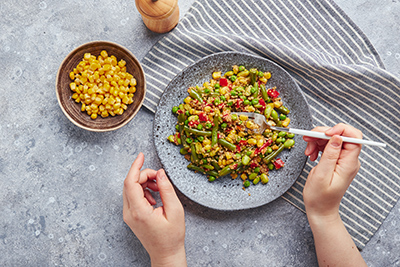
hands with a fork about with a plate of peas and corn on a table
Peas health benefits: Combining legumes with grains—corn and peas, for example—provides the body with all necessary amino acids, just as if they were complete animal proteins, but with many advantages: almost no fat, very little sodium, abundant potassium, and high fiber content. This makes peas, with or without corn or another grain, excellent food for those suffering from coronary heart disease.

Carbohydrates—Peas contain a significant amount, although less than potatoes. They are primarily constituted of starch with a small amount of saccharose. STARCH cannot be absorbed directly into the bloodstream. It must first be converted to glucose through digestion, which begins in the mouth. For the starch in peas to be well digested, they must be well chewed.

Proteins – Their content (5.42 percent) is greater than that of potatoes (2.07 percent) and is close to that of grains such as rice (6.61 percent), although much less than other legumes such as beans (23.4 percent). The proteins in peas are pretty complete, although there is a relative lack of the essential amino acid methionine and excess lysine. On the other hand, grains are very rich in methionine and lack lysine. Therefore, a combination of peas and grains is necessary to produce protein. It may be said that peas are a good source of proteins, particularly when combined with grains such as corn, for example.

B complex vitamins—One hundred grams of peas supply 0.266 mg of vitamin B1, representing 18 percent of the RDA for an adult male. A deficiency of this vitamin causes beriberi disease, characterized by heart failure and nervous disorders. Peas are also a good source of vitamins B2, B6, niacin, and folates, all necessary for proper heart and nervous system function.

Vitamin C—Peas supply 40 mg for every 100 grams, almost as much as lemon (53 mg). This vitamin is a powerful antioxidant that, among other functions, helps maintain coronary and other arteries healthy and free of cholesterol. Vitamin C is one of the top peas health benefits.

Potassium – Peas contain 244 mg per 100 grams of potassium, an essential mineral for cardiac health.

Peas Health Benefits

Additionally, peas are a good source of iron, zinc, folate, and fiber. They also provide significant provitamin A (beta carotene), vitamin E, and magnesium. Because of this, the many peas health benefits are instrumental in the following cases:

Cardiac disease – As we have seen, the many peas health benefits have everything necessary to be heart-healthy food. Additionally, they contain practically no fat or sodium, two substances antagonistic to coronary health if consumed excessively. They are appropriate in the diet of those suffering from heart failure, heart valve lesions, myocardiopathy (degeneration of the heart muscle), and coronary heart disease.

Nervous system disorders – Peas are a nutritious food rich in B group vitamins and minerals necessary for the correct jumpy system operation. They are appropriate in cases of a debilitated nervous system, neurasthenia, irritability, depression, insomnia, and other functional disorders.

Pregnancy and lactating – Peas are appropriate for pregnant or lactating women because of their protein richness (particularly when combined with grains), vitamins, and minerals. They are also rich in folates, which prevent fetal nervous system malformations. Pregnant women can benefit immensely from the many peas health benefits.

Diabetes—Pea starch is slowly transformed into glucose during digestion, making them well tolerated by people with diabetes.
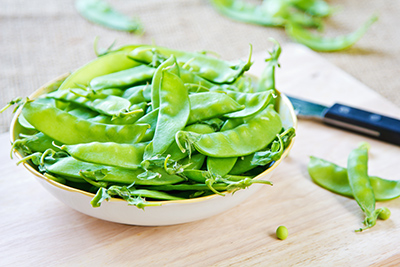
bowl of overflowing snow peas
Peas health benefits: Snow Peas

Snow Peas

The snow pea is characterized by a fleshy, tender pod, contrasted with the garden pea, which is tough and leathery. Because of this, all of the snow peas, pods, and seeds are eaten. They contain more sugars than peas and less starch. As a result, they have a sweeter taste. The snow pea is also rich in proteins, B groups, vitamins, and minerals such as potassium and iron. Snow peas are usually cooked in vegetable soups or as a part of stews.

How to use Peas

  1. Raw – When they are tender, peas may be eaten raw. They are very flavorful and healthful.
  2. Frozen – These are eaten after they have been thawed and briefly heated.
  3. Cooked – Peas should not be cooked for more than five to ten minutes (longer cooking times destroy their entire vitamin content). Very brief boiling or steaming is ideal.
  4. Dried – While dried peas may be stored for a very long time, they contain very little provitamin A and vitamin C. Cooking them for a few minutes is sufficient.
  5. Canning – Canned peas may be eaten as they are. Vitamin loss is between 15 and 30 percent.

DISCLAIMER: All content on this website is presented solely for educational and informational objectives. Do not rely on the information provided as a replacement for advice, diagnosis, or treatment from a qualified medical expert. If you are pregnant, nursing, or have any preexisting medical concerns, talk to your doctor before using any herbal or natural medicines.

REFERENCES
  1. George D. Pamplona-Roger, M.D. “Encyclopedia of Foods and Their Healing Power.” George D. Pamplona-Roger, M.D. Encyclopedia of Foods and Their Healing Power. Trans. Annette Melgosa. Vol. 2. Chai Wan: Editorial Safeliz, 2005. 73, 74. Print. [Peas Health Benefits]
  2. WebMD – https://www.webmd.com/diet/health-benefits-peas
  3. Healthline – https://www.healthline.com/nutrition/green-peas-are-healthy
  4. Verywell Health – https://www.verywellhealth.com/peas-8363876

Related posts:

  1. Foods For Healthy Arteries
  2. 9 Foods for Healthy Digestion
  3. 12 Foods That Boost Your Metabolism
  4. Foods That Cause Cancer? 10 Food and Drink Risks Worth Limiting
are frozen peas good for yougreen peas benefitsgreen peas caloriesgreen peas nutritiongreen peas proteinpeas benefitspeas nutrition protein
0 FacebookTwitterPinterestTumblrVKWhatsappEmail
Donald Rice
Donald Rice

Donald Rice is a natural health advocate and health writer focused on nutrition, wellness, and alternative health education. He creates clear, research-based content designed to help readers better understand health topics through reputable sources, including peer-reviewed studies, academic institutions, government health agencies, and established medical organizations.

previous post
Health Benefits of Peaches: Ideal Food for the Heart
next post
Health Benefits of Grapes: Improves Blood Flow and Strengthens the Heart

You may also like

Acerola Cherry vs Orange Vitamin C: The Complete Comparison

Published: April 8, 2026

Acerola Cherry vs Camu Camu: Which Vitamin C Superfruit Wins?

Updated: April 9, 2026

Barbados Cherry: What It Is, Where It’s From, and Why Everyone Calls It...

Updated: April 9, 2026

How to Grow Acerola Cherry: A Complete Guide for Home Gardeners

Updated: April 9, 2026

Acerola Cherry for Immunity: Can It Really Help You Fight Colds?

Updated: April 8, 2026

Acerola Cherry for Skin: Vitamin C, Collagen & Anti-Aging Benefits

Updated: April 8, 2026
Best Health and Wellness Blogs - OnToplist.com

Recent Posts

  • Best Exercises for Flat Feet in Adults

  • What Are Flat Feet? Causes, Types, and Common Symptoms

  • Flat Feet and Fallen Arches: Causes, Symptoms, and What Helps

  • Cardiovascular and Pulmonary Disease: What Every Patient Should Know

  • Acerola Cherry Supplements: 7 Important Things to Look for Before You Buy

Random Articles

Wheat Germ vs Wheat Bran
Cactus Plant: Health Benefits Explored
Exploring Natural Remedies for Candida: A Guide to Holistic Healing

Orange Tree: Discover the Surprising Health Benefits

Recent Articles

Cumin Plant Health Benefits
Turmeric Plant Health Benefits
Health Benefits of Hazelnuts: Helps Prevent Kidney Stones

Featured

Raspberry Health Benefits: What the Evidence Actually Supports
Night Blindness: Shedding Light on an Unseen Impairment
The Benefits of BioSchwartz Turmeric Curcumin for Overall Wellness

@2024 – All Right Reserved. Natural Health Message.

  • About Us
  • Contact Us
  • Advertising Disclosure
  • Medical Advice Disclaimer
We use cookies on our website to give you the most relevant experience by remembering your preferences and repeat visits. By clicking “Accept All”, you consent to the use of ALL the cookies. However, you may visit "Cookie Settings" to provide a controlled consent.
Cookie SettingsAccept All
Manage consent

Privacy Overview

This website uses cookies to improve your experience while you navigate through the website. Out of these, the cookies that are categorized as necessary are stored on your browser as they are essential for the working of basic functionalities of the website. We also use third-party cookies that help us analyze and understand how you use this website. These cookies will be stored in your browser only with your consent. You also have the option to opt-out of these cookies. But opting out of some of these cookies may affect your browsing experience.
Necessary
Always Enabled
Necessary cookies are absolutely essential for the website to function properly. These cookies ensure basic functionalities and security features of the website, anonymously.
CookieDurationDescription
cookielawinfo-checkbox-analytics11 monthsThis cookie is set by GDPR Cookie Consent plugin. The cookie is used to store the user consent for the cookies in the category "Analytics".
cookielawinfo-checkbox-functional11 monthsThe cookie is set by GDPR cookie consent to record the user consent for the cookies in the category "Functional".
cookielawinfo-checkbox-necessary11 monthsThis cookie is set by GDPR Cookie Consent plugin. The cookies is used to store the user consent for the cookies in the category "Necessary".
cookielawinfo-checkbox-others11 monthsThis cookie is set by GDPR Cookie Consent plugin. The cookie is used to store the user consent for the cookies in the category "Other.
cookielawinfo-checkbox-performance11 monthsThis cookie is set by GDPR Cookie Consent plugin. The cookie is used to store the user consent for the cookies in the category "Performance".
viewed_cookie_policy11 monthsThe cookie is set by the GDPR Cookie Consent plugin and is used to store whether or not user has consented to the use of cookies. It does not store any personal data.
Functional
Functional cookies help to perform certain functionalities like sharing the content of the website on social media platforms, collect feedbacks, and other third-party features.
Performance
Performance cookies are used to understand and analyze the key performance indexes of the website which helps in delivering a better user experience for the visitors.
Analytics
Analytical cookies are used to understand how visitors interact with the website. These cookies help provide information on metrics the number of visitors, bounce rate, traffic source, etc.
Advertisement
Advertisement cookies are used to provide visitors with relevant ads and marketing campaigns. These cookies track visitors across websites and collect information to provide customized ads.
Others
Other uncategorized cookies are those that are being analyzed and have not been classified into a category as yet.
SAVE & ACCEPT
Natural Health Message — Herbs, Remedies & Nutrition for Whole-Body Wellness.
  • Health Conditions
    • Cancer & Prevention
    • Cardiovascular Health
    • Digestive Health
    • Eye & Vision
    • Immune & Infections
    • Metabolic Health
    • Musculoskeletal Health
    • Nervous System
    • Reproductive Health
    • Respiratory Health
    • Skin Health
    • Urinary Health
  • Nutrition
    • Diet
    • Foods
    • Recipes
  • Remedies
    • Alternative Treatments
    • Herbal Remedies
    • Herbs
    • Lifestyle & Habits
  • Supplements and Reviews
    • General Supplements
    • Minerals
    • Nitric Oxide
    • Reviews
    • Vitamins