
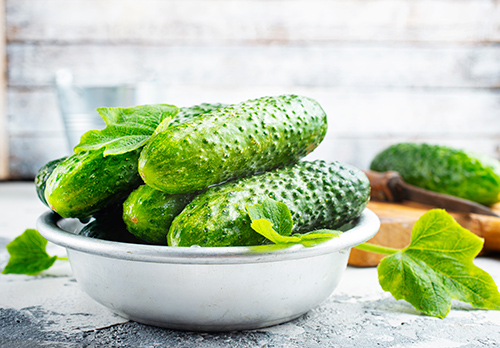
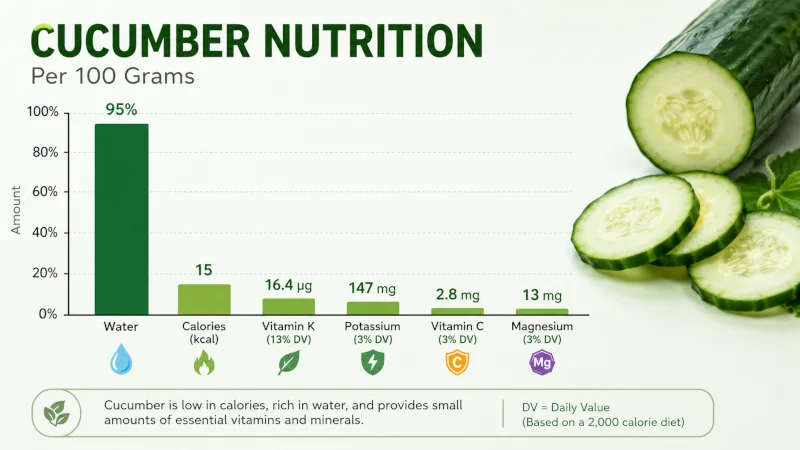
The health benefits of cucumbers come mostly from one unusual fact: a raw cucumber is about 95% water, which means a 300-gram cucumber delivers roughly a cup of fluid along with potassium, vitamin K, vitamin C, magnesium, and a small amount of fiber, all for about 45 calories [USDA FoodData Central, 2019]. That makes cucumber one of the lowest-calorie, most hydrating foods in a salad. It is not a cure for anything, but it is a sensible everyday food that contributes to fluid intake, supports potassium-rich eating patterns linked to better blood pressure, and can replace higher-calorie snacks if weight is a concern [American Heart Association, 2025].
This article walks through what cucumbers actually contain, what the science supports, where the evidence is weaker than popular claims suggest, who should be cautious, and how to use them so you get the most out of them. Cucumber sits in the same botanical family (Cucurbitaceae) as melons and squash, and shares space on most plates with other water-rich vegetables like tomatoes.
Cucumber Nutrition at a Glance
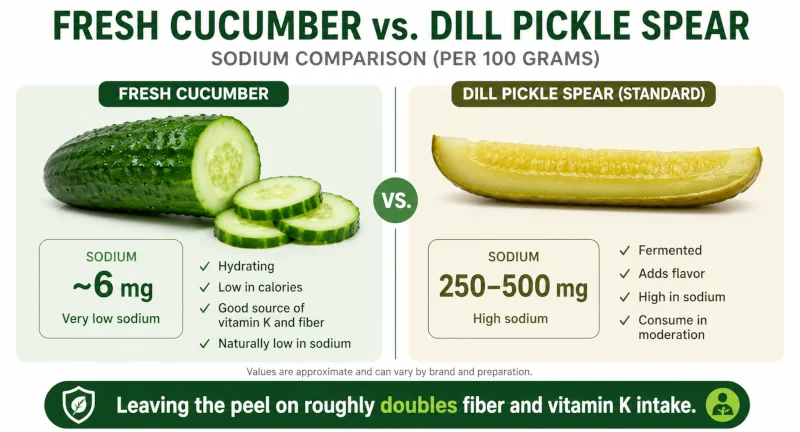
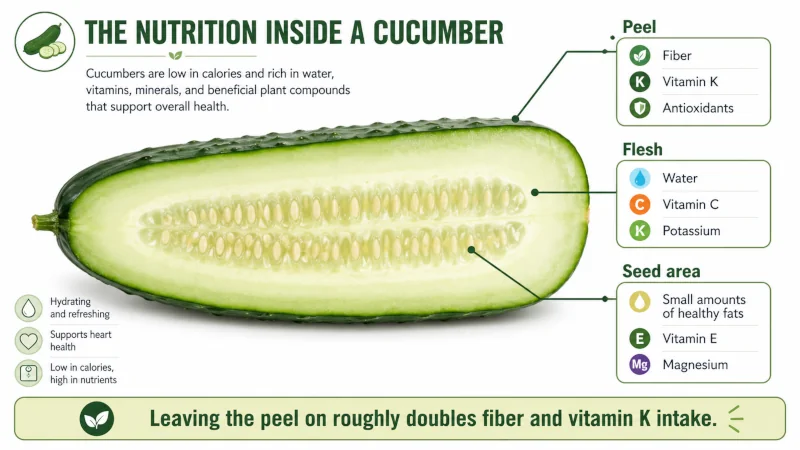
Cucumbers are eaten unripe, before the flesh turns soft and yellow. A typical 8-inch unpeeled cucumber weighs about 300 g and contains roughly 45 calories, 11 g of carbohydrates, 2 g of protein, 1.5 g of fiber, and 49 mcg of vitamin K — about 41% of the Daily Value for adults [USDA FoodData Central, 2019]. Most of the vitamin K and a portion of the fiber sits in the peel, so leaving the skin on roughly doubles what you get.
| Nutrient (per 100 g, raw with peel) | Amount |
| Calories | 15 kcal |
| Water | ~95 g (≈95%) |
| Carbohydrates | 3.6 g |
| Sugars | 1.7 g |
| Dietary fiber | 0.5 g |
| Protein | 0.65 g |
| Total fat | 0.1 g |
| Vitamin K | 16.4 mcg (≈14% DV) |
| Vitamin C | 2.8 mg |
| Potassium | 147 mg |
| Magnesium | 13 mg |
Source: USDA FoodData Central, Cucumber, with peel, raw (FDC ID 168409).
The nutrient that stands out is vitamin K, a fat-soluble vitamin needed for blood clotting and bone-protein formation. The NIH Office of Dietary Supplements lists 120 mcg as the Adequate Intake for adult men and 90 mcg for adult women [NIH ODS, 2021]. One whole cucumber covers a meaningful share of that.
Health Benefits of Cucumbers: Hydration That Actually Counts
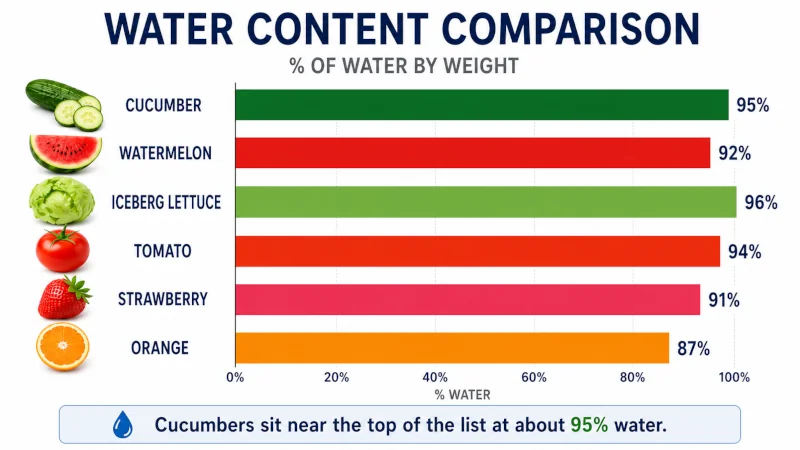
About 20% of daily fluid intake usually comes from food, not drinks, and water-rich produce is the easiest way to get there [Mayo Clinic, 2025]. The CDC notes that fruits and vegetables with high water content add measurably to total fluid intake alongside plain water and other beverages [CDC, 2026]. A 300-gram cucumber contributes roughly 285 grams of water — about the same as a small glass — which is why cucumbers, watermelon, and lettuce show up on most dietitian lists of “hydrating foods.”
This matters most for people who do not drink much plain water, older adults whose thirst signals are blunted, and anyone in hot weather. It is not a substitute for drinking water, but it is a useful supplement to it.
Potassium, Blood Pressure, and the Cardiovascular Picture
A medium cucumber supplies about 440 mg of potassium. The American Heart Association recommends 3,500 to 5,000 mg per day for adults trying to prevent or manage high blood pressure, ideally from food, because potassium helps the body excrete sodium and eases tension in blood vessel walls [American Heart Association, 2025]. Cucumber alone will not move blood pressure — a banana has more potassium per serving, and beans have far more — but it slots cleanly into a potassium-rich eating pattern alongside leafy greens, beans, and tomatoes.
People with chronic kidney disease, or who take ACE inhibitors, ARBs, or potassium-sparing diuretics, should not push potassium intake without medical guidance, because too much can be harmful [American Heart Association, 2025].
Plant Compounds: What’s Real, What’s Overstated
Cucumbers contain several plant compounds beyond their vitamins and minerals. A 2013 review in Fitoterapia identifies cucurbitacins, lignans, and flavonoids such as apigenin and orientin in different parts of Cucumis sativus [Mukherjee et al., 2013]. Cucurbitacins in particular have been studied in cell and animal models for anti-inflammatory and anti-cancer activity. That research is genuinely interesting — but it has not yet translated into reliable human evidence that eating cucumbers prevents or treats disease.
This is where most popular cucumber articles overreach. “Fights cancer,” “detoxifies the liver,” and “reverses diabetes” claims are usually built on lab studies of isolated compounds at concentrations no salad can produce. Treat cucumber as a useful, low-calorie, hydrating vegetable. Treat the bigger therapeutic claims as preliminary until human trials catch up.
Digestion, Fiber, and Regularity
Cucumbers are not a high-fiber food — about 1.5 g of fiber in a whole cucumber, most of it in the peel. But the combination of fluid and a small amount of fiber can support regular bowel movements, especially as part of an overall plant-forward diet. Cucumbers fit comfortably into eating patterns built for weight management, since they add volume and chew time without adding many calories.
People with sensitive digestion sometimes find raw cucumber hard to tolerate. Chewing thoroughly, peeling the skin, removing seeds, and avoiding very bitter specimens (which carry more cucurbitacins) usually resolves it. If a particular cucumber tastes strongly bitter, that is a real signal — discard it rather than chew through it.
Skin and the “Cucumber on the Eyes” Question
Cold cucumber slices on the eyes feel good because they are cold, wet, and weigh just enough to slow blood flow under thin eyelid skin, which can briefly reduce puffiness. That is mostly a thermal and mechanical effect, not a deep biochemical one. Cucumber extracts have shown mild anti-elastase and antioxidant activity in skin-cell studies, but applying a slice of cucumber for ten minutes is not the same intervention [Mukherjee et al., 2013].
So: by all means use cucumber slices for tired eyes — they are pleasant, cheap, and harmless on intact skin. Just do not expect them to replace sunscreen, a moisturizer, or treatment for a real skin condition. For active dermatitis or eczema, a clinician’s recommendation will outperform any kitchen vegetable.
Blood Sugar and Diabetes
With around 2 g of net carbs per 100 g and a low glycemic load, cucumbers are a low-impact choice for people watching blood glucose. Small animal and test-tube studies suggest cucumber extracts may improve markers of oxidative stress in diabetes models, but human data are limited [Mukherjee et al., 2013]. The honest claim is narrower than “cucumbers fight diabetes”: cucumbers are a sensible, very low-carbohydrate vegetable that can replace higher-glycemic snacks in a diabetes-friendly diet.
Pickles Are a Different Food
A whole dill pickle spear can contain 250–500 mg of sodium — sometimes more — depending on the brine. That undoes most of the blood-pressure logic of eating a fresh cucumber. Pickles are fine as an occasional condiment, but they are not a stand-in for raw cucumber, and “cucumber is healthy” should not be extended to mean “pickles are healthy.” Reduced-sodium pickles exist; check the label.
How to Use Cucumbers
Raw
Sliced into salads, added to sandwiches, blended into gazpacho, or simply eaten with a little salt and lemon. Leave the peel on (after washing) for more vitamin K and fiber. If the cucumber is not organic and the skin is waxed, peel it.
Infused water
A few slices of cucumber and a sprig of mint in a pitcher of cold water is the simplest way to make plain water more appealing — useful for anyone who struggles to drink enough.
Cooked
Less common, but cucumber holds up in light sautés, stir-fries, and warm soups. Cooking softens it and reduces some water content; the basic nutrient profile remains low-calorie and potassium-bearing.
Pickled
Tasty, but watch the sodium for the reasons above.
Who Should Be Cautious
Cucumber is one of the safest vegetables in the produce aisle, but a few groups should take note.
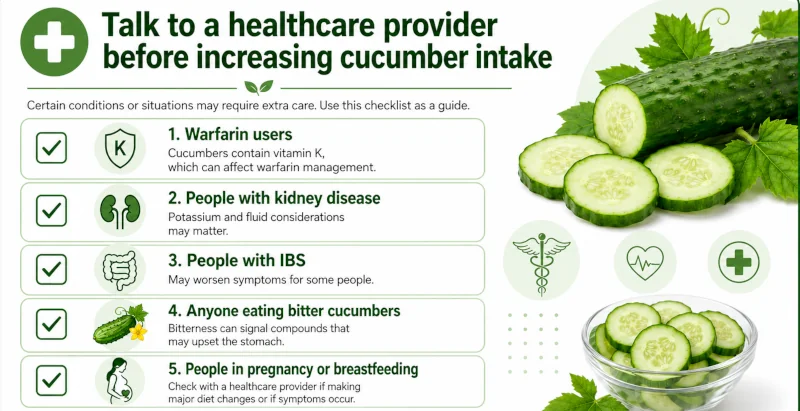
• People on warfarin (Coumadin) or similar anticoagulants. Cucumber contains vitamin K, which interacts with these drugs. The point is consistency: keep vitamin K intake steady from week to week rather than spiking it with a sudden salad-heavy diet [NIH ODS, 2021].
• People with chronic kidney disease or on potassium-sparing medication. Cucumbers add modest potassium; a kidney-friendly diet may still allow them, but check with your renal dietitian rather than ramping up intake on your own [American Heart Association, 2025].
• People with IBS or sensitive digestion. Raw cucumbers can trigger bloating in some people. Peeling and de-seeding usually helps; cooked cucumber is gentler still.
• Anyone eating a very bitter cucumber. Strong bitterness signals unusually high cucurbitacin levels, which can cause nausea, vomiting, and diarrhea. Discard it.
• Pregnancy and breastfeeding. Cucumber as food is fine. There is no clinical basis for treating it as a medicine in pregnancy, and cucumber-extract supplements have not been evaluated for safety at that life stage. Stick to the whole food.
When to Talk to a Healthcare Professional
See a doctor — not a kitchen — if you have:
• Persistent high blood pressure readings at home (130/80 mm Hg or higher)
• Blood sugar levels outside your target range
• A skin condition that is worsening, weeping, or spreading
• Constipation that lasts longer than three weeks, or any unexplained change in bowel habits
• Difficulty staying hydrated due to vomiting, diarrhea, or kidney disease
None of these conditions should be self-treated with food alone. A cucumber is a supporting actor, not the lead.
| Important: This article is for general education and is not a substitute for advice from your doctor, registered dietitian, or pharmacist. Cucumbers are a food, not a treatment. Information about supplements, herbs, and dietary patterns is provided for context only and does not constitute medical advice. If you are pregnant, nursing, take prescription medication (especially warfarin, ACE inhibitors, ARBs, or potassium-sparing diuretics), or have a diagnosed condition such as chronic kidney disease, diabetes, or IBS, talk to your healthcare provider before making significant changes to your diet. Seek immediate medical attention for any symptom that is severe, persistent, or unexplained. |
Frequently Asked Questions
Are cucumbers a fruit or a vegetable?
Botanically, cucumber is a fruit because it develops from the flower of the plant and contains seeds. Culinarily, it is treated as a vegetable. Both are correct; the distinction only matters for trivia.
Is it better to eat cucumber with the peel or peeled?
With the peel, when possible. The skin holds most of the vitamin K and roughly half the fiber. Wash the cucumber thoroughly and peel it only if it is heavily waxed or non-organic and you are concerned about pesticide residue.
Do cucumbers help you lose weight?
They can support weight loss as part of an overall lower-calorie diet, because they add volume, chew time, and fluid for very few calories. They do not burn fat on their own. No food does.
Can I drink cucumber water every day?
Yes, for healthy adults. Cucumber-infused water is essentially water with a mild flavor and a trace of nutrients. There is no daily limit other than what applies to plain water.
Are pickles as healthy as fresh cucumbers?
No. Most pickles are high in sodium, which can work against blood pressure goals. The fresh cucumber and the pickle should be thought of as two different foods.
References
- U.S. Department of Agriculture, Agricultural Research Service. FoodData Central — Cucumber, with peel, raw (FDC ID 168409). 2019. → View source
- National Institutes of Health, Office of Dietary Supplements. Vitamin K: Fact Sheet for Health Professionals. Updated March 29, 2021. → View source
- American Heart Association. How Potassium Can Help Prevent or Treat High Blood Pressure. Last reviewed August 14, 2025. → View source
- Centers for Disease Control and Prevention. About Water and Healthier Drinks. 2026. → View source
- Mayo Clinic. Water: How much should you drink every day? 2025. → View source
- Mukherjee PK, Nema NK, Maity N, Sarkar BK. Phytochemical and therapeutic potential of cucumber. Fitoterapia. 2013;84:227–236. doi:10.1016/j.fitote.2012.10.003. → View source
