
Searching for foods that fight parasites in humans usually means one of two things: you think you might have an infection, or you want to keep your gut resilient enough to resist one. Here’s the honest answer up front, because most articles bury it: no food on this list will cure a diagnosed parasitic infection.
A few foods contain compounds with real antiparasitic activity, and a small number have actually been tested in people. But if you have a confirmed infection, the proven fix is a stool test and the right prescription medication — and those medications work well [CDC, 2025]. What food can do is support a healthy gut and, in a couple of cases, modestly help. Knowing the difference is the whole game. For background, it can help to read up on antiparasitic herbs and their evidence as well.
First, the part most articles skip: food won’t cure an infection
So-called parasite cleanses — herbal blends, detox teas, restrictive diets — are everywhere online, and there’s no credible evidence they clear parasites from the body [Cleveland Clinic, 2025]. Worse, many cleanse ingredients (wormwood, black walnut, high-dose herbal laxatives) carry real risks, and because supplements aren’t vetted by the FDA before sale, you often don’t know the dose or purity of what you’re taking [Healthline, 2026].
Two facts make the food-as-cure idea fall apart. First, most digestive symptoms people blame on parasites — bloating, gas, irregular stools — usually aren’t parasitic at all [Cleveland Clinic, 2025]. Second, when there is a confirmed infection, doctors treat it with targeted drugs such as albendazole, ivermectin, praziquantel, or metronidazole, depending on the organism, and these are the standard of care precisely because they’re effective and their safety is well understood [AAFP, 2023]. Sometimes a mild, asymptomatic infection isn’t even treated, because the medication can cause more trouble than the parasite [AAFP, 2023]. That decision belongs to a clinician, not a blog.
None of this makes the foods below useless. It just means you should think of them as gut-supportive, and in a few cases promising, rather than curative.
Foods that fight parasites in humans — with the most research behind them
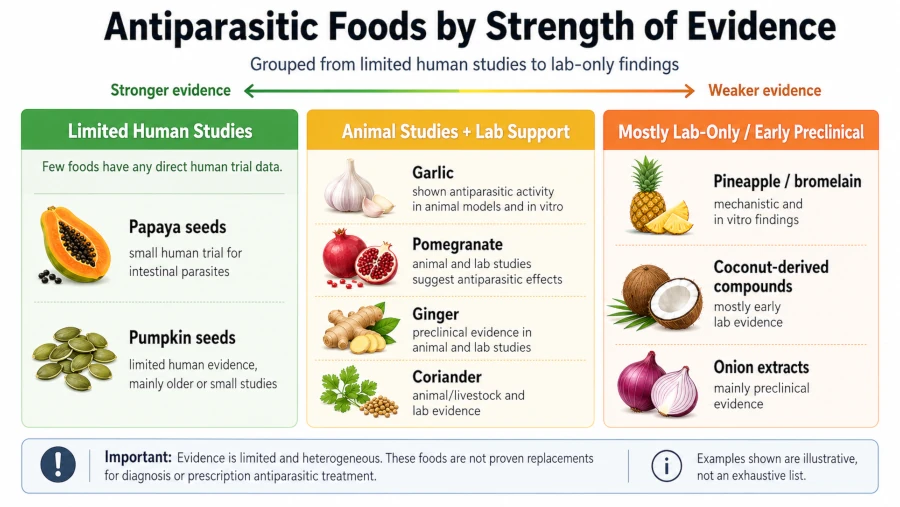
These three have at least some human or strong traditional evidence, which sets them apart from the rest of the list. “Some evidence” still isn’t “proven treatment,” so read the safety section before you act on any of it.
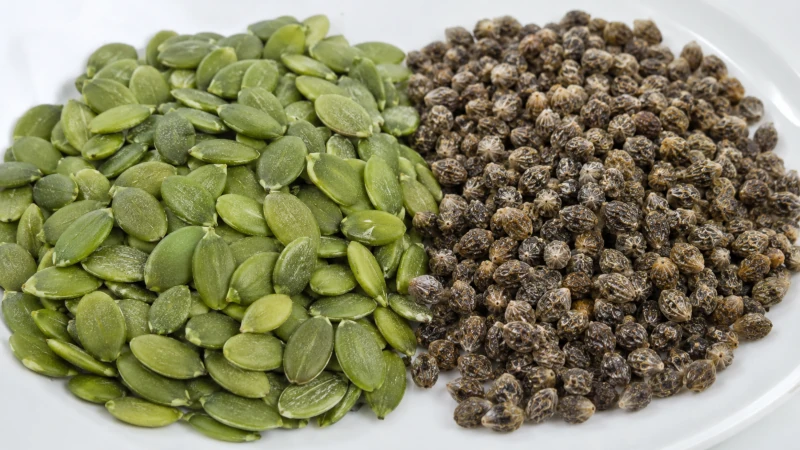
Pumpkin seeds
Pumpkin seeds are the closest thing on this list to a food with real antiparasitic data. Their active compound, cucurbitin, appears to paralyze certain worms — especially tapeworms — so the gut can clear them, rather than killing them outright [Alhawiti et al., 2019]. They’ve been used this way in traditional and veterinary medicine for a long time, and older human reports on tapeworm (often pairing pumpkin seed with areca nut) are reasonably encouraging.
The catch: the therapeutic effect is tied to raw seeds with the green inner coating intact, where cucurbitin concentrates — not the roasted, salted pepitas in a snack bag. Even so, the human evidence is thin and dated, and pumpkin seeds are not a substitute for diagnosis and treatment of a tapeworm, which is a parasite you genuinely want a doctor to confirm and clear.
Papaya seeds
Papaya seeds have the single most-cited human study in this whole category. In a small pilot trial, 60 Nigerian children with stool-confirmed intestinal parasites were given either a papaya-seed-and-honey elixir or honey alone; about 77% of the papaya group cleared parasites from their stool within seven days, versus roughly 17% on honey [Okeniyi et al., 2007].
That’s a genuinely interesting result — and also exactly one small study, in children, mostly affecting roundworms, with no large follow-up trials to confirm it [Science Feedback, 2022]. Gastroenterologists who’ve reviewed it make the same point: promising, not proven, and not a reason to skip an accurate diagnosis [Cleveland Clinic, 2021]. Eating a few ground papaya seeds is fine for most adults; treating yourself for a suspected worm with them is not. There’s more on papaya and digestion if you want the wider picture.
Garlic
Garlic’s sulfur compounds — allicin and related thioallyl molecules — show consistent activity against parasites like Giardia and Entamoeba in lab and animal studies, working partly by disrupting the parasite’s enzymes and cell integrity [Frontiers, 2018]. The human evidence is limited and mostly old, drawn largely from giardiasis. Allicin is also unstable, which makes real-world dosing from food unpredictable. Garlic is a reasonable, healthy addition to your cooking — see garlic’s broader health benefits — and chewing raw cloves does deliver more allicin, but expect culinary benefit, not a cure.
Foods that look promising in the lab — but aren’t proven in people
The rest of the classic “antiparasitic foods” share a pattern: their compounds do interesting things to parasites in a petri dish or in mice, and very little of that has been demonstrated in humans. They’re worth eating because they’re nutritious, not because they’ll evict a parasite. You’ll see several of them in lists of herbs traditionally used against parasites.
| Food | Active compound | What the evidence actually shows |
| Turmeric | Curcumin | Antiparasitic activity in lab studies, but curcumin is poorly absorbed when eaten, so dietary amounts are unlikely to reach a meaningful level in the gut. |
| Ginger | Gingerols | Lab and animal signals against some parasites; soothes nausea and supports digestion. No human treatment data. |
| Oregano | Carvacrol, thymol | These compounds slow parasite growth in vitro. Concentrated oregano oil is a supplement, not a food dose, and isn’t a proven treatment. |
| Cloves | Eugenol | Lab activity against some organisms and eggs. Human evidence is absent; clove tea and culinary use are fine, but claims of “killing eggs” inside the body aren’t supported. |
| Pineapple | Bromelain | In-vitro effects on some worms; no evidence fresh pineapple treats infection. Still a healthy, digestion-friendly fruit. |
| Coconut | Lauric acid | Mostly lab and traditional use. No solid human trials for parasite clearance. |
| Fennel | Anethole | Traditional digestive aid with lab-level antiparasitic interest only. |
| Pomegranate | Punicalagins (fruit); alkaloids (bark) | The fruit and juice are antioxidant-rich but not a proven antiparasitic. Note: the historical tapeworm remedy used pomegranate bark, which is toxic — do not use it. |
If you see any of these sold as a “parasite killer,” that’s marketing running ahead of the science.
Foods that support your gut’s own defenses
This is where everyday eating genuinely helps — not by attacking parasites, but by keeping the gut environment healthy and your immune system supplied.
Fermented foods and probiotics
Yogurt, kefir, sauerkraut, kimchi, and miso add beneficial bacteria that support a balanced microbiome. Some early research suggests probiotics may play a supportive role alongside conventional treatment for certain infections, though they’re not a stand-alone therapy [Healthline, 2026]. A resilient microbiome is a reasonable goal regardless of parasites.
Carrots and other vitamin-A foods
Carrots are rich in beta-carotene, which your body converts to vitamin A — a nutrient your immune system relies on. That’s an indirect benefit, not a direct antiparasitic one, so frame carrots as immune support rather than a parasite defense. The broader move that helps most is a fiber-rich diet built on vegetables, fruit, legumes, and whole grains, with good hydration, which keeps digestion moving and the gut healthy [BodySpec, 2026].
How to use these foods safely
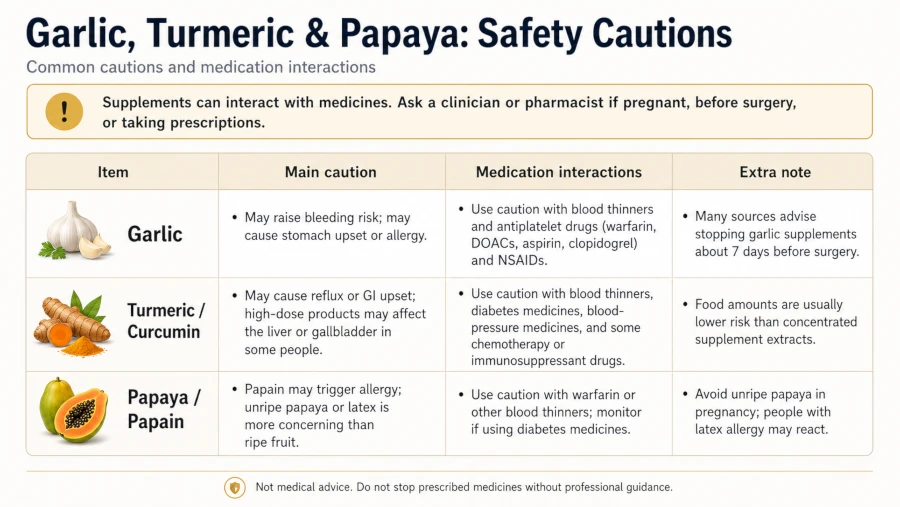
Eating these foods in normal amounts is safe for most people. Concentrated extracts, “cleanse” protocols, and large therapeutic doses are a different story.
A few specifics worth knowing. Raw garlic in large amounts can cause heartburn and GI upset, and because it has mild blood-thinning effects, it can add to the effect of anticoagulant or antiplatelet medications — relevant if you’re on a blood thinner or facing surgery. High-dose turmeric or curcumin supplements can also interact with blood thinners. Papaya — especially unripe papaya and its seeds — is traditionally avoided in pregnancy and is best skipped if you’re pregnant or trying to conceive; eating a lot of papaya seeds can also cause stomach upset. The herbs in commercial parasite cleanses, particularly wormwood and black walnut, can be toxic at the doses some protocols suggest [Healthline, 2026].
Because supplements aren’t pre-checked for purity or dose, talk to a pharmacist or doctor before starting any concentrated antiparasitic supplement — especially if you’re pregnant or breastfeeding, take prescription medication, have a chronic condition, or are buying it for a child or an older adult.
When food isn’t enough: symptoms that mean see a doctor
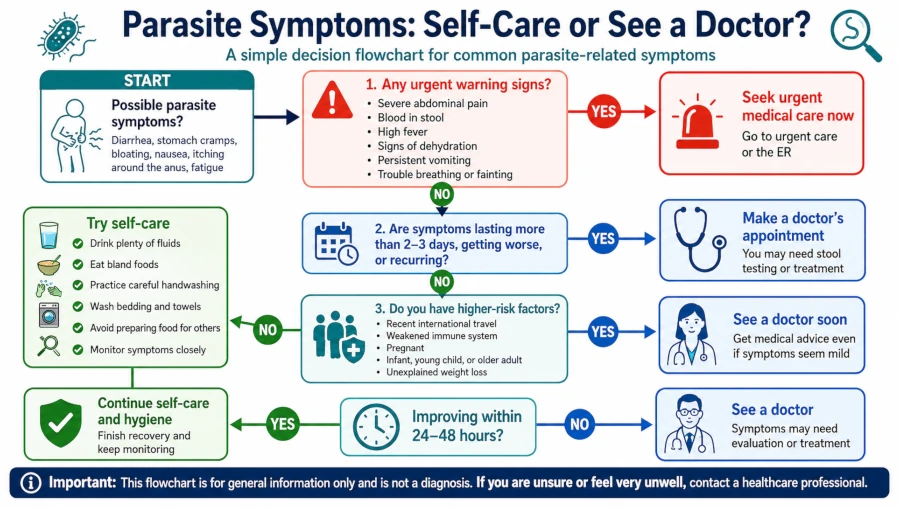
A real parasitic infection needs a real diagnosis. Intestinal parasites are typically identified with a stool ova-and-parasites test, and treated with the appropriate prescription drug once the organism is known [CDC, 2025]. Suspect a parasite — and get tested rather than self-treating — if you have diarrhea lasting more than a week or two, especially after travel to an area where parasites are common [AAFP, 2023].
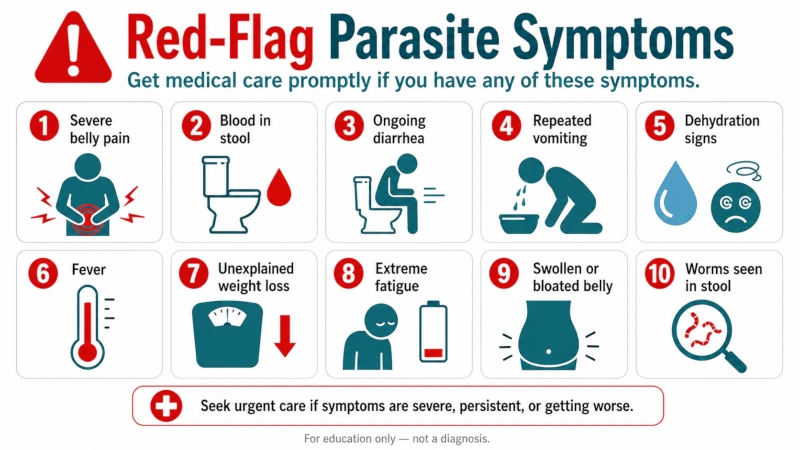
Get medical care promptly if you notice any of these:
- Blood or mucus in your stool, or a visible worm
- Persistent diarrhea, vomiting, or significant unintended weight loss
- Fever alongside digestive symptoms
- Signs of dehydration (dizziness, very dark urine, weakness)
- Severe abdominal pain
Don’t wait on food remedies if the person affected is an infant or young child, an older adult, pregnant, or immunocompromised — symptoms tend to be more serious in these groups, and so are the risks of delay [AAFP, 2023]. If you think you passed a worm, save it in a clean container; a lab can identify it [Healthline, 2026]. For a plain-language overview of how these infections present, Mount Sinai’s intestinal parasites health library is a reliable starting point.
| MEDICAL DISCLAIMER This article is for general education and is not a substitute for professional medical advice, diagnosis, or treatment. The foods described here support overall gut health and, in a few cases, show early antiparasitic promise — but they are not proven treatments for a parasitic infection. If you suspect you have a parasite, see a qualified healthcare professional for testing and care. Talk to your doctor or pharmacist before using herbal or concentrated supplements, particularly if you are pregnant, breastfeeding, taking medication, managing a health condition, or considering these foods for a child. If you have severe or worsening symptoms, seek medical care promptly. |
Frequently Asked Questions
Can you get rid of parasites with food alone?
Not reliably. A few foods (pumpkin seeds, papaya seeds, garlic) have limited human or traditional evidence, but no food is a proven cure. A confirmed infection needs a stool test and prescription medication, which is highly effective [Cleveland Clinic, 2025].
Do parasite cleanses work?
There’s no credible evidence that over-the-counter parasite cleanses clear infections, and some ingredients carry real risks. Major medical centers advise testing and targeted treatment instead [Cleveland Clinic, 2025]; [Healthline, 2026].
Which food has the strongest evidence against parasites?
Papaya seeds have the most-cited human study — a small trial in children where most cleared intestinal parasites within a week — but it’s one small study and not generalizable [Okeniyi et al., 2007]; [Science Feedback, 2022].
Are pumpkin seeds good for parasites?
Their compound cucurbitin can paralyze tapeworms, and they’ve long been used traditionally. The effect is linked to raw seeds with the green coating, not roasted snack pepitas, and the human evidence is thin [Alhawiti et al., 2019].
Is it safe to eat these foods every day?
In normal food amounts, yes, for most people. Concentrated supplements and “cleanse” doses are where the risk lies — check with a doctor or pharmacist first, especially during pregnancy or if you take other medications [Healthline, 2026].
What are the warning signs I should see a doctor?
Blood in your stool, a visible worm, diarrhea lasting more than a week or two, fever, dehydration, or unexplained weight loss — and don’t delay for young children, older adults, pregnant people, or anyone immunocompromised [AAFP, 2023].
References
- Centers for Disease Control and Prevention. Intestinal Parasites — clinical guidance. 2025. View source
- American Academy of Family Physicians. Common Intestinal Parasites. American Family Physician, 2023. View source
- Cleveland Clinic. Parasite Cleanse: Is It Safe? And Side Effects. 2025. View source
- Cleveland Clinic. Do Papaya Seeds Get Rid of Intestinal Parasites? 2021. View source
- Okeniyi JAO, Ogunlesi TA, Oyelami OA, Adeyemi LA. Effectiveness of dried Carica papaya seeds against human intestinal parasitosis: a pilot study. Journal of Medicinal Food, 2007. View source
- Science Feedback. Little clinical evidence supports the use of papaya seeds to treat intestinal parasites. 2022. View source
- Alhawiti AO, Toulah FH, Wakid MH. Anthelmintic potential of Cucurbita pepo seeds on Hymenolepis nana. Acta Parasitologica, 2019. View source
- Activity of Thioallyl Compounds From Garlic Against Giardia duodenalis Trophozoites and in Experimental Giardiasis. Frontiers in Cellular and Infection Microbiology, 2018. View source
- Healthline. ‘Parasite Cleanse’ Viral Detox Trend May Do More Harm Than Good. 2026. View source
- BodySpec. Parasite Cleanse: Evidence, Risks, and Safer Alternatives. 2026. View source
- Mount Sinai. Intestinal parasites — Health Library. View source
