
How to stop smoking starts with a plan that covers nicotine withdrawal, daily triggers, and support. You do not have to rely on willpower alone. The Centers for Disease Control and Prevention (CDC) says counseling and medication together give people who smoke the best chance of quitting for good. [CDC, 2024a]
Some people quit cold turkey. That can work, but it is not the only legitimate approach. Nicotine is addictive, and using proven treatment is not a sign of weakness. It is a practical way to make the first days and weeks more manageable. FDA-approved options include nicotine replacement therapy (NRT), bupropion SR, and varenicline. [CDC, 2024b] [FDA, 2026]
Quitting matters at any age, even after years of smoking. CDC reports that stopping smoking lowers the risk of premature death and can add as much as 10 years to life expectancy. It also reduces the risk of heart disease, chronic obstructive pulmonary disease (COPD), several cancers, and harm from secondhand smoke. [CDC, 2024c]
The most effective way to stop smoking
The strongest plan combines three pieces: a firm quit date, help with cravings, and support from another person or a cessation service. CDC recommends counseling plus medication because the two approaches address different parts of the problem. Counseling helps you prepare for stress and triggers. Medication reduces withdrawal symptoms and cravings. [CDC, 2024a]
You can start with a doctor, nurse, or pharmacist. You can also call 1-800-QUIT-NOW for free, confidential coaching through your state quitline. CDC describes quitlines as evidence-based services that offer counseling, practical information, referrals, and self-help materials. Some states also provide free or discounted cessation medicines. [CDC, 2025]
Do not switch to chewing tobacco, dip, nicotine pouches, or another tobacco product as a substitute for quitting. Complete cessation of tobacco products gives adults who smoke the greatest health benefit. If dip or chew is part of your routine, read the site guide on the dangers of smokeless tobacco. [FDA, 2026]
Your step-by-step quit plan
1. Pick a quit date within the next two weeks
Choose a day that gives you time to prepare but is close enough to keep your decision concrete. Smokefree.gov recommends selecting a quit date within the next two weeks and avoiding a day that is already likely to be stressful. [Smokefree.gov, n.d.-a]
Put the date on your calendar. Tell at least one person who will take your plan seriously. If you have quit before, write down what made you smoke again. That answer is useful data for this attempt.
2. Remove cigarettes and plan around your triggers
Before quit day, throw away cigarettes, ashtrays, and lighters. Wash jackets and clean the places where you usually smoke. Make the easy, automatic cigarette harder to reach.
List your strongest triggers. Common examples include coffee, alcohol, driving, work breaks, finishing a meal, talking on the phone, stress, and time with people who smoke. Next to each trigger, write one substitute behavior. Change the routine on purpose for the first week.
3. Choose support before quit day
Ask a friend or family member for a specific kind of help: a daily text, a short walk after dinner, or a phone call when cravings hit. For professional support, call 1-800-QUIT-NOW. Quitline coaching is free, confidential, and available throughout the United States. [CDC, 2025]
Faith can also be part of your support system. If prayer or a faith community helps you stay steady, use it alongside evidence-based treatment, not instead of treatment.

4. Consider a quit-smoking medicine
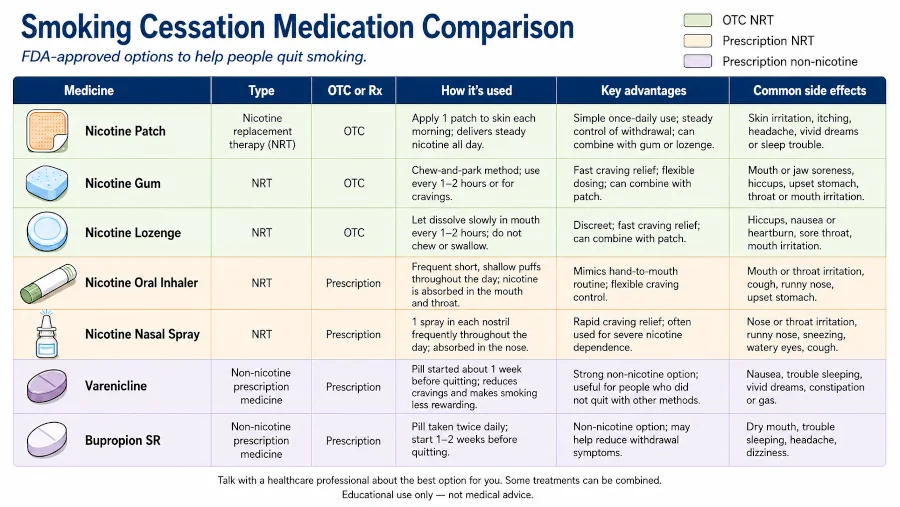
CDC lists seven FDA-approved medicines for adults who smoke cigarettes: five nicotine replacement products and two prescription pills. Over-the-counter options include the nicotine patch, gum, and lozenge. Nicotine inhalers and nasal sprays require a prescription. Varenicline and bupropion SR are prescription tablets. [CDC, 2024b]
A nicotine patch provides a steady dose. Gum or a lozenge can help when a craving breaks through. CDC states that using a long-acting patch with short-acting gum or lozenges can improve the chance of quitting compared with one NRT product alone. [CDC, 2024a]
5. Decide what you will do during a craving
Write a short craving script and keep it on your phone. A simple version is: wait five minutes, leave the trigger, drink water, take slow breaths, chew gum or use the NRT in your plan, and text your support person. Cravings pass. You need a response that buys time.
Smokefree.gov suggests staying busy, taking a short walk, keeping your mouth busy with gum or hard candy, drinking water, and using slow breathing until you feel more relaxed. Deep breathing does not “clear” smoke from your lungs. Its value is that it helps you get through an urge without lighting a cigarette. [Smokefree.gov, n.d.-b]
6. Treat a slip as a problem to solve
A cigarette after quit day is a warning sign, not proof that you cannot quit. Stop again immediately. Identify the trigger, change the plan, and contact your support person or quitline. Do not wait for a new week or a new month.
A lapse often reveals a weak spot: alcohol at a social event, cigarettes in the car, an untreated craving after meals, or a medication plan that needs adjustment. Fix the weak spot while the details are fresh.
Quit-smoking medicines: what the options are
FDA-approved cessation products can improve your chance of quitting successfully. Ask a clinician or pharmacist which option fits your smoking pattern, health history, other medicines, and past quit attempts. [FDA, 2022]
| Option | Access | How it may help | What to discuss or watch for |
| Nicotine patch | Over the counter | Provides steady nicotine through the skin. Often paired with gum or a lozenge for sudden cravings. | Skin irritation, vivid dreams, or sleep trouble can occur. |
| Nicotine gum | Over the counter | Short-acting option for cravings. Use the package directions carefully. | Mouth or jaw discomfort, hiccups, or stomach upset can occur. |
| Nicotine lozenge | Over the counter | Short-acting option that dissolves slowly in the mouth. | Mouth irritation, hiccups, or stomach upset can occur. |
| Nicotine inhaler | Prescription | Delivers nicotine through a mouthpiece and may help with the hand-to-mouth routine. | Mouth or throat irritation can occur. |
| Nicotine nasal spray | Prescription | Fast-acting nicotine option for cravings. | Nasal or throat irritation can occur. |
| Varenicline | Prescription tablet | Reduces cravings and changes the rewarding effect of nicotine. | Nausea, sleep-related effects, and mood or behavior changes require discussion with a prescriber. |
| Bupropion SR | Prescription tablet | Non-nicotine medicine that can reduce cravings and withdrawal symptoms. | Not appropriate for everyone; discuss seizure risk, other medicines, and mental health history with a prescriber. |
Medication list source: [CDC, 2024b]. Safety details vary by product. Follow package instructions and ask a clinician or pharmacist about your situation.
Nicotine replacement therapy
NRT gives you nicotine without the toxic smoke from cigarettes. Its purpose is to reduce withdrawal while you change the routines tied to smoking. The FDA notes that NRT is available over the counter and by prescription, depending on the product. [FDA, 2022]
Using NRT is not the same as continuing to smoke. Cigarette smoke contains the chemicals that cause most smoking-related disease. Take NRT exactly as directed, and ask a pharmacist how to use gum or lozenges correctly if you have not used them before.
Prescription pills
Varenicline and bupropion SR do not contain nicotine. Both require a prescription. FDA states that the benefits outweigh the risks for approved use, but mood or behavior changes, depressed mood, hostility, aggression, and suicidal thoughts or actions require prompt medical attention. [FDA, 2022]
A prescriber can tell you when to start the medicine, how long to take it, and whether it fits your health history. Do not combine or change prescription medicines on your own.
Medication safety
If you are pregnant, breastfeeding, or younger than 18, do not start a quit-smoking medicine without talking to a doctor. CDC gives the same advice for people who use tobacco products other than cigarettes, including cigars, chew, snuff, hookah, and e-cigarettes. [CDC, 2024b]
Ask a clinician or pharmacist before starting a product if you have a serious medical condition, take prescription medicines, or have a history of mental health symptoms. The right answer depends on the product and your circumstances.
What the first two weeks may feel like
Nicotine withdrawal is uncomfortable, but it is temporary. Smokefree.gov reports that the worst withdrawal symptoms usually last less than two weeks. [Smokefree.gov, n.d.-c]
The first few days often feel the hardest because your body and routines are adjusting at the same time. Do not interpret a strong craving as a permanent state. Use the plan you made before quit day.
| Common challenge | Practical response |
| Cravings | Use your planned NRT if appropriate, change locations, chew gum, drink water, and wait for the urge to pass. |
| Irritability or restlessness | Warn the people close to you that the first days may be rough. Take a walk or use slow breathing before reacting. |
| Trouble concentrating | Keep your schedule lighter when possible. Break tasks into short blocks. |
| Sleep changes | Protect a regular bedtime. Reduce late caffeine, especially if stopping smoking makes you feel more jittery. |
| Increased appetite | Keep practical snacks ready. Regular meals are more useful than a cleanse or juice-only plan. |
| Low mood | Tell a healthcare professional if symptoms are severe, worsening, or hard to manage. Seek emergency help for thoughts of self-harm. |
Food, exercise, and daily routines
You do not need a detox diet. Your body begins adjusting after the last cigarette without a juice fast, supplement, herb, or cold shower. Water, regular meals, and simple snacks can make the first week easier because they support routine and give your mouth or hands something else to do.
Keep sugar-free gum, sliced vegetables, fruit, or another easy snack nearby. Alcohol is a common trigger, so consider avoiding it during your first weeks. A short walk can interrupt a craving and reduce stress. If you want more practical meal and snack ideas, use the site’s guide to foods to help quit smoking. Treat food as support for your quit plan, not as a cure or a way to flush nicotine from your body.
If smoking has been part of your coffee break, car ride, or after-dinner routine, replace the routine rather than leaving an empty gap. Walk around the block, brush your teeth after meals, move coffee to a different location, or call someone during your usual smoking break.
Exercise is useful, but it is not a punishment for smoking and it is not a guarantee against weight gain. Start at a level that fits your health. Ask a clinician before beginning a vigorous program if you have chest symptoms, significant shortness of breath, or a medical condition that limits activity.
What improves after you quit smoking
Benefits start soon after your last cigarette and continue for years. CDC’s timeline is specific: heart rate drops within minutes, nicotine in the blood drops to zero within 24 hours, and carbon monoxide in the blood falls to the level of someone who does not smoke within several days. [CDC, 2024c]
| Time after quitting | What changes |
| Within minutes | Heart rate drops. |
| 24 hours | Nicotine level in the blood drops to zero. |
| Several days | Carbon monoxide level in the blood falls to the level of someone who does not smoke. |
| 1 to 12 months | Coughing and shortness of breath decrease. |
| 1 to 2 years | Risk of heart attack drops sharply. |
| 5 to 10 years | Added risk of cancers of the mouth, throat, and voice box drops by half; stroke risk decreases. |
| 10 to 15 years | Added risk of lung cancer drops by half. |
| 15 years | Risk of coronary heart disease drops close to that of someone who does not smoke. |
Timeline source: [CDC, 2024c]. Individual symptoms and recovery vary.
Quitting is one of the strongest steps you can take for your heart and blood vessels. It also makes sense to address blood pressure, movement, sleep, and diet over time. For a related nutrition guide, see foods that lower blood pressure.
When to talk to a healthcare professional
A clinician or pharmacist can help before quit day if you want medication, smoke heavily, have tried several times without success, use more than one tobacco product, or have a medical or mental health condition. Ask for help sooner rather than waiting for another failed attempt.
Schedule a routine appointment if you have an ongoing cough, wheezing, shortness of breath, or other symptoms that concern you. Stopping smoking is essential, but it does not replace an evaluation for symptoms that may need medical care.
Get urgent medical help now for red-flag symptoms
Call emergency services for chest pain or pressure, severe breathing trouble, fainting, or signs of stroke such as sudden weakness on one side of the body, sudden trouble speaking, sudden trouble seeing, or sudden loss of balance. WHO advises immediate medical care for heart-attack or stroke symptoms. [WHO, 2025]
Seek emergency help for thoughts of self-harm or severe mood or behavior changes, whether they occur during withdrawal or while taking a prescription cessation medicine. FDA specifically warns that mood and behavior changes and suicidal thoughts or actions can occur with prescription cessation products. [FDA, 2022]
Realistic expectations
Quitting can be hard even when the plan is good. A strong craving does not mean treatment has failed. It means you need to use the response you prepared: medication if appropriate, a different location, a short walk, water, gum, slow breathing, or a call for support.
Do not measure success only by whether the attempt feels easy. Measure whether you are building a plan that is safer and more effective each time. If one method is not enough, ask about adding counseling, changing medication, or using combination NRT.
| HEALTH DISCLAIMER: This page is for education only. It does not replace medical advice, diagnosis, or treatment. Ask a healthcare professional or pharmacist which quit-smoking method is appropriate for you, especially if you are pregnant, breastfeeding, younger than 18, taking prescription medicines, or living with a medical or mental health condition. Call emergency services for chest pain, severe breathing trouble, signs of stroke, or thoughts of self-harm. |
Frequently Asked Questions
Can I stop smoking cold turkey?
Yes. Some people stop smoking without medication. But cold turkey is not the only valid method, and you do not need to rely on willpower alone. CDC says counseling and medication together give people the best chance of quitting for good. [CDC, 2024a]
What is the best medicine to help stop smoking?
There is no single best product for everyone. Options include nicotine patches, gum, lozenges, inhalers, nasal spray, varenicline, and bupropion SR. A clinician or pharmacist can match the choice to your smoking pattern, medical history, and past attempts. [CDC, 2024b]
How long does nicotine withdrawal last?
The worst symptoms usually last less than two weeks, although cravings can return around familiar triggers later. Plan for the first days carefully and keep a response ready for sudden urges. [Smokefree.gov, n.d.-c]
Does drinking water flush nicotine out faster?
Water is a useful substitute during a craving and helps you stay hydrated, but it is not a smoking-cessation treatment and it does not replace time, support, or medication. You do not need a detox cleanse or juice-only diet to quit.
Is nicotine replacement therapy safer than smoking?
NRT provides nicotine without cigarette smoke. It is designed to reduce cravings and withdrawal while you stop smoking. Follow the package directions and ask a clinician or pharmacist which product fits your needs. [FDA, 2022]
What should I do if I smoke one cigarette after my quit date?
Stop again immediately. Write down the trigger, change your plan, and contact your support person or quitline. A slip is a reason to adjust the plan, not a reason to wait for another quit date.
References
- CDC. “How to Quit Smoking.” Updated May 15, 2024. → View source
- CDC. “Benefits of Quitting Smoking.” Updated May 15, 2024. → View source
- CDC. “Quit Smoking Medicines.” Tips From Former Smokers. → View source
- CDC. “Quitlines and Other Cessation Support Resources.” Updated January 31, 2025. → View source
- Smokefree.gov. “Build My Quit Plan.” → View source
- Smokefree.gov. “Nicotine Withdrawal.” → View source
- Smokefree.gov. “How to Manage Cravings.” → View source
- U.S. Food and Drug Administration. “Want to Quit Smoking? FDA-Approved and FDA-Cleared Cessation Products Can Help.” July 21, 2022. → View source
- U.S. Food and Drug Administration. “The Relative Risks of Tobacco Products.” Updated May 6, 2026. → View source
- World Health Organization. “Cardiovascular diseases (CVDs).” July 31, 2025. → View source
- Google Search Central. “FAQ (FAQPage, Question, Answer) structured data.” Accessed June 6, 2026. → View source
