
Here is the honest version of the pineapple health benefits story: pineapple is a genuinely good source of vitamin C and manganese, it is low in calories, and it contains bromelain, an enzyme with real but narrower effects than the internet usually promises. It is a smart fruit to eat often. It is not a cure for cancer, a fertility treatment, or a fat-burner, and a few popular claims about it fall apart the moment you look at the studies.
Below, we separate what the evidence solidly supports from what it doesn’t, give you practical guidance on fresh versus canned versus juice, and cover the side effects and allergy risks that most “superfood” articles skip. For the deeper dive on the vitamin behind much of pineapple’s reputation, see our guide to what vitamin C really does for your immune system.
What’s actually in a pineapple
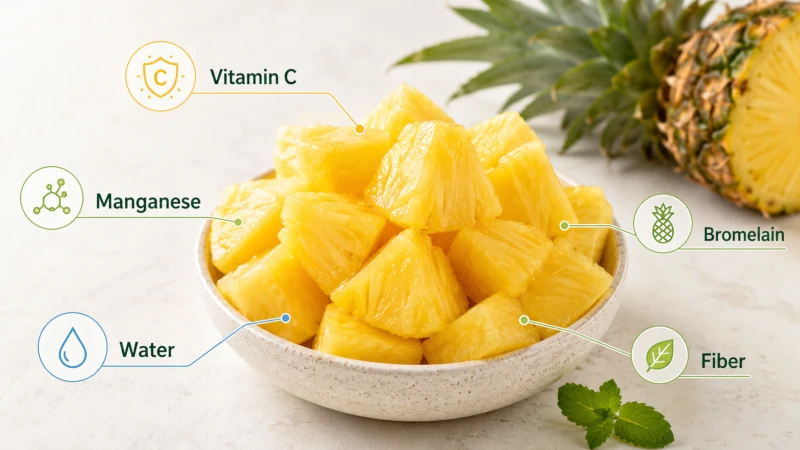
Fresh pineapple is mostly water — around 86% by weight — which is why it’s light on calories. Roughly 100 grams of raw pineapple provides about 50 calories and 13 grams of carbohydrate, almost all of it natural sugar, with very little fat or protein (USDA FoodData Central). A one-cup serving of chunks (about 165 grams) lands near 75–80 calories and supplies around 2 grams of fiber.
Its two nutritional standouts are vitamin C and manganese. Two slices of pineapple contain roughly 100 mg of vitamin C — about a full day’s recommended intake for an adult, which is 90 mg (Drugs.com pineapple & bromelain monograph, 2026; NIH Office of Dietary Supplements: Vitamin C, 2025). Half a cup of chunks provides about 0.8 mg of manganese, or roughly a third of the daily target of 2.3 mg (NIH Office of Dietary Supplements: Manganese, 2021). Pineapple also contributes smaller amounts of vitamin B6, folate, copper, and potassium.
| Nutrient (per 1 cup chunks, ~165 g) | Approximate amount | Share of Daily Value |
| Calories | 75–80 kcal | — |
| Vitamin C | ~79 mg | Most of a day’s intake |
| Manganese | ~1.6 mg | ~70% (0.8 mg per ½ cup = 35%) |
| Fiber | ~2 g | ~7% |
| Carbohydrate | ~21 g (mostly sugar) | — |
| Fat / protein | Trace | — |
Figures rounded from USDA FoodData Central (raw pineapple, all varieties) and NIH nutrient fact sheets. Vitamin C and manganese amounts vary with ripeness, variety, and serving size.
The pineapple health benefits worth taking seriously
A strong source of vitamin C
[Well established] This is the least controversial thing about pineapple. Vitamin C is essential — your body can’t make it — and it’s needed to build collagen, absorb iron from plant foods, and support normal immune function (NIH Office of Dietary Supplements: Vitamin C, 2025). A cup of pineapple covers most of an adult’s daily requirement.
[Modest / mixed] Where expectations should cool off is colds. In the large Cochrane review of vitamin C trials, regular supplementation didn’t stop most people from catching colds; it shortened them modestly — by about 8% in adults and 14% in children — and only in people taking it before symptoms began (NIH Office of Dietary Supplements: Vitamin C, 2025). Eating pineapple helps you meet your vitamin C needs; it won’t make you cold-proof. We unpack that evidence in detail in our piece on what vitamin C really does for your immune system.
Manganese and everyday minerals
[Well established as nutrition] Manganese is a trace mineral your body uses as a cofactor for enzymes involved in bone formation, metabolism, and antioxidant defense (NIH Office of Dietary Supplements: Manganese, 2021). Pineapple is one of the better fruit sources. Worth keeping in perspective: outright manganese deficiency is very rare in people eating an ordinary diet, so pineapple’s manganese is a genuine contribution to good nutrition rather than a fix for a common problem.
Bromelain and digestion — what it does, and doesn’t
Bromelain is a mixture of protein-digesting enzymes concentrated in the pineapple stem and, in smaller amounts, the fruit. It’s the reason fresh pineapple makes your tongue tingle and why it’s used commercially to tenderize meat (Drugs.com pineapple & bromelain monograph, 2026).
[Plausible, limited human evidence] Because bromelain breaks down protein, it’s long been taken as a digestive aid, and there’s a reasonable mechanistic basis for that. But high-quality trials showing that eating pineapple meaningfully improves digestion in healthy people are thin. If your interest is everyday gut comfort, a broader pattern of foods that support healthy digestion matters more than any single fruit.
One practical note that is well supported: heat destroys bromelain. Canned pineapple is heated during processing, so it has little enzyme activity left — which is why canned pineapple won’t stop gelatin from setting, but fresh or frozen pineapple will (Drugs.com pineapple & bromelain monograph, 2026).
Bromelain, inflammation, and recovery
[Promising for specific uses] The strongest clinical evidence for bromelain isn’t about the fruit on your plate — it’s about concentrated supplement doses in specific situations. A topical bromelain preparation is an established tool for debriding burn wounds, and a meta-analysis of dental surgery trials found that oral bromelain reduced pain in the first day and week after wisdom-tooth removal and cut painkiller use, though it didn’t reduce swelling (Drugs.com pineapple & bromelain monograph, 2026).
[Mixed / disappointing] For osteoarthritis the picture is less encouraging: in one trial, bromelain at 800 mg daily for 12 weeks produced no improvement over placebo on the standard arthritis score, even though other small studies had hinted at benefit (Drugs.com pineapple & bromelain monograph, 2026). The takeaway is that bromelain has real anti-inflammatory activity but works unevenly, and the doses studied are far higher than what you’d get from eating pineapple.
Claims that outrun the evidence
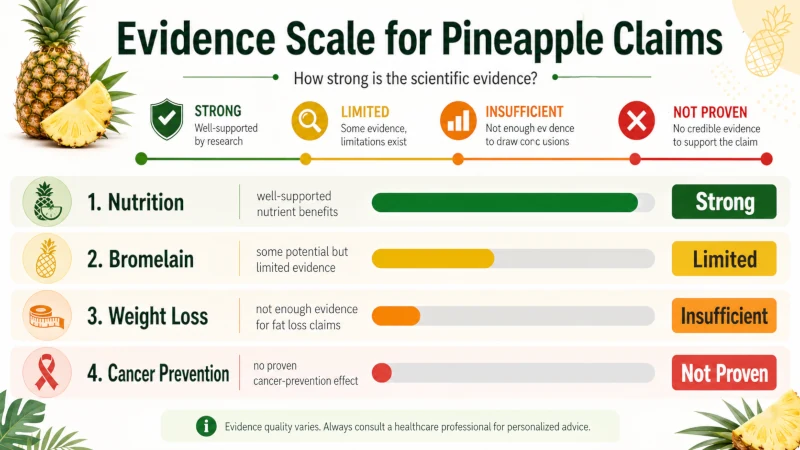
Older articles about pineapple — including the earlier version of this page — made some confident claims that don’t hold up. Here’s the honest accounting.
“Pineapple prevents stomach cancer”
[Overstated] The kernel of truth: eating pineapple has been shown to reduce the formation of nitrosamines — potentially carcinogenic compounds — in the digestive tract, an effect tied to its vitamin C (Drugs.com pineapple & bromelain monograph, 2026; NIH Office of Dietary Supplements: Vitamin C, 2025).
But reducing a chemical reaction in a study is not the same as preventing cancer in real people. Large trials of vitamin C supplements, including one testing vitamin C in a high-risk population, did not significantly lower the risk of stomach or esophageal cancer (NIH Office of Dietary Supplements: Vitamin C, 2025). Enjoy pineapple as part of a produce-rich diet, which is sensibly linked to lower cancer risk overall — but don’t treat it as protection against any specific cancer.
“Pineapple boosts fertility / treats sterility”
[Not supported] This claim usually rests on manganese’s role in reproduction. Manganese is indeed involved in reproductive biology, but deficiency is very rare in people eating normally, and there’s no clinical evidence that eating pineapple treats infertility in men or women (NIH Office of Dietary Supplements: Manganese, 2021). If you’re facing fertility challenges, this is a conversation for a doctor, not a fruit bowl.
“Pineapple burns fat and kills your appetite”
[Weak] Fresh pineapple is low in calories and mostly water, so it can absolutely fit a weight-management diet as a satisfying sweet option in place of higher-calorie snacks. That’s a real, if modest, advantage. What isn’t established is any special fat-burning or appetite-suppressing power — bromelain-and-obesity research so far is early and largely preliminary, not proof. Portion still matters, and pineapple juice, which strips the fiber and concentrates the sugar, is easy to overdo.
Fresh vs. canned vs. juice — and how to pick a ripe one
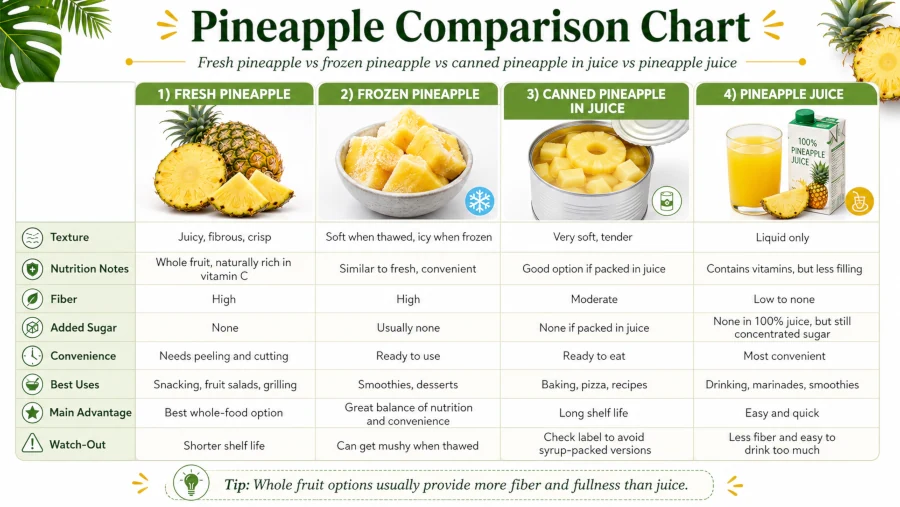
Fresh pineapple gives you the most fiber, the most vitamin C, and active bromelain. Canned pineapple keeps most of its vitamins and minerals but loses bromelain to heat, and syrup-packed versions add sugar — choose fruit canned in juice if you go that route (Drugs.com pineapple & bromelain monograph, 2026). Juice is the least filling and the most concentrated in sugar, so treat it as an occasional drink rather than a health tonic.
A ripe pineapple gives slightly to gentle pressure, smells sweet and fragrant at the base, and releases its lower leaves without a fight. One quirk worth knowing: pineapples don’t get sweeter after they’re picked the way some fruit does, so buying one that’s already fragrant matters more than leaving it on the counter.
Side effects, allergies, and who should be careful
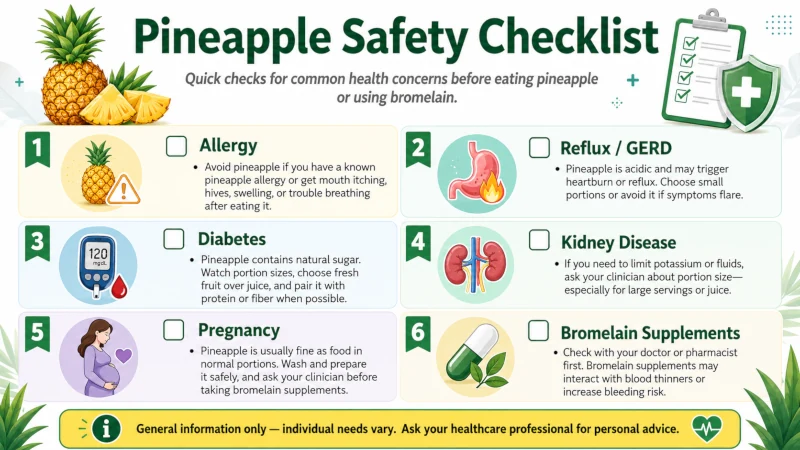
For most people, pineapple is a safe, low-risk food. Bromelain itself has very low toxicity (Drugs.com pineapple & bromelain monograph, 2026). But there are real exceptions worth knowing.
Allergy and mouth reactions
Pineapple allergy is documented and, in bromelain, involves an IgE-mediated immune response. People allergic to pineapple can cross-react with things that sound unrelated — honeybee venom, olive-tree and cypress pollen, celery, and papain (Drugs.com pineapple & bromelain monograph, 2026). Separately, some people get an itchy or tingling mouth from raw pineapple through oral allergy syndrome and the foods that trigger reactions; cooking usually settles that milder reaction. A true allergic reaction — hives, swelling, trouble breathing — is a medical emergency, not a food quirk.
Digestive effects and acidity
Eating a lot of pineapple can cause mouth soreness at the corners of the lips (from the enzyme and the fruit’s acidity), and the juice of unripe pineapple can act as a strong laxative (Drugs.com pineapple & bromelain monograph, 2026). If you have acid reflux or an active stomach ulcer, the fruit’s acidity may aggravate symptoms, so let your own tolerance and your clinician guide you.
Pregnancy and breastfeeding
There’s a persistent rumor that pineapple triggers labor or miscarriage. The reality is more boring: good safety and efficacy data in pregnancy and breastfeeding are simply lacking, and the traditional use of pineapple to bring on menstruation or end a pregnancy isn’t backed by solid evidence (Drugs.com pineapple & bromelain monograph, 2026). Normal culinary amounts of pineapple aren’t known to be harmful, but concentrated bromelain supplements haven’t been established as safe in pregnancy — so skip the supplements and check with your clinician if you’re unsure.
Medications and surgery
Here the sources genuinely disagree, so we’ll say so plainly. A leading drug-information reference lists no well-documented medication interactions for pineapple (Drugs.com pineapple & bromelain monograph, 2026). At the same time, laboratory work suggests bromelain can enhance the absorption of some antibiotics and may reduce platelet clumping, which is the basis for the common caution about combining bromelain supplements with blood thinners.
None of this is firmly established in people. The prudent line: food amounts of pineapple are not a concern, but if you take anticoagulants or antibiotics and are considering bromelain supplements, clear it with a pharmacist or doctor first — and because concentrated proteolytic enzymes are generally paused before surgery, mention any bromelain supplement to your surgical team.
When to see a professional
- Any sign of a severe allergic reaction after eating pineapple — swelling of the lips, tongue, or throat, trouble breathing, widespread hives, dizziness, or fainting. This is anaphylaxis; use epinephrine if prescribed and call emergency services immediately.
- Persistent mouth, lip, or throat itching with raw pineapple, so an allergist can tell oral allergy syndrome from a true food allergy.
- Reflux or ulcer symptoms that flare with acidic fruit.
- Before starting a bromelain supplement if you’re pregnant, breastfeeding, take anticoagulants or antibiotics, or have surgery scheduled.
| Health disclaimer This article is for general education and is not medical advice. It cannot diagnose you and does not replace care from a qualified professional who knows your history. Pineapple is a food, not a treatment for any disease. If you are pregnant or breastfeeding, have a chronic condition, take medication, or are considering a bromelain supplement, talk with your doctor, pharmacist, or a registered dietitian first. If you have a severe reaction after eating pineapple — trouble breathing, or swelling of the throat or tongue — use epinephrine if it has been prescribed and call emergency services right away. |
Frequently Asked Questions
Is pineapple good for you?
Yes, for most people. It’s low in calories, hydrating, and a strong source of vitamin C plus a useful amount of manganese (NIH Office of Dietary Supplements: Vitamin C, 2025; NIH Office of Dietary Supplements: Manganese, 2021). It’s a healthy fruit to eat regularly — just not a cure for anything.
Does pineapple actually help digestion?
It contains bromelain, a protein-digesting enzyme, and has a long history as a digestive aid. The mechanism is plausible, but strong human trials are limited, and canned pineapple loses the enzyme to heat (Drugs.com pineapple & bromelain monograph, 2026). For everyday gut comfort, overall eating patterns matter more.
Can pineapple prevent cancer?
No. Pineapple can reduce nitrosamine formation in the gut, but vitamin C supplement trials haven’t shown lower stomach or esophageal cancer risk (NIH Office of Dietary Supplements: Vitamin C, 2025). A produce-rich diet is linked to lower overall cancer risk; no single fruit is protective on its own.
Is it safe to eat pineapple during pregnancy?
Normal food amounts aren’t known to be harmful, and the “pineapple causes miscarriage” idea isn’t backed by good evidence. But safety data are genuinely limited, and concentrated bromelain supplements haven’t been established as safe in pregnancy (Drugs.com pineapple & bromelain monograph, 2026). Check with your clinician.
Why does pineapple make my mouth tingle or burn?
That’s bromelain acting on the soft tissue of your mouth, sometimes combined with the fruit’s acidity. Eating a lot can cause soreness at the corners of the lips (Drugs.com pineapple & bromelain monograph, 2026). If raw pineapple reliably makes your mouth or throat itch, it may be oral allergy syndrome and the foods that trigger reactions — worth an allergist’s opinion.
Does bromelain interact with medications?
A major drug reference lists no well-documented interactions (Drugs.com pineapple & bromelain monograph, 2026), but lab studies raise theoretical concerns with antibiotics and blood thinners. Food amounts are fine; clear bromelain supplements with a pharmacist, especially before surgery.
References
- NIH Office of Dietary Supplements. Vitamin C — Fact Sheet for Health Professionals. National Institutes of Health, updated 2025. View source
- NIH Office of Dietary Supplements. Manganese — Fact Sheet for Health Professionals. National Institutes of Health, updated 2021. View source
- Pineapple — Uses, Benefits & Dosage (bromelain monograph). Drugs.com / Wolters Kluwer, medically reviewed, updated May 2026. View source
- USDA FoodData Central. Pineapple, raw, all varieties. U.S. Department of Agriculture, Agricultural Research Service. View source
