
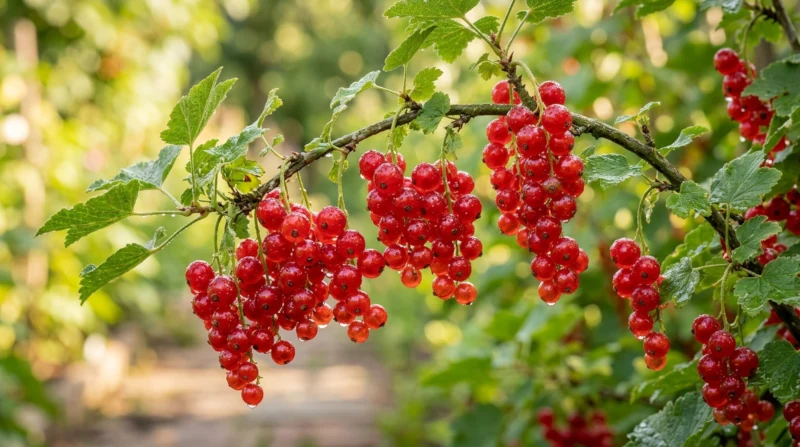
The honest headline on red currants is this: they’re a genuinely nutritious little fruit, low in calories and unusually rich in vitamin C, with a useful dose of fiber — but most of the sweeping “cures and prevents” claims you’ll read about them run well ahead of the evidence. If you want the real benefits of red currants, they come down to a handful of solid, food-based wins rather than anything miraculous. Eaten as part of a varied diet, these bright, tart berries earn their place. Here’s what they actually do, and where the hype gets ahead of the facts.
Benefits of red currants: What they actually are
Red currants (Ribes rubrum) are small, translucent, ruby-colored berries that grow in drooping clusters on shrubs. Native to parts of Europe and northern Asia, they’re now grown across temperate regions, including the United States. They’re sharply tart — which is why you most often meet them in jams, jellies, sauces, and desserts rather than eaten by the handful like blueberries. That tartness is a clue to their standout nutrient: vitamin C.
What’s inside a red currant (the numbers)
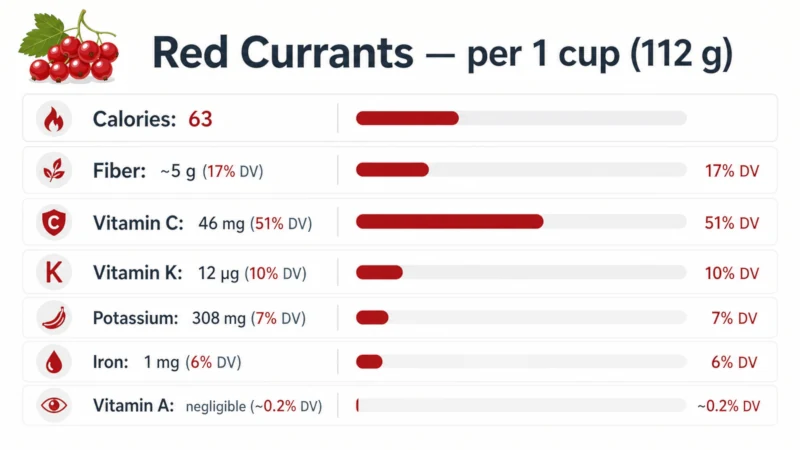
Red currants are a classic “nutrient-dense but light” food — very few calories, a lot of water, and a respectable micronutrient list. Here’s what a 100-gram serving (a little under a cup) and a full 1-cup serving provide, based on US Department of Agriculture data (USDA FoodData Central).
| Nutrient | Per 100 g | Per 1 cup (112 g) | % DV (per cup) |
| Calories | 56 | 63 | — |
| Fiber | 4.3 g | ~4.8 g | ~17% |
| Vitamin C | 41 mg | 46 mg | ~51% |
| Vitamin K | 11 µg | 12 µg | ~10% |
| Potassium | 275 mg | 308 mg | ~7% |
| Iron | 1 mg | 1 mg | ~6% |
| Manganese | 0.19 mg | 0.21 mg | ~9% |
| Vitamin A | 2 µg RAE | 2 µg RAE | ~0.2% |
Two things are worth flagging up front, because they’re commonly overstated elsewhere. First, red currants are an excellent source of vitamin C but only a modest source of potassium and vitamin K, and they contain almost no vitamin A. Second, they also deliver anthocyanins and other polyphenols — the plant pigments behind the red color — which act as antioxidants. That’s one reason it’s worth eating a range of colorful plant foods rather than leaning on any single berry.
How red currants compare to black currants
If you’re choosing between currants, black currants are the vitamin C and antioxidant heavyweight — they carry several times more vitamin C per gram and more anthocyanins. Red currants are milder, a little lower in calories, and more versatile in the kitchen. Neither is “better”; they’re just different tools.
Vitamin C: the real immune-support story
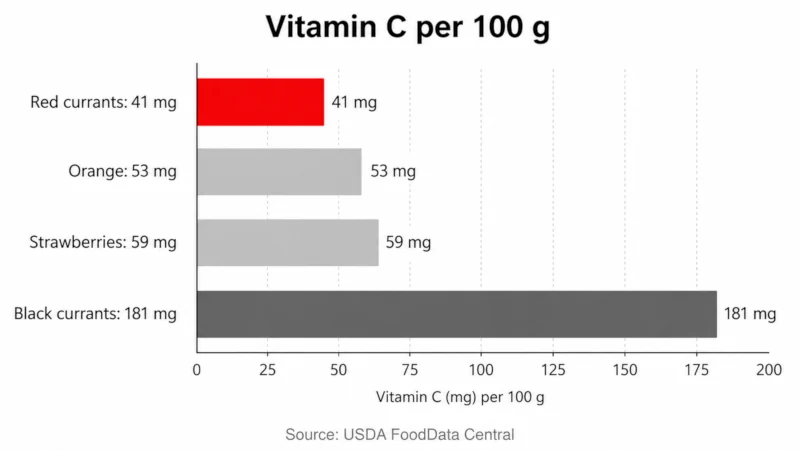
Vitamin C is the strongest nutritional case red currants have. It’s an antioxidant that helps protect cells from free-radical damage, and it’s genuinely needed for a normally functioning immune system (NIH Office of Dietary Supplements, 2021). A single cup of red currants covers roughly half a day’s vitamin C, which is a real contribution.
Here’s the part that gets mangled online: getting enough vitamin C is important for immunity, but that is not the same as vitamin C preventing colds. A large Cochrane review found that regular vitamin C did not reduce how often people in the general population caught colds; it only modestly shortened how long colds lasted — about 8% in adults (Cochrane review, Hemilä & Chalker, 2013). So the accurate way to think about it: red currants help you meet your vitamin C needs, which supports immune function overall. They won’t “ward off” the next cold going around your office.
Fiber: digestion, and why it matters beyond your gut
At around 4 grams per 100 grams, red currants are a useful source of dietary fiber. Fiber adds bulk and helps keep bowel movements regular, and diets higher in fiber are consistently linked to better outcomes beyond digestion — including lower rates of cardiovascular disease and lower average body weight (Slavin, Nutrients, 2013). Fiber also slows how quickly sugar is absorbed, which helps blunt the spikes that come from eating fast-digesting carbs alone.
The realistic framing: red currants aren’t a high-fiber food on their own, but they add to a daily total that most Americans fall short of. Pair them with other whole plant foods and the fiber adds up.
Potassium, antioxidants, and your heart
This is an area where careful language matters. Diets that are higher in potassium and lower in sodium are associated with lower blood pressure and reduced stroke risk — enough that the FDA authorizes a health claim for foods that are a good source of potassium and low in sodium (NIH Office of Dietary Supplements, 2022). Red currants are naturally very low in sodium, which is a plus.
But they are only a modest potassium source (about 275 mg per 100 g, roughly 6% of a day’s target), so they’re a small contributor to that overall pattern rather than a blood-pressure remedy. Their anthocyanins and vitamin C add antioxidant activity that may help counter the oxidative stress and inflammation involved in cardiovascular disease, though evidence tied specifically to red currants is limited. The honest bottom line: red currants can be part of a heart-supportive eating pattern, but they don’t lower blood pressure or treat heart disease on their own, and they’re no substitute for prescribed treatment.
Vitamin C and your skin
Your skin naturally holds high concentrations of vitamin C, where it helps drive collagen synthesis — the protein that keeps skin firm — and provides antioxidant protection against UV-related damage (Pullar et al., Nutrients, 2017). Because red currants are vitamin-C-rich, they contribute to the nutrient supply your skin draws on.
Worth keeping in perspective: most of the skin research looks at overall vitamin C status and topical products, not at eating berries specifically, and researchers note the dietary-versus-topical question isn’t fully settled. So red currants can support skin health as part of an adequate, vitamin-C-rich diet — but no fruit reverses wrinkles.
What about eye health?
Some articles credit red currants with protecting against macular degeneration and cataracts. This is where the older story falls apart. The carotenoids most linked to eye health — lutein and zeaxanthin — concentrate in leafy greens, corn, and egg yolks, not red currants, and red currants contain almost no vitamin A. If eye nutrition is your goal, greens and the foods discussed in our guide to natural approaches for eye health are the better targets. Red currants can be part of an overall healthy diet, but the specific “eat red currants for your eyes” claim isn’t supported.
Can red currants help with weight?
Indirectly, and modestly. Red currants are low in calories and contain fiber, and higher-fiber diets are associated with lower body weight (Slavin, Nutrients, 2013). A tart, water-rich fruit can be a satisfying swap for a more calorie-dense snack. That’s a reasonable, food-based benefit — not a fat-burning effect. No single fruit drives weight loss; the eating pattern around it does.
How to enjoy red currants (and one thing to watch)
Their sharpness is an asset. A few ways to use them:
- Stir a handful into oatmeal, yogurt, or a smoothie for tang and a vitamin C boost.
- Scatter them over a green salad or grain bowl for color and acidity.
- Use them in sauces for poultry, pork, or game, where their tartness cuts richness.
- Freeze them at peak season to use year-round.
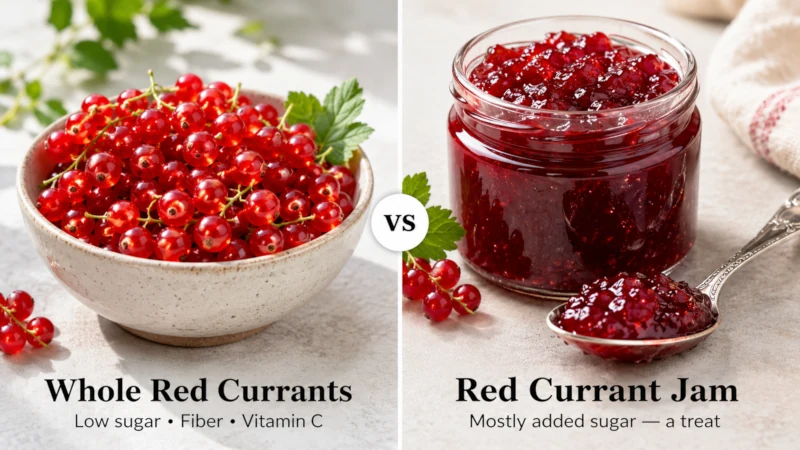
One honest caveat: most people encounter red currants as jam or jelly, which are typically loaded with added sugar. The benefits described here belong to the whole fruit. A spoonful of red currant jelly is a treat, not a health food — enjoy it as such.
A small bonus: the vitamin C in red currants improves absorption of non-heme (plant) iron, so eating them alongside plant-based iron sources like beans or leafy greens can help you get more from that meal (NIH Office of Dietary Supplements, 2021).
Safety, side effects, and who should be cautious
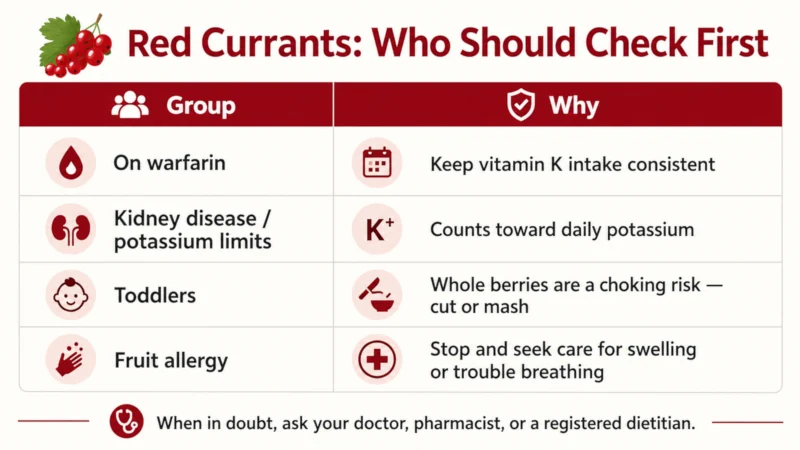
For the vast majority of people, red currants are a safe, ordinary food. A few groups should keep specifics in mind.
If you take warfarin
Red currants contain some vitamin K (about 11 µg per 100 g). If you take warfarin (Coumadin), the goal isn’t to avoid vitamin K but to keep your intake consistent week to week, since sudden changes can affect how the drug works (NIH Office of Dietary Supplements, 2021). Talk with your doctor or pharmacist before making a big change in vitamin-K-containing foods.
If you have kidney disease
People with advanced kidney disease, or anyone told to limit potassium — including some people on potassium-sparing diuretics, ACE inhibitors, or ARBs — should track potassium from all foods. Red currants are only a modest source, but they still count toward your total, so check with your doctor or a registered dietitian about where they fit.
Everyone else
True fruit allergies are uncommon but possible. Signs of a serious allergic reaction — hives, swelling of the lips or throat, trouble breathing, dizziness, or fainting — are a medical emergency; call 911. For young children, small whole berries are a choking hazard, so serve them cut or mashed for toddlers. And wash fresh currants before eating, as you would any produce.
The broader safety point for a food like this: red currants are a healthful addition to your diet, not a treatment. If you’re managing high blood pressure, heart disease, diabetes, or any chronic condition, keep taking what your doctor prescribed and use whole fruit as a complement, not a replacement.
| Health Disclaimer: This article is for general education only and is not medical advice, diagnosis, or treatment. Red currants are a food, not a remedy, and nothing here is intended to diagnose, treat, cure, or prevent any disease. Talk with your doctor, pharmacist, or a registered dietitian before making significant dietary changes if you take prescription medication (especially warfarin), have kidney disease or another chronic condition, or are pregnant or breastfeeding. Seek urgent care — call 911 — for signs of a severe allergic reaction such as trouble breathing or swelling of the throat. |
Frequently Asked Questions
Are red currants good for you?
Yes, as part of a varied diet. They’re low in calories, high in vitamin C (about half a day’s worth per cup), and a useful source of fiber. Their biggest, best-supported benefits are contributing vitamin C for immune and skin support and fiber for digestion.
Do red currants boost your immune system?
They help you meet your vitamin C needs, which your immune system depends on. But vitamin C doesn’t prevent colds in the general population and only modestly shortens their duration, so think “supports normal immune function,” not “stops you getting sick.”
Are red currants good for your heart or blood pressure?
They fit a heart-supportive pattern — they’re low in sodium and add fiber, antioxidants, and a little potassium. But they’re a modest potassium source and don’t lower blood pressure on their own. Use them alongside, not instead of, medical care.
Are red currants high in sugar?
Whole red currants are relatively low in sugar (about 7–8 g per cup) and tart. The high-sugar versions are jams and jellies, where sugar is added — those are treats, not health foods.
Can I eat red currants if I take warfarin?
Usually yes, in consistent amounts. They contain some vitamin K, so the key is steady intake rather than big swings. Confirm with your doctor or pharmacist.
Red currants vs. black currants — which is healthier?
Black currants pack more vitamin C and antioxidants; red currants are milder and slightly lower in calories. Both are nutritious; choose based on taste and use.
References
- U.S. Department of Agriculture. FoodData Central — Currants, red and white, raw. View source
- National Institutes of Health, Office of Dietary Supplements. Vitamin C — Fact Sheet for Health Professionals (2021). View source
- National Institutes of Health, Office of Dietary Supplements. Potassium — Fact Sheet for Health Professionals (2022). View source
- National Institutes of Health, Office of Dietary Supplements. Vitamin K — Fact Sheet for Health Professionals (2021). View source
- Hemilä H, Chalker E. Vitamin C for preventing and treating the common cold. Cochrane Database Syst Rev 2013, CD000980. DOI: 10.1002/14651858.CD000980.pub4. View source
- Slavin J. Fiber and Prebiotics: Mechanisms and Health Benefits. Nutrients. 2013;5(4):1417–1435. DOI: 10.3390/nu5041417 (PMC3705355). View source
- Pullar JM, Carr AC, Vissers MCM. The Roles of Vitamin C in Skin Health. Nutrients. 2017;9(8):866. DOI: 10.3390/nu9080866 (PMC5579659). View source
