
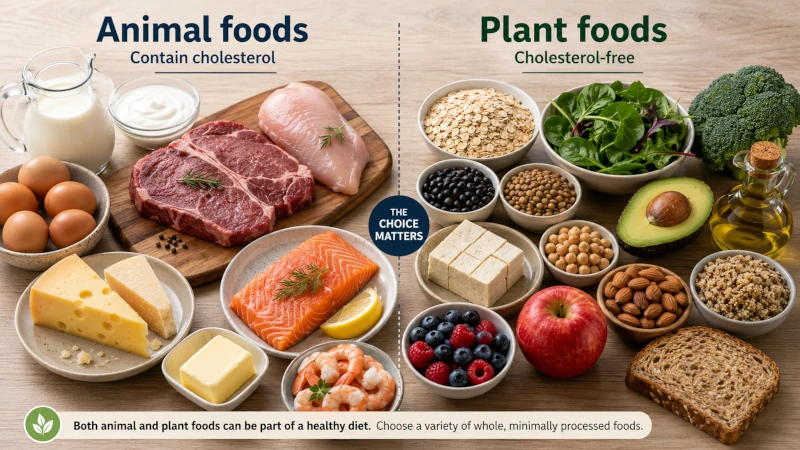
Cholesterol in food comes mostly from animal foods: egg yolks, meat, poultry, seafood, and dairy. Plant foods such as fruits, vegetables, grains, beans, nuts, and seeds do not meaningfully contain cholesterol. That gives you the quick answer on food sources of cholesterol, but it is not the whole heart-health story. For LDL cholesterol, the bigger daily lever is usually the amount of saturated and trans fat in your overall eating pattern, not one cholesterol number on one food label [CDC cholesterol guidance, 2024].
Your body makes the cholesterol it needs. It uses cholesterol to build cells, make hormones and vitamin D, and form bile acids that help digest fat [MedlinePlus cholesterol test guide]. So the goal is not to fear cholesterol as a substance. The goal is to keep blood cholesterol, especially LDL cholesterol, in a safer range while still eating enough nourishing food.
The quick answer on food sources of cholesterol
Dietary cholesterol is found in animal foods, including meat, seafood, poultry, eggs, and dairy products [CDC, 2024]. The liver also makes cholesterol, which means you do not need to eat cholesterol to supply your body with it.
The foods that deserve the most attention are not always the foods with cholesterol alone. A meal with processed meat, butter, cheese, and fried foods may be more LDL-raising than a simple egg eaten with vegetables and whole-grain toast, because saturated and trans fats raise LDL more consistently. The American Heart Association recommends limiting saturated fat and avoiding trans fat, while replacing those fats with monounsaturated and polyunsaturated fats [AHA fats guidance, 2026].
Dietary cholesterol vs. blood cholesterol
Dietary cholesterol is the cholesterol you eat. Blood cholesterol is what your clinician measures in a lipid panel. The two are connected, but they are not the same thing. A cholesterol test usually measures total cholesterol, LDL, HDL, and triglycerides [CDC cholesterol testing overview, 2024].
LDL is often called “bad” cholesterol because high LDL can contribute to plaque buildup in arteries. HDL is often called “good” cholesterol because higher HDL is generally associated with lower cardiovascular risk. Triglycerides are another blood fat that matters, especially when paired with high LDL or low HDL [MedlinePlus cholesterol levels].
Food choices matter, but genetics, age, body weight, diabetes, thyroid disease, kidney disease, activity level, smoking, and medications can also affect cholesterol numbers. If your LDL is high, do not assume one food is the whole cause. Get the numbers, look at the pattern, and work from there.
Food Sources of Cholesterol: The foods that contain it
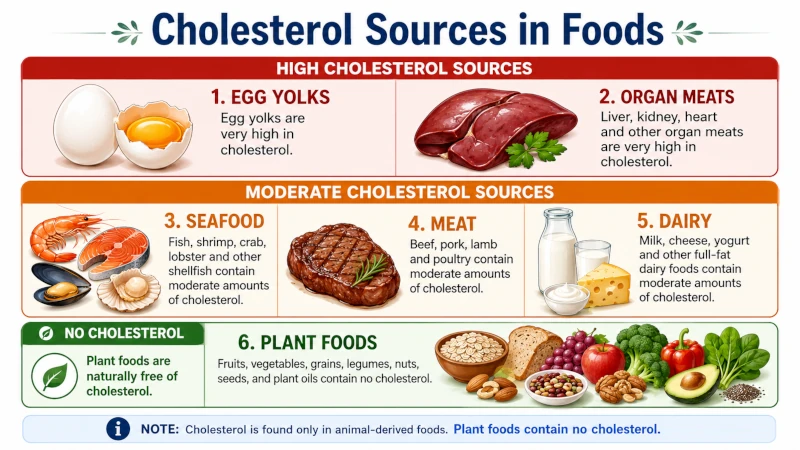
Exact cholesterol content varies by serving size, brand, cut, and preparation method. For precise values, use the Nutrition Facts label for packaged foods or USDA FoodData Central for individual foods [USDA FoodData Central]. The table below is meant as a practical guide, not a lab report.
| Food group | Cholesterol pattern | Practical note |
| Egg yolks and whole eggs | Contain cholesterol because the yolk is an animal food. Egg whites contain no cholesterol. | For many people, eggs can fit into an overall heart-healthy pattern. If your LDL is high or you have diabetes, heart disease, or familial hypercholesterolemia, ask your clinician how often whole eggs make sense for you. |
| Organ meats such as liver | Often among the most concentrated animal sources of cholesterol. | Best treated as occasional foods, especially for people already managing high LDL or heart-disease risk. |
| Shellfish and seafood | Contain cholesterol because they are animal foods. | Preparation matters. Steamed or grilled seafood is different from seafood fried in butter or served with creamy sauces. |
| Red meat, processed meat, poultry skin | Contain cholesterol and can also carry saturated fat, especially fatty cuts and processed meats. | Choose leaner cuts, smaller portions, and more beans, lentils, tofu, or fish when the goal is LDL reduction. |
| Full-fat dairy, butter, cream, cheese, ice cream | Contain cholesterol and are often important sources of saturated fat. | The saturated-fat content is often the bigger reason to limit these foods. |
| Fruits, vegetables, beans, lentils, whole grains, nuts, seeds | No meaningful dietary cholesterol. | These foods can help displace higher-saturated-fat choices and provide fiber, including soluble fiber. |
| Plant oils such as olive, canola, soybean, and sunflower oil | No meaningful dietary cholesterol. | Choose liquid non-tropical oils in place of butter, lard, shortening, coconut oil, or palm oil when possible. |
Higher-cholesterol foods to watch more carefully
The most concentrated food sources of cholesterol tend to be animal foods that contain yolks or organ tissue, along with some seafood and high-fat animal products. This does not mean every cholesterol-containing food has the same health effect. A boiled egg, grilled salmon, processed sausage, and butter-heavy pastry all sit in different nutritional contexts.
The safer question is: “What does this food usually replace?” If an egg replaces bacon and a pastry, it may improve the meal. If cheese, butter, and processed meat are added on top of an already high-saturated-fat diet, the pattern moves in the wrong direction. For more context on artery-focused eating, the related guide on foods for healthy arteries is a useful internal follow-up.
Foods with little or no cholesterol
Plant foods are naturally cholesterol-free in the practical nutrition sense. That includes oats, barley, beans, lentils, peas, fruits, vegetables, nuts, seeds, and whole grains. These foods are not automatically low-calorie or low-fat, but they do not add dietary cholesterol. They also bring fiber and unsaturated fats that can support healthier cholesterol numbers when they replace higher-saturated-fat foods.
For a broader food-pattern discussion, readers can also continue to Natural Health Message’s guide to foods good for the heart or browse the site’s cardiovascular health guides.
Why saturated fat often matters more than cholesterol on the label
Saturated fat can raise LDL cholesterol. The American Heart Association recommends aiming for less than 6% of daily calories from saturated fat, which is about 13 grams per day on a 2,000-calorie diet [AHA saturated-fat guidance, 2024]. The Dietary Guidelines for Americans recommend keeping saturated fat under 10% of calories starting at age 2 [Dietary Guidelines, 2020-2025].
These two recommendations are not identical because they serve different purposes. The Dietary Guidelines are broad public-health guidance. The AHA target is more aggressive and especially relevant for people trying to lower LDL. Either way, the direction is the same: replace saturated and trans fats with unsaturated fats from liquid plant oils, nuts, seeds, avocado, and fish where appropriate [AHA fats guidance, 2026].
How to use the Nutrition Facts label without overreacting
The FDA lists 300 mg as the Daily Value for cholesterol on Nutrition Facts labels [FDA Daily Value guide, 2024]. Treat that number as a label reference, not as your personal prescription. Your clinician may recommend a stricter or more flexible approach depending on your LDL, heart-disease history, diabetes status, medications, and overall diet.
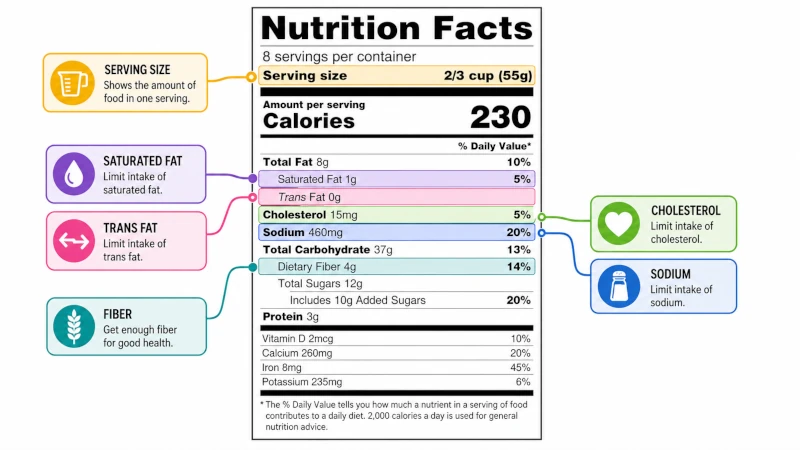
Start with serving size. The FDA emphasizes that nutrient amounts on the label refer to the listed serving, and eating two servings doubles the listed nutrients [FDA label guide]. Then look at saturated fat, trans fat, sodium, fiber, and protein alongside cholesterol. A food with modest cholesterol but high saturated fat may be a worse everyday choice than a higher-cholesterol food that is low in saturated fat and eaten in a balanced meal.
Practical swaps that lower cholesterol pressure on your diet
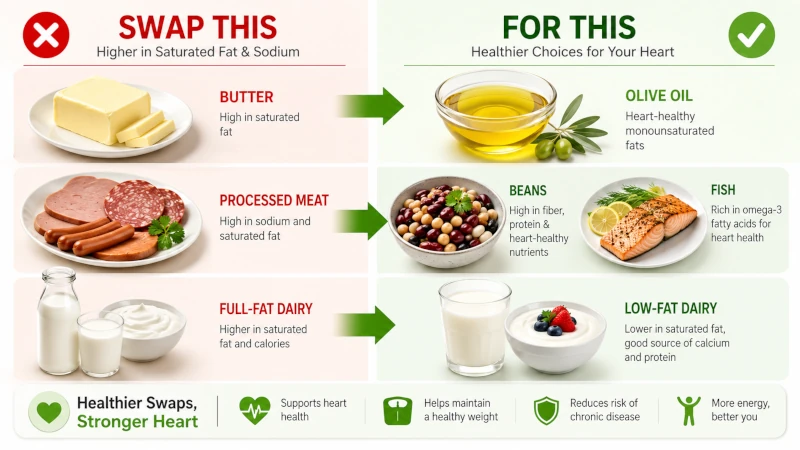
You do not have to build a perfect diet. Start with swaps that repeat often.
- Use olive, canola, soybean, sunflower, or other non-tropical liquid oils instead of butter, lard, shortening, coconut oil, or palm oil most of the time.
- Replace some red or processed meat meals with beans, lentils, tofu, fish, or skinless poultry.
- Choose low-fat or fat-free dairy more often if full-fat dairy is a major saturated-fat source for you.
- Keep egg-heavy meals simple: pair eggs with vegetables, beans, fruit, oats, or whole-grain toast rather than bacon, sausage, and buttered biscuits.
- Add soluble-fiber foods such as oats, barley, beans, lentils, apples, citrus, and psyllium if your clinician says fiber is appropriate for you.
- Use the Nutrition Facts label to compare similar foods. Choose the option lower in saturated fat, trans fat, and sodium, and higher in fiber when possible.
Who should be stricter with high-cholesterol foods?
Some readers need more individual guidance than a general article can provide. Be more cautious and ask for professional advice if you have high LDL cholesterol, known heart or blood-vessel disease, diabetes, chronic kidney disease, or a strong family history of early heart attack or very high cholesterol. Familial hypercholesterolemia is an inherited condition that can cause high LDL from birth and often requires medical treatment in addition to dietary changes [NHGRI familial hypercholesterolemia guide].
Medication can be appropriate even when someone eats well. Diet helps, but it does not replace prescribed cholesterol-lowering treatment for people at higher risk. If you take a statin or another lipid-lowering medicine, do not stop it because you improved your diet unless your clinician tells you to.
Safety notes, interactions, and when food is not enough
Most cholesterol-lowering food swaps are safe for most people, but a few cautions matter.
- Fiber: Increase fiber gradually and drink enough fluid. A sudden jump in oats, beans, lentils, or psyllium can cause gas, bloating, or constipation. Large fiber doses may interfere with how some medicines are absorbed, so ask your pharmacist about timing.
- Shellfish and fish: Avoid shellfish if you have a shellfish allergy. If you are pregnant or breastfeeding, choose lower-mercury seafood and follow your clinician’s advice.
- Eggs: Avoid raw or undercooked eggs, especially during pregnancy, for young children, older adults, or anyone immunocompromised.
- Kidney disease and potassium: If you have kidney disease or take ACE inhibitors, ARBs, or potassium-sparing diuretics, ask before using potassium-heavy salt substitutes or making aggressive potassium-focused diet changes.
- Blood thinners: If you take warfarin, keep vitamin K-rich greens consistent rather than swinging from very low to very high intake.
- Red flags: Call emergency services for chest pressure or pain, pain spreading to the arm, neck, jaw, or back, sudden shortness of breath, fainting, face drooping, arm weakness, or slurred speech. Diet is prevention and management support, not emergency treatment.
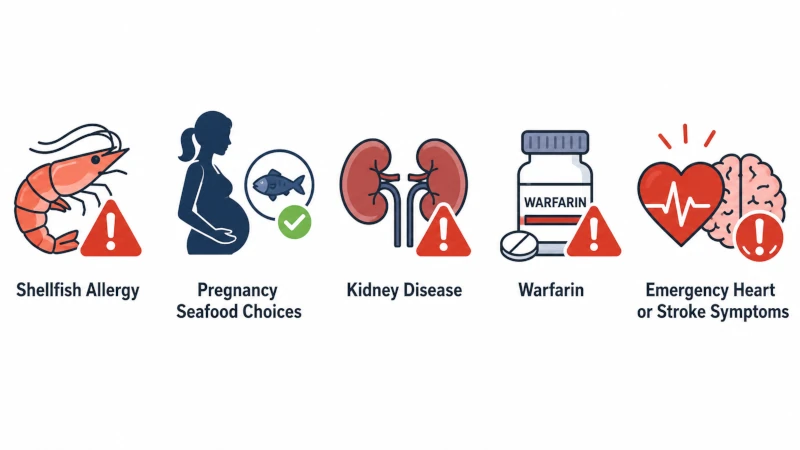
| Health disclaimer: This article is for general education only and is not medical advice. It does not diagnose, treat, cure, or prevent disease. Talk with a qualified healthcare professional or registered dietitian before making major diet changes, especially if you have heart disease, diabetes, kidney disease, familial hypercholesterolemia, are pregnant or breastfeeding, or take cholesterol medicines, blood thinners, blood-pressure medicines, or other prescription drugs. If you have chest pain, sudden shortness of breath, face drooping, arm weakness, slurred speech, or other signs of a heart attack or stroke, seek emergency care right away. |
Frequently Asked Questions
What foods contain cholesterol?
Cholesterol is found in animal foods, including meat, poultry, seafood, eggs, and dairy products. Plant foods such as fruits, vegetables, grains, beans, nuts, and seeds do not meaningfully contain cholesterol [CDC, 2024].
Are eggs bad for cholesterol?
Eggs contain cholesterol, but their effect depends on your overall diet and health status. If eggs replace bacon, sausage, and butter-heavy meals, they may fit better than many people expect. If you have high LDL, diabetes, heart disease, or familial hypercholesterolemia, ask your clinician how often whole eggs make sense for you.
Should I aim for 0 mg of dietary cholesterol?
You do not need dietary cholesterol because your liver makes what your body needs [CDC, 2024]. Still, 0 mg is not a practical or necessary target for every person. Current guidance focuses on an overall healthy pattern, especially limiting saturated and trans fats.
Is shellfish too high in cholesterol?
Shellfish contains cholesterol because it is an animal food. The bigger practical question is preparation and portion. Steamed shrimp or scallops are different from fried seafood with butter, creamy sauce, or refined sides. People with shellfish allergy should avoid shellfish entirely.
What matters more: cholesterol or saturated fat?
For LDL cholesterol, saturated and trans fats usually deserve more attention. AHA guidance recommends limiting saturated fats, avoiding trans fats, and replacing them with unsaturated fats [AHA fats guidance, 2026].
How do I find exact cholesterol amounts in foods?
Use the Nutrition Facts label for packaged foods and USDA FoodData Central for whole or generic foods [USDA FoodData Central]. Compare serving sizes before comparing numbers.
References
- Centers for Disease Control and Prevention. “About Cholesterol.” CDC, 2024. View source
- MedlinePlus / National Library of Medicine. “Cholesterol Levels.” MedlinePlus, n.d.. View source
- American Heart Association. “Saturated Fats.” American Heart Association, 2024. View source
- American Heart Association. “Fats in Foods.” American Heart Association, 2026. View source
- U.S. Food and Drug Administration. “Daily Value on the Nutrition and Supplement Facts Labels.” FDA, 2024. View source
- U.S. Food and Drug Administration. “How to Understand and Use the Nutrition Facts Label.” FDA, n.d.. View source
- U.S. Department of Agriculture and U.S. Department of Health and Human Services. “Top 10 Things You Need to Know About the Dietary Guidelines for Americans, 2020-2025.” DietaryGuidelines.gov, 2020-2025. View source
- National Human Genome Research Institute. “About Familial Hypercholesterolemia.” NHGRI, n.d.. View source
- U.S. Department of Agriculture, Agricultural Research Service. “FoodData Central.” USDA, 2026. View source
