
Muskmelon earns its spot in your fruit bowl for plain reasons: it’s mostly water, it’s low in calories, and the orange-fleshed kind gives you a solid share of the day’s vitamin C and vitamin A. Those are the real muskmelon health benefits, and they’re backed by USDA and NIH nutrient data. What muskmelon won’t do is cleanse your kidneys, dissolve kidney stones, or treat a urinary infection, claims that still circulate online. And for people with advanced kidney disease, its potassium is a reason for caution rather than celebration.
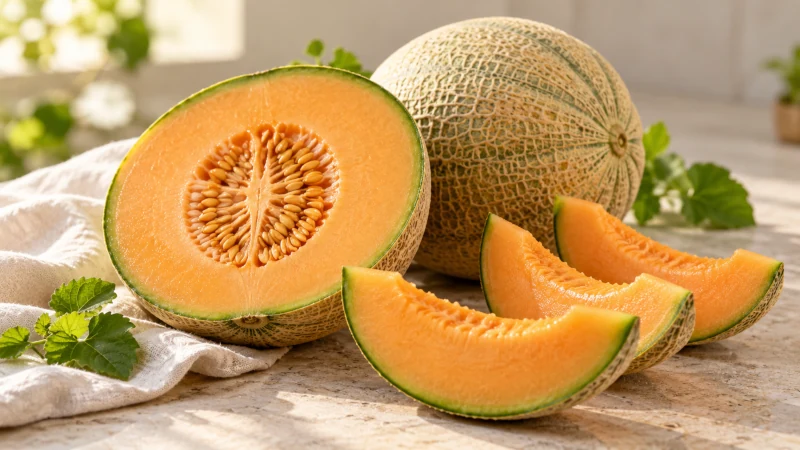
Muskmelon vs. cantaloupe: are they the same fruit?
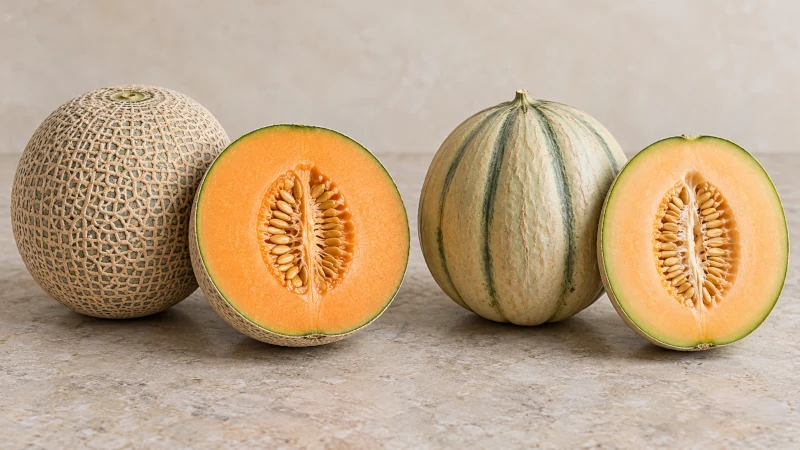
Mostly, yes. “Muskmelon” covers the many cultivated forms of Cucumis melo, a member of the gourd family alongside cucumbers and squash. The netted, orange-fleshed melon sold as cantaloupe in North American stores belongs to the reticulatus group, the classic muskmelon. The so-called true cantaloupe (C. melo var. cantalupensis), with ribbed, pale skin, is rarely grown in the U.S. [Oregon State University, 2010]
So when you see cantaloupe nutrition data, it describes the muskmelon most of us actually buy. Other muskmelons differ in their nutrient content, so treat the numbers below as specific to orange-fleshed cantaloupe.
Muskmelon nutrition at a glance
| Nutrient | Amount | Serving | Source |
| Calories | 34 kcal | 100 g (about ⅔ cup cubes) | [USDA FoodData Central, 2019] |
| Water | 90.2 g | 100 g | [USDA FoodData Central, 2019] |
| Total sugars (natural) | 7.9 g | 100 g | [USDA FoodData Central, 2019] |
| Fiber | 0.9 g | 100 g | [USDA FoodData Central, 2019] |
| Vitamin C | 29 mg (32% DV) | ½ cup | [NIH ODS, 2025] |
| Vitamin A (from beta-carotene) | 135 mcg RAE (15% DV) | ½ cup | [NIH ODS, 2025] |
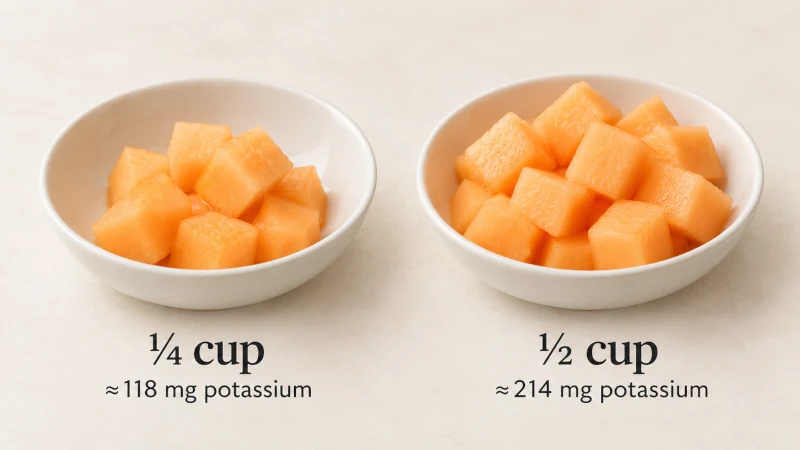
| Potassium | 214 mg (5% DV) | ½ cup, cubed | [NIH ODS, 2022] |
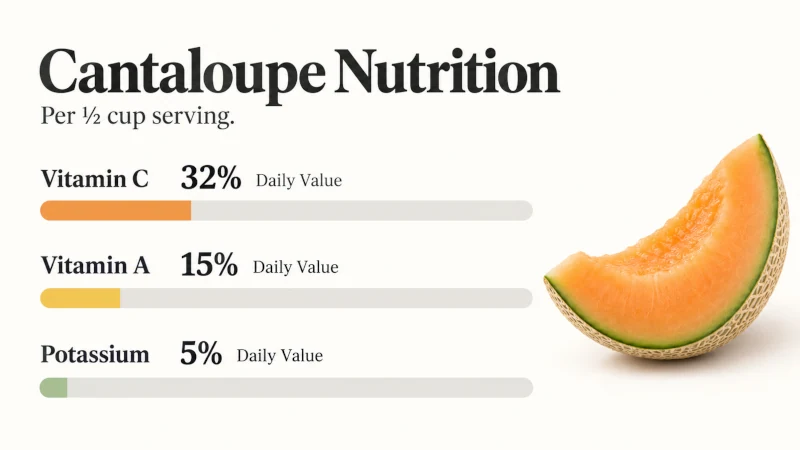
Double the half-cup figures for a full cup of cubes: roughly two-thirds of the Daily Value for vitamin C and about 30% for vitamin A, for around 55 calories.
Muskmelon health benefits, graded by evidence
It hydrates you for very few calories (well established)
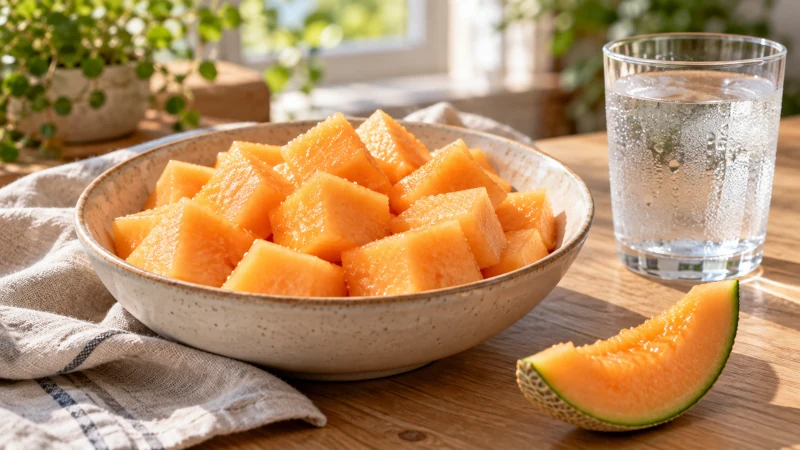
Cantaloupe is about 90% water by weight and has 34 calories per 100 grams [USDA FoodData Central, 2019]. That’s the honest core of the old “nothing quenches thirst like melon” line. A bowl of cubes adds fluid, a little potassium, and real sweetness for very little energy, which makes it a smart swap for desserts or sugary drinks on a hot day.
It doesn’t replace drinking water, and it isn’t a treatment for dehydration from vomiting or diarrhea. Those call for oral rehydration solutions and, if severe, medical care.
A good source of vitamin C (well established)
Half a cup supplies 29 mg of vitamin C, about 32% of the Daily Value, and NIH lists cantaloupe among good food sources alongside peppers, broccoli, and strawberries [NIH ODS, 2025]. A full cup gets an adult woman most of the way to her 75 mg daily target (men need 90 mg).
Your body uses vitamin C to build collagen, absorb iron from plant foods, and keep immune cells working normally [NIH ODS, 2025]. Getting enough matters; piling on more doesn’t add benefit. Because heat and storage break vitamin C down, raw, freshly cut melon is the best way to get it. Our guide to what vitamin C does and how much you need covers the details.
Beta-carotene your body turns into vitamin A (well established)
That orange color is beta-carotene, a provitamin A carotenoid. Half a cup provides 135 mcg RAE, roughly 15% of the Daily Value [NIH ODS, 2025]. Vitamin A keeps your eyes working in dim light, supports immune defenses, and is needed for normal growth and development.
Your body converts beta-carotene to vitamin A only as it needs it, so you can’t overdose on vitamin A by eating melon. Very high carotene intake can tint your skin yellow-orange, a harmless change that fades when you cut back [NIH ODS, 2025].
One distinction matters. Beta-carotene in food is not the same as high-dose beta-carotene pills. In two large trials, CARET and ATBC, high-dose beta-carotene supplements increased lung cancer risk in people who smoked [NIH ODS, 2025]. Eating cantaloupe carries no such warning. Our vitamin A guide explains the difference between food sources and supplements.
Potassium: a modest part of a heart-healthy pattern (indirect evidence)
Half a cup has 214 mg of potassium, about 5% of the Daily Value [NIH ODS, 2022]. That’s a modest amount. Where it helps is in combination: eating patterns rich in potassium from fruits and vegetables, such as the DASH diet, lower blood pressure, and the FDA permits a health claim that diets with potassium-rich, low-sodium foods may reduce the risk of high blood pressure and stroke [NIH ODS, 2022].
That evidence comes from overall diet and potassium intake, not from studies of cantaloupe itself. Think of melon as one contributor among many. Our potassium-rich foods chart shows how it compares with bigger sources.
Fiber and digestion: smaller than you’d expect (weak)
Cantaloupe has less than 1 gram of fiber per 100 grams [USDA FoodData Central, 2019], so a cup gives you about 1.5 grams. Muskmelon is often described as a laxative or a remedy for chronic constipation, but the fiber numbers don’t support that. If constipation is your concern, higher-fiber foods, enough fluid, and regular activity will do more, and persistent changes in bowel habits are worth raising with a clinician.
Claims about muskmelon that don’t hold up
| Claim you may read | What the evidence shows |
| Melon’s “living water” cleanses the kidneys and helps early kidney failure | No clinical evidence supports this. The water in fruit is ordinary water. For people with kidney disease, melon’s potassium can be a problem, not a help [National Kidney Foundation, 2023]. |
| It dissolves uric-acid kidney stones by “alkalizing” urine | No trials show melon dissolves stones. Potassium citrate, a prescribed supplement, has trial evidence for some calcium stones [NIH ODS, 2022], but that is a medication, not fruit. Stone prevention depends on stone type; ask a urologist. |
| It stops urinary tract infections | No evidence. Burning, urgency, fever, or back pain need medical evaluation, since UTIs often need antibiotics. |
| It treats gout and excess uric acid | No clinical evidence for melon specifically. Gout is managed with medication and diet guided by a clinician. |
| Eating melon after a meal “dilutes gastric juices” and disrupts digestion | There’s no good evidence that fruit timing harms digestion. Eat it when you like; if a large portion bloats you, try a smaller one. |
Who should be careful with muskmelon
People with kidney disease or on certain blood pressure drugs
This is the most important caution, and it runs opposite to the old claims. The National Kidney Foundation lists cantaloupe and honeydew among high-potassium fruits, meaning more than 200 mg per half-cup serving [National Kidney Foundation, 2023]. When kidneys can’t clear potassium well, even ordinary food amounts can push blood levels too high (hyperkalemia), which can cause muscle weakness, palpitations, and dangerous heart rhythms [NIH ODS, 2022]. ACE inhibitors, angiotensin receptor blockers (ARBs), and potassium-sparing diuretics also reduce potassium excretion [NIH ODS, 2022].
That doesn’t automatically put melon off-limits. NKF notes that many high-potassium foods can fit with planning; a quarter-cup of cantaloupe has about 118 mg [National Kidney Foundation, n.d.]. Your limit depends on your lab results, so check with your kidney dietitian. Our list of kidney-friendly foods for a CKD diet includes lower-potassium fruit swaps.
Pollen allergies and an itchy mouth
If raw melon makes your mouth itch or your throat feel scratchy, a pollen allergy may be the reason. The American College of Allergy, Asthma and Immunology lists melons among foods that cross-react with both grass and ragweed pollen [ACAAI, 2022]. Symptoms usually stay in the mouth and fade quickly.
Occasionally they don’t. In one study cited by ACAAI, about 9% of people with this syndrome developed symptoms beyond the mouth and 1.7% had anaphylaxis [ACAAI, 2022]. Many people with pollen-food allergy can eat the problem fruit cooked, but melon is rarely cooked, so skipping it raw is the usual fix. See an allergist if reactions keep happening.
Pregnancy, older adults, and weakened immunity
Melon is a nutritious food during pregnancy and breastfeeding. The concern is bacteria, not the fruit. CDC notes that melons are more likely than many fruits to carry Listeria because they’re low in acid and often refrigerated for a long time, and a 2011 multistate outbreak was traced to cantaloupe [CDC, 2024].
If you’re pregnant, 65 or older, or have a weakened immune system, CDC advises choosing melon that has just been cut and avoiding cut melon left out more than 2 hours (1 hour above 90°F) or kept in the refrigerator more than a week [CDC, 2025].
Diabetes and blood sugar
Nearly all of cantaloupe’s carbohydrate is natural sugar: about 8 grams per 100 grams, or roughly 12 to 13 grams in a cup of cubes [USDA FoodData Central, 2019]. That fits most diabetes meal plans when you count it like any other fruit. A measured cup is easier to plan around than half a melon, and whole fruit is a better pick than melon juice.
When to get medical help
- Call 911 or go to the emergency room for swelling of the lips, tongue, or throat, trouble breathing, or hives spreading across your body after eating melon [ACAAI, 2022].
- If you have kidney disease, get urgent care for muscle weakness, a racing or irregular heartbeat, or palpitations, which can signal high potassium [NIH ODS, 2022].
- If you’re pregnant and develop fever, muscle aches, or unusual tiredness, call your provider right away and mention any recalled food you ate [CDC, n.d.].
- Contact a clinician for vomiting, diarrhea, or fever after eating cut melon, especially if you’re in a higher-risk group [FDA, 2024].
- See a clinician for urinary burning, fever, or back pain rather than trying to treat it with food.
How to choose, prepare, and store muskmelon safely
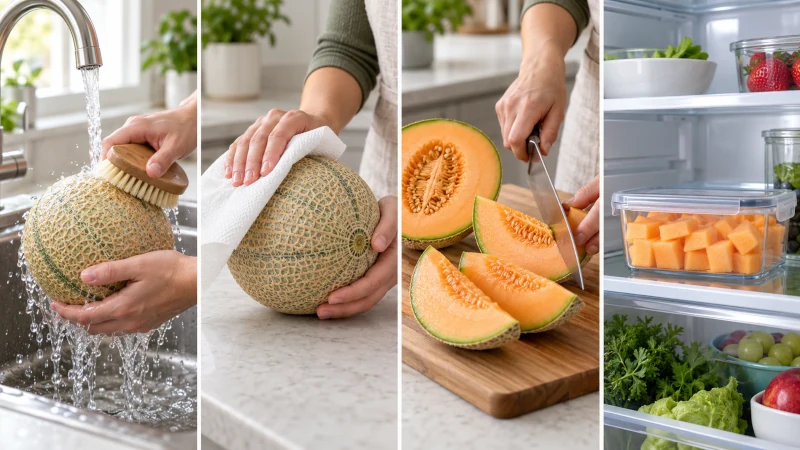
- Buy undamaged fruit. Skip bruised or broken melons, and buy pre-cut melon only if it’s refrigerated or on ice [FDA, 2024].
- Wash your hands, then scrub the rind. Even though you don’t eat the rind, a knife carries surface bacteria into the flesh. Scrub the melon under running water with a clean produce brush, then dry it. Don’t use soap or produce wash [FDA, 2024].
- Refrigerate cut melon promptly at 40°F or below [FDA, 2024], and eat it within a week. Toss cut melon left out more than 2 hours, or 1 hour on a hot day [CDC, 2025].
- Eat it fresh. Cubes, wedges, fruit salad, or blended into a smoothie all keep the vitamin C. Jams and preserves add sugar and lose much of the vitamin C to heat [NIH ODS, 2025].
| HEALTH DISCLAIMER: This article is for general educational purposes only and is not a substitute for professional medical advice, diagnosis, or treatment. Muskmelon is a food, not a medicine, and nothing here is a recommendation to treat or prevent any condition with it. If you have chronic kidney disease, take medicines that affect potassium (such as ACE inhibitors, ARBs, or potassium-sparing diuretics), have diabetes, food allergies, or a weakened immune system, or are pregnant or breastfeeding, talk with your doctor or a registered dietitian about how melon fits your diet. Seek emergency care for signs of a severe allergic reaction. |
Frequently Asked Questions
Is muskmelon the same as cantaloupe?
Largely. The netted, orange cantaloupe sold in North America is a muskmelon from the reticulatus group of Cucumis melo. The European “true” cantaloupe is a different, ribbed variety that is rarely grown in the U.S. [Oregon State University, 2010]
Is it okay to eat muskmelon every day?
For most healthy people, yes. A cup a day adds fluid, vitamin C, and vitamin A for about 55 calories. The main exception is advanced kidney disease or potassium-raising medicines, where portions should follow your care team’s advice [National Kidney Foundation, 2023].
Is muskmelon good for your kidneys?
It isn’t a kidney treatment. Healthy kidneys handle its potassium easily, but NKF classifies cantaloupe as a high-potassium fruit, so people with CKD may need to limit portions [National Kidney Foundation, 2023].
Can people with diabetes eat muskmelon?
Yes, counted like any fruit. A cup of cubes has roughly 12 to 13 grams of natural sugar [USDA FoodData Central, 2019]. Whole fruit in a measured portion is easier to plan around than juice.
Is muskmelon safe during pregnancy?
Yes, with good food-safety habits. Eat freshly cut melon, and avoid cut melon left out more than 2 hours or refrigerated more than a week, because of Listeria risk [CDC, 2025].
Why does melon make my mouth itch?
Usually pollen food allergy syndrome: proteins in raw melon resemble grass and ragweed pollen. It’s often mild, but see an allergist, and get emergency care for throat swelling or trouble breathing [ACAAI, 2022].
References
- U.S. Department of Agriculture, Agricultural Research Service. View source
- National Institutes of Health, Office of Dietary Supplements. Vitamin A and Carotenoids: Fact Sheet for Health Professionals. View source
- National Institutes of Health, Office of Dietary Supplements. Vitamin C: Fact Sheet for Health Professionals. View source
- National Institutes of Health, Office of Dietary Supplements. Potassium: Fact Sheet for Health Professionals. View source
- National Kidney Foundation. Potassium in Your CKD Diet. View source
- National Kidney Foundation. Can You Eat High Potassium Fruits and Vegetables on a Low-Potassium Diet? View source
- Centers for Disease Control and Prevention. Preventing Listeria Infection. View source
- Centers for Disease Control and Prevention. How Listeria Spread: Sprouts and Melons. View source
- Centers for Disease Control and Prevention. Protect Your Pregnancy from Listeria View source
- U.S. Food and Drug Administration. Selecting and Serving Produce Safely. View source
- American College of Allergy, Asthma and Immunology. Pollen Food Allergy Syndrome. View source
- Oregon State University, Department of Horticulture. View source


