Natural Health Message — Herbs, Remedies & Nutrition for Whole-Body Wellness.
  • Health Conditions
    • Cancer & Prevention
    • Cardiovascular Health
    • Digestive Health
    • Eye & Vision
    • Immune & Infections
    • Metabolic Health
    • Musculoskeletal Health
    • Nervous System
    • Reproductive Health
    • Respiratory Health
    • Skin Health
    • Urinary Health
  • Nutrition
    • Diet
    • Foods
    • Recipes
  • Remedies
    • Alternative Treatments
    • Herbal Remedies
    • Herbs
    • Lifestyle & Habits
  • Supplements and Reviews
    • General Supplements
    • Minerals
    • Nitric Oxide
    • Reviews
    • Vitamins
Home | Skin Health | How To Treat Dermatitis
Skin Health

How To Treat Dermatitis

by Donald Rice Updated: November 11, 2024
written by Donald Rice Published: December 9, 2020Updated: November 11, 2024
Naturalhealthmessage.com receives compensation from some of the companies, products, and services listed on this page. Advertising Disclosure
0FacebookTwitterPinterestTumblrVKWhatsappEmail
1.8K

Before we learn how to treat dermatitis, let us delve more into this condition. Dermatitis, frequently referred to as eczema, is an inflammation of the skin. Such disorders may result from an inborn sensitivity (inherited), exposure to some agent, or emotional stress. Thus, skin diseases have many causes and take many forms. Only the more familiar will be discussed.

The common characteristics of dermatitis are reddening, swelling, blistering, oozing, crusting, and itching. Depending on the condition, there may also be scaling and changes in skin color or pigments.

How to Treat Dermatitis: Atopic

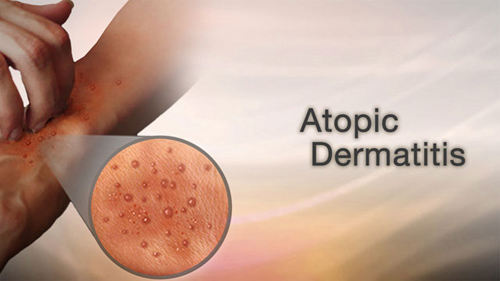
This disorder is an inflammation of the skin resulting from an inherited hypersensitivity. Seventy-five percent of sufferers have relatives who are troubled with asthma, hay fever, and hives. While it may arise at any age, it is most likely to occur during infancy and childhood.
how to treat dermatitis

The disorder varies in intensity from time to time. In infants, it affects the face and outer surfaces of the arms and legs: In children, it usually affects the skin on the arms and legs’ inner surface. From adolescence onward, the lesions tend to be drier with the formation of plaques, especially in the arms and legs’ skinfolds, on the neck, face, hands, and crotch.

At all ages scratching further aggravates the situation. The problem tends to become less severe as one gets older. Several factors may provoke or intensify atopic dermatitis.

These include marked temperature changes (cold, weather, heat, and humidity), profuse sweating (from vigorous physical activity), exposure to certain chemicals (grease, solvents, detergents), excessive clothing (especially woolen and coarse-textured garments), psychological stress, and allergens. In general, food allergies and pollen carried in the air are not related to the disorder.
hands preparing dermatitis cream for distribution over the skins affected areas
how to treat dermatitis

Since there is no cure, you must avoid anything that will trigger an episode while treatment is directed toward relieving the symptoms. Itching causes scratching, and scratching intensifies the itching, aggravates the lesions, and encourages infections.

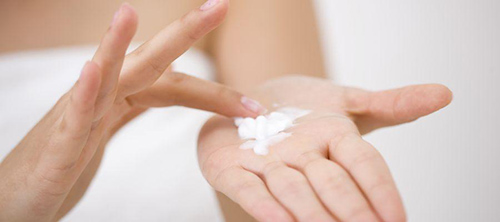
Wet dressings help to clean the lesions and reduce itching while the eczema is wet and oozing. Bathing and soap may intensify the problem. Cleansing creams may be used instead. Constant lubrication with a soothing cream or ointment is a necessity. When washing clothes and bedsheets, avoid detergents, use a mild soap, and thoroughly rinse it.

A physician will instruct you on how to cleanse and care for your lesions. Cortisone ointments and purified tar preparations with cautious ultraviolet light exposure will reduce both the itching and the inflammation. In severe cases, oral antihistamines and steroids may sometimes be recommended. An appropriate antibiotic will control secondary infection.

How to Treat Dermatitis: Contact

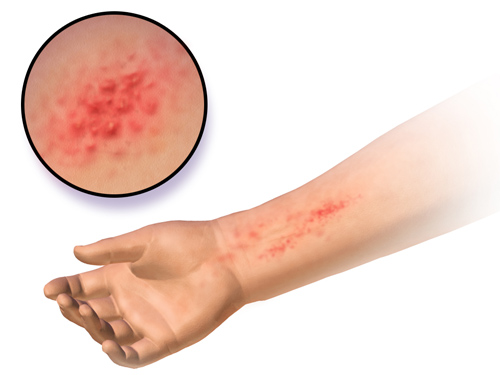
As the name suggests, contact dermatitis is an acute inflammatory eruption resulting from direct contact with an irritant material or to some substance to which an acquired sensitivity (allergy) has developed.
How to treat contact dermatitis
how to treat dermatitis
  • Irritant dermatitis can occur from many commonly used agents, including detergents, bleaches, toilet bowl cleaners, strong alkalis and acids, furniture polishes, aerosols, swimming pool disinfectants, adhesive bandages, rubber gloves, elastic components in stretch garments, industrial solvents, and oils.
  • Allergic dermatitis results from a sensitivity to a substance developed from previous exposure. Almost 75 percent of the population reacts to contact with poison ivy and poison oak. One can acquire a sensitivity to virtually any substance: the dyes in leather, the elastic in garments, fingernail polishes, and metals in jewelry, such as nickel.

    Dermatitis from irritants causes reddening, blistering, drying, and cracking. Painful fissures and ulcers may develop. Itching, if present, is mild. You have become sensitive in response to a substance; the skin becomes red and small to large blisters, eventually breaking, oozing, and weeping. The eyes and face may be puffy. The itching may be intense. As healing occurs, the lesions will dry and crust. Allergies to metals develop slowly and cause itching, scaling, and redness.

Try to avoid contact with any substance to which you respond adversely. Try a patch test to determine whether you will react to a substance. Put a drop or a tiny amount of the material on a very small piece of gauze, contact the skin of your abdomen or inner thigh, cover the gauze with wax paper, and attach it with adhesive tape.

Leave it in place for forty-eight hours unless itching and irritation occur earlier, at which point it should be removed. If you do not react, the substance is likely safe to use.

Your physician may be able to do sensitivity tests for things you have become allergic to. Careful observation of the circumstances under which you develop dermatitis will significantly aid your doctor in recognizing the offending materials.
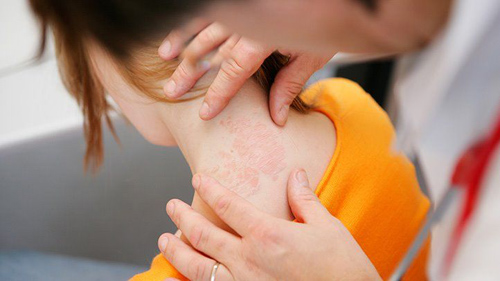
How To Treat Dermatitis 3
how to treat dermatitis

For irritant dermatitis, protect yourself from exposure. Wear cotton gloves inside rubber gloves when doing dishes or other chores in which your hands might come into contact with an irritant. Should you become exposed, wash the material off as quickly as possible. For poison oak or ivy exposure, use soap to remove the waxy or resinous toxic material, and thoroughly wash all clothes.

Many procedures for treating contact dermatitis are similar to those discussed under atopic dermatitis. Wet dressings, mild ointments, and calamine lotion should reduce itching and bring relief.

Your physician can test for agents to which you might have become sensitive. Steroid ointments and antihistamines may be recommended depending on the severity of the inflammation. An appropriate antibiotic will care for a secondary infection.

DISCLAIMER: All content on this website is presented solely for educational and informational objectives. You should not rely on the information provided as a replacement for advice, diagnosis, or treatment from a qualified medical expert. If you are pregnant, nursing, or have any preexisting medical concerns, you should talk to your doctor before using any herbal or natural medicines.

REFERENCES
  1. Hardinge, Mervyn G and Harold Shryock. “Family Medical Guide.” Hardinge, Mervyn G and Harold Shryock. Family Medical Guide. Ed. Marvin Moore and Bonnie Tyson-Flynn. Vol. three. Oshawa; Washington, D.C.; Hagerstown: Pacific Press Publishing Association; Review and Herald Publishing Association, 1999. Three vols. 242, 244, 245, 246. Print. [how to treat dermatitis]
  2. National Institute of Arthritis and Musculoskeletal and Skin Diseases: https://www.niams.nih.gov/
  3. American Academy of Dermatology: https://www.aad.org/

Related posts:

  1. 10 Best Foods for Eczema
  2. The Top 15 Foods That Cause Allergies That Should Be Limited or Avoided
  3. Want Clear Skin? Avoid These 6 Foods That Cause Acne
  4. The Top 4 Foods to Avoid with Psoriasis
How to treat contact dermatitis on faceHow to treat dermatitis on faceHow to treat dog dermatitis at homeHow to treat seborrheic dermatitisbest cream for dermatitis on handscontact dermatitis treatmentdermatitis treatment creamhow to cure eczema permanentlyhow to get rid of contact dermatitis fasthow to treat dermatitis on handsirritant contact dermatitistypes of dermatitis
0 FacebookTwitterPinterestTumblrVKWhatsappEmail
Donald Rice
Donald Rice

Donald Rice is a natural health advocate and health writer focused on nutrition, wellness, and alternative health education. He creates clear, research-based content designed to help readers better understand health topics through reputable sources, including peer-reviewed studies, academic institutions, government health agencies, and established medical organizations.

previous post
The Dangers of Smokeless Tobacco: What the Evidence Really Shows
next post
Natural Asthma Relief

You may also like

10 Game-Changing Benefits of Patch Testing: Uncover Hidden Triggers and Heal Your Skin

Updated: May 16, 2026

Vitamins for Age Spots: Important Facts You Should Know

Updated: May 16, 2026

How to Stop Alopecia Areata from Spreading

Updated: May 16, 2026

Top Plants and Herbs for Skin Issues: Over 100 Amazing Herbs To Choose...

Updated: May 16, 2026

Discover 7 Amazing Anti-Aging Foods For A Youthful Glow and Vibrant Health

Updated: March 27, 2025

Fungal Infections of The Skin

Updated: November 11, 2024
Best Health and Wellness Blogs - OnToplist.com

Recent Posts

  • Best Exercises for Flat Feet in Adults

  • What Are Flat Feet? Causes, Types, and Common Symptoms

  • Flat Feet and Fallen Arches: Causes, Symptoms, and What Helps

  • Cardiovascular and Pulmonary Disease: What Every Patient Should Know

  • Acerola Cherry Supplements: 7 Important Things to Look for Before You Buy

Random Articles

15 Organic Ways to Boost Your Energy Levels
Fennel Health Benefits: Excellent Invigorator and Cathartic
Rosemary Oil for Beard Growth: Miracle Solution or Myth? Explore the Facts

The Damiana Plant Health Benefits

Recent Articles

Explore the Wonders of Pasque Flower
The Female Fern Plant: Your ultimate resource for natural wellness
Tea Plant Health Benefits

Featured

Hyssop Plant: From Ancient Medicine to Modern Wellness
9 Fantastic Heart Healthy Foods That Prevent Stroke
Ground Cherry Plant: Research Suggests Reduced Joint Pain and Swelling: Top 3 Ways To Utilize This Plant

@2024 – All Right Reserved. Natural Health Message.

  • About Us
  • Contact Us
  • Advertising Disclosure
  • Medical Advice Disclaimer
We use cookies on our website to give you the most relevant experience by remembering your preferences and repeat visits. By clicking “Accept All”, you consent to the use of ALL the cookies. However, you may visit "Cookie Settings" to provide a controlled consent.
Cookie SettingsAccept All
Manage consent

Privacy Overview

This website uses cookies to improve your experience while you navigate through the website. Out of these, the cookies that are categorized as necessary are stored on your browser as they are essential for the working of basic functionalities of the website. We also use third-party cookies that help us analyze and understand how you use this website. These cookies will be stored in your browser only with your consent. You also have the option to opt-out of these cookies. But opting out of some of these cookies may affect your browsing experience.
Necessary
Always Enabled
Necessary cookies are absolutely essential for the website to function properly. These cookies ensure basic functionalities and security features of the website, anonymously.
CookieDurationDescription
cookielawinfo-checkbox-analytics11 monthsThis cookie is set by GDPR Cookie Consent plugin. The cookie is used to store the user consent for the cookies in the category "Analytics".
cookielawinfo-checkbox-functional11 monthsThe cookie is set by GDPR cookie consent to record the user consent for the cookies in the category "Functional".
cookielawinfo-checkbox-necessary11 monthsThis cookie is set by GDPR Cookie Consent plugin. The cookies is used to store the user consent for the cookies in the category "Necessary".
cookielawinfo-checkbox-others11 monthsThis cookie is set by GDPR Cookie Consent plugin. The cookie is used to store the user consent for the cookies in the category "Other.
cookielawinfo-checkbox-performance11 monthsThis cookie is set by GDPR Cookie Consent plugin. The cookie is used to store the user consent for the cookies in the category "Performance".
viewed_cookie_policy11 monthsThe cookie is set by the GDPR Cookie Consent plugin and is used to store whether or not user has consented to the use of cookies. It does not store any personal data.
Functional
Functional cookies help to perform certain functionalities like sharing the content of the website on social media platforms, collect feedbacks, and other third-party features.
Performance
Performance cookies are used to understand and analyze the key performance indexes of the website which helps in delivering a better user experience for the visitors.
Analytics
Analytical cookies are used to understand how visitors interact with the website. These cookies help provide information on metrics the number of visitors, bounce rate, traffic source, etc.
Advertisement
Advertisement cookies are used to provide visitors with relevant ads and marketing campaigns. These cookies track visitors across websites and collect information to provide customized ads.
Others
Other uncategorized cookies are those that are being analyzed and have not been classified into a category as yet.
SAVE & ACCEPT
Natural Health Message — Herbs, Remedies & Nutrition for Whole-Body Wellness.
  • Health Conditions
    • Cancer & Prevention
    • Cardiovascular Health
    • Digestive Health
    • Eye & Vision
    • Immune & Infections
    • Metabolic Health
    • Musculoskeletal Health
    • Nervous System
    • Reproductive Health
    • Respiratory Health
    • Skin Health
    • Urinary Health
  • Nutrition
    • Diet
    • Foods
    • Recipes
  • Remedies
    • Alternative Treatments
    • Herbal Remedies
    • Herbs
    • Lifestyle & Habits
  • Supplements and Reviews
    • General Supplements
    • Minerals
    • Nitric Oxide
    • Reviews
    • Vitamins