
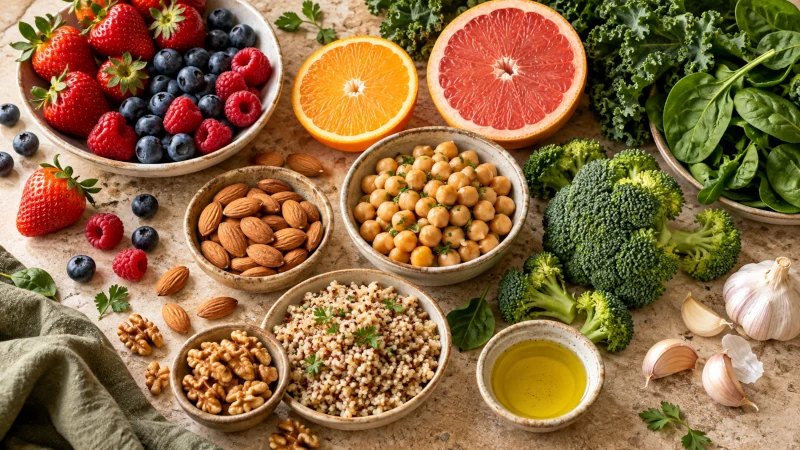
No food stops the clock. What food can do is shift the odds that you reach your 70s and beyond with your heart, mind, and mobility in good shape — and the evidence for that is stronger than most superfood lists let on. The catch is that it comes from your overall way of eating, not from one miracle ingredient. So the best anti-aging foods turn out to be ordinary ones you can eat most days: fruits, vegetables, whole grains, nuts, legumes, and healthy fats. Below is what the research shows for each food on the classic list, where the old claims went too far, and how to build a plate that ages well.
Why we age, and where food fits
Aging isn’t one switch. The National Institute on Aging describes it as several overlapping biological processes: damage from oxidative stress, cells that stop dividing but keep releasing harmful signals (senescence), shifts in how genes are turned on, wear and tear on proteins, and a slowly changing immune system. Aging is also the single biggest risk factor for most chronic diseases [NIA]. Genetics sets part of the pace of natural aging, and nothing you eat changes that [AAD, 2021].
Many anti-aging articles, including earlier versions of this one, put free radicals at the center of the story. Oxidative damage is real, but it’s one piece of a bigger picture — and the idea that you can slow aging by loading up on antioxidants hasn’t survived testing in pill form (more on that below). Food seems to work more broadly: through fiber, healthier fats, lower blood pressure, steadier weight, and the mix of plant compounds that comes packaged in whole foods.
The eating pattern most linked to healthy aging
The strongest evidence on food and aging comes from a 2025 study that followed 105,015 U.S. nurses and health professionals for up to 30 years. The researchers defined “healthy aging” demandingly: reaching age 70 free of 11 major chronic diseases, with cognitive, physical, and mental health intact. Only 9.3% made it. People whose diets scored highest on the Alternative Healthy Eating Index had 86% higher odds of healthy aging than those who scored lowest [Tessier et al., 2025].
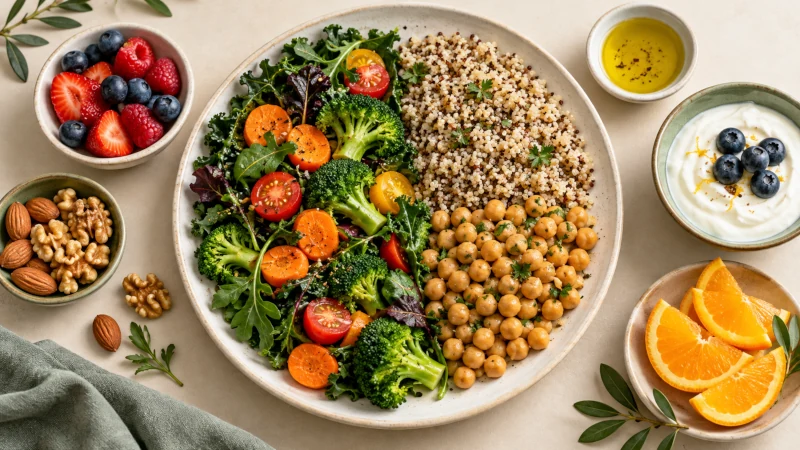
The foods tied to better odds were fruits, vegetables, whole grains, unsaturated fats, nuts, legumes, and low-fat dairy. Trans fats, sodium, sugary drinks, and red and processed meats pointed the other way [Tessier et al., 2025]. This was an observational study, so it shows a strong association rather than proof of cause, and some measures were self-reported. Still, it lines up closely with the American Heart Association’s guidance — produce, whole grains, healthy proteins, and unsaturated fats, with less ultraprocessed food, added sugar, sodium, and alcohol [AHA, 2026] — and with the same pattern that protects your blood vessels, covered in our guide to foods that clear arteries.
One thing that pattern isn’t: strictly vegan. Low-fat dairy sat on the helpful side of the ledger. Plant-forward is the point; you don’t have to cut out entire food groups.
Evidence at a glance
| Food or approach | What the evidence shows | Strength |
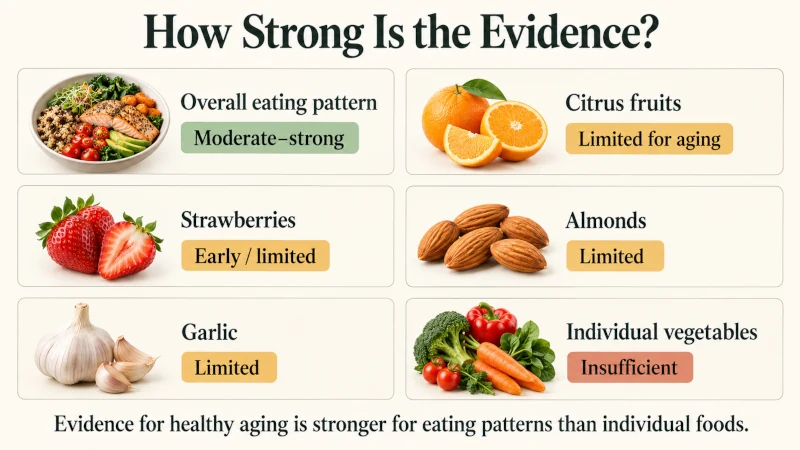
| Overall pattern: fruits, vegetables, whole grains, nuts, legumes, unsaturated fats | Higher odds of healthy aging over up to 30 years | Moderate–strong (large cohorts; consistent with heart guidance) |
| Citrus fruits | Rich in vitamin C, which the body needs to make collagen | Limited for aging itself |
| Strawberries | One small 12-week pilot trial: fewer memory “intrusion” errors; most tests unchanged | Early / limited |
| Almonds | One 24-week trial: wrinkle severity down about 16% in postmenopausal women | Limited (single small, industry-funded trial) |
| Garlic | Supplements may slightly lower blood pressure and cholesterol | Limited; no aging outcomes |
| Onions, artichokes, celery | Healthy vegetables; little or no direct aging evidence | Insufficient |
| Antioxidant supplements | No reduction in deaths; beta-carotene and vitamin E linked to slightly higher mortality | Strong evidence against |
Anti-aging foods worth eating more often
Here’s the classic list, food by food, with the hype stripped out.
Citrus fruits
Oranges, grapefruit, and their relatives are among the best sources of vitamin C, an antioxidant your body also needs to make collagen — the protein that gives skin its structure and helps wounds heal [NIH ODS, 2021]. A large survey-based study of middle-aged American women linked higher vitamin C intake with a less wrinkled appearance [Cosgrove et al., 2007], but that kind of study can’t separate vitamin C from everything else that comes with a produce-rich diet.
Earlier versions of this page credited citrus with plenty of beta-carotene. Orange and dark-green vegetables do far more of that work; see our guide to the best sources of vitamin A. If you take a statin or blood-pressure drug, check the grapefruit note in the safety section before you stock up.
Strawberries and other berries
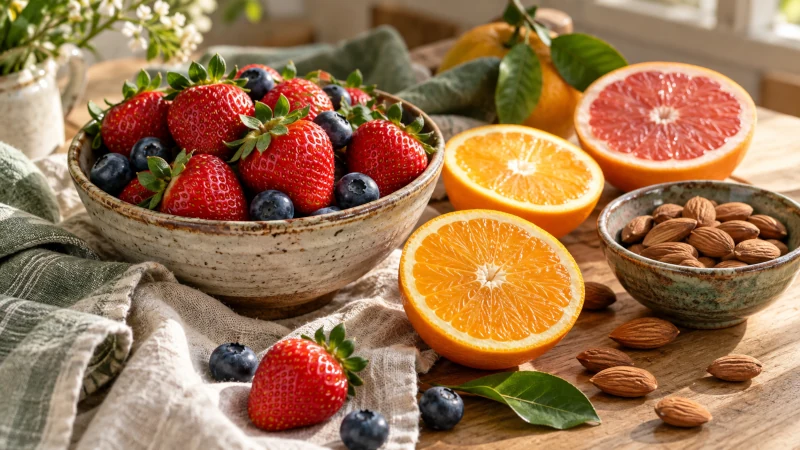
Strawberries supply vitamin C [NIH ODS, 2021] along with anthocyanins, the pigments behind their color. The brain claims rest on early work. In a 12-week pilot trial, 30 adults aged 50 to 65 with mild memory complaints took strawberry powder equal to about a cup of fresh berries a day, or a look-alike placebo. The strawberry group made fewer memory “intrusion” errors and reported fewer depressive symptoms, but showed no change in executive function, verbal or visual memory, or blood-sugar markers [Krikorian et al., 2023]. The California Strawberry Commission funded the study. Promising, small, and worth enjoying — not a memory treatment.
Almonds and other nuts
Almonds are one of the best food sources of vitamin E [NIH ODS, Vitamin E], and nuts as a group sit firmly on the healthy-aging side of the long-term data [Tessier et al., 2025]. The skin claim comes from one trial: 49 postmenopausal women with fair skin who finished 24 weeks of either almonds (20% of daily calories) or a calorie-matched snack. In the almond group, wrinkle severity fell about 16% and facial pigment intensity about 20%; the control group didn’t change [Rybak et al., 2021]. The Almond Board of California paid for it, the group was small and narrow, and the control snacks weren’t matched for fat or sugar.
A fair takeaway: a daily handful of nuts is a smart swap for chips or sweets, and smoother skin is a possible bonus rather than a promise. Nuts are calorie-dense, so the swap matters more than the addition.
Garlic and onions
Garlic has a long reputation and a short list of proven effects. Garlic supplements may lower cholesterol a little in people with high cholesterol and may lower blood pressure slightly in people with hypertension [NCCIH, 2025]. There’s no good human evidence that garlic slows aging, boosts collagen, or prevents Alzheimer’s, so those claims are gone from this page. Cook with it freely; treat concentrated supplements with the caution described below.
Onions follow a similar script: useful, flavorful, and rich in plant compounds, with mostly small or indirect benefits in human studies. Our evidence review of the benefits of eating onions goes through each claim.
Artichokes and the rest of the vegetable drawer
Artichokes are a good vegetable to rotate in. The bigger claims attached to them — reversing skin roughness, switching on “anti-aging genes” — come mostly from concentrated extracts and lab work, and we couldn’t find human trials showing that eating artichokes changes how you age. The same goes for celery, which older articles called a “blood purifier”; your kidneys and liver handle that job without help. What the long-term data reward is variety and volume across vegetables, not any single one.
Can anti-aging foods help your skin?
Some, a little. Dermatologists say eating plenty of fresh fruits and vegetables may help prevent skin damage, and that diets heavy in sugar and refined carbohydrates may speed up aging — while noting those findings come from only a few studies [AAD, 2021]. The almond and vitamin C research above fits that modest picture.
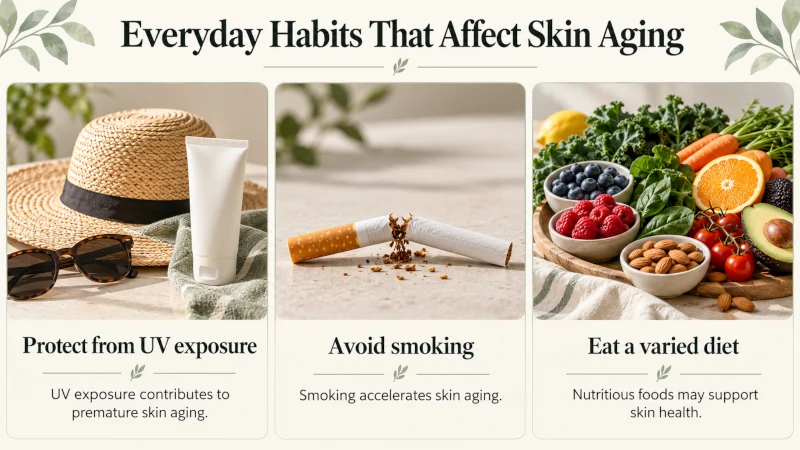
Sun matters much more. The American Academy of Dermatology says the sun plays a major role in premature skin aging and that smoking greatly speeds it up [AAD, 2021]. So the most effective anti-aging habit for your face is daily sun protection, with food in a supporting role. If dark spots are your main concern, our guide to vitamins for age spots explains which treatments actually fade them.
Why antioxidant pills aren’t a shortcut
If antioxidants in food are good, concentrated antioxidants should be better. That logic was tested — and it failed. A Cochrane review pooling 78 randomized trials and 296,707 people found no evidence that antioxidant supplements prevent death, in healthy people or in people with various diseases. Beta-carotene and vitamin E supplements were linked to slightly higher mortality, higher-dose vitamin A may be too, and vitamin C and selenium showed no effect either way [Bjelakovic et al., Cochrane Review CD007176].
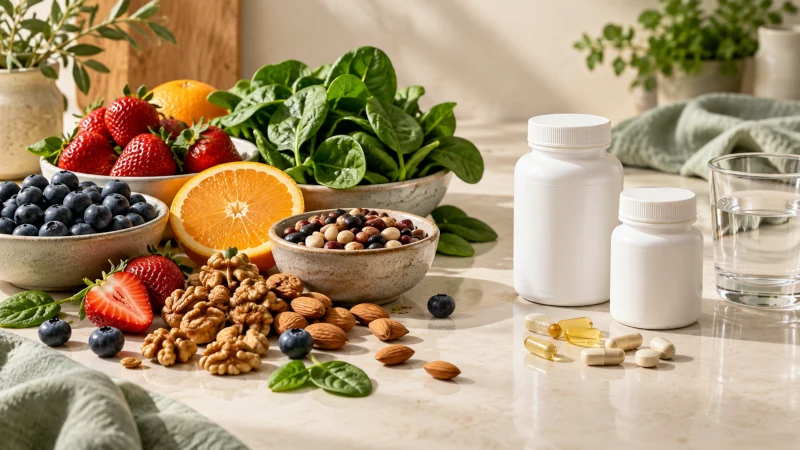
That’s why getting these nutrients from whole foods beats anti-aging capsules. Our evidence-graded guide to cancer-protective foods reaches the same conclusion for cancer risk.
Habits that work alongside food
Food does its best work next to a few other habits. The American Academy of Dermatology’s list for slowing premature aging includes quitting smoking, drinking less alcohol, and exercising most days, alongside a balanced diet [AAD, 2021]. Tobacco in any form works against everything else on this page — that includes chew and dip, as our review of the dangers of smokeless tobacco lays out.
You may see advice to “detox” with diuretic foods, bile-boosting vegetables, or deliberate sweating. There’s no good evidence that any of these remove aging-related waste. Drink enough water, eat enough fiber to stay regular, and let your liver and kidneys do their jobs.
Safety: interactions and who should be careful
Whole foods in normal amounts are safe for most people. The exceptions are worth knowing:
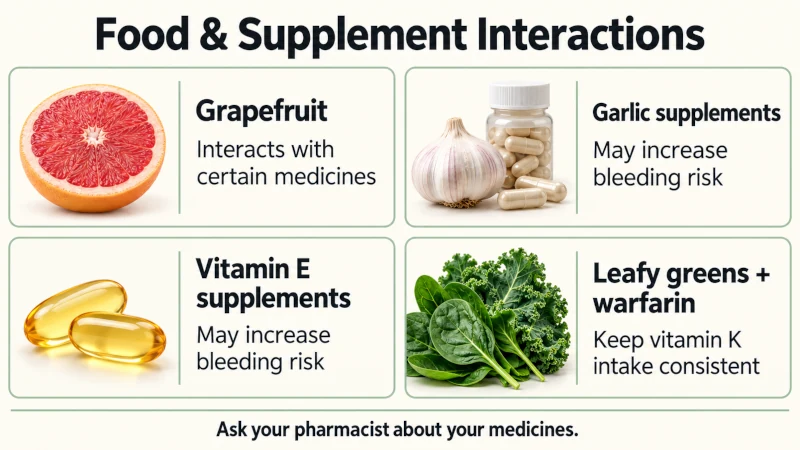
- Grapefruit and some citrus. Grapefruit juice can change blood levels of certain statins, blood-pressure drugs such as nifedipine, transplant drugs, and others; Seville oranges, pomelos, and tangelos can do the same. Ask your pharmacist whether your specific medicine is affected [FDA, 2021].
- Garlic supplements. They may raise bleeding risk, so tell your clinician before surgery or if you take anticoagulants or aspirin. Garlic in amounts above what’s in food may not be safe during pregnancy or breastfeeding. Side effects include breath and body odor, gas, nausea, and occasional allergy [NCCIH, 2025].
- Vitamin E supplements. They can increase bleeding risk with anticoagulant or antiplatelet drugs such as warfarin [NIH ODS, Vitamin E]. Almonds as food are a different matter.
- Warfarin and leafy greens. If you take warfarin, keep your vitamin K intake roughly the same day to day rather than avoiding greens; sudden changes can cause bleeding or clots [NIH ODS, Vitamin K].
- High-dose vitamin C. The adult upper limit is 2,000 mg a day from all sources; too much can cause diarrhea, nausea, and cramps, may worsen iron overload in hemochromatosis, and may interact with chemotherapy and radiation [NIH ODS, 2021].
- Nut allergy. If you’re allergic to tree nuts, skip the almond advice entirely; seeds and legumes can fill the gap.
Talk to a doctor, pharmacist, or registered dietitian before making big changes if you’re pregnant or breastfeeding, take prescription medication (especially blood thinners, statins, or blood-pressure drugs), have a chronic condition, or are thinking about anti-aging supplements.
When to see a doctor
Don’t write off new symptoms as “just getting older.” For skin, see a board-certified dermatologist promptly if you notice a new spot, a spot that looks different from your others, or one that changes, itches, or bleeds. Use the ABCDEs as a guide: Asymmetry, uneven Border, several Colors, a Diameter larger than a pencil eraser, and Evolving size, shape, or color [AAD, ABCDEs]. Diet can’t treat any of these.
| HEALTH DISCLAIMER: This article is for general education only. It is not medical advice and does not replace diagnosis or treatment from a qualified healthcare professional. No food, supplement, or diet can stop or reverse aging, and none should be used in place of prescribed treatment. If you are pregnant or breastfeeding, take prescription medication, have a chronic health condition, or are considering anti-aging supplements, talk with your doctor or pharmacist first. Do not start, stop, or change any medication based on this page. |
Frequently Asked Questions
What is the single best anti-aging food?
There isn’t one. The strongest long-term evidence points to an overall pattern — fruits, vegetables, whole grains, nuts, legumes, and unsaturated fats, with less processed meat, sodium, trans fat, and sugary drinks — rather than any hero food [Tessier et al., 2025].
Can food reverse wrinkles?
Not reverse, and only modestly improve at best. One small industry-funded trial found about a 16% drop in wrinkle severity after 24 weeks of daily almonds [Rybak et al., 2021]. Daily sun protection and not smoking do far more for skin aging [AAD, 2021].
Are anti-aging supplements worth it?
Antioxidant supplements haven’t lowered death rates in trials, and beta-carotene and vitamin E were linked to slightly higher mortality [Bjelakovic et al., Cochrane Review CD007176]. Food sources are the better bet.
Do I need to go vegan to age well?
No. The diet pattern most tied to healthy aging is plant-forward but also included low-fat dairy among the helpful foods [Tessier et al., 2025]. Shifting your plate toward plants matters more than eliminating food groups.
How soon will eating better make a difference?
The healthy-aging findings reflect decades of eating habits, so think long term. Smaller effects, such as the skin and memory changes in the almond and strawberry trials, appeared within 12 to 24 weeks [Rybak et al., 2021] [Krikorian et al., 2023].
References
- National Institute on Aging. Aging Strategic Directions — Goal A: Better understand the biology of aging and its impact on the prevention, progression, and prognosis of disease and disability. View source
- Tessier AJ, et al. Optimal dietary patterns for healthy aging. View source
- American Heart Association. The American Heart Association Diet and Lifestyle Recommendations. View source
- Bjelakovic G, Nikolova D, Gluud LL, Simonetti RG, Gluud C. Antioxidant supplements for prevention of mortality in healthy participants and patients with various diseases. View source
- Rybak I, Carrington AE, Dhaliwal S, et al. Prospective randomized controlled trial on the effects of almonds on facial wrinkles and pigmentation. Nutrients. View source
- Krikorian R, Shidler MD, Summer SS. Early intervention in cognitive aging with strawberry supplementation. Nutrients. View source
- Cosgrove MC, et al. Dietary nutrient intakes and skin-aging appearance among middle-aged American women. View source
- National Center for Complementary and Integrative Health. Garlic: Usefulness and Safety. View source
- U.S. Food and Drug Administration. Grapefruit Juice and Some Drugs Don’t Mix. View source
- American Academy of Dermatology. 11 ways to reduce premature skin aging. View source
- American Academy of Dermatology. What to look for: ABCDEs of melanoma. View source
- NIH Office of Dietary Supplements. Vitamin C — Fact Sheet for Consumers. View source
- NIH Office of Dietary Supplements. Vitamin E — Fact Sheet for Consumers. View source
- NIH Office of Dietary Supplements. Vitamin K — Fact Sheet for Consumers. View source


