The health benefits of honey are real but limited: honey may soothe a short-term cough in people older than 1 year, and medical-grade honey dressings may help in selected wound-care settings. Honey is also a concentrated source of sugar. It should not be treated as a cure-all, a daily supplement that everyone needs, or a replacement for medical care. [NICE, 2019] [Cochrane, 2018] [Cochrane, 2015]
Honey is made when bees collect flower nectar and transform it into a thick mixture of sugars, water, and smaller amounts of other compounds. Its flavor and color vary with the floral source. That variety can make honey enjoyable as a food. It does not turn ordinary honey into a proven treatment for a long list of health problems.
Honey is still a concentrated source of sugar
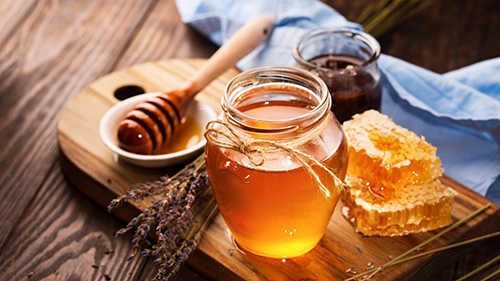
A tablespoon of honey is small, but it is not nutritionally minor. In the U.S. Food and Drug Administration example label for a single-ingredient honey product, one tablespoon (21 grams) contains 60 calories and 17 grams of added sugars. That equals 34% of the Daily Value for added sugars. The FDA uses special label wording for products such as honey, but the sugars still count toward your daily total. [FDA, 2026] [FDA fact sheet]
The World Health Organization classifies the sugars naturally present in honey as free sugars. It recommends keeping free sugars below 10% of total energy intake; reducing them below 5% may provide extra health benefits. The American Heart Association gives a stricter practical ceiling for added sugars: no more than about 6 teaspoons per day for most women and 9 teaspoons per day for most men. [WHO, 2026] [AHA]
Honey can supply fast carbohydrate when you need it, but it is not a meaningful source of protein, fiber, or essential vitamins and minerals at a typical serving size. For steadier meals, use it as a small flavoring rather than the main energy source, and build the meal around longer-lasting energy sources such as minimally processed grains, beans, fruit, vegetables, dairy foods, nuts, or seeds.
Health benefits of honey with the strongest evidence
Honey may soothe an acute cough in people older than 1 year
A spoonful of honey can be a reasonable comfort measure for an acute cough, especially at night. The National Institute for Health and Care Excellence (NICE) says people older than 1 year may wish to try honey for an acute cough, while describing the evidence as limited. A Cochrane review included six randomized trials with 899 children. Honey probably reduced cough symptoms compared with placebo or no treatment, and its effect was similar to dextromethorphan in the available evidence. Most studies assessed only one night of treatment, so the evidence does not support broad claims about prolonged use. [NICE, 2019] [Oduwole et al., 2018]
Use honey as a comfort measure, not as proof that a cough is harmless. Acute coughs commonly improve within three to four weeks. Get medical advice sooner if the cough is rapidly worsening, you feel very unwell, or you are concerned about breathing, dehydration, a high fever, or an underlying condition. [NICE, 2019]
Medical-grade honey may be used for selected wounds

Medical-grade honey is not the same thing as honey from a kitchen jar. It is produced and prepared for wound care, then used in products such as sterile dressings. A Cochrane review of 26 studies involving 3,011 people found that honey dressings may shorten healing time for some partial-thickness burns compared with certain conventional dressings. Evidence for most other wound types was low or very low quality, and the review is older: its evidence search was current to October 2014. [Jull et al., 2015]
Do not put pantry honey on a burn, ulcer, surgical wound, or diabetic foot wound. Those problems need proper assessment, and some need urgent treatment. Mayo Clinic also distinguishes medical-grade honey used in wound care from ordinary honey sold as food. [Mayo Clinic]
Evidence at a glance
| Claim | Evidence strength | Practical answer |
| Short-term cough relief, age >1 | Limited but useful evidence | Reasonable comfort measure; do not give to infants. |
| Selected wound care | Possible professional use | Use medical-grade products under clinical guidance, not pantry honey. |
| Blood sugar or cholesterol improvement | Mixed evidence | Do not add honey as a treatment. Count its sugars. |
| Asthma prevention or allergy desensitization | Not established | Do not use honey in place of prescribed treatment. |
| Treating diarrhea, infection, insomnia, or liver disease | Not established | Seek condition-specific care rather than using honey as a remedy. |
Claims that need a more careful answer
Raw honey, antioxidants, and cardiometabolic health
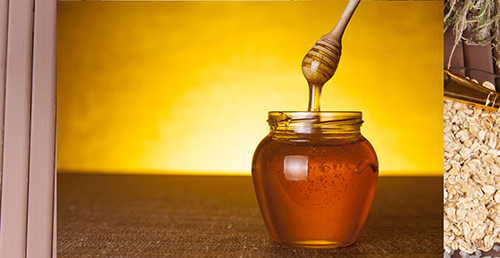
Honey contains small amounts of plant compounds, and its composition varies by floral source and processing. Researchers have studied whether those differences affect cardiometabolic markers such as fasting glucose and blood lipids. The results are not a reason to add large amounts of honey to your diet.
A 2023 systematic review and meta-analysis included 18 controlled feeding trials, 33 comparisons, and 1,105 participants. It reported modest changes in several markers after a median honey dose of 40 grams per day for a median of eight weeks, but the certainty varied by outcome and the authors called for more research. A separate meta-analysis of 23 controlled trials found no significant improvement in lipid profiles. A 2025 umbrella review also found variable results across bee products and emphasized differences in dose, product type, and evidence certainty. [Ahmed et al., 2023] [Gholami et al., 2022] [Norouzzadeh et al., 2025]
Raw honey may taste different from filtered or pasteurized honey, but it is still sugar-rich. No raw-honey claim should replace the ordinary advice to keep free and added sugars within a reasonable limit.
Honey is not an asthma, infection, sleep, or liver treatment
Honey should not be presented as a natural vaccine for pollen allergy or as a way to prevent asthma attacks. It also should not be recommended as a treatment for infectious diarrhea, colitis, insomnia, hepatitis, or other liver problems. These uses are not supported well enough for a public health article to give treatment instructions. Honey may feel soothing in a warm drink, but comfort is different from treating the cause of a symptom.
The same caution applies to antibacterial claims. Honey has been studied in wound products, where the preparation and clinical context matter. Eating honey or stirring it into water is not a substitute for evaluation and treatment of an infection.
How much honey is reasonable?

There is no evidence-based daily honey dose that healthy adults need to take for general wellness. Think of honey as a sweetener. A teaspoon can add flavor to plain yogurt, oatmeal, or a warm drink. Measuring matters: a tablespoon contains about three teaspoons and, in the FDA example, 17 grams of sugar. [FDA fact sheet]
A practical approach is to use honey instead of another sweetener, not on top of one. Keep an eye on sweetened drinks, desserts, sauces, and packaged foods during the same day. If you have diabetes or prediabetes, honey still counts as carbohydrate. The American Diabetes Association lists honey among names for sugar and describes sugars as fast-acting carbohydrates. [ADA]
Safety, side effects, and who should avoid honey
Never give honey to a baby younger than 12 months
Do not give honey to a child younger than 12 months. Do not add it to baby food, water, infant formula, or a pacifier. Honey can expose an infant to spores linked to infant botulism, a rare but serious illness. CDC states that botulism can cause difficulty breathing, muscle paralysis, and death; all forms of botulism are medical emergencies. [CDC, 2026] [CDC botulism]
Diabetes, allergies, digestive symptoms, medicines, and dental health
- Diabetes or prediabetes: count honey as carbohydrate and added/free sugar. Use the amount that fits your eating plan and glucose targets. Ask your clinician or registered dietitian if you are unsure.
- Honey, pollen, or bee-product allergy: avoid honey if you have had a reaction. Mayo Clinic lists possible allergy symptoms such as wheezing, fainting, dizziness, nausea, vomiting, weakness, and heavy sweating. Seek emergency care for signs of a severe allergic reaction. Read more about common food allergy triggers. [Mayo Clinic]
- Digestive symptoms: some people experience nausea, belly pain, or vomiting. Large portions of sweeteners may also worsen loose stools in some people. Persistent diarrhea deserves an assessment; see these possible causes of diarrhea and contact a healthcare professional when symptoms are severe or do not settle. [Mayo Clinic]
- Medicines: Mayo Clinic lists a possible interaction with phenytoin. Ask a pharmacist before using honey in unusually large daily amounts if you take prescription medicines. [Mayo Clinic]
- Dental health: honey is not tooth-friendly simply because it is natural. The NHS includes honey among free sugars that can contribute to tooth decay. Keep sweet foods to mealtimes rather than grazing on them throughout the day. [NHS]
- Pregnancy and breastfeeding: the infant restriction is about feeding honey to the baby. Culinary amounts are food use, but large daily amounts or wound products should be discussed with your healthcare professional when you are using them for a health reason.
When to talk with a healthcare professional
Honey is a food, not a diagnostic test. Contact a healthcare professional rather than relying on self-care when:
- a cough is rapidly worsening, lasts longer than expected, or comes with breathing trouble, severe illness, dehydration, or other worrying symptoms;
- a wound is deep, infected, slow to heal, caused by a burn, or located on the foot of a person with diabetes;
- a child younger than 12 months has been given honey and develops weakness, poor feeding, a weak cry, constipation, or breathing problems; or
- you develop symptoms of a severe allergic reaction, such as wheezing, faintness, or swelling involving the mouth or throat.
| Educational information only: This page is for general education. It is not a diagnosis, treatment plan, or substitute for care from a qualified healthcare professional. Honey should never be given to a baby younger than 12 months. Ask a clinician or pharmacist for advice when symptoms are severe, persistent, or unusual; when you are managing diabetes; when you take prescription medicines; or when you are considering a wound-care product. |
Frequently Asked Questions
Is honey healthier than white sugar?
Honey contains a wider range of minor compounds than table sugar, but it is still a concentrated sweetener. Use it for flavor, not as a way to avoid sugar limits.
Can honey help a cough?
For people older than 1 year, honey may help soothe an acute cough, particularly at night. Evidence is limited, and a worsening or persistent cough needs medical advice. [NICE, 2019] [Oduwole et al., 2018]
Is raw honey better than regular honey?
Raw honey may differ in taste and composition, but claims that it prevents disease or works as a pollen-allergy treatment are not established. Both raw and processed honey contain substantial sugar.
Can people with diabetes eat honey?
Some people with diabetes can fit a small amount into their eating plan, but honey still counts as carbohydrate and can raise blood glucose. It is not a diabetes treatment. Discuss portions with your clinician or registered dietitian if your targets are difficult to meet. [ADA]
Can babies have cooked honey or honey mixed into food?
No. CDC says not to give honey to children younger than 12 months and not to add honey to baby food, water, infant formula, or a pacifier. [CDC, 2026]
Can I put honey from my kitchen on a wound?
No. Research on wound care involves medical-grade products and specific clinical situations. Use a clinician-recommended dressing and have burns, ulcers, infected wounds, and diabetic foot wounds assessed promptly. [Cochrane, 2015] [Mayo Clinic]
References
- Centers for Disease Control and Prevention. “Foods and Drinks to Avoid or Limit.” Updated April 14, 2026. → View source
- Centers for Disease Control and Prevention. “About Botulism.” Updated February 26, 2026. → View source
- National Institute for Health and Care Excellence. “Cough (acute): antimicrobial prescribing — Recommendations.” Published February 7, 2019. → View source
- Oduwole O, Udoh EE, Oyo-Ita A, Meremikwu MM. “Honey for acute cough in children.” Cochrane Database of Systematic Reviews. 2018. DOI: 10.1002/14651858.CD007094.pub5. → View source
- Mayo Clinic. “Honey.” Drugs and Supplements. → View source
- World Health Organization. “Healthy diet.” Updated January 26, 2026. → View source
- U.S. Food and Drug Administration. “Added Sugars on the Nutrition Facts Label.” Updated March 4, 2026. → View source
- U.S. Food and Drug Administration. “Fact Sheet: Declaration of Added Sugars for Single-Ingredient Sugars and Certain Cranberry Products.” → View source
- American Heart Association. “Added Sugars.” → View source
- American Diabetes Association. “Types of Carbohydrates.” → View source
- National Health Service. “Sugar: the facts.” Reviewed July 16, 2025. → View source
- Jull AB, Cullum N, Dumville JC, et al. “Honey as a topical treatment for wounds.” Cochrane Database of Systematic Reviews. 2015. DOI: 10.1002/14651858.CD005083.pub4. → View source
- Ahmed A, Khan TA, Dan Ramdath D, et al. “Effect of honey on cardiometabolic risk factors: a systematic review and meta-analysis.” Nutrition Reviews. 2023;81(7):758–774. DOI: 10.1093/nutrit/nuac086. → View source
- Gholami Z, Khosravi A, Ghanbari M, et al. “The effect of honey on lipid profiles: a systematic review and meta-analysis of controlled clinical trials.” British Journal of Nutrition. 2022. DOI: 10.1017/S0007114521002506. → View source
- Norouzzadeh M, et al. “Dosage exploration of the effects of honey and its derivatives on cardiometabolic outcomes: an overview of systematic reviews and GRADE-assessed updated meta-analysis.” Nutrition & Diabetes. 2025;15:48. DOI: 10.1038/s41387-025-00403-9. → View source
