
Sweet clover (Melilotus officinalis) is one of the oldest European herbs used for circulatory complaints — heavy legs, varicose veins, and hemorrhoids. It has a pleasant hay-like aroma, bright yellow flowers, and a chemistry centered on coumarin, the compound that gives it both its therapeutic reputation and its most important safety considerations.
If you’re looking into sweet clover because your legs ache at the end of the day or because you’ve seen it listed alongside other venotonic herbs, you’re in the right place. This article covers what the plant actually contains, which uses have regulatory or scientific backing, how to prepare and dose it, and — just as importantly — when to be cautious.
What Is Sweet Clover?
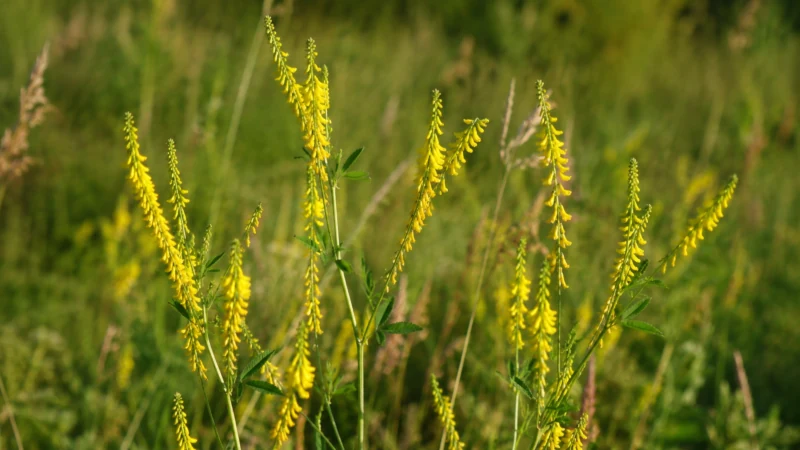
Sweet clover belongs to the legume family (Fabaceae) and grows 60 to 120 cm tall with leaves divided into three leaflets. It’s native to Europe but has naturalized widely across North America, including parts of the southern United States and Argentina. The plant thrives in limestone soils and roadsides.
The flowering tops are the parts used medicinally. When the plant dries, a glycoside called melilotoside breaks down and releases coumarin — which is responsible for both the characteristic sweet-hay scent and many of the plant’s biological effects [WebMD, 2026]. Other common names include yellow melilot, king’s clover, and hay flower.
Sweet clover should not be confused with red clover (Trifolium pratense), which is a different plant with different uses.
Key Compounds in Sweet Clover
The European Pharmacopoeia requires a minimum of 0.3% coumarin content in medicinal-grade sweet clover herb [EMA Assessment Report, 2017]. Beyond coumarin, the plant contains flavonoids (including kaempferol and quercetin glycosides), phenolic acids, melilotoside, scopoletin, vitamin C, mucilages, and choline.
Coumarin is the most pharmacologically studied of these. It has mild blood-thinning, anti-edema, and anti-inflammatory properties. Scopoletin, a related coumarin derivative found in sweet clover, has shown anti-inflammatory activity in laboratory studies. The flavonoids contribute additional capillary-strengthening effects.
Traditional and Evidence-Based Uses
Venous Insufficiency and Varicose Veins
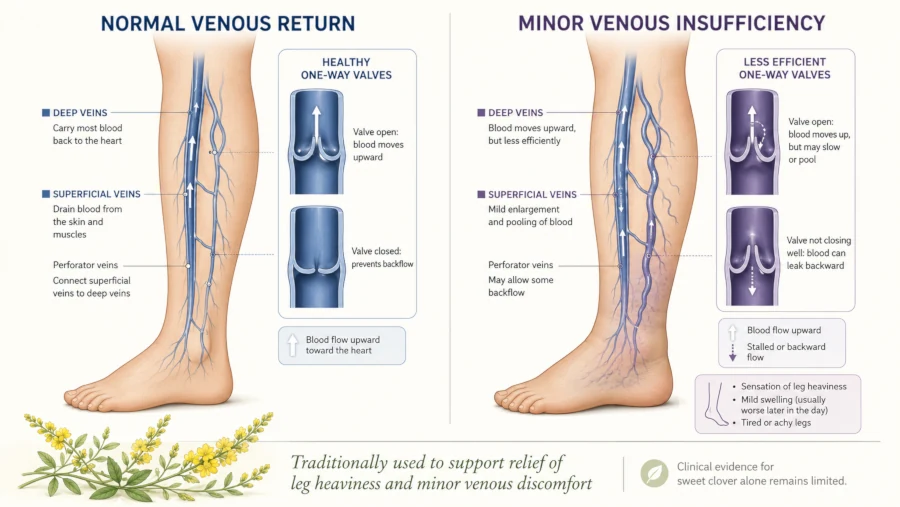
This is the use with the strongest regulatory backing. The European Medicines Agency (EMA) recognizes sweet clover as a traditional herbal product for relieving symptoms of discomfort and heaviness in the legs related to minor venous circulatory disorders [EMA Herbal Monograph, 2017]. The German Commission E monograph also recommends it for chronic venous insufficiency, varicose veins, and superficial thrombosis.
RxList classifies sweet clover as “possibly effective” for problems with circulation including leg cramps and swelling, as well as for varicose veins [RxList, 2026]. A small Italian clinical study of 30 patients found that a combination containing melilotus, alpha-tocopherol, rutin, and centella asiatica significantly improved swelling in people with chronic venous insufficiency. However, because the treatment combined multiple ingredients, it’s difficult to isolate how much sweet clover contributed on its own.
The overall picture: there is a long tradition and moderate regulatory recognition for this use, but the clinical trial evidence specifically for sweet clover as a standalone treatment remains limited. It is best understood as a traditional remedy with plausible pharmacology rather than a clinically proven therapy. For more on herbs used for varicose veins, several other plants have overlapping uses.
Hemorrhoids
Because hemorrhoids are essentially varicose veins in the rectal area, the same venotonic and anti-edema properties apply. Sweet clover (often listed as yellow melilot) appears in European phytotherapy guides as a supportive treatment for hemorrhoids, and the EMA monograph includes rectal preparations among its traditional dosage forms. Evidence is based on traditional use rather than controlled trials. For a broader look at this topic, see the guide to herbs for hemorrhoids.
Mild Sedative and Antispasmodic Uses
Some traditional European sources mention sweet clover for insomnia, digestive spasms, and intestinal discomfort. The EMA assessment report notes historical references to these uses, but the evidence is largely anecdotal and based on long-standing practice rather than clinical study. If sleep is a concern, other foods and herbs that support rest have more evidence behind them.
Topical Uses
Historically, sweet clover was applied externally for bruises, minor skin inflammation, and — in folk medicine — as an eye wash for conjunctivitis. The EMA monograph recognizes topical use for minor skin inflammation and feelings of heaviness in the legs, but recommends limiting topical application to one week. The eye-wash use lacks modern clinical support and should not be attempted without professional guidance, since improperly prepared herbal washes carry infection risk.
How to Use Sweet Clover
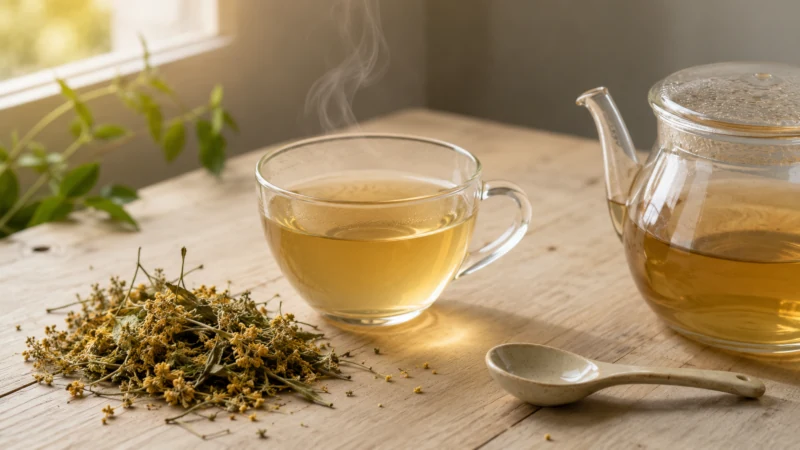
The most common preparation is a simple infusion (herbal tea). Based on the dosing information from RxList and the EMA monograph:
Infusion for internal use: Steep 1–2 teaspoons of finely chopped dried sweet clover flowering tops in about 150 mL (5 oz) of boiling water for 5–10 minutes, then strain. Drink 2–3 cups daily [RxList, 2026]. The EMA suggests a daily dose of dried herb corresponding to no more than 5 mg of coumarin to maintain an adequate safety margin [EMA Assessment Report, 2017]. This translates to roughly 2.0–2.4 grams of dried herb per day (about two level teaspoons).
Topical preparation: A more concentrated infusion or a standardized extract in cream or ointment form may be applied to the legs or to areas of minor skin inflammation. The EMA recommends limiting topical use to one week.
Standardized extracts: Commercial preparations standardized to coumarin content (typically 0.2–0.3%) are available in some European countries and may offer more predictable dosing than homemade tea.
Side Effects and Safety Concerns
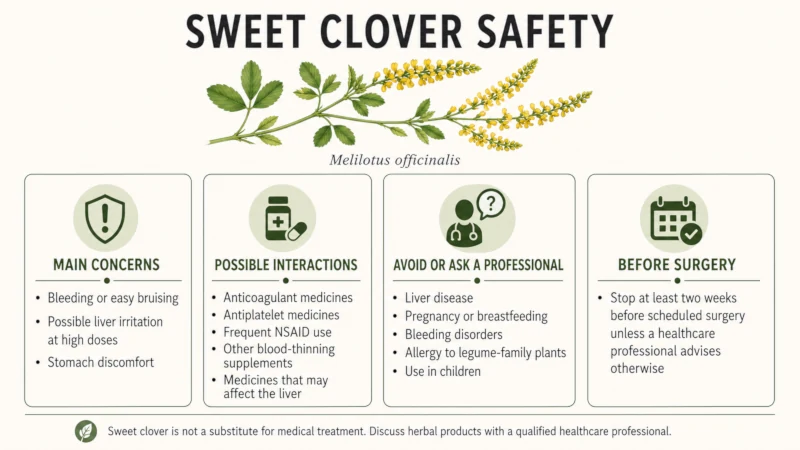
Sweet clover is considered possibly safe when used in appropriate amounts for short periods [WebMD, 2026]. The main safety concerns relate to its coumarin content and its effects on blood clotting.
Liver Safety and Coumarin
Coumarin at high doses can cause liver damage. WebMD and RxList both note that sweet clover is “possibly unsafe” in large amounts because of liver and bleeding risks [WebMD, 2026]. A 2022 narrative review of coumarin hepatotoxicity concluded that liver injury from coumarin is rare in humans and typically presents as mild transaminase elevations in a small subset of patients — no cases of liver failure have been reported in the clinical literature [Pitaro et al., 2022]. Still, people with existing liver disease should avoid sweet clover, and anyone using it regularly should be aware of this risk.
A related historical concern: when sweet clover hay spoils and is contaminated by mold, coumarin can convert into dicoumarol, a potent anticoagulant. This is how the blood-thinning drug warfarin was originally discovered. Properly dried and stored sweet clover does not contain dicoumarol, but this history explains why caution around blood thinning is warranted.
Bleeding Risk and Drug Interactions
Sweet clover may slow blood clotting. Taking it alongside anticoagulant or antiplatelet medications — including warfarin, aspirin, clopidogrel (Plavix), ibuprofen, naproxen, heparin, and others — could increase the risk of bruising and bleeding [RxList, 2026]. It should also not be combined with other herbs that have blood-thinning effects (such as ginkgo, garlic, or ginger in supplement doses) without medical advice.
Because sweet clover may stress the liver in large amounts, combining it with other hepatotoxic medications (such as acetaminophen at high doses, certain statins, or methotrexate) could compound the risk [WebMD, 2026].
Pregnancy, Breastfeeding, and Surgery
There is not enough reliable safety data for use during pregnancy or breastfeeding. Both WebMD and RxList recommend avoiding sweet clover during these periods. Because of its potential blood-thinning effects, stop using sweet clover at least two weeks before any scheduled surgery [WebMD, 2026].
Who Should Avoid Sweet Clover
You should not use sweet clover if you have liver disease, take anticoagulant or antiplatelet medications, are pregnant or breastfeeding, have a scheduled surgery within two weeks, or have a known allergy to plants in the legume (Fabaceae) family. Children should not use sweet clover without guidance from a pediatrician or qualified herbalist.
When to Talk to a Healthcare Professional
Leg heaviness, swelling, and varicose veins can sometimes signal deeper venous problems that need medical evaluation — including deep vein thrombosis (DVT), which is a medical emergency. See a healthcare professional if you notice sudden or severe leg swelling (especially in one leg), skin color changes, warmth or tenderness over a vein, or if varicose vein symptoms worsen despite self-care. Sweet clover tea is not a substitute for compression therapy, prescription medications, or procedures that a vein specialist may recommend.
If you experience unusual bleeding, dark urine, yellowing of the skin or eyes, or persistent stomach upset while using sweet clover, stop taking it and contact your doctor. Maintaining good blood circulation through diet is important, but it works alongside — not instead of — professional care.
| Health Disclaimer: This article is for general education only and is not medical advice, diagnosis, or treatment. Sweet clover and other herbal preparations discussed here are not a substitute for care from a qualified healthcare professional. Do not self-prescribe herbal remedies, especially if you take blood-thinning medications, have liver disease, are pregnant or breastfeeding, or are scheduled for surgery. Talk to your doctor before using sweet clover in any form. If you experience unusual bleeding, yellowing of the skin or eyes, or other concerning symptoms, seek medical care promptly. |
Frequently Asked Questions
Is sweet clover the same as red clover?
No. Sweet clover (Melilotus officinalis) and red clover (Trifolium pratense) are both in the legume family, but they are different plants with different active compounds and uses. Red clover is better known for isoflavones and is sometimes used for menopausal symptoms, while sweet clover’s primary active compound is coumarin, and it is used mainly for venous complaints.
Can sweet clover tea help varicose veins?
Sweet clover has a long tradition of use for leg heaviness, swelling, and varicose veins. The European Medicines Agency recognizes it as a traditional remedy for these symptoms, and RxList rates it as “possibly effective” for circulatory problems. However, clinical trial evidence for sweet clover as a standalone treatment is limited. It may provide modest symptomatic relief, but it should not replace medical treatment for significant varicose veins.
How much sweet clover tea is safe to drink?
Based on the EMA and RxList guidance, 2–3 cups daily (each made with 1–2 teaspoons of dried herb in 150 mL of hot water) is a typical dose. The EMA recommends keeping total daily coumarin intake below 5 mg, which corresponds to about 2.0–2.4 grams of dried herb. Do not exceed this amount, and avoid long-term use without consulting a healthcare professional.
Does sweet clover thin the blood?
Sweet clover contains compounds that may mildly slow blood clotting. This effect is part of its traditional use for circulation, but it also means it can interact with blood-thinning medications and increase bleeding risk. If you take warfarin, aspirin, or other anticoagulants, do not use sweet clover without talking to your doctor first.
Is sweet clover safe for the liver?
At typical doses, coumarin-related liver injury appears to be rare and usually mild. A 2022 review found no reported cases of liver failure from coumarin in the clinical literature. However, at high doses or with prolonged use, liver damage is a real concern — particularly for people with pre-existing liver conditions. People with liver disease should avoid sweet clover entirely.
References
- WebMD. “Sweet Clover: Overview, Uses, Side Effects, Precautions, Interactions, Dosing and Reviews.” WebMD, 2026. View source
- RxList. “Sweet Clover: Health Benefits, Side Effects, Uses, Dose & Precautions.” RxList, 2026. View source
- European Medicines Agency (EMA). “Assessment Report on Melilotus officinalis (L.) Lam., herba.” EMA/HMPC, 2017. View source (PDF)
- European Medicines Agency (EMA). “European Union Herbal Monograph on Melilotus officinalis (L.) Lam., herba.” EMA/HMPC, 2017. View source (PDF)
- Pitaro M, Croce N, Gallo V, et al. “Coumarin-Induced Hepatotoxicity: A Narrative Review.” Molecules. 2022;27(24):9063. doi:10.3390/molecules27249063. PMC9783661. View source
