
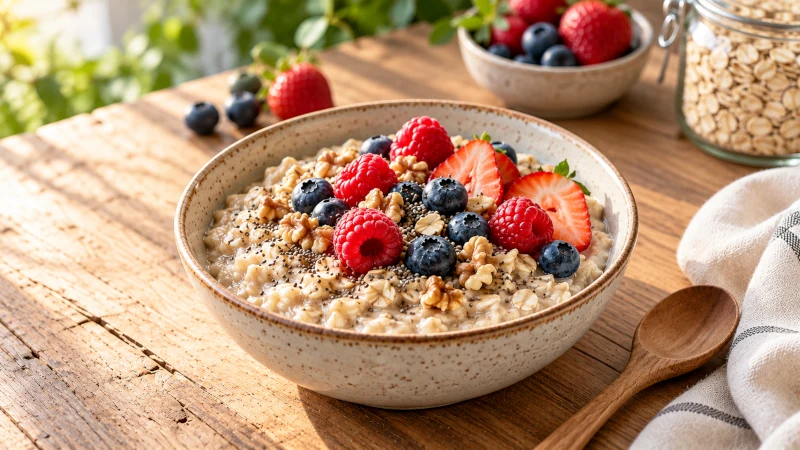
A daily bowl of oats does one thing especially well: its soluble fiber, beta-glucan, lowers LDL (“bad”) cholesterol by a modest but reliable amount when you get about 3 grams a day [Whitehead et al., 2014]. The evidence is strong enough that U.S. food labels on qualifying oat products may say so [FDA, 21 CFR 101.81]. The other health benefits of oats — steadier blood sugar, a small drop in blood pressure, easier digestion, staying full longer — are real but smaller. And a few popular claims, like oats calming your nerves or curing insomnia, have no good human evidence behind them.
Oats are also cheap, filling, and almost always a whole grain. That combination is hard to beat at breakfast.
What’s in a bowl of oats
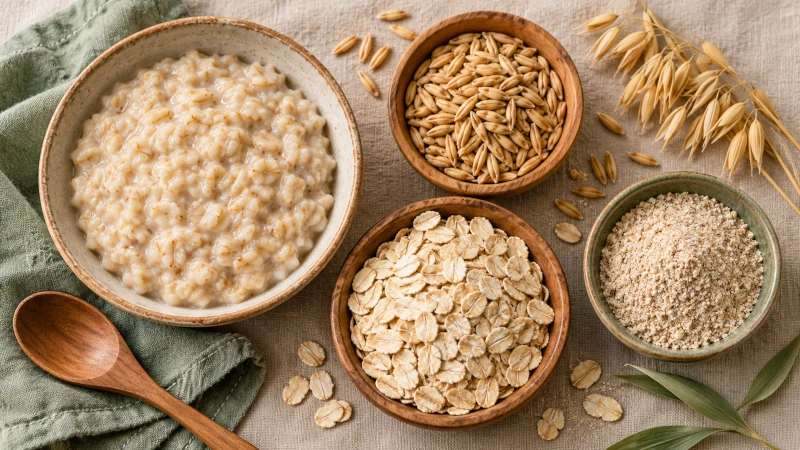
One cup of cooked oatmeal has about 166 calories and nearly 4 grams of fiber, along with 1.36 mg of manganese — more than half of what an adult needs in a day [AHA News, 2022]. Oats also supply phosphorus, thiamine (vitamin B1), magnesium and zinc [Harvard Nutrition Source].
Because the bran on an oat groat is soft and hard to strip away, nearly every oat product you can buy is a whole-grain food [AHA News, 2022]. Oats also contain avenanthramides, plant compounds found only in oats. They may have antioxidant and anti-inflammatory effects, but they have far less research behind them than beta-glucan does [AHA News, 2022].
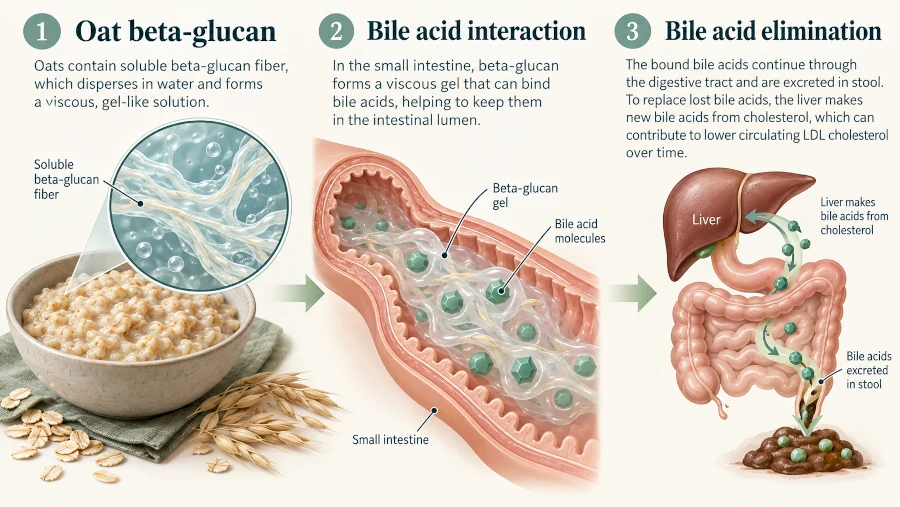
Beta-glucan is the part to pay attention to. Stirred into hot water, it thickens — that’s the slightly slippery texture of porridge. In your gut, it binds bile acids, which your liver makes from cholesterol, and carries them out of the body [Harvard Nutrition Source]. It also slows digestion, which helps explain why oatmeal keeps you full.
People have relied on that staying power for a long time. Samuel Johnson’s 1755 dictionary defined oats as a grain that “in England is generally given to horses, but in Scotland supports the people” [Wordorigins.org]. The Scots had the better end of that deal.
The health benefits of oats, graded by evidence
Cholesterol: the best-supported benefit
A 2014 meta-analysis pooled 28 randomized trials that gave people at least 3 grams of oat beta-glucan a day. Compared with control diets, LDL cholesterol fell by 0.25 mmol/L — roughly 10 mg/dL — and total cholesterol by 0.30 mmol/L, with no change in HDL or triglycerides [Whitehead et al., 2014]. People who started with higher LDL tended to see bigger drops. Two caveats: the trials ran 12 weeks at most, and the analysis was supported by a company that sells an oat beta-glucan ingredient [FoodNavigator-USA, 2014].
Ten points of LDL won’t replace a statin if you need one. It’s a dependable nudge that adds up alongside other changes. U.S. regulations frame it the same careful way: a qualifying oat food may say that soluble fiber from whole oats, as part of a diet low in saturated fat and cholesterol, “may” reduce the risk of heart disease — and it has to tie that to 3 grams of beta-glucan a day [FDA, 21 CFR 101.81].
Notice the “may.” Lowering LDL is the proven part. Whether eating oats by itself means fewer heart attacks is less clear: a Cochrane review of nine trials of whole-grain diets, including oats, didn’t find enough evidence of lower cardiovascular risk, though those trials were small and short [Harvard Nutrition Source].
If you don’t know your numbers, start there — our guide to checking your cholesterol at home and when you need a lab test explains the options. Psyllium is another gel-forming fiber with its own LDL data; see how psyllium works and how to take it safely, and our review of supplements that help lower cholesterol for why food is usually the better first step.
Blood sugar: small, real gains in type 2 diabetes
Two meta-analyses point the same way. One pooled 14 controlled trials and two observational studies in people with type 2 diabetes: oats lowered HbA1c by 0.42 percentage points and fasting glucose by 0.39 mmol/L, and oatmeal blunted the rise in blood sugar and insulin after a meal [Hou et al., 2015]. A 2022 review limited to randomized trials (median dose 3.25 g of beta-glucan a day) found HbA1c dropped by 0.47 points across eight comparisons — but the trials varied widely and most lasted only about a month. The authors described the gains as generally small, on top of the treatment people were already taking [Khan et al., 2022].
How the oats are processed matters. Steel-cut and other less-processed oats digest more slowly and have a lower glycemic index than rolled or instant oats [Harvard Nutrition Source], and many flavored instant packets add sugar. If you have diabetes, oats can fit: portion them like any carbohydrate, add protein or nuts, and check your glucose to see how you personally respond. Our list of diabetic-friendly foods that help control blood sugar has more ideas.
Blood pressure: a modest dip
In a meta-analysis of randomized trials in healthy adults, diets rich in beta-glucan — the fiber in oats and barley — lowered systolic blood pressure by about 2.9 mmHg and diastolic by 1.5 mmHg, at a median of 4 extra grams of beta-glucan a day. Other types of fiber showed no consistent effect [Evans et al., 2015]. That’s a small change. Useful as part of a bigger plan; not a treatment for high blood pressure.
Some herbal sources recommend “oat water” — grain steeped in water and sipped all day — for blood pressure and nerves. We found no trials testing it, and it’s unclear how much beta-glucan ends up in the liquid. Eat the oats instead.
Fullness and weight: helpful, not a weight-loss food
Beta-glucan thickens what’s in your stomach and slows digestion, and several trials show it increases fullness. But studies haven’t consistently shown that eating oats leads to meaningful weight loss [Harvard Nutrition Source]. Think of oatmeal as a breakfast that holds you until lunch, which can make the rest of the day easier — not as a fat-burning food.
Digestion and regularity
Fiber adds weight and water to stool, making it easier to pass, and cereal fibers such as oat bran are thought to work better for this than fiber from fruits and vegetables [Harvard Nutrition Source]. MedlinePlus lists oatmeal among the grains to eat more of for a high-fiber diet [MedlinePlus, 2026]. For a ranked list, see our guide to foods that help with constipation.
Plain, well-cooked oatmeal is also one of the gentler foods for a sore stomach, which is why it shows up on our list of foods to eat with gastritis. Some traditional sources go further and suggest living on oats for several days to heal an ulcer or gastritis. Don’t rely on that. Gastritis usually has a cause — most often an H. pylori infection or regular use of pain relievers like ibuprofen or naproxen — that needs a diagnosis [Mayo Clinic, 2024].
Sleep, stress and mood: tradition, not trials
Oats have an old folk reputation as a calming food, and herbal traditions use oat straw and green-oat preparations for stress and sleep. We found no good human trials showing that eating oats treats insomnia, anxiety or depression. The compound sometimes given credit, avenin, is a protein — the same one people with celiac disease ask about [Celiac Disease Foundation] — not a sedative.
A warm bowl in the evening is fine if you enjoy it. If poor sleep or low mood lasts more than a couple of weeks, that’s worth raising with a doctor.
Oat benefits at a glance
| Benefit | What the research shows | Evidence strength |
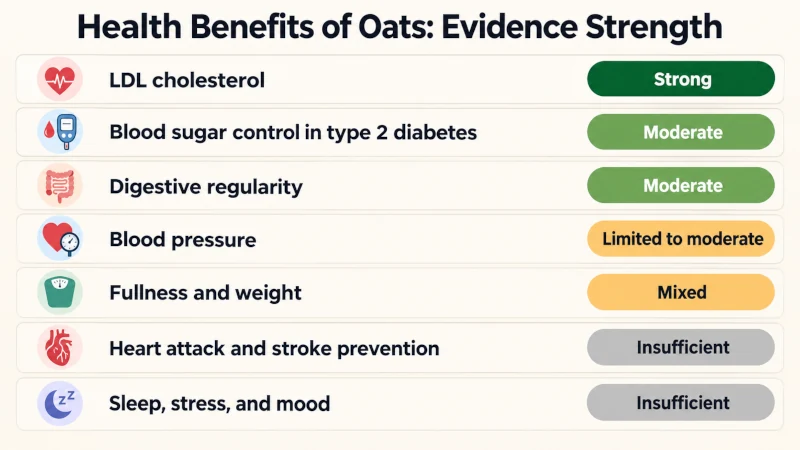
| Lower LDL cholesterol | ~3 g beta-glucan/day lowers LDL about 10 mg/dL in trials up to 12 weeks; basis of the FDA health claim | Strong |
| Blood sugar in type 2 diabetes | Small drops in HbA1c and fasting glucose; blunted after-meal spikes; short, varied trials | Moderate |
| Blood pressure | ~3/1.5 mmHg lower with beta-glucan-rich diets in healthy adults | Limited to moderate |
| Fewer heart attacks or strokes | Not shown directly for oats; whole-grain diet trials too small and short | Insufficient |
| Fullness and weight | More satiety; weight loss not consistent | Mixed |
| Regularity | Cereal fiber adds stool bulk and water | Moderate (general fiber evidence) |
| Sleep, nerves, mood | Folk use only; no good human trials found | Traditional / insufficient |
Which oats to buy
Nutritionally, steel-cut and rolled oats are close to identical; the bigger difference is how fast they raise blood sugar [AHA News, 2022; Harvard Nutrition Source].
| Type | What it is | Good to know |
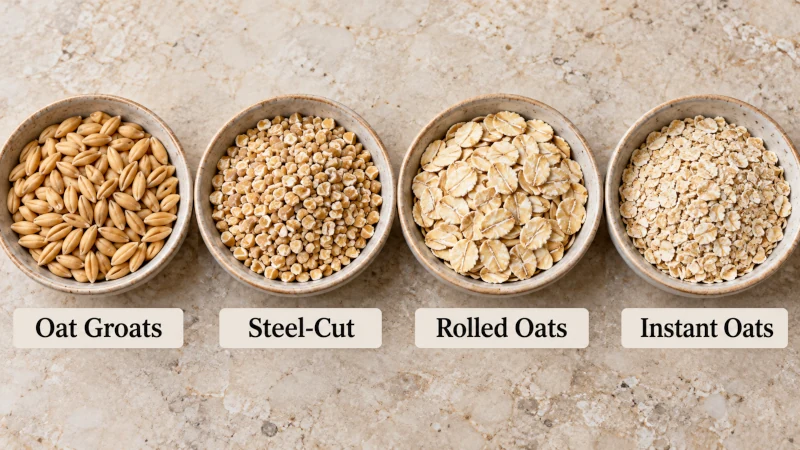
| Oat groats | Whole kernels with only the inedible hull removed | Least processed; long cooking |
| Steel-cut (Irish) | Groats cut into 2–3 pieces | Lower glycemic index; 25–30 minutes to cook |
| Scottish | Groats stone-ground into a meal | Creamy porridge texture |
| Rolled (old-fashioned) | Steamed and flattened into flakes | Quick, versatile; best for overnight oats |
| Quick / instant | Steamed longer, rolled thinner | Higher glycemic index; flavored packets often have added sugar |
| Oat bran | The fiber-rich outer layer, sold separately | Easy to stir into cereal or yogurt |
| Oat milk | Oats blended with water, often with added sugar, salt or oil | Commonly ~2 g fiber per cup, but little beta-glucan |
Sources: Harvard Nutrition Source; AHA News, 2022.
How much oatmeal it takes — and easy ways to eat it
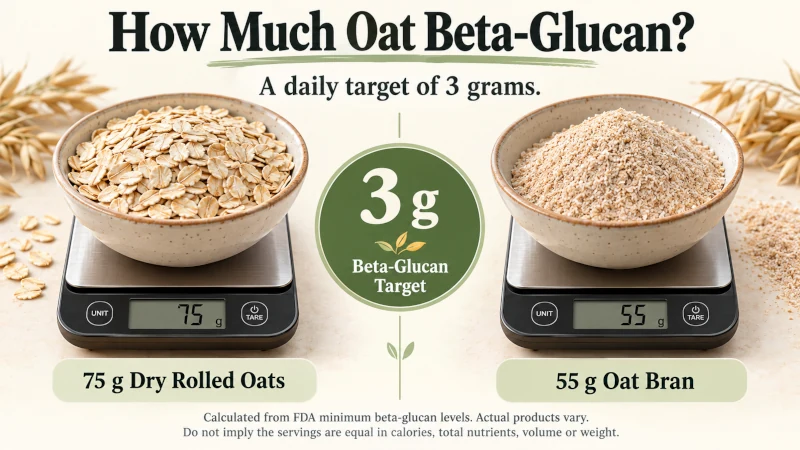
The 3-gram target comes from the FDA rule. Under that rule, rolled oats must contain at least 4% beta-glucan by dry weight and oat bran at least 5.5% [FDA, 21 CFR 101.81]. Do the math at those minimums and 3 grams works out to about 75 g of dry rolled oats, or about 55 g of oat bran, a day. That’s more than most single bowls, so it’s easier to spread oats across the day. Real products vary, and a food carrying the heart-health claim must supply at least 0.75 g per serving — so four servings gets you to 3 grams [FDA, 21 CFR 101.81].
A few ways to get there without eating porridge twice:
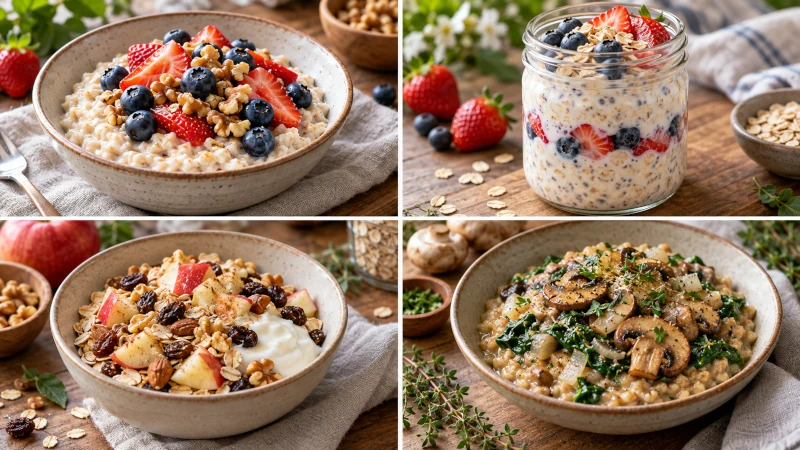
- Classic oatmeal. Cook rolled or steel-cut oats in water or low-fat milk following the package time. Top with fruit and unsalted nuts rather than sugar [AHA News, 2022].
- Overnight oats. In a jar, combine ½ cup rolled oats (not instant), ½ to 1 cup milk or soy milk, and ½ cup chopped fruit. Shake, then refrigerate at least four hours [Harvard Nutrition Source].
- Muesli. Mix oat flakes with nuts and a little dried fruit, then soak in milk or yogurt with fresh fruit. Keep any honey light.
- Oat bran boost. Stir 2–3 tablespoons into hot or cold cereal, yogurt or a smoothie [Harvard Nutrition Source].
- Savory oats. Toast steel-cut oats or groats with onion, then add stock a cup at a time, risotto-style [Harvard Nutrition Source]. Oats also stretch soups and pair well with chickpeas or lentils in stews.
Oats and celiac disease
Oats themselves don’t contain gluten. The problem is that they’re usually grown, processed and shipped alongside wheat, barley and rye, so ordinary oats can pick up gluten [Celiac Disease Foundation; Harvard Nutrition Source]. A 2017 systematic review found no evidence that adding oats to a gluten-free diet affected symptoms, gut lining, immune markers or blood tests in people with celiac disease — and the randomized trials in that review all used pure, uncontaminated oats [Pinto-Sánchez et al., 2017].
Most people with celiac disease can eat moderate amounts of gluten-free oats, but not everyone. Avenin is structurally similar to gluten, and some people report gluten-like symptoms even from gluten-free oats [Celiac Disease Foundation]. The Celiac Disease Foundation advises:
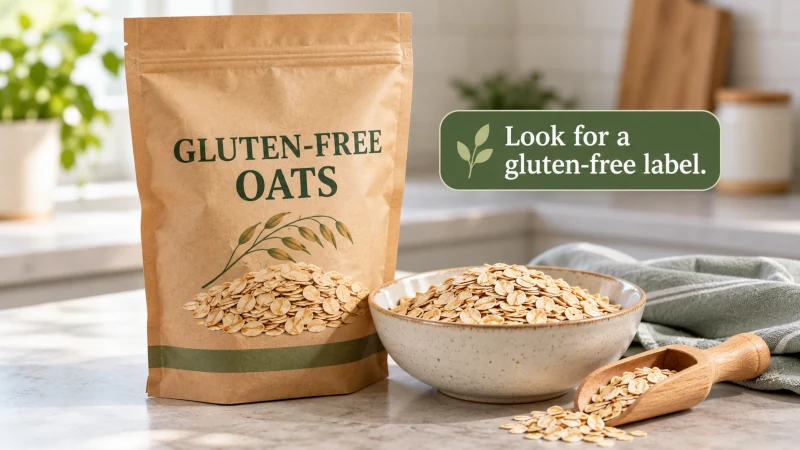
- Buy only oats and oat products labeled gluten-free. That label means the food meets the FDA rule of less than 20 ppm gluten [Celiac Disease Foundation].
- Know that “purity protocol” has no single standard definition — it varies by company [Celiac Disease Foundation].
- Decide with your doctor and dietitian, based on your symptoms, blood tests and gut healing, and keep up regular monitoring [Celiac Disease Foundation].
Side effects and who should be careful
Oats are an everyday food, and for most people the only side effect is gas or bloating when fiber goes up quickly.
- Gas and bloating. Add fiber gradually. If you get bloated, cut back for a few days. Drink plenty of fluids — too little can make constipation worse rather than better [MedlinePlus, 2026]. Fiber supplements and fiber-fortified foods are more likely to cause bloating than whole foods [MedlinePlus, 2026].
- Celiac disease or gluten sensitivity. Choose gluten-free-labeled oats and talk to your care team first (see above).
- Diabetes medicines. If you use insulin or other glucose-lowering drugs, check your readings when you change how much oatmeal you eat, and don’t adjust medicine on your own.
- Kidney disease. Oats are a source of phosphorus [Harvard Nutrition Source]. If you’ve been told to limit phosphorus, ask your dietitian how oats fit.
- Medications. We found no well-documented drug interactions for oats eaten as food. Concentrated fiber supplements are different and can affect when you should take some medicines — ask a pharmacist before starting a beta-glucan or oat-bran supplement.
- Pregnancy and breastfeeding. Oats are an ordinary food, and we found no specific cautions about eating normal amounts. Check with your clinician before taking concentrated beta-glucan or herbal oat (oat straw, green oat) products.
- Allergic reactions. Hives, swelling or trouble breathing after eating oats should be treated as an allergic reaction — get medical help.
When to talk to a doctor
Food can support your health, but it can’t diagnose anything. Get checked if:
- Indigestion or gastritis-type symptoms last a week or longer [Mayo Clinic, 2024].
- You have severe stomach pain, can’t keep food down, or feel lightheaded or dizzy — seek care right away [Mayo Clinic, 2024].
- You vomit blood, see blood in your stool, or have black stools — see a healthcare professional right away [Mayo Clinic, 2024].
- You have celiac disease and get symptoms after eating gluten-free oats [Celiac Disease Foundation].
- Your cholesterol or blood sugar is high. Oats can help, but they don’t replace an assessment of your overall risk or prescribed treatment.
Chest pain, pressure or shortness of breath is an emergency. Call 911.
| HEALTH DISCLAIMER: This article is for general education and is not a substitute for medical advice, diagnosis or treatment. Oats can modestly lower LDL cholesterol and support blood sugar control, but they do not cure or treat any disease and are not a replacement for prescribed medicine. Do not stop or change any medication because of what you read here. Talk to your doctor or a registered dietitian before making major diet changes if you have diabetes, celiac disease, kidney disease or another chronic condition, or if you are pregnant or breastfeeding. Seek care right away for vomiting blood, black or bloody stools, or severe abdominal pain, and call 911 for chest pain. |
Frequently Asked Questions
Is it OK to eat oatmeal every day?
For most people, yes. Daily intake is how the cholesterol trials worked — at least 3 g of beta-glucan a day [Whitehead et al., 2014]. Increase gradually and drink enough fluid to avoid bloating [MedlinePlus, 2026]. If you have celiac disease, stick to gluten-free-labeled oats.
Are instant oats as healthy as steel-cut oats?
Their nutrients are similar, but instant oats raise blood sugar faster [AHA News, 2022], and flavored packets often contain added sugar [Harvard Nutrition Source]. Plain instant oats are still a reasonable choice; steel-cut or rolled are better if you’re managing blood sugar.
Do oats have gluten?
Pure oats are gluten-free, but most regular oats are cross-contaminated during growing or processing. People with celiac disease should choose oats labeled gluten-free and decide with their care team [Celiac Disease Foundation; Harvard Nutrition Source].
How much can oatmeal lower my cholesterol?
Expect a modest effect: about 0.25 mmol/L (roughly 10 mg/dL) lower LDL with 3 g of beta-glucan a day, with larger drops in people who start higher [Whitehead et al., 2014]. That can help, but it won’t replace medicine you’ve been prescribed.
Is oat milk as good as oatmeal?
Not for beta-glucan. Oat milk usually has about 2 g of fiber per cup but only a small amount of beta-glucan, and some brands add sugar, salt or oil [AHA News, 2022].
References
- U.S. Food and Drug Administration. 21 CFR 101.81 — Health claims: Soluble fiber from certain foods and risk of coronary heart disease (CHD). View source
- Whitehead A, Beck EJ, Tosh S, Wolever TMS. Cholesterol-lowering effects of oat β-glucan: a meta-analysis of randomized controlled trials. View source
- FoodNavigator-USA. “Robust evidence” supports oat beta-glucan’s cholesterol-lowering potential. View source
- Harvard T.H. Chan School of Public Health. The Nutrition Source: Oats. View source
- Merschel M. Take a fresh look at oatmeal – it’s not as simple as you think. View source
- Hou Q, Li Y, Li L, Cheng G, Sun X, Li S, Tian H. The metabolic effects of oats intake in patients with type 2 diabetes: a systematic review and meta-analysis. View source
- Khan TA, Au-Yeung F, Blanco Mejia S, et al. (Sievenpiper JL, corresponding). Effect of oats and oat ß-glucan on glycemic control in diabetes: a systematic review and meta-analysis of randomized controlled trials. View source
- Evans CEL, Greenwood DC, Threapleton DE, et al. Effects of dietary fibre type on blood pressure: a systematic review and meta-analysis of randomized controlled trials of healthy individuals. View source
- Pinto-Sánchez MI, Causada-Calo N, Bercik P, et al. Safety of adding oats to a gluten-free diet for patients with celiac disease: systematic review and meta-analysis of clinical and observational studies. View source
- Celiac Disease Foundation. Gluten-Free Oats: What’s the Deal? View source
- MedlinePlus Medical Encyclopedia. High-fiber foods. U.S. National Library of Medicine. View source
- Mayo Clinic Staff. Gastritis — Symptoms and causes. View source
- Wilton D. Oat / sow one’s wild oats / feel one’s oats. View source


