
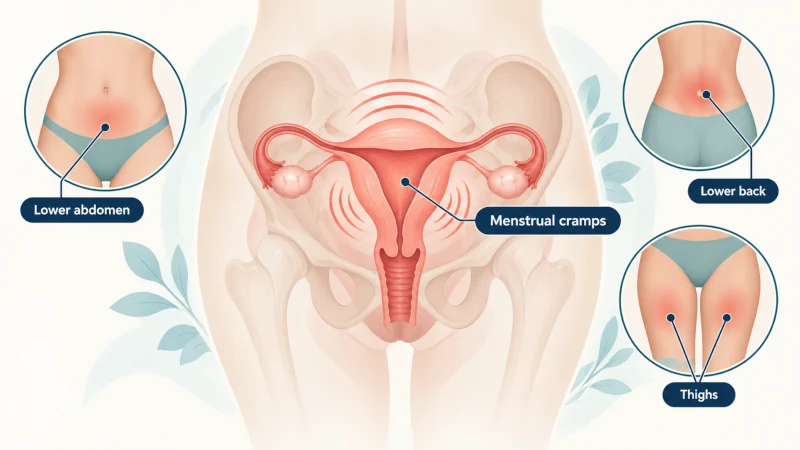
If your periods hurt enough to slow you down, there’s a medical name for it: dysmenorrhea. It simply means painful menstruation — the cramping, aching, and sometimes nausea or back pain that can show up in the day or two before your period and during the first days of bleeding. Most people who menstruate deal with it at some point, and for many it’s manageable. For some, it’s severe enough to miss work or school.
Dysmenorrhea comes in two forms, and the difference matters for what you do about it. Primary dysmenorrhea is period pain with no underlying disease behind it — the cramps are the problem. Secondary dysmenorrhea is pain caused by a separate condition, such as endometriosis or fibroids. This guide covers both, walks through which relief methods actually have evidence behind them, and flags the warning signs that mean it’s time to see a doctor rather than reach for a heating pad.
What is dysmenorrhea, exactly?
Dysmenorrhea is the clinical term for painful periods — throbbing or cramping pain in the lower abdomen that many people also feel in the lower back and thighs [Mayo Clinic]. It’s one of the most common reasons people seek care for a menstrual complaint.
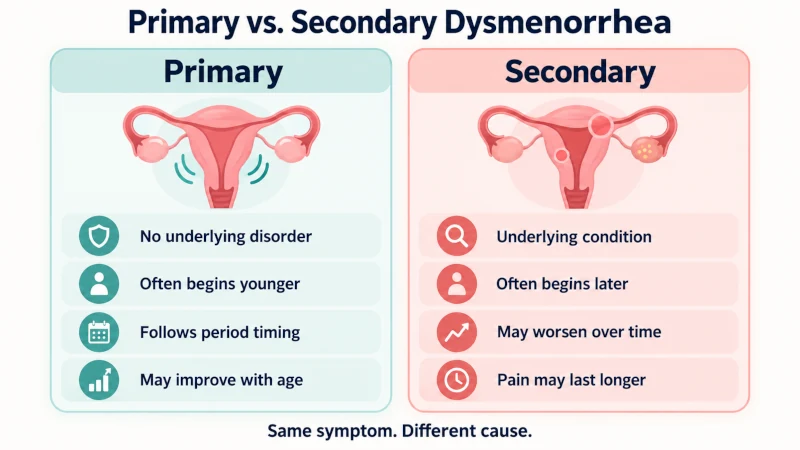
The two types differ by cause:
- Primary dysmenorrhea has no identifiable underlying disorder. It’s the most common form and usually starts within a few years of a person’s first period [MedlinePlus]. The pain typically begins one to two days before bleeding, or as it starts, and eases over the following days. It often becomes milder with age and, for some, after childbirth [MedlinePlus].
- Secondary dysmenorrhea is driven by an underlying condition and tends to appear later in life. This kind of pain often gets worse over time and can last longer than the period itself [MedlinePlus].
Primary dysmenorrhea: what’s happening in your body
The cramps of primary dysmenorrhea come down to prostaglandins — hormone-like chemicals your uterus makes. Higher levels are linked to stronger contractions of the uterine muscle and more intense pain [Mayo Clinic]. Those contractions can briefly reduce blood flow to the uterus, which is part of why the ache can be so gripping.
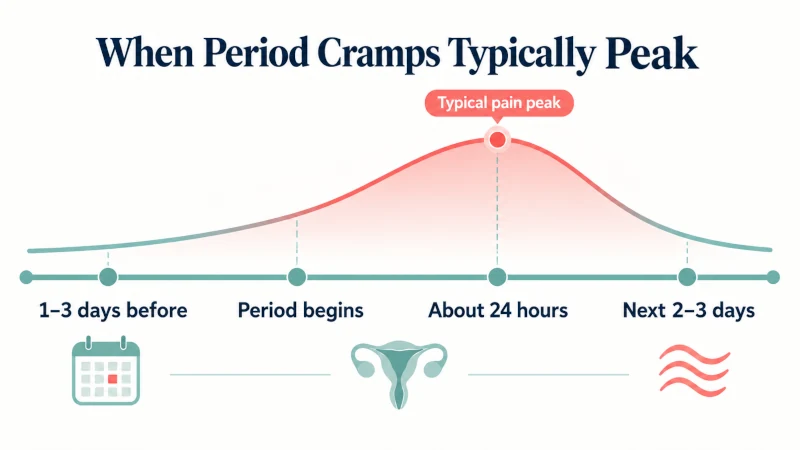
The timing is fairly predictable. Pain usually starts one to three days before your period, peaks around 24 hours after bleeding begins, and settles over the next two to three days [Mayo Clinic]. Alongside the cramps, it’s common to feel nausea, loose stools, headache, or dizziness [Mayo Clinic].
Certain things make painful periods more likely. You’re at higher risk if you’re under 30, started your periods early (age 11 or younger), have heavy or irregular bleeding, smoke, or have a family history of period pain [Mayo Clinic].
Secondary dysmenorrhea: when the pain has an underlying cause
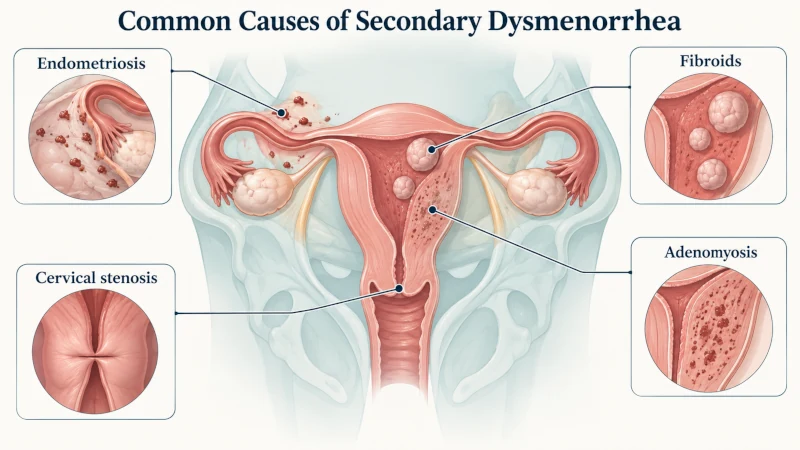
Here the period pain is a symptom of something else. Conditions that commonly cause secondary dysmenorrhea include [Mayo Clinic]:
- Endometriosis — tissue similar to the uterine lining growing outside the uterus.
- Uterine fibroids — noncancerous growths in the wall of the uterus.
- Adenomyosis — uterine-lining tissue growing into the muscular wall of the uterus.
- Pelvic inflammatory disease (PID) — infection of the reproductive organs, often from a sexually transmitted bacteria.
- Cervical stenosis — a narrowed cervical opening that slows menstrual flow.
An intrauterine device (IUD) can also cause more cramping, particularly in the first three to six months after it’s placed [NHS].
Because these causes need to be identified and treated on their own terms, secondary dysmenorrhea is something a clinician should diagnose. The tip-offs are pain that’s new in adulthood, pain that’s getting worse rather than better, or pain that shows up outside of your period.
Normal cramps versus a red flag: when to see a doctor
Ordinary period cramps that respond to rest, heat, or an over-the-counter painkiller usually aren’t cause for alarm. Some signs, though, deserve a professional’s attention.
Make a routine appointment if:
- Cramps disrupt your life every month, or your symptoms are progressively getting worse [Mayo Clinic].
- Severe period pain starts for the first time after age 25 [Mayo Clinic].
- Your periods become heavier, more painful, or irregular, or you bleed between periods [NHS].
- Pain and self-care measures aren’t enough, or the pain lingers outside your period [MedlinePlus].
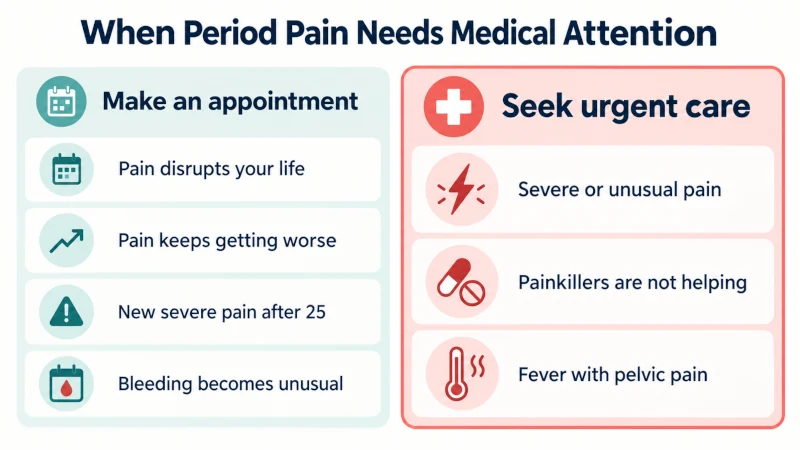
Seek urgent care if:
• Your pelvic or period pain is severe or worse than usual and painkillers haven’t helped [NHS].
• You have a fever along with the pain [MedlinePlus].
Fever with pelvic pain, foul-smelling discharge, or pain during sex can point to infection such as PID, which needs prompt treatment.
What actually helps: relief backed by evidence
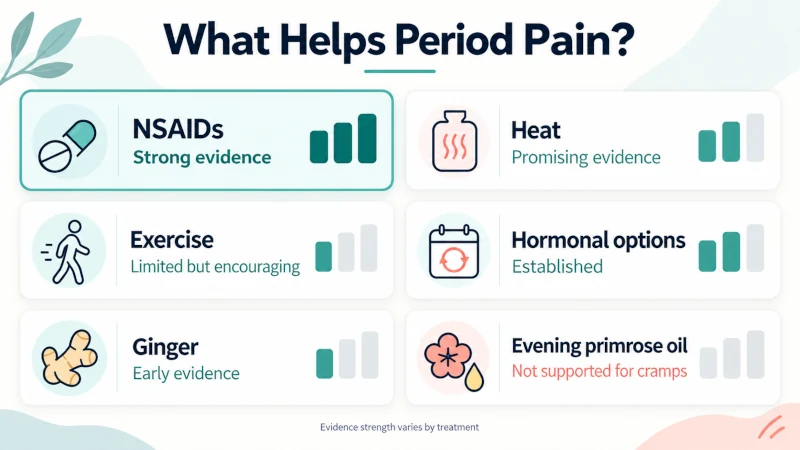
Plenty of remedies get recommended for period pain. Here’s what the research supports, graded honestly by how strong that evidence is.
| Approach | Evidence strength | Bottom line |
| NSAIDs (ibuprofen, naproxen) | Strong | Best-supported first choice; more effective than placebo or paracetamol. |
| Heat (pad, bottle, warm bath) | Promising | Meaningful relief in trials; performed at least as well as pain medicine. |
| Exercise / gentle movement | Limited but encouraging | May cut pain intensity; low-quality evidence, broad health upside. |
| Hormonal birth control | Established (clinician-led) | Reduces or prevents cramps; discuss with a doctor. |
| Oral ginger | Early / suggestive | Randomized trials suggest a benefit; not definitive. |
| Evening primrose oil | Not supported for cramps | Evidence is for PMS/breast pain, not period pain, and is weak. |
NSAIDs — the best-supported first choice (strong evidence)
Nonsteroidal anti-inflammatory drugs (NSAIDs) such as ibuprofen and naproxen do two things: they relieve pain and they lower the amount of prostaglandin your uterus makes [MedlinePlus]. A large Cochrane systematic review found NSAIDs are considerably more effective than placebo for period pain — where about 18% of women got good relief on placebo, roughly 45–53% did on an NSAID — and more effective than paracetamol (acetaminophen) [Marjoribanks et al., 2015].
They aren’t risk-free. The same review noted a real risk of side effects such as indigestion, headache, and drowsiness [Marjoribanks et al., 2015]. NSAIDs generally aren’t suitable for people with a history of stomach ulcers or gastrointestinal bleeding, certain kidney or heart conditions, or aspirin-sensitive asthma, and they can interact with blood thinners. If any of that applies to you, or you’re pregnant, check with a pharmacist or doctor before using them regularly. Taking an NSAID with food and starting it as pain begins — or just before, if your cycle is predictable — tends to work best.
Heat — simple, cheap, and effective (promising evidence)
A warm bath, a heat pad, or a hot water bottle on your lower abdomen is one of the oldest remedies for a reason [NHS]. A 2018 meta-analysis of randomized trials found heat therapy meaningfully reduced menstrual pain, and in the pooled data it performed at least as well as pain medication — though the authors cautioned the trials were few and small [Jo & Lee, 2018]. It has essentially no downside, so it’s a sensible thing to try first or alongside medication.
Movement and exercise (limited but encouraging evidence)
Gentle activity — yoga, walking, swimming, cycling — is often recommended, and there’s some support for it [NHS]. A Cochrane review concluded that exercise done for about 45–60 minutes, three or more times a week, may produce a clinically meaningful drop in pain intensity, while noting the evidence was low quality [Armour et al., 2019]. Given the low risk and the broader health benefits of being active, it’s a reasonable habit to build even if the effect on any single period is modest.
Hormonal options (doctor-prescribed)
For primary dysmenorrhea that doesn’t settle with the above, hormonal birth control — the pill, and other methods — can reduce or prevent cramps by thinning the uterine lining and lowering prostaglandin production [MedlinePlus]. This is a conversation to have with a clinician, who can weigh it against your health history and preferences.
Ginger and other supplements (early, suggestive evidence)
Among the supplements marketed for period pain, ginger has the most credible signal. A meta-analysis of randomized trials found oral ginger reduced pain scores, with the studied doses around 750–2,000 mg of ginger powder during the first three to four days of the cycle — though the authors described the evidence as “suggestive” rather than definitive [Daily et al., 2015].
Ginger is generally well tolerated in food amounts; higher supplement doses are worth discussing with a clinician if you’re pregnant or take blood thinners. Some herbs long used for cramps, such as chamomile, have antispasmodic properties and limited supportive research, but they shouldn’t be treated as proven substitutes for the better-evidenced options above — and several traditional “menstrual” herbs stimulate the uterus, so they’re not appropriate in pregnancy.
A note on one popular remedy: evening primrose oil is often sold for period pain, but the research behind it is for premenstrual syndrome and breast pain — not dysmenorrhea — and even there it’s weak. There isn’t good evidence it relieves menstrual cramps, so it’s not something to rely on.
Self-care you can start today
None of this has to wait for a prescription. For everyday primary dysmenorrhea, a practical starting kit looks like this:
- Put heat on your lower abdomen or back — a hot water bottle wrapped in a towel, a heat patch, or a warm bath [NHS].
- Take an NSAID at the first sign of pain if it’s safe for you, ideally with food [MedlinePlus].
- Keep moving gently — a walk or some easy yoga rather than powering through a hard workout [NHS].
- Nausea and loose stools can ride along with cramps; if an upset stomach is part of your picture, some gentle remedies for nausea may help you feel more comfortable.
- Ease off alcohol and smoking, both of which are linked to worse period pain [NHS].
If you’ve given reasonable self-care a fair try and your periods are still running your life, that’s the signal to see a clinician — not to quietly put up with it.
HEALTH DISCLAIMER: This article is for general education and is not medical advice. It can’t replace a diagnosis or treatment plan from a qualified healthcare professional who knows your history. Period pain is usually harmless, but it can occasionally signal a condition that needs treatment. If you’re pregnant or breastfeeding, have an existing medical condition, or take other medications, talk to your doctor or pharmacist before starting any medicine, supplement, or herbal remedy — and seek prompt care for severe, worsening, or unusual pain.
Frequently Asked Questions
Is dysmenorrhea normal, or a sign something’s wrong?
Mild-to-moderate cramping that comes with your period and eases within a few days is common and usually not a sign of disease — that’s primary dysmenorrhea. Pain that is severe, getting worse over time, starts for the first time after your mid-20s, or happens outside your period is more likely to have an underlying cause and is worth getting checked.
What’s the fastest way to relieve period cramps?
For most people, an NSAID like ibuprofen taken as pain starts, combined with heat on the lower abdomen, gives the quickest reliable relief. NSAIDs work partly by lowering the prostaglandins that drive the cramps, so starting early tends to help more than waiting until the pain peaks.
How is primary dysmenorrhea different from secondary?
Primary dysmenorrhea is period pain with no underlying disorder — it’s caused by normal prostaglandin-driven uterine contractions and usually begins within a few years of your first period. Secondary dysmenorrhea is caused by a condition such as endometriosis, fibroids, or adenomyosis, tends to start later, and often worsens over time.
Does evening primrose oil help with period pain?
There isn’t good evidence that it does. The research on evening primrose oil is for premenstrual syndrome and breast pain, not menstrual cramps, and even there it’s weak. If you want to try a supplement, oral ginger has better trial support for period pain — but talk to a clinician first if you’re pregnant or take blood thinners.
When should I go to the doctor for period pain?
See a clinician if cramps disrupt your life every month, your periods become heavier or more painful, you bleed between periods, or severe pain is new after age 25. Seek urgent care if the pain is severe or worse than usual and painkillers don’t help, or if you have a fever alongside the pain.
References
- Mayo Clinic. Menstrual cramps — Symptoms & causes. View source
- MedlinePlus, U.S. National Library of Medicine. Period Pain. View source
- NHS. Period pain. View source
- Marjoribanks J, Ayeleke RO, Farquhar C, Proctor M. Nonsteroidal anti-inflammatory drugs for dysmenorrhoea. Cochrane Database Syst Rev. 2015 (CD001751). View source
- Armour M, et al. Exercise for dysmenorrhoea. Cochrane Database Syst Rev. 2019 (CD004142). View source
- Jo J, Lee SH. Heat therapy for primary dysmenorrhea: a systematic review and meta-analysis. Scientific Reports. 2018;8:16252. DOI 10.1038/s41598-018-34303-z. View source
- Daily JW, Zhang X, Kim DS, Park S. Efficacy of Ginger for Alleviating the Symptoms of Primary Dysmenorrhea: a systematic review and meta-analysis of RCTs. Pain Medicine. 2015;16(12):2243–2255. DOI 10.1111/pme.12853. View source


