
Most lists of kiwi health benefits promise the world. This one separates the claims with real evidence behind them from the ones that are still mostly hope. The short version: a green kiwi is one of the richest everyday sources of vitamin C, and two green kiwi a day are a genuinely useful, well-tested way to ease mild constipation. Past that, the picture thins out — the sleep and immune claims rest on small or early studies, and kiwi treats no disease on its own.
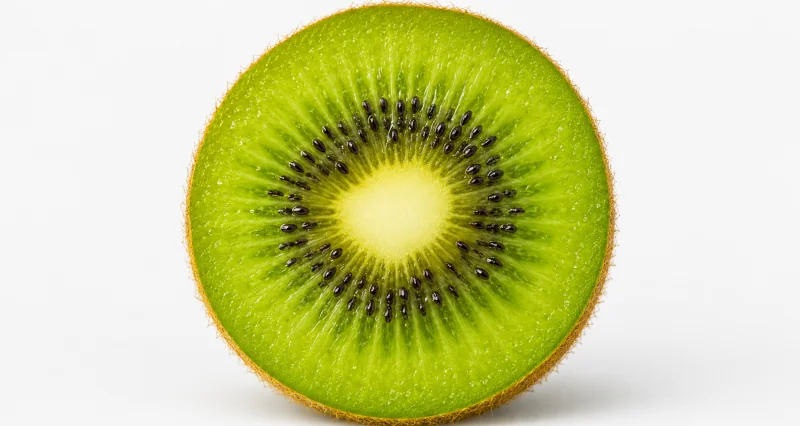
A medium green kiwi has roughly 64 calories and about 93 mg of vitamin C — more than an orange, packed into a fruit you eat with a spoon [USDA FoodData Central]. It also brings fiber, potassium, vitamin E, vitamin K and a little folate. Almost every benefit below traces back to that mix.
What’s actually in a kiwi
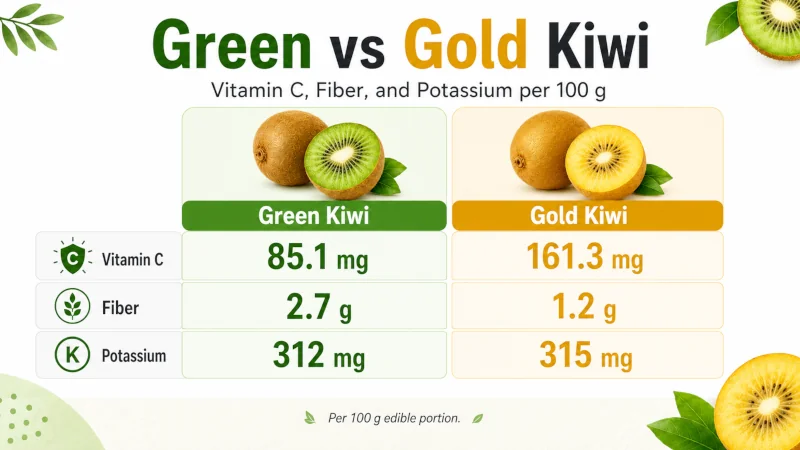
Two types fill the shops: green (Actinidia deliciosa, the fuzzy “Hayward” kind) and gold (Actinidia chinensis, smoother and sweeter). They’re close on most nutrients, with two clear splits — gold carries far more vitamin C, while green carries more than double the fiber. Here’s how a 100-gram serving compares, using USDA figures [USDA FoodData Central; Richardson, 2018].
| Per 100 g (about one large fruit) | Green kiwi | Gold kiwi |
| Calories | 61 kcal | 63 kcal |
| Vitamin C | 93 mg | 161 mg |
| Fiber | 3.0 g | 1.4 g |
| Potassium | 312 mg | 315 mg |
| Folate | ~25 µg | ~31 µg |
| Vitamin E | ~1.5 mg | ~1.4 mg |
| Vitamin K | ~40 µg | ~6 µg |
| Iron | 0.31 mg | 0.21 mg |
| Magnesium | 17 mg | 12 mg |
| Total sugars | 9.0 g | 12.3 g |
Vitamin C is the standout. One green kiwi covers most of an adult’s daily target (75 mg for women, 90 mg for men); two cover it with room to spare, and a single gold kiwi can do it alone [NIH ODS, 2024]. The fiber matters too, and it’s mostly the soluble kind that holds water in the gut — the detail that explains kiwi’s best-documented effect.
Kiwi health benefits, ranked by how strong the evidence is
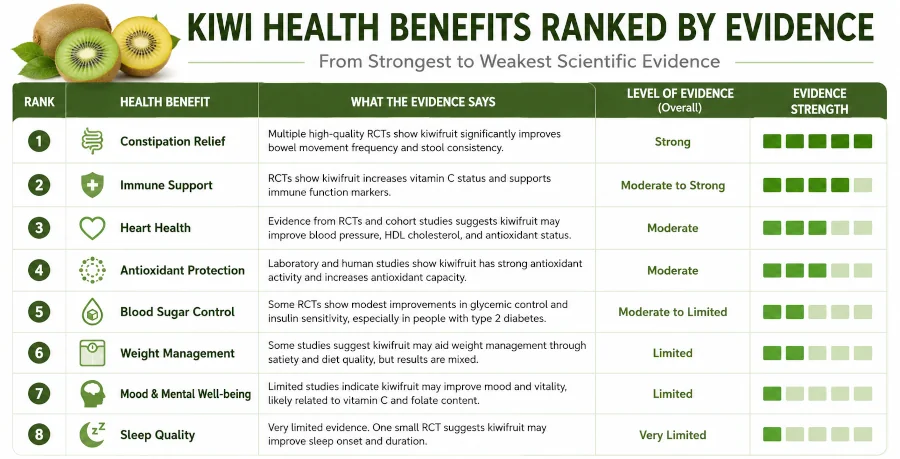
Not every benefit is equally proven. Sorting them by evidence is more honest than a flat top-10 list, so that’s how they’re laid out here — strongest first.
Constipation and regularity — the strongest case
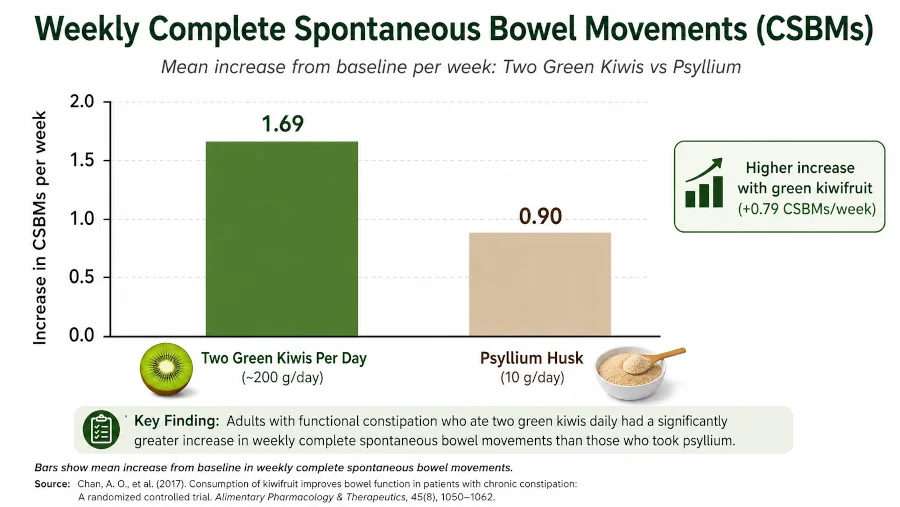
This is where kiwi earns its reputation. In a 2021 US trial, adults with chronic constipation ate two green kiwi, 100 g of prunes, or a dose of psyllium daily for four weeks. All three increased bowel movements, but kiwi caused the fewest side effects and the least dissatisfaction [Chey, 2021].
A larger international trial across New Zealand, Italy and Japan then found that two green kiwi a day raised the number of complete spontaneous bowel movements more than psyllium in people with constipation, while also easing straining and abdominal discomfort [Gearry, 2023].
The reason looks mechanical, not magical. Green kiwi fiber holds onto water, which softens and bulks the stool, and the fruit’s natural enzyme actinidin appears to speed how fast material moves through the gut [Richardson, 2018]. Two things keep this honest: most of these trials were funded by a kiwi marketer (Zespri), and they ran for weeks, not years. The effect is real but modest — closer to what prunes or a fiber supplement do than to a laxative drug.
Vitamin C and immune support — a solid nutrient, a modest illness effect
Kiwi is a vitamin C heavyweight, and vitamin C is needed for normal immune function, collagen, and the body’s antioxidant defenses [NIH ODS, 2024]. That part is settled. The leap people make — that loading up on vitamin C wards off colds — is where the evidence thins. Vitamin C doesn’t reliably prevent the common cold in healthy adults; at most it may slightly shorten one. A trial in adults over 65 found gold kiwi didn’t cut how often people caught upper-respiratory infections, though it did shorten and soften symptoms like sore throat and congestion.
So kiwi belongs among everyday immune-supporting foods that keep a working immune system supplied. It isn’t a treatment for an infection you already have.
Iron absorption and anemia — a helper, not a cure
Kiwi itself isn’t a high-iron food (about 0.3 mg per 100 g). What it does well is help your body absorb iron from other foods. Vitamin C converts the plant (“non-heme”) iron in foods like lentils, beans and spinach into a form the gut takes up more easily, so eating kiwi alongside an iron-rich plant meal squeezes more iron out of it — a sensible habit, especially if you eat little or no meat. It is not a fix for diagnosed anemia, which needs a blood test and a clear cause. Treating low iron with fruit alone risks missing something serious.
Heart and cholesterol markers — limited and mixed
A few small studies hint that regular kiwi might nudge heart-related numbers the right way — modestly raising HDL (“good”) cholesterol, or reducing how much platelets clump in some people. These studies are small, short, and not consistent enough to claim kiwi lowers heart-disease risk. What’s fair to say: kiwi is low in sodium, high in potassium, and fits the fruit-rich eating pattern that supports heart health. The credit belongs to the overall diet, not the single fruit.
Sleep — early and weak
You’ll see kiwi sold as a bedtime snack. The headline study is small and shaky: 24 adults with sleep complaints ate two kiwi an hour before bed for four weeks and reported falling asleep faster and sleeping longer [Lin, 2011]. There was no placebo group, so the kiwi can’t be separated from plain expectation. A few later studies are mildly encouraging but also small. If a couple of kiwi before bed helps you, there’s no harm in it — just don’t bank on it as a sleep aid.
Pregnancy — a folate contributor, not a folate plan
Folate matters in early pregnancy because it lowers the risk of neural-tube defects such as spina bifida. Kiwi supplies some folate (around 25 µg per 100 g), so it’s a fine part of a varied diet. But that protection comes from getting enough folate before and during the first weeks of pregnancy — which is why health agencies advise a 400 µg folic-acid supplement, not a serving of fruit. Enjoy kiwi while pregnant if it agrees with you; rely on the supplement your clinician recommends for the birth-defect protection.
How much to eat, and what to expect
For general nutrition, one or two kiwi a day is plenty. For constipation, the trials used two green kiwi daily and saw results within a couple of weeks [Chey, 2021; Gearry, 2023]. Eat the whole fruit rather than juice — juicing strips out the fiber that does the work.
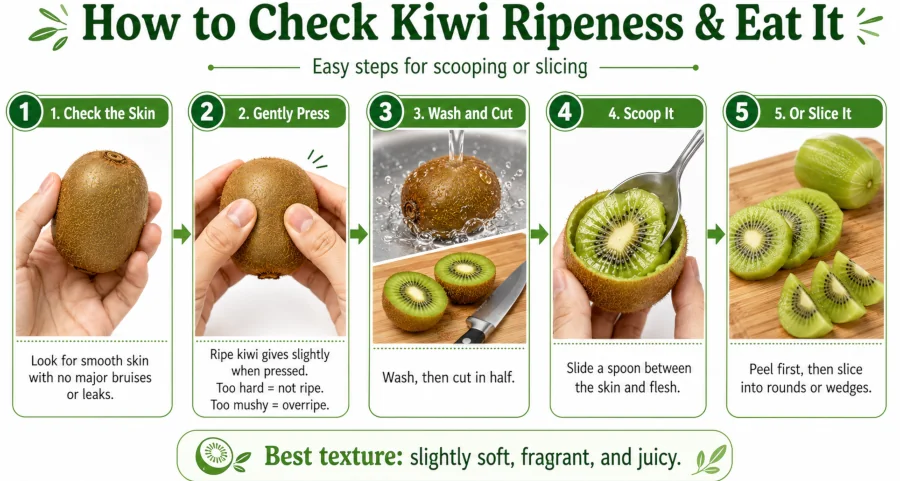
Both the flesh and the fuzzy skin are edible; the skin adds fiber, though the green variety’s hair puts many people off (gold skin is smoother). A ripe kiwi gives slightly to a gentle squeeze. Firm ones ripen on the counter over a few days — faster sitting next to a banana or an apple. Set expectations sensibly: kiwi is a nutritious food that can help with regularity and top up vitamin C. It doesn’t cure, reverse, or prevent disease by itself.
Safety, side effects, and who should be careful
For most people kiwi is a low-risk food. The cautions that actually matter:
Kiwi allergy is the real risk
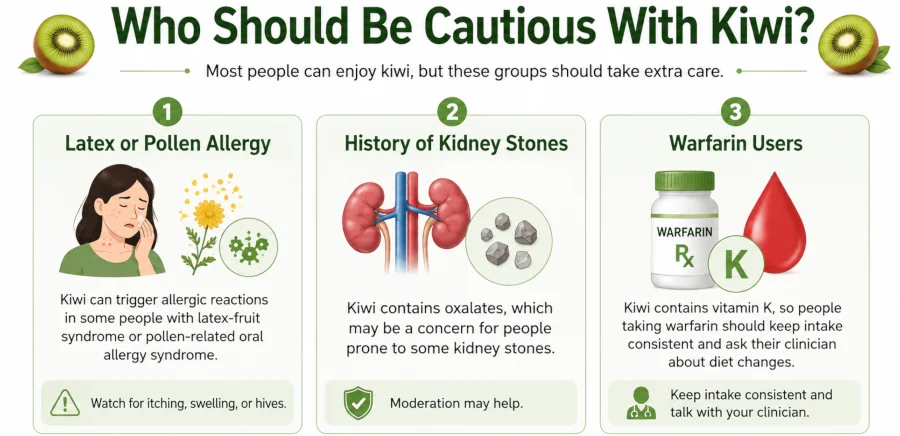
Kiwi is a recognized cause of food allergy, and reactions range from an itchy, tingling mouth (oral allergy syndrome) to — rarely — full anaphylaxis. People allergic to latex, or to birch and grass pollen, are more likely to react, a pattern called latex-fruit syndrome. Children can be affected too. If kiwi makes your lips, tongue or throat itch or swell, stop eating it and speak to a doctor. Any trouble breathing is an emergency.
Condition and medication cautions
- The enzyme actinidin and tiny calcium-oxalate crystals in kiwi can make the mouth tingle or sting, especially with very ripe fruit or large amounts. Uncomfortable, not dangerous for most.
- Because kiwi contains oxalates, people who form calcium-oxalate kidney stones may want to keep portions moderate.
- Kiwi is fairly high in potassium (about 312 mg per 100 g). If you have advanced kidney disease or take a potassium-affecting medication, factor that in.
- Green kiwi carries a fair amount of vitamin K (~40 µg per 100 g), which interacts with blood thinners such as warfarin. You needn’t avoid it — just keep your intake steady rather than swinging from none to lots.
- Eating a large amount can cause loose stools or wind — the flip side of the constipation benefit.
When constipation needs a doctor, not a fruit
Treating ordinary, occasional constipation with kiwi, fluids and fiber is reasonable. Get medical advice instead if you notice any of these red flags: blood in the stool, or black, tarry stools; constipation that is new and persistent after age 50; unexplained weight loss; ongoing or severe abdominal pain; constipation that alternates with diarrhea; or a family history of bowel cancer. New, severe, or unrelenting symptoms are not something to manage with diet alone.
| Health disclaimer This article is for general education only and is not medical advice. It can’t replace a diagnosis or treatment plan from a qualified professional who knows your history. If you’re pregnant or breastfeeding, manage a health condition, take medication, or have a known food or latex allergy, check with your doctor or a registered dietitian before making changes. If you have a severe allergic reaction or other emergency symptoms, seek urgent care. |
Frequently asked questions
How many kiwi should I eat a day?
One or two covers general nutrition. Two green kiwi a day is the amount studied for constipation. Much more than that can loosen the stools.
Green or gold — which is healthier?
They’re close. Gold has far more vitamin C; green has more than double the fiber and more vitamin K. For regularity, reach for green. For the biggest vitamin C hit, gold wins.
Can you eat kiwi skin?
Yes — the skin is edible and adds fiber. Gold kiwi skin is smooth and easy to eat; green skin is fuzzy, which puts some people off. Wash it first.
Does kiwi really help you sleep?
The evidence is early and weak — one small uncontrolled study and a few small follow-ups. It’s harmless to try a couple before bed, but it isn’t a proven sleep aid.
Is kiwi good for constipation?
This is its best-supported benefit. In randomized trials, two green kiwi a day increased bowel movements and eased straining, with very few side effects.
Can I eat kiwi while pregnant?
As a food, yes, as long as you’re not allergic. For neural-tube-defect protection, rely on a folic-acid supplement rather than fruit.
References
- US Department of Agriculture, Agricultural Research Service. FoodData Central: kiwifruit, green and gold, raw. → View source
- Richardson DP, Ansell J, Drummond LN. The nutritional and health attributes of kiwifruit: a review. Eur J Nutr. 2018;57(8):2659–2676. (Two authors were affiliated with a kiwifruit company; noted in text.) → View source
- Chey SW, Chey WD, Jackson K, Eswaran S. Exploratory comparative effectiveness trial of green kiwifruit, psyllium, or prunes in US patients with chronic constipation. Am J Gastroenterol. 2021;116(6):1304–1312. → View source
- Gearry R, Fukudo S, Barbara G, et al. Consumption of 2 green kiwifruits daily improves constipation and abdominal comfort — results of an international multicenter randomized controlled trial. Am J Gastroenterol. 2023;118(6):1058–1068. (Industry-funded; noted in text.) → View source
- Lin HH, Tsai PS, Fang SC, Liu JF. Effect of kiwifruit consumption on sleep quality in adults with sleep problems. Asia Pac J Clin Nutr. 2011;20(2):169–174. (Small, uncontrolled study.) → View source
- National Institutes of Health, Office of Dietary Supplements. Vitamin C: Fact Sheet for Health Professionals. Updated 2024. → View source
