
Natural Health Message — Herbs, Remedies & Nutrition for Whole-Body Wellness.
  • Health Conditions
    • Cancer & Prevention
    • Cardiovascular Health
    • Digestive Health
    • Eye & Vision
    • Immune & Infections
    • Metabolic Health
    • Musculoskeletal Health
    • Nervous System
    • Reproductive Health
    • Respiratory Health
    • Skin Health
    • Urinary Health
  • Nutrition
    • Diet
    • Foods
    • Recipes
  • Remedies
    • Alternative Treatments
    • Herbal Remedies
    • Herbs
    • Lifestyle & Habits
  • Supplements and Reviews
    • General Supplements
    • Minerals
    • Nitric Oxide
    • Reviews
    • Vitamins
Home | Foods | Mango Health Benefits: Protects the Arteries and Nourishes the Skin
Foods

Mango Health Benefits: Protects the Arteries and Nourishes the Skin

by Donald Rice Updated: May 16, 2026
written by Donald Rice Published: August 30, 2022Updated: May 16, 2026
Naturalhealthmessage.com receives compensation from some of the companies, products, and services listed on this page. Advertising Disclosure
0FacebookTwitterPinterestTumblrVKWhatsappEmail
1.5K

Contents

  • 1 Mango Nutritional Facts
  • 2 Mango Health Benefits
    • 2.1 Mango Scientific Facts
    • 2.2 How to Use and Prepare Mangos
        • 2.2.0.1 REFERENCES

Along with the many mango health benefits, the tree exemplifies tropical nature’s vitality. An average tree, about 65.62 ft in height, produces about four million blossoms yearly. Of these, only 250,000 will develop into fruit. This enormous fruit production has led natives in many tropical regions to consider the mango a natural pantry.

Considering that a mango tree lives for more than one hundred years, it is reasonable that it will produce more than two million pieces of fruit. Moreover, remember that this quantity is not at the expense of quality. Each mango is a masterpiece of nature for its aroma, delicate flavor, and dietary and therapeutic properties.
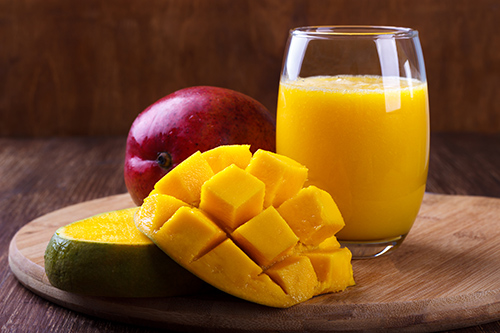
mango health benefits
Mango health benefits

Mango Nutritional Facts

Mango pulp is water, somewhat less than peach or plum. Its carbohydrate content primarily consists of sugars (glucose, saccharose, and fructose). Unripe mangos contain some starch, which converts to sugar as the fruit ripens. Their proportion of proteins and fats is deficient. The most notable nutrients in the mango’s composition are:

Provitamin A – one hundred grams of mango contains significant amounts of vitamin A. Bearing in mind that the daily requirement of this vitamin is 1000 ug, therefore, a 300-gram mango alone provides the Recommended Dietary Allowance (RDA) of this crucial vitamin. The mango is the fresh fruit with the most significant vitamin A content, followed by the cantaloupe, although both are much below the carrot.

Sixteen types of carotenoids have been identified in the mango responsible for its vitamin A action. The most abundant of these is beta-carotene.

Carotenoids are vegetable pigments, generally yellow or orange, that convert to vitamin A within the body. Vitamin A is essential to maintaining epithelial tissues, such as the skin and the mucosa that line the body’s internal systems. Carotenoids are powerful antioxidants that counteract the oxidizing free radicals, which are molecules responsible for cellular aging.

Vitamin C – The mango is a good source of vitamin C. A medium-sized mango (300 grams) provides 138 percent of the adult daily requirement of this vitamin.

Vitamin E – A 300-gram mango provides 33 percent of the daily requirement for this vitamin for an adult male. This is one of the richest fresh fruits in this vitamin.

Mangos also contain non-nutritive components such as soluble fiber (pectin), organic acids (citric and malic), and tannins. To give an idea of the mango’s composition, 41 aromatic substances have been identified that combine to give this fruit its unique fragrance.

Mango Health Benefits
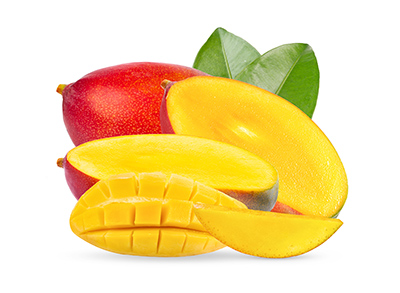
mango sliced open

The following conditions are where the mango health benefits come in:

Skin conditions – Eating mangos helps maintain healthy skin. It has been proven that vitamin S deficiency produces skin dryness and scaling. Mangos contribute to proper skin hydration and tone. Eating large amounts of mangos is recommended in cases of eczema, dermatosis (skin degeneration), and skin dryness as a preventative for premature skin aging.

Retinal conditions – Vitamin A, whose action is potentiated by the simultaneous presence of vitamins C and E, is necessary for good vision. Mango consumption is recommended for vision loss due to retinal conditions such as night blindness, optic nerve atrophy, or thrombosis in the central retinal artery.

Arteriosclerosis – Mangos are rich in the three most potent antioxidant vitamins: A, C, and E. Each of these is potent in its own right, but much more so as a combined unit. They prevent the oxidation of the cholesterol-bearing lipoproteins that circulate in the bloodstream. The oxidation of these substances initiates cholesterol depositing on the arterial walls, leading to their deterioration.

Mangos are incredibly beneficial to the circulatory system. They should be included in the diet of all who experience poor blood circulation to the extremities or coronary arteries (angina or heart attack).

High Blood pressure – Mangos are diuretic (increase urine production). They are pretty rich in potassium and low in sodium. This makes them highly recommended in cases of hypertension since they aid in its control.

Diabetes – Diabetics can benefit from eating mangos because this fruit’s positive effect on the arteries helps prevent the circulatory complications associated with diabetes. These patients tolerate mangos well. It has been shown that after eating mangos, the blood glucose level of non-insulin-dependent diabetics is lower than expected.

Mango Scientific Facts
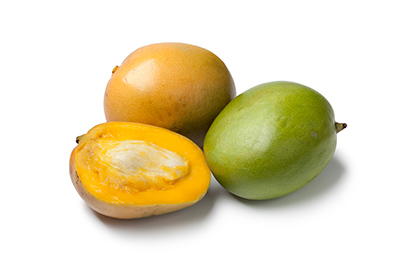
three mangoes with one cut open
  1. Scientific name – Mangifera indica L.
  2. Other names – Man-gay, Mangga, man-kay.
  3. French – Mangue.
  4. Spanish – Mango.
  5. German – Mango.
  6. Description – Fruit of the mango, an evergreen tree of the botanical family Anacardiaceae, grows to 82.02 ft. The fruit is oblong with a thin yellow, orange, or greenish skin and a hard flat pit.
  7. Environment—The mango is native to India and Southeast Asia. It is cultivated in tropical regions of Asia, Africa, and America. The Portuguese introduced it to the Americas in the sixteenth century, taking it to Brazil. Brazil and Mexico produce the best mangos in the world.

How to Use and Prepare Mangos

  1. Fresh—This is the best way to eat mangos, but poor-quality mangos are very fibrous and have a robust turpentine flavor. The best have little fiber and a smooth, aromatic pulp reminiscent of a peach. Mangos are harvested green and stored well in the refrigerator for one to two weeks.
  2. Preserves – Mangos make jellies and jams and can be canned in syrup.

DISCLAIMER: All content on this website is presented solely for educational and informational objectives. Do not rely on the information provided as a replacement for advice, diagnosis, or treatment from a qualified medical expert. If you are pregnant, nursing, or have any preexisting medical concerns, talk to your doctor before using any herbal or natural medicines.

REFERENCES
  1. George D. Pamplona-Roger, M.D. “Encyclopedia of Foods and Their Healing Power.” George D. Pamplona-Roger, M.D. Encyclopedia of Foods and Their Healing Power. Trans. Annette Melgosa. Vol. 2. Chai Wan: Editorial Safeliz, 2005. 341, 342. Print.
  2. WebMD: https://www.webmd.com/diet/health-benefits-mango
  3. Healthline: https://www.healthline.com/nutrition/mango
  4. Cleveland Clinic: https://health.clevelandclinic.org/mango-benefits/
  5. Medical News Today: https://www.medicalnewstoday.com/articles/275921

Related posts:

  1. Foods for Healthy Arteries: What the Evidence Actually Supports
  2. 9 Foods for Healthy Digestion
  3. 12 Foods That Boost Your Metabolism: An Evidence-Based Guide
  4. 10 Foods That Cause Cancer (and the Ones You Don’t Need to Fear)
mango benefitsmango benefits for skinmango health factsmango juice benefits for skinmango nutritional benefitsmango skin benefitsmango vitamin cmango vitaminsmango vitamins and mineralsmedicinal uses of mango
0 FacebookTwitterPinterestTumblrVKWhatsappEmail
Donald Rice
Donald Rice

Donald Rice is a natural health advocate and health writer focused on nutrition, wellness, and alternative health education. He creates clear, research-based content designed to help readers better understand health topics through reputable sources, including peer-reviewed studies, academic institutions, government health agencies, and established medical organizations.

previous post
Chestnut Health Benefits: Invigorates The Muscles
next post
Kiwi Health Benefits: What the Evidence Actually Shows

You may also like

Acerola Cherry vs Orange Vitamin C: What the Numbers Actually Mean

Updated: June 12, 2026

Acerola Cherry vs Camu Camu: Which Vitamin C Superfruit Wins?

Updated: April 9, 2026

Barbados Cherry: What It Is, Where It’s From, and Why Everyone Calls It...

Updated: April 9, 2026

How to Grow Acerola Cherry: A Complete Guide for Home Gardeners

Updated: April 9, 2026

Acerola Cherry for Immunity: What Vitamin C Really Does for Your Immune System

Updated: June 19, 2026

Acerola Cherry Benefits for Skin: Collagen, Brightening, and UV Defense

Updated: June 19, 2026
Best Health and Wellness Blogs - OnToplist.com

Recent Posts

  • Natural Ways to Support Nitric Oxide

  • Flat Feet Symptoms in Adults: What They Feel Like and When They Matter

  • Flat Feet vs Overpronation: What’s the Difference?

  • Best Exercises for Flat Feet in Adults

  • What Are Flat Feet? Causes, Types, and Common Symptoms

Random Articles

Roselle Plant: Essential Health Insights
Arnica Plant Health Benefits
The Moringa Miracle: How This Little-Known Plant Can Transform Your Health

Unveiling the Ulike Laser Hair Removal for Women and Men: Ditch the Razors and Embrace Skin-Baring Confidence

Recent Articles

Amazing Recipe for Mexican Salad
Foods for Healthy Arteries: What the Evidence Actually Supports
Muskmelon Health Benefits: A Fantastic Source of Living Water

Featured

Heart Disease in Seniors: Warning Signs, Risk Factors, and What Helps After 65
4 Amazing Foods to Eat With Hiatal Hernia
Vitamin C Complex Sources, Functions, Dosage, and Information

@2024 – All Right Reserved. Natural Health Message.

  • About Us
  • Contact Us
  • Advertising Disclosure
  • Medical Advice Disclaimer
We use cookies on our website to give you the most relevant experience by remembering your preferences and repeat visits. By clicking “Accept All”, you consent to the use of ALL the cookies. However, you may visit "Cookie Settings" to provide a controlled consent.
Cookie SettingsAccept All
Manage consent

Privacy Overview

This website uses cookies to improve your experience while you navigate through the website. Out of these, the cookies that are categorized as necessary are stored on your browser as they are essential for the working of basic functionalities of the website. We also use third-party cookies that help us analyze and understand how you use this website. These cookies will be stored in your browser only with your consent. You also have the option to opt-out of these cookies. But opting out of some of these cookies may affect your browsing experience.
Necessary
Always Enabled
Necessary cookies are absolutely essential for the website to function properly. These cookies ensure basic functionalities and security features of the website, anonymously.
CookieDurationDescription
cookielawinfo-checkbox-analytics11 monthsThis cookie is set by GDPR Cookie Consent plugin. The cookie is used to store the user consent for the cookies in the category "Analytics".
cookielawinfo-checkbox-functional11 monthsThe cookie is set by GDPR cookie consent to record the user consent for the cookies in the category "Functional".
cookielawinfo-checkbox-necessary11 monthsThis cookie is set by GDPR Cookie Consent plugin. The cookies is used to store the user consent for the cookies in the category "Necessary".
cookielawinfo-checkbox-others11 monthsThis cookie is set by GDPR Cookie Consent plugin. The cookie is used to store the user consent for the cookies in the category "Other.
cookielawinfo-checkbox-performance11 monthsThis cookie is set by GDPR Cookie Consent plugin. The cookie is used to store the user consent for the cookies in the category "Performance".
viewed_cookie_policy11 monthsThe cookie is set by the GDPR Cookie Consent plugin and is used to store whether or not user has consented to the use of cookies. It does not store any personal data.
Functional
Functional cookies help to perform certain functionalities like sharing the content of the website on social media platforms, collect feedbacks, and other third-party features.
Performance
Performance cookies are used to understand and analyze the key performance indexes of the website which helps in delivering a better user experience for the visitors.
Analytics
Analytical cookies are used to understand how visitors interact with the website. These cookies help provide information on metrics the number of visitors, bounce rate, traffic source, etc.
Advertisement
Advertisement cookies are used to provide visitors with relevant ads and marketing campaigns. These cookies track visitors across websites and collect information to provide customized ads.
Others
Other uncategorized cookies are those that are being analyzed and have not been classified into a category as yet.
SAVE & ACCEPT
Natural Health Message — Herbs, Remedies & Nutrition for Whole-Body Wellness.
  • Health Conditions
    • Cancer & Prevention
    • Cardiovascular Health
    • Digestive Health
    • Eye & Vision
    • Immune & Infections
    • Metabolic Health
    • Musculoskeletal Health
    • Nervous System
    • Reproductive Health
    • Respiratory Health
    • Skin Health
    • Urinary Health
  • Nutrition
    • Diet
    • Foods
    • Recipes
  • Remedies
    • Alternative Treatments
    • Herbal Remedies
    • Herbs
    • Lifestyle & Habits
  • Supplements and Reviews
    • General Supplements
    • Minerals
    • Nitric Oxide
    • Reviews
    • Vitamins