
The most useful thing an American beech tree gives you is food: small, sweet, triangular nuts that are edible, preferably roasted and eaten in moderation. The medicinal claims attached to American beech are a different story. Beech charcoal is not a universal antidote, beech bark has never been tested in a clinical trial, and the one beech product with real human data, wood creosote, is a factory-made medicine you shouldn’t try to recreate at home.
Here’s what holds up, what doesn’t, and how to enjoy this tree without getting hurt.
First, make sure it’s American beech
A lot of beech advice online, including older versions of this page, describes the European beech (Fagus sylvatica) while calling it American. They’re related but different trees. American beech is Fagus grandifolia, a native of eastern North America found from Maine to Florida and west to Texas, Oklahoma, and Minnesota [NC State Extension, n.d.].
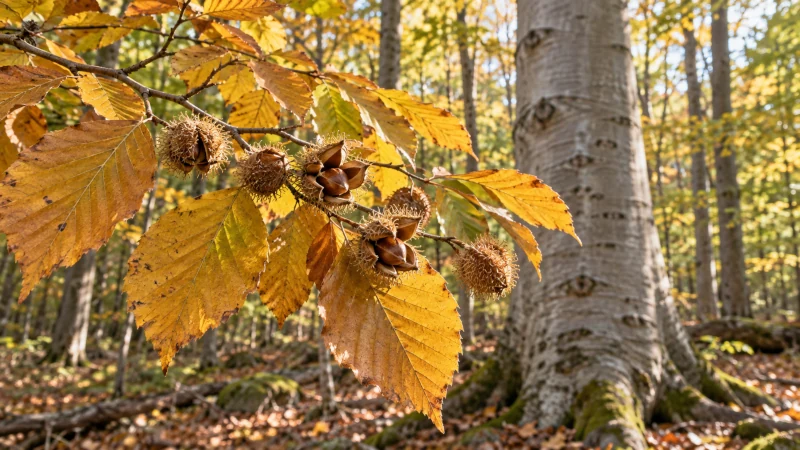
It’s easy to spot once you know it. The bark stays smooth and silver-gray for the tree’s whole life, which can run past 300 years, and many trees hold their dry, bronze leaves all winter [Towson University, n.d.]. Mature trees usually reach 60 to 80 feet. In fall they drop prickly husks holding two or three shiny brown, three-sided nuts, about three-quarters of an inch long [NC State Extension, n.d.]. If the spiny husk reminds you of a chestnut, that’s because both trees belong to the same family, Fagaceae.
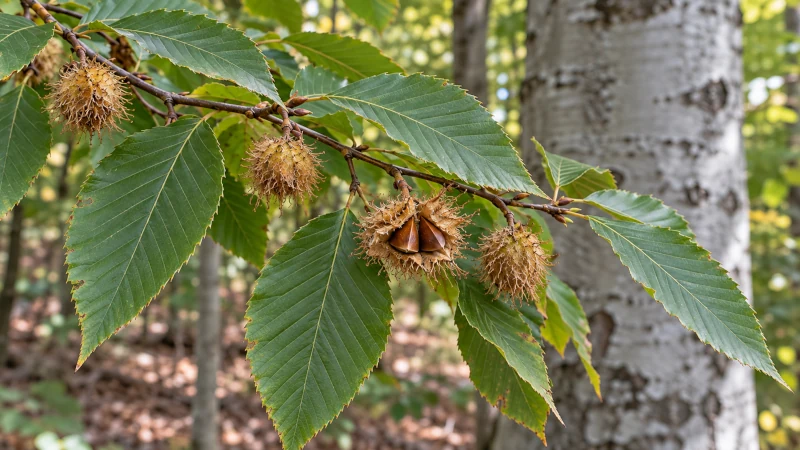
| Feature | American beech |
| Scientific name | Fagus grandifolia (not Fagus sylvatica, which is European beech) |
| Family | Fagaceae (beech family, shared with oaks and chestnuts) |
| Native range | Eastern North America: Maine to Florida, west to Texas, Oklahoma, Illinois, Michigan, Minnesota |
| Bark | Thin, smooth, light gray throughout life |
| Nuts | Triangular, shiny brown, 2–3 per prickly husk; ripen September–October |
| Parts used traditionally | Nuts (food), leaves and bark (folk remedies), wood (charcoal, creosote) |
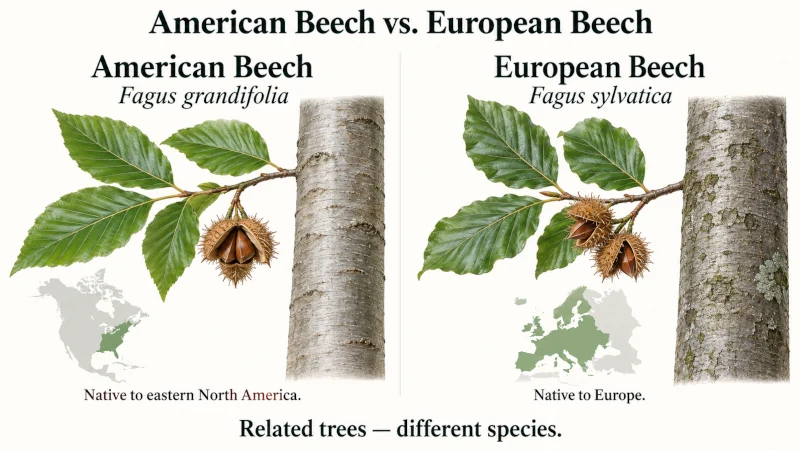
Source: NC State Extension; Towson University Glen Arboretum
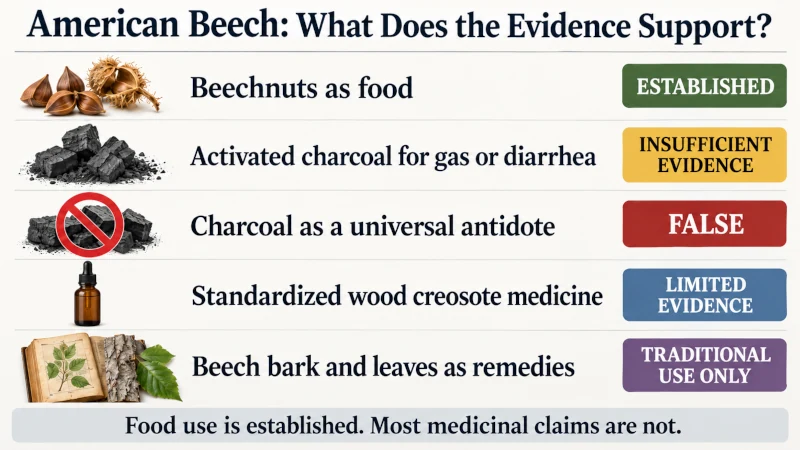
American beech uses at a glance: what the evidence says
| Use or claim | Strength of evidence | Verdict |
| Beechnuts as food | Well established (nutrient data; extension guidance) | Edible; roast them and keep raw portions small |
| Beech charcoal for gas, bloating, diarrhea | Insufficient; NIH finds no scientific evidence for activated charcoal here | Not recommended |
| Charcoal as a “universal antidote” | Contradicted; medical activated charcoal works only for some poisons, in hospital, early | False. Call Poison Control instead |
| Wood (beechwood) creosote for acute diarrhea | Limited: one manufacturer-linked randomized trial of a standardized drug | Interesting, but not a home remedy |
| Bark tea or leaf poultice | Traditional use only; no human studies found | Unproven |
| Beechnuts or bark for worms | Traditional use only | Unproven; get tested and treated |
Beechnuts: a real food, best eaten roasted and in moderation
American beechnuts are edible, and North Carolina State Extension lists the nutmeats as edible raw or cooked “in small quantities” [NC State Extension, n.d.]. That qualifier matters. The same source rates the nuts as having low-severity poison characteristics: a saponin-type compound (a saponic glycoside) that can irritate the stomach in some people who eat a lot of them. The Plants for a Future database likewise notes reports that large amounts of the raw seed may cause enteritis, an inflamed, upset gut [PFAF, n.d.].
Most warnings you’ll read about beechnut poisoning come from European beech. Foraging writers there describe excess raw nuts causing poisoning [Harford/Eatweeds, 2026]. Whether American beechnuts carry the same load hasn’t been well measured, so the sensible approach is the same for both: treat a handful of raw nuts as a snack, not a meal.
A correction to the older version of this page: it said the beech’s bark contains a substance that causes headaches. We couldn’t find a source supporting that. The documented caution is about eating lots of raw nuts.
What’s in a beechnut
USDA’s entry for dried beechnuts (the species isn’t specified) lists about 164 calories per ounce, with 14.2 g of fat, 1.8 g of protein, and 9.5 g of carbohydrate. An ounce also supplies roughly 21% of the Daily Value for copper, 17% for manganese, and 11% for vitamin B6 [USDA SR Legacy via MyFoodData]. In other words, they’re an energy-dense, fatty nut.
How to eat them safely
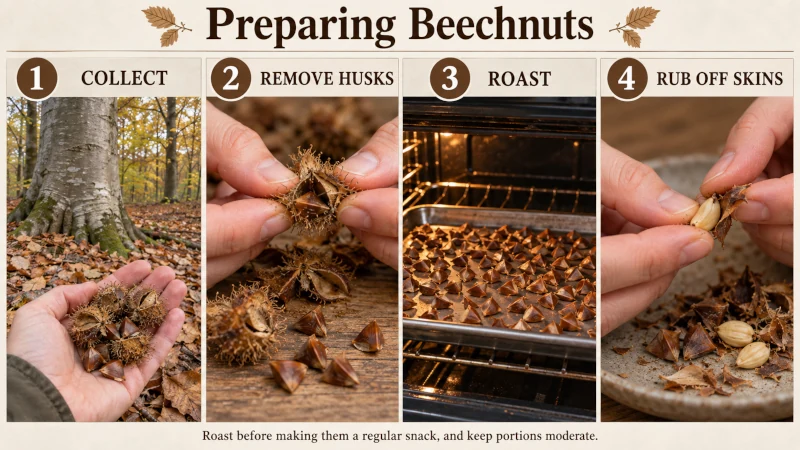
- Collect only nuts you can identify. Look for the smooth gray bark and the small, spiny husks, and leave anything you’re unsure about.
- Roast them. Ripe beechnuts can be roasted, and roasted nuts have long been used as a coffee substitute [Towson University, n.d.]. Roasting also loosens the thin papery skin so you can rub it off.
- Keep raw portions small, and go slower with children, who are smaller and get a proportionally larger dose.
- Have a tree-nut allergy? No good data tell us how beechnuts behave in people with nut allergies. Ask your allergist before trying them.
- Expect lean years. Good crops tend to come only every two to three years [PFAF, n.d.], and wildlife from black bears to blue jays eat the nuts [NC State Extension, n.d.]. Take a little and leave plenty.
Beech charcoal: why the “universal antidote” claim doesn’t hold up
Old herbals praised beech-wood charcoal for gas, colitis, and diarrhea and called it an antidote to “any” poisoning. The previous version of this page repeated that, along with a dose of 10 to 20 grams up to five times a day, or 100 grams at once. We’ve removed those instructions. Here’s why.
The charcoal used in medicine is activated charcoal: processed to create a huge, porous surface. Even that version is a narrow hospital tool. It’s considered mainly when it can be given within about an hour of swallowing certain toxins, it doesn’t meaningfully bind alcohols, iron, lithium, acids, or alkalis, and no studies have shown it improves outcomes like survival or length of hospital stay [Taylor et al., 2026]. Its most serious risk is aspiration: if someone vomits and inhales it, charcoal in the lungs can be life-threatening. Bowel blockage has also been reported. Ordinary wood charcoal from a fire hasn’t gone through the activation process at all.
For everyday gut complaints, the evidence is thin. The NIH’s National Center for Complementary and Integrative Health says there’s no scientific evidence that activated charcoal helps diarrhea, bloating, stomach cramps, or gas, and warns that children with diarrhea or dehydration shouldn’t be given it, because it can bind nutrients and medicines and hide how much fluid they’re losing [NCCIH, 2017].
Regular use has its own costs. Charcoal can soak up oral medications and reduce how well they work, and people who take it routinely may risk lower nutrient absorption and constipation [Taylor et al., 2026]. The old suggestion to use it as toothpaste is also off the table here; we found no quality evidence to support it.
If you think someone has swallowed something poisonous, skip the charcoal and get expert help. In the US, call Poison Control at 1-800-222-1222 or use the free webPOISONCONTROL tool online. Call 911 if the person collapses, has a seizure, has trouble breathing, or can’t be woken up [Poison Control].
Beechwood creosote: a genuine old medicine, but not a home remedy
Beech has one claim to real pharmaceutical history. Wood creosote, a pale, smoky-smelling liquid made by heating beech and other woods, was once used as a disinfectant, a laxative, and a cough treatment. According to the federal Agency for Toxic Substances and Disease Registry, it has since been replaced by better medicines [ATSDR, 2024].
Don’t confuse it with coal tar creosote, the black, oily wood preservative on railroad ties. They’re different products, though the name causes endless mix-ups. Neither is harmless: animal studies show that eating wood creosote damages the liver, and the International Agency for Research on Cancer classifies creosotes as probably carcinogenic to humans [ATSDR, 2024].
Wood creosote does have one decent human trial. In a double-blind study at 12 centers in the US and Mexico, 123 adults with acute diarrhea took either a standardized 135 mg wood creosote dose or the standard drug loperamide (Imodium). Diarrhea lasted about the same time in both groups (a median of 24.4 versus 22.1 hours). Wood creosote relieved cramping in more people (92.5% versus 78%), while loperamide produced fewer loose stools on day one [Kuge et al., 2004]. Keep two caveats in mind: it was a single trial, and its corresponding author was affiliated with the company that makes the creosote product.
The takeaway is narrow. A purified, dose-controlled pharmaceutical showed some promise for short-term diarrhea. That says nothing about tars, smoke, or anything you could make from a beech tree, and given the liver and cancer concerns, homemade creosote is a firm no.
Beech bark and leaves: traditional uses without clinical trials
Native Americans used American beech for building materials, food, and medicine [NC State Extension, n.d.]. Reported uses include a wash or poultice of boiled leaves for burns, frostbite, and poison ivy rash, a bark tea for lung complaints, and the nuts as a worm remedy [PFAF, n.d.].
Older herbals also describe the bark as rich in tannins and therefore astringent, meaning it tightens tissue and can reduce fluid loss, which is the logic behind using it for diarrhea. That’s plausible chemistry, but we found no study measuring tannins in American beech bark specifically, and no human trial of beech bark for any condition. If you’re interested in a tannin-rich bark that has at least been formally assessed for mild diarrhea, see our guide to oak bark benefits.
We’ve removed the old bark-decoction dosing, including the five-day “vermifuge” course. Worm infections are easy to confirm with a stool test and usually clear with inexpensive medicine, and no beech preparation has been shown to treat them. Our evidence reviews of herbs that kill parasites and antiparasitic herbs explain what actually works.
One traditional use is a clear safety warning rather than a benefit: beech bark tea is also recorded as having been used to bring on an abortion [PFAF, n.d.]. That’s reason enough for anyone who is pregnant to avoid it.
Beech pollen and wood dust can trigger allergies
American beech is wind-pollinated and sheds pollen from about April into May. In sensitized people, the pollen can cause hay fever symptoms and sometimes asthma, and it cross-reacts with birch and oak pollen, so if birch season makes you miserable, beech may too [Thermo Fisher, 2020]. Woodworkers exposed to beech dust have reported throat irritation and twitchy airways, and at least one carpenter developed allergic skin dermatitis from it [Thermo Fisher, 2020]. If you turn or sand beech, a well-fitted dust mask is worth wearing.
Who should avoid American beech remedies
Roasted beechnuts in normal food amounts are fine for most adults. The remedies are another matter. Skip beech bark, leaf, charcoal, and creosote preparations, and talk to a clinician first, if any of these apply to you:
- You’re pregnant or breastfeeding. Beech is best avoided as food or medicine in pregnancy and while breastfeeding [Harford/Eatweeds, 2026], and the bark has a recorded history as an abortifacient [PFAF, n.d.].
- You take daily medication. Charcoal can reduce absorption of oral drugs, such as propranolol, rifampin, and phenobarbital [Taylor et al., 2026]. Ask a pharmacist before taking any charcoal product.
- You’re giving it to a child. Don’t give charcoal to a child with diarrhea or dehydration [NCCIH, 2017], and keep raw beechnut portions very small.
- You have a bowel obstruction, recent gut surgery, or slow digestion (including from opioids). These raise the risk of charcoal causing a blockage [Taylor et al., 2026].
- You have liver disease. Wood creosote has damaged the liver in animal studies [ATSDR, 2024].
- You have tree-pollen or nut allergies. Beech pollen cross-reacts with birch and oak [Thermo Fisher, 2020].
Side effects to watch for: stomach upset or cramps after eating many raw beechnuts; constipation, black stools, or vomiting with charcoal; sneezing, wheezing, or itchy eyes in pollen season.
When to get medical help
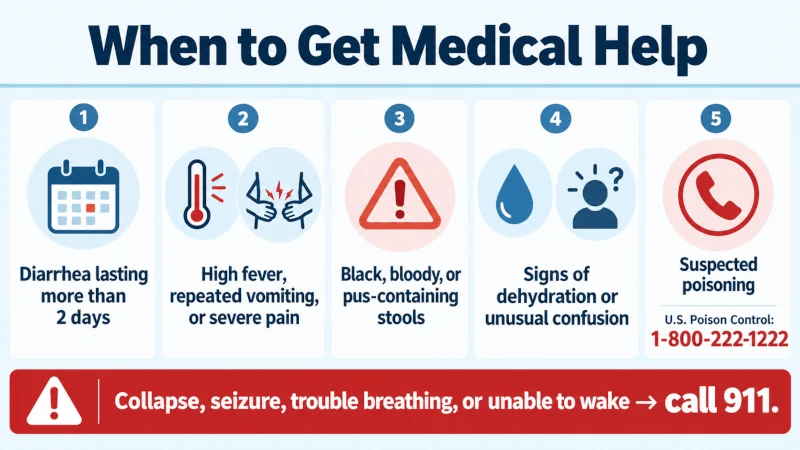
Self-care isn’t enough, and you should contact a doctor right away, if an adult with diarrhea has any of the following [NIDDK, n.d.]:
- Diarrhea lasting more than two days, or six or more loose stools in a day
- A high fever, frequent vomiting, or severe pain in the belly or rectum
- Black, tarry stools, or stools with blood or pus
- Signs of dehydration, or a change in mental state such as confusion or unusual lack of energy
Pregnant people, adults over 65, anyone on antibiotics, and people with weakened immune systems are at higher risk and should keep their clinician in the loop [NIDDK, n.d.]. For any suspected poisoning, from raw nuts, homemade remedies, or anything else, contact Poison Control at 1-800-222-1222, and call 911 for collapse, seizures, trouble breathing, or someone who can’t be woken [Poison Control].
| Health Disclaimer: This article is for general education and is not a substitute for professional medical advice, diagnosis, or treatment. Traditional uses of American beech described here have not been proven safe or effective in clinical studies. Do not use beech bark, leaves, charcoal, or creosote to treat an illness, especially if you are pregnant, breastfeeding, giving it to a child, taking prescription medication, or living with liver or digestive disease, without first talking to a qualified healthcare professional. If you suspect a poisoning, contact Poison Control (1-800-222-1222) or call 911 in an emergency. |
Frequently Asked Questions
Can you eat American beechnuts raw?
Yes, in small amounts. NC State Extension lists the nutmeats as edible raw or cooked in small quantities, but notes they can irritate the stomach if eaten in quantity. Roasting them is the safer, tastier habit.
Is American beech the same as European beech?
No. American beech is Fagus grandifolia, native to eastern North America; European beech is Fagus sylvatica. They’re close relatives, but much of the traditional medicine and poisoning literature describes the European tree.
Does beech charcoal help with gas or diarrhea?
There’s no good evidence it does. The NIH says activated charcoal hasn’t been shown to help diarrhea, bloating, cramps, or gas, and ordinary wood charcoal isn’t even activated. It can also interfere with medications.
Is beechwood creosote safe?
Not as a home remedy. A standardized wood creosote drug performed similarly to loperamide in one trial for short-term diarrhea, but creosotes are classified as probably carcinogenic and wood creosote has harmed the liver in animal studies.
References
- NC State Extension. Fagus grandifolia (American Beech). North Carolina Extension Gardener Plant Toolbox. n.d. View source
- Towson University Glen Arboretum. American Beech. Contributed by A. Eick and S. Cao. n.d. View source
- U.S. Department of Agriculture. Nuts, beechnuts, dried. SR Legacy, FDC ID 170161. Values accessed via MyFoodData. View source
- Plants for a Future. Fagus grandifolia – Ehrh. PFAF Plant Database. n.d. (traditional uses citing Moerman, Native American Ethnobotany). View source
- Harford R. The Traditional and Modern Uses of Beech (Fagus sylvatica). Eatweeds. View source
- Taylor A, Galuska MA, Patel P. Activated Charcoal. View source
- National Center for Complementary and Integrative Health. Complementary Health Approaches for Travelers. View source
- Agency for Toxic Substances and Disease Registry. ToxFAQs for Creosote. View source
- Kuge T, Shibata T, Willett MS. Multicenter, double-blind, randomized comparison of wood creosote, the principal active ingredient of Seirogan, an herbal antidiarrheal medication, and loperamide in adults with acute nonspecific diarrhea. View source
- Thermo Fisher Scientific. t5 American beech Pollen. Allergen Encyclopedia. View source
- National Institute of Diabetes and Digestive and Kidney Diseases. Symptoms & Causes of Diarrhea. n.d. View source
- National Capital Poison Center. Poison Control. View source


