
The top 5 cancers in seniors — breast, colorectal, lung, prostate, and bladder — account for a large share of cancer diagnoses in adults over 60. A diagnosis is frightening, but it is not a sentence: most of these cancers are survivable when caught early, and screening tests backed by the U.S. Preventive Services Task Force (USPSTF) have measurably improved outcomes over the past two decades [NCI, 2024], [USPSTF, 2023]. This guide explains each of the five, who is at highest risk, which screenings actually save lives, and the early symptoms worth a prompt call to a doctor.
Why cancer risk rises with age
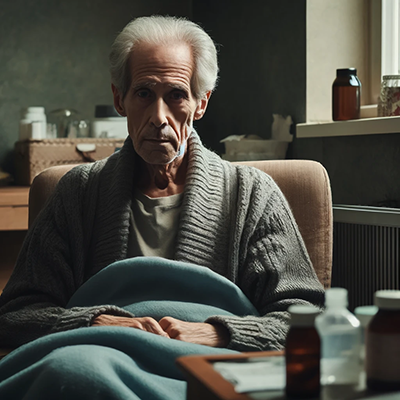
Cancer risk increases sharply after about age 60. Roughly 6 in 10 cancers are diagnosed in people 65 and older [NCI, 2024]. The reasons are biological, not a matter of willpower: DNA repair becomes less efficient, the immune system is slower to clear abnormal cells, and decades of exposure to tobacco smoke, ultraviolet light, alcohol, certain infections, and environmental chemicals accumulate. Chronic low-grade inflammation and oxidative stress in older tissues also create conditions in which abnormal cells are more likely to survive and multiply [Liguori et al., 2018].
None of this means cancer is inevitable. The World Health Organization estimates that 30–50% of cancers could be prevented by avoiding known risk factors and using evidence-based screening [WHO, 2022].
The top 5 cancers in seniors at a glance
The table below summarizes who is most affected, the screening tests with the strongest evidence, and the symptoms that should prompt a medical evaluation. Figures reflect U.S. data from the National Cancer Institute’s SEER program and the American Cancer Society.
| Cancer | Who is most affected | Standard screening | Early warning signs |
| Breast | Women; median age at diagnosis ~63 | Mammogram every 1–2 years, ages 40–74 | Lump, nipple change, skin dimpling |
| Colorectal | Men and women; median age ~66 | Colonoscopy or stool-based test, ages 45–75 | Blood in stool, bowel habit change |
| Lung | Long-term smokers; median age ~71 | Low-dose CT for eligible 50–80-year-olds | Persistent cough, chest pain, coughing blood |
| Prostate | Men; median age ~67 | PSA testing — shared decision, ages 55–69 | Often none early; urinary changes later |
| Bladder | Men > women; median age ~73 | No routine screening test | Blood in urine, painful urination |
Sources: NCI SEER Cancer Statistics; American Cancer Society Key Statistics; U.S. Preventive Services Task Force recommendations.
1. Breast cancer
Breast cancer is the most commonly diagnosed cancer in women, with roughly 1 in 8 U.S. women developing it over a lifetime [ACS, 2024]. Risk rises with age — the median age at diagnosis is around 63. Men can develop breast cancer too, though it’s uncommon.
Screening
The USPSTF now recommends mammograms every 1 to 2 years for women aged 40 to 74 at average risk [USPSTF, 2024]. Women with dense breasts, a strong family history, or known genetic mutations (BRCA1/2) may need additional imaging — discuss this with a clinician.
Warning signs worth a prompt call
- A new lump or thickening in the breast or underarm
- Skin dimpling, puckering, or redness
- Nipple retraction, discharge, or persistent rash
- A change in the size or shape of one breast
2. Colorectal cancer
Colorectal cancer (colon and rectal cancer together) is the second leading cause of cancer death in the United States when men and women are combined. Most cases are diagnosed after age 50 [ACS, 2024]. The good news: it is one of the most preventable cancers, because screening can find and remove precancerous polyps before they ever become malignant.
Screening
The USPSTF recommends screening starting at age 45 and continuing to age 75, with individualized decisions for adults 76 to 85 [USPSTF, 2021]. Options include colonoscopy (every 10 years), FIT stool testing (yearly), or stool DNA testing (every 1 to 3 years). The best test is the one you will actually complete.
Warning signs
- Blood in the stool or rectal bleeding
- A persistent change in bowel habits (looser, narrower, or less frequent)
- Abdominal cramping, bloating, or unexplained weight loss
- Iron-deficiency anemia with no obvious cause
3. Lung cancer
Lung cancer is the leading cause of cancer death worldwide. Smoking is responsible for the large majority of cases, though non-smokers can also develop it — from radon exposure, secondhand smoke, occupational hazards, or reasons that remain unclear [ACS, 2024]. The median age at diagnosis is around 71.

Screening
The USPSTF recommends annual low-dose CT scans for adults aged 50 to 80 who have a 20 pack-year smoking history and currently smoke or have quit within the past 15 years [USPSTF, 2021]. For people who have never smoked and have no unusual exposures, routine lung cancer screening is not currently recommended. If you currently smoke, quitting at any age lowers your risk — resources and programs to help are widely available through clinicians and state quitlines. Our guide on how to stop smoking outlines practical next steps.
Warning signs
- A new cough that won’t go away, or a change in a long-standing “smoker’s cough”
- Coughing up blood, even a small amount
- Chest pain, hoarseness, or shortness of breath with activities that used to be easy
- Unexplained weight loss, fatigue, or recurrent pneumonia
4. Prostate cancer
Prostate cancer is the most common non-skin cancer in American men, with about 1 in 8 diagnosed in their lifetime and most cases occurring after age 65 [ACS, 2024]. Many prostate cancers grow slowly and never cause symptoms or death — which is why screening is a decision, not an automatic recommendation.
Screening
The USPSTF recommends that men aged 55 to 69 make an individual decision about PSA (prostate-specific antigen) blood testing after discussing benefits and harms with their clinician. PSA testing is not recommended for men 70 and older at average risk, because the harms of over-diagnosis tend to outweigh the benefits in that age group [USPSTF, 2018]. Black men and men with a family history of prostate cancer face higher risk and may benefit from starting the conversation earlier.
Warning signs
Early prostate cancer usually has no symptoms. Later signs can include a weak or interrupted urine stream, difficulty starting or stopping urination, blood in the urine or semen, and new bone pain. Most urinary symptoms in older men are caused by benign prostate enlargement, not cancer — but they still deserve evaluation.
5. Bladder cancer

Bladder cancer is the fourth most common cancer in men, and it is clearly tied to age: the median age at diagnosis is 73. Smoking is the biggest single risk factor, followed by occupational exposures to certain industrial chemicals (dyes, rubber, leather, paint) [ACS, 2024]. There is no routine screening test for the general population.
Warning signs worth a prompt call
- Blood in the urine — even once, even if it stops
- Painful or burning urination not explained by an infection
- Needing to urinate more often or urgently
- Lower back or pelvic pain without a clear cause
Visible blood in urine (hematuria) is the most common early warning sign and should always be investigated, even if it goes away on its own.
These five rank among the most frequently diagnosed cancers in older adults by SEER incidence data — prostate and breast lead within each sex, while colorectal, lung, and bladder are common across both. Non-melanoma skin cancers, though more common still, are excluded because they are rarely life-threatening and aren’t tracked the same way.
General red-flag symptoms to never ignore
The following symptoms are not specific to any one cancer and often have benign explanations — but when they are new, persistent, or unexplained in an older adult, they deserve a prompt evaluation:
- Unintended weight loss of 10 pounds or more
- New, persistent fatigue that doesn’t improve with rest
- A lump anywhere in the body
- Any unusual bleeding — rectal, vaginal after menopause, in the urine, or coughing blood
- A sore, ulcer, or wound that doesn’t heal within a few weeks
- A new, persistent cough or hoarseness lasting more than 3 weeks
- Difficulty swallowing or persistent indigestion
- A mole that changes size, shape, color, or starts to bleed or itch
What actually reduces cancer risk
No lifestyle change can guarantee that you won’t develop cancer. But decades of research from the World Cancer Research Fund, the WHO, and large cohort studies point consistently to a handful of evidence-backed habits [WCRF, 2023], [WHO, 2022]:
- Don’t smoke, and avoid secondhand smoke. Tobacco is the single largest preventable cause of cancer.
- Keep alcohol low or avoid it. Alcohol is a Group 1 carcinogen and is linked to breast, colorectal, liver, esophageal, and head-and-neck cancers.
- Stay physically active. Aim for at least 150 minutes of moderate activity per week, adjusted for your abilities.
- Eat a mostly plant-based diet. Vegetables, fruit, whole grains, and legumes are consistently associated with lower risk. Our guide to healthy foods for long-term health and our cancer-preventing diet overview cover the specifics.
- Maintain a healthy weight. Excess body fat is linked to at least 13 cancers.
- Protect your skin. Use shade, clothing, and broad-spectrum sunscreen.
- Stay current on vaccines. HPV and hepatitis B vaccines prevent cancers caused by those viruses.
- Complete recommended screening. Screening is how we find many of these cancers early, when they are most treatable.
When self-care and watchful waiting are not enough
Diet and lifestyle matter, but they are not a substitute for medical evaluation. Call your doctor without delay if you notice any of the red-flag symptoms above, and seek urgent or emergency care for: heavy or sudden bleeding, severe chest pain or shortness of breath, sudden severe headache, new confusion, a seizure, inability to urinate, or severe abdominal pain.
For adults already living with cancer, palliative care — support focused on comfort, symptom relief, and quality of life — can be provided alongside active treatment at any stage, not just at the end of life.
| Health Disclaimer This article is for general educational purposes only and does not replace medical advice, diagnosis, or treatment. Cancer is a serious disease, and decisions about screening, testing, and treatment should always be made with a qualified healthcare professional who knows your personal and family medical history. If you notice a lump, unexplained bleeding, persistent pain, unintended weight loss, a new or changing cough, or any other symptom that concerns you, contact a doctor promptly. Nothing in this article should be interpreted as a promise that any food, supplement, or lifestyle change can prevent or cure cancer. |
Frequently asked questions
What is the most common cancer in seniors overall?
In men, prostate cancer is the most commonly diagnosed. In women, breast cancer is the most common. Lung cancer causes the most deaths in both sexes combined [NCI, 2024].
At what age should I stop cancer screening?
It depends on the cancer, your overall health, and your life expectancy — not just a birthday. The USPSTF gives upper age limits for several screenings (74 for breast, 75 for colorectal, 80 for lung) beyond which shared decision-making with a clinician is recommended. A healthy 78-year-old may still benefit from screening; someone with serious illness and limited life expectancy may not.
Can diet or supplements prevent cancer?
A mostly plant-based diet, regular activity, and a healthy weight are consistently associated with lower cancer risk. Single-nutrient supplements have mostly failed to show benefit in large trials, and some (like high-dose beta-carotene in smokers) have increased risk [WCRF, 2023]. Food first; supplements only if a clinician identifies a deficiency.
Are these cancers always terminal?
No. Five-year relative survival is above 90% for localized breast and prostate cancer, and above 70% for localized colorectal and bladder cancer. Lung cancer survival is lower but has risen substantially with newer treatments and earlier detection through low-dose CT screening [NCI SEER, 2024].
Does a family history mean I will definitely get cancer?
No — most cancers are not inherited. Family history is a risk factor worth sharing with your doctor, because it can change which screening tests are recommended and when they should start. Genetic counseling is an option if several close relatives have had the same type of cancer, especially at young ages.
References
- National Cancer Institute (2024). Cancer Statistics. → View source
- National Cancer Institute (2024). Age and Cancer Risk. → View source
- National Cancer Institute SEER Program (2024). Cancer Stat Facts. → View source
- U.S. Preventive Services Task Force (2024). Breast Cancer: Screening — Recommendation. → View source
- U.S. Preventive Services Task Force (2021). Colorectal Cancer: Screening — Recommendation. → View source
- U.S. Preventive Services Task Force (2021). Lung Cancer: Screening — Recommendation. → View source
- U.S. Preventive Services Task Force (2018). Prostate Cancer: Screening — Recommendation. → View source
- American Cancer Society (2024). How Common Is Breast Cancer? → View source
- American Cancer Society (2024). Key Statistics for Colorectal Cancer. → View source
- American Cancer Society (2024). Key Statistics for Lung Cancer. → View source
- American Cancer Society (2024). Key Statistics for Prostate Cancer. → View source
- American Cancer Society (2024). Key Statistics for Bladder Cancer. → View source
- World Health Organization (2022). Cancer — Fact Sheet. → View source
- World Cancer Research Fund (2023). Diet, Activity and Cancer — Cancer Prevention Recommendations. → View source
- National Institute on Aging. What Are Palliative Care and Hospice Care? → View source
- Liguori, I. et al. (2018). Oxidative stress, aging, and diseases. Clinical Interventions in Aging. → View source
