Prebiotic toothpaste is sold as a gentler way to care for your teeth: instead of scrubbing away bacteria, it aims to feed the helpful microbes already living in your mouth. The idea is appealing, and the science behind the oral microbiome is real. But the evidence that a tube of toothpaste delivers on the bigger promises is still early, and a lot of what you will read online runs well past what studies actually support.
This guide walks through what prebiotic toothpaste is, what the research shows so far, where the claims get oversold, and how to decide whether it belongs in your routine — without giving up the basics that are proven to work.
| The short version The oral microbiome is genuinely important to oral health — that part is well established.A few prebiotic-type ingredients, especially arginine, can shift mouth bacteria toward a healthier balance in studies.Evidence that prebiotic or probiotic toothpastes reduce plaque or gum inflammation is mostly low-to-moderate certainty.It is an add-on, not a replacement for fluoride, brushing, flossing, and regular dental visits.There is no good evidence it prevents heart disease, diabetes, Alzheimer’s, or cancer. |
What “prebiotic” means in a toothpaste
A prebiotic is a substance your own cells cannot digest but that beneficial microbes can use as fuel. In the gut, that usually means certain fibers. In the mouth, the goal is similar: give the friendly, health-associated bacteria something to feed on so they can outnumber the acid-producing and inflammation-driving species linked to cavities and gum disease.
That makes prebiotics different from probiotics, which add live bacteria. Some products combine both, and you will also see the word “synbiotic” for that mix. Prebiotic toothpaste, strictly speaking, is about feeding the community you already have rather than seeding a new one.
A quick look at your mouth’s ecosystem
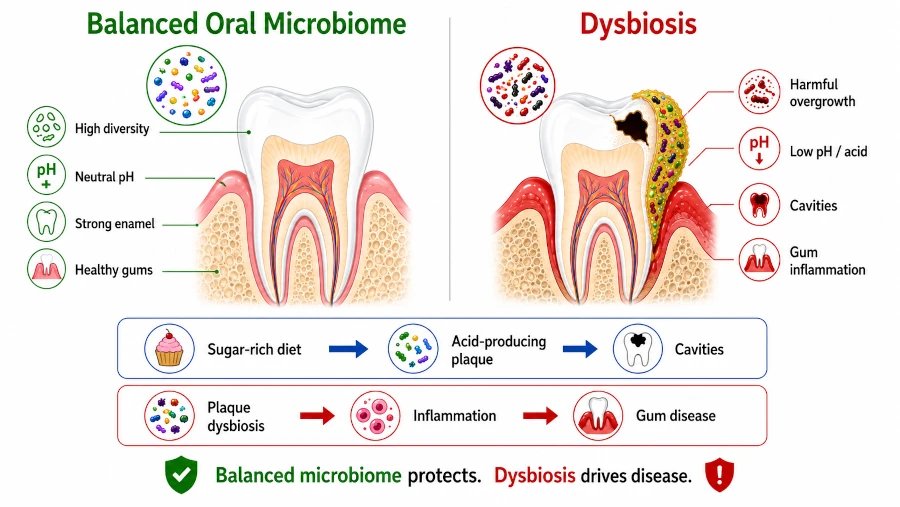
Your mouth hosts more than 700 microbial species. In a healthy mouth they sit in a rough balance. Problems start when that balance tips — a state researchers call dysbiosis — and acid-producing or inflammatory species take over. That shift is what drives tooth decay and gum disease, so a community-level approach to oral care has real logic behind it [Adams et al., 2017].
What the evidence shows, ingredient by ingredient
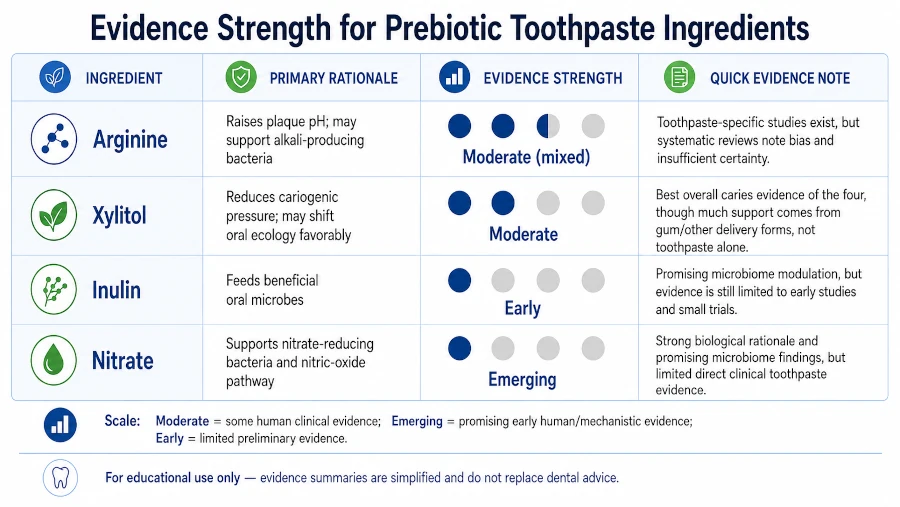
“Prebiotic” on a toothpaste box can mean very different ingredients, and the research behind each one varies a lot. Here is an honest read of where things stand.
| Ingredient | What it is meant to do | Evidence | Worth knowing |
| Arginine (often 1.5%) | An amino acid that mouth bacteria break down into ammonia, raising plaque pH and shifting the community toward health-associated species. | Emerging / moderate | Best-studied prebiotic-style ingredient; usually paired with fluoride. |
| Xylitol | A sugar alcohol that bacteria such as Streptococcus mutans cannot ferment for acid, which may reduce their numbers. | Limited / low-quality | Fluoride-plus-xylitol may modestly beat fluoride alone in children. Can upset the stomach; toxic to dogs. |
| Inulin, FOS, GOS | Plant fibers meant to feed beneficial oral bacteria, borrowed from gut-health science. | Very limited | Mostly lab studies or multi-ingredient formulas; little stand-alone human data in toothpaste. |
| Nitrate | Feeds nitrate-reducing bacteria associated with a healthier mouth and, possibly, blood-pressure effects. | Early-stage | An active research area, not yet a proven toothpaste benefit. |
Arginine has the strongest case
Arginine is the ingredient with the most credible mechanism. Oral bacteria metabolise it into ammonia, which raises the pH of dental plaque and makes the environment less friendly to decay-causing microbes [npj Biofilms and Microbiomes, 2024]. In one study of 53 adults, brushing with a fluoride-plus-arginine toothpaste for six months shifted the plaque community toward health-associated bacteria and changed which genes the microbes switched on [Metagenomic dentifrice study, 2022].
Xylitol: popular, but the evidence is thin
Xylitol is widely promoted, yet a Cochrane systematic review found only limited, low-quality evidence that it prevents cavities. The reviewers did see some low-quality evidence that a fluoride toothpaste containing xylitol may work slightly better than fluoride alone in the permanent teeth of children — a narrow finding, not a blanket endorsement [Cochrane, 2015].
The bigger picture across products
A 2025 systematic review and meta-analysis pulled together 12 randomised trials of toothpastes containing probiotic, prebiotic, synbiotic, or postbiotic ingredients. It found a real reduction in plaque at three months, but graded the overall certainty as moderate to very low — partly because many formulas mixed several actives, so it is hard to credit any single ingredient [Frontiers in Oral Health, 2025]. A separate trial in 288 children, using an arginine-and-probiotic lozenge alongside fluoride toothpaste, showed only a trend toward fewer active cavities rather than a clear, statistically significant benefit [Evidence-Based Dentistry, 2024]. The direction is encouraging; the proof is not yet decisive.
Where the claims get oversold
Marketing for prebiotic toothpaste often stretches well beyond the data. A few corrections worth keeping in mind:
- It does not replace fluoride. Fluoride remains the most established cavity-prevention ingredient in toothpaste. Swapping a proven fluoride paste for an unproven prebiotic one can leave your teeth less protected.
- It will not cure gum disease. Established gum disease needs professional treatment. A toothpaste can support healthy gums; it cannot reverse periodontitis on its own.
- It does not prevent whole-body diseases. Poor oral health is associated with conditions like heart disease and blood sugar control in diabetes, and the gum-disease–diabetes link runs in both directions [Narrative review, 2024]. But that association is about treating gum disease and keeping your mouth clean overall — not evidence that this specific toothpaste prevents heart disease, diabetes, Alzheimer’s, or cancer.
The fluoride question
Many prebiotic toothpastes include fluoride; some are deliberately fluoride-free. Fluoride strengthens enamel and helps repair early damage, and it is the ingredient with the deepest evidence base for preventing decay [ADA, 2024]. If you prefer a fluoride-free option, know the trade-off. Hydroxyapatite is an emerging alternative that some fluoride-free brands use to support enamel, though its evidence is still building and it is not itself a prebiotic. If you are cavity-prone, talk to your dentist before dropping fluoride.
How to choose one without falling for the hype
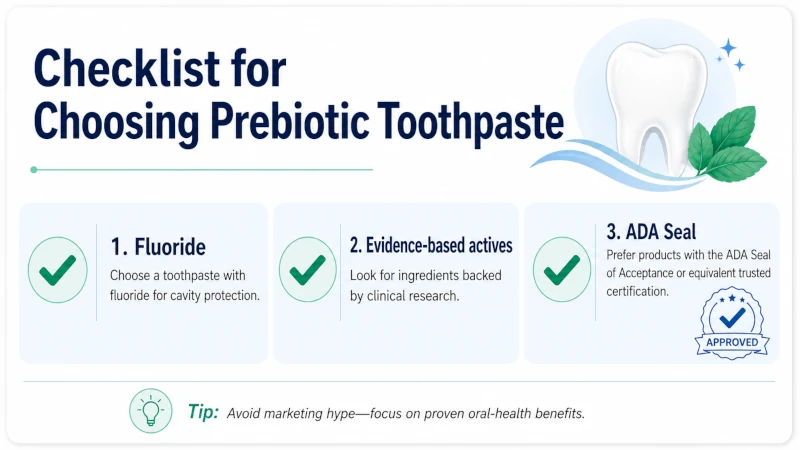
If you want to try prebiotic toothpaste, a few practical filters help:
- Keep fluoride unless you have a specific reason not to, and have weighed that choice with a dentist.
- Favour evidence-based actives such as arginine or xylitol over vague “microbiome support” language with no named ingredient.
- Check for the ADA Seal of Acceptance, which means a product met independent safety and effectiveness criteria. Many niche brands are never submitted, so a missing seal is not proof of harm — but the seal is a real, verifiable check.
- Pick a taste and texture you will actually use, because brushing twice a day for two minutes matters far more than any single ingredient. What you eat shapes your microbiome too, and a fiber-rich, plant-forward diet supports both oral and gut bacteria.
Safety, side effects, and who should take care
For most people, prebiotic toothpaste is low-risk when used as directed. A few cautions are worth flagging:
- Xylitol and pets. Xylitol is extremely toxic to dogs, even in small amounts. Keep xylitol-containing toothpaste well out of reach of pets.
- Swallowing. Swallowing large amounts of xylitol can cause bloating, gas, or a laxative effect. Spit, don’t swallow — and supervise young children, who should use only an age-appropriate amount of fluoride toothpaste.
- Flavourings and botanicals. Some natural toothpastes use essential oils such as tea tree oil, which can irritate or trigger sensitivity in some people. Stop if you notice burning, peeling, or a rash around the mouth.
- Pregnancy and breastfeeding. Topical toothpaste, including fluoride toothpaste, is generally considered safe in pregnancy as long as you don’t swallow it. If you’re unsure about a new product or ingredient, ask your dentist or prenatal provider.
When to see a dentist — not reach for a new toothpaste
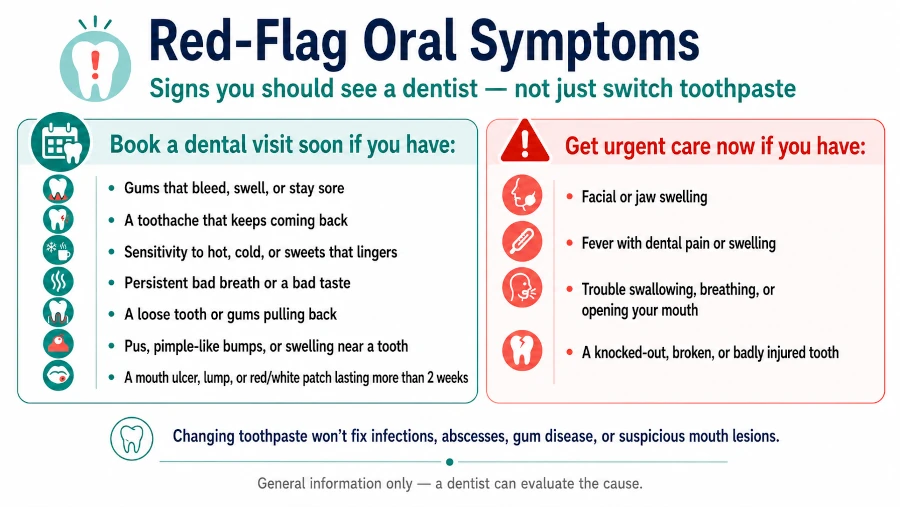
No toothpaste substitutes for a professional when something is wrong. Book a dental visit if you notice:
- Gums that bleed, swell, or stay tender despite good brushing and flossing
- Bad breath that persists no matter how carefully you clean your mouth
- Tooth pain, lingering sensitivity, or a visible hole or dark spot
- Loose teeth or gums that are pulling away from the teeth
- A mouth sore, lump, or red or white patch that does not heal within two weeks — get this checked promptly, as it can be a sign that needs an oral-cancer screening
Realistic expectations
Prebiotic toothpaste is not going to transform your mouth in a week, and it is not a shortcut around the fundamentals. At best, it is a reasonable add-on to a routine built on fluoride brushing, daily flossing, a lower-sugar diet, and regular cleanings. If those basics are in place and you like the product, there is little downside to trying one. Just don’t expect it to do the heavy lifting on its own.
| Health Disclaimer This article is for general education only and is not a substitute for professional medical or dental advice, diagnosis, or treatment. Prebiotic toothpaste is not intended to diagnose, treat, cure, or prevent any disease. Always speak with a licensed dentist or healthcare provider about your own oral health, before changing your oral-care routine, and before starting any new product — especially if you are pregnant, breastfeeding, choosing a fluoride-free product, or caring for a child. If you have a dental emergency or a mouth sore that does not heal, seek professional care promptly. |
Frequently asked questions
Does prebiotic toothpaste really work?
It depends on the ingredient. Arginine-based formulas have a credible mechanism and some supportive studies, and a 2025 review found prebiotic and probiotic toothpastes can reduce plaque — but the overall certainty of evidence is still low to moderate [Frontiers in Oral Health, 2025]. It is reasonable to try, but treat it as a supporting player, not a proven cure.
Can I replace my regular fluoride toothpaste with it?
Not without thought. Fluoride is the most established cavity-fighting ingredient, so many dentists suggest keeping it. Plenty of prebiotic toothpastes contain fluoride; if you choose a fluoride-free one and you are prone to cavities, discuss it with your dentist first [ADA, 2024].
Is prebiotic toothpaste safe?
For most people, yes, when used as directed. The main cautions are not swallowing large amounts of xylitol, keeping xylitol products away from dogs, and watching for irritation from botanical ingredients like tea tree oil.
Will it cure bad breath or gum disease?
It may help support a healthier balance of mouth bacteria, but persistent bad breath or gum disease should be evaluated by a dentist. Established gum disease needs professional treatment, not just a change of toothpaste.
Does it protect my heart or lower my diabetes risk?
There is no good evidence for that. Oral health is linked to conditions like heart disease and diabetes, but that connection is about overall gum health and hygiene — not proof that a prebiotic toothpaste prevents those diseases.
References
- Riley P, et al. Xylitol-containing products for preventing dental caries in children and adults. Cochrane Database of Systematic Reviews, 2015. → View source
- Probiotics, prebiotics, synbiotics, and postbiotics in dental caries: an oral microbiota perspective. npj Biofilms and Microbiomes, 2024. → View source
- Functional changes in the oral microbiome after use of fluoride and arginine containing dentifrices: a metagenomic and metatranscriptomic study, 2022. → View source
- The efficacy of lactic acid bacteria-based toothpaste on oral health: a systematic review and meta-analysis. Frontiers in Oral Health, 2025. → View source
- Pre- and probiotics as an adjunct to fluoridated toothpaste against dental decay (appraisal of a randomised trial). Evidence-Based Dentistry, 2024. → View source
- American Dental Association. Fluoride. MouthHealthy (ADA), accessed 2026. → View source
- Oral and gut microbiota dysbiosis due to periodontitis: systemic implications. Narrative review, 2024. → View source
- Adams SE, et al. A randomised clinical study of a toothpaste containing enzymes and proteins on the plaque oral microbiome. Scientific Reports, 2017. → View source
