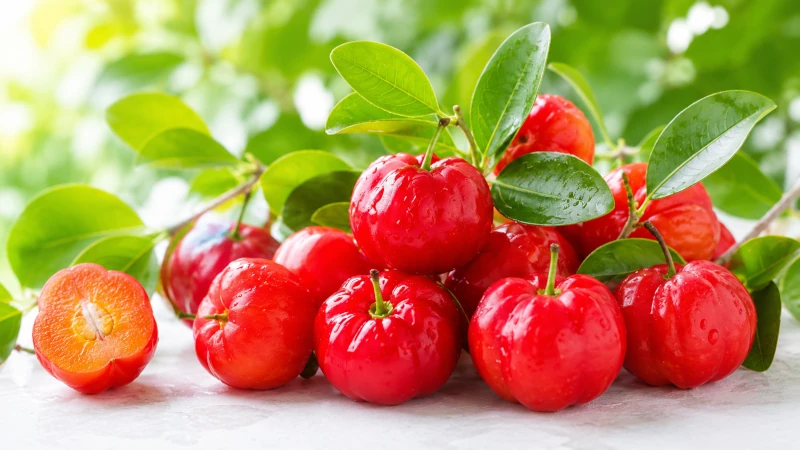
Acerola cherry is one of the most vitamin C–dense foods on the planet, and its acerola cherry benefits are well-documented. But any substance that is pharmacologically active in the body — and acerola certainly qualifies, given its extraordinary vitamin C concentration — also carries potential risks.
This article covers every known acerola cherry side effects, drug interaction, and safety concern in detail. The goal is not to scare you away from acerola. It is to give you the complete safety picture so you can make informed decisions. A trustworthy health resource is as transparent about risks as it is about benefits.
For a broader overview of the fruit, see our complete acerola cherry guide.
Is Acerola Cherry Safe?
The short answer: yes, for most people, at reasonable doses.
WebMD classifies acerola fruit as “possibly safe for most adults” when consumed in amounts that provide no more than 2,000 mg of vitamin C daily [WebMD]. The Natural Medicines Comprehensive Database uses the same “possibly safe” rating. Drugs.com lists it as generally well-tolerated at recommended doses.
The key phrase is “at reasonable doses.” Acerola is so rich in vitamin C that it is easier than you might expect to exceed the upper tolerable intake level (UL) of 2,000 mg/day, especially if you are also taking other vitamin C supplements, eating vitamin C–rich foods, or using vitamin C–fortified products.
Most acerola cherry side effects are dose-dependent, meaning they become more likely and more severe as intake increases. A few risks — particularly latex cross-reactivity — are not dose-dependent and can occur at any intake level in susceptible individuals.
Common Side Effects
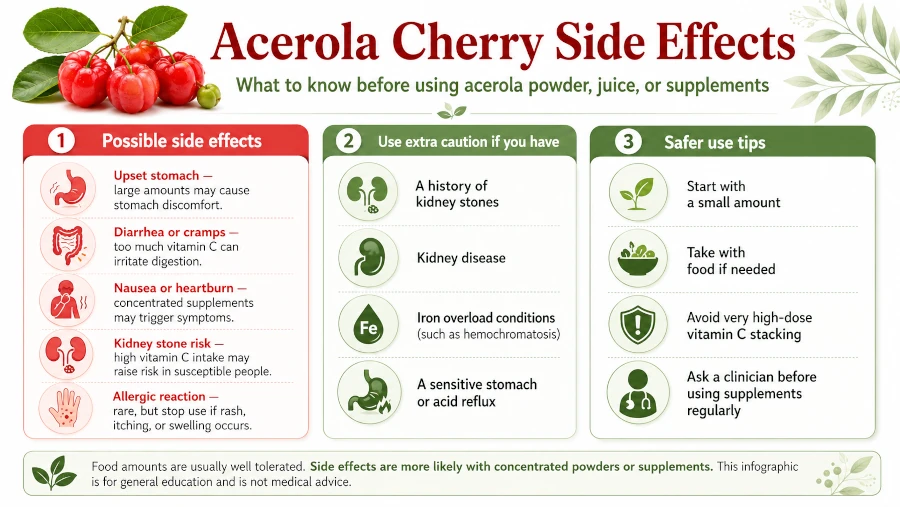
These side effects are associated with high vitamin C intake in general, not with acerola specifically. However, because acerola delivers such concentrated vitamin C, they are the most frequently reported acerola cherry side effects.
Nausea and Stomach Cramps
Vitamin C is an acid (ascorbic acid). At high doses, it can irritate the stomach lining, causing nausea, cramping, and general gastrointestinal discomfort. This is the most commonly reported side effect and is directly related to dose. It rarely occurs below 1,000 mg/day and becomes increasingly likely above 2,000 mg/day [NIH ODS].
Diarrhea
High-dose vitamin C has an osmotic laxative effect in the intestines. When you consume more vitamin C than your body can absorb, the excess draws water into the intestinal lumen, resulting in loose stools or diarrhea. This is the body’s primary mechanism for eliminating excess vitamin C and is the basis for the 2,000 mg/day upper limit [NIH ODS].
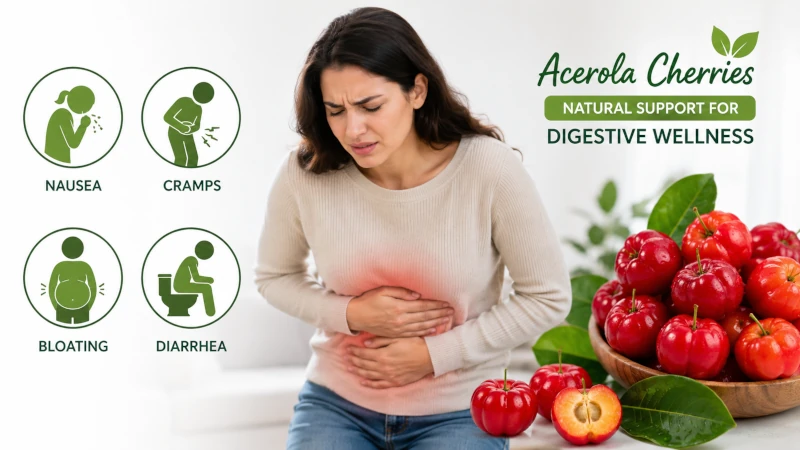
For most people, this is uncomfortable but not dangerous. It resolves quickly when the dose is reduced.
Insomnia and Restlessness
Some sources, including NutraWiki and RxList, report that acerola can cause sleepiness or insomnia in some users. This is less well-documented than the GI effects and may relate to individual sensitivity rather than a consistent pharmacological mechanism. If you notice sleep disruption after starting acerola, try taking it earlier in the day.
Serious Risks and Contraindications
The following acerola cherry risks are more significant and affect specific populations. They are not common in the general population at normal doses, but they are important to understand.
Kidney Stone Risk
This is the most frequently cited serious concern with high-dose vitamin C from any source, including acerola. Here is what the evidence shows:
Vitamin C is partly metabolized to oxalate in the body. Elevated urinary oxalate can increase the risk of calcium oxalate kidney stones — the most common type of kidney stone. A systematic review and meta-analysis by Jiang and colleagues found a statistically significant association between supplemental vitamin C intake and increased kidney stone incidence, particularly in men [Jiang et al., 2019].
The risk is dose-dependent and primarily affects people with a history of kidney stones, existing kidney disease, or genetic predisposition to hyperoxaluria. At typical acerola doses (100–500 mg vitamin C/day), the risk for healthy individuals with no stone history is considered low.
| If you have a history of kidney stones or kidney disease: consult your doctor before taking acerola supplements. This is especially important if you also take other vitamin C supplements, as the combined dose may exceed safe levels. |
Latex Allergy Cross-Reactivity
People with confirmed latex allergies may experience allergic reactions to acerola cherry. This is a recognized cross-reactivity pattern documented in multiple safety databases [WebMD; Prakash & Baskaran, 2018].
Symptoms could include hives, itching, swelling, difficulty breathing, or anaphylaxis in severe cases. If you have a known latex allergy, approach acerola with caution. Consider starting with a very small amount under medical supervision, or avoid it entirely.
This risk is not dose-dependent. Even small amounts could trigger a reaction in a sensitized individual.
Gout Considerations
There is a theoretical concern that very high doses of vitamin C could increase uric acid levels in some individuals, potentially worsening gout. The evidence on this is mixed — some studies suggest moderate vitamin C may actually reduce gout risk, while others raise concerns about very high doses. If you have gout, discuss acerola supplementation with your rheumatologist.
Drug Interactions
Because acerola delivers pharmacologically significant amounts of vitamin C, it can interact with several classes of medications. These interactions are mediated by vitamin C, not by unique compounds in acerola itself. However, acerola’s high vitamin C concentration makes these interactions more clinically relevant than they would be from typical food sources like oranges.
Warfarin (Blood Thinners)
Interaction rating: Moderate [WebMD; RxList]
Warfarin (Coumadin) is used to slow blood clotting. High doses of vitamin C may reduce warfarin’s effectiveness, potentially increasing the risk of dangerous blood clots. The mechanism appears to involve diarrhea-related malabsorption of warfarin at very high vitamin C doses (above 5,000–16,000 mg/day) [Weintraub & Griner, 1974; HelloPharmacist].
At typical acerola supplement doses (100–500 mg vitamin C), the clinical significance of this interaction is considered low. However, if you take warfarin, you should inform your prescribing physician about any acerola supplementation, monitor your INR regularly, and avoid dramatically changing your vitamin C intake without medical guidance.
Chemotherapy Medications
Interaction rating: Moderate concern (theoretical) [WebMD]
Vitamin C is an antioxidant. There is a theoretical concern that antioxidants could reduce the effectiveness of certain chemotherapy drugs that work by generating oxidative stress to kill cancer cells. This concern applies to all antioxidant supplements, not just acerola.
The clinical evidence on this interaction is inconclusive — some researchers argue antioxidants may actually protect healthy cells during chemotherapy, while others urge caution. If you are undergoing cancer treatment, do not take acerola or any antioxidant supplement without explicit approval from your oncologist.
Fluphenazine (Prolixin)
Interaction rating: Moderate [WebMD; RxList]
Large amounts of vitamin C may reduce blood levels of fluphenazine, an antipsychotic medication. This could decrease the drug’s effectiveness. If you take fluphenazine, consult your prescribing psychiatrist before using acerola supplements.
Estrogen-Based Medications
Interaction rating: Minor [WebMD]
Vitamin C may increase how much estrogen the body absorbs from estrogen-based medications, including oral contraceptives, hormone replacement therapy (Premarin), and ethinyl estradiol. This could slightly intensify the effects and side effects of these medications. The clinical significance at typical acerola doses is considered low, but inform your prescriber if you supplement with acerola regularly.
Aluminum-Containing Antacids
Interaction rating: Moderate (for kidney disease patients) [WebMD]
Vitamin C can increase how much aluminum the body absorbs from antacid medications. For healthy individuals, this is not a concern — the kidneys efficiently clear aluminum. However, people with kidney disease who take aluminum-containing phosphate binders should avoid high-dose acerola, as impaired kidneys cannot clear the extra aluminum effectively.
Aspirin
Interaction rating: Minor [WebMD]
Vitamin C may slightly decrease how much aspirin is excreted in the urine. WebMD notes this “probably isn’t a big concern,” but it is worth mentioning for completeness.
Stacking with Other Vitamin C Sources
This is not technically a drug interaction, but it is one of the most common practical mistakes. If you take acerola powder alongside a separate vitamin C supplement, rosehip capsules, or a multivitamin containing vitamin C, you may inadvertently exceed the 2,000 mg/day upper limit. Always calculate your total daily vitamin C intake from all sources.
For form-specific dosage guidance, see our acerola dosage guide.
Pregnancy and Breastfeeding
There is insufficient clinical data to confirm the safety of acerola in supplemental (medicinal) doses during pregnancy or breastfeeding [WebMD; Drugs.com]. This does not mean acerola is known to be harmful — it means the safety studies simply have not been done.
Acerola consumed in normal food amounts is generally considered safe during pregnancy. The concern applies to concentrated supplements (powder, capsules, extracts) where vitamin C doses may significantly exceed what you would get from food.
The RDA for vitamin C during pregnancy is 85 mg/day, with an upper limit of 2,000 mg/day [NIH ODS]. If you are pregnant or breastfeeding, consult your obstetrician or midwife before taking any acerola supplement.
Safety for Children
Acerola in food amounts is generally considered safe for children. For supplemental doses, the vitamin C upper limits for children are lower than for adults:
| Age Group | Vitamin C Upper Limit |
| 1–3 years | 400 mg/day |
| 4–8 years | 650 mg/day |
| 9–13 years | 1,200 mg/day |
| 14–18 years | 1,800 mg/day |
| Adults 19+ | 2,000 mg/day |
Source: NIH Office of Dietary Supplements; Institute of Medicine Dietary Reference Intakes.
Given acerola powder’s potency, even small amounts could deliver substantial vitamin C relative to a child’s lower body weight and tolerance. Consult a pediatrician before giving acerola supplements to children.
How to Minimize Your Risk
Most acerola cherry side effects are preventable with sensible use. Here is a practical framework:
1. Stay below the upper limit. Keep total daily vitamin C from all sources below 2,000 mg for adults. This single step eliminates most GI side effects and substantially reduces kidney stone risk.
2. Start low. Begin with 1/4 teaspoon of powder (~170–300 mg vitamin C depending on the product) and assess tolerance before increasing.
3. Count all sources. Add up your vitamin C from acerola, other supplements, multivitamins, fortified foods, and vitamin C–rich fruits. It adds up faster than you think.
4. Disclose to your doctor. If you take any prescription medication — especially warfarin, chemotherapy drugs, fluphenazine, or estrogen-based medications — inform your prescribing physician about acerola use.
5. Avoid if latex-allergic. If you have a confirmed latex allergy, do not take acerola without medical supervision.
6. Hydrate. Adequate water intake helps dilute urinary oxalate and reduces kidney stone risk. This is good practice for anyone taking vitamin C supplements.
7. Choose quality products. A well-labeled product with clear vitamin C per serving makes accurate dosing possible. For buying guidance, see our acerola cherry powder guide.
When to Talk to Your Doctor
Consult a healthcare provider before taking acerola supplements if any of the following apply to you:
- You have a history of kidney stones or kidney disease
- You take warfarin (Coumadin) or other blood thinners
- You are undergoing chemotherapy or radiation
- You take fluphenazine or other antipsychotic medications
- You take estrogen-based medications or oral contraceptives
- You have a latex allergy
- You are pregnant or breastfeeding
- You have gout or hyperuricemia
- You take aluminum-containing antacids and have kidney impairment
- You already take vitamin C supplements from other sources
| Seek immediate medical attention if you experience: hives, difficulty breathing, facial swelling, blood in urine, severe abdominal pain, or any symptoms suggestive of an allergic reaction after taking acerola. |
Side Effect and Risk Summary Table
| Side Effect / Risk | Type | Likelihood | Who Is Most at Risk | How to Manage |
| Nausea, stomach cramps | Dose-dependent | Common above 2,000 mg/day | Anyone at high doses | Reduce dose; take with food |
| Diarrhea | Dose-dependent | Common above 2,000 mg/day | Anyone at high doses | Reduce dose; increase water |
| Insomnia / restlessness | Possible | Uncommon | Individual sensitivity | Take earlier in the day |
| Kidney stones | Dose-dependent | Low at normal doses; higher in susceptible people | History of stones, kidney disease, hyperoxaluria | Stay below UL; hydrate; consult doctor |
| Latex allergy reaction | Not dose-dependent | Rare but serious | People with latex allergy | Avoid acerola or use under supervision |
| Warfarin interaction | Dose-dependent | Low at normal doses | Warfarin users | Inform prescriber; monitor INR |
| Chemotherapy interaction | Theoretical | Unknown | Cancer patients on chemo | Do not take without oncologist approval |
| Estrogen interaction | Minor | Low | Users of estrogen-based drugs | Inform prescriber |
| Gout exacerbation | Theoretical | Low | Gout patients | Consult rheumatologist |
Frequently Asked Questions
Is acerola cherry safe to take every day?
Yes, for most healthy adults, daily acerola consumption is considered safe as long as total vitamin C intake stays below 2,000 mg per day. This is the upper tolerable intake level established by the Institute of Medicine. At typical supplement doses of 100–500 mg vitamin C from acerola, daily use is well-tolerated by most people.
Can acerola cherry cause kidney stones?
At very high doses, the vitamin C in acerola is partly converted to oxalate, which can increase the risk of calcium oxalate kidney stones. A meta-analysis by Jiang et al. (2019) found a statistically significant association between supplemental vitamin C and kidney stone incidence, particularly in men. The risk is primarily relevant for people with a history of kidney stones, existing kidney disease, or genetic predisposition. At moderate acerola doses, the risk for healthy individuals is considered low.
Does acerola interact with blood thinners?
Yes. High doses of vitamin C can reduce the effectiveness of warfarin (Coumadin), potentially increasing clotting risk. The interaction appears to become clinically significant at very high vitamin C doses (above 5,000 mg/day). At typical acerola supplement doses, the effect is likely minimal — but you should still inform your prescribing physician and monitor your INR if you take warfarin.
Can I take acerola cherry during pregnancy?
Acerola in food amounts is generally considered safe during pregnancy. However, there is insufficient clinical safety data for supplemental doses. The vitamin C RDA during pregnancy is 85 mg/day with an upper limit of 2,000 mg/day. Consult your obstetrician before taking concentrated acerola supplements.
Is acerola cherry safe for people with latex allergies?
Use caution. People with latex allergies may experience cross-reactive allergic responses to acerola, ranging from mild skin reactions to potentially severe anaphylaxis. If you have a confirmed latex allergy, consult your allergist before consuming acerola in any form.
What happens if I take too much acerola?
Exceeding the 2,000 mg/day vitamin C upper limit typically causes gastrointestinal symptoms: nausea, cramps, and diarrhea. These resolve when the dose is reduced. Chronic excessive intake may increase kidney stone risk. Extremely high doses (above 5,000–16,000 mg) could interfere with certain medications. There is no known lethal dose of vitamin C, but there is no benefit to megadosing either.
Can I take acerola cherry with a multivitamin?
You can, but calculate your total vitamin C intake first. Many multivitamins contain 60–250 mg of vitamin C. Adding acerola powder on top could bring you closer to the upper limit than you realize. Add up all sources and stay below 2,000 mg/day total.
Key Takeaways
Acerola cherry is safe for most healthy adults at normal doses. The fruit is classified as “possibly safe” by major safety databases when daily vitamin C intake stays below 2,000 mg.
The most common acerola cherry side effects — nausea, cramps, and diarrhea — are dose-dependent and preventable by staying within recommended intake levels. They are not unique to acerola; they apply to any high-dose vitamin C source.
More serious risks exist for specific populations: people with a history of kidney stones, latex allergies, or those taking warfarin, chemotherapy drugs, fluphenazine, or estrogen-based medications. These groups should consult a healthcare provider before using acerola supplements.
Safety during pregnancy and breastfeeding has not been established for supplemental doses. Food amounts are generally considered safe.
The single most effective risk-reduction strategy is simple: know your total daily vitamin C intake from all sources, and keep it below 2,000 mg. Do that, and acerola cherry is a safe, well-tolerated, nutrient-dense addition to most people’s diets.
| Medical Disclaimer: This article is for informational purposes only and does not replace professional medical advice. If you experience adverse effects from acerola or any supplement, contact your healthcare provider. If you take prescription medications, discuss acerola supplementation with your doctor or pharmacist before starting. |
References
- 1. WebMD. Acerola — Uses, Side Effects, and More. https://www.webmd.com/vitamins/ai/ingredientmono-608/acerola
- 2. RxList. Acerola: Health Benefits, Side Effects, Uses, Dose & Precautions. https://www.rxlist.com/supplements/acerola.htm
- 3. Drugs.com. Acerola Uses, Side Effects & Warnings. https://www.drugs.com/mtm/acerola.html
- 4. NIH Office of Dietary Supplements. Vitamin C: Fact Sheet for Health Professionals. https://ods.od.nih.gov/factsheets/VitaminC-HealthProfessional/
- 5. Jiang, K., et al. (2019). Ascorbic acid supplements and kidney stones incidence among men and women: a systematic review and meta-analysis. Urological Journal, 16(2), 115–120.
- 6. Weintraub, M. & Griner, P.F. (1974). Warfarin and ascorbic acid: lack of evidence for a drug interaction. Toxicology and Applied Pharmacology, 28, 53–56.
- 7. Prakash, A. & Baskaran, R. (2018). Acerola, an untapped functional superfruit: a review on latest frontiers. Journal of Food Science and Technology, 55(9), 3373–3384.
- 8. HelloPharmacist. Acerola – Warfarin Interaction Details. https://hellopharmacist.com/drug-herbal-interactions/acerola-with-warfarin
- 9. Institute of Medicine. (2000). Dietary Reference Intakes for Vitamin C, Vitamin E, Selenium, and Carotenoids. National Academy Press.
- 10. NutraWiki. Acerola. https://nutrawiki.org/acerola/
