
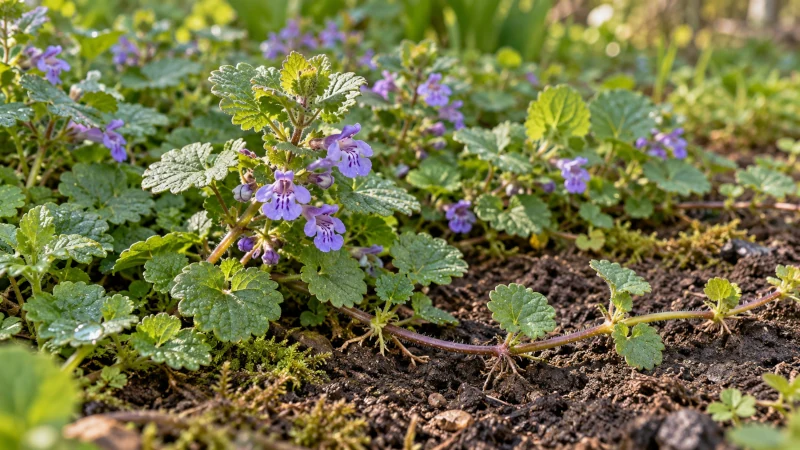
The ground ivy plant (Glechoma hederacea) is the creeping, mint-scented weed many people know as creeping Charlie, and it has a long history as a folk remedy for coughs, congestion, and minor wounds. What it doesn’t have is clinical proof. We found no published human trials testing it for any respiratory condition, and the lab and animal studies that exist can’t tell you what a cup of tea will do. It also contains small amounts of pulegone, a compound that can harm the liver, which is why most references say to skip it during pregnancy [Southern Cross University, 2008].
So the short answer: ground ivy is a traditional herb with plausible chemistry and thin evidence. Used as a culinary herb or an occasional tea, it’s probably low-risk for healthy adults. As a treatment for anything, it’s unproven. Here is what the plant is, what the research does and doesn’t show, and who should leave it alone.
What Is the Ground Ivy Plant?
Despite the name, ground ivy isn’t related to English ivy. It belongs to the mint family, and it shows: square stems, leaves in opposite pairs, and a musky, minty smell when crushed. The leaves are round to kidney-shaped with scalloped edges, and the small purplish-blue, two-lipped flowers sit in clusters at the leaf joints from March through June [Ohio State University, n.d.].
The stems creep along the soil and put down roots at nearly every node, which is why ground ivy forms dense mats and is so hard to pull out of a lawn. Native to Europe and Asia, it was brought to North America by early settlers and is now naturalized across much of the eastern and central United States [Ohio State University, n.d.].
| Scientific name | Glechoma hederacea (synonym Nepeta hederacea) |
| Family | Lamiaceae (mint family) |
| Common names | Creeping Charlie, alehoof, gill-over-the-ground, cat’s-foot, field balm, haymaids, turnhoof |
| Parts used | Aerial parts (leaves, stems, flowers), traditionally gathered while flowering [Southern Cross University, 2008] |
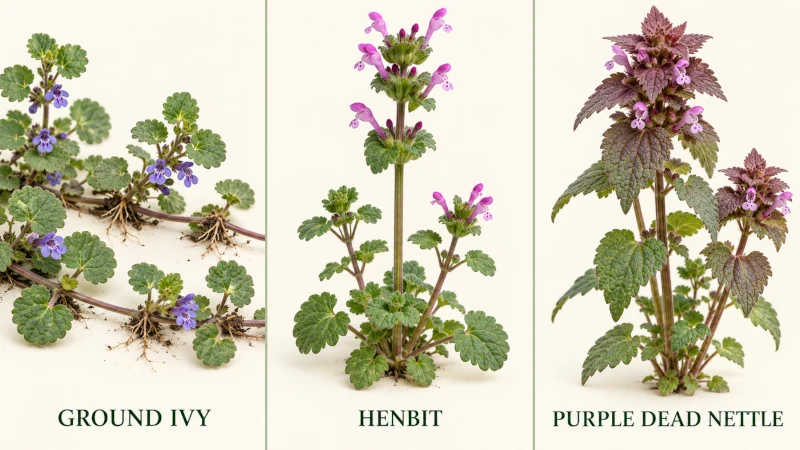
| Easily confused with | Henbit and purple dead nettle (square stems, but they don’t creep and root at the nodes); common mallow (round stems, one leaf per node) [Ohio State University, n.d.] |
How Ground Ivy Has Been Used
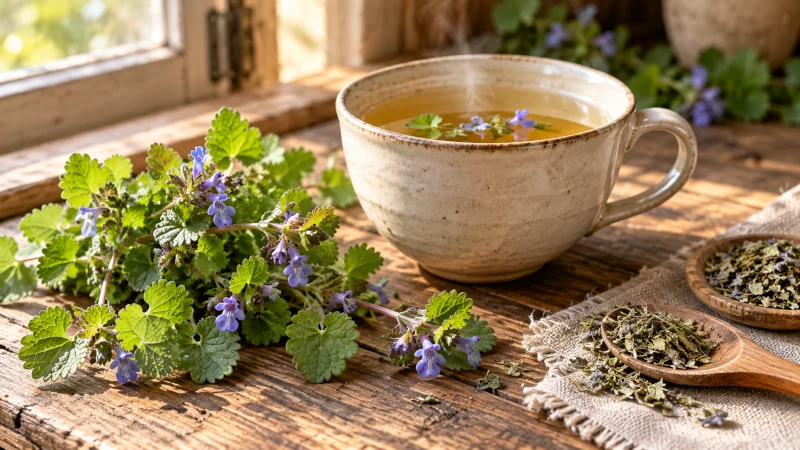
Its old name, alehoof, points to ground ivy’s best-documented job. Before hops became standard, brewers used it to flavor and clarify ale [Southern Cross University, 2008]. Mugwort did similar duty in medieval beer, and our look at the benefits of mugwort tea covers that herb’s story and its own safety catches.
As medicine, ground ivy was a general-purpose herb. The 16th-century English herbalist John Gerard recommended it for ringing in the ears and kidney complaints, and American physicians of the early 19th century had numerous uses for it [Southern Cross University, 2008]. Folk tradition leaned hardest on the airways: ground-ivy tea or ale for coughs, colds, and congestion, and the pressed juice for sore or injured eyes [Harford, 2021]. Some herbalists still reach for it for catarrh, the persistent mucus that comes with chronic bronchial irritation [Southern Cross University, 2008].
What the Research on Ground Ivy Actually Shows
Nearly all of the evidence comes from test tubes and animals. A Southern Cross University monograph reported that no human clinical trials of ground ivy had been done [Southern Cross University, 2008], and the Natural Medicines database, as republished by RxList, rates the evidence as insufficient for every use it lists, from coughs and bronchitis to kidney stones and hemorrhoids [RxList/Natural Medicines, n.d.]. Our search turned up no newer trials for those conditions, only one small cosmetic study of a topical extract on sun-darkened skin, cited by Latvian researchers [Sile et al., 2022].
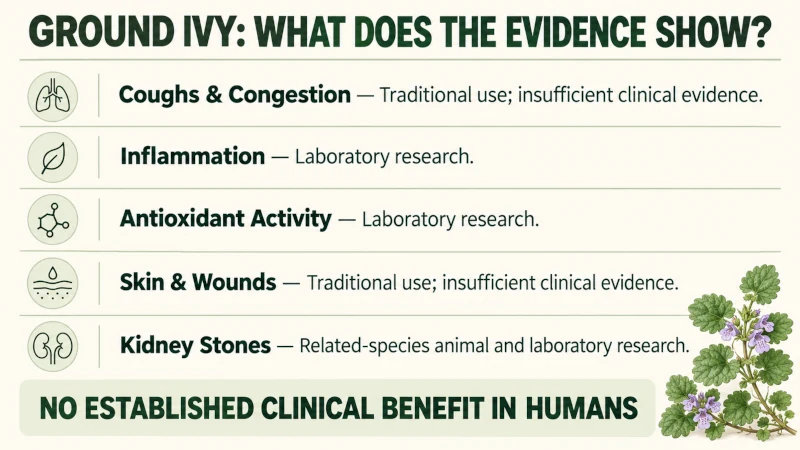
| Traditional use | What the research is | Evidence rating |
| Cough, congestion, bronchitis | Long traditional use; constituents with plausible activity; no human trials | Traditional / insufficient |
| Inflammation | Mouse immune cells in the lab | Lab only |
| Antioxidant activity | Laboratory assays | Lab only |
| Wounds, skin, hemorrhoids (on the skin) | Traditional astringent use; no trials for these conditions | Traditional / insufficient |
| Kidney and gallstones | Traditional use of related Glechoma species; lab and animal work | Animal / traditional |
| Ringing in the ears | Historical recommendation only | Traditional only |
Coughs, congestion, and bronchitis
This is what most people come for, and it’s where tradition is strongest. There is a plausible chemical story. Ground ivy contains rosmarinic acid and tannins, which give it an astringent, drying character [Southern Cross University, 2008], and when Latvian researchers analyzed its essential oil, eucalyptol (1,8-cineole), a compound known for expectorant activity, was among the dominant components [Sile et al., 2022].
The catch is quantity. In that analysis the dried plant held only about 0.03 to 0.3% essential oil [Sile et al., 2022], and no one has tested whether a tea delivers enough of anything to change a cough. A warm herbal tea may feel soothing on a scratchy throat, as most warm drinks do. It isn’t a treatment for bronchitis, and there’s no evidence it helps asthma.
If a cough is the problem, honey and a few better-studied herbs have far stronger support, and our evidence-rated guide to herbs for the lungs ranks them. If you have asthma, don’t trade a prescribed inhaler for any herb; our page on natural asthma relief that actually helps explains why.
Inflammation and antioxidant activity
In a 2006 study using mouse immune cells, ground ivy extract lowered nitric oxide, TNF-alpha, and one form of the signaling protein IL-12 in a dose-dependent way, though it raised a related form [An et al., 2006]. A 2022 study found that extracts reduced the number of mouse macrophages switching into a pro-inflammatory state by roughly 13 to 56% at the tested concentration, and showed strong antioxidant activity in lab assays [Sile et al., 2022]. A 2021 review of the whole Glechoma genus lists anti-inflammatory, antimicrobial, antioxidant, and antiviral activity among findings from extracts and isolated compounds [Zhou et al., 2021].
These findings explain why researchers keep studying the plant. They also all happened in cells or animals. Mouse cells bathed in concentrated extract are a long way from a person drinking tea, so treat them as reasons for more research, not reasons to self-treat.
Wounds, skin, and hemorrhoids
Herbalists class ground ivy as a vulnerary, or wound herb, and folk practice applied compresses to cuts and hemorrhoids [Southern Cross University, 2008]. Its astringency is plausible for mild surface irritation. But it hasn’t been tested for either use, and RxList rates the evidence for both as insufficient [RxList/Natural Medicines, n.d.]. For hemorrhoids, fiber and witch hazel have much better support; see our herbs for hemorrhoids, ranked by the evidence. Don’t put homemade plant preparations on open, deep, or infected wounds.
Kidney stones, tinnitus, and other folk uses
In China, closely related Glechoma plants have been used for kidney and gallstones for a very long time, and crude extracts have shown stone-preventing activity in laboratory and animal research [Zhou et al., 2021]. In Europe, Gerard’s tinnitus recommendation still appears in many herbals [Southern Cross University, 2008]. Neither use has been tested in people, and both a suspected kidney stone and new ringing in the ears deserve a proper diagnosis.
Ground Ivy Plant Side Effects and Safety
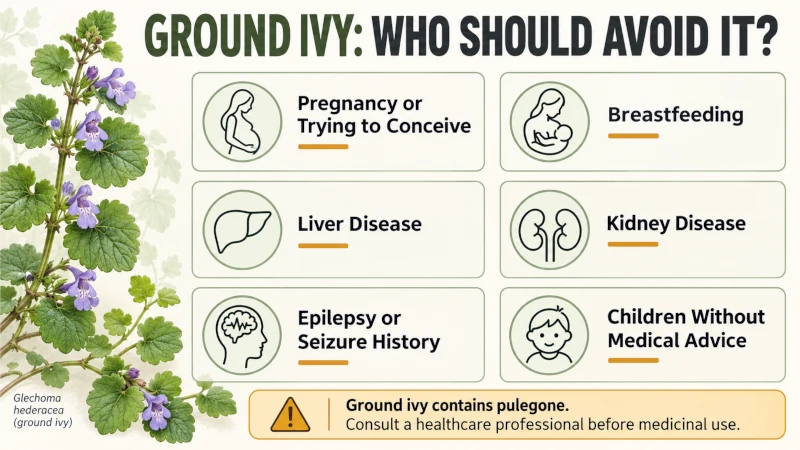
Small, food-like amounts are probably low-risk for healthy adults. Still, ground ivy is less harmless than its weedy reputation suggests. Its volatile oil contains pulegone [Southern Cross University, 2008], the compound that makes pennyroyal oil dangerous. Pulegone can damage the liver and irritate the digestive tract; in ground ivy it’s present in low concentrations, which is why references urge caution rather than a flat ban [Southern Cross University, 2008].
RxList, drawing on the Natural Medicines database, calls ground ivy possibly safe in food-flavoring amounts and small medicinal doses, but warns that larger amounts can irritate the stomach, intestines, and kidneys and may cause serious liver damage [RxList/Natural Medicines, n.d.].
Why sources disagree on how risky it is
References don’t agree on how cautious to be. The Southern Cross University monograph lists no documented contraindications and recommends caution in pregnancy and breastfeeding [Southern Cross University, 2008]. RxList goes further, calling ground ivy unsafe in pregnancy because it could cause miscarriage and advising people with kidney disease, liver disease, or epilepsy not to use it [RxList/Natural Medicines, n.d.]. Neither source points to human case reports; both warnings rest on the plant’s chemistry. With a small potential benefit and a real potential downside, the more cautious advice is the sensible one to follow.
Who should avoid ground ivy
- Pregnant people, or anyone trying to conceive. RxList rates it unsafe in pregnancy [RxList/Natural Medicines, n.d.].
- Breastfeeding parents. There isn’t enough information to know whether it’s safe for a nursing infant [RxList/Natural Medicines, n.d.].
- People with liver or kidney disease. Constituents may irritate the kidneys or harm the liver [RxList/Natural Medicines, n.d.].
- People with epilepsy or a history of seizures [RxList/Natural Medicines, n.d.].
- Anyone using other pulegone-containing herbs, such as pennyroyal [Southern Cross University, 2008].
- Children. We found no safety data for children, so don’t give it to them without a clinician’s advice.
Medication interactions
No drug interactions with ground ivy have been documented. Hypothetical interactions with oral contraceptives, iron, aspirin, and warfarin have been proposed based on the plant’s vitamin C content, with no reported cases [Southern Cross University, 2008]. If you take a blood thinner or several regular prescriptions, mention any herbal tea to your pharmacist before adding it.
Ground ivy and horses
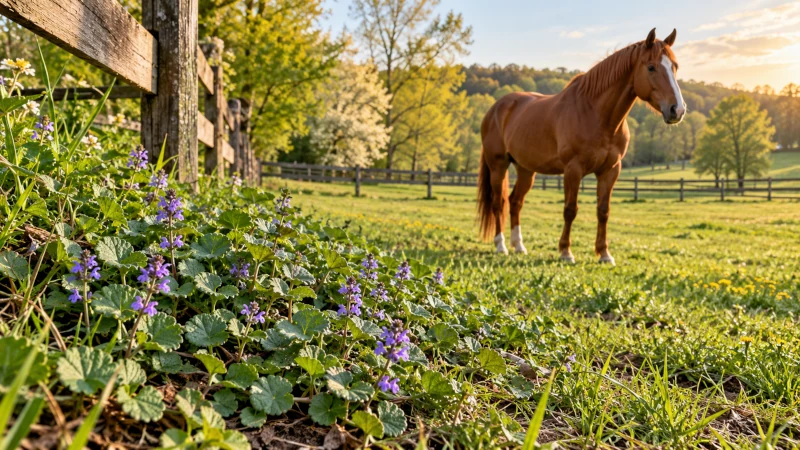
If you keep horses, this plant matters more for them than for you. Most livestock avoid ground ivy because it’s bitter, but horses that eat large amounts, either fresh or dried in hay, can be poisoned. Signs include slobbering, sweating, dilated pupils, and labored breathing, and deaths are rare [USDA NRCS, 2006]. Don’t make hay from meadows where it’s abundant, and keep horses off heavily infested pasture when other forage is dry or scarce [USDA NRCS, 2006].
If You Still Want to Try Ground Ivy
If you’re a healthy, non-pregnant adult, treat ground ivy as a culinary herb or an occasional tea, not as medicine.
- Identify it carefully. Look for square stems, opposite scalloped leaves, a minty smell when crushed, and roots at the stem joints [Ohio State University, n.d.]. Don’t harvest from lawns, roadsides, or anywhere that may have been sprayed.
- Use it like a kitchen herb. The leaves have an aromatic flavor and have traditionally stood in for mint or thyme in soups, sauces, and egg dishes, or gone sparingly into salads [Harford, 2021].
- Keep tea occasional and weak. Traditional “gill tea” was made by steeping the herb in boiling water and sweetening it [Harford, 2021]. No clinical dose has been established [RxList/Natural Medicines, n.d.]. Herbal references summarized by Southern Cross University list about 2 to 4 grams of dried herb up to three times daily [Southern Cross University, 2008]; staying at the low end for no more than a few days is the cautious choice.
- Skip concentrated products. Essential oil concentrates the volatile compounds, pulegone included. Don’t take it internally.
- Stop if something feels off. Stomach upset, nausea, dark urine, or yellowing of the skin or eyes are reasons to stop and call a doctor.
When to See a Doctor Instead
Ground ivy isn’t the right tool for anything that is getting worse. Get medical care for:
- Severe trouble breathing, chest pain, or bluish lips (call 911)
- A cough lasting more than three weeks, or coughing up blood
- A fever of 104°F (40°C) or higher, or one lasting more than five days
- Severe pain in your side or back, blood in your urine, or fever with urinary symptoms
- Yellow skin or eyes, dark urine, or upper-right belly pain after using any herbal product
- Any rectal bleeding; don’t assume it’s hemorrhoids
Our guide to foods to eat when sick with bronchitis lists the CDC’s warning signs for chest infections in full.
| HEALTH DISCLAIMER: This article is for general education only. It is not medical advice and does not replace diagnosis or treatment from a qualified healthcare professional. Ground ivy has not been shown to treat, cure, or prevent any disease. It may be unsafe in pregnancy and for people with liver disease, kidney disease, or seizure disorders. Talk with your doctor or pharmacist before using any herb if you are pregnant, breastfeeding, caring for a child, taking prescription medication, or managing a health condition. Seek urgent care for severe breathing difficulty, chest pain, or signs of liver injury such as yellowing skin or eyes. |
Frequently Asked Questions
Is ground ivy poisonous to humans?
Not highly, but it isn’t harmless. Small food-flavoring amounts are considered possibly safe, while larger amounts can irritate the stomach, intestines, and kidneys and may damage the liver [RxList/Natural Medicines, n.d.]. Its oil contains pulegone, the reason pregnancy is a firm no [Southern Cross University, 2008].
Is ground ivy the same as creeping Charlie?
Yes. Creeping Charlie, alehoof, gill-over-the-ground, and cat’s-foot are all common names for Glechoma hederacea [Ohio State University, n.d.]. It’s a mint-family plant, not a true ivy.
Can ground ivy tea help a cough?
It’s a traditional cough remedy, but no human trials have tested it [Southern Cross University, 2008]. Warm tea may soothe your throat; honey has much better evidence for easing a cough. A cough lasting more than three weeks needs a medical check.
Can you eat ground ivy?
In small amounts, yes. The leaves have long been used like mint or thyme to flavor soups, sauces, and egg dishes [Harford, 2021]. Pick only from unsprayed areas, and skip it entirely if you’re pregnant.
Why do some sources say ground ivy is unsafe in pregnancy?
Because of its pulegone content. RxList calls it unsafe in pregnancy because it could cause miscarriage [RxList/Natural Medicines, n.d.], while Southern Cross University advises caution [Southern Cross University, 2008]. Either way, the practical answer is to avoid it.
References
- Gatti J (author), Aleschewski N (editor). “Glechoma hederacea.” Medicinal Plant Monographs, Analytical Research Laboratory, Southern Cross University. View source
- RxList. “Ground Ivy: Health Benefits, Side Effects, Uses, Dose & Precautions.” View source
- Sile I, Krizhanovska V, Nakurte I, Mezaka I, Kalane L, Filipovs J, Vecvanags A, Pugovics O, Grinberga S, Dambrova M, Kronberga A. “Wild-Grown and Cultivated Glechoma hederacea L.: Chemical Composition and Potential for Cultivation in Organic Farming Conditions.” View source
- An HJ, Jeong HJ, Um JY, Kim HM, Hong SH. “Glechoma hederacea inhibits inflammatory mediator release in IFN-gamma and LPS-stimulated mouse peritoneal macrophages.” Journal of Ethnopharmacology. View source
- Zhou Y, He YJ, Wang ZJ, Hu BY, Xie TZ, Xiao X, Zhou ZS, Sang XY, Luo XD. “A review of plant characteristics, phytochemistry and bioactivities of the genus Glechoma.” Journal of Ethnopharmacology. View source
- USDA Natural Resources Conservation Service, Illinois. “Ground Ivy or Creeping Charlie.” Illinois Grazing Manual Fact Sheet: Poisonous Plants. View source
- The Ohio State University, CFAES. “Ground-Ivy (Glechoma hederacea).” Ohio Perennial and Biennial Weed Guide. View source
- Harford R. “The Traditional and Modern Uses of Ground Ivy.” Eatweeds. View source


