
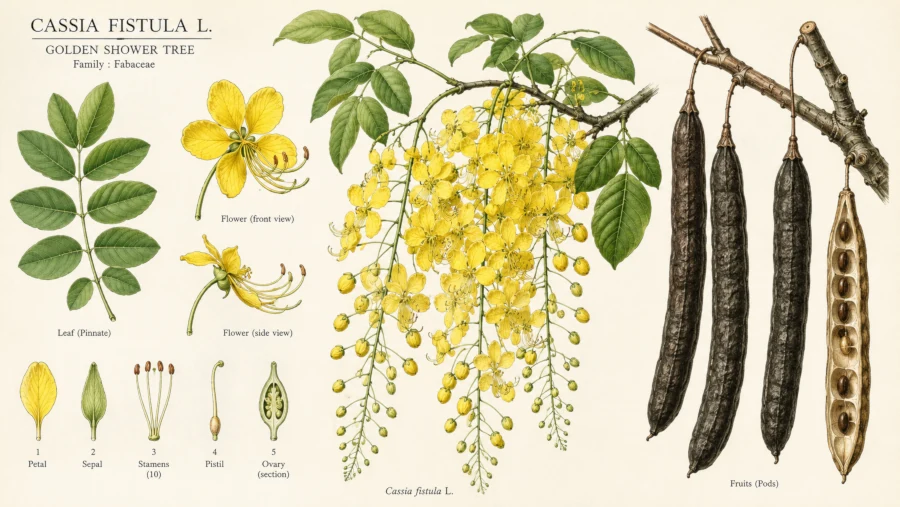
Cassia fistula — also known as the golden shower tree, Indian laburnum, or aragvadha in Ayurveda — is a tropical legume whose long, brown seed pods contain a sticky black pulp used for centuries as a mild stimulant laxative [Kuriakose et al., 2025].
The pulp belongs to the broader anthraquinone laxative family and shows up in traditional medicine across India, Iran, Thailand, and tropical regions of Mexico — typically prescribed for short-term relief of constipation, especially in people who don’t tolerate stronger stimulants.
This guide covers what the pulp actually does, what randomized trials have found, how it is dosed, who should avoid it, and where the evidence is still thin.
What Cassia Fistula Is
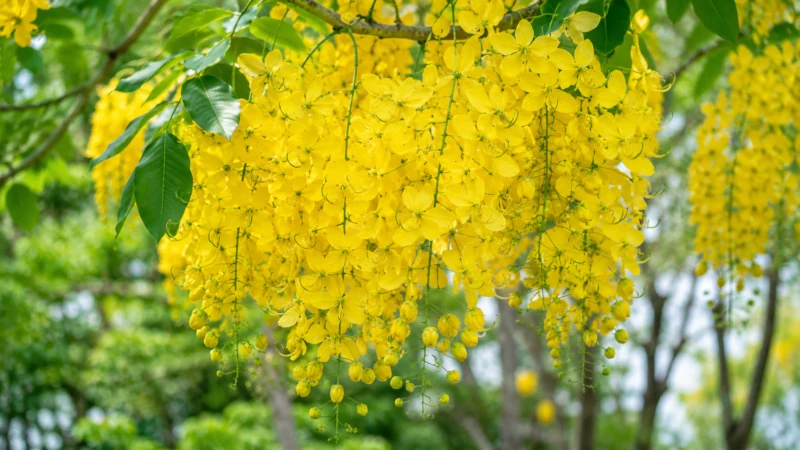
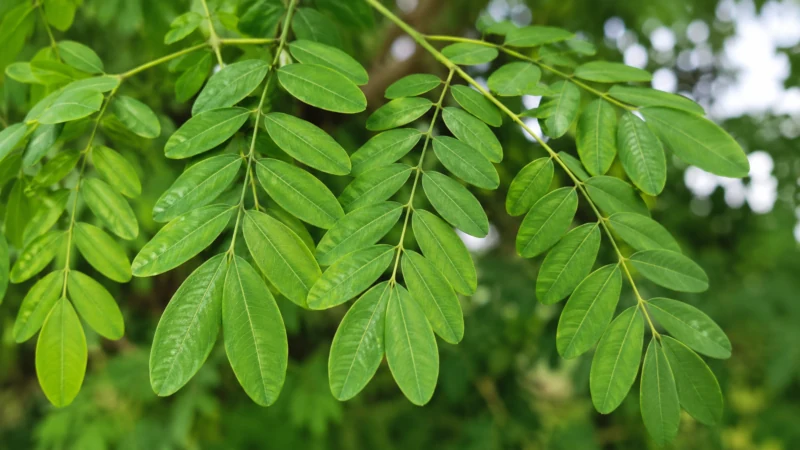
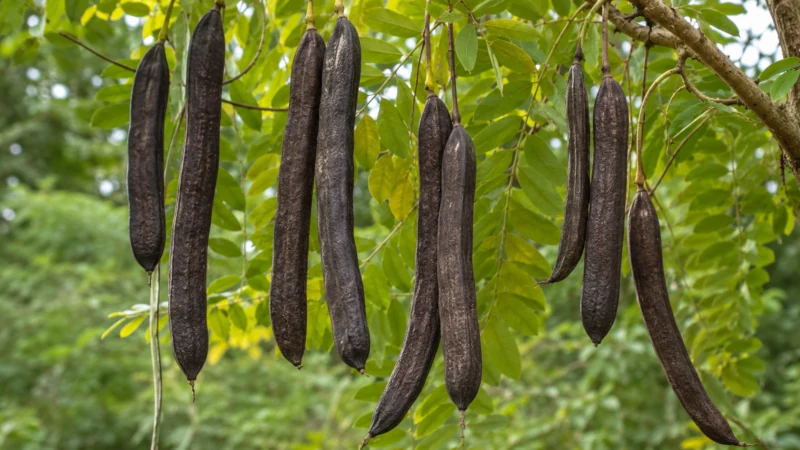
Cassia fistula L. is a medium-sized tree in the Fabaceae (legume) family. It is native to South Asia and now grows across the tropics, including parts of Mexico, Central America, the West Indies, and East Africa. The bright yellow flowers hang in long pendulous clusters — the origin of the common name golden shower tree. The fruit is a cylindrical pod, 25–50 cm long, with a dark, sweet pulp surrounding the seeds. The pulp is the part used medicinally [Kuriakose et al., 2025].
Other names you may see on labels or in older literature:
- Golden shower tree, Indian laburnum (English)
- Casse, cassier (French); cañafístula (Spanish)
- Aragvadha (Sanskrit / Ayurveda)
- Folus or Foloos (Persian medicine)
How It Works
The laxative effect comes from anthraquinone glycosides in the pulp, with rhein as the main active compound, plus sugars and mucilage [Mangmeesri et al., 2014]. The glycosides themselves are not absorbed in the small intestine. They reach the colon, where gut bacteria convert them into active anthraquinones that stimulate colon muscle contractions and reduce reabsorption of water and electrolytes from stool. The result is softer stool and faster transit [NIDDK LiverTox, 2020].
Compared with its better-known cousin senna (Cassia angustifolia), cassia fistula pulp contains a lower concentration of anthraquinones, which is why the effect is milder and the cramping tends to be less severe [Mangmeesri et al., 2014].
What the Evidence Says
Most modern clinical trials on cassia fistula come out of Iran, where the pulp has been used in Persian traditional medicine (“Folus”) for centuries. Trials are mostly small, single-center, and short. Here is what they show.
Adults with chronic constipation
A randomized crossover trial in Thai patients found that cassia fistula pulp extract worked about as well as senna for relieving constipation and was well tolerated [Mangmeesri et al., 2014]. A 2025 multicenter Indian trial of a standardized cassia fistula extract in 60 adults with irregular bowel habits reported improvements in stool frequency and consistency comparable to senna over 14 days [Bhanot et al., 2025].
Older adults
In a randomized trial of 70 adults over age 60 with constipation, 30 mL/day of cassia fistula syrup over two weeks improved stool frequency, straining, and quality of life more than lactulose did [Sepehr et al., 2022]. This is one of the better-quality trials in the literature, though still single-center.
Children
An 81-child Iranian trial (ages 4–13) reported that cassia fistula emulsion outperformed mineral oil for functional constipation [Mozaffarpur et al., 2012]. A separate 109-child trial compared it with polyethylene glycol (PEG 4000), the standard pediatric laxative, and found similar effectiveness over 4 weeks [Esmaeilidooki et al., 2016]. Neither drug caused serious adverse effects, but neither study was blinded and both came from the same research group.
Pregnancy
A 2023 open-label RCT in 70 pregnant women in Iran reported that cassia fistula syrup increased weekly bowel movement frequency from about 2 to 5 without significant side effects [Akbarzadeh et al., 2023]. The broader picture is less reassuring: a 2022 review of Iranian traditional medicine places cassia fistula in the “avoid in pregnancy” category because of its anthraquinone content [Akbarzadeh et al., 2022], and Western guidelines generally advise against stimulant and anthraquinone laxatives during pregnancy unless bulk-forming options (psyllium) and osmotic laxatives (lactulose, PEG) have failed [Mayo Clinic, 2024]. Talk to an obstetrician before using it.
Chronic kidney disease
A 2025 RCT in 66 patients with chronic kidney disease and chronic constipation found that cassia fistula syrup improved bowel frequency significantly more than lactulose over two weeks, with no detectable change in kidney function markers in that short window [Jahanian et al., 2025]. This is preliminary but useful in a group that often struggles with constipation.
What is still unclear
Most trials are short (2–4 weeks), single-center, and conducted by overlapping research groups, mainly at Babol University of Medical Sciences in Iran. There is no large multicenter Western trial and no Cochrane review specific to cassia fistula. Treat the evidence as suggestive for short-term constipation relief, not as a settled comparison to standard care.
How Cassia Fistula Is Used
The medicinal part is the soft, bitter-sweet pulp surrounding the seeds inside the dried pod. It is typically taken in one of these forms:
| Form | Typical use | Notes |
| Raw pulp | 5–10 g eaten directly, usually at night | Traditional use; bitter taste |
| Pulp infusion | 30–60 g of pulp dissolved in 1 L boiled water; 1–2 cups in the morning | Strain before drinking |
| Standardized syrup | 30 mL once daily (dose used in the Iranian RCTs) | Standardized for aloin content in trials |
| Emulsion | Weight-based, used in pediatric trials | Children only under pediatric guidance |
A laxative effect from the pulp typically shows up within 6 to 12 hours. Trials suggest 1–2 weeks of consistent use produces noticeable improvement in chronic constipation. Effects fade after stopping.
In Persian-medicine practice, cassia fistula is often combined with tamarind or rose water. These combinations have not been independently tested in modern trials. Plain pulp is the safer starting point unless you are under the care of a qualified practitioner.
Side Effects and Safety
In the short-term trials cited above, cassia fistula was generally well tolerated. Reported side effects include:
- Mild abdominal cramping
- Loose stools or diarrhea, particularly at higher doses
- Nausea (uncommon)
- Reduced potassium levels with prolonged use — a class effect of anthraquinone laxatives
Long-term anthraquinone concerns
Cassia fistula belongs to the anthraquinone (stimulant) laxative family, which also includes senna and cascara sagrada. Long-term, regular use of any anthraquinone laxative has been linked to:
- Melanosis coli — a brownish pigment buildup in the colon lining, generally considered benign and reversible within 6–12 months of stopping the laxative [El Hussein, 2021]
- A possible association with colorectal adenomas in observational data, although large cohort studies have not confirmed a clear cancer risk [van Gorkom et al., 1999]
- Rare liver injury reported with high doses of senna over long periods; the same class effect could in principle apply to other Cassia species [NIDDK LiverTox, 2020]
For these reasons, anthraquinone-containing laxatives — cassia fistula included — are meant for occasional, short-term use, not as a daily, long-term fix. Most professional bodies recommend no more than 1 to 2 weeks at a stretch [Mayo Clinic, 2024]. If you need a laxative on most days, that is a reason to see a clinician — not to keep increasing the dose.
Drug interactions
Anthraquinone laxatives can:
- Lower potassium, which can intensify the effects of digoxin and some diuretics
- Reduce absorption of oral medications taken at the same time
- Increase the risk of low potassium when combined with corticosteroids or licorice root
Take cassia fistula at least 1–2 hours apart from other oral medications, and check with a pharmacist if you take a heart medication or a diuretic.
Who should avoid cassia fistula
Avoid cassia fistula, or use only under medical supervision, if you are:
- Pregnant or trying to conceive — the broader anthraquinone class is generally avoided in pregnancy, despite one positive Iranian RCT
- Breastfeeding — small amounts of anthraquinones can pass into breast milk
- Under 4 years old, unless prescribed by a pediatrician
- Living with inflammatory bowel disease (Crohn’s, ulcerative colitis), bowel obstruction, severe abdominal pain of unknown cause, or appendicitis symptoms
- Taking digoxin, diuretics, or oral corticosteroids without speaking with a clinician first
- Looking for a daily, long-term constipation solution — pick a bulk-forming fiber (psyllium) or an osmotic laxative (PEG, lactulose) instead, and add foods that help with constipation as the baseline
Realistic Expectations
Cassia fistula is a mild stimulant laxative that may help with short-term constipation. It is not a cure for chronic constipation, IBS, slow-transit constipation, or any underlying medical condition, and the trial evidence so far is suggestive rather than definitive. Diet, hydration, physical activity, and a consistent toilet routine remain the first line of care recommended by every major guideline [NIDDK, 2018]. Building those habits with the right foods for the intestines usually does more long-term good than any stimulant laxative.
When to Talk to a Doctor
See a clinician if you have any of these:
- Blood in the stool, on the toilet paper, or in the bowl
- Unintentional weight loss
- Severe abdominal pain not relieved by passing stool or gas
- New constipation in someone over age 50, or any unexplained change in bowel habits
- Family history of colorectal cancer or inflammatory bowel disease
- Constipation lasting more than three weeks despite diet and lifestyle changes
- Vomiting, inability to pass gas, or a distended belly — go to urgent care or an ER for possible bowel obstruction
These signs can point to colorectal cancer, inflammatory bowel disease, thyroid problems, or other conditions that need a proper workup [Mayo Clinic, 2025].
| HEALTH DISCLAIMER: This article is for general education only and is not medical advice, diagnosis, or treatment. Cassia fistula is a stimulant laxative that contains anthraquinones; long-term, daily use is not recommended. Speak with a qualified healthcare professional before using cassia fistula or any other herbal laxative — especially if you are pregnant, breastfeeding, under 18, over 60, taking prescription medications, or living with kidney, liver, or bowel disease. Seek immediate medical care for the red-flag symptoms listed above. |
Frequently Asked Questions
Is cassia fistula the same as senna?
Both are part of the Cassia genus and both contain anthraquinones, so they work in similar ways. Senna (Cassia angustifolia) is more concentrated and is the standard over-the-counter stimulant laxative in the US and Europe. Cassia fistula pulp is milder, contains fewer anthraquinones, and tends to cause less cramping.
How fast does cassia fistula work?
For most adults, a bowel movement comes within 6 to 12 hours of taking the pulp. Trials measuring stool frequency, straining, and consistency usually report noticeable changes within 1 to 2 weeks of daily use.
Can children take cassia fistula?
Two Iranian pediatric trials suggest cassia fistula emulsion is effective and reasonably safe for functional constipation in children aged 4 and up, performing similarly to PEG 4000 [Esmaeilidooki et al., 2016]. It should not be used in children without pediatric guidance, particularly in those under 4.
Is cassia fistula safe long-term?
Probably not as a daily routine. As an anthraquinone-containing laxative, cassia fistula falls in the same class as senna and cascara, and long-term use of that class is associated with melanosis coli and, in some observational data, changes in bowel function. Most guidance limits stimulant laxatives to short courses (no more than 1–2 weeks at a time). For chronic constipation, fiber, fluids, and teas that help with constipation are safer starting points.
Where can I buy cassia fistula?
Cassia fistula pulp, syrup, and extracts are sold under names like “Indian laburnum,” “golden shower fruit,” or “Cassia fistula extract” through herbal suppliers and Ayurvedic pharmacies. Quality varies widely, and the anthraquinone content is rarely listed on the label. If you use a commercial product, look for one with a standardized extract and a third-party quality certificate.
Does cassia fistula help with anything besides constipation?
Laboratory and animal studies suggest possible antioxidant, antibacterial, anti-inflammatory, and hepatoprotective activity from various parts of the plant [Kuriakose et al., 2025]. None of these has been confirmed in well-designed human trials. The constipation evidence remains by far the strongest.
References
- Kuriakose JR, et al. A review of Cassia fistula Linn potential uses in medicine. World J Biol Pharm Health Sci. 2025;22(02):480–508. → View source
- Mangmeesri P, Komindr S, Hairadej W, Jiamjarasrangsi W. Comparison of laxative effectiveness of Cassia fistula pod pulp extract and senna in Thai constipated patients. Phytother Res. 2014. → View source
- Sepehr A, et al. The effect of Cassia fistula L. syrup in geriatric constipation in comparison with lactulose: A randomized clinical trial. J Ethnopharmacol. 2022;297:115535. → View source
- Mozaffarpur SA, et al. The effect of Cassia fistula emulsion on pediatric functional constipation in comparison with mineral oil: A randomized clinical trial. DARU J Pharm Sci. 2012;20:83. → View source
- Esmaeilidooki MR, et al. Comparison between the Cassia fistula emulsion with polyethylene glycol (PEG4000) in pediatric functional constipation: A randomized clinical trial. Iran Red Crescent Med J. 2016;18(7):e33998. → View source
- Akbarzadeh M, et al. Efficacy of Cassia fistula syrup on constipation in pregnant women: An open-label controlled randomised clinical trial. Adv Integr Med. 2023. → View source
- Akbarzadeh M, et al. Effect of Cassia fistula L. aqueous extract in maternal reproductive outcome, some serum indices and fetal anomaly frequency in rat. Avicenna J Phytomed. 2022. → View source
- Jahanian I, et al. The efficacy of Cassia fistula on constipation in chronic kidney disease patients in comparison with lactulose: A randomized clinical trial. Avicenna J Phytomed. 2025. → View source
- Bhanot K, et al. A clinical study to evaluate efficacy of CaFi (Cassia fistula extract) in healthy individuals with irregular bowel habits: An open label, randomized, comparative, multicentric, interventional, prospective clinical study. medRxiv (preprint). 2025. → View source
- National Institute of Diabetes and Digestive and Kidney Diseases (NIDDK). Eating, Diet, & Nutrition for Constipation. 2018 (last reviewed). → View source
- Mayo Clinic. Nonprescription Laxatives for Constipation: Use With Caution. 2024. → View source
- Mayo Clinic. Constipation — Symptoms and Causes. Reviewed 2025. → View source
- National Institute of Diabetes and Digestive and Kidney Diseases. LiverTox: Senna. Last update April 1, 2020. → View source
- National Institute of Diabetes and Digestive and Kidney Diseases. LiverTox: Cascara. Last update January 23, 2017. → View source
- Van Gorkom BAP, et al. Review article: anthranoid laxatives and their potential carcinogenic effects. Aliment Pharmacol Ther. 1999;13(4):443–452. → View source
- El Hussein S. Melanosis coli: An incidental finding of long-term laxative use — a case report. Egypt J Intern Med. 2021;33:14. → View source
