
If you want an herb that reliably makes you feel more awake, the honest answer is short: the ones that work contain caffeine. Tea, yerba mate and coffee give a real, predictable lift. Beyond them, the popular natural herbs for energy — ginseng, rhodiola, ashwagandha — have modest, mixed evidence, and some plants still promoted as stimulants are genuinely dangerous. Here is what each one can do, how much is too much, and who should leave them alone.
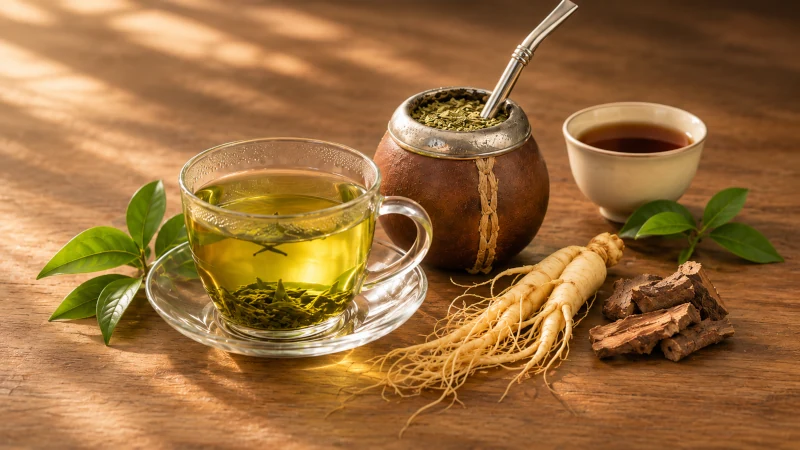
Natural herbs for energy at a glance
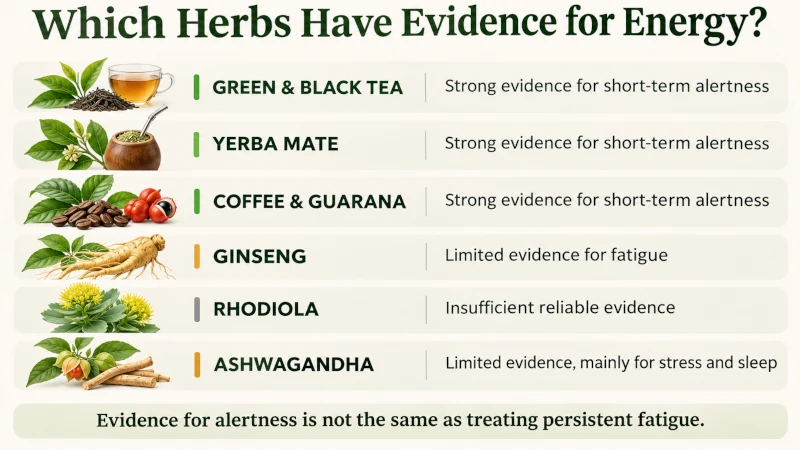
| Herb | How it works | Evidence for energy | Main caution |
| Tea | Caffeine (about 37–71 mg per 12 oz) | Strong for short-term alertness | Sleep, jitters; total daily caffeine |
| Yerba mate | Caffeine | Strong for short-term alertness | Drink it warm, not scalding |
| Coffee, guarana | Caffeine (higher doses) | Strong for short-term alertness | Easy to overshoot 400 mg/day |
| Asian ginseng | Ginsenosides; mechanism unclear | Limited; small effect on general fatigue | Insomnia; blood sugar; pregnancy |
| American ginseng | Ginsenosides | Limited; one large trial in cancer-related fatigue | Ask your oncology team first |
| Rhodiola | Unclear | Insufficient | Dizziness, insomnia; losartan |
| Ashwagandha | Unclear; calming rather than stimulating | Limited; mainly stress and sleep | Liver, thyroid; pregnancy |
| Coca, tobacco, lobelia | Cocaine, nicotine, lobeline | Not appropriate | Addiction, heart effects, toxicity — avoid |
First, a quick check on why you’re tired
Feeling worn out after a short night or a hard week is normal. Fatigue that sticks around is different. Common causes include anemia or low iron, depression, sleep disorders such as sleep apnea, an underactive or overactive thyroid, and side effects of medicines like sedatives, antihistamines and blood pressure drugs [MedlinePlus, 2025].
That matters because no herb fixes those. MedlinePlus is blunt on this point: stimulants, caffeine included, are not effective treatments for fatigue and can make it worse when you stop them [MedlinePlus, 2025]. An herb can lift you for a few hours. It cannot repay sleep debt or correct a deficiency. If you haven’t already, our guide to boosting your energy levels naturally covers the sleep, movement, food and water changes that do the heavy lifting.
Caffeine herbs: the ones that reliably work
Caffeine is the only plant compound with consistent, everyday evidence for alertness. Your body handles it the same way whether it comes from a tea leaf or is added to a can, so what matters is the total across your day [FDA, 2024].
Tea
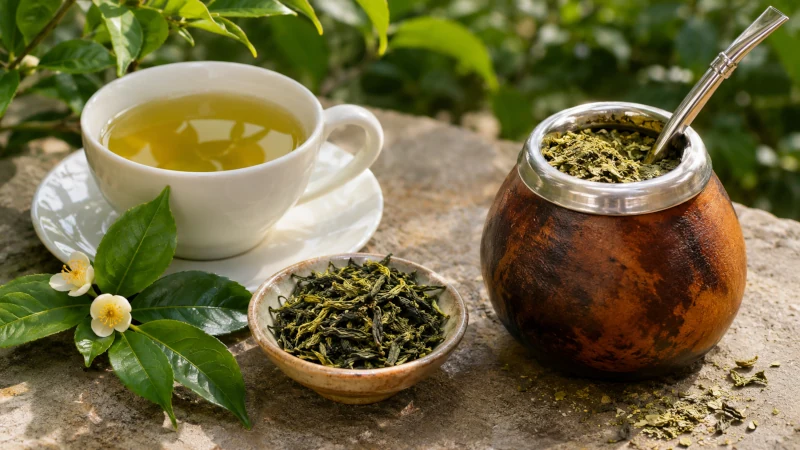
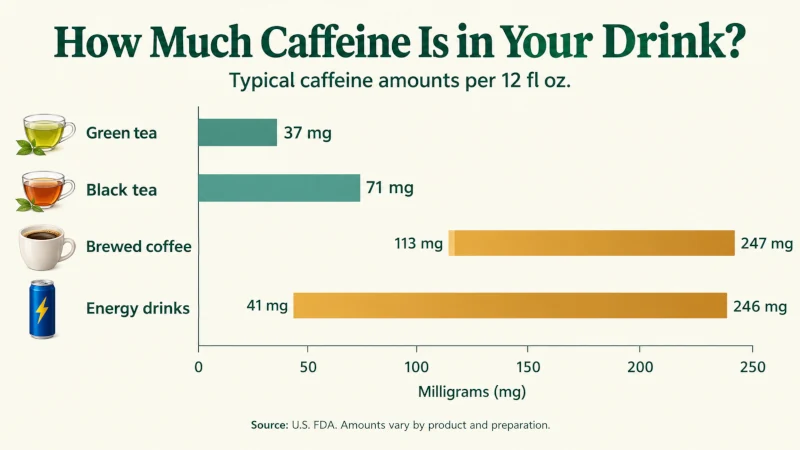
Green and black tea come from the same plant, Camellia sinensis. A typical 12-ounce cup of green tea has about 37 mg of caffeine and black tea about 71 mg, compared with 113–247 mg for the same amount of brewed coffee [FDA, 2024]. That gentler dose is the main reason tea suits people who get jittery on coffee. More on what tea can and can’t do in our guide to tea plant health benefits.
Yerba mate
Mate is brewed from the leaves of a South American holly and delivers caffeine much like tea or coffee. The safety point people miss has nothing to do with the leaf. The World Health Organization’s cancer agency classifies drinking any beverage hotter than 65 °C (149 °F) as probably carcinogenic, while mate that isn’t very hot is not classifiable as a carcinogen [IARC, 2018]. Let it cool before you sip. Our yerba mate guide covers brewing and who should be careful.
Coffee and guarana
Coffee works, and its higher caffeine content is exactly why it is the easiest way to overshoot. Guarana, a seed common in energy drinks, is another caffeine source; FDA notes that most energy drinks list total caffeine from all sources, guarana included, on the label [FDA, 2024]. Generally, energy drinks carry 41–246 mg per 12 ounces [FDA, 2024], so read the can.
How much caffeine is too much
For most healthy adults, FDA cites 400 mg a day as an amount not generally linked to harmful effects — about two to three 12-ounce cups of coffee [FDA, 2024]. Sensitivity varies a lot, and some medicines and conditions make caffeine hit harder. Signs you’ve had too much include a fast or pounding heart, higher blood pressure, insomnia, anxiety, jitters, an upset stomach, nausea and headache [FDA, 2024].
A few practical rules:
- Count milligrams, not cups. A large mug or a strong brew can hold far more than the label numbers above.
- Stop by early afternoon. Late caffeine undermines the sleep you actually need. If nights are the problem, see our natural remedies for insomnia.
- Skip pure caffeine powders. FDA estimates toxic effects such as seizures with rapid intake of around 1,200 mg — less than half a teaspoon of pure caffeine [FDA, 2024].
- Cut back gradually. Withdrawal isn’t dangerous, but it is unpleasant [FDA, 2024]. Decaf still contains a little caffeine.
Ginseng and adaptogens: modest, mixed evidence
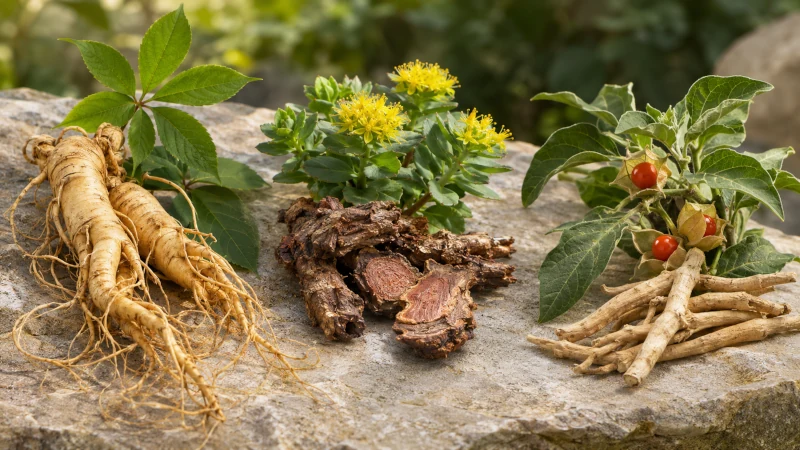
“Adaptogen” is a traditional label for herbs thought to help the body resist stress. It describes a belief, not a test result. Dietary supplements are not approved by FDA before they’re sold, so products vary in what they contain [NCCIH, 2025a].
Asian ginseng
Asian ginseng (Panax ginseng) has the most research of the group. A 2023 review of 19 randomized trials with 2,413 participants found that, pooled together, ginseng did not significantly reduce fatigue. In subgroups, ginseng gave a small benefit for general fatigue not tied to a specific disease, and multi-herb ginseng formulas helped chronic fatigue — also with small effects. Ginseng did not increase side effects compared with controls [Li et al., 2023]. NCCIH notes that not all research agrees [NCCIH, 2025a].
Realistic expectation: possibly a small difference for some people, over weeks rather than hours. Short-term use (up to about six months) appears safe for most adults. Trouble sleeping is the most common side effect; rare reports include severe rash, liver damage and allergic reactions. It may lower blood sugar, interfere with blood clotting and worsen autoimmune conditions [NCCIH, 2025a].
American ginseng
American ginseng (Panax quinquefolius) has one notable trial. In 364 cancer survivors with fatigue, 2,000 mg a day of a quality-controlled Wisconsin ginseng didn’t beat placebo at four weeks, but did at eight. People still in active cancer treatment benefited more, and side effects were similar to placebo [Barton et al., 2013]. That’s encouraging for one group, not proof for healthy people who are simply tired. If you’re in cancer treatment, talk with your oncology team before adding any supplement.
Rhodiola
Rhodiola is marketed for energy, endurance and stress, but NCCIH says there isn’t enough reliable evidence to know whether it helps with any health purpose; most human studies are low-to-moderate quality. It is possibly safe for up to 12 weeks. Side effects can include dizziness, headache, insomnia, and either dry mouth or extra saliva, and an interaction with the blood pressure drug losartan has been reported [NCCIH, 2025b].
Ashwagandha
Ashwagandha is calming, not stimulating — drowsiness is one of its common side effects. Where it may help energy is indirectly: in studies lasting six to eight weeks, people taking it reported less stress and anxiety and less fatigue and sleeplessness [NIH ODS, 2023]. It appears safe for up to about three months. It has been linked to liver injury, may affect thyroid function, and may interact with thyroid, diabetes and blood pressure medicines, sedatives and immune suppressants [NIH ODS, 2023]. Our ashwagandha evidence guide goes deeper on doses and safety.
Plants sold or used as stimulants that you should skip
Some herbal sources still list coca, tobacco and lobelia alongside tea and mate. They don’t belong on the same list.
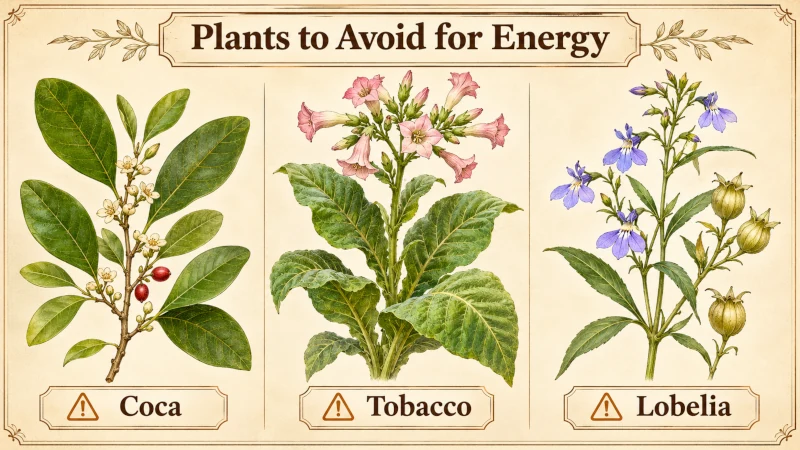
- Coca. Coca leaves are the source of cocaine, a Schedule II drug. Cocaine can cause heart attacks, strokes and seizures, any of which can be fatal, and it is addictive [NIDA, 2024].
- Tobacco. Nicotine can lead to addiction, and tobacco contains other harmful chemicals [NIDA, 2026]. MedlinePlus lists avoiding nicotine as a way to reduce fatigue, not a way to treat it [MedlinePlus, 2025].
- Lobelia (“Indian tobacco”). Lobelia’s main alkaloid acts somewhat like nicotine. FDA prohibited over-the-counter lobeline smoking-cessation products in 1993 for lack of evidence, high doses can cause vomiting, tremor, fast heart rate and low blood pressure, and fairly small amounts of leaf are considered toxic [Drugs.com, 2026]. Avoid it in pregnancy [Drugs.com, 2026].
Caffeine-free swaps: chicory and dandelion root
If you want the ritual of a dark, bitter morning cup without the caffeine, roasted chicory or dandelion root brews into something coffee-like. Be clear about what you’re getting: these won’t give you a caffeine lift. They’re a way to cut back, not a substitute stimulant.
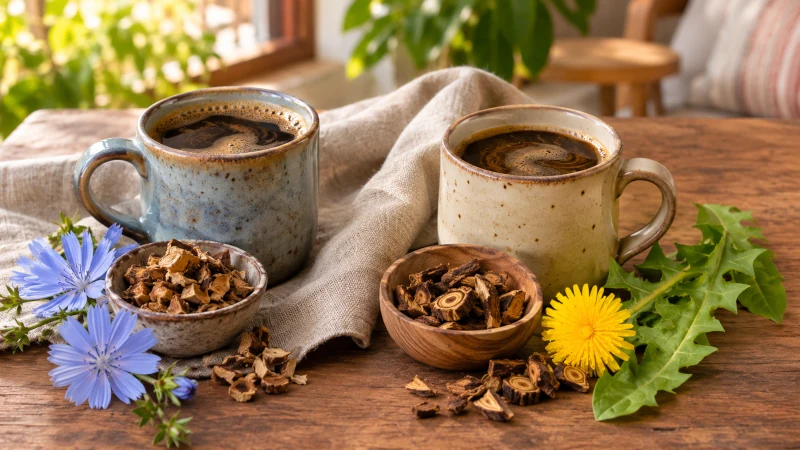
Dandelion in food amounts is considered likely safe. Evidence is conflicting on whether people allergic to ragweed, chrysanthemums, marigolds or daisies react to it, and it may in theory interact with diabetes drugs, blood thinners and water pills. There’s little safety information on larger-than-food amounts in pregnancy or breastfeeding [NCCIH, 2024].
Side effects, interactions, and who should avoid these herbs
| Herb | Common side effects | Interactions to ask about | Avoid or check first if you… |
| Caffeine herbs | Fast heartbeat, insomnia, anxiety, jitters, upset stomach, headache [FDA, 2024] | Some medicines increase caffeine sensitivity [FDA, 2024] | Are pregnant, breastfeeding, sensitive to caffeine, or have heart rhythm or blood pressure problems |
| Asian ginseng | Insomnia; rarely rash, liver damage, allergy [NCCIH, 2025a] | Diabetes medicines; may affect clotting [NCCIH, 2025a] | Are pregnant or breastfeeding, have diabetes or an autoimmune disease |
| Rhodiola | Dizziness, headache, insomnia, dry mouth or extra saliva [NCCIH, 2025b] | Losartan [NCCIH, 2025b] | Are pregnant or breastfeeding (little is known) |
| Ashwagandha | Upset stomach, loose stools, nausea, drowsiness [NIH ODS, 2023] | Thyroid, diabetes, blood pressure drugs; sedatives; immune suppressants [NIH ODS, 2023] | Are pregnant or breastfeeding, have prostate cancer, a thyroid or liver condition |
| Dandelion root | Possible allergy [NCCIH, 2024] | Theoretical: diabetes drugs, blood thinners, water pills [NCCIH, 2024] | Are allergic to the daisy family |
Pregnancy and breastfeeding. Keeping caffeine under 200 mg a day in pregnancy does not appear to be a major factor in miscarriage or preterm birth; whether higher amounts raise miscarriage risk is unsettled [ACOG, 2010; reaffirmed 2023]. FDA advises talking with your provider about caffeine if you’re pregnant, trying to conceive or breastfeeding [FDA, 2024]. Some studies suggest Asian ginseng may be unsafe in pregnancy [NCCIH, 2025a]; ashwagandha may not be safe in pregnancy or while breastfeeding [NIH ODS, 2023]; and little is known about rhodiola [NCCIH, 2025b]. Skip all three unless your clinician says otherwise.
Children. Drinks with caffeine should be avoided under age 2, and medical experts advise against energy drinks for children and teens [FDA, 2024].
If you take regular medication, show your pharmacist the exact product before you start any herbal supplement.
When tiredness needs a doctor, not an herb
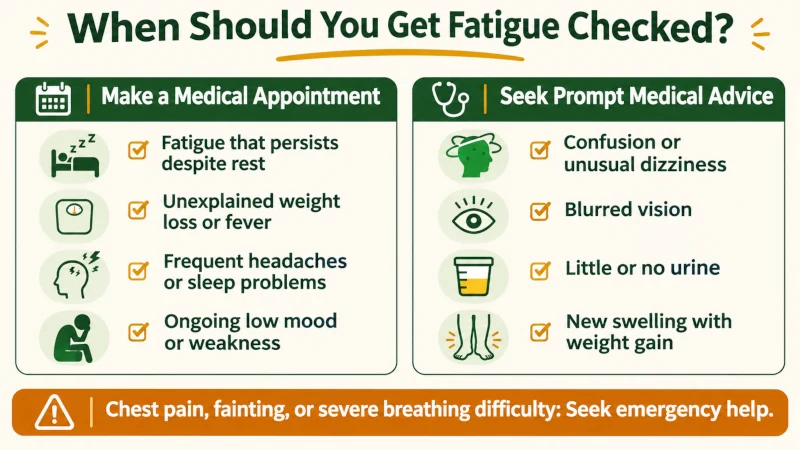
If fatigue doesn’t lift with enough sleep, decent food and a calmer schedule, get it checked [MedlinePlus, 2025]. Contact a provider right away if tiredness comes with confusion or dizziness, blurred vision, little or no urine, or recent swelling and weight gain [MedlinePlus, 2025].
Make an appointment if you have unexplained weakness or fatigue with fever, unintentional weight loss or regular sweats; constipation, dry skin, weight gain or feeling cold all the time; frequent headaches; low mood; insomnia; or you take medicines that could cause drowsiness [MedlinePlus, 2025]. Stop an herbal supplement and seek prompt care if you notice yellowing of the skin or eyes. For chest pain, fainting or severe trouble breathing, call 911.
If tiredness comes with thoughts of harming yourself, call or text 988 to reach the Suicide & Crisis Lifeline [NIDA, 2024].
| HEALTH DISCLAIMER: This article is for general education and isn’t a substitute for medical advice, diagnosis or treatment. Herbs and caffeine can raise heart rate, disrupt sleep and interact with prescription medicines, and supplements are not reviewed by FDA for safety or effectiveness before they’re sold. If you’re pregnant or breastfeeding, take regular medication, have a heart, liver, thyroid or autoimmune condition, or are choosing something for a child, talk with your doctor or pharmacist first. Persistent fatigue deserves a medical evaluation. |
Frequently Asked Questions
What is the best natural herb for energy?
For a reliable, same-day lift, a caffeinated herb such as tea or yerba mate. Green tea has about 37 mg of caffeine per 12 ounces and black tea about 71 mg [FDA, 2024]. Ginseng, rhodiola and ashwagandha have weaker evidence and work, if at all, over weeks.
Is ginseng better than coffee for energy?
They do different things. Coffee’s caffeine reliably raises alertness within the hour. Ginseng’s evidence is a small, inconsistent effect on fatigue over weeks of use [Li et al., 2023], and its most common side effect is trouble sleeping [NCCIH, 2025a].
Do adaptogens like rhodiola actually work?
The evidence is thin. NCCIH says there isn’t enough reliable research to know whether rhodiola helps any health purpose [NCCIH, 2025b]. Ashwagandha studies mostly show modest effects on stress and sleep [NIH ODS, 2023].
How much caffeine from tea or mate is safe per day?
Most healthy adults can stay under FDA’s 400 mg benchmark, counting every source [FDA, 2024]. In pregnancy, keep total caffeine under 200 mg [ACOG, 2010; reaffirmed 2023].
Can I combine energy herbs with my medication?
Check first. Ginseng may affect blood sugar and clotting [NCCIH, 2025a], rhodiola has a reported interaction with losartan [NCCIH, 2025b], and ashwagandha may interact with thyroid, diabetes, blood pressure and sedating drugs [NIH ODS, 2023].
References
- U.S. Food and Drug Administration. Spilling the Beans: How Much Caffeine Is Too Much? View source
- IARC Working Group on the Evaluation of Carcinogenic Risks to Humans. Drinking Coffee, Mate, and Very Hot Beverages. View source
- American College of Obstetricians and Gynecologists. Moderate Caffeine Consumption During Pregnancy. View source
- National Center for Complementary and Integrative Health. Asian Ginseng. Last updated February 2025. View source
- Li X, Yang M, Zhang YL, Hou YN, Smith CM, Korenstein D, Mao JJ. Ginseng and Ginseng Herbal Formulas for Symptomatic Management of Fatigue: A Systematic Review and Meta-Analysis. View source
- Barton DL, Liu H, Dakhil SR, et al. Wisconsin Ginseng (Panax quinquefolius) to Improve Cancer-Related Fatigue: View source
- National Center for Complementary and Integrative Health. Rhodiola. View source
- NIH Office of Dietary Supplements. Ashwagandha: Is It Helpful for Stress, Anxiety, or Sleep? Fact Sheet for Consumers. View source
- National Center for Complementary and Integrative Health. Dandelion. View source
- MedlinePlus Medical Encyclopedia. Fatigue. U.S. National Library of Medicine; View source
- National Institute on Drug Abuse. Cocaine. View source
- National Institute on Drug Abuse. Tobacco/Nicotine and Vaping. View source
- Drugs.com. Lobelia (Natural Products – Professional). View source


