
Slippery elm bark benefits are real, but they are narrower than most herbal websites suggest. The bark of the slippery elm tree (Ulmus rubra) is best known as a sore-throat soother, and the U.S. Food and Drug Administration formally recognizes it as a safe and effective oral demulcent in over-the-counter lozenges and similar products [FDA, 2022]. Outside that use, the evidence is thinner. Small studies and laboratory work suggest the inner bark may also calm certain digestive symptoms, but most of the broader claims — for cancer, ulcers, urinary infections, wounds, or inflammatory bowel disease — are not supported by good human trials [NCI/NLM LiverTox, 2024]; [Memorial Sloan Kettering, 2024].
This guide explains, in plain English, what slippery elm bark is, how it actually works in the body, where the evidence is strong, where it is weak, and how to use it safely. If you are managing a chronic condition or take prescription medication, talk to your clinician before starting any herbal product.
Slippery elm at a glance
| Plant | Slippery elm (Ulmus rubra), a North American tree; only the inner bark is used medicinally. |
| Main use with the best evidence | Short-term relief of sore throat and dry cough (FDA-recognized as an oral demulcent). |
| Possible secondary uses | Mild relief in constipation-predominant IBS, occasional heartburn, and mild surface skin irritation — based on small studies and traditional use. |
| Active component | Mucilage — a soluble fiber that forms a slippery gel in water and coats mucous membranes. |
| Forms available | Lozenges, capsules, powder, tea, liquid extract, and topical paste. |
| Main safety issue | Slippery elm is generally well tolerated, but its mucilage can reduce how much of an oral medication your body absorbs. Take it at least 1 hour after other oral medicines. Avoid in pregnancy due to traditional safety concerns. |
What slippery elm bark actually is
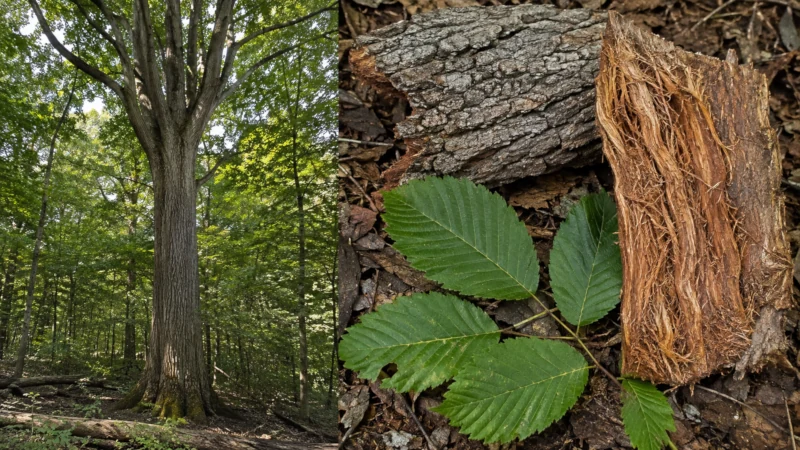
Slippery elm is a medium-sized deciduous tree native to the eastern and central United States and southern Canada. It can reach 60–80 feet tall. Native American tribes used the tree for ropes, baskets, canoes, and food, and they used the inner bark medicinally for sore throat, digestive complaints, wounds, and as a nutrient-rich gruel for people recovering from illness [USDA NRCS]. Only the inner bark — peeled away from the outer bark — is used as medicine. When the inner bark is mixed with water it releases a thick, gel-like substance called mucilage, which is what makes it “slippery.”
The bark also contains tannins (which are mildly astringent), small amounts of antioxidants, and other plant compounds. The mucilage is the part with the clearest physiological effect: it coats irritated tissue, holds water, and is not broken down by digestion in the same way as sugar or starch [NCI/NLM LiverTox, 2024].
How slippery elm works in the body
Two mechanisms explain almost all of slippery elm’s plausible effects.
Demulcent action. When you swallow a lozenge or sip a tea made from the powder, the mucilage forms a slick film over the lining of the mouth, throat, and esophagus. That film provides a physical barrier between irritated tissue and whatever is irritating it — acid, dry air, repeated coughing. This is the same basic mechanism behind any throat lozenge that contains pectin, glycerin, or other demulcents [FDA, 2022].
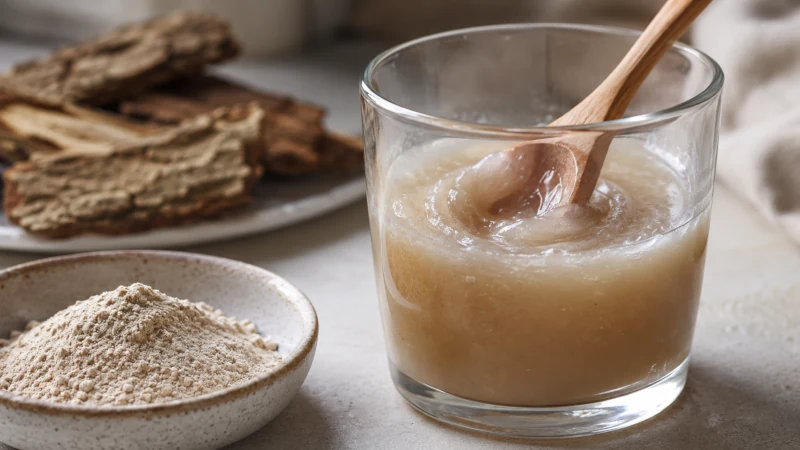
Soluble-fiber action in the gut. Once it passes the stomach, the mucilage behaves like a soft, soluble fiber. It absorbs water, can soften stool, and may slow how quickly other substances are absorbed from the gut [MedlinePlus, NIH]. This is the most likely reason a slippery-elm-containing formula improved bowel habits in one small IBS trial.
Two things slippery elm does not reliably do, despite older claims:
- It is not a proven anti-inflammatory drug. Lab studies on biopsy tissue suggest antioxidant activity, but that has not translated into evidence of healing inflammatory bowel disease in people.
- It does not treat infections, cancer, or serious wounds. Cancer centers and government health agencies are explicit about this [Memorial Sloan Kettering, 2024]; [MedlinePlus, NIH].
Slippery elm bark benefits supported by evidence
1. Soothing a sore throat and dry cough
This is the strongest use. The FDA’s over-the-counter monograph for oral healthcare products lists slippery elm bark as a demulcent ingredient permitted in lozenges and similar products labeled for “temporary relief of minor discomfort and protection of irritated areas in sore mouth and sore throat” [FDA, 2022]. The label warning on those products is direct: if a sore throat is severe, lasts more than two days, or is accompanied by fever, headache, rash, nausea, or vomiting, see a doctor — slippery elm is not for those situations.
A 2003 multicenter, randomized, double-blind, placebo-controlled trial of “Throat Coat,” a herbal tea containing slippery elm bark alongside licorice and marshmallow root, found that the tea provided faster pain relief than placebo in 60 adults with acute pharyngitis [Brinckmann et al., 2003]. That is a small study and the tea contained several demulcent herbs, so the credit cannot be assigned to slippery elm alone — but the result is consistent with the FDA’s classification.

For minor cough or hoarseness, slippery elm lozenges or a warm tea can be a reasonable home option. The Mayo Clinic lists slippery elm among the herbal sore-throat options some people try alongside rest and fluids. If you are looking for a wider range of gentle approaches for upper-airway symptoms, see our guide to natural ear, nose, and throat remedies.
2. Constipation-predominant IBS — promising but not proven
The most-cited human study is a 2010 open-label pilot trial by Hawrelak and Myers. Thirty-one Australian adults who met Rome II criteria for IBS took one of two herbal formulas for several weeks. The constipation-predominant group received a powder containing slippery elm bark, oat bran, lactulose, and licorice root. Bowel movement frequency rose by about 20%, with significant reductions in straining, abdominal pain, bloating, and overall IBS symptom severity [Hawrelak & Myers, 2010].
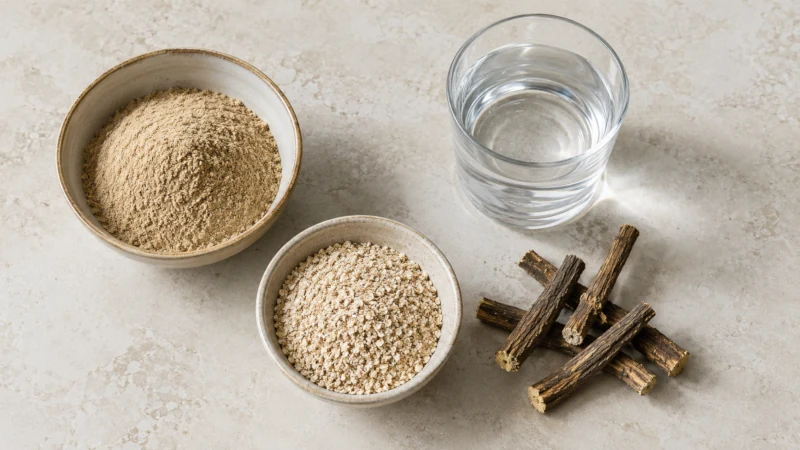
Two caveats matter. The trial had no control group and only 10 people in the constipation arm, so the placebo response could explain part of the improvement. And slippery elm was one of four active ingredients — the fiber from oat bran and the osmotic effect of lactulose could account for much of the benefit on their own. The honest summary: it is plausible, in a multi-ingredient formula, that slippery elm contributes to relief in constipation-type IBS. It has not been shown to do so by itself.
For broader, evidence-based ways to support a sluggish gut, see our digestive health resources.
3. Occasional heartburn and reflux
Many integrative clinicians suggest slippery elm tea for occasional heartburn on the basis of its demulcent properties: mucilage may form a temporary protective layer over the esophagus when acid moves up from the stomach. The National Center for Complementary and Integrative Health and MedlinePlus both note this potential use, while flagging that there is not enough reliable human data to confirm it. If reflux is frequent, painful, or interferes with eating or sleep, that warrants a medical workup rather than a tea.

4. Surface skin irritation
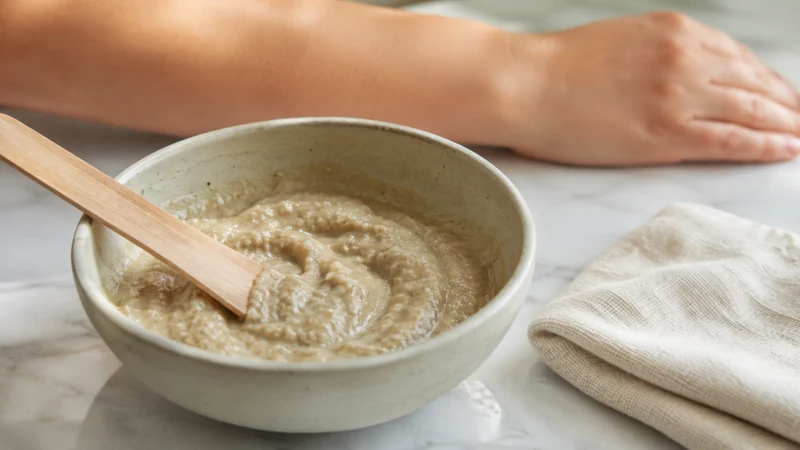
Mixed into a paste with water, slippery elm powder has been used as a poultice for mild skin irritation. The skin-coating effect is plausible. There is no good evidence it heals serious wounds, burns, or persistent skin disease, and any wound that is deep, infected, slow to heal, or related to diabetes needs medical evaluation, not a herbal poultice [NCI/NLM LiverTox, 2024]. For irritation in the anal area, the safer first step is medical guidance — our overview of herbal options used alongside conventional care for hemorrhoids walks through what is reasonable and what is not.
Quick evidence summary
| Use | What the evidence shows | Strength of evidence |
| Sore throat / pharyngitis | FDA recognizes slippery elm as a safe and effective oral demulcent in OTC lozenges; one 60-patient trial of a slippery-elm-containing tea showed faster pain relief than placebo. | Moderate (limited but consistent) |
| Constipation-predominant IBS | One 31-person pilot trial of a slippery-elm + oat-bran + lactulose + licorice formula reported a 20% increase in bowel movements and less abdominal pain. Slippery elm was not tested alone. | Limited (single small pilot, mixed herbs) |
| Heartburn / GERD | Mucilage may coat the esophagus and stomach lining, which is plausible biologically, but human trials are scarce and mostly use combination products. | Limited / theoretical |
| Crohn’s disease, ulcerative colitis | Lab studies on biopsy tissue show antioxidant activity, but there are no human clinical trials showing slippery elm changes the disease course. | Very limited (lab / in vitro) |
| Cancer, infections, wound healing of serious wounds | Cancer centers say there is no evidence slippery elm treats cancer or serious infections. Surface skin soothing is plausible but not equivalent to wound healing. | None / unsupported |
Claims that are not supported by good evidence
Older herbal references, including some still circulating online, list slippery elm as a treatment for tumors, gangrene, dysentery, ulcerative colitis, Crohn’s disease, urinary tract infections, sexually transmitted infections, and a long roster of other diseases. None of these are supported by the kind of human clinical evidence that would justify those claims today.
Memorial Sloan Kettering Cancer Center states plainly that slippery elm “may help relieve minor cough or sore throat, but there is no evidence it can treat infections, cancer, or other serious medical conditions” [Memorial Sloan Kettering, 2024]. The NIH’s MedlinePlus entry is similarly cautious: “There is interest in using slippery elm for a number of purposes, but there isn’t enough reliable information to say whether it might be helpful” [MedlinePlus, NIH].
If you have a diagnosed disease — including IBD, peptic ulcer disease, interstitial cystitis, or any cancer — slippery elm is, at best, a supportive comfort measure to discuss with your medical team. It is not a substitute for proven treatment.
How to take slippery elm bark
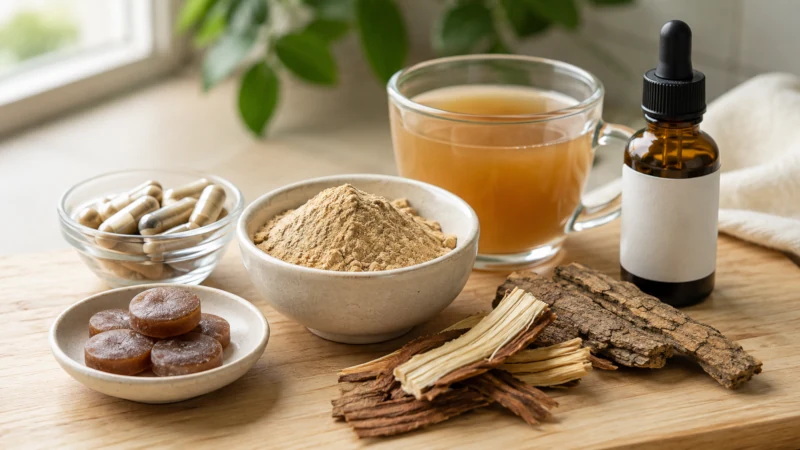
There is no single “correct” dose. The numbers below are common amounts published by herbal references and product manufacturers, not government-set doses, so check the label of whatever product you buy and follow it.
| Form | Typical adult amount in published sources | Best suited for |
| Lozenge | About 150 mg of slippery elm per lozenge; up to 8–10 per day per some product directions. | Sore throat, dry cough. |
| Capsule / tablet | 400–500 mg, three to four times daily in some references; follow your product label. | General digestive comfort, when tea is impractical. |
| Powdered bark (tea or gruel) | 1–2 teaspoons stirred into a cup of hot water, up to three times daily. | Throat irritation, mild reflux, occasional indigestion. |
| Liquid extract | Roughly 5 mL up to three times daily in some references; products vary widely — follow the label. | People who do not tolerate the gel-like texture of powder. |
| Topical paste | Mix powder with water to a thick paste; apply to intact skin for short periods. | Minor surface skin irritation. |
A simple tea: stir 1 to 2 teaspoons of slippery elm powder into a cup of hot — not boiling — water. It will thicken quickly. Drink it warm, optionally sweetened with a small spoonful of honey or paired with a slice of lemon. Up to three cups daily is a typical upper end. Do not give honey to children under one year of age.
Critical timing tip. Because slippery elm’s mucilage can slow absorption of other substances, the NIH advises taking it at least one hour after any oral medication [MedlinePlus, NIH]. This is especially important for medications with narrow therapeutic windows, such as thyroid hormone, certain seizure medications, immunosuppressants, and oral diabetes drugs.
Safety, side effects, and interactions
Slippery elm is generally well tolerated. The FDA classifies the bark as “generally recognized as safe” (GRAS), and there is no known signal of liver toxicity from oral use [NCI/NLM LiverTox, 2024]. Still, no herb is risk-free.
Possible side effects
- Mild nausea or a gritty texture in the mouth, especially with raw powder.
- Allergic reactions, including skin rash or itching. Slippery elm pollen has been reported as allergenic, and contact dermatitis from extracts has been documented [Drugs.com].
- Slowed absorption of other medicines or supplements taken at the same time.
Medication interactions to know about
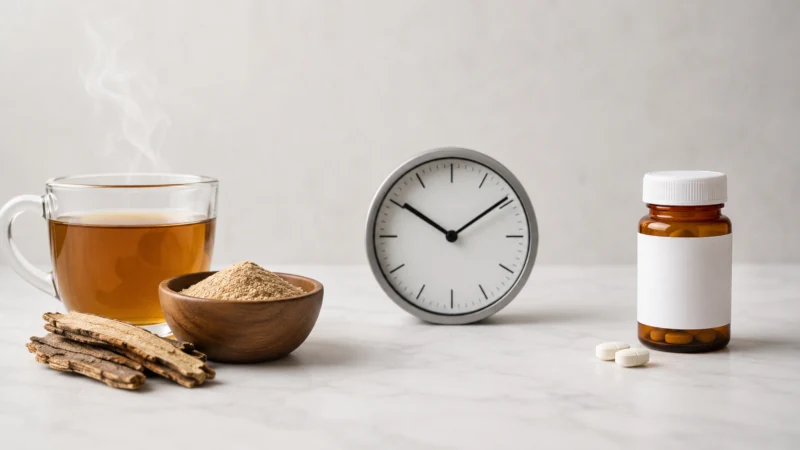
The most consistent concern across drug-information databases is that mucilage in slippery elm can decrease how much of an oral medicine your gut absorbs [MedlinePlus, NIH]. This is not a unique problem with slippery elm — it applies to most high-fiber herbs and supplements. Practical rule: take slippery elm at least one hour after, and ideally two hours away from, any oral medication.
Who should avoid slippery elm
- Pregnant or breastfeeding women. There is a long-standing — though not scientifically confirmed — traditional belief that slippery elm bark was used to induce abortion. Because reliable safety data in pregnancy do not exist, the NIH advises avoiding it during pregnancy and breastfeeding [MedlinePlus, NIH].
- Children under 1 year of age. Avoid honey-sweetened slippery elm preparations in infants because of the risk of infant botulism from honey, not from slippery elm itself.
- Anyone with a known elm or birch pollen allergy. Cross-reactivity is possible.
- People taking medications with narrow therapeutic windows. Talk to a pharmacist about how to time slippery elm around your regular doses.
Realistic expectations
Within the limits of the evidence, slippery elm is best thought of as a gentle comfort herb. It can take the edge off a scratchy throat, soften the experience of an occasional bout of heartburn, and add fiber that may help with mild constipation. It does not work like a drug, and it should not delay medical care for anything that is getting worse, lasting more than a few days, or affecting your ability to eat, sleep, or breathe.
When self-care is not enough — talk to a doctor

Stop trying home remedies and seek medical care if any of the following apply.
- A sore throat that lasts more than 2 days, especially with fever above 101°F (38.3°C), severe pain, drooling, difficulty swallowing, or a stiff neck.
- Heartburn or reflux symptoms that occur more than twice a week, wake you at night, or come with unintentional weight loss, difficulty swallowing, vomiting, or black or bloody stools.
- A change in bowel habits that lasts more than a few weeks, especially after age 45 or with rectal bleeding, weight loss, or a family history of colon cancer.
- A wound that is deep, infected, slow to heal, or that you developed while living with diabetes.
- Any allergic-type reaction — hives, swelling of the lips or tongue, wheezing — after taking slippery elm. Call emergency services.
| Health Disclaimer: This article is for general educational purposes only. It does not provide medical advice, diagnosis, or treatment, and it is not a substitute for the judgment of a qualified healthcare professional. Slippery elm is a herbal product, not a regulated medicine. Talk to your doctor or pharmacist before using slippery elm if you take prescription medications, are pregnant or breastfeeding, are managing a chronic condition such as inflammatory bowel disease or diabetes, or are giving the herb to a child. Stop using it and seek medical attention if you develop an allergic reaction, persistent symptoms, or any new symptom that worries you. Do not delay urgent care for a serious illness in order to try a herbal remedy. |
Frequently Asked Questions
Is slippery elm bark safe to take every day?
For most healthy adults, short-term daily use of slippery elm in product-label doses appears to be safe. There are no long-term safety studies in humans, so it is not a substitute for solving the underlying reason you reach for it. Keep at least one hour between slippery elm and any oral medications [MedlinePlus, NIH].
Does slippery elm help acid reflux?
It may provide brief comfort by coating the esophagus, but there is no large clinical trial showing it reduces reflux episodes the way an acid-suppressing medication does. If reflux is frequent or severe, see a clinician.
Can children take slippery elm?
Slippery elm lozenges have been used in children old enough to safely manage a lozenge (typically over age 4), but pediatric dosing is not well established. Talk to your pediatrician before giving any herbal product to a child, and never use honey-sweetened preparations in infants under 1 year of age.
Will slippery elm interfere with my medications?
It can. The mucilage in slippery elm can decrease how much of an oral drug your gut absorbs. The conservative rule from the NIH is to take slippery elm at least one hour after any oral medication [MedlinePlus, NIH]. Ask a pharmacist about your specific drug list.
Is there a difference between slippery elm and “red elm” or Ulmus fulva?
No. Red elm, Indian elm, moose elm, sweet elm, Ulmus rubra, and Ulmus fulva all refer to the same species [Drugs.com].
Are slippery elm supplements regulated?
In the U.S., slippery elm is sold as a dietary supplement and is not approved by the FDA to treat any disease. Quality varies between brands. Look for products that list Ulmus rubra inner bark explicitly, have a lot number and contact information, and ideally carry a third-party testing seal.
References
- U.S. National Library of Medicine, MedlinePlus. Slippery Elm — overview, effectiveness, safety, dosing, and drug interactions. → View source
- National Institute of Diabetes and Digestive and Kidney Diseases. LiverTox: Clinical and Research Information on Drug-Induced Liver Injury — Slippery Elm. NCBI Bookshelf, 2024. → View source
- Memorial Sloan Kettering Cancer Center, Integrative Medicine. Slippery Elm — clinical summary, mechanism of action, purported uses, and warnings. → View source
- U.S. Food and Drug Administration. Over-the-Counter Monograph M022 — Oral Healthcare Products for OTC Human Use (slippery elm listed as a permitted oral demulcent). → View source
- Hawrelak JA, Myers SP. Effects of two natural medicine formulations on irritable bowel syndrome symptoms: a pilot study. Journal of Alternative and Complementary Medicine. 2010;16(10):1065–1071. → View source
- Brinckmann J, Sigwart H, van Houten Taylor L. Safety and efficacy of a traditional herbal medicine (Throat Coat) in symptomatic temporary relief of pain in patients with acute pharyngitis: a multicenter, prospective, randomized, double-blinded, placebo-controlled study. Journal of Alternative and Complementary Medicine. 2003;9(2):285–298. → View source
- USDA Natural Resources Conservation Service, National Plant Data Center. Plant Guide: Slippery Elm (Ulmus rubra Muhl.). → View source
- WebMD. Slippery Elm — uses, side effects, and risks. → View source
- Drugs.com. Slippery Elm — uses, dosage, side effects, warnings, and drug interactions. → View source
