
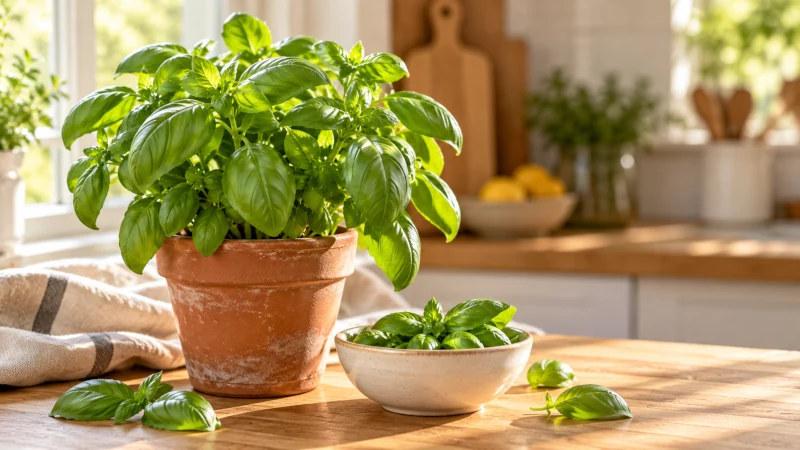
If you’re hoping basil will calm your nerves, lower your blood pressure or boost your milk supply, here’s the straight answer: those claims are mostly tradition, and good human trials haven’t backed them up. The real basil benefits are smaller and more dependable. As a food, sweet basil is safe for nearly everyone, makes vegetables and beans taste better, and is surprisingly rich in vitamin K for such a light leaf. The exciting-sounding research — antioxidant, anti-inflammatory, antimicrobial — comes mostly from test tubes and animals [Aminian et al., 2022], and the human research on sweet basil is thin: a few small studies, the most careful of which tested a leaf extract for menopause symptoms in 60 women [Karimi et al., 2024].
One more thing up front, because it matters for safety. Basil leaves and basil essential oil are not the same product. Sweet basil oil can be anywhere from about a fifth to nearly nine-tenths estragole, a compound European regulators treat as a genotoxic carcinogen in rodents [EMA, 2023]. Enjoy the leaves. Keep the oil out of your mouth.
What basil is — and which basil this guide covers
Sweet basil (Ocimum basilicum) is the soft, clove-and-anise-scented herb of pesto, caprese salad and countless Italian and Thai dishes. It belongs to the mint family, Lamiaceae [EMA, 2023]. Its aroma comes from a small amount of essential oil — less than 1% of the fresh herb [EMA, 2023] — made up mainly of linalool, estragole (also called methyl chavicol), eugenol and 1,8-cineole [LactMed, 2024].
Some of those names may ring a bell. Eugenol is behind the numbing bite of cloves. Linalool is one of the two compounds that dominate lavender oil. Estragole is the same compound that gives tarragon its main safety caveat. The blend varies widely from plant to plant: published basil leaf oils range from mostly linalool to almost entirely estragole [Aminian et al., 2022]. So a result from one variety or extract doesn’t automatically carry over to another.
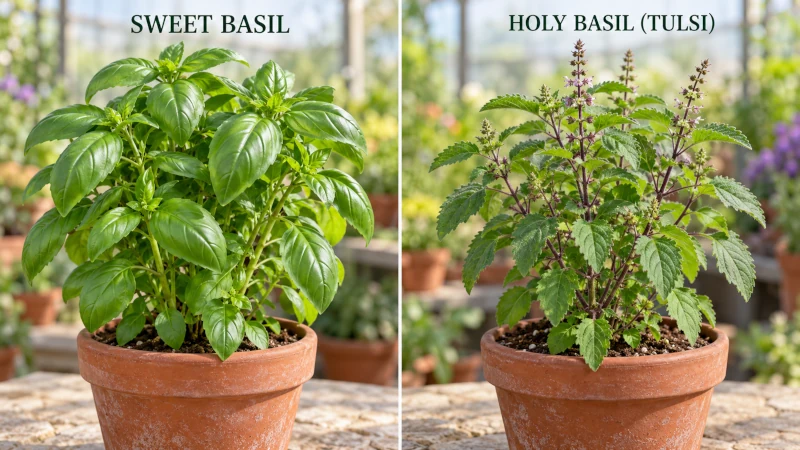
Holy basil, or tulsi (Ocimum tenuiflorum, also sold as O. sanctum), is a separate species. Much of what you’ll read about “basil” easing stress or helping blood sugar actually comes from holy basil research [Jamshidi & Cohen, 2017].
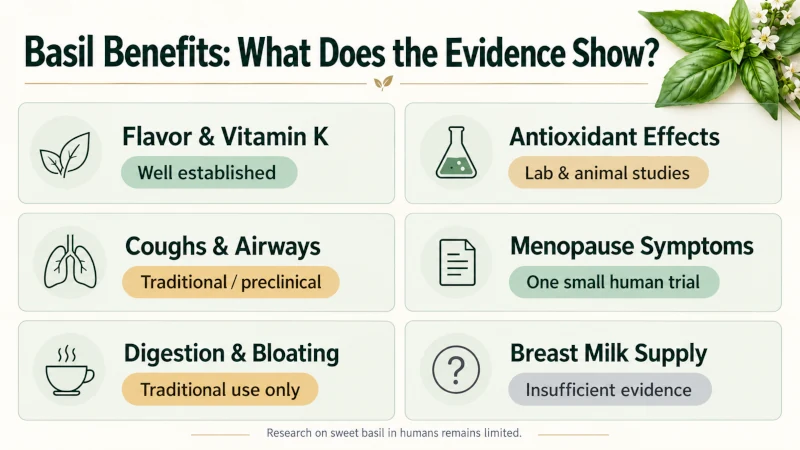
Basil benefits, graded by the evidence
As food: flavor and vitamin K (well established)
This is the benefit you can count on, and it’s a modest one. Basil makes tomatoes, beans, grains and vegetables more appealing, and anything that helps you eat more of those is doing real work. Nutritionally, the standout is vitamin K. USDA data list five fresh leaves at about 10 micrograms [USDA, 2015], against an adult Adequate Intake of 90 micrograms a day for women and 120 for men [NIH ODS, 2026]. A sprinkle on pasta barely registers. A big bowl of pesto is another matter — which is why basil shows up in the warfarin advice below.
Antioxidant, anti-inflammatory and antimicrobial effects (lab and animal only)
Basil extracts and oil show antioxidant, anti-inflammatory and immune-modulating activity in laboratory and animal studies, and the oil inhibits a range of fungi and bacteria in the lab [Aminian et al., 2022]. Those findings are real. They are not evidence that eating basil prevents infections, inflammation or chronic disease in people, and we found no human trials showing that it does.
Coughs and airways (tradition plus animal studies)
Basil has a long folk history for coughs, bronchitis and asthma in places as far apart as Iran and Brazil. In animal tissue and rodent models, basil extracts and their linalool relax airway muscle and calm allergic airway inflammation. Yet the authors of the main review say clinical studies are limited and that proper trials are needed before basil is used in practice [Aminian et al., 2022]. Even the part of that review labeled “clinical” mostly summarizes lab tests of extracts against fungi and tuberculosis bacteria.
If you have asthma or a cough that won’t quit, basil tea is not a stand-in for a diagnosis or for your prescribed inhaler.
Menopause symptoms (one small trial)
This is the most interesting human result for sweet basil, and it’s still preliminary. In a triple-blind trial in Iran, postmenopausal women took either a 500 mg basil-leaf extract capsule or a placebo every night for one month. Of 76 women randomized, 60 finished. Overall menopause-symptom scores were lower in the basil group at one month — though not at two weeks — with improvements in the psychological and physical domains and no difference in urinary and vaginal symptoms. No serious side effects were reported [Karimi et al., 2024].
Hold it loosely. The trial was small, short and based in one city; it relied on self-reported questionnaires, a limitation the authors acknowledge; and it used a lab-made extract, not kitchen basil. Some summary figures in the paper’s abstract also don’t match its own tables. It’s a reason for a bigger study, not a reason to self-treat. If menopause symptoms are disrupting your life, talk with a clinician about options with much stronger evidence.
Digestion, gas and a “nervous stomach” (traditional use)
Herbal tradition prizes basil as an antispasmodic for gas, bloating and slow, stress-related digestion. We couldn’t find good human trials testing basil for any of these. If cramping and bloating are your problem, peppermint oil has much better evidence, especially for IBS; for nausea, ginger has stronger trials behind it. A warm cup of basil tea after dinner is pleasant and low-risk for most adults. Think of it as a comfort, not a treatment.
Breast milk, periods and blood pressure (claims without good trials)
Some herbal sources still describe basil as a milk booster, a remedy for painful periods, and a tonic for fatigue and low blood pressure. The lactation claim is the best documented, and it doesn’t hold up. The National Library of Medicine’s LactMed database lists basil as a purported galactagogue but finds no scientifically valid trials supporting it — and notes that Persian traditional medicine used basil for the opposite job, reducing milk oversupply [LactMed, 2024]. Milk thistle carries a similar reputation with similarly thin support, as our guide to milk thistle and breast milk explains. We found no human trials of sweet basil for menstrual pain, fatigue or low blood pressure.
Holy basil is a different plant
Holy basil has more human research than sweet basil. A 2017 systematic review found 24 human studies involving 1,111 people, reporting effects on blood sugar, cholesterol, blood pressure, immunity, mood and stress; all reported favorable results and none reported significant side effects [Jamshidi & Cohen, 2017].
That sounds better than it is. Most studies were small and lasted 13 weeks or less, nearly all were conducted in India, and only three earned a high quality score. The authors concluded there isn’t enough evidence to recommend any specific tulsi product for any specific condition, and one author disclosed consulting work for a company that sells tulsi products [Jamshidi & Cohen, 2017]. None of it tells you what the basil on your pizza does.
Basil benefits at a glance
| Use | What the evidence shows | Strength |
| Flavor and vitamin K in food | USDA nutrient data; long culinary use [USDA, 2015] | Well established |
| Antioxidant, anti-inflammatory, antimicrobial | Lab and animal studies only [Aminian et al., 2022] | Preclinical |
| Coughs, asthma, airways | Folk use; animal studies; clinical evidence limited [Aminian et al., 2022] | Traditional / preclinical |
| Menopause symptoms | One 60-woman, one-month trial of a leaf extract [Karimi et al., 2024] | Early, limited |
| Digestion, gas, cramps | Traditional use; no good human trials found | Traditional only |
| Breast milk supply | No scientifically valid trials [LactMed, 2024] | Insufficient |
| Stress, blood sugar (holy basil) | 24 mostly small, low-quality trials of a different species [Jamshidi & Cohen, 2017] | Limited — holy basil only |
How to use basil sensibly
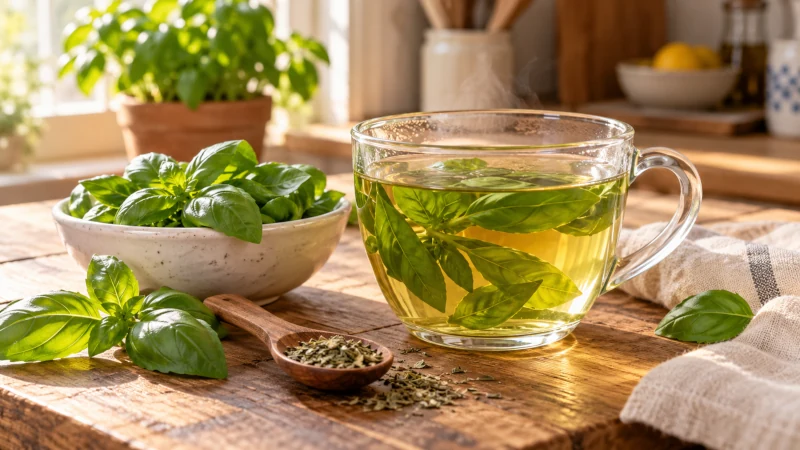
Cook with it freely. Fresh leaves keep their flavor best when added at the end of cooking or eaten raw; dried basil suits sauces and soups. A simple tea — a small handful of fresh leaves steeped in hot water for a few minutes — is a reasonable occasional drink for healthy adults who aren’t pregnant.
What to skip: some herbal sources recommend swallowing a few drops of basil essential oil several times a day, adding it to bathwater, or rubbing it on as a “stimulating” lotion. Don’t take the oil by mouth. For skin use, European regulators advise limiting estragole-containing herbal products to intact skin and no more than two weeks, because no one knows how much estragole passes through the skin [EMA, 2023]. If what you really want is the scent, a pot of the living plant on the windowsill does the job.
Estragole: the safety catch with basil oil
Estragole occurs naturally in sweet basil, tarragon, fennel, anise and several other herbs. After reviewing the toxicology, the European Medicines Agency’s herbal committee concluded that estragole is a genotoxic carcinogen in rodents, that the same activation pathway appears to work in human cells, and that exposure from herbal medicines should be kept as low as practically achievable [EMA, 2023].
Scale matters. The fresh herb is less than 1% oil, so a leaf in your salad delivers very little. Sweet basil essential oil, by contrast, can be 20% to 89% estragole. European estimates put everyday estragole intake from food at roughly 0.5 to 5 mg a day, and food-safety bodies have advised restricting estragole-rich herbs and spices beyond occasional kitchen use rather than banning them [EMA, 2023].
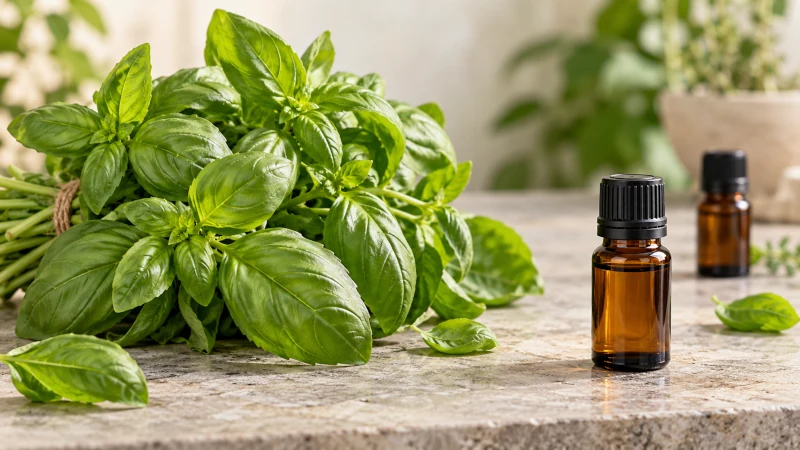
Not everyone reads the risk the same way. Basil contains a flavonoid, nevadensin, that reduced estragole’s activation in rat studies, and some researchers argue the whole plant is far safer than isolated estragole. The EMA weighed that argument and found it unconvincing for now: basil oil damaged DNA in a lab test at the same doses as pure estragole, and any protective effect is predicted to be small or absent at realistic human exposures [EMA, 2023]. The practical middle ground is simple. Culinary basil is fine; concentrated oil and high-dose extracts are where caution belongs.
Side effects, interactions and who should be careful
For most people, basil in food causes no problems at all. The cautions below are mainly about large regular amounts, extracts and essential oil.
Warfarin and similar blood thinners
Warfarin works against vitamin K, so people taking it are advised to keep their vitamin K intake consistent from day to day; sudden changes can make the drug stronger or weaker [NIH ODS, 2026]. You don’t have to give up basil. Keep your habits steady — not pesto every night one week and none the next — and tell your anticoagulation clinic if your diet changes. We couldn’t find reliable data on interactions between basil extracts and other medicines, so ask a pharmacist before taking a basil supplement alongside prescription drugs.
Pregnancy and breastfeeding
Basil in normal food amounts is fine. Medicinal amounts are a different story. The EMA advises against estragole-containing herbal medicines during pregnancy and breastfeeding when they supply more than 0.05 mg of estragole a day [EMA, 2023]. LactMed considers food amounts of basil safe while breastfeeding but notes that many sources advise against medicinal doses because of the estragole content and the lack of safety data [LactMed, 2024]. Skip basil oil and extracts, and check with your midwife or doctor before using any basil product beyond cooking.
Children
Keep children to basil in food. European guidance advises against estragole-containing herbal medicines for children up to 11 years old when they exceed 1 microgram of estragole per kilogram of body weight a day [EMA, 2023]. Store essential oils out of reach. If a child swallows one, call Poison Help at 1-800-222-1222 right away [HRSA, 2025].
Allergies and skin
Allergic reactions to basil are uncommon but have been documented in published case reports [Vartholomaios et al., 2007]. Stop eating it and get medical help if you notice hives, swelling of the lips or face, or trouble breathing. Essential oils are highly concentrated, so if you use basil oil on your skin at all, dilute it, patch-test a small area first, and keep it away from your eyes.
When to see a doctor instead
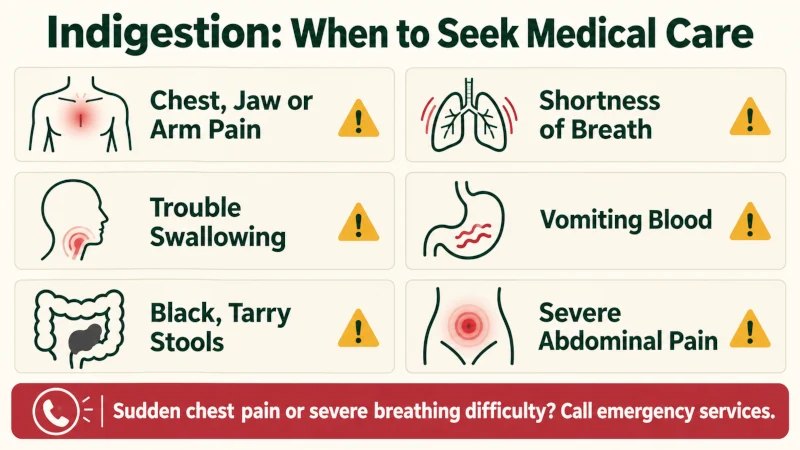
Basil is a kitchen herb, not a fix for ongoing symptoms. If you’ve been reaching for basil tea because of indigestion, see a doctor if it doesn’t get better — and see one right away if it comes with any of the following [NIDDK, 2025]:
- pain in your chest, jaw, neck or arm
- shortness of breath
- difficulty swallowing or painful swallowing
- frequent vomiting, or vomit with blood in it
- severe, constant pain in your abdomen, or long-lasting bloating or swelling
- weight loss without trying, or loss of appetite
- yellowing of your eyes or skin
- black, tarlike stools
If chest pain or trouble breathing comes on suddenly, call 911. And if someone swallows basil essential oil, call Poison Help at 1-800-222-1222 [HRSA, 2025].
| HEALTH DISCLAIMER: This article is for general education and is not medical advice, diagnosis or treatment. Basil is a culinary herb; it has not been shown to treat or prevent any disease. Basil essential oil is concentrated, can be high in estragole, and should not be swallowed. Talk with your doctor, pharmacist or midwife before using basil extracts, supplements or oils — especially if you are pregnant or breastfeeding, take warfarin or other prescription medicines, or are considering use in a child. If symptoms are severe or getting worse, seek medical care. If someone has swallowed an essential oil, call Poison Help at 1-800-222-1222 (US) or your local emergency number. |
Frequently Asked Questions
What are the real health benefits of basil?
As a food, basil adds flavor without salt or calories and supplies vitamin K [USDA, 2015]. Lab and animal studies show antioxidant and anti-inflammatory activity [Aminian et al., 2022], but human evidence for sweet basil is limited to a few small studies, such as a one-month trial of a leaf extract for menopause symptoms [Karimi et al., 2024].
Is it safe to eat basil every day?
For most people, yes, in normal cooking amounts. If you take warfarin, keep your intake steady from day to day rather than avoiding basil [NIH ODS, 2026]. The real safety concerns involve essential oil and high-dose extracts, because of estragole [EMA, 2023].
Can I take basil essential oil by mouth?
No. Sweet basil oil can be 20% to 89% estragole, a compound European regulators treat as a rodent carcinogen and want exposure kept as low as practically achievable [EMA, 2023]. Use fresh or dried leaves instead.
Does basil help with breast milk supply?
There’s no good evidence that it does. LactMed finds no scientifically valid trials supporting basil as a galactagogue, considers food amounts fine, and stresses that herbs should never replace a proper evaluation of what’s affecting milk supply [LactMed, 2024]. A lactation consultant or your baby’s doctor is the better first call.
Is holy basil the same as the basil I cook with?
No. Holy basil (tulsi) is a different species, Ocimum tenuiflorum. Most human studies on stress and blood sugar used holy basil, and the quality of that research is generally low [Jamshidi & Cohen, 2017].
References
- European Medicines Agency, Committee on Herbal Medicinal Products. Public statement on the use of herbal medicinal products containing estragole. View source
- Drugs and Lactation Database (LactMed). Basil. National Institute of Child Health and Human Development; View source
- Jamshidi N, Cohen MM. The clinical efficacy and safety of tulsi in humans: a systematic review of the literature. View source
- Karimi FZ, Hosseini H, Mazlom SR, Rakhshandeh H. The effect of oral capsules containing Ocimum basilicum leaf extract on menopausal symptoms in women: View source
- Aminian AR, Mohebbati R, Boskabady MH. The effect of Ocimum basilicum L. and its main ingredients on respiratory disorders: an experimental, preclinical, and clinical review. View source
- National Institutes of Health, Office of Dietary Supplements. Vitamin K: View source
- U.S. Department of Agriculture, Agricultural Research Service. National Nutrient Database for Standard Reference, View source
- Vartholomaios S, et al. Allergy to basil, a Lamiaceae herb. J Investig Allergol Clin Immunol. View source
- National Institute of Diabetes and Digestive and Kidney Diseases. Symptoms & Causes of Indigestion. View source
- Health Resources and Services Administration. Poison Help: Contact Us. View source


