
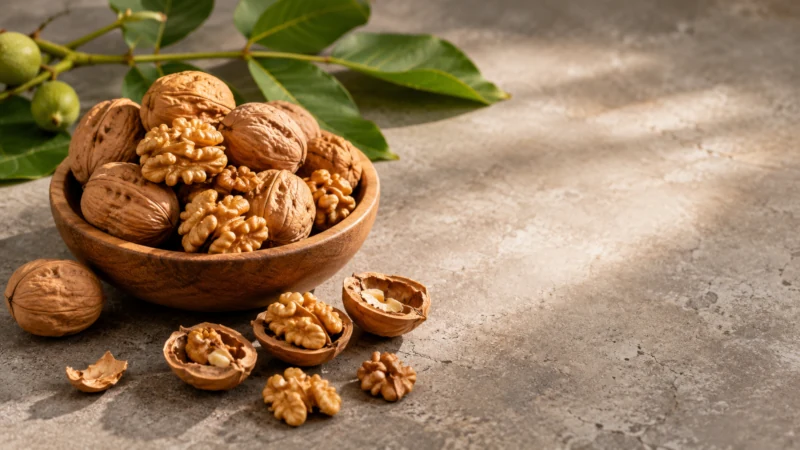
The walnut health benefits that get the most attention are real, but the picture is more specific than “superfood.” A single ounce — about 14 halves — supplies roughly 2.5 grams of plant omega-3 (alpha-linolenic acid), 1.9 grams of fiber, a serving of magnesium and copper, and a bundle of polyphenols that researchers have studied for decades in heart disease, type 2 diabetes, and cognitive health [USDA FoodData Central, 2024]. The U.S. Food and Drug Administration cleared a qualified health claim for walnuts and reduced coronary heart disease risk back in 2004, and the trial data since then has continued to point in the same direction [FDA, 2024]; [Guasch-Ferré et al., 2018].
What follows is what walnuts actually do, which studies are strong and which aren’t, who should be careful, and a sensible daily amount.
Walnuts at a glance
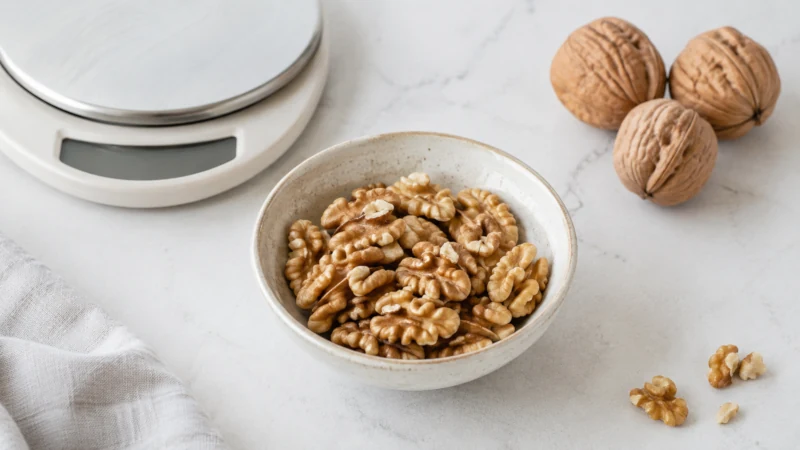
Walnuts are the seeds of Juglans regia, the English (or Persian) walnut tree. They are 65% fat by weight, which makes them calorie-dense, but the fat profile is unusual: about seven times more unsaturated than saturated, and walnuts are the only common tree nut with a meaningful dose of alpha-linolenic acid, the plant-form of omega-3 [UC Davis Health, 2024].
Nutrient values per 1-ounce (28-gram) serving of raw English walnuts, drawn from the USDA’s national nutrient database:
| Nutrient | Per 1 oz (28 g) | % Daily Value* |
| Calories | 185 kcal | ~9% |
| Total fat | 18.5 g | 24% |
| – Saturated | 1.7 g | 9% |
| – Monounsaturated | 2.5 g | — |
| – Polyunsaturated | 13.4 g | — |
| Alpha-linolenic acid (ALA omega-3) | 2.5 g | 156% AI |
| Protein | 4.3 g | 9% |
| Carbohydrate | 3.9 g | 1% |
| – Fiber | 1.9 g | 7% |
| – Sugar | 0.7 g | — |
| Magnesium | 45 mg | 11% |
| Phosphorus | 98 mg | 8% |
| Copper | 0.45 mg | 50% |
| Manganese | 1.0 mg | 43% |
* % Daily Values calculated against 2,000-kcal adult intake; AI = Adequate Intake. Source: USDA FoodData Central.
A practical footnote on the calorie line: a USDA metabolic-energy study found that adults absorb only about 79% of the calories on the walnut label. The remaining ~21% is locked inside intact cell walls and passes through digestion unused, which puts the metabolizable energy closer to 146 kcal per ounce. That helps explain why long-term walnut trials have not produced weight gain even when participants added a daily ounce to their existing diet [Baer et al., 2016].
Heart and cholesterol: the strongest evidence
Walnuts have been studied for cardiovascular benefit longer than any other nut, and this is where the evidence is most consistent.
Walnut Health Benefits: Lower LDL and triglycerides
A 2018 meta-analysis from the Harvard T.H. Chan School of Public Health pooled 26 randomized controlled trials covering 1,059 adults aged 22 to 75 — including participants with high cholesterol, type 2 diabetes, metabolic syndrome, and obesity. Compared with control diets (low-fat, Western, Mediterranean, and Japanese), walnut-enriched diets produced a 3.25% greater drop in total cholesterol, a 3.73% greater drop in LDL (“bad”) cholesterol, and a 5.52% greater drop in triglycerides [Guasch-Ferré et al., 2018]. A separate 2022 meta-analysis confirmed similar absolute reductions: total cholesterol down by about 8.6 mg/dL, LDL down by 5.7 mg/dL, and triglycerides down by 10.9 mg/dL [Wang et al., 2022].
The WAHA (Walnuts and Healthy Aging) study went a step further. Over two years, 628 healthy adults aged 63–79 in Barcelona and Loma Linda were randomized either to add about half a cup of walnuts daily to their usual diet, or to continue eating as usual. The walnut group ended the trial with total LDL particle counts 4.3% lower, small LDL particles 6.1% lower, and intermediate-density lipoprotein (IDL) cholesterol nearly 17% lower than the control group [Sala-Vila et al., 2020, Circulation]. Particle counts and IDL are increasingly used as independent cardiovascular risk markers; these are clinically meaningful shifts in otherwise healthy older adults [AHA Newsroom, 2021].
| Study | Design / Duration | Walnut dose | Main lipid effect |
| Guasch-Ferré et al., 2018 (meta-analysis, 26 RCTs) | Pooled analysis of trials in 1,059 adults | ~30–60 g/day | Total cholesterol −3.25%; LDL −3.73%; triglycerides −5.52% |
| WAHA trial — Sala-Vila et al., 2020 | 2-year RCT, 628 healthy adults aged 63–79 | ~½ cup (≈60 g)/day | LDL particles −4.3%; small LDL −6.1%; IDL −16.9% |
| Wang et al., 2022 (meta-analysis) | Updated pooled RCTs | Varied | Total cholesterol −8.6 mg/dL; LDL −5.7 mg/dL; triglycerides −10.9 mg/dL |
| PREDIMED — Estruch et al., 2018 | RCT in 7,447 adults at high CVD risk; median 4.8 y | 30 g/day mixed nuts (incl. walnuts) | 28% relative reduction in major cardiovascular events |
The FDA’s qualified health claim
In 2004 the FDA approved one of its first qualified health claims for a whole food, allowing walnut packaging to state: “Supportive but not conclusive research shows that eating 1.5 ounces of walnuts per day, as part of a low saturated fat and low cholesterol diet, and not resulting in increased caloric intake, may reduce the risk of coronary heart disease.” The word qualified matters: the agency considered the evidence credible but not strong enough for the higher “significant scientific agreement” standard [FDA, 2024].
PREDIMED and major cardiovascular events
The largest dietary trial relevant to walnuts is PREDIMED, which randomized 7,447 Spanish adults at high cardiovascular risk to one of three diets: a Mediterranean diet supplemented with mixed nuts (15 g walnuts plus 7.5 g almonds and 7.5 g hazelnuts daily), the same diet supplemented with extra-virgin olive oil, or a low-fat control. Over a median 4.8 years of follow-up, both Mediterranean arms produced fewer major cardiovascular events (heart attack, stroke, or cardiovascular death) than the control diet, with the nut arm showing a 28% relative reduction [Estruch et al., NEJM 2018]. The original 2013 paper was retracted and republished in 2018 after methodological corrections; the conclusions held in the revised analysis.
A useful caveat: PREDIMED tested mixed nuts inside a broader Mediterranean pattern, not walnuts alone. The benefit reflects the pattern as much as any single ingredient. For readers tracking their numbers, a cholesterol test at home is a useful trend tool between proper lab panels — but not a substitute for them.
Brain and cognitive health
The brain-and-walnut connection is real but more modest than headlines suggest.

Population studies have consistently linked nut intake — walnuts in particular — to slower age-related cognitive decline. The MIND diet cohort and the Rush Memory and Aging Project both associated higher walnut intake with better scores on memory and processing tests [Morris et al., 2015]. A randomized 2-year trial in 636 cognitively healthy older adults (the cognition arm of WAHA) added 30–60 g of walnuts daily to half the participants’ diet. Global cognition did not improve significantly across the whole group, but a pre-specified subgroup with greater baseline cognitive vulnerability did show benefit [Sala-Vila et al., 2020]. The honest read: walnuts may help slow decline in adults already at higher risk; they are not a cognitive enhancer for healthy people.
The biological story is plausible. Roughly 60% of the brain is fat by dry weight, and a substantial fraction of that fat is long-chain omega-3. Walnuts supply ALA, which the body partially converts to the long-chain forms EPA and DHA — though that conversion is only 1–10% efficient in humans, which is why fatty fish remains the more direct dietary source [NIH ODS, 2023]. Walnuts also supply polyphenols (notably ellagic acid) and vitamin E, both of which show antioxidant and anti-inflammatory effects in lab models [Cleveland Clinic, 2023].
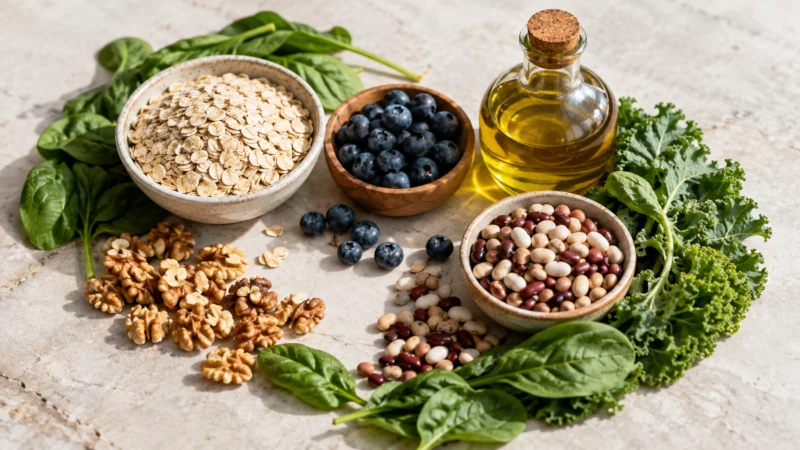
For readers planning meals around brain and nerve function, see the broader list of foods for the nervous system — walnuts are one part of a pattern that also includes fatty fish, leafy greens, eggs, and legumes.
Type 2 diabetes
The clearest diabetes signal comes from the Harvard Nurses’ Health Study, which followed 137,956 women without diabetes for an average of 10 years. Women who reported eating walnuts at least twice a week had a 21% lower risk of developing type 2 diabetes compared with women who rarely or never ate them. Even after adjusting for BMI — meaning independent of body weight — the reduction was still 15% [Pan et al., 2013]. This is an observational finding, so it cannot prove cause, but the effect size matches what some pharmaceutical interventions deliver.
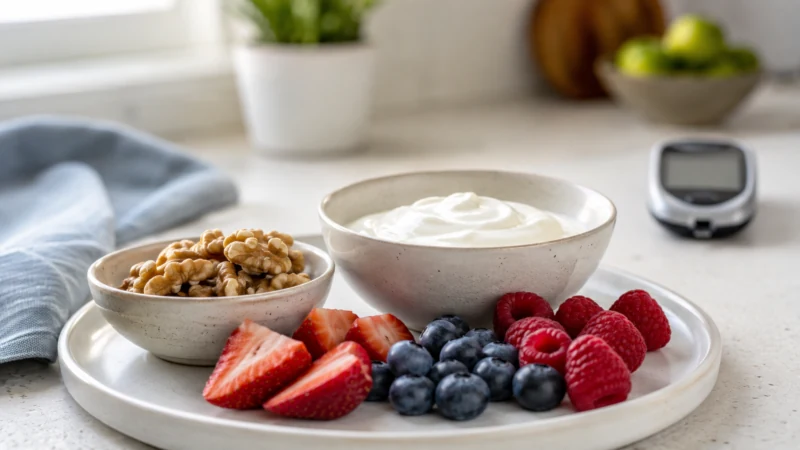
In people who already have type 2 diabetes, clinical trials show that walnuts modestly improve fasting blood glucose and insulin resistance, with effect sizes smaller than the lipid effects [Neale et al., 2020]. Walnuts are very low in carbohydrate — about 2 g of net carbs per ounce — so they slot easily into most diabetic eating plans alongside other diabetic-friendly foods. Walnuts are not a treatment for diabetes; they are a useful food choice within a broader plan.
Gut bacteria, inflammation, and other studied effects
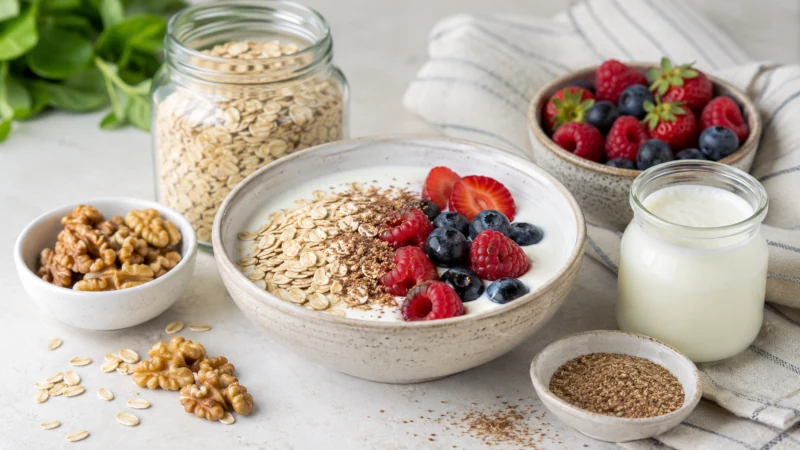
Walnut fiber and polyphenols feed gut bacteria. A 2018 randomized crossover trial in 18 healthy adults found that eating 43 g of walnuts daily for three weeks shifted the gut microbiome — increasing Faecalibacterium and Roseburia, both associated with anti-inflammatory effects — while also lowering markers of inflammation and bile acid metabolism [Holscher et al., 2018].
Blood pressure effects have been small and inconsistent. Some trials show modest reductions in systolic pressure; others find no change. A small effect is plausible — walnuts contain L-arginine, the substrate for nitric oxide — but the size of the effect across pooled trials is not large enough to qualify as a blood pressure intervention.
Walnut polyphenols and ellagic acid show anticancer activity in cell and animal studies, particularly for breast and colon cancer. Human evidence is preliminary and consists mainly of small trials and observational signals [Hardman, 2014]. Treat that benefit as plausible but unproven; it would be premature to call walnuts cancer-preventive in any clinical sense.
Iron absorption from walnuts is modest. The broader category of plant-iron foods — and the vitamin C that helps absorb them — is covered separately in our guide to foods that support healthy blood.
How many walnuts per day?
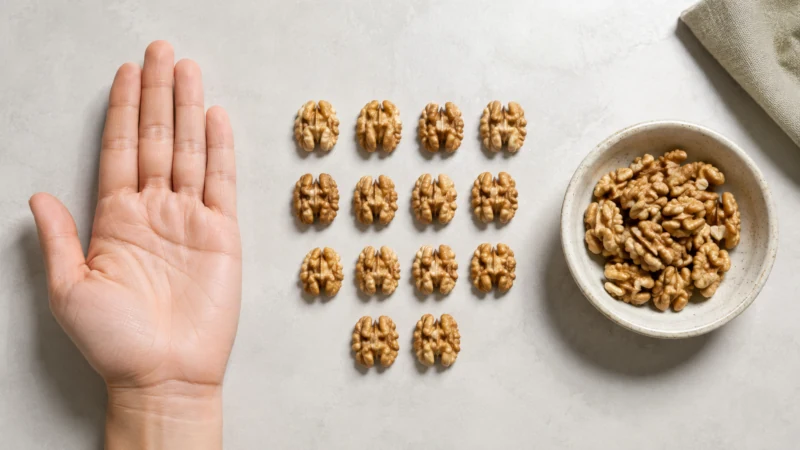
Most trials that show heart and metabolic benefit used between 28 g and 60 g (1–2 ounces) daily — roughly 14 to 28 walnut halves. The 1.5-ounce serving in the FDA claim works out to about 21 halves; PREDIMED used 30 g of mixed nuts daily; the WAHA trial used about half a cup. A practical baseline for most adults is one ounce a day, with up to two if walnuts are replacing less healthy snacks rather than adding calories on top.
A simple starting plan:
- Morning: a handful (≈14 halves) chopped into oatmeal, yogurt, or whole-grain toast with nut butter.
- Midday: walnuts on a salad with leafy greens, beans, and olive oil — the same combination used in PREDIMED.
- Snack: a small handful with a piece of fruit when energy dips in the afternoon.
If weight is a concern, remember the 21% absorption correction [Baer et al., 2016], and pay attention to what the walnuts are replacing rather than the raw calorie count. Long-term trials have not found weight gain from daily walnut intake, presumably because the fat, protein, and fiber blunt later hunger [Sala-Vila et al., 2020].
Side effects, allergies, and who should be careful
Walnuts are food, and food is safer than most supplements. A few groups still need to be specific.

Tree nut allergy
Walnuts are among the most common tree-nut allergens. Reactions can range from mild oral itching to full anaphylaxis. Anyone with a known tree nut allergy must avoid walnuts entirely and carry epinephrine if it has been prescribed. Hidden walnut in baked goods, pestos, sauces, and granolas is the usual culprit in accidental exposure.
Oral allergy syndrome
Some people with birch pollen allergy experience oral itching, throat irritation, or lip swelling when eating raw walnuts due to cross-reactive plant proteins. Lightly cooking the nuts denatures those proteins and often resolves the reaction, but anyone who has had throat tightness should be evaluated by an allergist before experimenting.
Medication interactions
Walnuts contain a meaningful amount of vitamin K. Day-to-day consistency matters more than avoidance for people on warfarin (Coumadin) — abrupt large changes in walnut intake can shift INR. The ALA omega-3 content also produces a mild blood-thinning effect; people taking aspirin, clopidogrel, or other anticoagulants should mention regular nut intake to their clinician, particularly before any procedure. For broader strategies relevant to anyone managing lipid numbers, see how to lower triglycerides naturally.
Pregnancy and breastfeeding
Walnuts in normal food amounts are a useful source of protein, fiber, magnesium, and ALA omega-3 during pregnancy and breastfeeding. Concentrated walnut extracts or supplement-form ellagic acid are different products and have not been adequately studied; use the food.
Other situations
- Chronic kidney disease: walnuts are relatively high in phosphorus and potassium; people on a restricted renal diet should ask their dietitian for a per-day amount.
- Diverticular disease: older guidance to avoid nuts has been overturned by the data; whole nuts are not associated with increased flare risk for most people.
- Gastrointestinal sensitivity: the thin tan skin contains tannins that some people find difficult to digest. Blanching briefly in hot water and slipping off the skin helps, though the skin carries most of the polyphenols, so removing it loses some of the antioxidant benefit.
- Storage and rancidity: walnuts go rancid faster than most nuts because of their high polyunsaturated content. Refrigerate or freeze in an airtight container; discard nuts that smell sharp or paint-like.

When to talk to a healthcare professional
Walnuts cannot replace a clinical workup. Make an appointment, or call ahead to a clinician, if any of the following apply:
- You have known high cholesterol and want to make dietary changes — confirm baseline numbers with a proper lab lipid panel.
- You take warfarin, aspirin, clopidogrel, or another anticoagulant and plan to significantly increase nut intake.
- You have a personal or family history of tree nut allergy or have experienced any throat tightness, hives, or breathing difficulty after eating nuts.
- You have chronic kidney disease, are on dialysis, or have been told to limit phosphorus or potassium.
- You are managing diabetes and want help integrating nuts into a broader eating plan.
- You are recovering from a heart attack, stroke, or other cardiovascular event and want a structured Mediterranean- or DASH-style plan.
Walnuts will not cure or reverse cardiovascular or metabolic disease, replace cholesterol-lowering medication, or substitute for medical care. They are one supportive piece of a broader pattern of eating — the same pattern that includes vegetables, legumes, whole grains, fatty fish, and olive oil. Call 911 for any chest pain, shortness of breath, slurred speech, or one-sided weakness; severe allergic reaction with throat tightness or difficulty breathing is also an emergency.
| Health Disclaimer: This article is for general educational and informational purposes only. It is not a substitute for professional medical advice, diagnosis, or treatment. Walnuts are a food, not a medication, and do not cure, prevent, or reverse any disease. Always speak with a qualified healthcare professional before making significant dietary changes — particularly if you have a known tree nut allergy, take blood thinners or other prescription medication, are pregnant or breastfeeding, are managing diabetes or kidney disease, or are recovering from a cardiovascular event. Severe allergic reaction to walnuts (anaphylaxis) is a medical emergency — call 911 immediately. |
Frequently Asked Questions
How many walnuts should I eat a day?
About 1 ounce — 14 halves, or a small handful — covers most of the heart and metabolic benefits shown in trials. The FDA’s qualified health claim is built around 1.5 ounces (~21 halves) daily. Going past 2 ounces adds calories without much added measured benefit [UC Davis Health, 2024].
Are walnuts really good for the brain, or is that folklore?
Both, partly. Walnuts supply nutrients the brain uses — ALA omega-3, vitamin E, polyphenols, magnesium. Population studies and the MIND cohort link higher walnut intake to slower cognitive decline. Randomized trials show modest benefit, mostly in adults already at higher risk; they will not make a healthy adult measurably smarter [Sala-Vila et al., 2020].
Will eating walnuts every day make me gain weight?
Long-term trials have repeatedly found no weight gain from daily walnut intake — partly because about 21% of the listed calories pass through digestion unabsorbed, and partly because the fat and fiber reduce later hunger. The catch is the same as with any food: it has to be replacing lower-quality calories, not added on top of them [Baer et al., 2016].
Raw or roasted — which is better?
Raw or lightly toasted. High-heat roasting can degrade the delicate ALA omega-3 and produce some lipid oxidation products. If you prefer roasted, a brief stovetop or oven toast at 300–325°F (150–160°C) for 6–8 minutes preserves most of the nutrient profile.
Should I peel off the walnut skin?
Generally keep it. The thin tan skin contains most of the walnut’s polyphenols and ellagic acid — the antioxidant compounds most often credited for its anti-inflammatory effects. People with stomach upset from tannins can blanch the nuts and slip the skin off, but they will lose some of the benefit [Cleveland Clinic, 2023].
Are black walnuts the same as the walnuts in the store?
They are a different species. Standard supermarket walnuts are English (Persian) walnuts, Juglans regia. Black walnut, Juglans nigra, is native to North America, has a stronger flavor, and a much harder shell. Nutritionally they are similar, but virtually all of the clinical evidence cited in this article has been done on English walnuts.
References
- U.S. Department of Agriculture, Agricultural Research Service. (2024). FoodData Central — nuts, English walnuts, raw. → View source
- U.S. Food and Drug Administration. (2024). Questions and Answers on Health Claims in Food Labeling. → View source
- Guasch-Ferré, M., Li, J., Hu, F. B., et al. (2018). Effects of walnut consumption on blood lipids and other cardiovascular risk factors: an updated meta-analysis and systematic review of controlled trials. American Journal of Clinical Nutrition, 108(1), 174–187. → View source
- Wang, J., Wang, S., Henning, S. M., et al. (2022). The effect of walnut intake on lipids: a systematic review and meta-analysis of randomized controlled trials. Nutrients, 14(21), 4452. → View source
- Sala-Vila, A., Cofán, M., Núñez, I., et al. (2020/2021). Effects of walnut consumption for 2 years on lipoprotein subclasses among healthy elders: findings from the WAHA randomized controlled trial. Circulation, 144, 1083–1085. → View source
- Sala-Vila, A., Valls-Pedret, C., Rajaram, S., et al. (2020). Effect of a 2-year diet intervention with walnuts on cognitive decline: the WAHA randomized controlled trial. American Journal of Clinical Nutrition, 111(3), 590–600. → View source
- Estruch, R., Ros, E., Salas-Salvadó, J., et al. (2018). Primary prevention of cardiovascular disease with a Mediterranean diet supplemented with extra-virgin olive oil or nuts (PREDIMED). New England Journal of Medicine, 378(25), e34. → View source
- Pan, A., Sun, Q., Manson, J. E., Willett, W. C., Hu, F. B. (2013). Walnut consumption is associated with lower risk of type 2 diabetes in women. Journal of Nutrition, 143(4), 512–518. → View source
- Neale, E. P., Tapsell, L. C., Guan, V., Batterham, M. J. (2020). The effect of walnut consumption on markers of blood glucose control: a systematic review and meta-analysis. British Journal of Nutrition, 124(7), 641–653. → View source
- Baer, D. J., Gebauer, S. K., Novotny, J. A. (2016). Walnuts consumed by healthy adults provide less available energy than predicted by the Atwater factors. Journal of Nutrition, 146(1), 9–13. → View source
- Holscher, H. D., Guetterman, H. M., Swanson, K. S., et al. (2018). Walnut consumption alters the gastrointestinal microbiota, microbially derived secondary bile acids, and health markers in healthy adults: a randomized controlled trial. Journal of Nutrition, 148(6), 861–867. → View source
- Hardman, W. E. (2014). Walnuts have potential for cancer prevention and treatment in mice. Journal of Nutrition, 144(4 Suppl), 555S–560S. → View source
- Morris, M. C., Tangney, C. C., Wang, Y., et al. (2015). MIND diet associated with reduced incidence of Alzheimer’s disease. Alzheimer’s & Dementia, 11(9), 1007–1014. → View source
- National Institutes of Health, Office of Dietary Supplements. (2023). Omega-3 Fatty Acids — Fact Sheet for Health Professionals. → View source
- University of California, Davis Health. (2024). 4 health benefits of walnuts and how much you should eat. → View source
- Cleveland Clinic. (2023). Health benefits of walnuts. → View source
- American Heart Association. (2021). Eating walnuts daily lowered bad cholesterol and may reduce cardiovascular disease risk. → View source
