
Cardoon looks like a giant, silvery stalk of celery and tastes like a milder, earthier cousin of the artichoke — which makes sense, since they’re the same plant species. If you’ve come across cardoon health benefits mentioned alongside claims about the liver, gallbladder, and blood sugar, this page sorts out what’s actually backed by evidence, what’s traditional use worth knowing about, and — just as important — who should be careful with it.
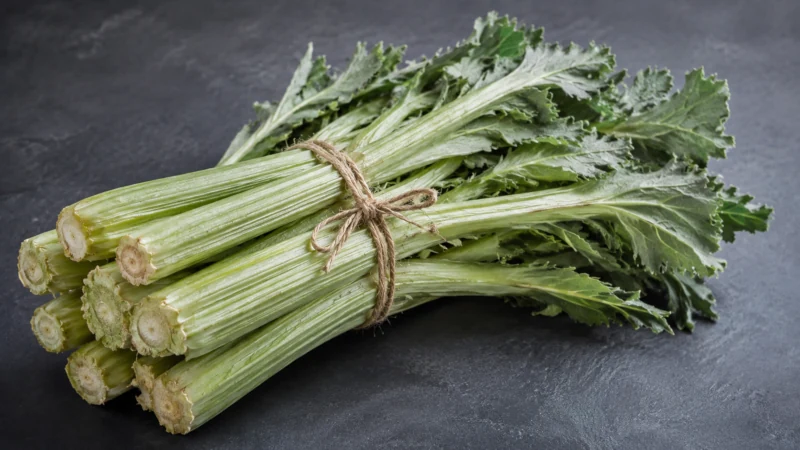
Cardoon (Cynara cardunculus) is a Mediterranean vegetable, prized in parts of Europe and South America but still something of a curiosity in Germanic and Anglo countries. Its stalks are eaten boiled, braised, or occasionally raw, and its close relationship to the globe artichoke means a lot of what’s known about artichoke’s active compounds applies, at least in part, to cardoon too.
What Is Cardoon?
Cardoon and globe artichoke are both varieties of the same species, Cynara cardunculus L., a thistle-like perennial in the Asteraceae (daisy) family native to the Mediterranean basin [Silva et al., Foods, 2022]. Botanists split the species into three groups: wild cardoon, domesticated cardoon — grown for its edible leaf stalks, the vegetable most people mean by “cardoon” — and globe artichoke, grown for its edible flower bud [Silva et al., Foods, 2022]. If you want a deeper look at the artichoke side of the family, Artichoke Health Benefits covers what the human trials on artichoke leaf extract actually show.
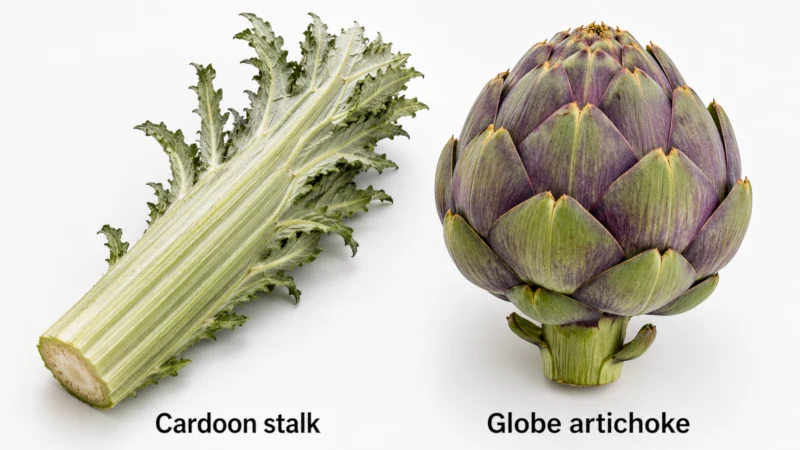
The part eaten as cardoon is the leaf stalk — long, ribbed, whitish-to-reddish petioles that can grow more than a meter long. The flavor sits somewhere between celery and artichoke heart, with a mild bitterness that mellows with cooking.
Cardoon Nutrition Facts
Per 100 grams of raw cardoon:
| Nutrient (per 100 g raw) | Amount |
| Calories | 47 kcal |
| Water | 94 g |
| Protein | 2.0 g |
| Fat | 0.2 g |
| Carbohydrate | 10.5 g |
| Dietary fiber | 5.4 g |
| Calcium | 129 mg |
| Magnesium | 60 mg |
| Potassium | 370 mg |
| Phosphorus | 23 mg |
| Iron | 1.1 mg |
| Zinc | 0.17 mg |
| Copper | 0.23 mg |
| Manganese | 0.26 mg |
| Vitamin C | 22 mg |
Source: Silva, Jacinto & Coutinho, Foods, 2022 (nutrient values compiled from USDA data within the review).
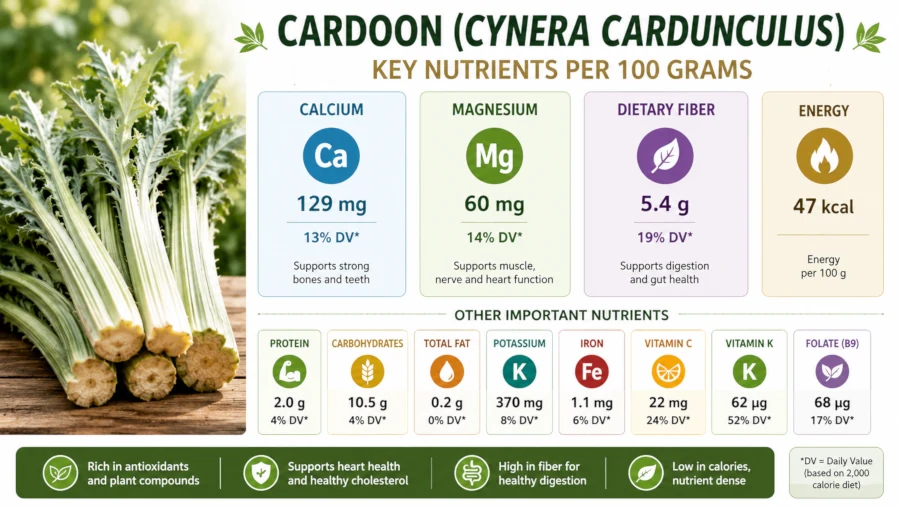
Cardoon is low in calories and fat, with a decent calcium and magnesium showing for a vegetable, plus small amounts of zinc, copper, and manganese. One thing worth correcting: cardoon is often described as being mostly inulin, the prebiotic fiber. That’s true of the root, where inulin content runs as high as 22 to 50 grams per 100 grams dry weight — but the stalk most people actually eat isn’t the inulin-rich part [Silva et al., Foods, 2022]. The carbohydrate in a serving of cooked cardoon stalk is mostly ordinary sugars and fiber, not concentrated inulin.
Cardoon Health Benefits: What the Evidence Shows
Traditional Liver and Bile Support
Cardoon leaves have a long history in Mediterranean folk medicine as a diuretic and bile stimulant [Silva et al., Foods, 2022]. The compound usually credited is cynarin, a caffeoylquinic acid also found in artichoke.
Most of the controlled research here comes from concentrated artichoke leaf extract rather than cardoon stalks eaten as food. The European Medicines Agency’s herbal monograph on this same plant species recognizes leaf preparations as a traditional remedy for digestive complaints like bloating and fullness, based on long-standing use rather than large clinical trials [EMA HMPC, Cynara cardunculus folium monograph, 2018]. Animal studies using artichoke leaf extract have shown reduced liver-enzyme markers after induced liver stress, and a handful of small human trials support a mild cholesterol-lowering effect [Silva et al., Foods, 2022]. Whether eating cardoon stalks, rather than taking a standardized leaf extract, delivers a similar effect hasn’t really been tested.
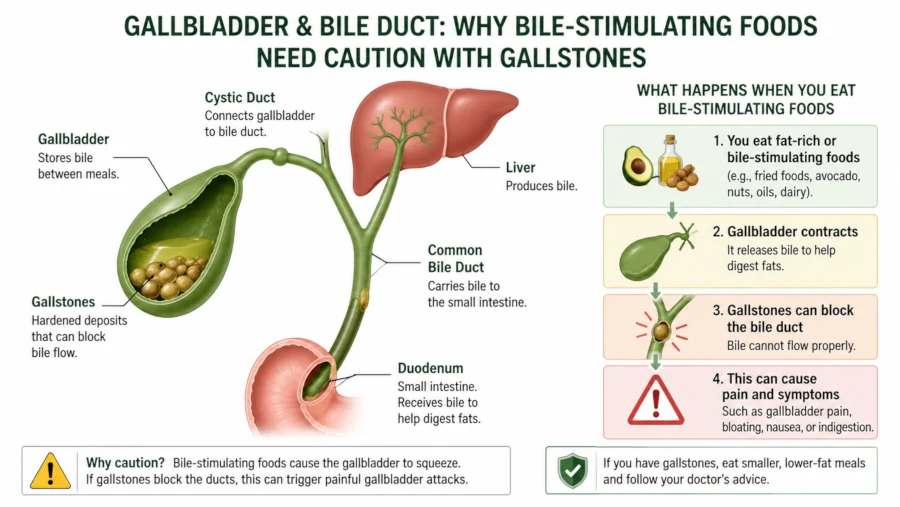
This matters for anyone with gallstones: increasing bile flow is exactly the mechanism that can trigger a painful gallbladder attack if a stone is blocking part of the biliary tract. The same EU monograph that recognizes cardoon’s traditional bile-stimulating use also lists gallstones, bile duct obstruction, and other biliary disease as reasons to avoid it [EMA HMPC, Cynara cardunculus folium monograph, 2018]. If you’re managing an existing liver or gallbladder condition, 10 Best Foods for the Liver and 10 Gallbladder-Friendly Foods go into more detail on what’s genuinely supportive versus what needs a doctor’s sign-off first. Cardoon’s choleretic (bile-increasing) action is exactly why it belongs in the “ask first” category rather than the “eat freely” one if you already have stones.
Blood Sugar and Inulin
Cardoon’s connection to diabetes usually comes down to inulin — but as noted above, inulin in this plant concentrates in the root, not the stalk most people cook and eat. Inulin itself has a reasonably solid research base: a 2019 GRADE-assessed meta-analysis of 33 randomized trials found that inulin-type fructan supplementation, around 10 grams daily for six weeks or longer, measurably lowered fasting blood glucose and HbA1c in people with prediabetes or type 2 diabetes [Wang et al., J Transl Med, 2019]. That’s a real effect, but it’s about concentrated inulin supplements, not a plate of cardoon.
What cardoon stalk does offer is a low-calorie, low-glycemic vegetable with real fiber content — a reasonable addition to a diabetes-friendly diet even without a dramatic direct blood-sugar effect of its own. 19 Diabetic-Friendly Foods covers a broader range of options, including artichoke, which has been studied a bit more directly for this than cardoon has.
Minerals for Bone and Muscle Function
This part of the nutrition profile is more straightforward. Cardoon supplies meaningful calcium and magnesium for a vegetable, along with iron and trace amounts of zinc, copper, and manganese [Silva et al., Foods, 2022]. None of these appear in large-enough amounts in a typical serving to replace a balanced diet’s other sources, but they add to the overall nutrient density of a dish built around cardoon.
Antioxidant Compounds — Early Research
Cardoon contains phenolic compounds — chlorogenic acid, cynarin, and various flavonoids — that show antioxidant, anti-inflammatory, and lipid-lowering activity in laboratory and animal studies [Silva et al., Foods, 2022]. This is genuinely interesting research, but it’s early-stage: cell and animal data don’t reliably predict what happens when a person eats a normal serving of the cooked vegetable. Treat this as a reason cardoon is a nutritionally worthwhile vegetable, not as evidence it treats or prevents any specific condition.
Safety, Side Effects, and Who Should Be Cautious
Common side effects
Cardoon is a food, and most people tolerate it the way they’d tolerate any fibrous vegetable. Because of its fiber content, a large portion — especially if your gut isn’t used to it — can cause gas, bloating, or loose stools, a pattern seen with other fiber- and inulin-containing foods.
Who should avoid or use caution with cardoon
- Gallstones or bile duct obstruction. Cardoon’s bile-stimulating action is a real caution here, not just a theoretical one — talk to a doctor before treating gallbladder symptoms with cardoon or concentrated cardoon/artichoke preparations.
- Allergy to the Asteraceae/Compositae family. Cardoon is closely related to ragweed, daisies, marigolds, and chrysanthemums, and cross-reactive allergic reactions are possible.
- Pregnancy and breastfeeding. Safety data on concentrated cardoon or artichoke preparations during pregnancy and lactation is insufficient, so supplements and extracts aren’t recommended in that time. Eating ordinary cooked cardoon as part of a meal is a lower-concern situation, but check with your doctor if you’re unsure.
- Existing liver disease. Traditional use doesn’t substitute for treatment of hepatitis, cirrhosis, or other diagnosed liver conditions — see a hepatologist or your physician for those.
Medication interactions
There isn’t dedicated research on cardoon stalk and drug interactions specifically. Because cardoon increases bile flow, there’s a theoretical concern about interactions with medications that depend on bile for absorption; separating dosing times is a reasonable precaution. If you take prescription medication regularly and are considering cardoon supplements or extracts, rather than eating the vegetable occasionally, mention it to your pharmacist or doctor.
When to Talk to a Healthcare Professional
See a doctor rather than relying on cardoon if you have: right-upper-abdominal pain that comes in waves after meals (possible gallstones), yellowing of the skin or eyes, dark urine or pale stools, or blood-sugar readings that aren’t at goal despite diet changes. None of these are situations a vegetable should be asked to manage on its own.
How to Prepare and Cook Cardoon
- Raw. Young, tender stalks can be sliced thin and eaten raw in a salad, similar to celery.
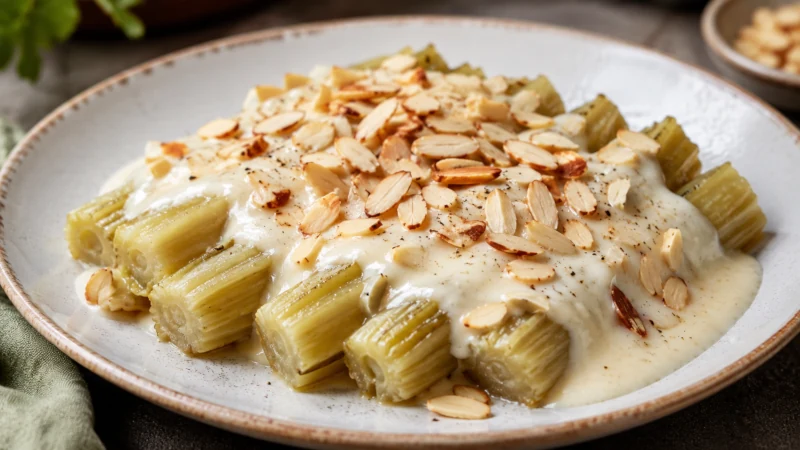
- Cooked. Boiled or roasted cardoon, often finished with a béchamel sauce and slivered almonds, is a traditional holiday dish in parts of the Mediterranean. Boiling the stalks with a little lemon juice in the water helps keep them from discoloring.
Cardoon at a Glance
| Scientific name | Cynara cardunculus L. |
| Other English names | Spanish cardoon, cardi, cardoni |
| French | chardon, cardon |
| Spanish | cardo |
| German | Kardone |
| Family | Asteraceae (thistle/daisy family) |
| Where grown | Mediterranean countries and parts of South America |
| HEALTH DISCLAIMER: This article is for general educational and informational purposes only. It is not a substitute for professional medical advice, diagnosis, or treatment. Cardoon’s bile-stimulating action can worsen symptoms in people with gallstones or bile duct obstruction, and it should not be used to self-treat liver disease, gallbladder symptoms, or diabetes without medical supervision. Talk to a qualified healthcare professional before using cardoon supplements or concentrated extracts, especially if you are pregnant or breastfeeding, take prescription medication, or have a pre-existing condition. Seek care for right-upper-abdominal pain, yellowing of the skin or eyes, dark urine, or pale stools. |
Frequently Asked Questions
Is cardoon the same as artichoke?
They’re the same species, Cynara cardunculus, but different cultivated varieties. Cardoon is grown for its edible leaf stalk; globe artichoke is grown for its edible flower bud. They share many of the same active compounds, but most of the human research on those compounds — cholesterol, digestion, liver enzymes — used artichoke leaf extract, not cardoon stalk.
Is cardoon good for the liver?
Cardoon leaves have a long traditional use as a bile stimulant, and related compounds show liver-protective effects in animal studies. There isn’t strong human-trial evidence for the stalk specifically, and it isn’t a substitute for treatment of diagnosed liver disease.
Can people with diabetes eat cardoon?
Yes — as a low-calorie, fiber-containing vegetable, it fits reasonably into a diabetes-friendly diet. The inulin most associated with blood-sugar benefits is concentrated in the root rather than the stalk, so don’t expect a dramatic direct effect from eating the vegetable.
Is cardoon safe if I have gallstones?
Not without checking with a doctor first. Cardoon increases bile flow, which is the same mechanism that can trigger pain if a gallstone is partly blocking a bile duct.
How do you cook cardoon?
The tender inner stalks can be eaten raw and thinly sliced, but cardoon is most often boiled or braised, then finished with a sauce such as béchamel — a traditional preparation in Mediterranean holiday cooking.
References
- Silva, L.R.; Jacinto, T.A.; Coutinho, P. “Bioactive Compounds from Cardoon as Health Promoters in Metabolic Disorders.” Foods 2022, 11(3), 336. DOI: 10.3390/foods11030336. PMID: 35159487. View source
- European Medicines Agency, Committee on Herbal Medicinal Products (HMPC). “European Union herbal monograph on Cynara cardunculus L. (syn. Cynara scolymus L.), folium.” EMA/HMPC/195635/2018. Adopted 27 March 2018. View source
- Wang, L.; Yang, H.; Huang, H.; Zhang, C.; Zuo, H.-X.; Xu, P.; Niu, Y.-M.; Wu, S.-S. “Inulin-type fructans supplementation improves glycemic control for the prediabetes and type 2 diabetes populations: results from a GRADE-assessed systematic review and dose–response meta-analysis of 33 randomized controlled trials.” Journal of Translational Medicine 2019, 17, 410. DOI: 10.1186/s12967-019-02159-0. PMID: 31805963. View source
