
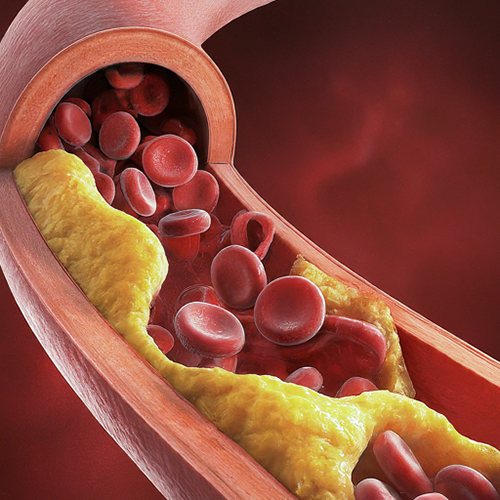
If you’ve been told your LDL is elevated, the question of which supplements help lower cholesterol — and which are mostly hype — is fair to ask. High cholesterol has no symptoms, so the only way to know your numbers is a cholesterol test, and the only way to move them is some combination of diet, exercise, medication, and, in selected cases, evidence-backed supplements.
This guide walks through the supplements with the strongest human evidence for lowering LDL cholesterol — soluble fiber, plant sterols and stanols, red yeast rice, omega-3s, berberine, niacin, garlic, and bergamot — what each one actually does, the size of the effect you can realistically expect, and where it can be unsafe. The American Heart Association makes its position plain: dietary supplements are not recommended as primary treatment for high cholesterol [AHA, 2026]. They can have a role as adjuncts — after a conversation with your doctor — but they are not a substitute for the medical treatment people with significant cardiovascular risk actually need.
Cholesterol Basics in 60 Seconds
Cholesterol is a waxy fat your body uses to build cells, make hormones, and produce vitamin D. The problem isn’t cholesterol itself — it’s the balance between the particles that carry it through the bloodstream.
- LDL (low-density lipoprotein) — often called “bad” cholesterol. High levels deposit cholesterol in artery walls and drive atherosclerosis.
- HDL (high-density lipoprotein) — often called “good” cholesterol. It carries cholesterol back to the liver for disposal.
- Triglycerides — a separate type of blood fat. High levels often travel with low HDL and raise cardiovascular risk.
- Total cholesterol — a rough sum that doesn’t tell you much on its own. Always look at LDL, HDL, and triglycerides individually.
LDL is the main target for treatment because lowering it consistently reduces heart attacks and strokes [NHLBI, 2024]. Most cholesterol-lowering supplements work by either limiting cholesterol absorption in the gut, slowing the liver’s cholesterol production, or — like red yeast rice — using a naturally occurring statin-like molecule.
Supplements With the Strongest Evidence
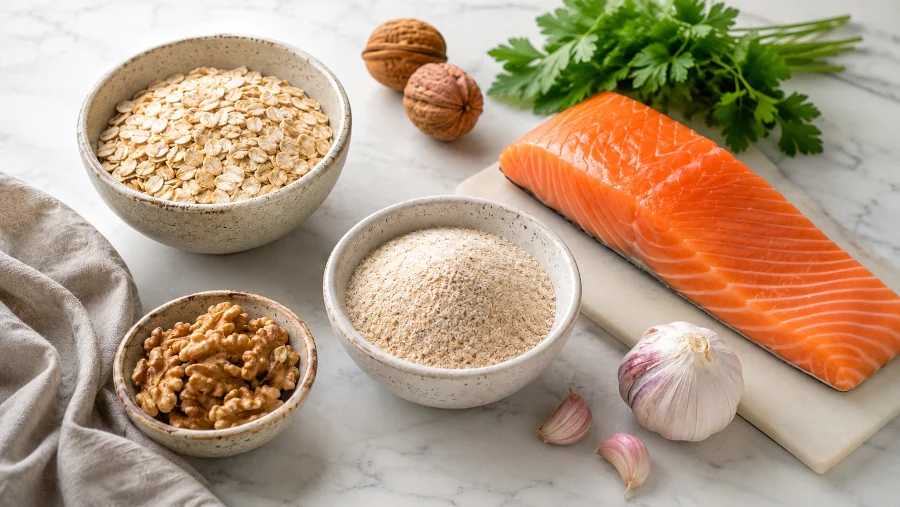
1. Soluble Fiber (Psyllium, Beta-Glucan, Pectin)
Soluble fiber binds bile acids in the gut and pulls them out in stool. The liver responds by pulling cholesterol out of the blood to make more bile acids, which lowers LDL. Psyllium is the form with the most clinical evidence; oat beta-glucan and apple pectin work by the same mechanism.
What the studies show: A meta-analysis of 28 clinical trials found that around 10.2 g/day of psyllium reduced LDL cholesterol by an average of 11 mg/dL after about 7 weeks [Jovanovski et al., 2018]. The FDA permits a qualified health claim that soluble fiber from psyllium husk, oats, and barley may reduce the risk of heart disease when consumed as part of a diet low in saturated fat and cholesterol [FDA, 2024].
Typical dose: 5–10 g of psyllium husk per day, divided across meals with plenty of water. Beta-glucan: 3 g per day from oats or barley.
Watch out for: Gas and bloating in the first 1–2 weeks as your gut adapts. Take psyllium at least 1–2 hours apart from prescription medications — it can interfere with absorption. People with swallowing problems or strictures of the gut should avoid bulk-forming fiber.
2. Plant Sterols and Stanols (Phytosterols)
Phytosterols are cholesterol-like molecules found in small amounts in plants. They compete with cholesterol for absorption in the small intestine, leaving more dietary cholesterol to pass through unabsorbed.
What the studies show: A European Atherosclerosis Society consensus review concluded that 2 g per day of plant sterols or stanols lowers LDL cholesterol by 8–10% with no effect on HDL or triglycerides [Gylling et al., 2014]. The effect plateaus above about 3 g/day. Phytosterols are added to certain margarines, yogurts, and orange juices in many countries specifically for this reason.
Typical dose: 2 g per day, taken with meals. Capsules and fortified foods both work.
Watch out for: People with a rare inherited condition called sitosterolemia must avoid phytosterol supplements. Plant sterols can reduce absorption of fat-soluble vitamins and beta-carotene slightly; eating a variety of fruits and vegetables minimizes the impact.
3. Red Yeast Rice
Red yeast rice is fermented rice that produces a compound called monacolin K — which is structurally identical to the prescription statin lovastatin [NCCIH, 2022]. That’s not coincidence — it’s why red yeast rice products with meaningful monacolin K content actually lower LDL.
What the studies show: Red yeast rice products with adequate monacolin K can lower LDL cholesterol by 15–25% in clinical trials. A systematic review of 20 trials found that red yeast rice reduced LDL by roughly 1 mmol/L (about 39 mg/dL) compared with placebo [Gerards et al., 2015].
The catch: Monacolin K content varies wildly between brands. A 2017 analysis of 28 U.S. red yeast rice products found that monacolin K levels ranged more than 60-fold, from 0.09 to 5.48 mg per 1,200 mg dose — and the label never tells you which is which [NCCIH, 2022]. The FDA considers red yeast rice products with added or significant monacolin K to be unapproved drugs.
Watch out for: Red yeast rice has the same side effect profile as statin drugs: muscle pain, liver enzyme changes, and potentially severe muscle injury (rhabdomyolysis) in rare cases. Some products are also contaminated with citrinin, a kidney-toxic mold byproduct. Do not combine red yeast rice with prescription statins, and do not use it during pregnancy or breastfeeding. Discuss with your doctor before starting.
4. Omega-3 Fatty Acids (Fish Oil)
Omega-3s are best known for lowering triglycerides — not LDL cholesterol. The NIH Office of Dietary Supplements summarizes the cardiovascular evidence carefully: omega-3 supplements consistently reduce triglycerides in a dose-dependent way, may modestly reduce some cardiovascular events in people with established heart disease, and generally do not lower LDL [NIH ODS, 2024]. The American Heart Association recommends fish or fish oil specifically for people with documented coronary heart disease, at about 1 g/day EPA+DHA, ideally from oily fish [AHA, 2024].
What the studies show: A 2020 Cochrane review of 86 trials covering 162,796 participants found that long-chain omega-3s reduced triglycerides by about 15% but had small or no effects on most other cardiovascular outcomes [Abdelhamid et al., 2020]. For people with very high triglycerides, prescription-strength omega-3 (4 g/day) is approved and effective.
Typical dose: About 1 g/day combined EPA+DHA from fish or fish oil for general heart health under a doctor’s direction; 2–4 g/day for triglyceride-lowering, ideally as a prescription preparation.
Watch out for: Fishy aftertaste, mild gastrointestinal upset. High-dose fish oil can mildly increase bleeding risk — relevant if you take warfarin or aspirin. Two large trials at 4 g/day found a small but real increase in atrial fibrillation, so high doses are not for everyone. If your LDL is the main concern, omega-3 is not the right tool.
Supplements With Moderate or Mixed Evidence
5. Berberine
Berberine is an alkaloid extracted from plants like Coptis chinensis and barberry, used for centuries in traditional Chinese medicine. It works partly by upregulating LDL receptors on liver cells, similar in concept to how statins work but through a different mechanism.
What the studies show: A 2015 meta-analysis of 27 randomized trials found that berberine reduced total cholesterol, LDL, and triglycerides and raised HDL across studies of type 2 diabetes, hyperlipidemia, and hypertension [Lan et al., 2015]. A more recent systematic review on hyperlipidemia specifically reported average LDL reductions of about 25 mg/dL when berberine was used alone, and additive effects when combined with statins [Ju et al., 2018]. Trial quality is a real limitation — many of the included studies are small and from a single region.
Typical dose: 500 mg two to three times daily with meals (1,000–1,500 mg/day total).
Watch out for: Berberine is a strong inhibitor of the CYP3A4 enzyme system and interacts with many prescription drugs — statins, blood pressure medications, immunosuppressants, and cyclosporine, among others. Side effects include constipation, diarrhea, and abdominal cramping. Avoid in pregnancy and breastfeeding — berberine can cross the placenta and has caused kernicterus in newborns when used near term.
6. Niacin (Vitamin B3)
Niacin at high doses raises HDL, lowers LDL, and reduces triglycerides. For decades it was prescribed alongside statins on that basis. The story changed when large outcome trials looked at whether the lipid changes translated into fewer heart attacks and strokes — and found they didn’t.
What the studies show: Mayo Clinic now states plainly that although niacin can raise HDL cholesterol, niacin therapy is not linked to lower rates of death, heart attack, or stroke [Mayo Clinic, 2025]. The AIM-HIGH and HPS2-THRIVE trials both failed to show added cardiovascular benefit from niacin on top of statin therapy, and HPS2-THRIVE showed an increase in serious side effects.
Typical dose: Prescription niacin for cholesterol is usually 1–2 g/day, titrated carefully. Over-the-counter “flush-free” niacin (inositol hexanicotinate) does not appear to have the same lipid effects.
Watch out for: Flushing, itching, upset stomach, gout flares, blood sugar elevation, and at higher doses, liver toxicity. Do not take large amounts of niacin if you have liver disease, peptic ulcer, low blood pressure, gout, or diabetes without medical supervision. Pregnant women should not take prescription niacin for cholesterol [Mayo Clinic, 2025].
7. Garlic
Garlic supplements (typically aged garlic extract or garlic powder standardized to allicin content) have a long history of use for cardiovascular health, and the modern evidence is supportive but modest.
What the studies show: A 2025 comprehensive meta-analysis of 108 randomized controlled trials in 7,137 participants found that garlic supplementation significantly reduced total cholesterol, LDL cholesterol, and triglycerides, with a small but consistent benefit for blood pressure as well [Musazadeh et al., 2025]. The size of the LDL reduction is generally in the range of 10–15 mg/dL — modest but real.
Typical dose: 600–1,200 mg/day of aged garlic extract or a garlic powder providing about 4 mg allicin per dose.
Watch out for: Garlic thins blood. Inform your doctor before surgery, and use caution if you take warfarin, aspirin, clopidogrel, or other antiplatelet drugs. Heartburn, body odor, and breath odor are common.
8. Bergamot Extract
Bergamot (a citrus fruit grown in southern Italy) contains flavonoids that appear to inhibit cholesterol synthesis in the liver. It is one of the newer entrants in this category, with growing — but still limited — clinical data.
What the studies show: A 2019 meta-analysis of 12 trials found bergamot polyphenolic fraction reduced total cholesterol, LDL, and triglycerides, with effect sizes roughly comparable to red yeast rice in some studies [Lamiquiz-Moneo et al., 2020]. The evidence base is smaller than for the supplements above, and head-to-head comparisons with statins remain limited.
Typical dose: 500–1,000 mg/day of standardized bergamot polyphenolic fraction.
Watch out for: Bergamot is generally well tolerated. Like grapefruit, it can affect drug metabolism through CYP3A4, so discuss it with your doctor if you take statins or other prescription medications.
How These Supplements Compare
| Supplement | Typical Dose | Avg. LDL Effect | Evidence Strength | Main Cautions |
| Soluble fiber (psyllium) | 5–10 g/day | ↓ ~7% | Strong | Take separately from medications |
| Plant sterols/stanols | 2 g/day | ↓ 8–10% | Strong | Avoid in sitosterolemia |
| Red yeast rice | 1,200–2,400 mg/day | ↓ 15–25% | Strong (with caveats) | Statin-like side effects; quality varies |
| Omega-3 (fish oil) | 1–4 g/day EPA+DHA | Little effect on LDL | Strong for triglycerides | Bleeding, AFib risk at high dose |
| Berberine | 1,000–1,500 mg/day | ↓ ~15–20 mg/dL | Moderate | Many drug interactions; avoid in pregnancy |
| Niacin (prescription) | 1–2 g/day | ↓ 10–15% | Mixed (no outcome benefit) | Flushing, liver, gout, glucose |
| Garlic | 600–1,200 mg/day | ↓ ~10 mg/dL | Moderate | Bleeding risk; before surgery |
| Bergamot | 500–1,000 mg/day | ↓ ~10–15% | Limited (promising) | CYP3A4 interactions |
Effect sizes are averages from clinical trials and meta-analyses; individual response varies. LDL effects assume the supplement is added to an otherwise reasonable diet. None of these reliably matches the LDL reduction of a moderate-intensity statin.
What to Realistically Expect
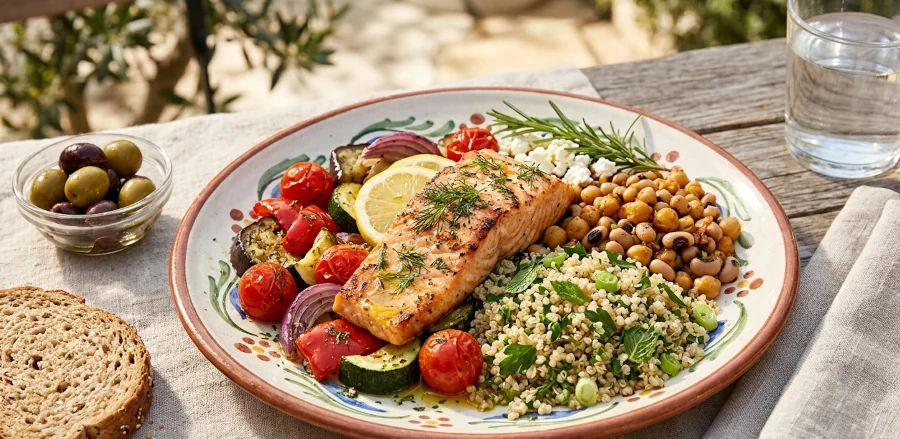
A few honest points before you spend money on capsules.
- Supplements rarely match statins. A moderate-intensity statin typically lowers LDL by 30–50%. The best individual supplements above lower LDL by 7–25%. If your doctor recommends a statin because of your overall cardiovascular risk, supplements are not an equivalent substitute.
- The first move is food and movement, not pills. A Mediterranean or DASH-style eating pattern, weight loss if needed, regular aerobic activity, and quitting smoking can lower LDL meaningfully and improve every other cardiovascular risk factor at the same time [AHA, 2026]. See our companion guide to how to lower triglycerides naturally for the same logic applied to high triglycerides.
- Effects stack, but not infinitely. Combining psyllium and plant sterols, for example, can produce additive LDL reductions of about 15–20%. Stacking five supplements rarely doubles the benefit — and usually doubles the cost and side-effect risk.
- Numbers matter. Recheck your lipid panel 8–12 weeks after starting a supplement to see whether it’s actually working for you. If LDL hasn’t budged, the supplement isn’t doing what you hoped.
Who Should Not Use These Supplements Without Medical Guidance
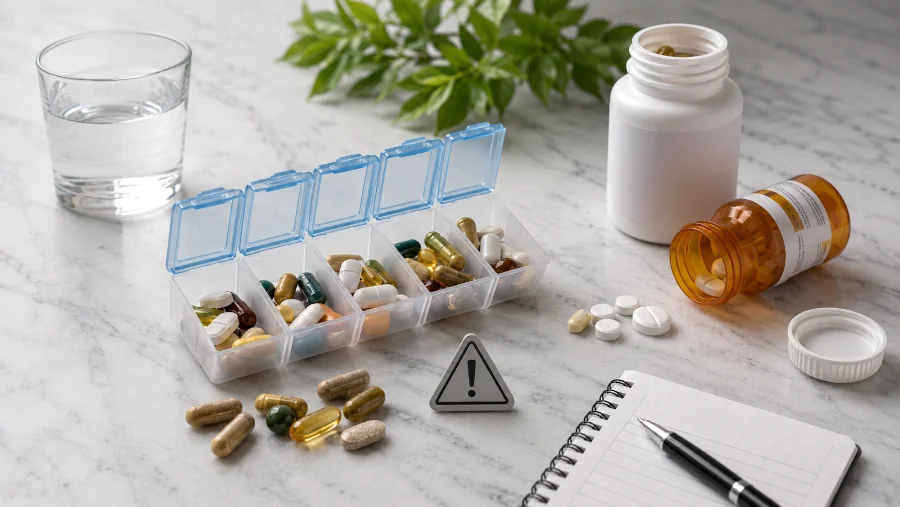
Some groups are at much higher risk for harm from cholesterol supplements and should only use them under direct medical supervision:
- Anyone already taking a statin — red yeast rice, niacin, and berberine all overlap with or amplify statin effects and side effects.
- Anyone on blood thinners (warfarin, apixaban, rivaroxaban, aspirin) — garlic, high-dose fish oil, and others increase bleeding risk.
- Pregnant or breastfeeding women — red yeast rice, niacin (for cholesterol), and berberine are not safe in pregnancy.
- People with liver disease, kidney disease, gout, or peptic ulcer — niacin in particular can worsen all of these.
- People with diabetes — niacin can raise blood sugar; berberine can lower it. Both can throw off diabetes management.
- Anyone preparing for surgery — most cholesterol supplements should be stopped 1–2 weeks before any surgical procedure.
- Children and adolescents — supplements are not appropriate for treating pediatric cholesterol problems outside specialist care.
When to Talk to Your Doctor
Don’t try to self-manage high cholesterol with supplements alone. Call your doctor if any of the following apply:
- Your LDL is 190 mg/dL or higher.
- You have known cardiovascular disease, diabetes, chronic kidney disease, or a strong family history of early heart attacks.
- You’ve been on diet and lifestyle changes for 3–6 months and your LDL hasn’t moved.
- You develop muscle pain or weakness after starting red yeast rice or any other supplement.
- You take prescription medications and want to add any supplement — even ones marketed as “natural.”
For background on how cardiovascular risk shifts with age, see our companion article on heart disease in seniors, and for diet-driven prevention, our guide to foods that help prevent stroke.
Health Disclaimer
| HEALTH DISCLAIMER This article is for general educational purposes only and is not a substitute for professional medical advice, diagnosis, or treatment. High cholesterol is a medical condition that should be evaluated and managed by a qualified healthcare provider. Do not start, stop, or change any prescription medication based on this article. Always speak with your doctor before adding a supplement — including “natural” products — particularly if you are pregnant, breastfeeding, taking other medications, preparing for surgery, or living with any chronic health condition. If you experience symptoms such as chest pain, severe shortness of breath, sudden weakness, slurred speech, or facial drooping, call 911 immediately. |
Frequently Asked Questions
Can supplements replace statin medication?
No. Statins typically lower LDL by 30–50% and reduce heart attack and stroke risk in well-designed trials over many years. No supplement has matched that combination of LDL reduction and outcome data. If your cardiovascular risk warrants a statin, supplements are an addition, not a replacement.
Which supplement lowers LDL the most?
Red yeast rice (with adequate monacolin K) usually produces the largest LDL reduction — 15–25% in trials — because the active compound is essentially a low-dose statin. The trade-off is that it also carries statin-like side effects and unpredictable potency. Plant sterols at 2 g/day are more consistent and safer for most people.
How long until I see a difference in my cholesterol numbers?
Most cholesterol-lowering supplements need 4–8 weeks of consistent use to produce a measurable change on a lipid panel. Recheck your numbers about 8–12 weeks after starting, ideally after a 9–12 hour fast.
Are flush-free niacin and regular niacin the same thing?
No. “Flush-free” niacin (inositol hexanicotinate) does not produce the flushing reaction — but it also doesn’t appear to have the same lipid-lowering effects as regular niacin or prescription extended-release niacin. If you’re taking it for cholesterol, the flush-free form is likely doing little.
Is fish oil good for high cholesterol?
Fish oil’s main effect is lowering triglycerides, not LDL. If your triglycerides are high, omega-3s can help; if your LDL is the issue, fish oil is not the most useful tool. For comprehensive triglyceride strategies, see how to lower triglycerides naturally.
Do I need to take cholesterol supplements with food?
Most should be taken with meals — particularly plant sterols (which need to compete with dietary cholesterol for absorption), berberine, and fish oil (better tolerated and absorbed). Soluble fiber should be taken with plenty of water at meals and separated from prescription medications by 1–2 hours.
References
1. American Heart Association. (2026, March). Prevention and Treatment of High Cholesterol (Hyperlipidemia). American Heart Association. → View source
2. American Heart Association. (2024, August). Fish and Omega-3 Fatty Acids. American Heart Association. → View source
3. Mayo Clinic. (2025, March). Niacin. Mayo Clinic. → View source
4. National Center for Complementary and Integrative Health. (2022, November). Red Yeast Rice: What You Need to Know. NCCIH, NIH. → View source
5. National Institutes of Health, Office of Dietary Supplements. (2024). Omega-3 Fatty Acids: Fact Sheet for Health Professionals. NIH ODS. → View source
6. National Heart, Lung, and Blood Institute. (2024). High Blood Cholesterol — Treatment. NHLBI, NIH. → View source
7. Gylling, H., Plat, J., Turley, S., Ginsberg, H. N., Ellegård, L., Jessup, W., et al. (2014). Plant sterols and plant stanols in the management of dyslipidaemia and prevention of cardiovascular disease. Atherosclerosis, 232(2), 346–360. → View source
8. Jovanovski, E., Yashpal, S., Komishon, A., Zurbau, A., Blanco Mejia, S., Ho, H. V. T., et al. (2018). Effect of psyllium (Plantago ovata) fiber on LDL cholesterol and alternative lipid targets: A systematic review and meta-analysis of randomized controlled trials. The American Journal of Clinical Nutrition, 108(5), 922–932. → View source
9. Lan, J., Zhao, Y., Dong, F., Yan, Z., Zheng, W., Fan, J., & Sun, G. (2015). Meta-analysis of the effect and safety of berberine in the treatment of type 2 diabetes mellitus, hyperlipemia and hypertension. Journal of Ethnopharmacology, 161, 69–81. → View source
10. Ju, J., Li, J., Lin, Q., & Xu, H. (2018). Efficacy and safety of berberine for dyslipidaemias: A systematic review and meta-analysis of randomized clinical trials. Lipids in Health and Disease, 17(1), 281. → View source
11. Gerards, M. C., Terlou, R. J., Yu, H., Koks, C. H., & Gerdes, V. E. (2015). Traditional Chinese lipid-lowering agent red yeast rice results in significant LDL reduction but safety is uncertain — a systematic review and meta-analysis. Atherosclerosis, 240(2), 415–423. → View source
12. Abdelhamid, A. S., Brown, T. J., Brainard, J. S., Biswas, P., Thorpe, G. C., Moore, H. J., et al. (2020). Omega-3 fatty acids for the primary and secondary prevention of cardiovascular disease. Cochrane Database of Systematic Reviews, 3(3), CD003177. → View source
13. Musazadeh, V., Mohammadizadeh, M., Roshanravan, N., Faghfouri, A. H., Mosharkesh, E., & Dehghan, P. (2025). Effects of garlic supplementation on cardiovascular risk factors in adults: A comprehensive updated systematic review and meta-analysis of RCTs. Journal of Functional Foods. → View source
14. Lamiquiz-Moneo, I., Giné-González, J., Alisente, S., Bea, A. M., Pérez-Calahorra, S., Marco-Benedí, V., et al. (2020). Effect of bergamot on lipid profile in humans: A systematic review. Critical Reviews in Food Science and Nutrition, 60(18), 3133–3143. → View source
15. U.S. Food and Drug Administration. (2024). Authorized Health Claims That Meet the Significant Scientific Agreement (SSA) Standard. FDA. → View source
