
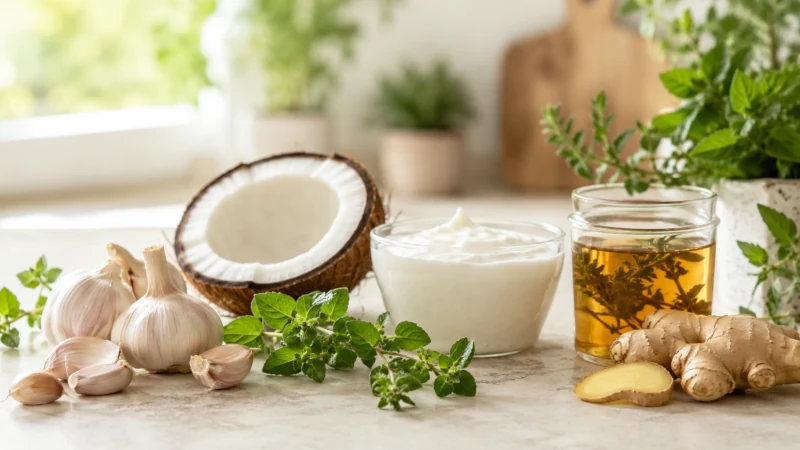
Natural remedies for candida are everywhere online, but most have far less evidence behind them than the marketing suggests. Here is the honest version: a few approaches have modest research support, several have none, and the most useful first step is working out which kind of candida problem you actually have. Candida is a yeast that lives on the skin and in the mouth, gut, and vagina of most healthy people without causing any trouble [CDC, 2024]. It only becomes an infection when it overgrows in one spot — and where it overgrows decides what helps.
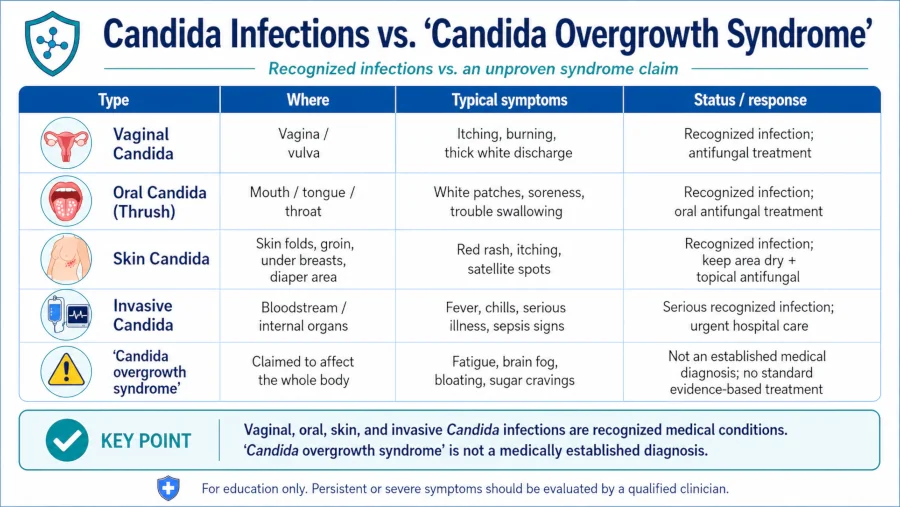
You will also see “candida overgrowth” blamed for fatigue, brain fog, sugar cravings, and mood swings. That broader idea — sometimes called candida hypersensitivity or the “yeast connection” — is not a recognized medical diagnosis, and the research used to promote it has not held up [Dismukes, 1990]. That does not mean your symptoms are imaginary. It means yeast may not be the cause, and treating a yeast that is not overgrowing will not fix them.
So this guide does two things: it separates the real candida infections from the marketing, and it grades each popular remedy by how much human evidence actually backs it.
What “candida” actually means
“Candida” is shorthand for an infection caused by Candida yeast, most often Candida albicans. Doctors recognize a few distinct types, and they are not interchangeable [WHO, 2024]. Knowing which one you are dealing with matters more than any single remedy.
| Type | Where it shows up | Who tends to get it |
| Vaginal yeast infection | Vaginal itching, burning, and a thick white discharge | Very common — about 3 in 4 women have at least one in their lifetime |
| Oral thrush | White patches in the mouth or throat; soreness | Infants, denture wearers, inhaled-steroid users, and people with weak immunity |
| Skin (cutaneous) | Red, itchy rash in warm skin folds | Often linked to moisture, friction, or diabetes |
| Invasive candidiasis | Bloodstream or organ infection; fever and chills | A medical emergency, almost always in hospitalized or seriously ill people |
The first three are common and treatable. Invasive candidiasis is the serious one, and healthy people are generally not at risk for it [CDC, 2024].
Where the evidence runs out: “systemic candida”
In the 1980s, a popular book argued that gut candida overgrowth quietly causes a long list of whole-body symptoms in otherwise healthy people. The American Academy of Allergy, Asthma & Immunology reviewed that concept and judged it speculative and unproven, pointing out that its supposed symptoms are so broad they could fit almost anyone who feels unwell. When researchers finally put the theory to a fair test — a randomized, double-blind trial of the antifungal nystatin in women with presumed “candidiasis hypersensitivity” — the drug relieved symptoms no better than a placebo [Dismukes, 1990].
The practical takeaway: if you have vague, ongoing symptoms like exhaustion or brain fog, a “candida cleanse” is unlikely to be the answer, and chasing it can delay finding what is actually going on. That is a conversation for a doctor, not a supplement aisle.
Natural remedies for candida: what the evidence shows
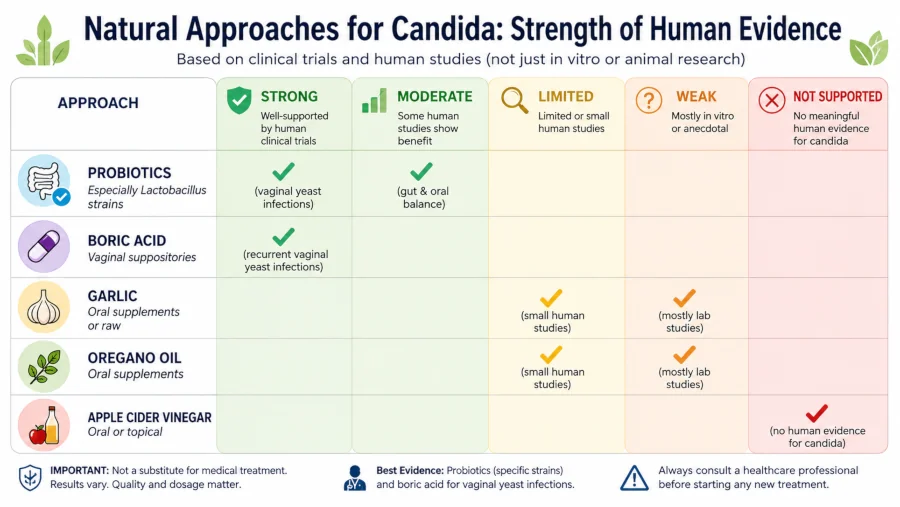
Here is where most online lists go wrong. They treat “kills candida in a lab dish” as if it means “works in people.” It usually doesn’t. The table below grades the popular options by the strength of human evidence, followed by the details that matter.
| Remedy | What the evidence actually shows | Main caution |
| Probiotics (Lactobacillus) | Low-quality trials suggest that adding them to antifungal treatment may modestly improve short-term cure of vaginal yeast infections. A helper, not a cure. | Generally safe; caution if severely immunocompromised |
| Lower-sugar, whole-food eating | Little direct proof it shrinks candida, but reasonable for overall health and low risk. | Don’t use it to replace treatment for an active infection |
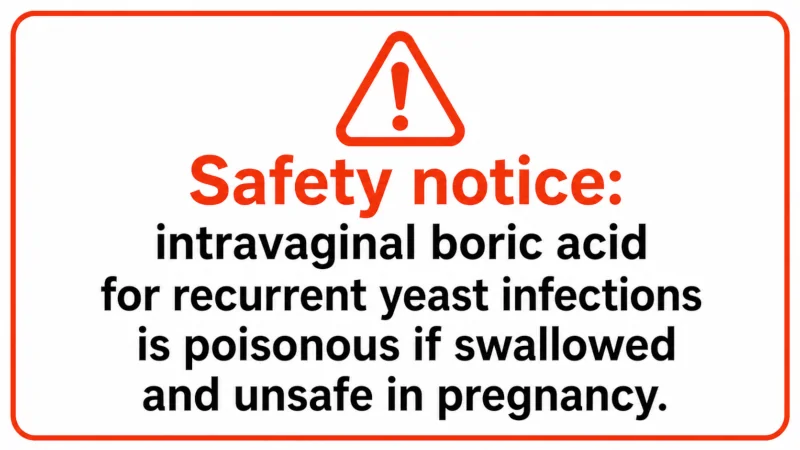
| Boric acid (vaginal) | Real evidence for recurrent or drug-resistant vaginal yeast infections; listed by the CDC and Mayo Clinic as a second-line option. | Vaginal use only — poisonous and possibly fatal if swallowed; avoid in pregnancy |
| Garlic (oral) | Kills candida in the lab, but the one good human trial found no benefit and more side effects. | GI upset; raises bleeding risk with blood thinners |
| Oregano / tea tree oil | Antifungal in lab studies; no quality human trials for candida. | Never swallow essential oils; they irritate skin and mucous membranes |
| Coconut oil / caprylic acid | Antifungal in lab and some animal studies; very little human data. | Food amounts are safe; concentrated supplements are less studied |
| Apple cider vinegar | Antifungal in a test tube only. Douching with it is harmful. | Never douche — it can worsen irritation and disrupt healthy bacteria |
Probiotics: the best-studied option (with limits)
A 2017 Cochrane review pooled five small, low-quality trials — about 695 women — and found that adding Lactobacillus probiotics to standard antifungal treatment slightly raised short-term cure rates for vaginal yeast infections [Cochrane, 2017]. The important words are “adding to” and “low-quality.” Probiotics did their job as a sidekick to medication, not as a replacement, and the studies were not strong enough to settle the question [AAFP, 2020]. If you want to try them, fermented foods and a good-quality digestive supplement are low-risk — just don’t expect them to clear an active infection on their own.
Boric acid: the one with real medical backing
Boric acid is the rare “natural” candida remedy that earns a place in clinical guidelines. Both the CDC and Mayo Clinic list intravaginal boric acid for yeast infections that keep returning or don’t respond to standard antifungals [CDC, 2025] [Mayo, 2024]. But it comes with a hard rule: boric acid is poisonous if swallowed and can be fatal, it is for vaginal use only, and it should not be used during pregnancy [Mayo, 2024]. Use it only on a clinician’s advice, not as a first guess.
Garlic: lab promise that failed a real test
Crushed garlic kills Candida in a petri dish, which is why it appears on nearly every remedy list. But when Australian researchers gave 63 women either oral garlic tablets or a placebo for two weeks, the garlic group’s vaginal yeast counts were no lower — and more of them reported side effects like bad breath and gas [Watson, 2014]. Placing a garlic clove in the vagina, a common online tip, has no evidence behind it and can introduce bacteria. This is the clearest case of “works in the lab” not meaning “works in you.”
Essential oils and vinegar: skip the internal use
Oregano oil, tea tree oil, and apple cider vinegar all show antifungal activity in laboratory tests, but none has quality human trials for treating candida. Swallowing concentrated essential oils can be toxic, applying them to delicate tissue often causes burning and irritation, and douching with vinegar can strip the healthy bacteria that keep yeast in check. If you want these in your life, keep them culinary, not medicinal.
The “candida diet”: realistic expectations

The candida diet usually means cutting sugar, refined carbohydrates, alcohol, and sometimes whole food groups, on the theory that you can “starve” the yeast. Direct evidence that this clears candida is thin. What is fair to say: a diet lower in added sugars and artificial sweeteners and built around vegetables, lean protein, and fiber is good for general health and carries little downside.
Fermented foods such as sauerkraut, kefir, kimchi, and plain yogurt add live cultures and fiber that support digestive health. The caution is the extreme version: very restrictive “cleanse” protocols can cut out nutritious foods, are hard to sustain, and have not been shown to outperform a balanced diet. Treat eating well as support, not as a substitute for treating an active infection.
Safety, side effects, and interactions
“Natural” does not mean risk-free. A few cautions are worth knowing before you try anything above.
Who should be careful — or avoid these
- Pregnant or breastfeeding: avoid boric acid entirely, skip internal use of essential oils, and don’t take high-dose garlic supplements. Ask your provider before using any remedy.
- On blood thinners (or due for surgery): concentrated garlic can add to bleeding risk.
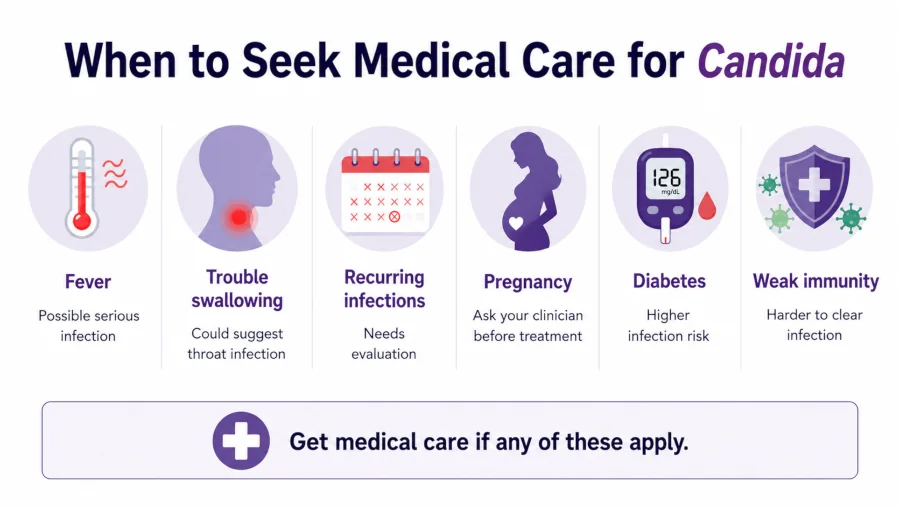
- Weakened immune system, diabetes, or recurrent infections: don’t self-treat. These situations need a proper diagnosis and often prescription antifungals.
- Infants and oral thrush: this is treated by a clinician, not home remedies.
Red flags — seek medical care promptly
- Fever and chills along with feeling very unwell, especially if you are already sick or hospitalized — this can signal a serious, invasive infection.
- Pain or difficulty swallowing, which can point to a throat or esophagus infection.
- Yeast symptoms in someone who is pregnant, diabetic, or immunocompromised.
- A first-ever yeast infection, so you can confirm it actually is one — several other conditions look similar [CDC, 2024].
When self-care isn’t enough
If symptoms don’t improve within a few days, keep coming back (four or more times a year), or get worse despite home measures, stop experimenting and see a clinician. Proven antifungal treatments — creams, vaginal tablets, or a short course of oral fluconazole — work quickly and are well studied [Mayo, 2024]. For recurrent infections, doctors often use a longer maintenance plan that is far more reliable than any natural remedy.
| Health Disclaimer: This article is for general education and information only. It is not medical advice and is not a substitute for diagnosis or treatment from a qualified healthcare professional. Candida infections can resemble other conditions, and the right treatment depends on the type and severity. If you are pregnant, breastfeeding, immunocompromised, managing diabetes, or have ongoing or worsening symptoms, talk to your doctor or pharmacist before starting any herbal, supplement, or home remedy — some carry real risks or interact with medications. |
Frequently Asked Questions
What kills candida fast?
For an active infection, prescription or over-the-counter antifungal medications are the fastest, best-proven option. “Natural” approaches act slowly at best and, for most of them, the human evidence is weak or absent.
Does a candida cleanse work?
There is no good evidence that a “candida cleanse” clears yeast or fixes vague symptoms like fatigue. The whole-body “candida overgrowth” it targets is not a recognized diagnosis [Dismukes, 1990].
Can I treat a yeast infection with garlic or coconut oil?
Garlic failed the one solid human trial for vaginal candida [Watson, 2014], and coconut oil has only lab and animal data. Neither is a reliable treatment — see a clinician for proven antifungals.
Are probiotics worth taking?
Possibly, as an add-on. Low-quality trials suggest they may slightly help when paired with antifungal treatment for vaginal infections [Cochrane, 2017]. They are low-risk for most people but aren’t a standalone cure.
Is candida causing my fatigue and brain fog?
Probably not directly. There is no proven link between gut yeast and these symptoms in otherwise healthy people. Because many other conditions cause them, it is worth getting checked rather than self-treating for yeast.
When should I see a doctor?
See a clinician for a first-time infection, symptoms that don’t improve in a few days, four or more infections a year, or any fever, trouble swallowing, pregnancy, diabetes, or weakened immunity alongside symptoms.
References
- Probiotics to augment antifungal treatment of vulvovaginal candidiasis. Am Fam Physician. 2020;101(7):432. → View source
- Centers for Disease Control and Prevention. About Candidiasis. 2024. → View source
- Centers for Disease Control and Prevention. Treatment of Candidiasis. 2025. → View source
- Centers for Disease Control and Prevention. Testing and Diagnosis for Candidiasis. 2024. → View source
- World Health Organization. Candidiasis (yeast infection) — fact sheet. 2024. → View source
- Mayo Clinic. Yeast infection (vaginal) — Diagnosis & treatment. 2024. → View source
- Dismukes WE, et al. A randomized, double-blind trial of nystatin therapy for the candidiasis hypersensitivity syndrome. N Engl J Med. 1990;323:1717–1723. → View source
- Xie HY, et al. Probiotics for vulvovaginal candidiasis in non-pregnant women. Cochrane Database Syst Rev. 2017;(11):CD010496. → View source
- Watson CJ, et al. The effects of oral garlic on vaginal candida colony counts: a randomised placebo-controlled double-blind trial. BJOG. 2014;121(4):498–506. → View source
