
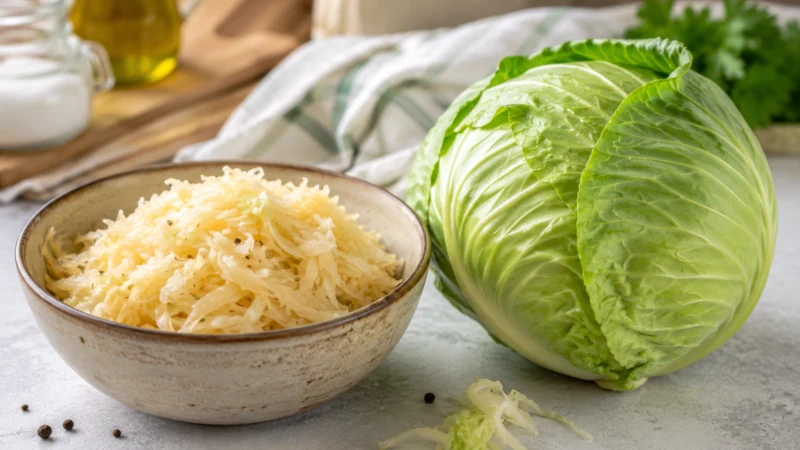
Sauerkraut is cabbage fermented with salt. The most defensible sauerkraut health benefits are practical rather than miraculous: it contributes fiber and vitamin C, and some unpasteurized products contain live microorganisms. Research on fermented foods is promising, but evidence specific to sauerkraut remains limited. It is not a detox, a treatment for digestive disease, or a substitute for medication.
The quick answer
| What the evidence says Well established: sauerkraut is a low-calorie fermented vegetable that supplies fiber and several micronutrients. Product dependent: unpasteurized, refrigerated sauerkraut may contain live microbes, but strain, amount and survival vary. Promising but indirect: a small randomized trial of a diet rich in several fermented foods found greater gut-microbe diversity and lower inflammatory markers. Not established: sauerkraut has not been shown to detox the body, cure constipation, control diabetes, cause weight loss, or treat arthritis, liver disease, acid reflux or heart disease. |
What sauerkraut is
Traditional sauerkraut is made by shredding cabbage, adding salt and allowing naturally present microorganisms to ferment the cabbage sugars into organic acids. The acids create its sour flavor and help preserve it. Vinegar-pickled cabbage is not necessarily bad, but it is a different product and may not contain live fermentation cultures.
A typical commercial sauerkraut provides fiber, vitamin C, vitamin K and smaller amounts of several other nutrients. A full cup is a large serving, but it contains roughly four grams of fiber according to a sauerkraut nutrition overview that references USDA data [Cleveland Clinic sauerkraut nutrition overview, 2026]. Brand formulas and serving sizes vary, especially for sodium.
Sauerkraut health benefits supported by evidence
Fiber can contribute to bowel regularity
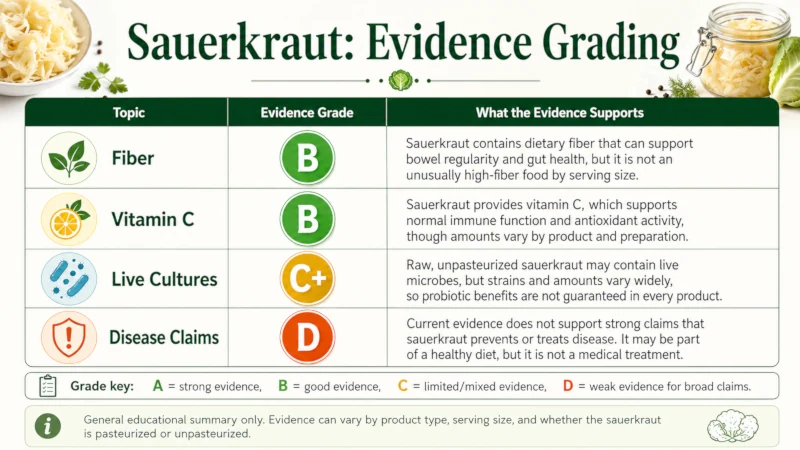
Sauerkraut contributes dietary fiber. Fiber adds bulk to stool, and adequate fluid helps it work more effectively. This makes sauerkraut one possible part of a constipation-friendly eating pattern—not a stand-alone remedy. The National Institute of Diabetes and Digestive and Kidney Diseases recommends increasing fiber gradually and drinking enough liquids [NIDDK constipation nutrition guidance].
If your current diet is low in fiber, begin with a small serving. A sudden increase can cause gas, bloating or cramping. Persistent constipation, blood in the stool, unexplained weight loss, severe pain or vomiting needs medical assessment rather than more fermented food.
Vitamin C and other nutrients
Sauerkraut contains vitamin C, although the amount differs by product and may decline with prolonged storage or heating. Vitamin C helps the body make collagen, absorb iron from plant foods and support normal immune function [NIH Office of Dietary Supplements: Vitamin C]. That does not mean sauerkraut prevents infections or treats disease.
A varied diet matters more than any single food. For additional produce options, see the site’s guide to vitamin C-rich foods.
Fermented-food research is promising but indirect
The most cited human evidence involves fermented foods as a group, not sauerkraut alone. In a 2021 randomized prospective study, 36 healthy adults followed either a high-fermented-food diet or a high-fiber diet. The fermented-food group consumed foods such as yogurt, kefir, kimchi and other fermented vegetables. Over the intervention, microbial diversity increased and several inflammatory markers decreased [Wastyk et al., Cell, 2021].
This is encouraging, but it cannot tell us that a spoonful of sauerkraut produces the same effect. The trial was small, enrolled healthy adults and tested a broader dietary pattern. Larger and longer studies focused specifically on fermented cabbage are needed.
A flavorful, low-calorie vegetable—not a weight-loss treatment
Sauerkraut adds acidity, crunch and volume for relatively few calories. Using it in place of a richer topping may help make a meal lighter. Its fiber may also add some fullness. Those are useful food qualities, but no good evidence shows that sauerkraut itself causes meaningful weight loss or controls blood sugar.
Treat it as one vegetable within an overall eating pattern rich in vegetables, fruit, beans, whole grains, nuts and other minimally processed foods.
Does sauerkraut count as a probiotic food?
Sometimes—but the word probiotic should be used carefully. Probiotics are live microorganisms intended to confer a health benefit. Different organisms and strains can have different effects, and benefits shown for one strain cannot automatically be assigned to another [NCCIH probiotics guidance].
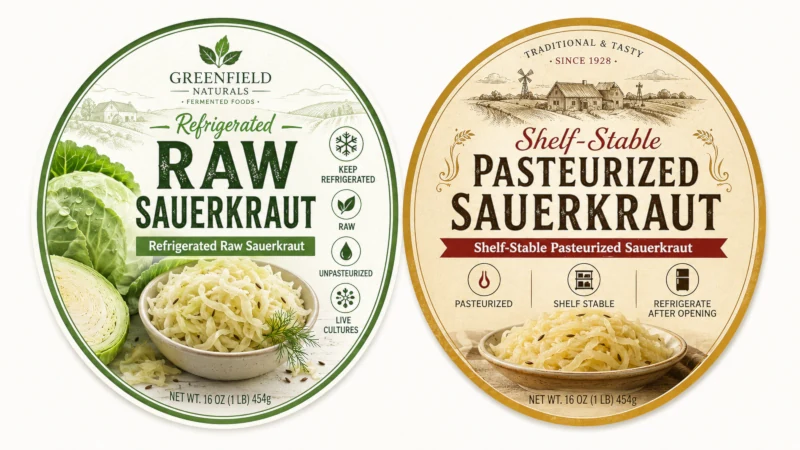
Refrigerated sauerkraut labeled unpasteurized, raw or contains live cultures is more likely to contain living fermentation microbes. Even then, the label may not identify the strains or amount, and there may be no clinical trial showing a particular benefit from that product. Shelf-stable or pasteurized sauerkraut can still provide fiber and nutrients, but heating reduces or eliminates live microbes.
Raw, pasteurized and cooked sauerkraut
| Type | Live microbes | Nutrition | Best use |
| Refrigerated, unpasteurized | Likely, but amount and strains vary | Fiber and micronutrients remain | Add cold or after cooking if live cultures are the goal |
| Shelf-stable or pasteurized | Usually greatly reduced or absent | Still contributes fiber and some nutrients | Convenient side dish or recipe ingredient |
| Cooked sauerkraut | Heat reduces live microbes | Fiber remains; vitamin C may decline | Soups, potatoes, beans, grain bowls and cooked entrées |
How to choose and eat sauerkraut
- Decide what you want from it. Choose refrigerated, unpasteurized sauerkraut if live cultures are your priority. Choose any version you enjoy if you mainly want a tangy vegetable.
- Read the ingredient list. Traditional products may contain little more than cabbage, salt and seasonings. Added sugar is not necessary for fermentation.
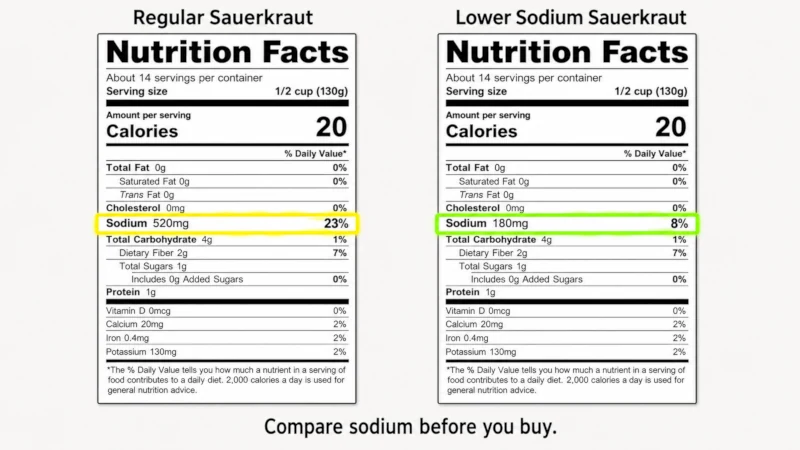
- Compare sodium per serving. Salt is part of traditional fermentation, but brands differ. A smaller portion can fit more easily into a sodium-conscious diet.
- Start with a small portion. A forkful or two with a meal is enough to test tolerance. There is no established therapeutic daily dose.
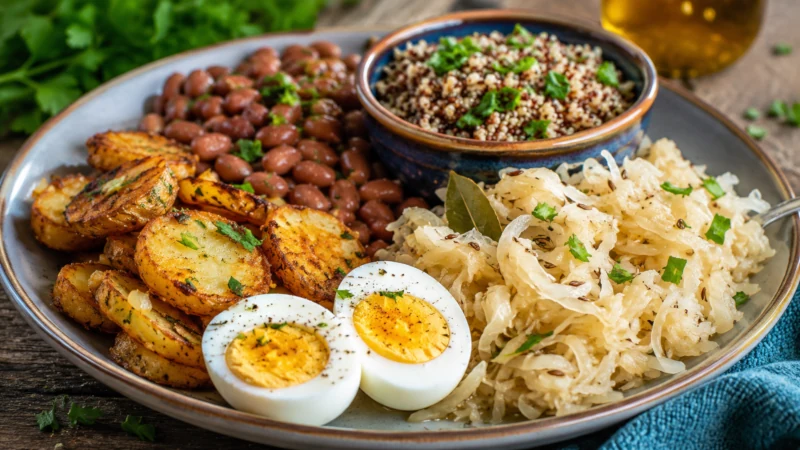
- Use it where acidity helps. Try it with potatoes, beans, eggs, grain bowls, salads or sandwiches. A little olive oil can soften the sharpness.
For home fermentation, use a tested method rather than improvising the salt ratio or temperature. The National Center for Home Food Preservation sauerkraut method provides USDA-based instructions for quantities, fermentation temperatures, storage and canning.
Risks, side effects and who should be cautious
Sodium and blood pressure
Sauerkraut can be high in sodium because salt is used during fermentation. Excess sodium can raise blood pressure, and the American Heart Association recommends comparing Nutrition Facts labels and choosing lower-sodium options when possible [American Heart Association sodium guidance, 2025].
People with high blood pressure, heart failure, kidney disease or a prescribed sodium restriction should ask their clinician or dietitian how sauerkraut fits their plan. The site’s guide to foods that lower blood pressure explains why the overall sodium–potassium pattern matters more than one food.
MAOI and warfarin considerations
Sauerkraut may contain tyramine. People taking a monoamine oxidase inhibitor (MAOI) may need to avoid or strictly limit high-tyramine fermented foods; Mayo Clinic specifically lists sauerkraut among foods that may contain more tyramine [Mayo Clinic MAOI diet guidance]. Follow the diet instructions from your prescriber or pharmacist.
Sauerkraut also contains vitamin K. If you take warfarin, the goal is usually consistency rather than eliminating vitamin K foods. The NHS advises eating similar amounts regularly so blood vitamin K and INR are more stable [NHS warfarin food guidance]. Do not make a large change in intake without checking with your anticoagulation team.
Pregnancy, breastfeeding and weakened immunity
Pregnancy and breastfeeding do not automatically make commercially prepared sauerkraut off-limits, but food handling matters. Pregnant people have a higher risk of severe illness from some foodborne germs, so follow clean, separate, cook and chill practices and use products that have been stored as directed [CDC food-safety guidance for pregnancy, 2025]. Ask your obstetric clinician about homemade or unpasteurized products if you have additional risk factors.
People who are severely ill or have a compromised immune system should discuss live-microbe foods with a healthcare professional. NCCIH notes that probiotic-related harms are more concerning in high-risk individuals, even though fermented foods have a long history of use in healthy people [NCCIH probiotics safety guidance].
Digestive symptoms and when to seek care
Some people notice gas, bloating, loose stools or cramping after adding fermented foods or increasing fiber. Reduce the portion or stop if symptoms are troublesome. People who are sensitive to histamine or other biogenic amines may also find fermented foods trigger symptoms, but individual tolerance varies.
Seek prompt medical care for severe or persistent abdominal pain, repeated vomiting, black or bloody stool, fever with significant digestive symptoms, dehydration, unexplained weight loss, or a sustained change in bowel habits. Sauerkraut should not be used to self-treat inflammatory bowel disease, irritable bowel syndrome, reflux, infection or another ongoing condition.
| HEALTH DISCLAIMER: This article is for educational purposes and does not provide diagnosis or treatment. Food choices can interact with medicines and medical conditions. Speak with a qualified healthcare professional before making a major dietary change if you are pregnant or breastfeeding, immunocompromised, following a sodium-restricted diet, or taking warfarin, an MAOI or another medicine with dietary restrictions. Do not delay medical care for persistent or severe symptoms. |
Frequently Asked Questions
Does sauerkraut have probiotics?
Unpasteurized, refrigerated sauerkraut may contain live fermentation microbes. That does not guarantee a clinically proven probiotic effect because strains, amounts and survival vary. Shelf-stable or pasteurized products generally contain few or no live microbes, but they can still provide fiber and nutrients.
Is sauerkraut good for gut health?
It can contribute fiber and, in some products, live microbes. A small trial found microbiome and inflammatory-marker changes from a diet rich in several fermented foods, but sauerkraut was not tested as a stand-alone treatment. Consider it one part of a varied, plant-rich diet.
How much sauerkraut should you eat per day?
There is no established therapeutic dose. Start with a small forkful or two and see how you tolerate it. Portion size also matters because sodium can add up quickly.
Can sauerkraut help constipation?
Its fiber can contribute to bowel regularity, especially when the rest of your diet includes adequate fiber and fluids. It is not a guaranteed remedy. Ongoing constipation or warning signs such as bleeding, severe pain or weight loss should be assessed by a healthcare professional.
Is cooked sauerkraut still healthy?
Yes. Cooking reduces live microbes and may lower some heat-sensitive vitamin C, but the fiber and many other food components remain. Cooked sauerkraut can still be a useful vegetable side.
Can people with high blood pressure eat sauerkraut?
Often in a modest portion, but sodium varies widely. Compare labels and ask your clinician or dietitian for individualized guidance if you have high blood pressure, heart failure, kidney disease or a prescribed sodium limit.
References
- American Heart Association. Get the Scoop on Sodium and Salt. Last reviewed September 11, 2025. View source
- Centers for Disease Control and Prevention. Safer Food Choices for Pregnant Women. January 31, 2025. View source
- Cleveland Clinic Health Essentials. Is Sauerkraut Good for You? Nutrition overview reviewed on the live page. View source
- Mayo Clinic. MAOIs and diet: Is it necessary to restrict tyramine? Live page specifically lists sauerkraut among fermented foods that may contain more tyramine. View source
- National Center for Complementary and Integrative Health. Probiotics: Usefulness and Safety. National Institutes of Health. View source
- National Center for Home Food Preservation. Sauerkraut. University of Georgia; adapted from the USDA Complete Guide to Home Canning, revised 2015. View source
- National Institute of Diabetes and Digestive and Kidney Diseases. Eating, Diet, & Nutrition for Constipation. National Institutes of Health; last reviewed May 2018. View source
- National Health Service. Warfarin: Advice about food and drink. Page last reviewed April 22, 2022. View source
- NIH Office of Dietary Supplements. Vitamin C — Fact Sheet for Consumers. View source
- Wastyk HC, Fragiadakis GK, Perelman D, et al. Gut-microbiota-targeted diets modulate human immune status. Cell. 2021;184(16):4137–4153.e14. DOI: 10.1016/j.cell.2021.06.019. View source
