Goat’s rue has one genuinely remarkable claim to fame: it is the plant that led chemists to metformin, the most widely prescribed oral diabetes drug in the world. Everything else you will read about goat’s rue benefits is weaker than that, and knowing where the line falls matters before you buy a tincture or brew the tea.
Two uses have any real traction. Nursing parents take it to increase milk supply, and it is genuinely popular for that — but no properly controlled trial has ever tested goat’s rue on its own [LactMed, 2026]. People with blood sugar concerns take it because of the metformin link, and there the human evidence is thinner still: the research sits in rats and test tubes [Nagalievska, 2018; Bednarska, 2020].
Meanwhile, the plant is a federally listed noxious weed in the United States [USDA APHIS, 2010] and a documented killer of grazing sheep [Keeler, 1986]. That is not a reason to panic. It is a reason to treat goat’s rue as a drug-like substance rather than a gentle tea herb.
What Goat’s Rue Actually Is
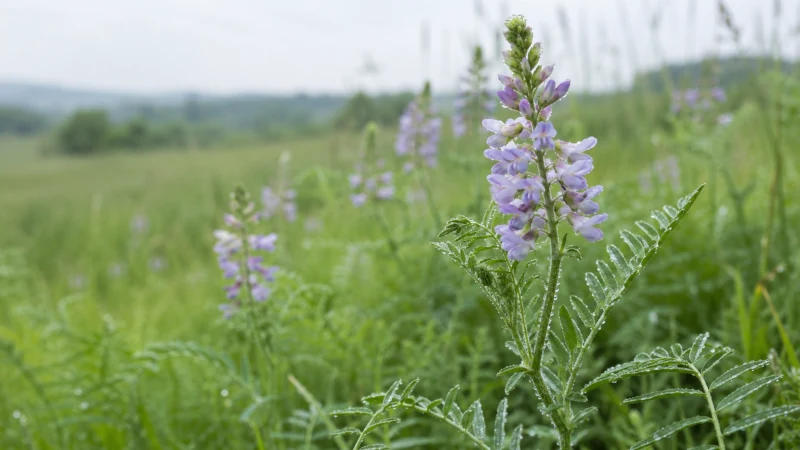
Galega officinalis is a perennial legume in the pea family (Fabaceae), also called goatsrue or professor-weed [Invasive Plant Atlas, n.d.]. It grows two to six feet tall, with compound leaves carrying six to ten pairs of leaflets and purple-to-white pea flowers packed into racemes of twenty to fifty blooms [Massachusetts Department of Agricultural Resources, 2014]. It is native to the Middle East and has naturalized across Europe and western Asia [CDFA, 2015]. In the wild it favors wet meadows, stream banks, ditches and marshy ground.
It reached the United States by invitation. Goatsrue was introduced into Utah in 1891 as a candidate forage crop, escaped cultivation, and now occupies more than sixty square miles of Cache County alone [Oregon Department of Agriculture, n.d.]. Livestock will not willingly eat it, which is part of why the forage experiment failed.
A name problem worth knowing about
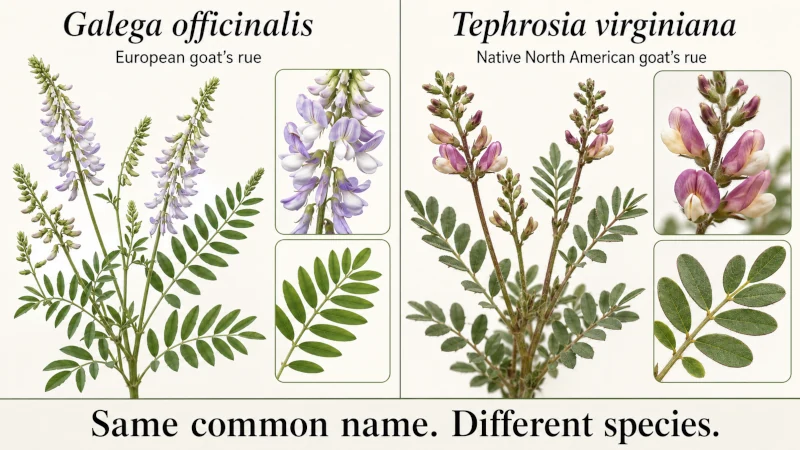
In North America, “goat’s rue” is also the common name of Tephrosia virginiana, an unrelated native wildflower of the eastern United States, also called devil’s shoestring. Its roots contain rotenone, historically used as an insecticide, and its seeds are reported to cause nausea [USDA Forest Service, n.d.].
Different plant. Different chemistry. Different risks. If a product label or a plant database entry says only “goat’s rue,” find the Latin binomial before you assume it is the herb described here. Botanical references written for gardeners in Wisconsin or Virginia are frequently about Tephrosia, not Galega — a mismatch that has quietly propagated into herbal write-ups.
The Metformin Connection, and What It Does Not Mean
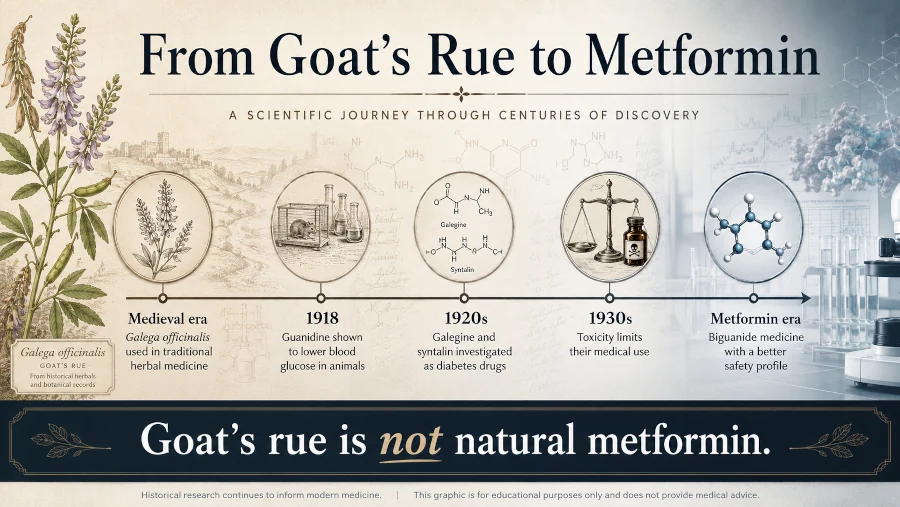
Medieval herbals recommended goat’s rue against worms, epilepsy, fever and pestilence [Bailey, 2017]. Early twentieth-century chemists took a closer look and found the plant rich in guanidine and related compounds. Guanidine itself was shown to lower blood glucose in animals in 1918. Galegine — the plant’s own guanidine derivative — and a related compound called synthalin were developed into diabetes drugs during the 1920s.
Then they were dropped. Toxicity curtailed their use through the 1930s as insulin became widely available [Bailey, 2017]. Metformin, synthesized in 1922 and largely ignored until its glucose-lowering action was confirmed in 1929, survived for a specific reason: biguanides were judged less toxic than the mono- and diguanidines that came directly from the plant [Bailey, 2017].
Metformin is what you get after taking the plant’s chemistry into a laboratory and engineering the hazard out of it. Goat’s rue is not natural metformin. It is the raw material that had to be improved upon, and the improving was not cosmetic.
Goat’s Rue Benefits, Graded Honestly
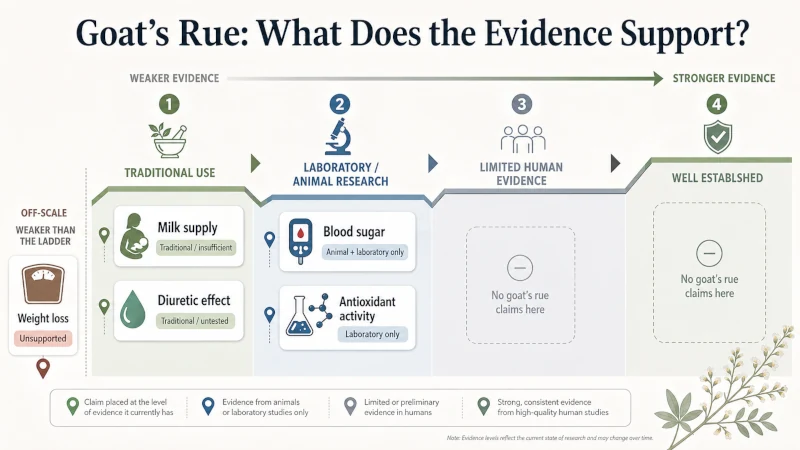
| Claimed benefit | What evidence exists | Strength |
| Increases breast milk supply | Long international traditional use; one positive RCT of a combination product; no trial of goat’s rue alone | Traditional / insufficient |
| Lowers blood sugar | Rat studies and in-vitro assays; documented hypoglycemic potential of galegine | Early-stage, animal and lab only |
| Diuretic effect | Traditional herbal use | Traditional, untested |
| Weight loss | None located in humans | Unsupported |
| Antioxidant activity | In-vitro assays of the dried herb | Lab only; clinical meaning unknown |
Milk supply: heavily used, barely studied
Goat’s rue is used internationally as a galactagogue, yet no scientifically valid clinical trials support that use [LactMed, 2026]. Popularity and evidence are two different things, and here the gap between them is wide.
The one positive trial people cite tested a combination capsule containing silymarin, phosphatidylserine and Galega. Mothers taking it averaged roughly 200 mL of milk by day seven against 115 mL in controls, with statistically significant differences in exclusive breastfeeding at three and six months [LactMed, 2026]. That is a real result — but you cannot hand the credit to goat’s rue, because silymarin, the extract from milk thistle, was sitting in the same capsule.
A 2026 systematic review of herbal galactagogues in mothers of preterm infants reached the same wall: Galega appeared only inside combination products, never as a standalone intervention, and the body of evidence overall was rated low to very low certainty [Cragg, 2026].
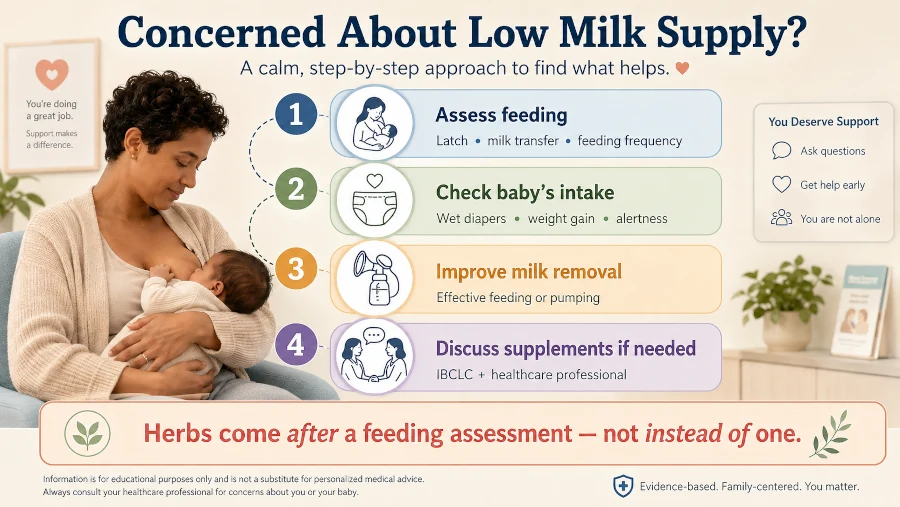
The Academy of Breastfeeding Medicine is blunt about the whole category. There is little or no scientific evidence for the effectiveness or safety of herbal galactagogues, and the protocol warns specifically about the absence of standardized dosing outside research settings, possible contaminants, allergic potential and drug interactions [Brodribb, 2018]. Its central instruction is one that no supplement can substitute for: medication should never replace evaluation and counseling on modifiable factors, and milk removal frequency and effectiveness come first.
In practice, that ordering matters more than the herb you choose. If a baby is not transferring milk efficiently, no tea corrects it. A feeding assessment with an IBCLC, attention to latch, and increasing effective milk removal are the interventions with the strongest track record. Herbs — goat’s rue, fenugreek, blessed thistle — sit downstream of that, and all of them share the same thin evidence base.
Blood sugar: rats and test tubes
In rats with streptozotocin-induced diabetes, a Galega officinalis extract given at 600 mg/kg per day for two weeks reduced several diabetes-related disturbances in white blood cells, including a 37.2% drop in TNF-α and a large reduction in abnormal lymphocyte proliferation [Nagalievska, 2018]. It is a competent study. It is also a rat study, at a dose far above anything a person drinking tea would encounter, measuring immune markers rather than glycemic control.
In the laboratory, extracts of the dried herb show antioxidant activity and trap methylglyoxal, a reactive compound formed from sugar that is implicated in diabetic complications [Bednarska, 2020]. That work was explicitly in vitro, and the authors note that the plant’s chemistry and pharmacology remain insufficiently known.
I could locate no randomized controlled trial of goat’s rue for blood sugar in humans. What is established points the other way: galegine may cause hypoglycemia, and caution is advised in anyone taking antidiabetic drugs [LactMed, 2026]. The risk of combining this herb with diabetes medication is better documented than any benefit from taking it.
If you want a food-first approach to post-meal blood sugar with better human data behind it, whole legumes are a more defensible place to start — the kidney bean page on this site walks through what that evidence does and does not show.
Diuretic, weight loss and the rest
The diuretic reputation comes from older herbal texts and has not, as far as I can find, been tested in controlled human research. Weight-loss marketing borrows metformin’s reputation wholesale; goat’s rue itself has not been studied for weight loss in people. Any label promising fat loss from this herb is selling a drug’s résumé under a plant’s name.
What Is Actually in the Plant
Chemical analysis of the dried herb identifies four main groups of compounds [Bednarska, 2020]:
- Guanidine alkaloids — galegine, averaging 6.57 mg per gram of dry weight, and hydroxygalegine at roughly 1.51 mg/g. An earlier toxicology measurement put galegine at about 0.46% of plant material, or 4.6 mg/g [Keeler, 1992]. Same ballpark, and the difference between the two figures is itself informative: galegine content varies with plant part, growing stage and collection.
- Quinazoline alkaloids — vasicine, hydroxyvasicine and vasicinone.
- Flavonols — quercetin and kaempferol glycosides, including rutin.
- Hydroxycinnamic acid esters — caffeoyl, coumaroyl and feruloyl derivatives of hexaric acid.
Two corrections belong here, because both errors circulate widely in herbal writing about this plant, and an earlier version of this page carried them.
The alkaloid is galegine, not “glargine.” Insulin glargine is a manufactured long-acting insulin analog, a prescription injectable with no botanical relationship to this or any herb. The two words look alike and the mistake has been copied from one herbal write-up to the next for years.
There is no “plant insulin” in goat’s rue. Modern analyses of the herb describe guanidines, quinazoline alkaloids and polyphenols [Bednarska, 2020]. Nothing insulin-like has been isolated from it. The plant’s glucose-lowering reputation traces to galegine’s guanidine chemistry, which is a completely different mechanism from insulin.
Safety: Side Effects, Interactions and Who Should Avoid It
Side effects
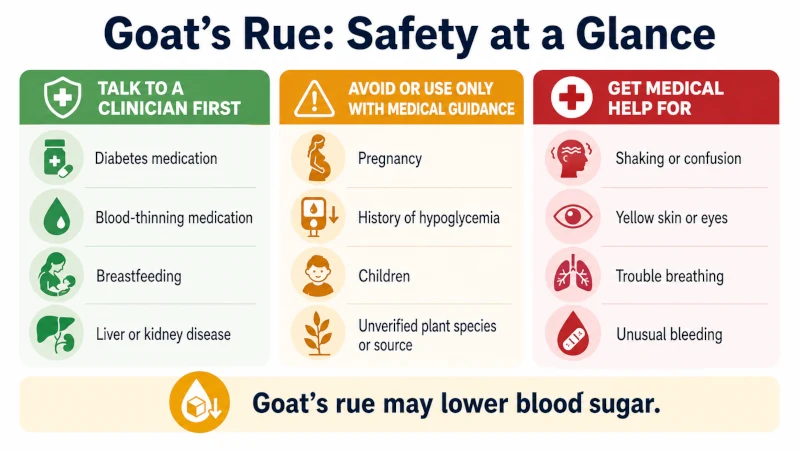
Hypoglycemia is the principal documented concern, arising from the plant’s galegine content [LactMed, 2026]. Goat’s rue is otherwise described as generally well tolerated at the amounts found in commercial preparations.
One woman taking a combination of fennel, fenugreek and goat’s rue developed diarrhea and hepatomegaly with raised liver transaminases, which reversed after she stopped [LactMed, 2026]. A single case involving three herbs cannot pin the blame on any one of them. It is still a reason to take liver symptoms seriously rather than assume an herbal product cannot cause them.
Medication interactions
Diabetes medications are the clear one. Caution is advised in women taking antidiabetic drugs because of the herb’s hypoglycemic potential [LactMed, 2026]. Adding a glucose-lowering herb to insulin, a sulfonylurea or metformin can stack effects that neither you nor your prescriber is monitoring for.
Anticoagulants and antiplatelet drugs are a theoretical concern rather than a demonstrated one. A desalted extract of Galega officinalis inhibited platelet aggregation in platelet-rich plasma in vitro, blocking ADP-, collagen- and thrombin-induced aggregation at concentrations from 35 to 125 µg/mL [Atanasov, 1999]. That is a test-tube finding at concentrations that may bear no relationship to what reaches human blood after a cup of tea. No human interaction studies exist. The honest position is that this is a precaution derived from chemistry, not a documented clinical interaction — which is a reason to mention the herb to your prescriber if you take warfarin, a DOAC or daily aspirin, or if you have surgery scheduled, and not a reason for alarm.
Because human interaction data for goat’s rue essentially do not exist, different herbal references reach different conclusions about how much any of this matters. Where sources disagree, the disagreement itself is the finding.
Pregnancy and breastfeeding
Pregnancy: there is no adequate human safety data. Given that the plant’s principal alkaloid was withdrawn from medical use for toxicity, avoid it in pregnancy.
Breastfeeding: goat’s rue is widely used and generally well tolerated, but its effects on the nursing infant have not been properly studied, and its hypoglycemic potential is a reason for care [LactMed, 2026]. Discuss it with your pediatrician, your own prescriber, and ideally an IBCLC before starting.
One detail from the lactation literature is worth carrying into any decision about nursing teas. A case report describing two infants with hypotonia, lethargy and weak sucking was attributed to anethole from fennel and anise, not to goat’s rue [LactMed, 2026]. Commercial nursing blends usually contain half a dozen herbs. Your baby is exposed to the blend, not the headline ingredient, and the safety question applies to every plant in the tin.
Who should avoid goat’s rue
- Anyone pregnant or trying to conceive
- Anyone taking insulin, sulfonylureas, metformin or other glucose-lowering medication, without prescriber supervision
- People with a history of hypoglycemia, including reactive hypoglycemia
- People with liver disease or unexplained abnormal liver enzymes
- Anyone on anticoagulant or antiplatelet therapy, or with surgery scheduled
- Children
- Anyone who cannot confirm the species and source of the product
About the “dried is safe” claim
Older herbal sources — including the previous version of this page — advise using only dried goat’s rue, on the grounds that fresh plant is irritating. The toxicology does not support that reassurance.
In the controlled feeding study that established the plant’s toxicity in sheep, the material tested was dried plant. Doses as small as 0.8 g of dried plant per kilogram of body weight per day produced labored breathing, oxygen deprivation and foaming nasal discharge. Animals that died after overdose showed severe fluid accumulation in the chest cavity and widespread pulmonary edema [Keeler, 1986].
Two things need saying plainly. Sheep are not people; ruminant digestion, body size and exposure route all differ, and there is no valid way to convert that animal dose into a human one. But drying does not remove galegine — the toxicology measurements were made on dried material [Keeler, 1992; Bednarska, 2020]. Whatever safety margin exists for a cup of goat’s rue tea, “it has been dried” is not the reason for it.
The same study found something else worth knowing: ewes dosed on consecutive days developed an apparent tolerance and later withstood five to ten times the previously lethal dose without visible effect [Keeler, 1986]. Adaptation of that kind is not reassurance. It means visible tolerance and actual safety can come apart.
Traditional Preparation, and Why the Numbers Are Shaky
The traditional infusion calls for 20 to 30 g of dried leaf and flower, gathered while the plant is in bloom, steeped in a liter of water, with two cups drunk daily. Two cups is roughly 500 mL, which works out to about 10 to 15 g of dried herb per day.
For scale: the phytochemistry study that measured the plant’s alkaloid content uses a 4 g average daily dose as its reference point, containing roughly 32 mg of total guanidines [Bednarska, 2020]. The traditional tea recipe delivers two to four times that quantity of plant material. That comparison is arithmetic performed here from their published concentrations, not a figure the authors report or endorse.
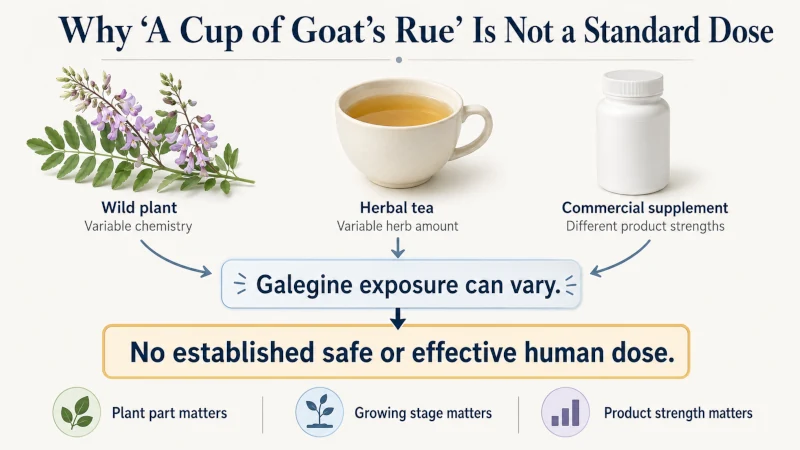
Commercial products land elsewhere again. One European nursing tea contains 100 mg of goat’s rue per serving [LactMed, 2026] — a small fraction of the traditional infusion. Between wild variation in galegine content and this spread in product strength, “a cup of goat’s rue tea” does not describe a consistent dose of anything.
There is no established safe or effective human dose for goat’s rue. In the United States, the FDA does not have the authority to approve dietary supplements before they are marketed; manufacturers and distributors carry the initial responsibility for meeting safety standards [FDA, 2026]. Verifying identity, potency and purity falls to you and to whichever brand you decide to trust.
When to Talk to a Healthcare Professional
Before you start, if you take any diabetes medication, take an anticoagulant or antiplatelet drug, are pregnant or trying to conceive, have liver or kidney disease, are breastfeeding, or are considering giving it to a child. The FDA’s standing advice on supplements applies here with force: talk to a doctor or pharmacist first, because supplements can interact with medicines [FDA, 2026].
Stop and seek prompt medical care if you develop:
- Shakiness, sweating, confusion, a racing heart, or blurred vision — possible hypoglycemia
- Yellowing of the skin or eyes, dark urine, persistent pain under the right ribs, or unusual fatigue — possible liver injury
- Difficulty breathing, chest tightness, swelling of the face, lips or tongue, or hives — goat’s rue is a legume, and legume allergies are real
- Unexplained bruising or bleeding that is slow to stop
Call emergency services for severe hypoglycemia — confusion that is worsening, seizure, or loss of consciousness. That is not a wait-and-see situation.
If you are breastfeeding, the red flags that matter are in your baby, not in your supply anxiety: fewer than six wet diapers a day after day five, poor or stalled weight gain, persistent lethargy, or consistently weak feeding. Those warrant a same-day call to your pediatrician or midwife, not a stronger tea.
So Should You Take It?
If you are hoping to increase milk supply, goat’s rue is a reasonable thing to discuss with your lactation consultant and prescriber — after a feeding assessment, not instead of one, and with clear eyes about the evidence being traditional rather than demonstrated. Many people use it without incident. Nobody has shown it works on its own.
If you are hoping to manage blood sugar, the case is weaker and the risk is more concrete. The plant’s descendant is available as a well-characterized medicine with decades of human trial data and a known dose. Choosing the unstandardized plant over the standardized drug means accepting more uncertainty in exchange for less evidence. If you take diabetes medication already, adding goat’s rue without telling your prescriber is the specific scenario the safety literature warns about.
That is a narrower recommendation than most pages about goat’s rue benefits will give you. It is the one the evidence currently supports.
| Health Disclaimer: This article is for educational and informational purposes only. It is not medical advice, and it is not a substitute for diagnosis or treatment from a qualified healthcare professional. Goat’s rue can lower blood sugar and may interact with medications. Do not use it to treat diabetes, and do not start, stop or change any prescribed medication based on what you have read here. If you are pregnant, breastfeeding, taking any prescription medicine, or managing an existing health condition, speak with your doctor, pharmacist or another qualified clinician before using goat’s rue or any herbal product. If you think you are experiencing a medical emergency, contact your local emergency services. |
Frequently Asked Questions
Is goat’s rue the same thing as metformin?
No. Metformin is a synthetic biguanide, developed after the plant’s own guanidine derivatives — galegine and synthalin — proved too toxic for continued medical use in the 1930s [Bailey, 2017]. Goat’s rue contains galegine, not metformin, at variable and unstandardized concentrations. Taking the herb is not a natural equivalent of taking the drug.
How long does goat’s rue take to work for milk supply?
There is no reliable answer, because no controlled trial has tested goat’s rue on its own [LactMed, 2026]. The combination-product trial reported differences by day seven, but that capsule also contained silymarin and phosphatidylserine [LactMed, 2026]. Anyone quoting a specific timeframe for goat’s rue alone is quoting anecdote.
Can I take goat’s rue if I am on metformin?
Talk to your prescriber first, and do not start it on your own. Goat’s rue contains galegine, which may cause hypoglycemia, and caution is specifically advised for people taking antidiabetic drugs [LactMed, 2026]. Two glucose-lowering agents together, one of them unstandardized, is exactly the combination that needs monitoring.
Is goat’s rue safe because it is dried?
Drying does not remove the active alkaloid. The sheep toxicity studies that established this plant as a poisonous species used dried plant material [Keeler, 1986; Keeler, 1992]. Animal doses do not translate to humans, but the reassurance that dried goat’s rue is inert is not supported.
Is the goat’s rue in my garden the same plant?
Possibly not. Tephrosia virginiana, a native eastern North American wildflower, also goes by goat’s rue and by devil’s shoestring; it contains rotenone in its roots and is a different species entirely [USDA Forest Service, n.d.]. Check for Galega officinalis on the label or in the plant description before assuming anything about it.
Can I forage goat’s rue?
It is not advisable. Galega officinalis is on the US Federal Noxious Weed List [USDA APHIS, 2010], which restricts its movement, and galegine content varies substantially with plant part and growth stage [Keeler, 1992; Bednarska, 2020], so wild-gathered material has an unknown potency. Several US states run active eradication programs for it.
References
- Bailey CJ. Metformin: historical overview. Diabetologia. 2017;60(9):1566–1576. DOI: 10.1007/s00125-017-4318-z View source
- Goat’s Rue. In: Drugs and Lactation Database (LactMed®). Bethesda (MD): National Institute of Child Health and Human Development. Bookshelf ID NBK501817. Last revised 15 July 2026. View source
- Brodribb W; Academy of Breastfeeding Medicine. ABM Clinical Protocol #9: Use of Galactogogues in Initiating or Augmenting Maternal Milk Production, Second Revision 2018. Breastfeeding Medicine. 2018;13(5):307–314. DOI: 10.1089/bfm.2018.29092.wjb View source
- Cragg A, Levene I, Darabi S, Willcox M. Herbal galactagogues to improve breastmilk production and lactation in mothers of preterm babies: a systematic review of clinical trials. European Journal of Clinical Nutrition. 2026;80:146–158. DOI: 10.1038/s41430-025-01679-x View source
- Bednarska K, Kuś P, Fecka I. Investigation of the Phytochemical Composition, Antioxidant Activity, and Methylglyoxal Trapping Effect of Galega officinalis L. Herb In Vitro. Molecules. 2020;25(24):5810. DOI: 10.3390/molecules25245810 View source
- Nagalievska M, Sabadashka M, Hachkova H, Sybirna N. Galega officinalis extract regulate the diabetes mellitus related violations of proliferation, functions and apoptosis of leukocytes. BMC Complementary and Alternative Medicine. 2018;18:4. DOI: 10.1186/s12906-017-2079-3 View source
- Keeler RF, Johnson AE, Stuart LD, Evans JO. Toxicosis from and possible adaptation to Galega officinalis in sheep and the relationship to Verbesina encelioides toxicosis. Veterinary and Human Toxicology. 1986;28(4):309–315. PMID: 3750812 View source
- Keeler RF, Baker DC, Panter KE. Concentration of galegine in Verbesina encelioides and Galega officinalis and the toxic and pathologic effects induced by the plants. Journal of Environmental Pathology, Toxicology and Oncology. 1992;11(2):11–17. PMID: 1573558 View source
- Atanasov AT, Spasov V. Inhibiting effect of desalted extract from Galega officinalis L. on platelet aggregation. Folia Medica (Plovdiv). 1999;41(1):46–50. PMID: 10462920 View source
- United States Department of Agriculture, Animal and Plant Health Inspection Service. Federal Noxious Weed List, Version 1.0, effective 10 December 2010. View source
- Oregon Department of Agriculture Noxious Weed Control Program. Goatsrue — Galega officinalis plant profile. View source
- Kelch DG. Goatsrue (Galega officinalis) — Pest Rating Proposal. California Department of Food and Agriculture, 7 April 2015. View source
- Stritch L. Goat’s Rue (Tephrosia virginiana L.). USDA Forest Service, Celebrating Wildflowers. View source
- Goatsrue — Galega officinalis (Fabales: Fabaceae). Invasive Plant Atlas of the United States. View source
- Goatsrue — Galega officinalis. Massachusetts Introduced Pests Outreach Project. Last reviewed 30 December 2014. View source
- U.S. Food and Drug Administration. Questions and Answers on Dietary Supplements. Last updated 27 August 2026. View source
