
Choosing the right angina foods to eat won’t cure chest pain, but it can help manage the coronary artery disease behind most angina and lower your long-term risk of a heart attack. Angina is the pressure, squeezing, or tightness you feel when part of your heart muscle isn’t getting enough oxygen-rich blood [Mayo Clinic, 2024]. It is a symptom, not a disease of its own — usually a sign that your coronary arteries have narrowed because of plaque buildup, a process called atherosclerosis [Harvard Health, 2025]. No food widens a blocked artery on the spot. What a steady, heart-healthy eating pattern can do is slow that narrowing over months and years, help bring cholesterol and blood pressure down, and reduce how often stable angina flares.
First, the part that matters most. If your chest pain is new, lasts more than a few minutes, comes on at rest, or feels worse or more frequent than usual, treat it as an emergency and call 911 [AHA, 2025]. Diet is for the long game. It is never a treatment for an attack in progress, and it does not replace the medicines your clinician prescribes.
What angina is, and what food can and can’t do
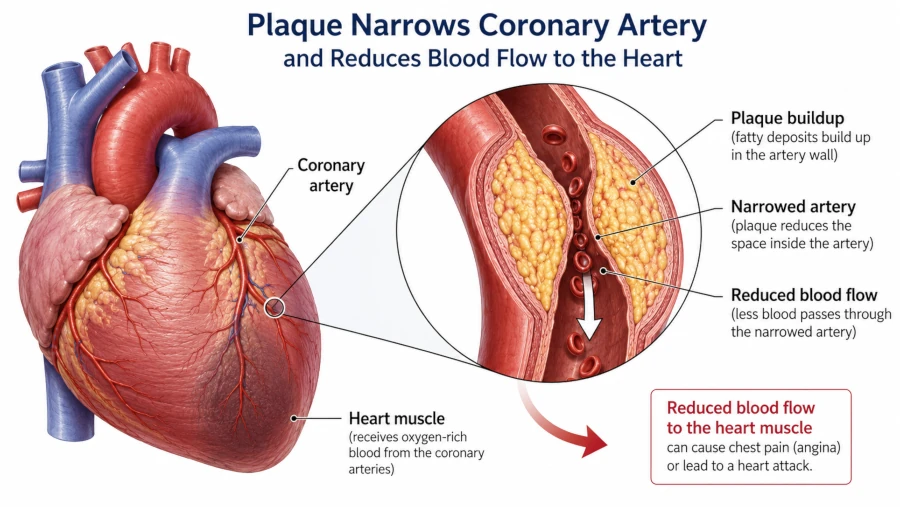
Angina happens when the heart muscle’s demand for oxygen outstrips the supply coming through the coronary arteries. Most often the cause is atherosclerosis: fatty plaque narrows the arteries so that during exertion, cold, or stress the heart can’t get enough blood [NHLBI, 2024]. Knowing your type matters, because it changes how urgent the situation is.
- Stable angina. Predictable chest pain brought on by exertion or emotion that eases within a few minutes of rest or with medicine. This is the type that long-term diet and lifestyle most directly support.
- Unstable angina. Pain at rest, lasting longer, or clearly worsening. This is a medical emergency — call 911, not your kitchen.
- Variant (Prinzmetal) angina. Caused by a temporary spasm of a coronary artery rather than fixed plaque. Diet plays a smaller role here, and triggers like smoking, stimulants, and cold matter more [Mayo Clinic, 2024].
This distinction is why the older idea of “magic” angina foods needs a reality check. A grape or an onion does not relax a coronary artery the way nitroglycerin does. The honest mechanism is slower and less dramatic: foods that lower your cholesterol, blood pressure, and weight reduce the plaque burden and strain that produce angina in the first place. If you want the bigger picture of diet and arteries, see our guide to foods for healthy arteries.
How a heart-healthy diet actually helps
The strongest evidence in nutrition is for overall eating patterns, not single foods. In its 2021 dietary guidance, the American Heart Association distilled a heart-healthy pattern into a few principles: eat plenty and a variety of vegetables and fruits; choose whole grains over refined; get protein mostly from plants, with fish and seafood and low-fat dairy; use liquid plant oils instead of tropical or partially hydrogenated fats; favor minimally processed foods; limit added sugars; prepare food with little or no salt; and limit alcohol [AHA, 2021].
Two named patterns fit that template and have been studied directly. The DASH eating plan, built to lower blood pressure, is recommended by the National Heart, Lung, and Blood Institute specifically to help prevent angina [NHLBI, 2024]. The Mediterranean pattern — vegetables, fruit, whole grains, legumes, fish, nuts, and olive oil — has the most supportive trial evidence for reducing cardiovascular events. The mechanisms are unglamorous but real: lower LDL cholesterol, lower blood pressure, a healthier weight, and less arterial inflammation.
The best angina foods to eat
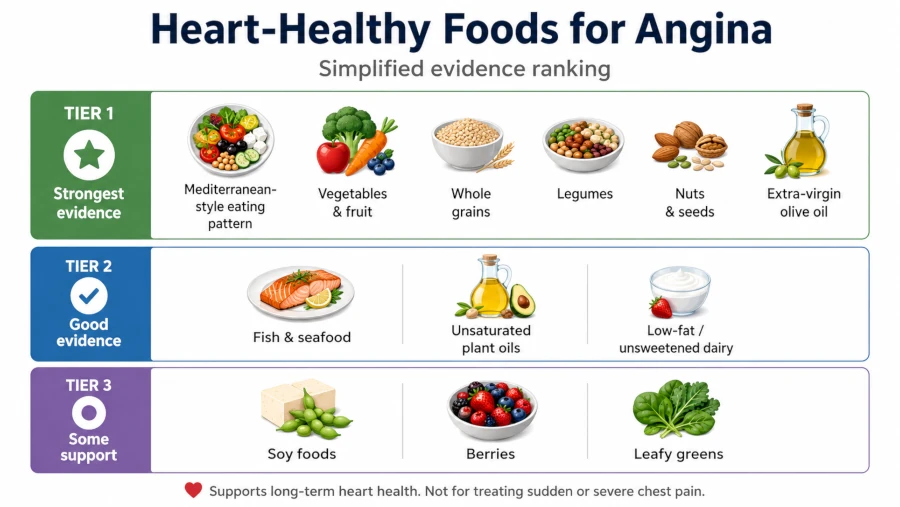
Think in food groups rather than single “superfoods.” The items below earn their place because they push your numbers in the right direction over time. The evidence behind each is labeled honestly.
Vegetables and fruit
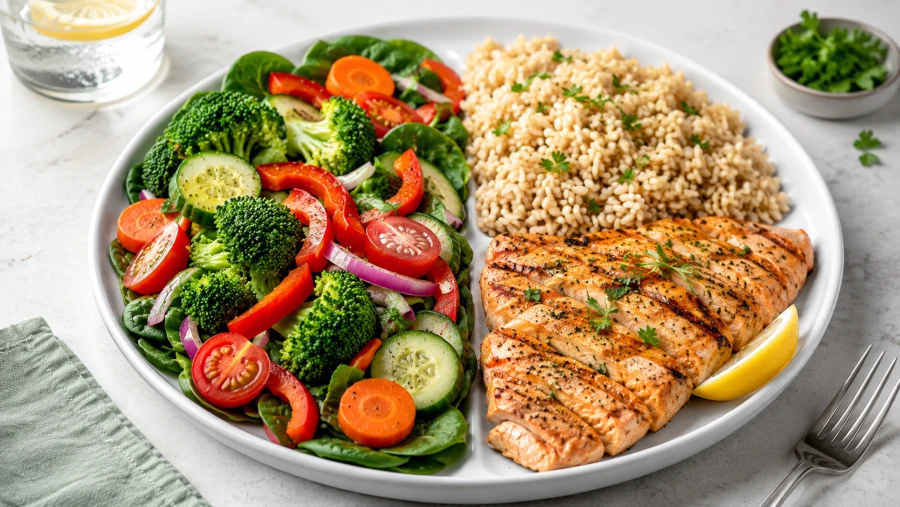
Large cohort studies consistently link higher vegetable and fruit intake with lower rates of heart disease. They supply potassium, which counters sodium’s effect on blood pressure, plus soluble fiber and polyphenols. Leafy greens, berries, citrus, tomatoes, and orange-fleshed vegetables like squash and sweet potato all fit. The benefit comes from eating a variety, most days — not from any one fruit being uniquely curative. Aim to fill roughly half your plate with vegetables and fruit.
Whole grains, especially oats and barley
Oats and barley are the standouts because of beta-glucan, a soluble fiber. A meta-analysis of randomized trials found that at least 3 grams of oat beta-glucan a day — about a generous bowl of oatmeal — lowers LDL (“bad”) cholesterol by roughly 0.25 mmol/L (about 10 mg/dL), without lowering protective HDL [Whitehead et al., 2014]. The effect is modest but real and reproducible, which is why it carries an FDA-authorized heart-health claim. Barley delivers the same fiber; rye and other intact whole grains help too.
Nuts
Nuts have some of the best human evidence of any single food group. A dose-response meta-analysis found that each additional 28 grams a day (about a small handful) was associated with roughly 21% lower cardiovascular disease risk and 29% lower coronary heart disease risk [Aune et al., 2016]. In the PREDIMED trial, a Mediterranean diet supplemented with about 30 grams of mixed nuts a day cut major cardiovascular events by about 28% over roughly five years in high-risk adults [Estruch et al., 2018]. Walnuts, almonds, and cashews all qualify; choose unsalted to keep sodium down.
Fish, legumes, and healthy fats
Replacing saturated fat (fatty meat, butter, coconut and palm oils) with unsaturated fat from olive or canola oil is one of the more reliable ways to improve your cholesterol profile. Oily fish such as salmon and sardines a couple of times a week, and legumes like beans, lentils, and chickpeas most days, round out a pattern that consistently tracks with lower heart-disease risk [AHA, 2021]. For a broader list, see our roundup of foods good for the heart.
What about grapes, onions, and the classic “angina” foods?
Older food lists single out grapes and resveratrol, onions, peaches, strawberries, and squash as angina remedies. Here is the fair read: every one of these belongs in a heart-healthy diet — they are low in sodium and saturated fat and rich in potassium and antioxidants. But the specific claims that grapes “dilate coronary arteries” or that strawberries “stop angina” rest mostly on laboratory and animal studies, not on human outcomes. Enjoy them as part of the overall pattern, not as medicine, and be mindful that grape juice and dried fruit concentrate the sugar.
At a glance: foods, why they help, and how strong the evidence is
| Food group | Why it helps the heart | Evidence | Practical amount |
| Vegetables & fruit | Potassium, fiber, polyphenols; lower BP and CVD risk | Strong (cohort) | ~Half your plate, variety, most days |
| Oats & barley | Beta-glucan lowers LDL cholesterol | Strong (RCT) | ≥3 g beta-glucan/day (≈ 1 bowl oatmeal) |
| Nuts | Lower LDL; linked to fewer cardiac events | Strong (RCT + cohort) | ~28–30 g/day, unsalted |
| Fish & legumes | Unsaturated fat and plant protein replace saturated fat | Good | Fish 2×/week; legumes most days |
| Olive/canola oil | Improves cholesterol when it replaces butter/tropical oils | Good | Use in place of solid fats |
| Grapes, onions, berries, squash | Fit a low-sodium, antioxidant-rich pattern | Weak for specific angina claims | Eat freely as part of the pattern |
Foods and habits to limit
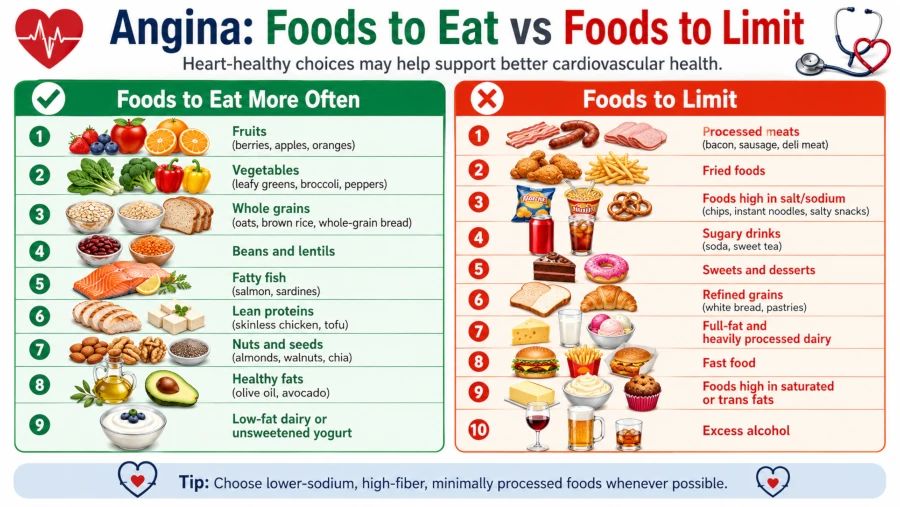
What you cut back on matters as much as what you add. The American Heart Association’s fact sheet on angina is blunt about it: eat meals low in saturated fat, trans fat, sodium, and added sugars [AHA, 2025].
- Saturated and trans fat. Fatty and processed meats, butter, and fried food raise LDL. The AHA suggests keeping saturated fat to a small share of daily calories to help lower cholesterol.
- Sodium. Excess salt raises blood pressure, a major driver of artery damage. The AHA suggests aiming for under 2,300 mg a day, moving toward an ideal of about 1,500 mg [AHA, 2021]. Most sodium hides in packaged and restaurant food, not the salt shaker.
- Added sugars and ultra-processed foods. These crowd out better choices and push weight and triglycerides up.
- Alcohol. If you don’t drink, don’t start; if you do, keep it limited. Some people with angina also find that caffeine or alcohol triggers symptoms.
A realistic picture of what to expect
Diet is one lever among several. On its own, an oat-rich diet might trim LDL by around 5%, and nuts add a further modest improvement; combined with exercise, not smoking, and any prescribed medication, those small effects stack into a meaningfully lower risk. Cholesterol and blood pressure usually shift over weeks to a few months. Changes inside the artery wall are slower still, measured in years. None of this works as quickly or as powerfully as the medications used for angina, so never stop a statin, beta blocker, or nitrate because you’ve improved your diet — food and medicine work together, not in competition.
Safety, interactions, and who should be cautious
A heart-healthy diet is safe for almost everyone, but a few interactions matter for people who already have heart disease and take medication. Talk with your clinician or a registered dietitian before making big changes if any of these apply to you.
- Grapefruit and certain heart medicines. Grapefruit and its juice can raise blood levels of some statins (such as simvastatin and atorvastatin) and some calcium channel blockers, increasing side-effect risk. Check your specific prescriptions [Mayo Clinic, 2024].
- Warfarin and leafy greens. Vitamin-K-rich greens are healthy, but if you take warfarin, keep your intake steady from week to week rather than swinging high and low, and tell the clinic managing your dose.
- Potassium, kidney disease, and some blood-pressure drugs. High-potassium foods are usually good for blood pressure, but if you have reduced kidney function or take ACE inhibitors or ARBs, your potassium needs monitoring.
- Heart failure. If you also have heart failure, your team may set specific sodium and fluid limits that override general advice.
- Pregnancy and breastfeeding. Heart-healthy eating is appropriate, but chest pain during pregnancy always needs prompt medical assessment, and supplements should be cleared with your clinician.
For more condition-specific reading, browse our cardiovascular health section.
When to seek urgent care
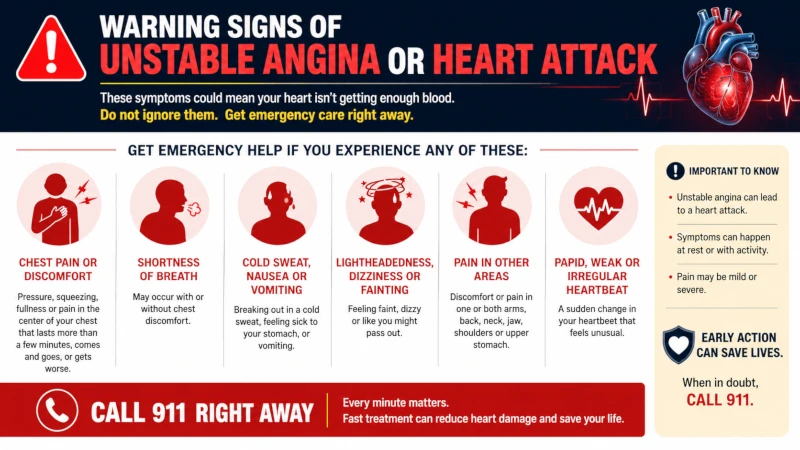
Food choices are a long-term strategy. These symptoms are not — they need immediate medical attention [AHA, 2025]:
- Chest pain or pressure lasting more than a few minutes, or that doesn’t ease with rest or your usual angina medicine.
- Chest pain at rest, or pain that is new, worse, or more frequent than your usual pattern.
- Pain spreading to the arm, neck, jaw, shoulder, or back, with sweating, nausea, shortness of breath, or a sense of dread.
Call 911 if any of these occur. Any new chest pain, even if it passes, should be checked by a healthcare professional [Mayo Clinic, 2024].
| Health Disclaimer This article is for general education only and is not a substitute for professional medical advice, diagnosis, or treatment. Angina is a sign of heart disease and can be life-threatening; do not use food to self-treat chest pain. Always follow the guidance of a qualified healthcare provider, keep taking any prescribed medication, and seek emergency care for new, severe, or worsening symptoms. If you are pregnant, nursing, have kidney disease or heart failure, or take prescription medicines, talk with your clinician before making major dietary changes. |
Frequently Asked Questions
Can changing my diet get rid of angina?
No. A heart-healthy diet helps manage the coronary artery disease behind angina and can reduce how often stable angina flares, but it isn’t a cure and works slowly. Keep taking prescribed medicines and follow your clinician’s plan.
Is there a single best food for angina?
No single food does the job; the overall pattern is what counts. If you want the foods with the strongest human evidence, oats and barley, nuts, vegetables and fruit, and fish stand out.
Are grapes or grape juice special for the heart?
Grapes fit a heart-healthy diet, but the specific claim that they dilate coronary arteries comes from lab studies, not human outcome trials. Whole grapes are a better choice than juice, which concentrates sugar.
How much salt is okay?
The American Heart Association suggests aiming for under 2,300 mg of sodium a day and moving toward about 1,500 mg. Most sodium comes from packaged and restaurant foods.
Can I drink coffee or alcohol with angina?
It varies by person. Some people find caffeine or alcohol triggers symptoms. General advice is to limit alcohol and, if it isn’t already part of your life, not to start. Ask your own clinician about your triggers.
How soon will eating better help?
Cholesterol and blood pressure often improve within weeks to a few months. Benefits to the artery wall itself build over years, which is why consistency beats any short-term “detox.”
References
- Mayo Clinic. (2024). Angina — Symptoms and causes. → View source
- Harvard Health Publishing. (2025). Angina. Reviewed by Robert H. Shmerling, MD. → View source
- American Heart Association. (2025). What Is Angina? (Answers by Heart fact sheet). → View source
- National Heart, Lung, and Blood Institute. (2024). Angina — Causes and Risk Factors. → View source
- Lichtenstein AH, et al. (2021). 2021 Dietary Guidance to Improve Cardiovascular Health. Circulation, 144(23). doi:10.1161/CIR.0000000000001031 → View source
- Aune D, et al. (2016). Nut consumption and risk of cardiovascular disease and mortality: a meta-analysis. BMC Medicine, 14, 207. doi:10.1186/s12916-016-0730-3 → View source
- Estruch R, et al. (2018). Primary prevention of cardiovascular disease with a Mediterranean diet (PREDIMED). New England Journal of Medicine, 378, e34. doi:10.1056/NEJMoa1800389 → View source
- Whitehead A, et al. (2014). Cholesterol-lowering effects of oat β-glucan: a meta-analysis of randomized controlled trials. American Journal of Clinical Nutrition, 100(6), 1413–1421. → View source
