
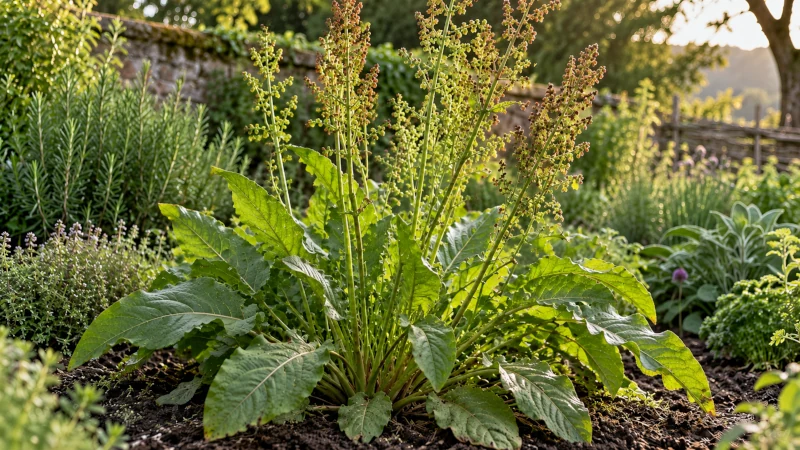
If you’ve found a tall, sour-leaved dock in a seed catalogue or an old herbal, here’s the short answer. Patience dock (Rumex patientia) is a relative of sorrel and rhubarb whose young leaves have long been cooked as a spring green, and in normal portions that’s a reasonable way to enjoy it. The medicinal claims are thinner. Its root carries the same family of laxative compounds as rhubarb root, and lab and animal studies hint at anti-inflammatory and antibacterial activity, but we found no clinical trial of patience dock itself for constipation, anemia, eczema or anything else [Li et al., 2022; Mohamed Gohar et al., 2025].
The thing to respect is oxalate. The lemony bite in dock leaves comes from oxalic acid, so treat patience dock the way you’d treat spinach or rhubarb: a side dish, not a daily tonic, and one to skip if you form kidney stones.
What patience dock is
Patience dock is a hardy perennial in the dock and buckwheat family, Polygonaceae — the same family as rhubarb. A 2022 review of the Rumex genus lists it under the common names patience dock, garden patience, herb patience and spinach dock, with traditional records from Europe, parts of Asia and North India, Bulgaria and Ukraine [Li et al., 2022].
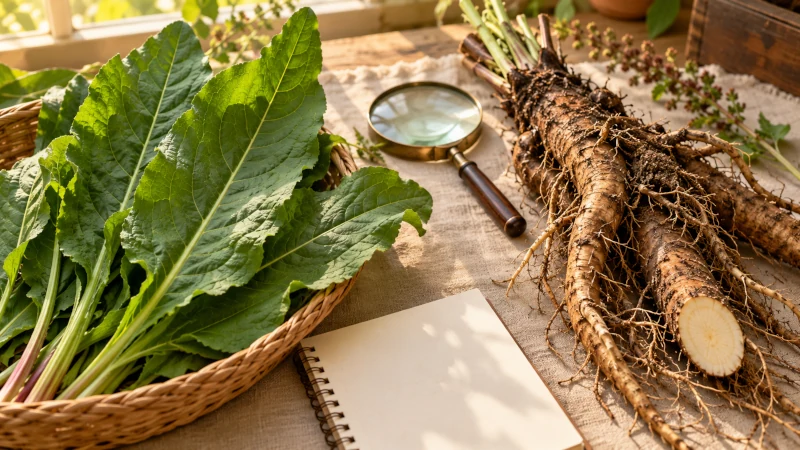
| Quick facts | |
| Botanical name | Rumex patientia L. (Polygonaceae) |
| Common names | Patience dock, garden patience, herb patience, spinach dock [Li et al., 2022] |
| Relatives | Garden sorrel (R. acetosa), curled or yellow dock (R. crispus); rhubarb is in the same family |
| Parts used | Leaves as a cooked or raw green; dried root in traditional herbal medicine |
| Main compounds | Root: anthraquinones (emodin, chrysophanol and related glycosides), naphthalene glycosides, tannins and catechins. Genus-wide: oxalic acid, which gives the sour taste [Li et al., 2022] |
One naming caution. “Sorrel,” “dock” and “patience” get swapped freely in older books and seed lists, and Rumex species can look alike. If you’re foraging rather than growing it from labeled seed, be sure of what you’ve picked.
Eating patience dock: the oxalate question
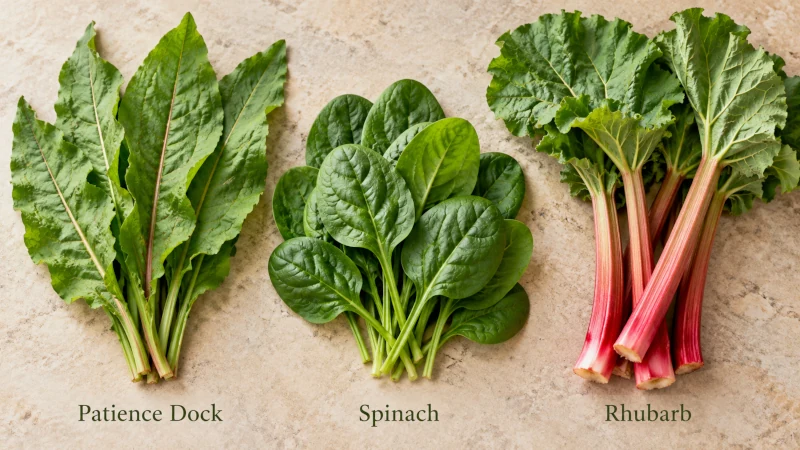
The leaves of more than a dozen Rumex species, patience dock included, are eaten fresh or cooked as vegetables in folk cooking [Li et al., 2022]. The same review notes the catch: Rumex plants are rich in oxalic acid, which is why they taste sour and why some regions regard them as hard to digest. A 2025 review of the genus flags oxalate accumulation as one of its main safety issues [Mohamed Gohar et al., 2025].
For most healthy people, a serving of cooked dock greens now and then isn’t a concern. Oxalate matters most in two situations.
If you form calcium oxalate kidney stones. The National Institute of Diabetes and Digestive and Kidney Diseases advises people with these stones that they may want to avoid high-oxalate foods such as rhubarb and spinach, and to get enough calcium from food, since calcium in the gut helps block oxalate [NIDDK, 2017]. Patience dock isn’t on NIDDK’s short list, but it is a sour member of the rhubarb family, so it’s sensible to treat it as high-oxalate until your doctor or dietitian says otherwise. Our guide to foods that raise kidney stone risk explains why stone type changes the advice.
If you eat or drink a lot at once. Absorbed oxalate binds calcium in the blood and can form calcium oxalate crystals in the kidney tubules, injuring them [Dassanayake & Gnanathasan, 2012]. That case report involved chemical oxalic acid, not a plant, but plant poisonings do happen: a 1989 letter in The Lancet described a fatal case of oxalic acid poisoning after eating sorrel soup [Farré et al., 1989]. Cases like that are rare. The lesson is about quantity, which is why a daily glass of raw dock-leaf juice — something a few herbal sources recommend — is a poor idea.
What about iron?
Patience dock is often described as iron-rich and “antianemic.” We couldn’t find a reliable nutrient analysis of Rumex patientia leaves to check that claim, so treat it as unproven. Even if the leaves do contain a fair amount, it would be nonheme iron, the plant form. The NIH Office of Dietary Supplements puts iron absorption at roughly 5–12% from vegetarian diets versus 14–18% from mixed diets, and notes that spinach — a green often praised for iron — absorbs poorly because of its own polyphenols [NIH ODS, 2025]. Dock leaves are high in tannins, a related group of compounds [Li et al., 2022].
So patience dock is not a treatment for anemia. If you’re working on your iron intake, lentils, beans, tofu and fortified grains eaten with a vitamin C source are better bets; see our lists of iron-rich foods and foods for healthy blood. And because low iron can come from blood loss or poor absorption, not just diet, persistent tiredness or paleness deserves a blood test before any home remedy [NIH ODS, 2025].
Patience dock benefits, graded by the evidence
| Claim | What supports it | Grade |
| Relieving constipation (root) | Root contains anthraquinones similar to rhubarb root [Li et al., 2022]; no human studies of patience dock | Traditional use, plausible mechanism — untested in people |
| Stopping bleeding; easing diarrhea (leaf) | Recorded traditional uses [Li et al., 2022] | Traditional only |
| Healing skin sores, eczema, ulcers | Genus-wide folk use for skin; root extracts antibacterial in a lab dish [Orbán-Gyapai et al., 2017] | Traditional + lab only |
| Reducing inflammation | One rat study of a root extract [Li et al., 2022] | Animal only |
| Antioxidant activity | Compounds isolated from the root, tested in the lab [Li et al., 2022] | Lab only |
| Treating anemia; “purifying” the blood | No supporting studies found | Unsupported |

Constipation: a plausible mechanism, no human trials
The root is the part with the laxative reputation; older European herbals describe it as a gentle, slow-acting laxative [Pamplona-Roger, 2000 — UNVERIFIED print source]. The chemistry makes that plausible. Quinones concentrate in Rumex roots, and anthraquinone glycosides — including emodin-type compounds — have been isolated from patience dock root specifically [Li et al., 2022]. That puts it in the same broad class as rhubarb root and senna.
Rhubarb root gives a useful benchmark. European regulators accept standardized rhubarb root products for short-term relief of occasional constipation, with a bowel movement typically 8–12 hours after a dose and use limited to one week [EMA, 2020]. Two differences matter. A homemade patience dock root tea has an unknown and variable anthraquinone content, and nobody has tested what dose is effective or safe. And the folk idea that it takes “weeks” to work doesn’t fit how this compound class behaves — while drinking it daily for weeks is exactly what regulators warn against, because prolonged stimulant-laxative use can impair bowel function and cause dependence [EMA, 2020].
For everyday constipation, the better-supported first steps are more fiber, more fluid and more physical activity, all of which NIDDK lists as common contributors when they’re lacking [NIDDK, 2018].
Skin sores, eczema and ulcers: tradition and test tubes
Dock and sorrel species have been used for centuries on skin complaints and to stop bleeding after injuries [Li et al., 2022]. In a lab screening of 14 Rumex species from the Carpathian Basin, extracts of patience dock root were among those that strongly inhibited bacteria growing on culture plates [Orbán-Gyapai et al., 2017; Li et al., 2022]. That’s a reason to study the plant, not evidence that a mashed-root poultice heals a wound. No safety or benefit testing exists for that use, and a sore or ulcer that isn’t healing needs a clinician’s look.
Inflammation and antioxidant effects: animal and lab only
In one rat study, a water extract of patience dock root at 150 mg/kg reduced paw swelling by 41.7%, compared with 36.6% for the anti-inflammatory drug indomethacin [Li et al., 2022]. Tannins isolated from the root also showed antioxidant activity in lab tests. Neither result has been tested in people. Both recent reviews of the genus conclude that standardized extracts, clinical trials and proper toxicity data are still missing [Li et al., 2022; Mohamed Gohar et al., 2025].
How patience dock is used — and what to skip
| Use | How it’s done | Our take |
| Cooked greens | Young spring leaves in soups, stews, pies or sautéed like spinach | Fine for most people as an occasional side dish |
| Raw leaves | A few young leaves in a salad | Small amounts; same oxalate caution |
| Root tea | Some herbal sources suggest about 30 g of dried root or leaves per liter, two or three cups a day | Not recommended: dose is untested and anthraquinone content unknown. Never as a long-term daily drink |
| Fresh leaf juice | A glass a day in some herbals | Skip — concentrates oxalate |
| Poultice | Mashed leaves or root on sores | Skip on broken skin; get wounds assessed |
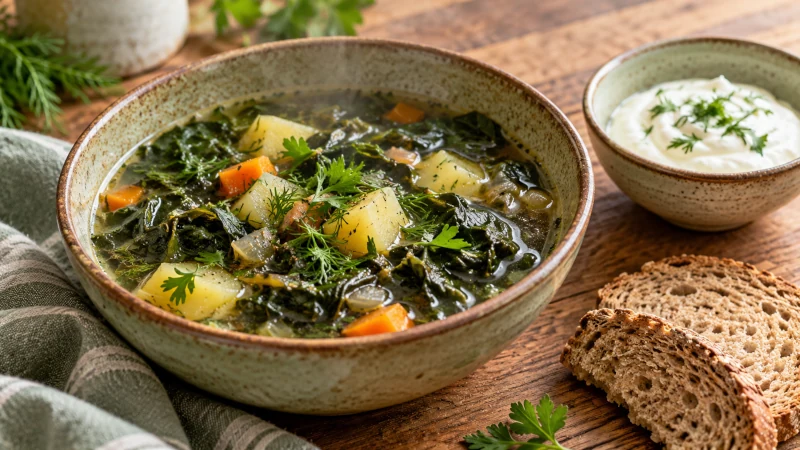
If you eat the greens, have them as part of a meal that includes some calcium — dairy, fortified plant milk or tofu — rather than on their own, in line with NIDDK’s advice to get calcium from food [NIDDK, 2017].
Safety, side effects, and who should avoid patience dock
There are no safety studies of patience dock in people. What follows draws on two better-documented sources: the oxalate content it shares with other docks, and the European safety monograph for rhubarb root, which contains the same class of anthraquinone laxatives. Applying the rhubarb data to patience dock is a reasonable precaution, not a measured finding.
Side effects
- Digestive upset. Anthraquinone laxatives can cause cramping, abdominal pain and loose stools, especially at higher doses or in people with irritable bowels [EMA, 2020].
- Allergic reactions such as itching or rash [EMA, 2020].
- With long-term use: water and electrolyte imbalance, protein or blood in the urine, and harmless darkening of the colon lining. Yellow or red-brown urine can also occur and is not dangerous [EMA, 2020].
- From large amounts of leaves or juice: oxalate-related kidney strain [Dassanayake & Gnanathasan, 2012].
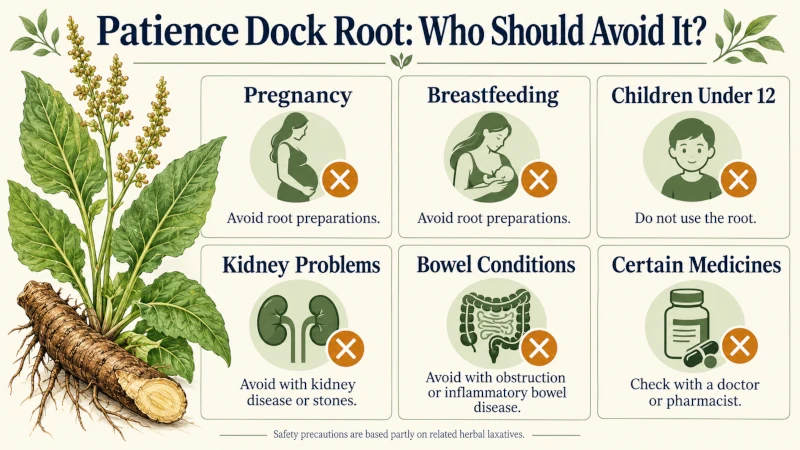
Who should not use the root (and who should go easy on the leaves)
- Pregnancy and breastfeeding. Rhubarb root is contraindicated in pregnancy because of lab data suggesting a genotoxic risk from anthraquinones such as emodin, and during breastfeeding because active metabolites pass into milk [EMA, 2020]. Patience dock root contains emodin-type compounds [Li et al., 2022], so avoid root preparations. There’s no data on the leaves as food in pregnancy; keep portions modest and ask your prenatal provider.
- Children under 12 — no root preparations [EMA, 2020].
- Kidney stones or kidney disease. High oxalate is the main concern [NIDDK, 2017], and the rhubarb monograph warns people with kidney disorders about electrolyte imbalance [EMA, 2020].
- Bowel conditions: intestinal blockage or narrowing, Crohn’s disease, ulcerative colitis, appendicitis, abdominal pain with no known cause, or severe dehydration [EMA, 2020].
- Anyone allergic to dock or sorrel.
Medication interactions
No interaction studies exist for patience dock. Stimulant laxatives as a class can lower potassium, and low potassium strengthens the effect of heart drugs such as digoxin and interacts with antiarrhythmics. Diuretics (“water pills”), corticosteroids and licorice root add to potassium loss. Europe’s rhubarb monograph tells anyone on these medicines, or on drugs that prolong the QT interval, to consult a doctor first [EMA, 2020]. The same caution makes sense here. If you take any regular medication, check with your pharmacist before using patience dock root.
When to see a doctor
See a doctor if constipation doesn’t improve with self-care or if you have a family history of colon or rectal cancer. Go right away if constipation comes with any of these [NIDDK, 2018]:
- bleeding from the rectum or blood in your stool
- constant belly pain, or being unable to pass gas
- vomiting or fever
- lower back pain
- losing weight without trying
Ongoing tiredness, weakness or pale skin calls for a blood test rather than a herbal remedy, since iron deficiency can signal blood loss or an absorption problem [NIH ODS, 2025].
If someone has eaten a large amount of dock leaves, juice or root and develops vomiting, belly pain or is passing much less urine than usual, call Poison Help at 1-800-222-1222 [HRSA] or emergency services. Those symptoms featured in the oxalic acid case report cited above [Dassanayake & Gnanathasan, 2012].
| HEALTH DISCLAIMER This article is general education, not medical advice, and it isn’t a substitute for diagnosis or treatment by a qualified clinician. Patience dock is a traditional food and herbal plant, not a proven treatment for any condition. Don’t use the root if you are pregnant or breastfeeding, for children under 12, or if you have kidney stones, kidney disease or a bowel condition. Talk with your doctor or pharmacist before using it if you take regular medication, especially heart medicines, diuretics or steroids. Constipation with bleeding, constant pain, vomiting or weight loss needs prompt medical care. |
Frequently Asked Questions
Is patience dock the same as sorrel?
They’re close relatives in the same genus, Rumex, but different species. Garden sorrel is Rumex acetosa; patience dock is Rumex patientia. Both get their sour taste from oxalic acid [Li et al., 2022].
Can you eat patience dock raw?
Yes — its leaves are eaten fresh or cooked in folk cooking [Li et al., 2022]. Keep raw portions small, as with other sour, oxalate-rich greens.
Does patience dock work as a laxative?
Possibly, because the root contains anthraquinones like those in rhubarb root [Li et al., 2022], but it hasn’t been tested in people and homemade teas have an unknown strength. Standardized rhubarb-type laxatives are limited to a week of use [EMA, 2020], and fiber, fluids and activity come first [NIDDK, 2018].
Is patience dock good for anemia?
There’s no evidence it treats anemia. Any iron in the leaves would be the less-absorbed plant form [NIH ODS, 2025]. Get tested to find the cause, and see our guide to foods for anemia.
Is patience dock safe during pregnancy?
Avoid the root. Related anthraquinone laxatives are contraindicated in pregnancy and breastfeeding [EMA, 2020]. For the leaves as food there’s no data, so keep amounts modest and check with your prenatal provider.
References
- Wang D, Zhang Y-J. The genus Rumex (Polygonaceae): an ethnobotanical, phytochemical and pharmacological review. Natural Products and Bioprospecting. View source
- Mohamed Gohar M, Ezzat SM, Yeskaliyeva B, et al. Rumex species: phytochemistry, pharmacology and nutritional potential for food and health applications. Food Science & Nutrition. View source
- Orbán-Gyapai O, Liktor-Busa E, Kúsz N, Stefkó D, Urbán E, Hohmann J, Vasas A. Antibacterial screening of Rumex species native to the Carpathian Basin and bioactivity-guided isolation of compounds from Rumex aquaticus. View source
- European Medicines Agency, HMPC. View source
- European Medicines Agency. Rhei radix — herbal medicinal product. View source
- National Institute of Diabetes and Digestive and Kidney Diseases. Eating, Diet, & Nutrition for Kidney Stones. View source
- National Institute of Diabetes and Digestive and Kidney Diseases. Symptoms & Causes of Constipation. View source
- NIH Office of Dietary Supplements. Iron — Fact Sheet for Health Professionals. View source
- Dassanayake U, Gnanathasan CA. Acute renal failure following oxalic acid poisoning: a case report. View source
- Farré M, Xirgu J, Salgado A, Peracaula R, Reig R, Sanz P. Fatal oxalic acid poisoning from sorrel soup. View source
- Health Resources and Services Administration. Poison Help line (1-800-222-1222). View source


