
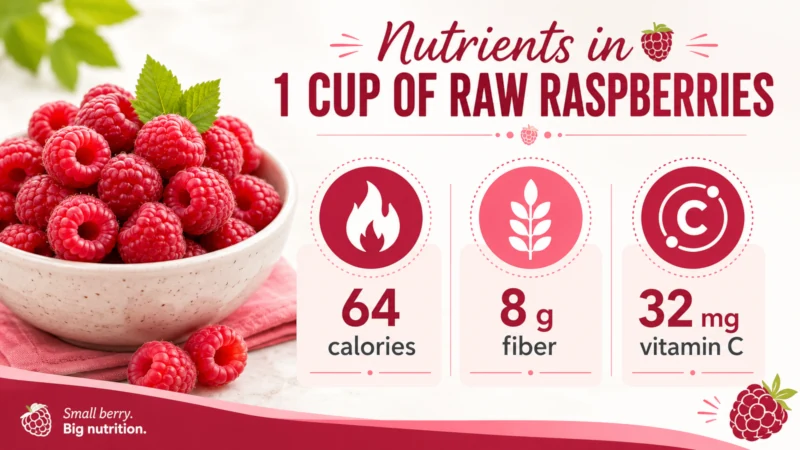
The raspberry health benefits that hold up under research are simpler — and more interesting — than the long lists you’ll find on supplement sites. A cup of raw raspberries gives you about 8 grams of fiber, roughly a third of the day’s vitamin C, and a heavy dose of plant compounds called polyphenols [USDA FoodData Central].
That nutrient profile is where most of the credible claims come from. Older herbal traditions credited the fruit and its leaves with treating everything from fevers to difficult labor. A few of those uses have been tested in people. Most haven’t. Here’s what the evidence supports, what’s still uncertain, and the safety points worth knowing before you reach for raspberry leaf tea or a raspberry ketone pill.
A Quick Look at What’s in Raspberries
Raspberries (Rubus idaeus) are low in calories and unusually high in fiber for their size. One cup — 123 grams of raw red raspberries — contains, in round numbers [USDA FoodData Central]:
| Nutrient | Per 1 cup (123 g) | % Daily Value |
| Calories | 64 kcal | — |
| Fiber | 8 g | ~29% |
| Vitamin C | 32 mg | ~35% |
| Manganese | 0.8 mg | ~35% |
| Folate | 26 mcg | ~7% |
| Vitamin K | 9.6 mcg | ~8% |
| Natural sugar | 5 g | — |
| Fat | 0.8 g | — |
% DV is calculated against FDA 2,000-kcal Daily Values; figures are rounded. Values corroborated by USDA SNAP-Ed.
Beyond the macronutrients, raspberries carry a distinctive mix of polyphenols — mainly anthocyanins (the red pigment), ellagitannins, and ellagic acid. These are the compounds that keep raspberries showing up in research on antioxidant activity, inflammation, and heart and metabolic health [Burton-Freeman et al., 2016].
Health Benefits With Real Research Behind Them
Fiber for digestion and steadier blood sugar
Eight grams of fiber from a single cup is a real amount. The FDA sets the Daily Value for fiber at 28 grams, and most Americans never reach it — the agency lists fiber as a “dietary component of public health concern” precisely because so few people get enough [FDA, 2021]. Soluble fiber feeds gut bacteria and helps regulate stool consistency; insoluble fiber adds bulk and keeps things moving. Raspberries supply both. Pairing them with other high-fiber foods that ease constipation is one practical way to close the daily gap.
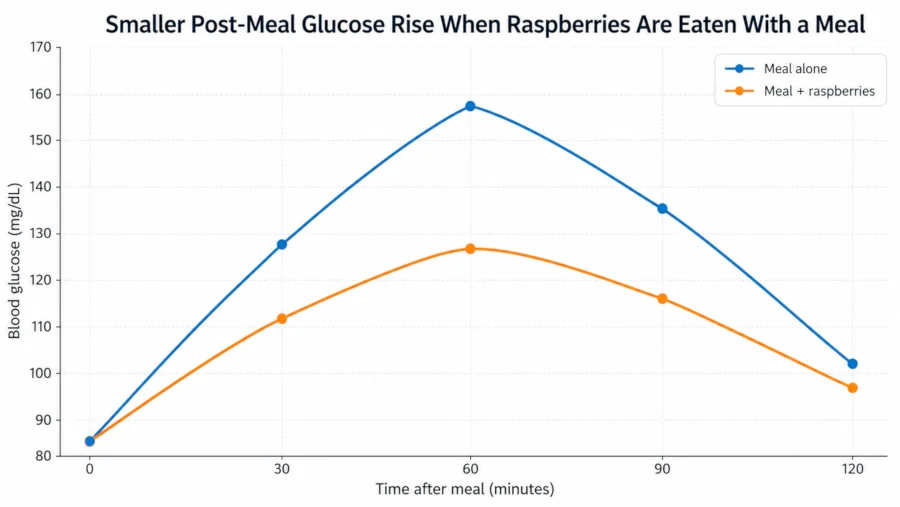
Fiber also blunts the rise in blood sugar after a meal. In a randomized crossover trial in adults with type 2 diabetes, eating raspberries with a higher-fat breakfast lowered blood glucose two and four hours later and reduced two inflammatory markers, IL-6 and TNF-α, compared with the same meal without berries [Schell et al., 2019]. A 2024 systematic review and meta-analysis of randomized trials put this in perspective: pooled across studies, raspberry intake produced no meaningful change in fasting glucose, HbA1c, or insulin resistance, and its effects on inflammatory markers were small and inconsistent [Jazinaki et al., 2024]. Raspberries aren’t a treatment for diabetes. They are a sensible fruit for anyone keeping an eye on post-meal glucose.
For people managing their weight, the mix of low calorie density, high fiber, and natural sweetness is genuinely useful. Fiber-rich fruits turn up again and again among foods that support weight management.
A useful dose of vitamin C
One cup delivers about 32 mg of vitamin C — roughly a third of the Daily Value [USDA FoodData Central]. Your body needs vitamin C to build collagen, run immune cells, and absorb plant-based (non-heme) iron. The case for getting vitamin C from whole food is settled; the case for high-dose supplements is much weaker. A handful of berries with breakfast is a reliable top-up.
Polyphenols, inflammation, and heart-metabolic markers
The most interesting raspberry research is about its polyphenols. Ellagitannins, ellagic acid, and anthocyanins have been studied for effects on blood-vessel function, oxidative stress, and inflammation. A review in Advances in Nutrition concluded that current evidence supports a plausible role for red raspberries in nudging risk factors for cardiovascular disease, type 2 diabetes, and obesity — while stressing that most human trials are small and short [Burton-Freeman et al., 2016].
The 2024 meta-analysis is a useful reality check: across pooled trials, raspberries did not reliably shift fasting glucose, HbA1c, or most inflammatory markers [Jazinaki et al., 2024]. The honest summary is that whole raspberries seem to move a few metabolic and inflammatory markers in a favorable direction. Calling them a treatment for any disease goes well past what’s been shown.
Berries also feature in most lists of foods discussed for liver health, largely because of their polyphenols — though direct human trials on raspberries and liver outcomes are still thin.
An early signal for brain and memory
A 2026 crossover trial in the British Journal of Nutrition followed 36 adults aged 55 to 70 who were overweight or had obesity, testing whether adding 25 grams of freeze-dried red raspberry powder to a high-carbohydrate, moderate-fat meal changed their metabolic and cognitive response. Compared with the control meal, the raspberry meal lowered post-meal glucose and insulin and improved performance on memory and learning tasks within hours [Xiao et al., 2026]. Two caveats matter: it was a single acute meal in a small group, and the study was funded by the National Processed Raspberry Council and the Washington Red Raspberry Commission. Promising, not conclusive.
Raspberry Leaf Tea Is Not the Same as the Fruit
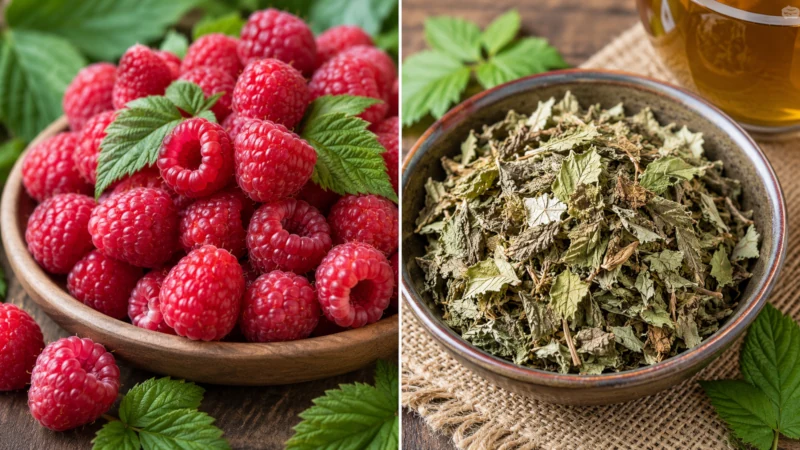
Raspberry leaf is the dried leaf of the same plant, brewed as a tea or sold in capsules. It’s high in tannins, which give it an astringent, tea-like taste, and it has a long history in traditional women’s health. It shares almost none of the fruit’s nutrition, and its evidence base is separate.
What pregnancy research actually shows
A systematic integrative review in BMC Complementary Medicine and Therapies pooled 13 studies — laboratory tissue, animal experiments, and six human studies — on raspberry leaf in pregnancy. Lab and animal work shows the leaf can act on uterine smooth muscle, and very high intravenous doses were toxic in animal models, but the human studies have not consistently shown either benefit or harm. One trial reported a modest reduction in the second stage of labor and a lower forceps rate; others found no difference in length of labor, blood loss, or Apgar scores [Bowman et al., 2021].
The fair reading: at the doses studied, raspberry leaf has not been shown to clearly shorten labor, prevent intervention, or improve outcomes for mother or baby, and it has not been shown to cause harm in the small human studies done so far. Guidance still varies — some clinical references advise avoiding it in pregnancy altogether, and many clinicians specifically caution against it in the first trimester [Healthline, 2025]. Anyone considering it should talk with their midwife or OB first.
Other traditional uses
Raspberry leaf is also promoted for menstrual cramps, PMS, diarrhea, and sore throats. Its tannins plausibly explain the astringent effect on the throat and gut, and it’s sometimes blended with herbs like peppermint for mild digestive complaints. Beyond traditional use and a handful of case reports, controlled human trials are scarce. The German Commission E monograph — a respected reference on herbal medicines — concluded there is insufficient evidence to recommend red raspberry leaf as a medicinal product [PeaceHealth]. That isn’t proof of no effect; it means the studies needed to say so haven’t been done.
A Closer Look at the Garden Raspberry Plant
The garden raspberry is a thorny perennial in the rose family (Rosaceae). It grows one to two meters high, prefers cool temperate climates, and is native to Europe and northern Asia. It produces small white-green flowers in spring and the familiar summer fruit — actually a cluster of tiny drupelets, each with its own seed. North American gardens usually grow Rubus idaeus or the closely related Rubus strigosus, and herbalists use three parts of the plant: the ripe fruit, the dried leaves, and occasionally the flowers. Wild raspberries have a nutrient and polyphenol profile much like cultivated ones, though cultivated berries tend to be larger and sweeter.
At a glance:
- Scientific name: Rubus idaeus L.
- Other names: red raspberry, European red raspberry
- Family: Rosaceae
- French: framboisier · Spanish: frambueso
- Parts used: ripe fruit, dried leaves, flowers
Practical Ways to Eat More Raspberries
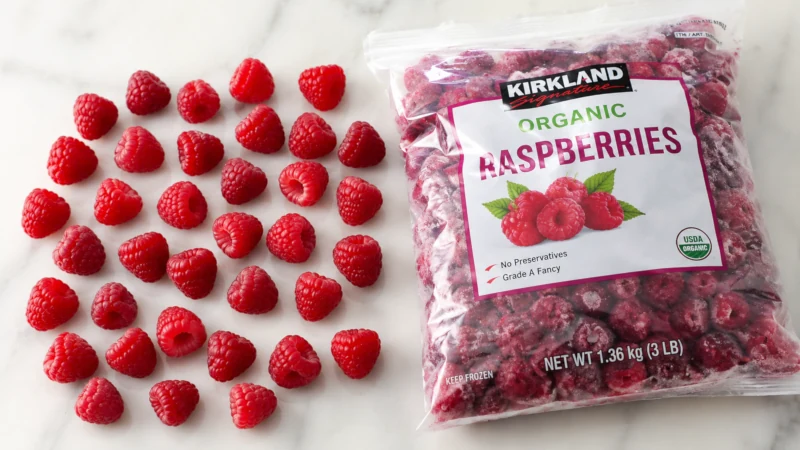
Fresh raspberries are fragile. They keep one to two days in the refrigerator, ideally stored unwashed in a single layer and rinsed only just before eating [USDA SNAP-Ed]. Frozen raspberries hold onto most of their fiber, vitamin C, and polyphenols and are usually cheaper and easier to find year-round. Freeze-drying preserves the polyphenols well, and the powder blends into smoothies and yogurt.
Quick uses: stir frozen raspberries into oatmeal as it cooks, layer them into a yogurt parfait with seeds and nuts, fold them into pancake batter, or muddle them into sparkling water with a slice of lime. Raspberries are among the lower-sugar fruits, which is why they fit so easily into lower-glycemic eating [Medical News Today, 2019]. They also pair well with other berries — red currants make a tart stand-in when raspberries are out of season.
Safety, Side Effects, and Who Should Be Careful
Whole raspberries are safe for most people. The things worth knowing cluster in a few specific situations.
Allergies and oral allergy syndrome
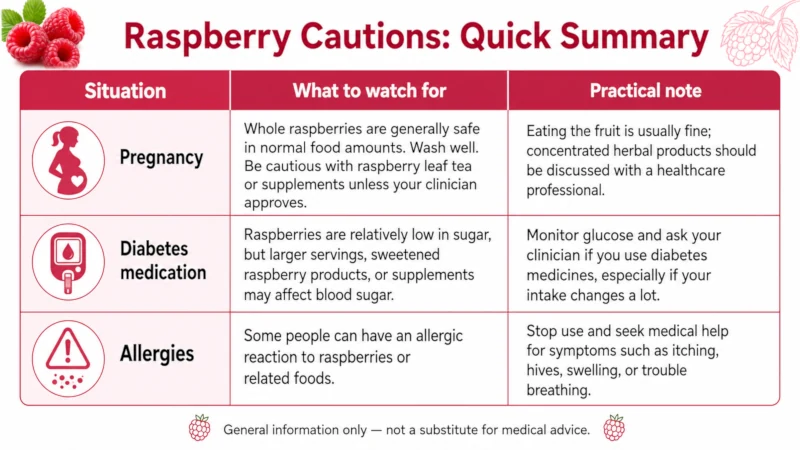
Raspberry allergy is uncommon but real. People with birch pollen allergy sometimes get oral allergy syndrome — tingling, itching, or mild swelling of the mouth and throat — after eating raw raspberries, because some pollen proteins cross-react with fruit proteins. Cooking usually breaks down the offending protein and resolves the reaction. A true systemic raspberry allergy (hives, throat swelling, trouble breathing) is rare and needs medical evaluation.
Raspberry leaf in pregnancy
Because lab evidence shows raspberry leaf can act on uterine smooth muscle, cautious guidance is to avoid it in the first trimester and to discuss any later use with a midwife or obstetrician — and some references advise avoiding it in pregnancy altogether, even though human studies have not shown clear harm at typical tea doses [Bowman et al., 2021]. People who take medications that lower blood sugar, or who have a hormone-sensitive condition, should check with a clinician before using raspberry leaf as a supplement, since the data in these situations are limited [Drugs.com, 2025].
Raspberry ketone supplements
Raspberry ketone is the aromatic compound behind the fruit’s scent, sold as a weight-loss supplement at doses far beyond anything you’d get from food. The human evidence for weight loss is weak: the few trials that exist combined raspberry ketone with caffeine, capsaicin, or other ingredients, so any effect can’t be pinned on the ketone itself, and animal studies used doses that don’t translate safely to people [Medical News Today, 2019]. There’s no good reason to expect a raspberry ketone pill to produce meaningful weight loss, and the long-term safety of high-dose supplementation hasn’t been established.
Medication considerations
Raspberry as food is unlikely to interact with medications. Raspberry leaf taken regularly as a supplement may modestly lower blood sugar and could, in theory, add to the effect of glucose-lowering drugs, so anyone on insulin, sulfonylureas, or other diabetes medication should mention it to their clinician [Drugs.com, 2025]. Whole fruit in normal amounts doesn’t raise these concerns.
When to see a doctor
Some symptoms call for a medical evaluation rather than a dietary tweak. New, persistent, or bloody changes in bowel habits; unexplained weight loss; severe abdominal pain; or signs of an allergic reaction (hives, swelling of the face or throat, trouble breathing) all need a healthcare provider. The same goes for anyone considering raspberry leaf in pregnancy, anyone with a chronic condition, and anyone on prescription medication. Berries also appear on lists of foods for a healthy bladder and kidneys, but specific urinary symptoms need a proper workup, not a food fix.
| Health Disclaimer: This article is for education and is not a substitute for medical advice, diagnosis, or treatment. The research summarized here is general and does not account for your individual health situation. If you are pregnant or breastfeeding, have a chronic medical condition, take prescription medication, or are considering raspberry leaf or any herbal supplement, talk with your physician, midwife, pharmacist, or a registered dietitian before starting. Stop using any food, herb, or supplement that causes an unusual reaction, and contact a clinician if symptoms are serious or persistent. |
Frequently Asked Questions
How many raspberries should I eat a day?
There’s no official target specific to raspberries. A practical amount is one to two cups a day, which gives you roughly 8 to 16 grams of fiber and most of the day’s vitamin C from this fruit alone. Larger amounts aren’t harmful for healthy adults, but increase gradually to avoid gas or loose stools.
Are frozen raspberries as healthy as fresh?
In nearly every measurable way, yes. Frozen berries are picked ripe and frozen quickly, which preserves fiber, vitamin C, and most polyphenols. They’re usually cheaper, easier to portion, and available year-round. Vitamin C drops slightly over long freezer storage, but the difference is small.
Can raspberries help with weight loss?
Swapping whole raspberries in for higher-calorie snacks can help with calorie balance, partly thanks to their fiber and water content. The fruit itself doesn’t burn fat, and raspberry ketone supplements have not been shown to produce meaningful weight loss in human trials.
Is raspberry leaf tea safe in early pregnancy?
Most clinicians advise against it in the first trimester, and some references suggest avoiding raspberry leaf throughout pregnancy. Human studies haven’t shown clear harm at moderate tea doses later on, but lab studies show the leaf can act on uterine smooth muscle and the overall evidence base is small [Bowman et al., 2021]. Discuss any use with your midwife or OB.
Do raspberries affect blood sugar?
Less than many other fruits. Their fiber slows glucose absorption, and a randomized trial in adults with type 2 diabetes found that eating raspberries with a higher-fat meal lowered the post-meal glucose response [Schell et al., 2019]. A 2024 meta-analysis found no consistent change in fasting glucose, HbA1c, or insulin resistance from raspberry intake [Jazinaki et al., 2024].
Can I eat the leaves like the berries?
Raspberry leaves aren’t eaten as food. They’re dried and brewed as tea, where their tannins give an astringent, slightly grassy taste. Fresh leaves are bitter and not a culinary ingredient.
References
- U.S. Department of Agriculture, Agricultural Research Service. FoodData Central: Raspberries, raw (SR Legacy, FDC ID 167755). → View source
- U.S. Department of Agriculture, SNAP-Ed Connection. Seasonal Produce Guide: Raspberries. → View source
- Burton-Freeman BM, Sandhu AK, Edirisinghe I. Red Raspberries and Their Bioactive Polyphenols: Cardiometabolic and Neuronal Health Links. Advances in Nutrition. 2016;7(1):44–65. doi:10.3945/an.115.009639. (PMC4717884) → View source
- Jazinaki MS, Nosrati M, Chambari M, Jamialahmadi T, Sahebkar A. The Effects of Raspberry Consumption on Glycemic Control and Inflammation Markers in Adults: A Systematic Review and Meta-Analysis of Randomized Controlled Trials. Current Developments in Nutrition. 2024;8(6):102161. doi:10.1016/j.cdnut.2024.102161. → View source
- Schell J, Betts NM, Lyons TJ, Basu A. Raspberries Improve Postprandial Glucose and Acute and Chronic Inflammation in Adults with Type 2 Diabetes. Annals of Nutrition and Metabolism. 2019;74(2):165–174. doi:10.1159/000497226. (PMID 30763939) → View source
- Xiao D, Shukitt-Hale B, et al. Red raspberry improves postprandial metabolic indices and cognitive function in older adults who are overweight or have obesity. British Journal of Nutrition. 2026. doi:10.1017/S0007114525105497. → View source
- U.S. Food and Drug Administration. Interactive Nutrition Facts Label: Dietary Fiber. October 2021. → View source
- Bowman R, Taylor J, Muggleton S, Davis D. Biophysical effects, safety and efficacy of raspberry leaf use in pregnancy: a systematic integrative review. BMC Complementary Medicine and Therapies. 2021;21:56. doi:10.1186/s12906-021-03230-4. (PMC7871383; PMID 33563275) → View source
- Drugs.com. Raspberry (Rubus idaeus): uses, side effects, and dosage. Reviewed August 2025. → View source
- PeaceHealth Health Information Library. Red Raspberry monograph (citing the German Commission E). → View source
- Healthline (Goodson A; medically reviewed). Red Raspberry Leaf Tea: Potential Health Benefits and Precautions. Updated 2025. → View source
- Ware M, RDN, LD. Raspberries: Health benefits, nutrition, tips, and risks. Medical News Today. Updated October 2019. → View source
