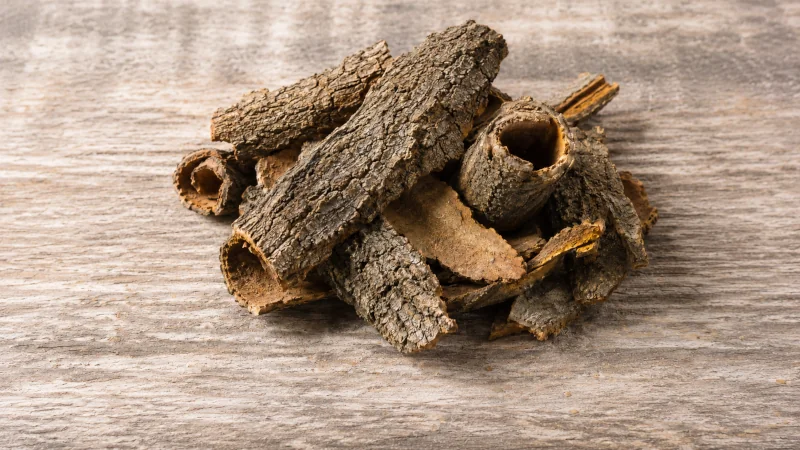
Oak bark benefits are mostly tied to one chemistry trick: the bark of Quercus species (oak trees) is packed with tannins, and tannins are powerful astringents that bind to proteins on the surface of skin and mucous membranes. That binding is the entire basis for oak bark’s traditional medical role. The European Medicines Agency lists three traditional uses backed by long-standing experience — short-term treatment of mild diarrhea, minor inflammation of the mouth or skin, and itching and burning around hemorrhoids — and notes that none of these is supported by modern controlled clinical trials [EMA HMPC, 2010].
What is oak bark?
Oak bark is the dried bark, harvested in spring from young branches, of three closely related European species recognized in the European Pharmacopoeia: Quercus robur (English oak), Quercus petraea (sessile oak), and Quercus pubescens (downy oak) [EMA HMPC, 2010]. In American herbalism, white oak (Quercus alba) is used the same way and contains a similar tannin profile, with somewhat lower ellagitannin levels and higher gallic acid [Herbal Reality, 2024].
By European Pharmacopoeia standards the bark must contain at least 3% tannins; fresh young bark commonly contains 8–20% by weight depending on harvest timing [EMA Assessment, 2010]. The active fraction is dominated by hydrolysable tannins — chiefly ellagitannins like vescalagin and castalagin, along with gallic acid, ellagic acid, and condensed proanthocyanidins [Mossa et al., 2022]. These polyphenols are what give a raw acorn or strong oak bark tea its puckering, drying mouthfeel — and what carry whatever medicinal effect oak bark has.
Oak bark benefits at a glance
Five quick takeaways on what the evidence does and does not show:
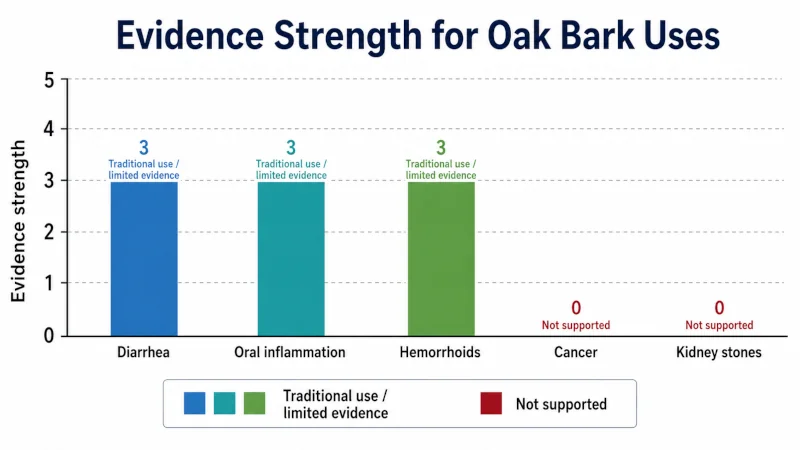
| Use | Route | Evidence level | Max duration |
| Mild, short-term diarrhea | Oral tea or extract | Traditional use | 3 days |
| Minor oral or skin inflammation | Rinse, gargle, compress | Traditional use | 1 week |
| Hemorrhoid itching and burning | Sitz bath / topical | Traditional use | 1 week |
| Antibacterial / antioxidant activity | Topical / in vitro | Lab studies only | n/a |
| Cancer, kidney stones, snake bite, etc. | Various | Not supported | Not advised |
“Traditional use” is the European Medicines Agency’s lowest evidence tier. It means a substance has been used the same way for at least 30 years (15 within the EU) without obvious harm — not that controlled trials confirm the effect [EMA Assessment, 2010]. Independent reviewers note that double-blind, placebo-controlled trials of oak bark for any of its named indications have not been performed [EBSCO Research Starters].
Three traditional uses backed by the European Medicines Agency
All three indications below are listed in the EMA’s 2010 herbal monograph on Quercus cortex. The wording matters — the agency calls them symptomatic treatments, meaning short-term relief of a defined problem, not a cure.
1. Short-term oral use for mild diarrhea
The EMA approves oak bark for “symptomatic treatment of mild diarrhoea” in adults [EMA HMPC, 2010]. The mechanism: ellagitannins appear to inhibit intestinal secretion and bind to surface proteins of the inflamed gut lining, forming a thin protective coat [PeaceHealth / Healthwise]. The monograph’s dosing is precise — 3 g of cut bark steeped in 250 mL of water three times daily; or 1 g powdered bark in capsules three times daily; or 140 mg of a 5:1 dry extract four times daily — and the strict caveat is do not use for more than 3 days. Recurrent or bloody diarrhea is a reason to stop and see a doctor.
For most cases of acute diarrhea, oral rehydration with electrolyte solution is the priority. Oak bark is not an alternative to fluids. Some patients also find specific foods that help with diarrhea (bananas, applesauce, plain rice, toast) easier to tolerate alongside rehydration than a tea.
2. Minor inflammation of the oral mucosa or skin
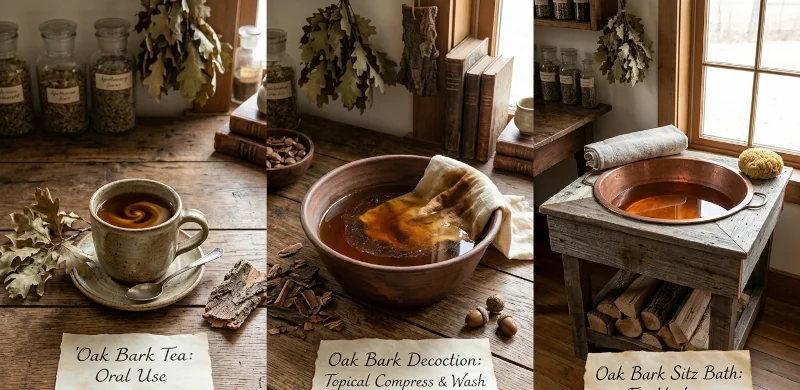
For sore mouth, mild gum inflammation, canker sores, or low-grade skin irritation, the EMA monograph specifies a stronger 20 g per liter decoction used as a mouthwash, gargle, or topical compress several times daily, for no longer than a week [EMA HMPC, 2010]. For bath use, the dose drops to 5 g of comminuted bark per liter, with a 20-minute soak. Bath use is contraindicated over open wounds, large skin or mucosal injuries, or active infection.
The same astringent action led Germany’s Commission E to approve oak bark externally for inflammatory skin diseases, though Commission E rulings rest on traditional use rather than modern trials [PeaceHealth / Healthwise]. If you are exploring this for chronic skin issues, evidence-based options for herbs for eczema covers other plants more rigorously studied for the skin. For oral cavity uses, the broader review of herbs for teeth and gums puts oak bark in context next to tannin-rich alternatives like rhatany and tormentil.
3. Itching and burning around hemorrhoids
The third EMA-approved use is “symptomatic relief of itching and burning associated with haemorrhoids” — applied as a sitz bath or topical decoction, again for no more than 1 week, and only after a doctor has ruled out more serious causes of rectal bleeding [EMA HMPC, 2010]. If bleeding starts or worsens during use, the EMA is explicit: stop and consult a doctor. For other plant options used in this area, see herbs for the rectum and anus.
How tannins do their work
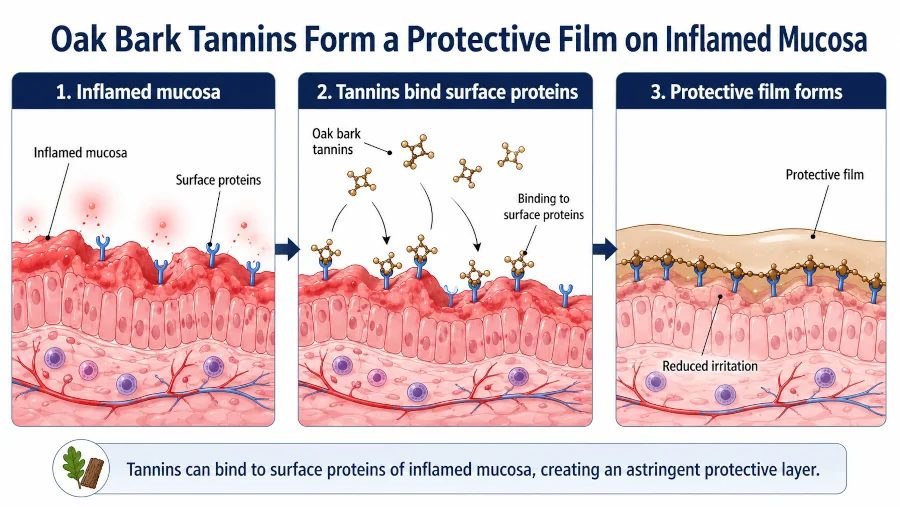
Tannins are large polyphenolic molecules — molecular weights between 500 and over 3,000 Daltons — that bind tightly to proteins and precipitate them. On inflamed mucosa, this binding pulls fluid out, tightens the surface, and forms a thin protective film over irritated tissue [Mossa et al., 2022]. That is the same chemistry that turns animal hide into leather, just stopped well short of full tanning.
A 2022 in-vitro study showed oak bark extract has antibacterial activity against several pathogens, and the authors attribute much of this to its polyphenolic tannins [Mossa et al., 2022]. The same compounds show antioxidant and anti-inflammatory effects in laboratory assays. Useful background, but a petri dish is not a person — none of this has been confirmed in a human clinical trial. Other tannin-rich plants like uva ursi share the same astringent chemistry and run into the same evidence ceiling.
How to use oak bark traditionally
The EMA monograph specifies five preparation routes. None requires more than dried bark, water, and a strainer. Doses are for adults.
| Preparation | How to make it | How often | Max duration |
| Tea (cut bark) — diarrhea | 3 g bark in 250 mL boiling water; strain after 10 min | 3× daily | 3 days |
| Powdered bark (capsules) | 1 g powdered bark in a capsule with water | 3× daily | 3 days |
| Dry extract (DER 5–6.5:1) | 140 mg as supplied | 4× daily | 3 days |
| Decoction — mouth or skin | 20 g bark per 1 L water; simmer 15 min; cool; use as rinse, gargle, or compress | Several times daily | 1 week |
| Sitz or full bath | 5 g bark per 1 L water added to bath; 20 min soak | 1× daily | 1 week |
A note on what is not on this list: nasal plugs, eye baths, and vaginal irrigations all appear in older herbal texts, but none is part of the current monograph. Oak bark on the eye or inside the vagina is not advisable without medical supervision.
Other uses you’ll see online — and what the evidence actually shows
Older herbal sources list oak bark for kidney stones, gallstones, prolapsed uterus, herpes, leukorrhea, “bladder weakness,” snake bites, bee stings, and even cancer. None of these is supported by modern clinical evidence. Independent reviewers are blunt: “no meaningful scientific evidence exists that oak bark offers therapeutic benefits in these or other conditions” [EBSCO Research Starters]. A few specific cautions worth naming:
- Snake bites and bee stings: Apply standard first aid and seek medical care. Topical herbs do not neutralize venom.
- Cancer: No oak bark preparation has been tested for cancer in controlled human trials. Do not use any herb as a substitute for oncology care.
- Kidney and gall stones: No human evidence that oak bark dissolves stones. The heavy tannin load may actually reduce mineral absorption.
- Vaginal infections, prolapsed uterus, herpes: These need medical evaluation, not folk remedies.
A trademarked French wood extract called Robuvit — made from Quercus robur wood, not bark — has been studied in small trials for fatigue and oxidative stress [Darwin Nutrition, 2025]. Whatever those trials show does not translate to homemade oak bark tea; the preparation, dose, and chemistry are different.
White oak vs. English oak
American herbalism leans on white oak (Quercus alba); European tradition centers on English oak (Q. robur). The two share most of the same tannins and astringent action. Q. alba contains relatively less ellagitannin and more gallic acid than Q. robur, but the clinical effect is similar [Herbal Reality, 2024]. The European Pharmacopoeia treats them as substantially interchangeable when standardized to tannin content [EMA Assessment, 2010].
Side effects and safety
Reported adverse effects are uncommon and usually mild. The EMA notes that allergic reactions have been reported, frequency unknown; people with known allergy to Fagaceae plants (oaks, beeches, chestnuts) should not use oak bark [EMA HMPC, 2010]. Constipation and upset stomach have been reported with the oral tea [PeaceHealth / Healthwise].
Important safety points:
- Do not exceed the monograph’s duration limits — 3 days oral, 1 week topical.
- Do not use oak bark baths over open wounds, broken skin, large mucosal injuries, or active skin infection.
- Hot baths are not appropriate during fever, infection, heart failure, or uncontrolled high blood pressure.
- Stop and consult a doctor if diarrhea continues or contains blood, or if rectal bleeding develops during hemorrhoid treatment.
Who should not use oak bark
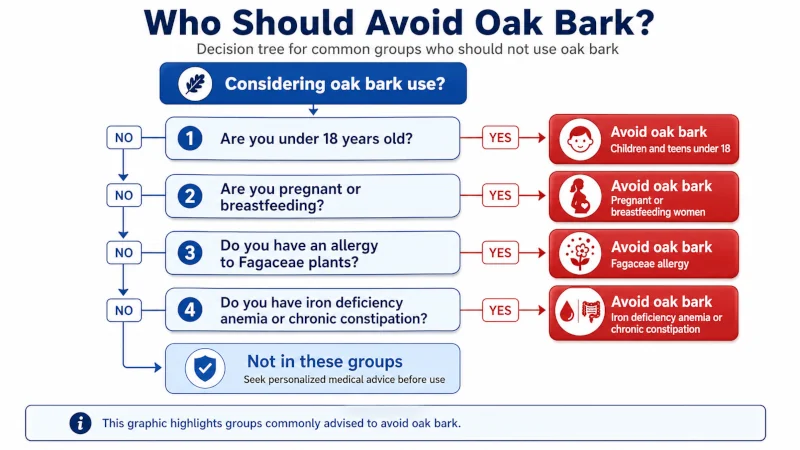
The EMA recommends against oak bark in:
- Children and adolescents under 18 — not enough safety data.
- Pregnancy and breastfeeding — safety has not been established.
- People with known hypersensitivity to oak or related Fagaceae plants.
And — based on the heavy tannin load — people with iron-deficiency anemia or chronic constipation should also avoid it, because tannins can worsen both [Herbal Reality, 2024].
Medication interactions
Tannins bind to many compounds in the gut, which can slow or reduce absorption. The EMA’s specific instruction is to take oak bark one hour or more before or after any other medication [EMA HMPC, 2010]. Documented effects include reduced absorption of ephedrine and pseudoephedrine, both common in cold and allergy products [PeaceHealth / Healthwise]. Iron supplements, certain antibiotics, and some alkaloid-based drugs may also be affected.
If you take prescription medication or daily supplements, ask a pharmacist before adding oak bark.
When to see a doctor
See a clinician promptly if:
- Diarrhea lasts more than a few days, contains blood or mucus, or is paired with high fever.
- A child or older adult shows signs of dehydration.
- Rectal bleeding occurs that has not been investigated.
- Mouth sores or skin lesions do not improve within a week, or get worse.
- Hives, swelling, or trouble breathing develop after using an oak bark preparation.
| Health Disclaimer: This article is for general educational and informational purposes. It is not medical advice and does not replace evaluation, diagnosis, or treatment by a qualified healthcare professional. If you are pregnant, breastfeeding, taking medication, or living with a chronic condition, talk to your doctor or pharmacist before using oak bark or any herbal preparation. Stop use and seek medical care if symptoms worsen or unusual reactions occur. |
Frequently Asked Questions
Is oak bark safe for long-term use?
No. The European Medicines Agency limits oral use to 3 days and topical use to 1 week. Longer use has not been studied, and the heavy tannin load can interfere with iron absorption and aggravate constipation [EMA HMPC, 2010].
Can children use oak bark for diarrhea?
The EMA does not recommend oak bark for anyone under 18 because of inadequate safety data. Childhood diarrhea is treated first with oral rehydration solution; talk to a pediatrician before using any herb [EMA HMPC, 2010].
Is white oak bark better than English oak bark?
Both contain the same tannin chemistry and act as astringents. Quercus robur tends to be higher in ellagitannins, Q. alba higher in gallic acid, but the practical effect for traditional uses is similar.
Can oak bark help with anxiety, energy, or chronic fatigue?
There is no good evidence that oak bark itself does. A patented oak wood extract called Robuvit has been studied in small trials for fatigue, but it is a different preparation from oak bark, and the trials are small [Darwin Nutrition, 2025].
Will oak bark interfere with my prescription medication?
It can. Tannins bind to many drugs in the gut and can reduce their absorption. The EMA advises taking oak bark at least one hour before or after any other medication, and checking with a pharmacist first [EMA HMPC, 2010].
Is “tannic acid” the same as oak bark?
Not exactly. Tannic acid is a refined hydrolysable tannin once extracted commercially from oak galls. It is more concentrated than whole oak bark and is no longer commonly used internally because of liver toxicity at high doses.
References
- European Medicines Agency, Committee on Herbal Medicinal Products (HMPC). Community herbal monograph on Quercus robur L., Quercus petraea (Matt.) Liebl., Quercus pubescens Willd., cortex. EMA/HMPC/3203/2009. Adopted 25 November 2010. → View source
- European Medicines Agency, HMPC. Assessment report on Quercus robur L., Quercus petraea (Matt.) Liebl., Quercus pubescens Willd., cortex. EMA/HMPC/3206/2009. Final, 2010. → View source
- PeaceHealth Health Information Library. Oak (Quercus spp.). TraceGains / Healthwise content. Last reviewed 24 May 2015. → View source
- Mossa AT, Refaie AA, Ramadan A, Bouajila J. Antibacterial effects of oak bark (Quercus robur) and heather herb (Calluna vulgaris L.) extracts against the causative bacteria of bovine mastitis. PMC9631361, 2022. → View source
- EBSCO Research Starters. Oak bark’s therapeutic uses. Accessed 2026. → View source
- Herbal Reality. Oak (Quercus robur): Benefits, Safety, Uses, Research. Updated 2026. → View source
- Darwin Nutrition. Oak: benefits, dosage, contraindications. Reviewed November 2025. → View source
