
The mache lettuce health benefits worth caring about come down to one thing: nutrient density. For a green that is mostly water and barely 21 calories per 100 grams, mache carries a genuinely useful amount of vitamin C, provitamin A, and plant-based iron [USDA FoodData Central]. That is the honest headline. Mache will not cure or treat any disease, but as a raw salad leaf it earns its spot on the plate — and it happens to pair its iron with the vitamin C that helps your body absorb it.
What mache lettuce actually is
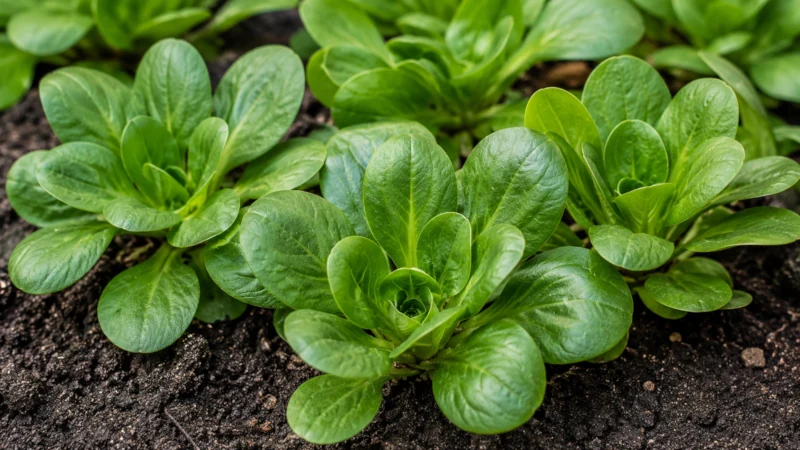
Mache (Valerianella locusta) is a small, cold-hardy leaf that grows in low rosettes and tastes mild and faintly nutty. You will also see it sold as lamb’s lettuce or corn salad; the French call it mâche and Germans Feldsalat. It grew wild around the Mediterranean before spreading across Europe and North America, and it is prized in Central European kitchens precisely because it stays tender and harvestable through cold months when little else is growing.
One quirk worth clearing up: mache belongs to the same botanical family as valerian, the herb known for its sedative effect. That relationship is real, but it is a matter of taxonomy, not pharmacology. Mache does not contain valerian’s sleep-promoting compounds in any meaningful amount, so a bowl of it will feed you well — it will not calm your nerves or help you sleep.
Mache lettuce nutrition at a glance
The figures below are for 100 grams of raw mache — a generous couple of handfuls. Because the leaf is so light, a normal salad portion weighs less than this, so treat the numbers as the density of what you are eating rather than a typical serving [USDA FoodData Central]).
| Nutrient | Per 100 g (raw) | % Daily Value |
| Calories | 21 kcal | — |
| Water | ~93% | — |
| Protein | 2.0 g | — |
| Vitamin C | 38.2 mg | ~42% |
| Vitamin A (provitamin A / beta-carotene) | 355 mcg RAE (~7,000 IU) | ~39% |
| Vitamin B6 | 0.27 mg | ~16% |
| Iron (non-heme) | 2.18 mg | ~12% |
| Potassium | 459 mg | ~10% |
| Manganese | 0.36 mg | ~16% |
| Copper | 0.14 mg | ~15% |
| Folate | 14 mcg | ~4% |
Daily Values use FDA reference intakes for adults. Nutrient amounts are from USDA FoodData Central (Cornsalad, raw). A dash means no meaningful amount or no reliable value.
What the evidence actually supports
Vitamin C — a real strength
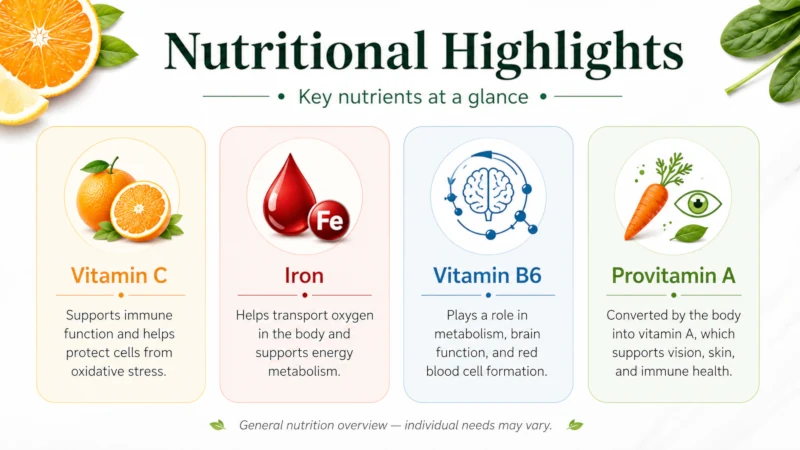
A 100-gram serving of mache supplies about 38 mg of vitamin C, close to 42% of the daily target and more than you would get from the same weight of raw tomato [USDA FoodData Central]. Vitamin C supports collagen production, immune function, and — the part that matters most here — the absorption of the iron sitting in the same leaf. If you want other strong sources to rotate through, see this rundown of vitamin C–rich foods.
Provitamin A (beta-carotene) — also strong
Mache is a good source of provitamin A carotenoids, delivering roughly 355 micrograms RAE (about 7,000 IU) per 100 grams, near 39% of the daily value [USDA FoodData Central]. Your body converts beta-carotene into vitamin A as needed, which supports normal vision, skin, and immune tissue. It is a meaningful amount for a salad green, though not dramatically higher than other dark leaves — spinach, for instance, edges it out on this particular nutrient.
Iron, and the absorption story
This is where mache gets interesting. At 2.18 mg per 100 grams, its iron content is high for a leafy green — roughly a quarter of the 8 mg daily requirement for an adult man, or about an eighth of the 18 mg a menstruating woman needs [Harvard T.H. Chan, The Nutrition Source]. The catch is the type. Plant foods carry non-heme iron, which your body absorbs far less efficiently than the heme iron in meat.
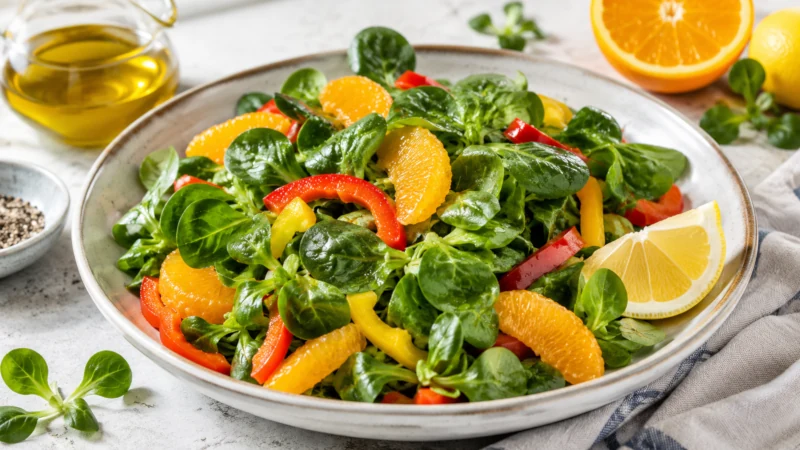
Two things move that dial. Vitamin C eaten in the same meal measurably improves how much non-heme iron you take up, while calcium, tea, and coffee can blunt it [Harvard T.H. Chan, The Nutrition Source]. Mache’s built-in vitamin C is a natural partner here — one reason the traditional dressing of olive oil and lemon is more than habit. The Popeye-era iron myth around spinach applies to mache too: it is a worthwhile contributor to iron intake, not a stand-in for treatment.
The “anti-anemic” reputation — useful, but read it carefully
Older herbal and nutrition texts describe mache as anti-anemic and remineralizing, and you can see why: it combines iron, vitamin C, and trace copper, all of which play a part in healthy red blood cells. As a framing for a nutritious food, that is fair. As a medical claim, it needs a firm boundary. Iron-deficiency anemia is a diagnosis that calls for a blood test and, often, supervised iron supplementation — not a salad [Harvard T.H. Chan, The Nutrition Source]. Mache can support the iron intake of a varied diet, and it belongs on any list of iron- and folate-rich foods that help with anemia, but it does not correct a deficiency on its own.
Digestion claims — mostly traditional
Mache is sometimes called a mild laxative and digestive stimulant. Those are traditional descriptions rather than clinically demonstrated effects. What can be said plainly is that mache is very high in water and adds a little fiber and volume to a meal, which is generally friendly to regular digestion — the same modest benefit you get from most leafy foods that support healthy digestion. If you are eating it for that reason, keep expectations realistic and think of it as one small helper, not a remedy.
What to realistically expect
Mache is a nutrient-dense, low-calorie green that adds vitamin C, provitamin A, and a useful dose of plant iron to a varied diet. It is a smart way to eat more vegetables, and its nutrient mix is well suited to people building an iron-and-vitamin-C-conscious plate. It is not a treatment for anemia, a sedative, or a cure for anything — and any source telling you otherwise is overselling a very pleasant salad leaf.
Who should take a little care
- Anyone with iron overload. People with hemochromatosis or another iron-storage condition are usually advised to limit both iron and vitamin C supplements; a food this focused on both is worth mentioning to your clinician, though normal culinary portions are rarely a problem [Harvard T.H. Chan].
- Pregnancy. Mache is a nutritious, folate-containing green and fine to enjoy, but wash all raw leaves thoroughly, and do not rely on any single food to meet pregnancy iron or folate needs — follow your prenatal supplement guidance.
- Anyone with a weakened immune system. Raw greens should be washed well; if you are immunocompromised, standard food-safety care for uncooked produce applies.
- Do not self-treat anemia. If you suspect low iron, get a blood test rather than loading up on any one food.
When to see a professional
Food is the wrong tool for a real deficiency. Talk to a doctor — and ask about a blood test — if you have ongoing fatigue or weakness, unusual paleness, shortness of breath, a racing heartbeat, dizziness, or cravings for non-food items like ice or clay. These can be signs of iron-deficiency anemia, which is common and very treatable, but needs proper diagnosis rather than guesswork [Harvard T.H. Chan, The Nutrition Source].
How to prepare and enjoy mache
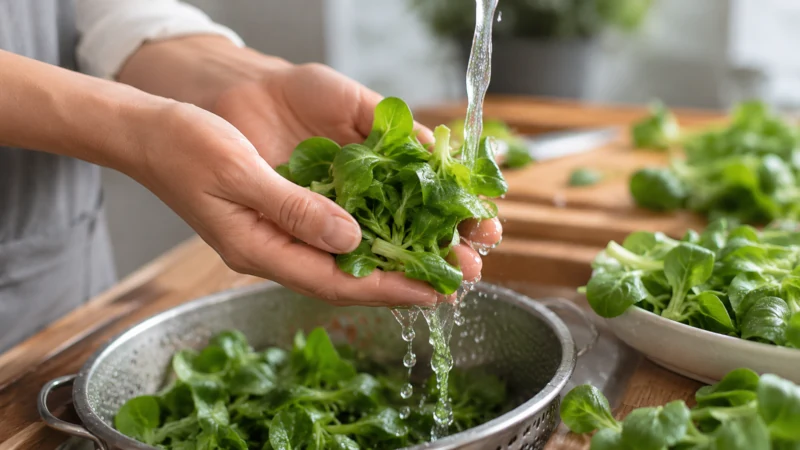
- Raw, in a salad. This is the classic and the most nutritious way to eat it, since vitamin C is heat-sensitive. Dress simply with olive oil and lemon juice — the lemon’s vitamin C helps you absorb the leaf’s iron.
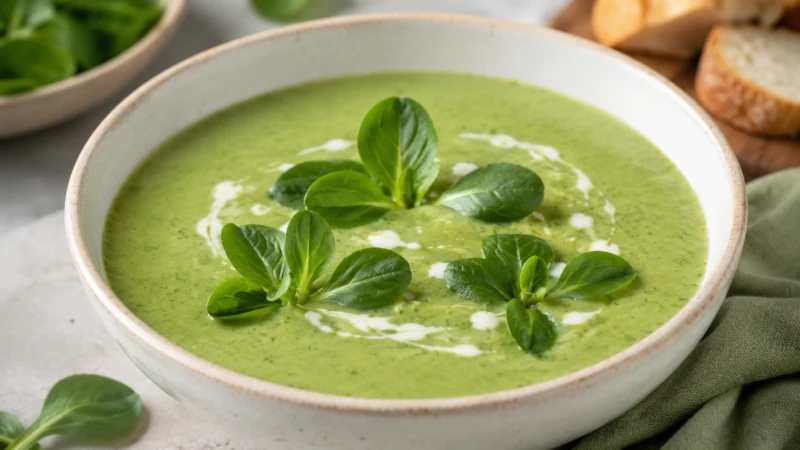
- Lightly cooked. Mache wilts nicely into soups or folds into an omelet at the last moment. Gentle, brief cooking keeps more of its vitamin C than a long simmer.
- Pair it well. Add other vitamin C sources — peppers, citrus, tomato — to a mache salad if iron intake is your goal, and keep tea or coffee for between meals rather than alongside.
| Health Disclaimer: This article is for general education and is not medical advice. It is not a substitute for diagnosis, treatment, or guidance from a qualified healthcare professional. Mache lettuce is a food, not a remedy for any disease. If you have persistent fatigue or other signs of anemia, are pregnant or planning a pregnancy, have hemochromatosis or any iron-overload condition, or manage an ongoing medical condition, talk with your doctor, pharmacist, or a registered dietitian before making major changes to your diet or starting any supplement. |
Frequently Asked Questions
Is mache lettuce good for iron?
Yes, for a leafy green it is a solid source — about 2.18 mg per 100 grams. But it is non-heme iron, which is less readily absorbed than the iron in meat, so pair it with vitamin C and don’t treat it as a fix for diagnosed anemia [Harvard T.H. Chan].
How is mache different from spinach?
They overlap as nutrient-dense greens, but the profiles differ. Spinach carries more vitamin K, folate, and vitamin A, while mache holds its own on vitamin C and iron. Spinach is also much higher in oxalates. There is a fuller breakdown of spinach’s benefits and cautions if you want to compare.
Does mache lettuce have the same calming effect as valerian?
No. Mache is botanically related to valerian, but it does not contain valerian’s sedative compounds. Any calming reputation is a misreading of that family connection — mache is food, not a sleep aid [valerian, for context].
Can you eat mache lettuce every day?
For most people, yes — it is a low-calorie, nutrient-rich green with no notable downsides in normal amounts. Wash it well, and if you have an iron-overload condition or a specific medical situation, run daily high-volume greens past your clinician first.
Is mache better raw or cooked?
Raw keeps the most vitamin C and its delicate texture, which is why it is usually served in salads. Light cooking is fine and lets you use it in soups or eggs, but a long simmer will cost you some of the vitamin C.
References
- U.S. Department of Agriculture, FoodData Central — Cornsalad (mache), raw; nutrient data, SR Legacy entry (FDC ID 169219). Publisher: USDA Agricultural Research Service. → View source
- Harvard T.H. Chan School of Public Health, The Nutrition Source — “Iron.” Covers heme vs. non-heme iron, vitamin C and absorption, iron requirements, and signs of iron-deficiency anemia. Last reviewed March 2023. → View source
