
Contents
- 1 What Makes a Food Diabetic Friendly?
- 2 19 Diabetic Friendly Foods: Evidence-Informed Choices
- 3 Detailed Notes on Key Diabetic Friendly Foods
- 3.1 Legumes: Fibre-Rich Blood Sugar Regulators
- 3.2 Vegetables: Fill Half Your Plate
- 3.3 Whole Grains: Choose Over Refined
- 3.4 Fruit: Not Off-Limits — But Portion Carefully
- 3.5 Avocado: Healthy Fat and Fibre
- 3.6 Artichoke: Cynarin and Inulin
- 3.7 Onion: Blood Glucose and Cardiovascular Protection
- 3.8 Nopal (Prickly Pear Cactus Pads)
- 3.9 Wheat Germ: B Vitamins for Glucose Metabolism
- 3.10 Mushrooms
- 3.11 Guar Gum
- 4 Key Nutrients That Support Diabetes Management
- 5 Foods That May Worsen Diabetes Control
- 6 Practical Meal Planning Principles
- 7 When to Talk to a Healthcare Professional
- 8 Frequently Asked Questions
- 8.1 Can people with Type 1 diabetes follow the same dietary approach as Type 2?
- 8.2 Are potatoes off-limits for diabetics?
- 8.3 Is fruit sugar the same as sugar in processed foods?
- 8.4 Do I need to count carbohydrates on every meal?
- 8.5 Can dietary changes reduce or eliminate the need for diabetes medication?
- 9 References
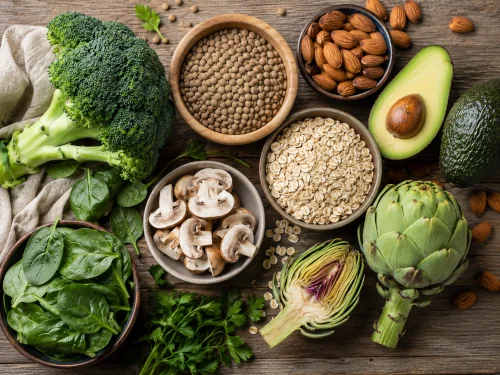
Diabetic friendly foods are those that support stable blood glucose levels, provide protective nutrients, and reduce the risk of long-term cardiovascular and metabolic complications associated with diabetes. Diet is one of the most powerful — and modifiable — tools in diabetes management, but it works best when built around a personalised plan developed with a registered dietitian or diabetes specialist.
Diabetes mellitus is characterised by chronically elevated blood glucose. In Type 1 diabetes, insulin-producing cells are destroyed (typically by an autoimmune process), making external insulin essential. In Type 2 diabetes, the problem is not an absence of insulin but a progressive loss of the body’s sensitivity to it, often combined with impaired secretion. According to NIDDK, an estimated 38.4 million people in the United States — or 11.6% of the population — have diabetes. [NIDDK, 2024]
Uncontrolled blood glucose causes significant long-term harm: arterial disease, heart disease, kidney failure, nerve damage, and retinal disorders. The encouraging reality is that dietary patterns have a well-established influence on blood glucose levels and on the risk of these complications. The foods below are chosen because evidence supports their tolerability or benefit in diabetes, not because any one of them is a cure or guaranteed treatment.
What Makes a Food Diabetic Friendly?
Several properties make a food well-suited to a diabetes dietary plan:
- Low glycaemic index (GI) or glycaemic load (GL) — meaning it raises blood glucose slowly rather than sharply.
- High dietary fibre — particularly soluble fibre, which slows carbohydrate absorption and helps manage post-meal glucose and cholesterol.
- Rich in protective micronutrients — antioxidant vitamins, magnesium, B vitamins, and trace elements that support metabolism and reduce oxidative stress.
- Low in refined sugar and saturated fat — both of which worsen insulin resistance and increase cardiovascular risk when consumed in excess.
Portions still matter even for ‘good’ foods. Carbohydrate content — not just food type — affects blood glucose. A registered dietitian can help translate these principles into practical meal plans tailored to your medications, lifestyle, and individual glucose responses. Healthful Eating with Diabetes (Academy of Nutrition and Dietetics)
19 Diabetic Friendly Foods: Evidence-Informed Choices
The table below covers the core foods well-supported by nutritional research for inclusion in a diabetes dietary plan. Evidence strength is noted where relevant in the sections that follow.
| Food | Why It May Help in Diabetes | Practical Tips |
| Legumes (lentils, chickpeas, black beans) | Low glycemic index; soluble fibre slows glucose absorption and supports cholesterol control | Rinse canned legumes to cut sodium; aim for ½ cup cooked per serving |
| Non-starchy vegetables (broccoli, cauliflower, leafy greens, cucumber, green beans) | Very low carbohydrate load; high fibre; vitamins and antioxidants that may slow diabetes complications | Fill half your plate; raw or steamed retains the most nutrients |
| Whole grains (oats, barley, bulgur, whole wheat) | Beta-glucan fibre in oats/barley attenuates post-meal glucose rise; more nutrient-dense than refined grains | Choose intact or minimally processed grains over flour-based products |
| Avocado | Rich in heart-healthy monounsaturated fat and fibre; helps reduce post-meal blood glucose spikes | Use as a spread instead of butter; ¼ to ½ avocado is a standard serving |
| Nuts and seeds (almonds, walnuts, pumpkin seeds, sunflower seeds) | Provide healthy fats, magnesium, vitamin E, and protein with minimal impact on blood sugar | Unsalted, unroasted preferred; portion to ~1 oz (28 g) to manage calories |
| Artichoke | Contains cynarin (mild hypoglycaemic effect) and inulin (a prebiotic fibre that slows glucose absorption) | Best steamed whole; eat heart and tender bract bases |
| Onion | Quercetin and flavonoids may help reduce blood glucose; alkalising and cardiovascular-protective | Eaten raw or lightly cooked to retain quercetin; use in salads and stir-fries |
| Celery | Very low in carbohydrates; may help regulate blood glucose; supports cholesterol and kidney health | Eat raw as a snack with nut butter, or add to soups and stir-fries |
| Whole fruit (fresh) | Antioxidant vitamins protect against cardiovascular complications; fibre slows sugar release | Avoid dried fruit and juices; choose lower-sugar options like berries, green apple, citrus |
| Mushrooms | Very low in carbohydrates; supply B-group vitamins and protein; animal studies suggest glucose-improving effects | Use as a meat substitute in stews and grain bowls |
| Nopal (prickly pear cactus pads) | Human studies (primarily in Type 2 diabetes) show a meaningful reduction in post-meal blood glucose | Used in Mexican cooking; boil or grill pads; choose fresh over syrup-packed products |
| Potato (controlled portions) | Complex carbohydrates and fibre; slower glucose release than refined carbohydrates when consumed whole with skin | Boiled or baked with skin on; pair with protein and vegetables to blunt glycaemic impact |
| Wheat germ | Rich in B vitamins (essential for glucose metabolism) and vitamin E; small servings may modestly reduce glucose levels | Add 1–2 tablespoons to oatmeal, yoghurt, or smoothies |
Detailed Notes on Key Diabetic Friendly Foods
Legumes: Fibre-Rich Blood Sugar Regulators
Despite containing 20–30% carbohydrates by weight, legumes — including lentils, chickpeas, black beans, kidney beans, and soybeans — are exceptionally well-tolerated by people with diabetes. Their unique physical structure (the outer seed coat and dense starchy interior) slows enzymatic breakdown and glucose release, producing a low glycaemic response. Soluble fibre, particularly in lentils and chickpeas, also helps reduce LDL cholesterol, which matters for cardiovascular risk in diabetes. [ADA, 2024] Read more: Soybean Health Benefits
Vegetables: Fill Half Your Plate
All non-starchy vegetables — broccoli, cauliflower, cabbage, kale, spinach, lettuce, green beans, cucumber, endive, and peas — are low in calories and carbohydrates while being dense in vitamins, minerals, and fibre. People with diabetes can eat non-starchy vegetables liberally without concern about blood sugar spikes. The Academy of Nutrition and Dietetics recommends making vegetables half of every plate. [AND, 2025] Starchy vegetables (potatoes, corn, peas in large amounts) need portion control but are not off-limits.
Whole Grains: Choose Over Refined
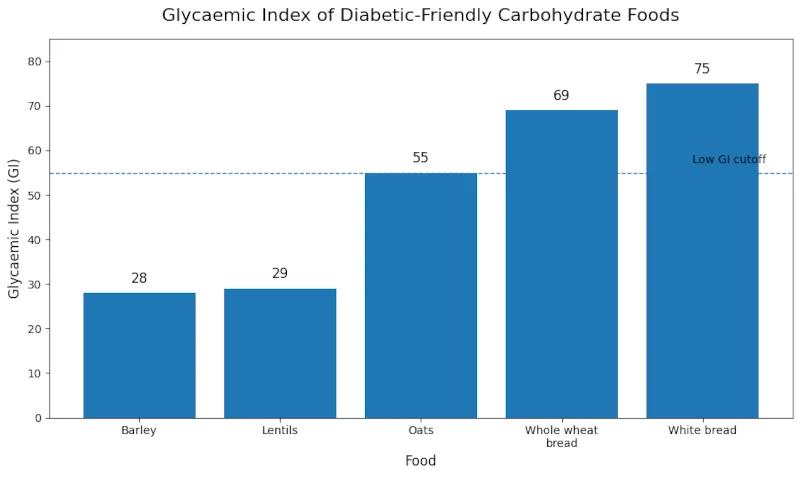
Research from Harvard T.H. Chan School of Public Health and others confirms that diets high in refined grains and low in whole grains increase diabetes risk, while whole grains improve it. Oats and barley are particularly valuable because their soluble fibre (beta-glucan) has been shown to attenuate post-meal blood glucose and insulin responses. Barley has one of the lowest glycaemic indices of any grain. These benefits do not extend to refined or flour-based products made from the same grains. [NIDDK, 2024]
Fruit: Not Off-Limits — But Portion Carefully
The belief that all fruit is off-limits for people with diabetes is a persistent misconception. Whole fruits provide dietary fibre, vitamins A and C, and flavonoids — antioxidants that may protect against the cardiovascular complications that frequently accompany diabetes. What matters is how much and what type. Whole fruit raises blood sugar more gradually than juice because the fibre slows absorption. Dried fruit is very concentrated in natural sugar and should be avoided or strictly limited. Berries, green apples, citrus, and stone fruits tend to have a lower glycaemic impact than tropical fruits. Fresh mangoes and bananas, while included in the original source material for this article, are higher in natural sugar and should be eaten in moderate portions, not freely.
Avocado: Healthy Fat and Fibre
Avocado is rich in monounsaturated fatty acids and dietary fibre — neither of which raises blood glucose. Including healthy fats in a meal slows digestion and reduces the glycaemic impact of carbohydrates eaten at the same time. Avocado also contributes vitamin E, folate, potassium, and magnesium, all of which support cardiovascular health. Read more: Avocado Nutrition Facts
Artichoke: Cynarin and Inulin
The artichoke contains cynarin, a compound with a mild blood glucose-lowering effect, and inulin, a prebiotic fibre made from fructose molecules that people with diabetes assimilate more readily than glucose. Inulin also feeds beneficial gut bacteria, which emerging research links to improved metabolic outcomes. Read more: Health Benefits of Artichokes
Onion: Blood Glucose and Cardiovascular Protection
Onions contain quercetin and other flavonoids that have demonstrated hypoglycaemic activity in several small studies. They also provide alkalising minerals that may counteract the mild acidosis associated with diabetes. Their anti-arteriosclerotic properties are particularly relevant, given the heightened cardiovascular risk in people with diabetes.

Nopal (Prickly Pear Cactus Pads)
Multiple studies conducted in Mexico have shown that consuming nopal (the flat pads of the prickly pear cactus) produces a measurable reduction in post-meal blood glucose in people with Type 2 diabetes, but not in healthy individuals without diabetes. The effect appears to be due to soluble fibre and mucilaginous compounds that slow glucose absorption. Read more: Prickly Pear Health Benefits This is a promising and culturally relevant food, but it is not a replacement for medication.
Wheat Germ: B Vitamins for Glucose Metabolism
Wheat germ is the nutrient-dense embryo of the wheat kernel. It is one of the richest food sources of B vitamins (B1, B2, B6) — nutrients essential for the enzymatic steps that convert glucose into cellular energy. Small amounts (4–5 teaspoons daily) may modestly reduce fasting glucose levels, and its vitamin E content provides antioxidant protection. Read more: Wheat Germ vs Wheat Bran
Mushrooms
Mushrooms supply protein, B vitamins, and selenium while containing very few carbohydrates. Animal studies suggest their polysaccharide compounds (notably beta-glucans) can improve glucose tolerance and reduce insulin resistance. Human evidence remains limited, but mushrooms are an excellent low-carbohydrate, nutrient-dense food and a versatile meat substitute in diabetes meal planning.
Guar Gum
Guar gum, extracted from the seeds of a leguminous Asian plant, is used medicinally as a viscous soluble fibre that slows glucose absorption from other foods in the same meal. It is also used commercially as a food thickener. Unlike many supplements, its mechanism is well-understood and it has been studied in human clinical settings. It should be taken with adequate water and is not appropriate for people with oesophageal or bowel abnormalities.
Key Nutrients That Support Diabetes Management
Beyond choosing the right foods, attention to specific micronutrients is important in diabetes. The table below summarises the most clinically relevant ones. Always aim to meet nutritional needs through food first; discuss supplementation with your healthcare provider.
| Nutrient | Role in Diabetes Management | Key Food Sources |
| Magnesium | Involved in insulin secretion and insulin sensitivity; deficiency more common in Type 2 diabetes | Wheat bran, pumpkin seeds, almonds, black beans, legumes |
| B vitamins (B1, B2, B6) | Essential for converting glucose into usable energy in cells | Wheat germ, nutritional yeast, legumes, nuts, whole grains |
| Vitamin E | Antioxidant that helps protect cells from oxidative stress caused by elevated blood sugar | Sunflower seeds, almonds, wheat germ, avocado |
| Provitamin A (beta-carotene) & Vitamin C | Natural antioxidants that may limit the cellular damage of prolonged hyperglycaemia | Carrots, sweet peppers, citrus fruits, leafy greens, berries |
| Chromium | Trace element involved in insulin production and action | Eggs, wheat germ, brewer’s yeast, fresh vegetables — use with care; supplements not routinely recommended |
| Zinc & Manganese | Involved in insulin synthesis and pancreatic function | Pumpkin seeds, legumes, whole grains, nuts |
Magnesium deserves particular mention: adult-onset (Type 2) diabetics frequently have lower magnesium levels because elevated blood glucose increases urinary magnesium excretion. Correcting dietary shortfalls through food sources is preferable to supplementation in most cases. Read more: Magnesium-Rich Foods Similarly, vitamin E provides antioxidant protection that may limit cellular damage from chronic hyperglycaemia. Read more: Vitamin E-Rich Foods
A note on fructose: because fructose requires less insulin for metabolism than glucose, it was historically promoted for diabetics. However, its ‘isolated’ use (as in high-fructose corn syrup or fructose-sweetened drinks) — separated from the fibre matrix of whole fruit — raises triglycerides and uric acid levels and should be avoided. Fructose in whole fruit, combined with fibre and other nutrients, is a different matter.
Foods That May Worsen Diabetes Control
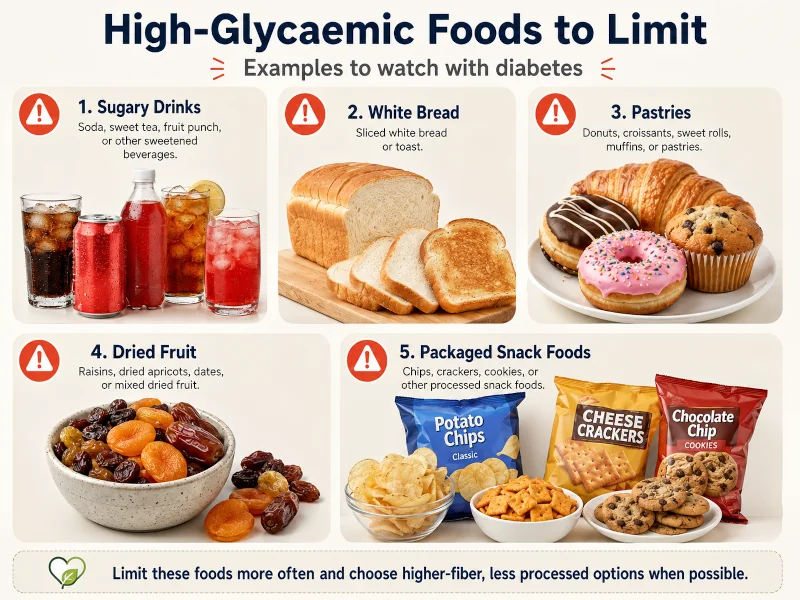
Just as important as what to eat is what to limit. The following foods are consistently associated with worsening glycaemic control, increasing cardiovascular risk, or both. Avoidance does not have to be absolute for every person, but these should be minimised in a diabetic dietary plan.
| Food/Drink to Limit | Why It’s Problematic | Healthier Swap |
| Refined grains & white flour products | Rapidly converted to glucose; high glycaemic index | Choose whole grain equivalents (oats, barley, whole wheat bread) |
| Sugary beverages (sodas, fruit juice, sweetened coffee) | Liquid glucose with no fibre; causes rapid blood sugar spikes | Water, unsweetened herbal teas, sparkling water with lemon |
| Dried fruit & fruit in syrup | Concentrated sugar without the fibre modulation of whole fruit | Fresh whole fruit in moderate portions |
| Processed snack foods (crisps, biscuits, packaged pastries) | High in refined carbohydrates, unhealthy fats, and sodium; disrupt hormonal balance | Unsalted nuts, seeds, cut vegetables with hummus |
| Sweetened dairy products (flavoured yogurts, ice cream) | Added sugars lead to unpredictable blood sugar fluctuations | Plain Greek yogurt; use fresh fruit for sweetness |
| Molasses & added sugars | Even fructose-sweetened products can raise triglycerides if overconsumed; use sparingly | Limit all concentrated sweeteners; small cinnamon additions may help palatability |
Practical Meal Planning Principles
Following a diabetes dietary plan does not mean eating bland or restricted food. A few practical principles make a significant difference:
- Distribute carbohydrates evenly across meals and snacks throughout the day rather than concentrating them in one sitting. This reduces the magnitude of blood glucose peaks.
- Pair carbohydrates with protein, fibre, or fat at every meal. This combination slows glucose absorption and produces a more stable post-meal blood glucose curve.
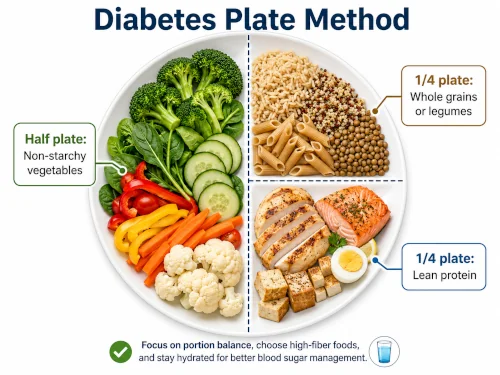
- Use the plate method: fill half the plate with non-starchy vegetables, one quarter with lean protein, and one quarter with a whole grain or legume.
- Monitor portion sizes carefully for starchy foods. Even diabetes-friendly carbohydrates raise blood sugar if eaten in large amounts.
- Read nutrition labels for total carbohydrates (not just sugar), fibre, sodium, and saturated fat.
- Stay well hydrated with water. Sugary drinks — including fruit juice, sports drinks, and sweetened coffee or tea — cause rapid blood glucose spikes and should be avoided.
Blood glucose control is a lifelong commitment. Every person with diabetes will respond somewhat differently to specific foods. Self-monitoring of blood glucose — particularly checking readings one to two hours after eating — can reveal individual food tolerances and guide personalised adjustments. Work with your diabetes care team for guidance tailored to your medications and metabolic goals.
When to Talk to a Healthcare Professional
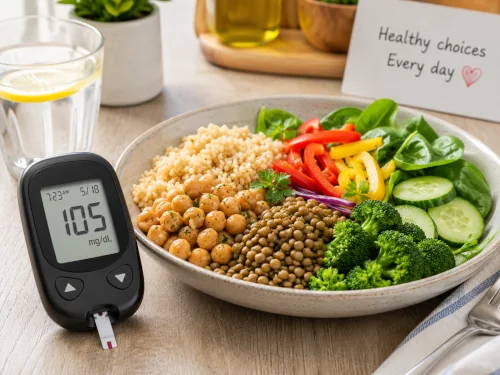
Dietary changes should complement — not replace — prescribed medical treatment. Consult your doctor or diabetes educator if:
- You have been recently diagnosed with diabetes and do not yet have a dietary plan
- Your blood glucose levels remain poorly controlled despite dietary efforts
- You are losing weight unintentionally or experiencing frequent episodes of low blood sugar (hypoglycaemia)
- You are pregnant or planning to become pregnant (gestational diabetes requires specialist dietary management)
- You are considering major dietary changes such as a very low-carbohydrate or plant-based diet
- You want to reduce or change your diabetes medication in response to dietary improvements
| HEALTH DISCLAIMER This article is for general educational and informational purposes only. It is not a substitute for professional medical advice, diagnosis, or treatment. Diabetes is a serious medical condition that requires ongoing management by qualified healthcare providers. Always consult your doctor, registered dietitian, or diabetes educator before making significant dietary changes. Never stop or adjust prescribed medications based on dietary changes alone. Individual responses to foods vary; work with your healthcare team to build a plan that suits your specific situation. |
Frequently Asked Questions
Can people with Type 1 diabetes follow the same dietary approach as Type 2?
Many of the same foods are appropriate for both types: whole grains, legumes, non-starchy vegetables, lean proteins, and healthy fats. The key difference is that people with Type 1 diabetes must carefully match carbohydrate intake to insulin doses. Working with a diabetes dietitian is essential to developing a plan that accounts for insulin timing and dosing.
Are potatoes off-limits for diabetics?
Potatoes are not off-limits, but portions and preparation method matter considerably. A medium boiled potato with skin has a lower glycaemic impact than mashed or baked potato without skin. Pairing potatoes with protein, healthy fat, and non-starchy vegetables further blunts the glucose response. Refrigerating cooked potatoes overnight before eating (and reheating) increases their resistant starch content, further lowering the glycaemic impact.
Is fruit sugar the same as sugar in processed foods?
No. In whole fruit, natural sugars — fructose, glucose, and sucrose — are embedded within a matrix of fibre, water, vitamins, and polyphenols that slows their absorption and provides additional health benefits. Fruit juice and dried fruit lack this matrix and raise blood sugar much more rapidly. As a general rule, the more processed a sweet food is, the faster it raises blood glucose.
Do I need to count carbohydrates on every meal?
Carbohydrate counting is one approach, particularly useful for people on insulin. Other people use the plate method, the glycaemic index, or simply focus on food quality. The best approach is the one that is sustainable, accurate, and agreed upon with your diabetes care team. Consistency in meal timing and carbohydrate amounts tends to produce more stable blood glucose than irregular eating patterns.
Can dietary changes reduce or eliminate the need for diabetes medication?
In some people with Type 2 diabetes, especially when diagnosed recently and accompanied by significant weight loss, substantial dietary and lifestyle changes can lead to a meaningful reduction in medication needs. However, medication decisions must always be made by a qualified healthcare provider based on regular monitoring. Never stop or reduce prescribed diabetes medication without medical guidance, as doing so can lead to dangerous blood glucose levels.
References
- National Institute of Diabetes and Digestive and Kidney Diseases (NIDDK). (2024). Diabetes. U.S. Department of Health & Human Services. → View source
- Ellis, E. (2025). Healthful Eating with Diabetes. Academy of Nutrition and Dietetics (eatright.org). Reviewed November 2025. → View source
- American Diabetes Association. (2024). Standards of Care in Diabetes. Diabetes Care Journal. diabetes.org. → View source
- Pamplona-Roger, G. D. (2005). Encyclopedia of Foods and Their Healing Power, Vol. 2. Editorial Safeliz. → View source
