Alfalfa sprouts are a light, low-calorie way to add a little nutrition and a lot of crunch to a sandwich or salad — and that’s about the honest size of it. They give you vitamin K, small amounts of vitamin C, folate and iron, and some interesting plant compounds. They are not a cure for anything. And the most useful thing to know about the health benefits of alfalfa sprouts isn’t a benefit at all: it’s that raw sprouts carry a real risk of food poisoning, and some people shouldn’t eat them raw. So let’s cover both sides clearly — what these tiny greens do for you, and how to enjoy them without the downside.
What’s actually in alfalfa sprouts
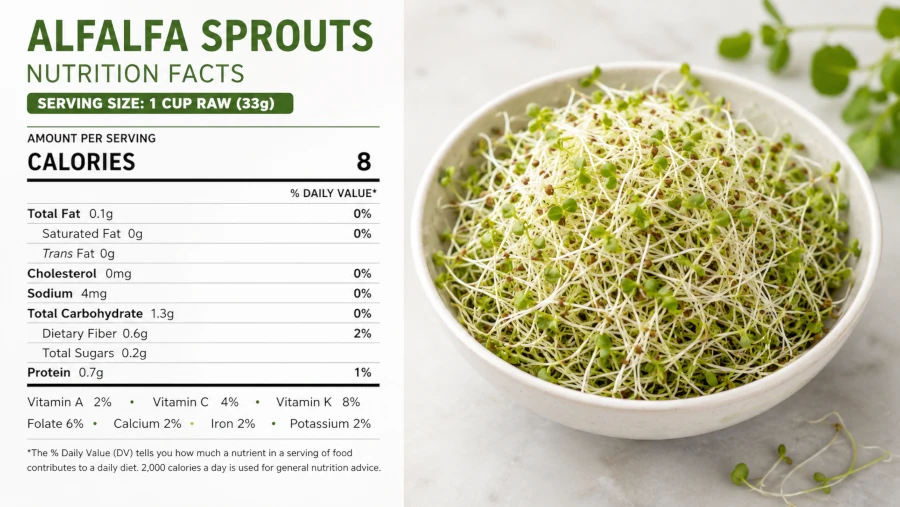
A cup of raw alfalfa sprouts (about 33 grams) has roughly 8 calories. Per 100 grams, you’re looking at about 23–30 calories, close to 4 grams of protein, nearly 2 grams of fiber, and a scattering of vitamins and minerals — vitamin C, folate, calcium, and a little iron [USDA FoodData Central]. They’re mostly water, which is exactly why they add volume and freshness without much else.
| Nutrient | Per 1 cup (33 g) | Per 100 g |
| Calories | ~8 kcal | ~23–30 kcal |
| Protein | ~1.3 g | ~4 g |
| Fiber | ~0.6 g | ~2 g |
| Vitamin K | ~10 µg (~8% DV) | ~30 µg |
| Vitamin C | ~2.7 mg | ~8 mg (~9% DV) |
| Iron | ~0.3 mg | ~1 mg (~5% DV) |
| Folate | ~12 µg | ~36 µg |
The one nutrient alfalfa delivers in a meaningful amount is vitamin K. One cup covers roughly 8% of the daily value [Cleveland Clinic, 2025]. Worth flagging, because older write-ups (including the version this page replaces) list vitamin K in the hundreds of micrograms per 100 grams. That figure describes dried alfalfa leaf or meal — the kind sold as a supplement — not the fresh sprouts on your sandwich, which sit closer to 30 µg per 100 grams [USDA FoodData Central]. It’s a real difference, and it matters if you take a blood thinner, which we’ll get to.
The health benefits of alfalfa sprouts, graded by evidence
Here’s the practical breakdown, strongest evidence first.
| Claimed benefit | Evidence strength | In plain terms |
| Vitamin K (clotting, bone support) | Established | Basic nutrition; sprouts are a modest source. |
| Iron + vitamin C pairing | Established | Real but small; not a treatment for anemia. |
| Lower cholesterol | Promising / early | Mostly animal studies; human data used seeds, not sprouts. |
| Antioxidant plant compounds | General (plant-wide) | True of plants broadly; sprouts add a little. |
| Treats anemia / bones / depression | Not supported | Overclaims from older sources; removed. |
Vitamin K for blood clotting and bone support
This is the most solid benefit, because it’s just basic nutrition. Vitamin K is essential for normal blood clotting and contributes to bone health [Cleveland Clinic, 2025]. Alfalfa sprouts are a modest source — a useful contribution to a varied diet, not a standout. If you want vitamin K specifically, any dark leafy green delivers far more. Sprouts are a nice supporting player, not the headliner. For the bone-health angle, sprouts fit best as one item among several foods that support bone and muscle health.
A small iron and vitamin C boost
Alfalfa sprouts contain about 1 mg of iron per 100 grams — less than spinach (around 2.7 mg) but not nothing [USDA FoodData Central]. The plant form of iron (non-heme iron) is absorbed less efficiently than the iron in meat, but the vitamin C in the same sprouts helps your body take it up. That’s a genuine, well-established pairing, and it’s a good reason to combine sprouts with other vitamin-C-rich foods.
What sprouts can’t do is treat anemia. The amount of iron is too small for that, and the older framing of alfalfa as an “anti-anemic” remedy oversells a light salad green. If you’re dealing with iron-deficiency anemia, that’s a conversation for your doctor and likely involves iron-richer foods or supplements — not sprouts.
Cholesterol: promising, but mostly animal research
This is alfalfa’s best-studied effect, and also the one most often overstated. In numerous animal studies, alfalfa — and specifically its saponins, natural plant compounds — lowered total and LDL (“bad”) cholesterol, apparently by binding cholesterol in the gut and reducing how much gets absorbed [Memorial Sloan Kettering, 2023]. The human evidence is thin: a small, older study found that alfalfa seeds (not sprouts) lowered LDL cholesterol in people with high cholesterol [Mølgaard et al., 1987]. Well-designed human trials are lacking.
So: a real and interesting signal, but early, and largely from animals and from seed preparations rather than the sprouts you’d eat. Promising is not the same as proven. Eat sprouts because you like them; don’t rely on them as cholesterol treatment.
Plant compounds and antioxidants
Alfalfa contains flavonoids and other antioxidant plant compounds, the same broad family found across colorful plant foods [Cleveland Clinic, 2025]. These contribute to a healthy overall eating pattern. The honest version: this is a benefit of eating plants in general, and sprouts are a small, pleasant way to eat a few more of them.
The part most articles skip: raw sprouts and food poisoning
Here’s the safety story that belongs at the center of any alfalfa sprouts article, not the footnotes.
Sprouts are grown in warm, humid conditions — and those are the exact conditions bacteria love. Any Salmonella, E. coli, or Listeria present on the seed can multiply dramatically during sprouting, and because sprouts are usually eaten raw, there’s no cooking step to kill it [FDA]. This isn’t theoretical. Between 2000 and 2020, the CDC recorded at least 53 sprout-linked outbreaks in the U.S., causing roughly 1,500 illnesses, 179 hospitalizations, and 5 deaths — most from Salmonella and E. coli, and alfalfa sprouts were among the most frequently implicated [CDC/FDA]. The FDA classifies raw sprouts as a higher-risk food for this reason [FDA].
That doesn’t mean nobody can eat them. It means eat them with your eyes open, and that some people should skip the raw version entirely.
Who should avoid raw sprouts entirely
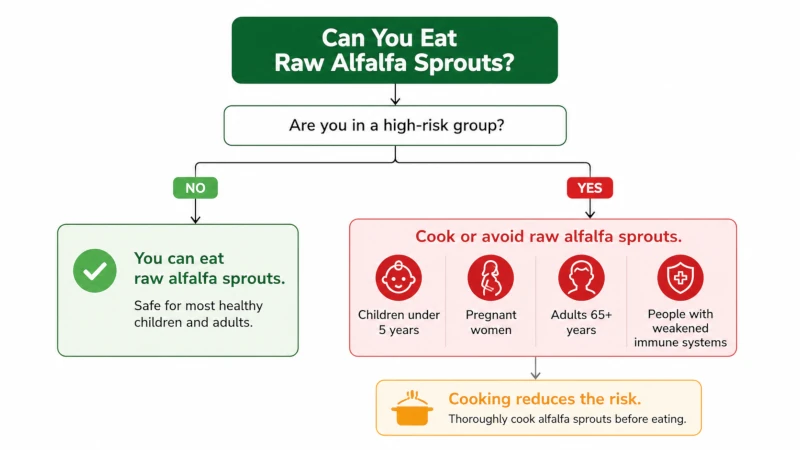
Federal food-safety guidance is specific: children, older adults, pregnant people, and anyone with a weakened immune system should not eat raw sprouts of any kind — alfalfa, clover, radish, or mung bean [FDA]. For these groups, a foodborne infection is more likely to turn serious, and the safe move is to cook sprouts until they’re steaming hot, which kills the bacteria [FDA].
How to lower your risk
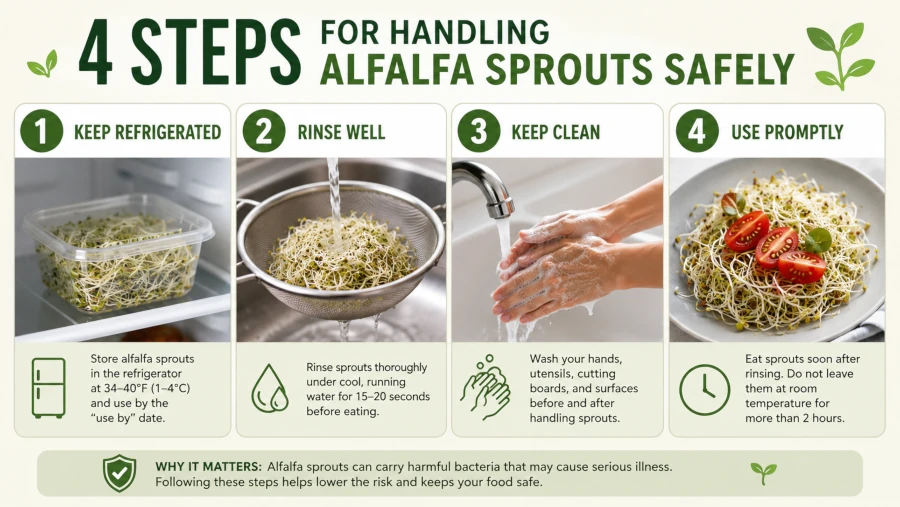
If you’re not in a higher-risk group and you want to enjoy raw sprouts, a few habits help:
- Buy fresh and cold. Choose sprouts with crisp white stems and green tops; skip any that look brown, slimy, or smell musty.
- Keep them refrigerated and eat them within a few days.
- Rinse them well under running water before eating.
- Cook them when you can. Tossing sprouts into a stir-fry or soup near the end, until steaming hot, keeps most of the texture while removing most of the risk.
- At restaurants, you can ask for sandwiches and salads without raw sprouts if you’d rather not chance it.
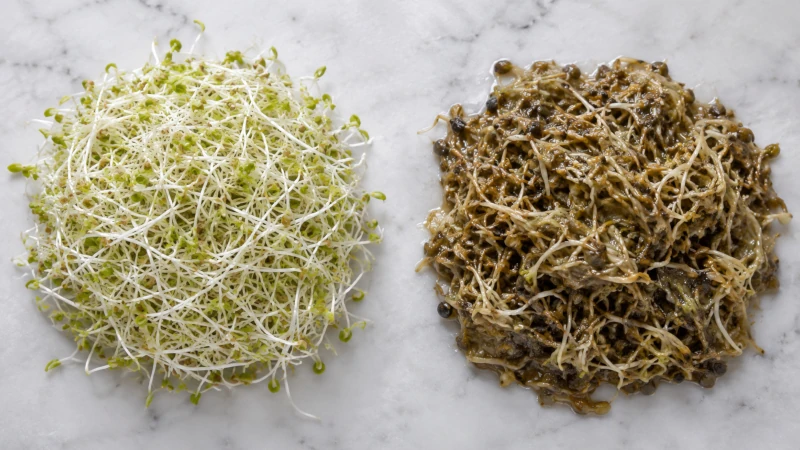
Rinsing reduces risk but doesn’t eliminate it, because contamination can come from inside the seed. Cooking is the only step that reliably kills the bacteria [FDA].
Who else should be careful with alfalfa
If you take a blood thinner
Because alfalfa contains vitamin K — the very nutrient that warfarin (Coumadin) works against — it can blunt the medication and is best handled carefully [Cleveland Clinic, 2025]. The fresh sprouts are relatively low in vitamin K, but alfalfa supplements can be far more concentrated and unpredictable, and reference sources advise against them during warfarin therapy unless your clinician signs off [WebMD]. The general rule with warfarin is consistency: keep your vitamin-K intake roughly steady day to day rather than swinging it, and tell your anticoagulation team before adding alfalfa in any concentrated form.
If you have lupus or another autoimmune condition
Alfalfa contains an amino acid called L-canavanine, which can stimulate the immune system and increase inflammation. The Johns Hopkins Lupus Center advises that people with lupus and similar autoimmune conditions avoid alfalfa sprouts completely [Johns Hopkins Lupus Center]. This isn’t folklore: in classic research, monkeys fed alfalfa sprouts developed a lupus-like illness that was tied to L-canavanine, and re-exposure brought it back [Malinow et al., 1982]. Human case reports have linked alfalfa to lupus flares as well. If you have an autoimmune diagnosis, this is a clear “skip it.”
Pregnancy, breastfeeding, and supplements
Two cautions overlap here. First, raw sprouts are on the avoid list during pregnancy because of the foodborne-illness risk [FDA]. Second, alfalfa in larger-than-food amounts — seeds, tablets, strong infusions — carries hormone-like (estrogenic) plant compounds and is considered possibly unsafe in pregnancy and breastfeeding [RxList]. Long-term, high-dose alfalfa seed use is rated likely unsafe in general, partly because of the lupus-like reactions noted above [WebMD]. The takeaway: an occasional cooked sprout in food is one thing; alfalfa as a supplement is a different decision, and one to run past a healthcare professional.
When to talk to a doctor
Most foodborne illness from sprouts resolves on its own in healthy adults within about a week. Get medical care if, after eating sprouts (or anything else), you have diarrhea lasting more than three days, a high fever, blood in your stool, or so much vomiting that you can’t keep liquids down and are barely urinating [FDA]. Those can signal a serious infection. A small share of E. coli O157 cases progress to a dangerous kidney complication called hemolytic uremic syndrome — warning signs include unusual tiredness, decreased urination, and easy bruising or bleeding — which needs urgent care [FDA].
And talk to your clinician before adding alfalfa, in any form beyond an occasional garnish, if you take warfarin or another anticoagulant, have an autoimmune condition, are pregnant or breastfeeding, or are considering alfalfa supplements.
| HEALTH DISCLAIMER: This article is for general education and information only. It is not medical advice and is not a substitute for diagnosis or treatment from a qualified healthcare professional. Alfalfa can interact with medications such as blood thinners and is not appropriate for everyone, including people with autoimmune conditions and those who are pregnant or immunocompromised. If you are pregnant or nursing, have a health condition, or take any medication, talk to your doctor or pharmacist before adding alfalfa sprouts or alfalfa supplements to your routine. |
Frequently Asked Questions
Are alfalfa sprouts good for you?
For most healthy people, yes — in a small way. They’re low in calories and add vitamin K, a little vitamin C, folate, fiber, and antioxidant plant compounds to a meal [Cleveland Clinic, 2025]. They’re a nice addition to a varied diet, not a superfood that does any one thing dramatically.
Why are raw alfalfa sprouts considered risky?
They’re grown in warm, humid conditions that also let bacteria like Salmonella and E. coli multiply, and because they’re eaten raw, there’s no cooking step to kill those germs. Raw sprouts have been linked to dozens of U.S. outbreaks, which is why the FDA treats them as a higher-risk food [FDA].
Who should not eat alfalfa sprouts?
Children, older adults, pregnant people, and anyone with a weakened immune system should avoid raw sprouts (cooked is safer) [FDA]. People with lupus or other autoimmune conditions should avoid alfalfa altogether because of its L-canavanine content [Johns Hopkins Lupus Center]. Anyone on a blood thinner should check with their clinician [Cleveland Clinic, 2025].
Can I make alfalfa sprouts safe to eat?
Cooking is the only step that reliably kills harmful bacteria. Buy fresh, keep them cold, rinse well, and ideally cook them until steaming hot — for example, stirred into a hot dish at the end [FDA]. Rinsing alone reduces but doesn’t remove the risk.
Do alfalfa sprouts lower cholesterol?
Maybe a little, but the evidence isn’t strong enough to count on. Most of it comes from animal studies, and the limited human research used alfalfa seeds rather than sprouts [Memorial Sloan Kettering, 2023; Mølgaard et al., 1987]. Treat any cholesterol effect as a possible bonus, not a treatment.
Are alfalfa sprouts safe during pregnancy?
References
- Cleveland Clinic. Alfalfa: Nutrition, Benefits and Concerns (reviewed by Michelle Dodd, RD, LD), 2025. View source
- U.S. Food and Drug Administration. Sprouts: food-safety guidance and outbreak information. View source
- U.S. FDA. Multistate outbreak of E. coli O157 linked to alfalfa sprouts (illustrative outbreak record). View source
- Colorado State University, Food Source Information. Sprouts (summarizing CDC NORS outbreak data, 2000–2020). View source
- FoodSafety.gov. People at Risk: Sprouts. View source
- USDA FoodData Central. Alfalfa sprouts, raw (FDC ID 168384). View source
- Johns Hopkins Lupus Center. Foods and Medications to Avoid If You Have Lupus. View source
- Malinow MR, Bardana EJ, Pirofsky B, Craig S. Systemic lupus erythematosus-like syndrome in monkeys fed alfalfa sprouts: role of a nonprotein amino acid. Science. 1982;216(4544):415–417. View source
- Memorial Sloan Kettering Cancer Center. Alfalfa (Integrative Medicine herb monograph), 2023. View source
- Mølgaard J, von Schenck H, Olsson AG. Alfalfa seeds lower low density lipoprotein cholesterol and apolipoprotein B concentrations in patients with type II hyperlipoproteinemia. Atherosclerosis. 1987;65(1–2):173–179. View source
- WebMD. Alfalfa: Uses, Side Effects, Interactions, Dosing. View source
- RxList. Alfalfa: Health Benefits, Side Effects, Uses, Dose & Precautions. View source
