
If you are looking into the jaborandi plant, here is the honest headline first: its real contribution to medicine comes down to a single compound the leaves make — pilocarpine — and that compound is a prescription drug, not a kitchen remedy. The leaves themselves are potent enough to be dangerous, so the useful, safe version of jaborandi is the one your pharmacist dispenses, not one you brew at home.
That reframing matters, because most of the genuine jaborandi plant health benefits people search for are really the benefits of pilocarpine used under medical supervision: relief from certain kinds of dry mouth, and lowering pressure inside the eye. Below is what the evidence supports, what it doesn’t, and why self-dosing the raw plant is a bad idea.
What the jaborandi plant actually is
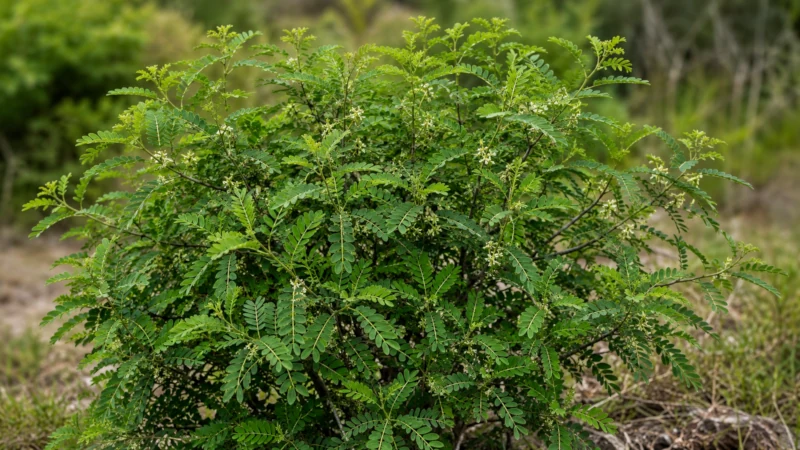
Jaborandi is a common name for several shrubs in the genus Pilocarpus (family Rutaceae), native to Brazil and neighboring parts of South America. The name comes from the Tupi-Guarani languages of the region’s Indigenous peoples, and the plant entered European medicine in the 1800s. The species that matters most medically is Pilocarpus microphyllus, whose leaves are the part used (PLoS ONE study on jaborandi alkaloids, 2017).
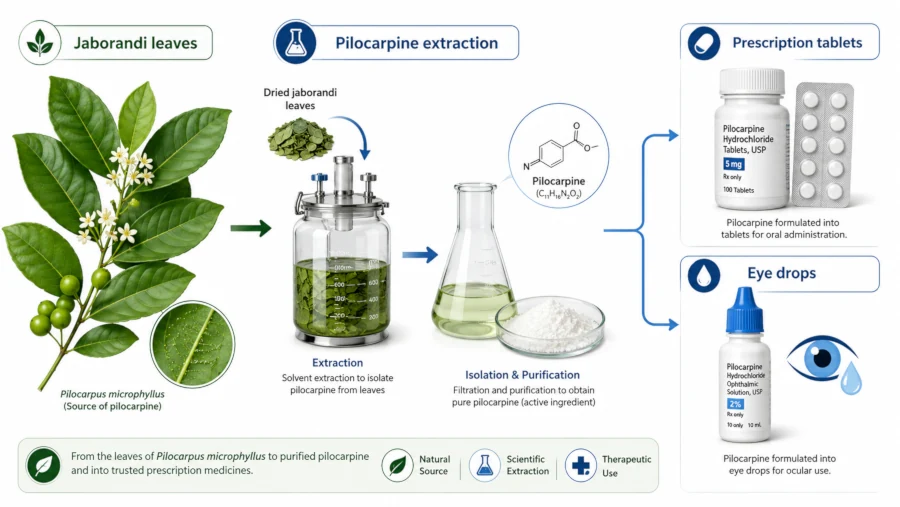
Those leaves are essentially a natural factory for pilocarpine. In cultivated P. microphyllus, pilocarpine makes up roughly 0.5% to 1% of the dried leaf, and Brazil is the main global supplier of the compound to the pharmaceutical industry. The species is also listed as endangered in Brazil, which is part of why it is grown as a managed crop rather than simply harvested from the wild (PLoS ONE study on jaborandi alkaloids, 2017). If you have read about other South American plants that became mainstream drugs — like the cinchona tree, the source of quinine — jaborandi belongs to the same story.
The real benefit: the medicine inside the leaf
Pilocarpine is a cholinergic agonist — a substance that mimics part of the body’s “rest and digest” nervous signaling. In practical terms, it tells certain glands and muscles to switch on, which is why it increases saliva and sweating and affects the eye (MedlinePlus: Pilocarpine, 2016). Two of those effects have become established medical treatments.
Dry mouth (Sjögren’s syndrome and radiation therapy)
Oral pilocarpine tablets (brand name Salagen, among others) are approved to treat dry mouth in two situations: dryness caused by radiotherapy for head and neck cancer, and dryness from Sjögren’s syndrome, an autoimmune condition that reduces moisture in the eyes and mouth. It works by prompting the salivary glands to make more saliva, which can make speaking, chewing, and swallowing easier (MedlinePlus: Pilocarpine, 2016). The tablets are taken a few times a day, at a dose your doctor sets — they control symptoms rather than cure the underlying condition.
Eye pressure and glaucoma
As an eye drop, pilocarpine constricts the pupil (an effect called miosis) and helps fluid drain from the eye, which lowers intraocular pressure. That made it a long-standing tool in managing certain kinds of glaucoma and for tightening the pupil after dilation (RxList: Jaborandi, 2026). This is prescription eye care handled by an eye doctor; it is not something a plant infusion can safely reproduce, and you can read more about how the site covers eye and vision health separately.
Traditional uses of the raw herb — and what the evidence says
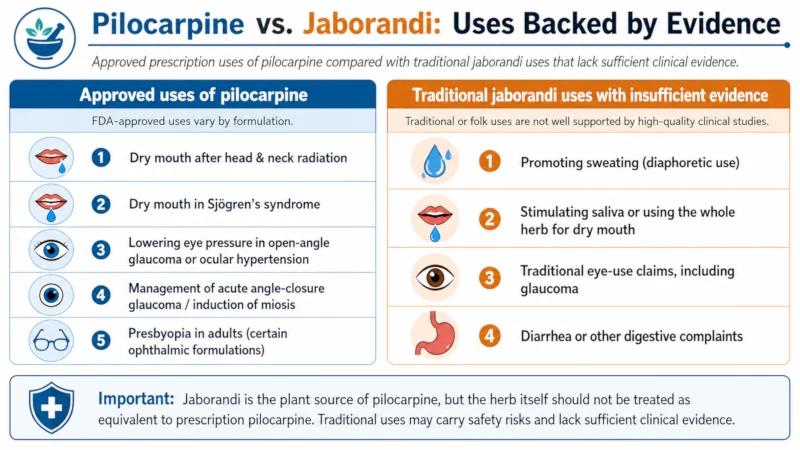
Historically, jaborandi leaves were used to make people sweat (for fevers and flu-like illness), to nudge the digestive tract, and were placed in the eye for glaucoma. Those traditional uses are the reason the plant was studied in the first place. But when you look at the raw herb — as opposed to purified pilocarpine — the picture is thin.
Consumer drug references rate the evidence for jaborandi the herb (for diarrhea, glaucoma, and causing sweating) as insufficient — meaning there isn’t enough good human research to say it works or to guide a safe dose (RxList: Jaborandi, 2026). So while pilocarpine, the isolated drug, has clear approved uses, the leaf you might buy as a “supplement” does not have the same backing. Those are two different things, and it’s worth keeping them apart.
Why you should not brew jaborandi yourself
This is the part that matters most. The same chemistry that makes jaborandi useful also makes it hazardous outside a controlled dose. One widely cited estimate puts a potentially deadly amount at only about 5 to 10 grams of leaf, and standard references describe the herb itself as unsafe to use as a medicine (RxList: Jaborandi, 2026). The margin between “an effect” and “too much” is narrow, and the amount of active compound in any given batch of leaves varies with the plant, the season, and how it was dried.
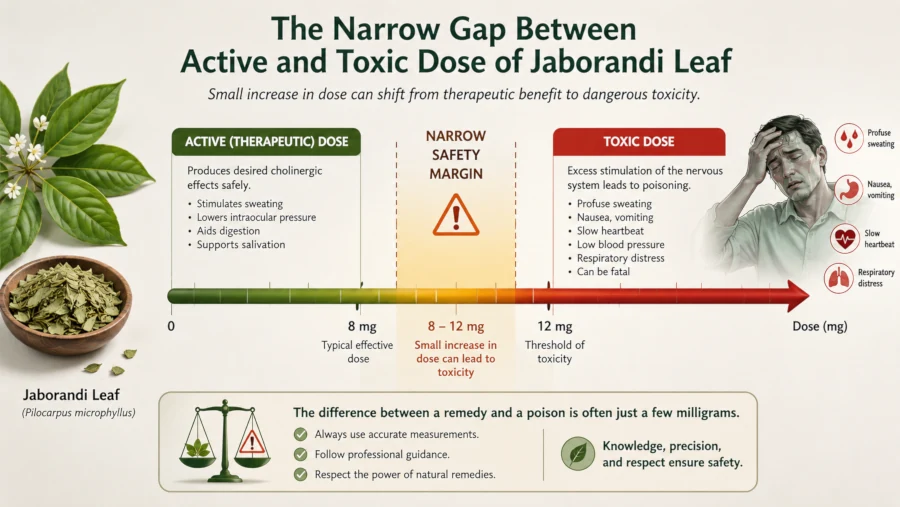
Potent medicinal plants tend to share this trait. The foxglove plant, the natural source of the heart drug digoxin, is the classic example of a plant that can help in a precise pharmaceutical dose and harm in a homemade one. Isolating and standardizing the active compound is exactly what makes it safe to use — which is why jaborandi’s benefits belong in a pharmacy bottle. If you’re curious about how herbs are traditionally prepared, that background is covered in this guide to herbs for medicinal uses, but preparation know-how does not make a dangerous plant safe to self-dose.
Side effects to expect with pilocarpine
Even used correctly as a prescription, pilocarpine commonly causes side effects because it switches on glands throughout the body. The most frequently reported is heavy sweating. Other common effects include (MedlinePlus: Pilocarpine, 2016):
- Sweating, flushing, and chills
- Nausea, vomiting, heartburn, stomach pain, or diarrhea
- Runny nose
- Frequent urination
- Dizziness, weakness, or headache
- Swelling in the hands, feet, ankles, or lower legs
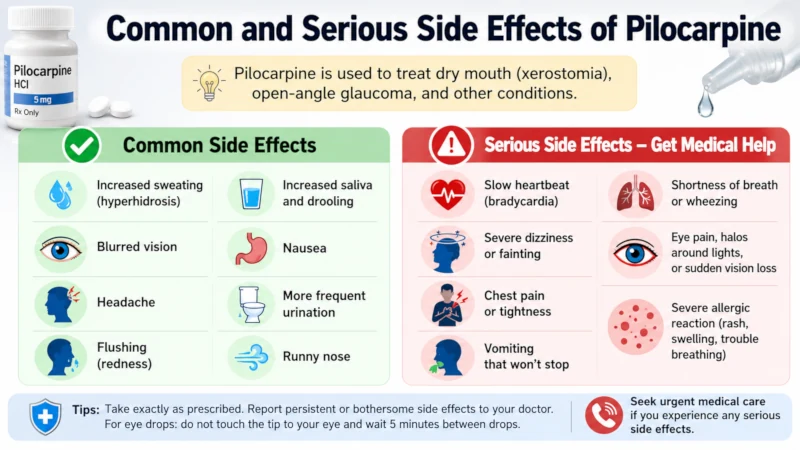
A couple of effects deserve faster attention. Pilocarpine can change your vision, especially at night or in dim light, so be careful driving after dark. And the sweating it causes can lead to dehydration — drink enough fluid, and call your doctor if you can’t keep up (MedlinePlus: Pilocarpine, 2016).
Medication interactions
Tell your doctor and pharmacist about every prescription drug, over-the-counter medicine, vitamin, and herbal product you take before starting pilocarpine, because doses may need adjusting (MedlinePlus: Pilocarpine, 2016). Two categories are worth naming. Drugs with anticholinergic effects work in the opposite direction and can blunt pilocarpine’s benefit, while medicines that also slow the heart may add to its effect on heart rate and conduction. Your prescriber weighs these interactions; a home infusion gives you no way to.
Who should be cautious or avoid it
Pilocarpine isn’t right for everyone. Before it’s prescribed, your doctor should know if you have any of the following, because it may be unsafe or need close monitoring (MedlinePlus: Pilocarpine, 2016):
- Asthma, chronic bronchitis, or other chronic obstructive pulmonary disease (COPD)
- Certain eye conditions, including acute iritis (uveitis) and some forms of glaucoma
- Heart disease, or a history of heart rhythm problems
- Gallstones or kidney stones
- Liver disease, or conditions affecting thinking and alertness
Pregnancy and breastfeeding: this is a clear caution. Standard references consider jaborandi unsafe in pregnancy, noting it contains chemicals that could contribute to birth defects or miscarriage, and there are concerns about breastfeeding as well (RxList: Jaborandi, 2026). For prescription pilocarpine, tell your doctor if you are pregnant, planning to be, or breastfeeding; it may also reduce fertility, so raise it early if you’re trying to conceive (MedlinePlus: Pilocarpine, 2016).
Warning signs that need urgent care
Because the therapeutic window is narrow, too much pilocarpine — or any ingestion of the raw plant — is a medical emergency. Get help right away for signs that can point to overdose or a serious reaction (MedlinePlus: Pilocarpine, 2016):
- Trouble breathing or wheezing
- A very fast or very slow heartbeat
- Heavy tearing, drenching sweating, confusion, or shaking you can’t control
- Severe or persistent vomiting, diarrhea, or stomach cramping
- Signs of an allergic reaction — hives, swelling of the face, lips, tongue, or throat, or difficulty breathing

In the United States, you can reach Poison Control at 1-800-222-1222; for collapse, seizures, or trouble breathing, call 911. Elsewhere, use your local emergency number or poison center.
One promising research thread
Jaborandi leaves contain more than one alkaloid. Beyond pilocarpine, researchers have taken interest in epiisopiloturine, a compound recovered from the leftover biomass of pilocarpine production. In laboratory and animal studies it has shown activity against schistosomiasis, a parasitic disease, along with anti-inflammatory effects (PLoS ONE study on jaborandi alkaloids, 2017). This is early-stage, preclinical work — interesting, and a reason the plant is studied, but not evidence of a benefit you can act on today.
How to think about jaborandi
The useful way to hold all of this: jaborandi is the source of a real, effective medicine, and that medicine has a proper place — prescribed, standardized, and monitored. The leaf on its own carries the same power without the safeguards. If dry mouth or eye pressure is the problem you’re trying to solve, the productive next step is a conversation with a doctor, dentist, or eye specialist about whether pilocarpine fits — not an experiment with the plant.
| Health Disclaimer: This article is for general education and is not medical advice, a diagnosis, or a treatment plan. Jaborandi and pilocarpine are potent substances, and pilocarpine is a prescription medicine — decisions about using them should be made with a qualified healthcare professional who knows your history. Do not prepare, ingest, or apply jaborandi leaves on your own. If you are pregnant, breastfeeding, take other medications, or have an eye, heart, lung, or digestive condition, talk to your doctor or pharmacist before using any pilocarpine product. In an emergency or suspected poisoning, contact your local emergency number or a poison control center right away. |
Frequently Asked Questions
Is jaborandi safe to take as a supplement or tea?
No — standard drug references classify the raw herb as unsafe, with a potentially deadly amount estimated at only about 5 to 10 grams of leaf (RxList: Jaborandi, 2026). The benefits people associate with jaborandi come from purified pilocarpine used under medical supervision, not from homemade preparations.
What is jaborandi actually used for in medicine?
Its extracted compound, pilocarpine, is used as tablets for dry mouth from Sjögren’s syndrome or head-and-neck radiotherapy, and as eye drops that lower pressure inside the eye in certain types of glaucoma (MedlinePlus: Pilocarpine, 2016; RxList: Jaborandi, 2026).
Does jaborandi help hair growth?
You’ll see jaborandi extract marketed in some hair and scalp products, but that is a cosmetic use, not a proven medical treatment for hair loss. There isn’t strong human evidence to support taking jaborandi internally for hair, and doing so carries real safety risks. Treat any such product claims with caution and speak to a professional about evidence-based options.
What are the main side effects of pilocarpine?
Common ones include sweating, nausea, runny nose, diarrhea, chills, flushing, frequent urination, dizziness, headache, and swelling of the limbs; vision changes and an unusually fast or slow heartbeat need prompt medical attention (MedlinePlus: Pilocarpine, 2016).
Can I use jaborandi if I’m pregnant or breastfeeding?
Avoid it. Jaborandi is considered unsafe in pregnancy because of concerns about birth defects and miscarriage, and there are worries about breastfeeding too (RxList: Jaborandi, 2026). If a doctor is considering prescription pilocarpine, tell them about pregnancy, breastfeeding, or plans to conceive (MedlinePlus: Pilocarpine, 2016).
References
- MedlinePlus (U.S. National Library of Medicine). Pilocarpine. AHFS Patient Medication Information, last revised 2016. View source
- RxList (Therapeutic Research Center / Natural Medicines). Jaborandi: Health Benefits, Side Effects, Uses, Dose & Precautions, 2026. View source
- Lima DF, de Lima LI, Rocha JA, et al. Seasonal change in main alkaloids of jaborandi (Pilocarpus microphyllus). PLoS ONE, 2017;12(2):e0170281. DOI 10.1371/journal.pone.0170281; PMID 28151972. View source
- PubChem (U.S. National Institutes of Health). Pilocarpine, Compound CID 5910 (C11H16N2O2). View source
