
A half-cup of raw sweet red pepper carries about 95 mg of vitamin C — more than a medium orange, and more than a full day’s target for most adults [NIH Office of Dietary Supplements, 2025]. A high-strength capsaicin patch, applied under supervision in a clinic, gives meaningful pain relief to a minority of people with nerve pain [Cochrane Review of topical capsaicin, 2017]. Those are the two pepper plant benefits with real evidence behind them.
Both are narrower than the claims usually attached to this plant. Peppers are excellent food and the source of a legitimate pain medicine. They are not a treatment for heart disease, arthritis, infection, or bleeding, and a few of the older folk uses are genuinely unsafe. Below is what holds up, what does not, and where the line sits.
First, which pepper?
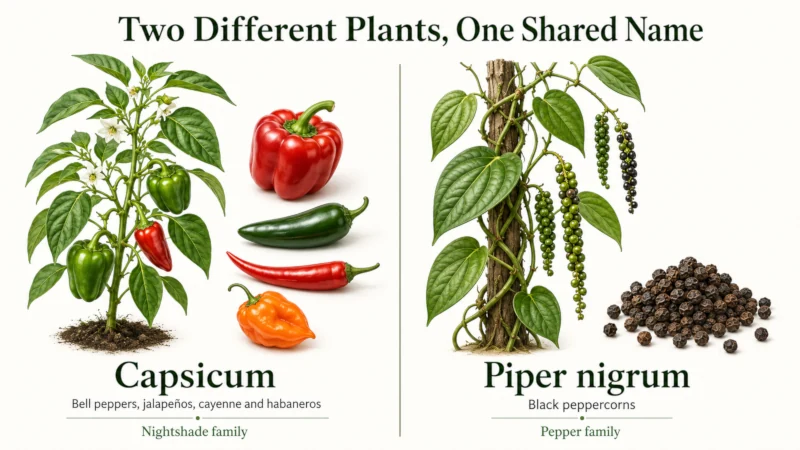
Two unrelated plants share the name. Black pepper is Piper nigrum, the peppercorn in your grinder. Everything else in this article — bell peppers, paprika, jalapeños, cayenne, habaneros — belongs to the genus Capsicum, a member of the nightshade family alongside tomatoes, potatoes, and eggplant.
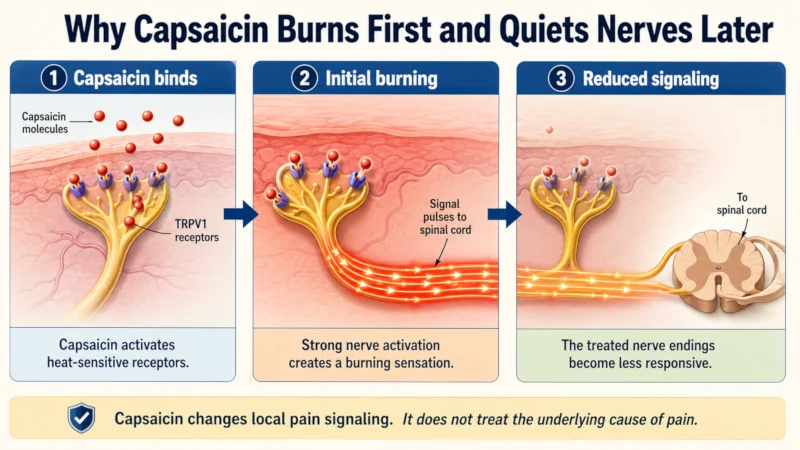
Most peppers you buy are Capsicum annuum: sweet bells, paprika, jalapeño, and the cayenne types. Tabasco peppers are Capsicum frutescens; habaneros and scotch bonnets are Capsicum chinense. The heat comes from capsaicin and related capsaicinoids, which bind to a receptor called TRPV1 on sensory nerve endings — the same receptor that responds to physical heat, which is why the burn feels like a burn without any tissue actually being damaged [StatPearls, capsaicin pharmacology].
Sweet peppers contain almost no capsaicin. That single fact separates the two halves of this article: the nutrition case applies to all peppers, and the pain case applies only to hot ones and to concentrated capsaicin products.
The nutrition is the least exciting benefit and the most dependable
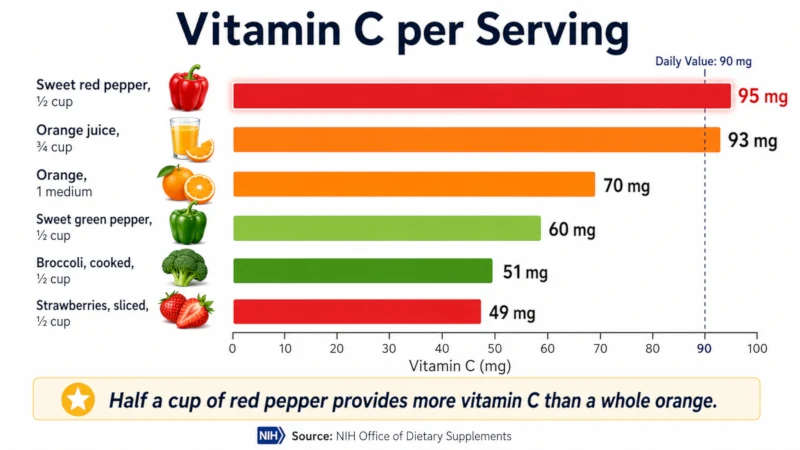
Peppers are among the densest food sources of vitamin C available in a US supermarket. A half-cup of raw sweet red pepper supplies 95 mg, which is 106% of the Daily Value. Green peppers are lower but still strong at 60 mg. For comparison, a medium orange gives 70 mg [NIH Office of Dietary Supplements, 2025]. If you have been reaching for citrus, peppers outperform oranges gram for gram.
| Food (raw unless noted) | Vitamin C per serving | % Daily Value |
| Sweet red pepper, ½ cup | 95 mg | 106% |
| Orange juice, ¾ cup | 93 mg | 103% |
| Orange, 1 medium | 70 mg | 78% |
| Sweet green pepper, ½ cup | 60 mg | 67% |
| Broccoli, cooked, ½ cup | 51 mg | 57% |
| Strawberries, sliced, ½ cup | 49 mg | 54% |
Source: NIH Office of Dietary Supplements, Vitamin C Fact Sheet for Health Professionals (updated 2025). The Daily Value for vitamin C is 90 mg.
The adult recommended intake is 90 mg a day for men and 75 mg for women, with an extra 35 mg for people who smoke [NIH ODS, 2025]. One red pepper covers it comfortably. Vitamin C is needed for collagen synthesis, wound healing, normal immune function, and absorption of iron from plant foods — which is a practical reason to put raw peppers in a bean or lentil salad.
One caveat worth knowing: vitamin C is water soluble and degrades with heat and long storage, so a raw or lightly cooked pepper delivers more than a stewed one [NIH ODS, 2025]. Red and orange peppers also carry the carotenoid pigments that give them their color, which is a reasonable nutritional argument for letting peppers ripen past green.
This is not a dramatic claim. It is simply the most reliable thing peppers do.
Capsaicin for pain: the strongest of the pepper plant benefits
Applied to skin, capsaicin first excites pain nerve endings, then exhausts them. With enough exposure the nerve fibers in the treated patch of skin stop signaling normally — a state researchers call defunctionalization. That is the mechanism behind every capsaicin pain product, and the evidence for it splits sharply by concentration.
The clinic-strength patch
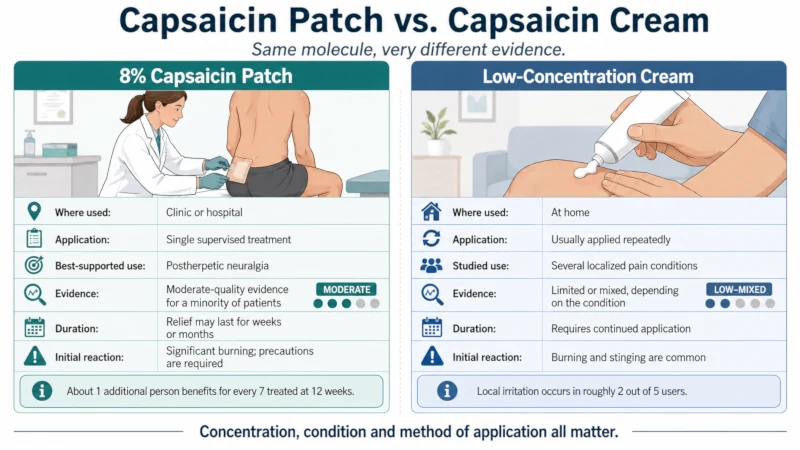
An 8% capsaicin patch is applied for about an hour in a clinic or hospital, often after a local anesthetic, because the initial burn is severe without precautions. A single application is designed to relieve pain for up to three months [Cochrane Review, 2017].
A Cochrane systematic review of eight randomized trials found moderate-quality evidence of benefit in postherpetic neuralgia, the nerve pain that can follow shingles. Across two trials with 571 participants, the number needed to treat for one additional person to report substantial improvement was 8.8 at eight weeks and 7.0 at twelve weeks. For painful HIV-related neuropathy and diabetic neuropathy the evidence was rated very low quality. Serious adverse events were no more common with treatment (3.5%) than control (3.2%) [Derry et al., Cochrane, 2017].
Read those numbers honestly. A number needed to treat of seven means roughly one in seven people gets a clear benefit they would not have had otherwise — real, worth having, and far from universal. The reviewers noted that people who did respond well also tended to report better sleep, less fatigue, and improved quality of life.
The drugstore cream
Low-concentration capsaicin creams — under 1%, rubbed on several times a day — are the ones sold over the counter, and they have not performed nearly as well in trials. A separate Cochrane review concluded there were insufficient data to draw conclusions about their efficacy in neuropathic pain, and that the available information suggests low-concentration capsaicin works no better than the placebo creams it was compared against. Local skin irritation was common: the number needed to harm was 2.5, meaning roughly two in five users get a burning or stinging reaction [Derry and Moore, Cochrane, 2012].
Where the evidence genuinely disagrees
The picture is not uniformly negative for over-the-counter preparations. The US National Center for Complementary and Integrative Health, summarizing herbal treatments for low-back pain, states that topical cayenne preparations reduce pain, and rates that evidence better than the evidence for comfrey, lavender, willow bark, or devil’s claw [NCCIH, 2020].
So one federal agency says topical cayenne helps back pain, and Cochrane says low-concentration capsaicin does little for nerve pain. Both can be right. They are describing different conditions (musculoskeletal back pain versus damaged nerves), different preparations (cayenne plasters and extracts versus purified capsaicin cream), and different outcome measures. What neither supports is the idea that a cayenne rub treats the underlying disease. It changes pain signaling in the skin over the sore area, and that is the whole of it. If joint pain is your reason for reading this, the wider evidence on dietary and herbal approaches to joint and muscle pain is worth reading alongside.
Peppers and digestion: what is myth and what is real irritation
The old idea that spicy food causes stomach ulcers is wrong, and the correction is not subtle. Peptic ulcers are overwhelmingly caused by Helicobacter pylori infection and by long-term use of NSAIDs such as aspirin and ibuprofen. As MedlinePlus puts it, stress and spicy foods do not cause ulcers, though they can make an existing one feel worse [MedlinePlus, peptic ulcer]. The National Institute of Diabetes and Digestive and Kidney Diseases goes further, noting that researchers have not found diet to play an important role in causing, preventing, or treating peptic ulcers, and that doctors do not recommend avoiding specific foods for them [NIDDK, peptic ulcers].
Real irritation is a different question. In a controlled study comparing red chili with placebo, people with non-erosive reflux disease reported significantly more severe abdominal burning after chili and a trend toward worse heartburn, while healthy volunteers reported symptoms no different from placebo [Gastric accommodation study, 2020]. That is the practical summary: hot peppers do not damage a healthy gut, and they can reliably provoke symptoms in a sensitized one.
If you have reflux, functional dyspepsia, irritable bowel syndrome, or active inflammatory bowel disease, heavily spiced food is a common and reasonable thing to pull back on during a symptom flare — an approach that mirrors the broader flare-versus-remission logic used in inflammatory bowel disease. Sweet peppers, which carry almost no capsaicin, are usually tolerated far better than hot ones.
Metabolism, appetite, and the fat-burning claim
Capsaicin does measurably raise energy expenditure. A systematic review and meta-analysis of 13 placebo-controlled trials in healthy adults found that capsaicinoids or capsinoids increased resting metabolic rate by a weighted mean of about 34 kcal per day (95% CI 16 to 52), with no heterogeneity between studies [Capsaicinoid thermogenesis meta-analysis, PubMed].
Thirty-four calories is roughly a third of a banana. The effect is real, consistent, and far too small to matter for weight loss on its own.
Appetite is the more interesting angle. A meta-analysis of energy-intake data pooled eight trials in 191 participants and found that capsaicinoids reduced how much people ate at a subsequent meal, with a minimum effective dose of about 2 mg of capsaicinoids and a shift in preference away from fatty foods. Heterogeneity was high (I² = 75.7%), and the authors called for long-term randomized trials before drawing conclusions [Whiting et al., capsaicinoid energy intake meta-analysis, PubMed].
Grade this one “limited and short-term.” Spicy food may modestly blunt appetite at a meal. No trial has shown that eating chili, or taking cayenne capsules, produces meaningful long-term weight loss, and products marketed on that basis are running ahead of the evidence.
Do people who eat chili live longer?
A large US cohort study followed 16,179 adults from NHANES III for a median of 18.9 years. Among people who reported eating hot red chili peppers, 21.6% died during follow-up, compared with 33.6% of those who did not — a 13% lower risk of death after adjustment [Chopan and Littenberg, PLOS ONE, 2017].
That headline needs its footnotes. This is observational data, so it shows association and not cause. The chili eaters in the study were younger, more likely to be male, and — awkwardly for the finding — more likely to smoke and drink, while also eating more vegetables. Statistical adjustment helps with measured differences and cannot fix unmeasured ones. The authors themselves described the evidence base for spice consumption as insufficient.
A fair reading: liking spicy food is not a health risk, and may travel with a dietary pattern that is good for you. It is not a reason to start eating chili as a life-extension strategy.
Safety, side effects, and interactions
Common side effects
- Eaten: mouth and throat burning, abdominal pain, heartburn, and diarrhea, mostly dose related and more likely in people with existing gut conditions.
- On skin: burning, stinging, and redness at the application site. With low-concentration cream this is common enough that roughly two in five users experience it.
- In eyes and on mucous membranes: intense pain. Capsaicin transfers easily from fingers. Wash hands with soap after handling hot peppers, and consider gloves for large quantities.
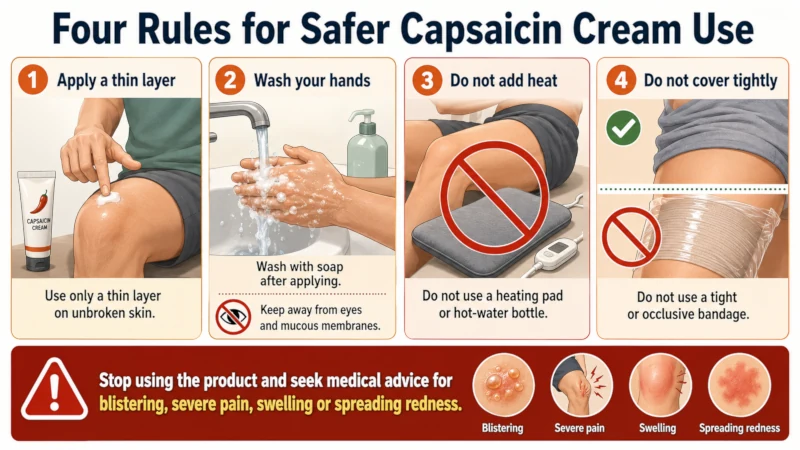
- Rarely, serious skin injury. The FDA has warned that over-the-counter topical muscle and joint products containing menthol, methyl salicylate, or capsaicin have caused rare first- to third-degree chemical burns; most severe cases involved menthol or menthol plus methyl salicylate rather than capsaicin. Do not bandage the area tightly, do not apply heat, and do not use these products on broken or irritated skin.
Medication interactions
Concentrated capsicum products, unlike food-level amounts, warrant a conversation with a pharmacist. The National Institutes of Health LactMed database notes that capsicum may increase bleeding risk and should be used cautiously by people taking anticoagulant or antiplatelet medication [LactMed, Capsicum, 2021]. Beyond that, the interaction data for capsicum supplements are thin rather than reassuring; absence of documented interactions is not evidence of safety.
One published case report describes a previously healthy 25-year-old man who developed coronary vasospasm and an inferior myocardial infarction after taking cayenne pepper pills for weight loss [Sogut et al., International Journal of Emergency Medicine, 2012]. A single case report proves nothing about population risk. It does illustrate why concentrated capsaicin capsules are a different product from a pepper on a plate.
Pregnancy and breastfeeding
Peppers as food are part of normal diets worldwide. Concentrated supplements are a separate matter, and there is not enough data to call them safe in pregnancy — talk to your obstetric clinician first.
For breastfeeding, the guidance is more specific. LactMed reports that capsicum components can reach breast milk in amounts that affect infants, with skin rashes described in the breastfed infants of women eating heavily red-peppered food. Topical capsaicin applied to the mother’s skin should not affect the infant provided the infant’s skin does not touch treated areas — but severe pain has been reported in an infant who ingested capsaicin from a mother’s skin. Do not apply capsaicin cream to the breast or to any area the baby may contact [LactMed, Capsicum, 2021] [LactMed, Capsaicin, 2024].
Who should avoid or limit hot peppers
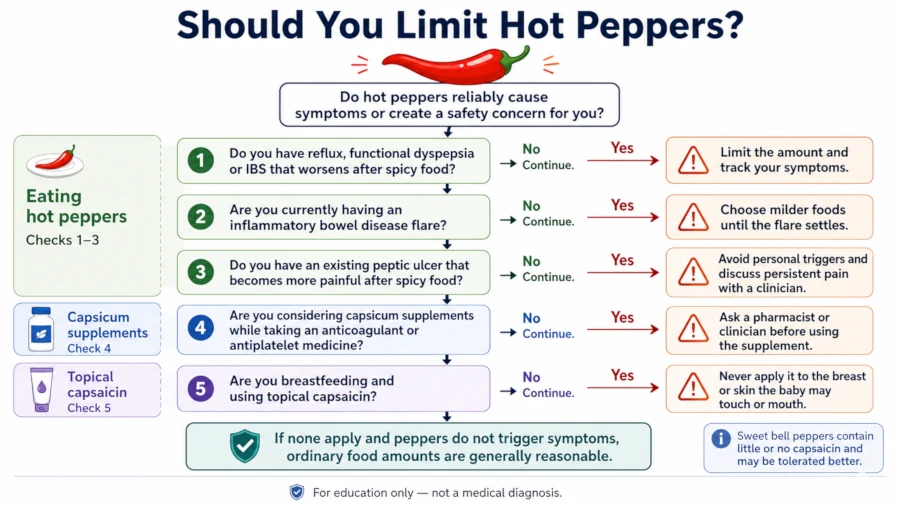
- Anyone with reflux, functional dyspepsia, IBS, or an active IBD flare who finds that spice reliably triggers symptoms.
- Anyone with an existing peptic ulcer, where hot food can worsen the pain even though it did not cause the ulcer.
- People taking warfarin, direct oral anticoagulants, or antiplatelet drugs, before using capsicum supplements.
- Anyone applying topical capsaicin to broken, irritated, or infected skin, or planning to combine it with a heating pad or an occlusive bandage.
- Breastfeeding parents applying capsaicin anywhere the baby’s skin or mouth could reach.
- Young children, who should not be given capsaicin products or handle hot peppers unsupervised.
Claims to walk away from
Cayenne is widely promoted for uses it cannot support, and some of that advice is dangerous. Cayenne does not stop a heart attack; chest pain is a 911 call, not a spice cabinet problem. Sprinkling cayenne powder on an open wound to stop bleeding risks contamination and delays proper care. Packing capsaicin oil into a tooth cavity is not a substitute for a dentist. And there is no credible evidence that cayenne treats jaundice, arteriosclerosis, convulsions, kidney disease, or blood pressure in either direction.
Traditional use is a reason to investigate a plant. It is not, by itself, evidence that the plant works.
Red flags: when to stop and get medical care
Call 911 or go to an emergency room for:
- Chest pain, pressure, or tightness, especially with sweating, nausea, or pain spreading to the arm or jaw.
- Difficulty breathing, throat swelling, or hives after eating peppers — this can be anaphylaxis.
- Vomiting blood, or stools that are black and tarry or visibly bloody.
- Sudden, severe abdominal pain with a rigid or distended belly.
Contact your primary care clinician or an urgent care center for:
- Heartburn several times a week, or reflux that wakes you at night, for more than a few weeks.
- Difficulty or pain when swallowing, or a sense of food sticking.
- Unexplained weight loss, persistent vomiting, or early fullness at meals.
- Blistering, spreading redness, swelling, or pain at the site of a topical pain product — stop using it and get it looked at.
- Capsaicin in the eye with pain or blurred vision that persists after thorough flushing with water.
- Nerve pain that is not controlled by what you are currently doing. Prescription options, including the clinic-administered capsaicin patch, exist and are worth asking about.
How to actually use peppers
- For vitamin C, eat sweet peppers raw or briefly cooked. Red and orange varieties are riper and more nutrient-dense than green.
- Pair raw peppers with beans, lentils, or leafy greens — the vitamin C improves iron absorption from those foods.
- For a sore back or joint, an over-the-counter capsaicin cream is a low-risk thing to try for a few weeks. Apply a thin layer, wash your hands afterward, skip the heating pad, and stop if the skin blisters.
- Expect the burn to feel worse before it feels better. That is the mechanism, not a sign the product is working better.
- For established nerve pain, ask a clinician about the high-concentration patch rather than buying stronger creams.
- Build spice tolerance gradually if you want to. Sudden large increases are the most common cause of an unpleasant evening.
- Treat cayenne capsules as a supplement decision, not a cooking decision, and tell your pharmacist you are taking them.
Peppers earn their place on the plate on nutrition alone. Capsaicin earns a narrow, real place in pain management. Anything sold beyond that is being sold on hope.
| Health Disclaimer: This article is for general education and is not a substitute for medical advice, diagnosis, or treatment from a qualified healthcare professional. Nutrient needs, medication interactions, and tolerance for spicy food vary between individuals. Talk with your doctor or pharmacist before starting any capsicum or capsaicin supplement, particularly if you are pregnant or breastfeeding, take anticoagulant or antiplatelet medication, or have a digestive condition. Do not delay medical care for pain, bleeding, or digestive symptoms in order to try a home remedy. If you have chest pain, difficulty breathing, throat swelling, or bleeding from the digestive tract, call 911 or go to an emergency room right away. |
Frequently Asked Questions
Are bell peppers really higher in vitamin C than oranges?
Yes. A half-cup of raw sweet red pepper provides 95 mg of vitamin C compared with 70 mg in a medium orange, according to the NIH Office of Dietary Supplements. Green peppers give 60 mg per half-cup. Because vitamin C is destroyed by heat, raw or lightly cooked peppers deliver the most.
Does capsaicin cream actually work for pain?
It depends on the strength and the condition. A Cochrane review found moderate-quality evidence that a high-concentration 8% patch, applied in a clinic, helps a minority of people with postherpetic neuralgia. A separate Cochrane review of the low-concentration creams sold over the counter found insufficient data and no meaningful advantage over placebo cream for nerve pain. NCCIH does report evidence that topical cayenne preparations reduce low-back pain, which is a different condition and a different preparation.
Do hot peppers cause stomach ulcers?
No. Peptic ulcers are caused mainly by Helicobacter pylori infection and long-term NSAID use. MedlinePlus states that spicy foods do not cause ulcers, although they can make an existing ulcer feel worse. If you have reflux, dyspepsia, or IBS, chili can still reliably trigger symptoms without causing damage.
Can cayenne pepper help you lose weight?
Not to a degree that matters. A meta-analysis of 13 trials found capsaicinoids raised resting metabolic rate by roughly 34 kcal a day. A separate meta-analysis suggested a modest short-term reduction in how much people eat at a following meal, with high variability between studies. Neither supports cayenne capsules as a weight-loss product.
Is it safe to eat spicy food while breastfeeding?
Peppers as food are eaten by breastfeeding parents worldwide, but the NIH LactMed database notes that capsicum components can reach breast milk in amounts that have been linked to skin rashes in some breastfed infants. The clearer rule concerns topical products: never apply capsaicin cream to the breast or to any skin your baby might touch or mouth, because severe pain has been reported in an infant who ingested capsaicin from a parent’s skin.
What should I do if I get chili in my eye?
Flush the eye with lukewarm water for several minutes and avoid rubbing it, which spreads the capsaicin. Discomfort usually settles within an hour. Seek medical care if pain, redness, or blurred vision persists after thorough flushing, or if you wear contact lenses and cannot remove them comfortably.
References
- National Institutes of Health, Office of Dietary Supplements. Vitamin C — Fact Sheet for Health Professionals. Updated July 31, 2025. → View source
- National Institutes of Health, Office of Dietary Supplements. Vitamin C — Fact Sheet for Consumers. Updated March 22, 2021. → View source
- National Center for Complementary and Integrative Health. Low-Back Pain and Complementary Health Approaches: What You Need To Know. Last updated January 2020. → View source
- Derry S, Rice ASC, Cole P, Tan T, Moore RA. Topical capsaicin (high concentration) for chronic neuropathic pain in adults. Cochrane Database of Systematic Reviews 2017, Issue 1. Art. No.: CD007393. DOI: 10.1002/14651858.CD007393.pub4. PMID 28085183. → View source
- Derry S, Moore RA. Topical capsaicin (low concentration) for chronic neuropathic pain in adults. Cochrane Database of Systematic Reviews 2012, Issue 9. Art. No.: CD010111. DOI: 10.1002/14651858.CD010111. PMID 22972149. → View source
- Drugs and Lactation Database (LactMed). Capsicum. National Institute of Child Health and Human Development. Last revision May 17, 2021. NBK501824. → View source
- Drugs and Lactation Database (LactMed). Capsaicin. National Institute of Child Health and Human Development. Last revision August 15, 2024. NBK574071. → View source
- Chopan M, Littenberg B. The Association of Hot Red Chili Pepper Consumption and Mortality: A Large Population-Based Cohort Study. PLOS ONE. 2017;12(1):e0169876. DOI: 10.1371/journal.pone.0169876. PMID 28068423. → View source
- MedlinePlus, National Library of Medicine. Peptic Ulcer. → View source
- National Institute of Diabetes and Digestive and Kidney Diseases. Peptic Ulcers (Stomach or Duodenal Ulcers). → View source
- Acute Effects of Red Chili, a Natural Capsaicin Receptor Agonist, on Gastric Accommodation and Upper Gastrointestinal Symptoms in Healthy Volunteers and Gastroesophageal Reflux Disease Patients. PMC7761989. → View source
- The effect of Capsaicinoids or Capsinoids in red pepper on thermogenesis in healthy adults: a systematic review and meta-analysis. PubMed PMID 33063385. → View source
- Whiting S, Derbyshire E, Tiwari BK. Could capsaicinoids help to support weight management? A systematic review and meta-analysis of energy intake data. PubMed PMID 24246368. → View source
- Sogut O, Kaya H, Gokdemir MT, Sezen Y. Acute myocardial infarction and coronary vasospasm associated with the ingestion of cayenne pepper pills in a 25-year-old male. International Journal of Emergency Medicine. 2012;5:5. DOI: 10.1186/1865-1380-5-5. PMC3284873. → View source
- Capsaicin. StatPearls, NCBI Bookshelf. NBK459168. → View source
