Natural Health Message — Herbs, Remedies & Nutrition for Whole-Body Wellness.
  • Health Conditions
    • Cancer & Prevention
    • Cardiovascular Health
    • Digestive Health
    • Eye & Vision
    • Immune & Infections
    • Metabolic Health
    • Musculoskeletal Health
    • Nervous System
    • Reproductive Health
    • Respiratory Health
    • Skin Health
    • Urinary Health
  • Nutrition
    • Diet
    • Foods
    • Recipes
  • Remedies
    • Alternative Treatments
    • Herbal Remedies
    • Herbs
    • Lifestyle & Habits
  • Supplements and Reviews
    • General Supplements
    • Minerals
    • Nitric Oxide
    • Reviews
    • Vitamins
Home | Herbs | Could The Burdock Plant Lower Blood Sugar? Studies Show Promise with 2 Grams Daily
Herbs

Could The Burdock Plant Lower Blood Sugar? Studies Show Promise with 2 Grams Daily

by Donald Rice Updated: May 16, 2026
written by Donald Rice Published: July 9, 2021Updated: May 16, 2026
Naturalhealthmessage.com receives compensation from some of the companies, products, and services listed on this page. Advertising Disclosure
0FacebookTwitterPinterestTumblrVKWhatsappEmail
1.7K

Contents

  • 1 Burdock Plant Scientific Facts
  • 2 Preparation and Use
  • 3 Healing Properties
        • 3.0.0.1 REFERENCES
Burdock plant
Burdock plant

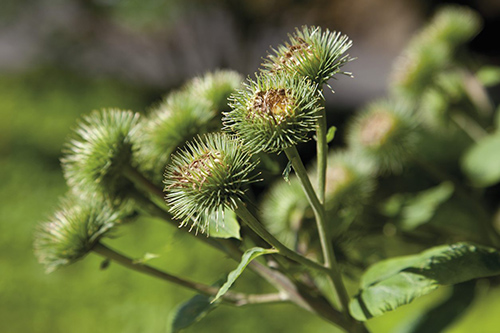
The burdock plant demands a lot of attention because of its large leaves. Ancient classical authors used burdock leaves as masks to cover up their faces. Hence, the plant was named personatia since theater masks were called “persona.”

We do not know how the effects of this plant on the skin were discovered. Perhaps one of those actors had acne or furuncles on his face, and after some plays, the appearance of his skin improved.

Related Products

Browse practical items related to herbal routines.

Browse Herbal Tools

As an Amazon Associate I earn from qualifying purchases.

Whether this is true or not, the medicinal properties of burdock have been known for many ages and were noted by Dioscorides, the great Greek physician of the first century A.D. However, in the modern era, the properties of this plant were celebrated up to the point it was called a “cure-all.” The famous London physician of the eighteenth century, John Hill, thought that burdock was the ultimate solution for gout; unfortunately, he died at age 59, suffering from intense gout attacks.

Burdock Plant Scientific Facts
burdock root tincture
Burdock plant for maximum skin cleaning
  1. Other names: Bardana, burr seed, clotbur, cocklebur, grass burdock, hardock, hareburr, hurrburr, turkey burrseed, great burdock.
  2. French: Bardane
  3. Spanish: Bardana
  4. Environment: It grows near roads and populated places with abundant human or animal excretions. It is widespread in warm regions of Europe and America.
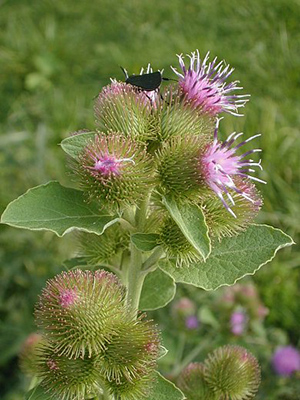
  5. Description: Strong plant of the Compositae family, growing up to one meter high. It is a biennial plant that takes two years to flower. It has large leaves, half a meter wide or even more. The flower heads are surrounded by thorns, which allow them to stick to clothes and hair. From their upper part, small purple or pink flowers grow. This plant is sometimes mistaken for Arctium minus, which has similar properties. It is considered to be one of the burdock look-alikes.
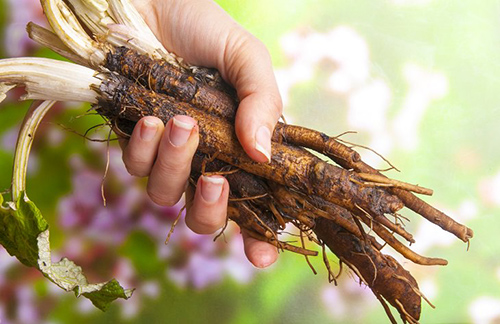
  6. Parts of the plant used medicinally: The root and the leaves when fresh. They are gathered in the spring (just before blooming) of the plant’s second year.

Preparation and Use

  1. Infusion
  2. Cold extract
  3. Compresses: Made with the same infusion or decoction taken internally but slightly more concentrated. Apply from two to six times a day for 10-15 minutes.
  4. Poultices: With mashed fresh leaves or the root, well-boiled, make a paste and apply it on the affected skin for around 10 minutes, several times a day.
  5. Lotions: Applied with the fresh juice of the plant.

Infusion (leaves): Take one cup three to four times daily. Decoction (seeds or root): One-ounce root to 1 ½ pint of water boiled down to one pint. Take 3 ounces three to four times daily. Tincture: Take 30 to 60 drops three to four times daily. Fluid Extract: Take ½ to one teaspoon three to four times daily. Powder (root or seed): Take ten to twenty #0 capsules (60 to 90 grains) daily. Powder (leaves): Take 5 to 10 #0 capsules (30 to 60 grains) thrice daily.

Healing Properties

The root and leaves of burdock contain different active components which explain its properties:
Could The Burdock Plant Lower Blood Sugar? Studies Show Promise with 2 Grams Daily 3
Burdock plant root
  1. Antibiotic: Artiopicrine, mainly contained in the root, is a plant antibiotic of the glycosidic type, proven to be especially effective against staphylococcus, a germ that causes many skin infections. Its use in external (compresses, poultices, lotions) and internal (infusion or cold extract) applications are recommended for skin infections caused by staphylococci, such as abscesses and furuncles gumboils, adenitis, and infected sebaceous cysts.

    It is also helpful for chronic eczema, acne, and eruptive infectious diseases (measles, chickenpox, scarlet fever, etc.) The antibiotic properties of burdock are eliminated through the urine and are thus recommended for cystitis and recidivist urinary infections.
  2. Depurative: Because of its content of essential oil and mineral salts rich in potassium, burdock is an excellent sudorific and depurative plant. It promotes the elimination of waste substances through the skin. Thus, the skin, also an excreting organ, frees itself of impurities. Its mild diuretic properties also contribute to this action. It is recommended for gout (excess of uric acid), arthritis, and renal lithiasis.
  3. Hypoglycemic: Burdock root decreases the sugar level in the blood partially because of its inulin content (a carbohydrate useful for people with diabetes). It produces fantastic results as a complement to diabetes treatment, allowing the patient to reduce insulin or antidiabetic medicines.
  4. Hair invigorant: Some people use burdock, with unequal success, applied on the scalp as compresses or lotion, intending to grow hair.

The maximum cleaning and beauty effects of burdock on the skin are achieved by drinking herbal teas and at the same time applying it externally.

The burdock plant helps to promote kidney function and works through the kidneys to aid in clearing the blood of harmful acids. It is considered one of the best blood purifying herbs for sciatica, skin diseases, arthritis, rheumatism, and chronic infections. Burdock is also used for skin disorders, such as boils and carbuncles, and it can be helpful for menopausal symptoms and gout. It can eliminate uric acid, excess fluids, and toxins.

The plant is also antifungal and antibacterial. It acts as an antioxidant and could help defend against cancer by helping to control cell mutation. Burdock’s diaphoretic properties result from volatile oils, which, when taken internally, come out through the sweat glands, removing toxic substances. Sweating helps cool down the body. Therefore, it is a crucial remedy for reducing fevers and heat-related conditions such as canker sores, carbuncles, styes, boils, and infections.

The burdock plant contains 27 to 45 percent inulin, the source of its curative properties and abilities. Inulin is a starch. This plant is also rich in iron, making it valuable for treating blood disorders and as a blood purifier. This makes it helpful in treating lumbago, sciatica, rheumatism, and arthritis. The seeds can be used to create a tincture or extract which can treat kidney and skin diseases.

Taken on its own or with other blood purifiers such as sarsaparilla, it is highly effective against skin issues. It would help if you took it internally to treat psoriasis, eczema, chicken pox, boils, and acne. A decoction of the root can be made by using one ounce to 1 ½ pint of water and simmering until the volume is reduced to one pint. Take ½ cup three times daily.

To produce sweating, simmer in a covered pan for ten minutes, then drink one cup of the tea before taking a hot bath. When used externally, it can treat poison oak, ivy, itchy skin, eczema, and boils.

DISCLAIMER: All content on this website is presented solely for educational and informational objectives. It would be best to not rely on the information provided as a replacement for advice, diagnosis, or treatment from a qualified medical expert. If you are pregnant, nursing, or have any preexisting medical concerns, you should talk to your doctor before using any herbal or natural medicines.

REFERENCES
  1. George D. Pamplona-Roger, M.D. “Encyclopedia of Medicinal Plants.” George D. Pamplona-Roger, M.D. Encyclopedia of Medicinal Plants. Ed. Francesc X. Gelabert. vols. 2 San Fernando de Henares: Editorial Safeliz, 2000. 697, 698. Print.[burdock plant]
  2. Vance Ferrell Harold M. Cherne, M.D. The Natural Remedies Encyclopedia [Book]. – Altamont, TN: Harvestime Books, 2010. – Vol. Seventh Edition: 7: pp. 148, 149.

Related posts:

  1. Foods For Healthy Blood
  2. Boost Your Liver Health: 10 Best Foods for The Liver
  3. Stinging Nettle: An Amazing Plant That Defends Itself and Us
  4. Lavender Benefits: Amazing Fragrance, Invigorating and Medicinal
benefits of burdock root tea for hairburdock leaf usesburdock plant benefitsburdock plant imagesburdock plant seedsburdock plant usesburdock root benefits for hairburdock root benefits for skinburdock root nutritionburdock root nutritional benefitsburdock root oil for skinburdock root supplementburdock root tinctureorganic burdock root oil
0 FacebookTwitterPinterestTumblrVKWhatsappEmail
Donald Rice
Donald Rice

Donald Rice is a natural health advocate and health writer focused on nutrition, wellness, and alternative health education. He creates clear, research-based content designed to help readers better understand health topics through reputable sources, including peer-reviewed studies, academic institutions, government health agencies, and established medical organizations.

previous post
5 Reasons Your Aloe Vera Plant Deserves a Spot in Your Kitchen
next post
St. John’s Wort Plant: A Natural Mood Booster? Studies Show Effectiveness Comparable to Antidepressants for Mild to Moderate Depression

You may also like

Ashwagandha Benefits: What the Evidence Actually Supports

Updated: June 1, 2026

How to Make a Nervine Tea Blend for Stress

Published: November 11, 2025

The Best Adaptogenic Herbs for Social Anxiety

Published: November 1, 2025

The Benefits of Mugwort Tea: Tradition, Evidence, and Safety

Updated: June 13, 2026

The Best Herbs for Male Stamina

Updated: October 14, 2025

Yohimbe Benefits for Men: What the Science Actually Says About Fat Loss, Energy,...

Updated: May 20, 2026
Best Health and Wellness Blogs - OnToplist.com

Recent Posts

  • Flat Feet Symptoms in Adults: What They Feel Like and When They Matter

  • Flat Feet vs Overpronation: What’s the Difference?

  • Best Exercises for Flat Feet in Adults

  • What Are Flat Feet? Causes, Types, and Common Symptoms

  • Flat Feet and Fallen Arches: Causes, Symptoms, and What Helps

Random Articles

Alcohol Withdrawal: Symptoms, Management, and the Best Treatment Options
Elecampane Plant Health Benefits
Discover the Healing Power of Sweet Clover

Yellow Adonis Plant Heart Health Benefits

Recent Articles

Corneal Ulcers: Causes, Symptoms, and Treatment Options
Health Benefits of Honey: What the Evidence Really Shows
Night Blindness: Shedding Light on an Unseen Impairment

Featured

Blessed Herb (Geum urbanum): What It’s Used For and What the Evidence Shows
The Bee Balm Plant: Is It the Natural Health Booster You’ve Been Missing?
Sea Wormwood Health Benefits

@2024 – All Right Reserved. Natural Health Message.

  • About Us
  • Contact Us
  • Advertising Disclosure
  • Medical Advice Disclaimer
We use cookies on our website to give you the most relevant experience by remembering your preferences and repeat visits. By clicking “Accept All”, you consent to the use of ALL the cookies. However, you may visit "Cookie Settings" to provide a controlled consent.
Cookie SettingsAccept All
Manage consent

Privacy Overview

This website uses cookies to improve your experience while you navigate through the website. Out of these, the cookies that are categorized as necessary are stored on your browser as they are essential for the working of basic functionalities of the website. We also use third-party cookies that help us analyze and understand how you use this website. These cookies will be stored in your browser only with your consent. You also have the option to opt-out of these cookies. But opting out of some of these cookies may affect your browsing experience.
Necessary
Always Enabled
Necessary cookies are absolutely essential for the website to function properly. These cookies ensure basic functionalities and security features of the website, anonymously.
CookieDurationDescription
cookielawinfo-checkbox-analytics11 monthsThis cookie is set by GDPR Cookie Consent plugin. The cookie is used to store the user consent for the cookies in the category "Analytics".
cookielawinfo-checkbox-functional11 monthsThe cookie is set by GDPR cookie consent to record the user consent for the cookies in the category "Functional".
cookielawinfo-checkbox-necessary11 monthsThis cookie is set by GDPR Cookie Consent plugin. The cookies is used to store the user consent for the cookies in the category "Necessary".
cookielawinfo-checkbox-others11 monthsThis cookie is set by GDPR Cookie Consent plugin. The cookie is used to store the user consent for the cookies in the category "Other.
cookielawinfo-checkbox-performance11 monthsThis cookie is set by GDPR Cookie Consent plugin. The cookie is used to store the user consent for the cookies in the category "Performance".
viewed_cookie_policy11 monthsThe cookie is set by the GDPR Cookie Consent plugin and is used to store whether or not user has consented to the use of cookies. It does not store any personal data.
Functional
Functional cookies help to perform certain functionalities like sharing the content of the website on social media platforms, collect feedbacks, and other third-party features.
Performance
Performance cookies are used to understand and analyze the key performance indexes of the website which helps in delivering a better user experience for the visitors.
Analytics
Analytical cookies are used to understand how visitors interact with the website. These cookies help provide information on metrics the number of visitors, bounce rate, traffic source, etc.
Advertisement
Advertisement cookies are used to provide visitors with relevant ads and marketing campaigns. These cookies track visitors across websites and collect information to provide customized ads.
Others
Other uncategorized cookies are those that are being analyzed and have not been classified into a category as yet.
SAVE & ACCEPT
Natural Health Message — Herbs, Remedies & Nutrition for Whole-Body Wellness.
  • Health Conditions
    • Cancer & Prevention
    • Cardiovascular Health
    • Digestive Health
    • Eye & Vision
    • Immune & Infections
    • Metabolic Health
    • Musculoskeletal Health
    • Nervous System
    • Reproductive Health
    • Respiratory Health
    • Skin Health
    • Urinary Health
  • Nutrition
    • Diet
    • Foods
    • Recipes
  • Remedies
    • Alternative Treatments
    • Herbal Remedies
    • Herbs
    • Lifestyle & Habits
  • Supplements and Reviews
    • General Supplements
    • Minerals
    • Nitric Oxide
    • Reviews
    • Vitamins