
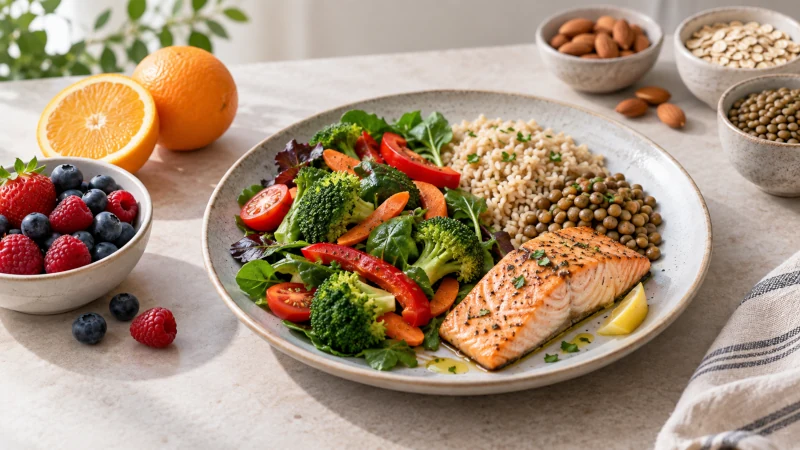
If you’ve just been told you have gallstones, the honest short answer is this: the right foods to eat with gallstones can lower your odds of forming new stones and cut down on the meals that trigger pain — but no food, tea, or supplement reliably dissolves a stone once it’s there. That distinction matters, because a lot of gallstone diet advice online quietly promises more than the evidence supports.
Most gallstones are made of hardened cholesterol that has dropped out of your bile; a smaller share are pigment stones formed from excess bilirubin [Mayo Clinic]. Your gallbladder’s job is to squeeze stored bile into your intestine when you eat, especially when a meal is fatty. When a stone blocks the exit, that squeeze becomes pain. So a gallbladder-friendly plate has two jobs: keep bile chemistry on your side over the long run, and avoid provoking a painful contraction in the short run.
What eating well can — and can’t — do for gallstones
Diet is prevention and symptom management, not a cure. Population studies consistently link certain eating patterns to a lower risk of developing gallstones and needing gallbladder surgery. But if you already have stones, changing your breakfast won’t make them disappear. What it can do is reduce how often you get attacks and support your gallbladder’s normal emptying. For the fuller picture of what helps and what to skip, our gallbladder diet food list breaks it down food by food, and our guide to natural remedies for gallstones is candid about which popular “cleanses” don’t hold up.
The best foods to eat with gallstones
Fiber-rich plants: fruit, vegetables, whole grains
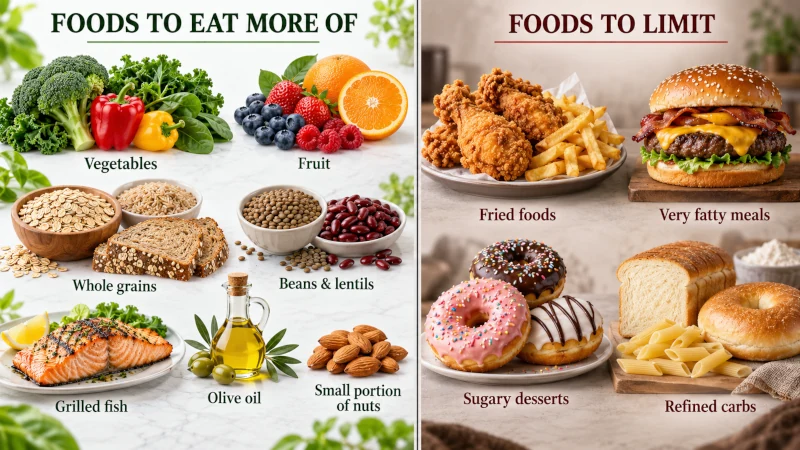
Fiber is the closest thing to a consensus recommendation here. NIDDK advises building meals around fruits, vegetables, beans and peas, and whole grains like brown rice, oats, and whole-wheat bread [NIDDK]. Beyond the agency guidance, a long-running study of U.S. women found that a higher long-term fiber intake was associated with a lower risk of needing gallbladder removal [Tsai, 2004]. Fiber also happens to be filling and low in fat, which makes it easy on a gallbladder that would rather not contract hard.
You don’t need a target to hit perfectly. Aim to make half your plate produce, swap refined grains for whole ones where you can, and let beans do some of the work of meat.
Healthy fats, in modest amounts
Fat has a bad reputation with gallstones, and only half of it is deserved. You do need some fat, because it’s the signal that tells your gallbladder to contract and empty rather than let bile sit and concentrate. NIDDK specifically points to healthy fats like fish oil and olive oil to help the gallbladder empty on a regular basis [NIDDK]. The move isn’t zero fat — it’s steady, moderate amounts of the better fats (olive oil, fatty fish, a small handful of nuts) instead of large loads of fried or greasy food in one sitting.
Plant proteins, nuts, and soy
Where your protein comes from seems to matter. In a large cohort of women, vegetable protein was associated with a lower risk of gallbladder surgery [Tsai, 2004]. Nuts show up the same way: frequent nut eaters in that research had a lower risk of cholecystectomy than those who rarely ate them [Tsai, 2004]. Swapping some animal protein for beans, lentils, tofu, and a daily handful of nuts is a reasonable, low-risk change. Soy foods like tofu and soymilk are an easy plant-protein anchor — more on soy’s profile in our write-up on soybean health benefits.
Vitamin C–rich fruits and vegetables
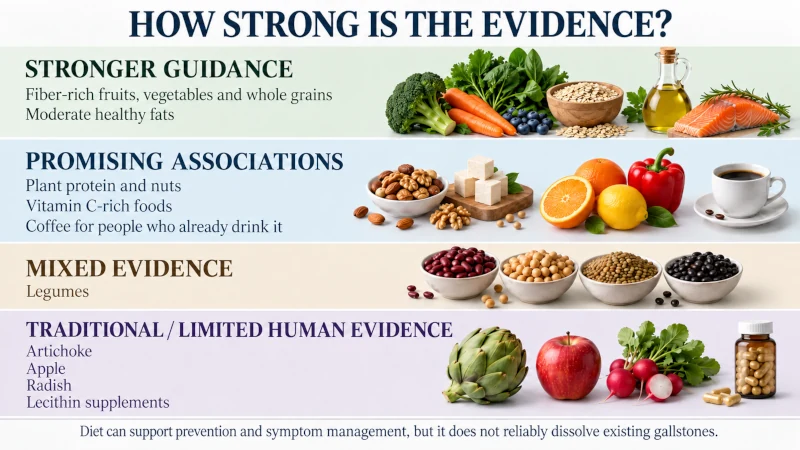
Here’s a claim worth getting right, because the original version of this page overstated it. A UCSF analysis of national survey data (NHANES III) found that among women, higher blood levels of vitamin C were linked to a lower prevalence of gallbladder disease — roughly 13% lower for each modest increase in serum vitamin C, and about 34% lower among women who used vitamin C supplements [Simon & Hudes, 2000]. Two honest caveats: this was a snapshot study, so it shows association, not proof that vitamin C prevents stones; and the link appeared in women, not men. Still, citrus, kiwi, guava, bell peppers, strawberries, and broccoli are good foods on every other count, so there’s no downside to eating more of them.
Coffee, if you already drink it
If you drink coffee, there’s modest reason to keep enjoying it. Prospective studies in men and, separately, in women linked regular coffee consumption to a lower risk of symptomatic gallstone disease, likely because caffeine nudges the gallbladder to contract [Leitzmann et al., 1999]. This isn’t a reason to start drinking coffee for your gallbladder — the effect is modest and it doesn’t apply neatly to decaf — but it’s reassuring if coffee is already your habit.
Where the evidence is thinner
Some foods get recommended for gallstones on tradition more than trials. Artichoke (and its compound cynarin), apple, and radish are often said to “thin the bile” or “empty the gallbladder.” These claims trace mostly to traditional use and some animal or laboratory work, not to solid human studies showing fewer gallstones or attacks. They’re perfectly healthy foods to eat — just don’t count on them as treatment. The same caution applies to lecithin: it’s a real component of bile that helps keep cholesterol dissolved, which is why the idea is appealing, but evidence that lecithin supplements prevent or shrink gallstones in people is limited. Eat the artichoke; skip the expectation.
The legume question: genuinely mixed
Beans deserve their own note because the science actually disagrees. On one hand, legumes are exactly the high-fiber, vegetable-protein foods linked to lower gallstone risk above. On the other, a study of young men in Chile — a country with very high gallstone rates — found that a legume-heavy diet raised the cholesterol saturation of their bile, which is a step toward cholesterol stones, not away from it [Nervi et al., 1989]. So the flat claim that “beans prevent gallstones” isn’t warranted. For most people eating a varied diet, legumes are a healthy staple; if you have recurrent stones and eat very large amounts, this is a reasonable thing to raise with your doctor rather than something to panic about.
Foods and habits to limit
- Big, fried, or very fatty meals. Fat triggers the gallbladder to contract, and a hard squeeze against a stone is what causes an attack. NIDDK recommends avoiding the unhealthy fats common in fried foods and desserts. Spread fat across the day rather than front-loading it into one heavy meal.
- Refined sugar and refined carbohydrates. NIDDK’s guidance is to eat fewer refined carbs and less sugar; diets high in both are associated with more gallstone disease.
- Crash diets and very rapid weight loss. This is the one many people get backwards. Losing weight gradually is protective, but very-low-calorie diets and rapid weight loss actually raise gallstone risk. If you’re cutting calories hard or considering weight-loss surgery, do it with medical supervision.
- Alcohol as a “remedy.” Some studies associate moderate alcohol with slightly lower gallstone risk, but that is not a reason to drink — the harms to your liver and overall health outweigh a small biliary benefit.
A simple day of gallstone-friendly eating
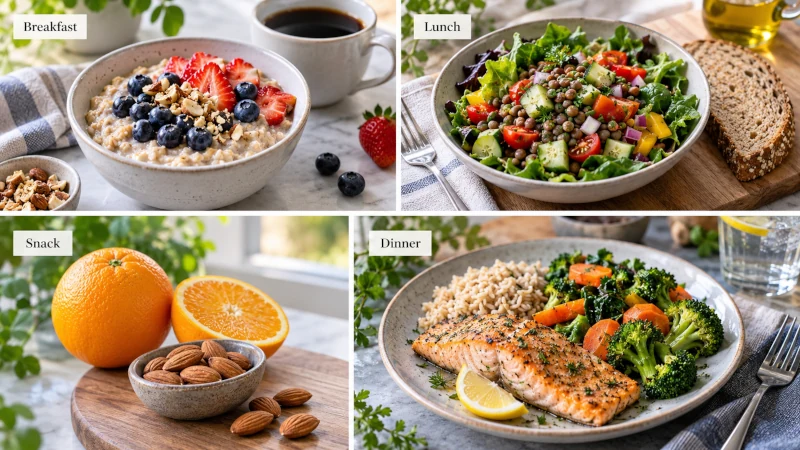
You don’t need a rigid plan. This is what the principles above look like on a plate:
| Meal | Example |
| Breakfast | Oatmeal with berries and a spoon of nuts; coffee if you drink it |
| Lunch | Lentil or bean salad with olive oil, plenty of vegetables, whole-grain bread |
| Snack | An orange or kiwi and a small handful of almonds |
| Dinner | Baked or grilled fish, brown rice, and a large serving of vegetables |
The pattern — fiber-forward, moderate healthy fat spread through the day, plant protein doing real work, not much fried food or added sugar — is the whole strategy.
When food isn’t enough: red flags and when to see a doctor
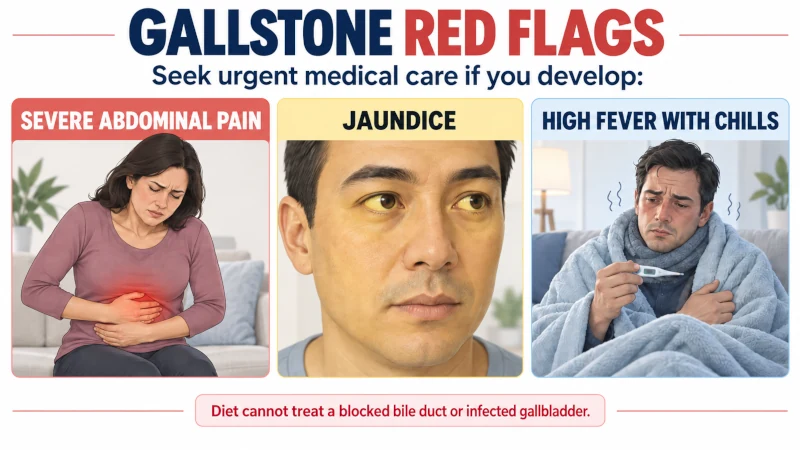
Diet manages risk and mild symptoms. It does not handle a blocked duct or an infected gallbladder, which are medical emergencies. Seek urgent care if you have any of the following [Mayo Clinic]:
- Abdominal pain so intense you can’t sit still or find a comfortable position
- Yellowing of the skin or the whites of the eyes (jaundice)
- A high fever with chills
Pain that comes and goes after fatty meals, lasting minutes to a few hours, is worth a non-urgent appointment to confirm what’s going on and discuss whether monitoring, medication, or surgery makes sense for you. Self-care is not a substitute for that conversation, especially if attacks are getting more frequent or severe.
| HEALTH DISCLAIMER: This article is for general education and information only. It is not medical advice and is not a substitute for diagnosis or treatment from a qualified healthcare professional. Gallstones can lead to serious complications, and the right approach depends on your individual health. Talk to your doctor before making significant dietary changes, starting any supplement, or acting on anything here — especially if you are pregnant, breastfeeding, managing another condition, or taking medication. |
Frequently Asked Questions
Can diet dissolve gallstones I already have?
No. Food and supplements have not been shown to reliably dissolve existing gallstones. Diet lowers the risk of forming new ones and can reduce how often stones trigger symptoms. Actual stone removal or dissolution is a medical decision — usually surgery, and occasionally prescription bile acids in specific cases.
What foods most often trigger a gallbladder attack?
Large, fatty, or fried meals are the usual culprits, because fat prompts the gallbladder to contract hard. Attacks often show up an hour or two after a heavy meal. Spreading fat across smaller meals helps some people.
Should I go completely fat-free?
No, and it can backfire. Some fat is needed to prompt the gallbladder to empty rather than let bile sit and concentrate. The goal is moderate amounts of healthier fats like olive oil and fish, not zero fat.
Is losing weight good or bad for gallstones?
Both, depending on speed. Reaching a healthy weight gradually lowers risk. Losing weight very fast — through crash diets or after weight-loss surgery — raises the risk of new stones, so rapid weight loss should be medically supervised.
Are beans and legumes safe to eat with gallstones?
For most people, yes — they’re high in fiber and plant protein, both linked to lower risk. The evidence isn’t unanimous: one study in a high-risk population found very high legume intake shifted bile chemistry toward cholesterol stones. If you have recurrent stones, discuss your particular diet with your doctor.
Does vitamin C prevent gallstones?
It’s associated with lower gallbladder-disease prevalence in women in survey data, but that’s an association, not proof, and it showed up in women more than men. Vitamin C–rich foods are worth eating regardless; a supplement is a conversation to have with your doctor.
References
- National Institute of Diabetes and Digestive and Kidney Diseases (NIDDK). Eating, Diet, & Nutrition for Gallstones. View source
- Mayo Clinic. Gallstones — Symptoms & Causes. View source
- Simon JA, Hudes ES. Serum ascorbic acid and gallbladder disease prevalence among US adults (NHANES III). Arch Intern Med. 2000. PMID 10761957. View source
- Pixley F, Wilson D, McPherson K, Mann J. Effect of vegetarianism on development of gall stones in women. Br Med J. 1985. PMID 3926039. View source
- Tsai CJ, et al. Long-term intake of dietary fiber and decreased risk of cholecystectomy in women. Am J Gastroenterol. 2004. PMID 15233680. View source
- Tsai CJ, et al. Dietary protein and the risk of cholecystectomy in a cohort of US women (Nurses’ Health Study). Am J Epidemiol. 2004. PMID 15229112. View source
- Tsai CJ, et al. Frequent nut consumption and decreased risk of cholecystectomy in women. Am J Clin Nutr. 2004. View source
- Leitzmann MF, et al. Coffee consumption and the risk of symptomatic gallstone disease in men. JAMA. 1999. PMID 10367821 (and Gastroenterology 2002, women). View source
- Nervi F, et al. Influence of legume intake on biliary lipids and cholesterol saturation in young Chilean men. Gastroenterology. 1989. View source


