
All the primitive peoples of the American continent, from Chile to Canada, knew the health benefits of corn, and they grew and ate it from antiquity. Spaniards introduced it to Europe in the sixteenth century, from where it spread throughout the world. Corn is the third most cultivated grain worldwide, after wheat and rice. However, nine of every ten kilos harvested is destined for animal feed.
Early in the twentieth century, food scientists in the United States had already noted that eating corn directly was more beneficial than feeding it to animals for meat production. Consequently, lovely and tender varieties of corn were developed specifically for human consumption. Because of its flavor and nutritional properties, sweet corn’s acceptance as food is increasing worldwide.
Corn Scientific Facts
- Scientific name: Zea mays L.
- Other names: Sweet corn and maize.
- French: Maïs.
- Spanish: Maiz, chocio.
- German: Mais.
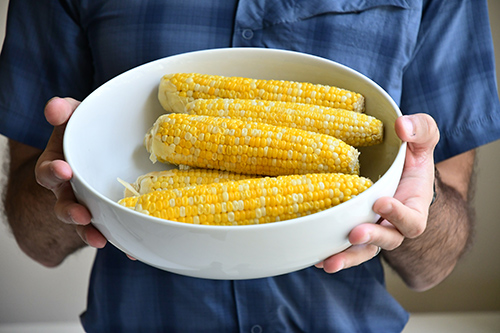
- Description: Kernels or seeds of the corn plant, an herbaceous plant of the botanical family Gramineae. Corn kernels grow on an ear or cob. Each plant contains one or two ears.
- Environment: Corn originated on the American continent. Its cultivation spread first to Europe and then to temperate regions worldwide. Almost half of the world’s corn comes from the United States today.
Corn Nutritional Facts
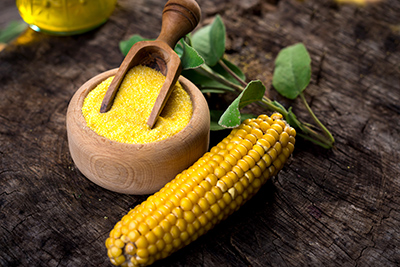
Sweet corn contains 76 percent water, considerably more than other drier varieties. This is because it is gathered before it ripens; thus, it includes a higher percentage of water, and sugars, which give it its pleasant tenderness and flavor. Sweet corn provides 86 kcal/100 grams, somewhat more than potatoes (79 kcal/100 grams) but less than rice (360 kcal/100 grams). These are sweet corn’s primary nutrients:
CARBOHYDRATES: These make up 16.3 percent of its weight. These are formed from a blend of starch and sugars. Unripe kernels possess more sugar, while riper ones contain more starch. Both varieties of carbohydrates are easy to digest and assimilate.
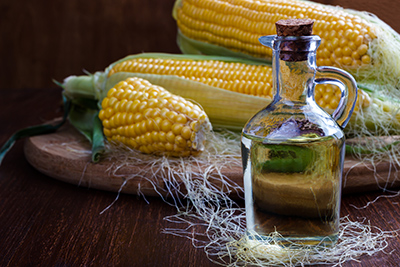
FAT: This is found mainly in the germ and comprises 1.18 percent of its weight. It is rich in poly and monounsaturated fatty acids, specifically linoleic acid. A highly nutritious OIL is extracted from this fat that is effective against excess cholesterol.
PROTEIN: Sweet corn contains about 3.22 percent protein by weight, although when dried, this reaches 10 percent. The most abundant protein in a kernel of corn is known as zein. Although it contains all essential amino acids, two are insufficient: lysine and tryptophan. This gives corn protein a relatively low biological value of sixty percent compared with eggs (ninety-four percent) or milk (eighty-five percent).
Although easily digestible, corn protein alone is insufficient to meet the body’s amino acid needs, particularly during periods of growth. However, combining corn with legumes and sunflower seeds provides a complete protein.
VITAMINS: Yellow sweet corn contains a certain amount of provitamin A (28 ug RE/100 grams), while white corn contains virtually none. Canned sweet corn loses twenty-five percent of its provitamin A in a year of storage. Corn has an outstanding supply of vitamin B1, providing a small amount of vitamin C. Although it contains niacin, it cannot be utilized in the body if the corn is not treated with alkali.
MINERALS: Corn contains extensive amounts of potassium, phosphorus, magnesium, and iron but very little calcium.
FIBER: Sweet corn is an excellent source of fiber (2.7 percent) of soluble and insoluble types.
Health Benefits of Corn
Eating corn is especially recommended in the following cases:
Health benefits of corn (INTESTINAL DISORDERS): Sweet corn, cornmeal, and other means of preparation have an emollient (soothing) effect on the intestinal mucosa. Corn also contains no gluten, making it easily tolerated in sensitive digestive systems. It is recommended particularly in the following issues:
- Intestinal dyspepsia is exemplified by gas, fermentation, and cramping pains.
- Irritable bowel is typified by varying between periods of diarrhea and constipation.
- Chronic colitis (swelling of the large intestine), mainly in the form of cornmeal mush.
- Weaning diets for infants are still nursing, as well as flour.
- Celiac disease: This disease results from intestinal intolerance to wheat gluten.
Health benefits of corn (CHRONIC RENAL DISEASES) that result in kidney failure (chronic glomerulonephritis and nephrosis). Corn kernels have a slight diuretic effect (although much less than the silky ones) and provide a limited amount of proteins in proportion to their caloric content. Because of all this, corn is suitable for the diet of kidney patients.
Health benefits of corn (ADDITIONAL CHOLESTEROL) and fat in the blood: The BRAN covering each corn kernel, present in sweet corn and corn meal, can reduce blood cholesterol. A study conducted at Illinois State University demonstrated this.
Health benefits of corn (HYPERTHYROIDISM): Corn has a slight hindering effect on the thyroid gland and metabolism in general. Its consumption is appropriate in cases of hyperthyroidism, characterized by thinness and nervousness, among other symptoms.
Health benefits of corn: (SLENDERNESS IN GENERAL): Corn in any form is suggested for weight-gain diets.
How to Overlook Corn’s Nutritional Deficiencies
Corn is a staple in the nutrition of many people, but it is insufficient by itself. It must be combined with other foods that compensate for its nutritional deficiencies. Corn’s importance for humans is surpassed only by rice and wheat. Many of the world’s peoples, particularly in South America, depend primarily on corn to subsist.
The famous Mexican tortillas combine very well with beans and legumes, which provide the lysine and calcium missing from corn. In contrast to other products made with corn, tortillas contain absorbable niacin that the body can assimilate. As a result, regular tortilla consumption does not raise the risk of niacin deficiency, which causes pellagra.
Corn is used in developing countries to feed weaned infants for the following reasons:
- Corn is one of the most productive crops, yielding about six metric tons per hectare. Wheat, for example, only produces about two metric tons per hectare.
- In many developing countries, corn is the most abundant source of calories and proteins—sometimes, it is virtually the only source.
- Cornmeal is easy to store without the need for refrigeration.
- Young children easily digest cornmeal mush.
- Corn lacks gluten, the protein of certain grains like wheat, which is the origin of specific intolerances in some children.
Despite all these benefits, corn has three significant nutritional deficits: Its proteins are of low quality, it does not provide sufficient niacin, and it is poor in calcium. These deficits are aggravated when corn is the primary element of the diet, particularly for babies. Fortunately, these nutritional deficiencies can be corrected or alleviated if corn is appropriately combined with other foods.
LOW-QUALITY PROTEIN: Corn protein is low in the essential amino acids lysine and tryptophan. This deficiency dramatically inhibits the growth of children who eat only corn and can lead to a deficiency disease (due to a lack of proteins): kwashiorkor or infantile pellagra. However, corn’s lack of amino acids is well compensated for when consumed with the following foods.
- Legumes such as soy or beans that are rich in lysine.
- Sunflower or sesame seeds that are rich in tryptophan.
The agronomy science has produced lysine-rich corn, known as “opaque-2” (O2), with more complete proteins. However, this new corn variety is more susceptible to disease and yields less per hectare. Thus, it has not been particularly well accepted. Investigations continue in search of more nutritious corn. The Institute of Nutritional Research of Lima has shown that these new varieties of corn with higher-quality proteins are appropriate for infant weaning food.
NIACIN DEFICIENCY: Although corn contains a certain amount of niacin (1.7 mg/100 grams in sweet corn and 2.1 mg/100 grams in dried corn or corn flakes), most of it is combined with a chemical substance that prevents its absorption in the intestine. Corn is also deficient in tryptophan, an amino acid that converts to niacin. If tryptophan were present in significant amounts, it could compensate for the lack of absorption of this vitamin factor. Consequently, corn-based diets result in niacin deficiency in the skin and nervous system disease pellagra.
However, investigators observed that despite eating tremendous amounts of corn in tortillas, there is very little pellagra in Mexico. The explanation for this fascinating phenomenon is as follows: Traditionally, tortillas are made by soaking the corn overnight in limewater (calcium hydroxide). This frees the niacin, allowing it to be absorbed in the intestine. Something similar happens in Columbia, where corn is soaked in potassium salts whose alkalinity releases the niacin. The food industry treats cornmeal and corn products sufficiently to facilitate the release of niacin.
POOR in CALCIUM: Corn contains only 2 mg/100 grams of calcium, much less than other foods such as sesame (975 mg/100 grams), almonds (247 mg/100 grams), beans (240 mg/100 grams), sunflower seeds (116 mg/100 grams), or spinach (99 mg/100 grams). Any of these foods combined with corn compensate for its lack of calcium.
How to Use and Prepare Corn
- FRESH SWEET CORN: This may be heated in water, roasted over coals, and eaten directly from the cob.
- CANNED SWEET CORN: This is typically canned or frozen. In either case, it maintains its flavor and nutritional properties. Canned or frozen corn is whole-grain, containing the germ and the grain’s bran.
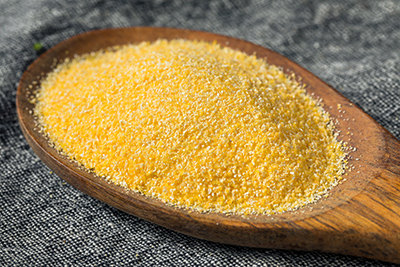
- CORNMEAL: This is as nutritious as whole grains. In Mexico, cornmeal is used to make the famous tortillas. In Italy, it makes polenta, a thick cornmeal mush.
- GRITS: This is refined cornmeal, less nutritious than whole cornmeal because the germ and bran have been removed.
- CORNFLAKES: These are made by mashing and toasting corn, which loses some vitamin content. Subsequently, industrially produced cornflakes are enriched with minerals and vitamins.
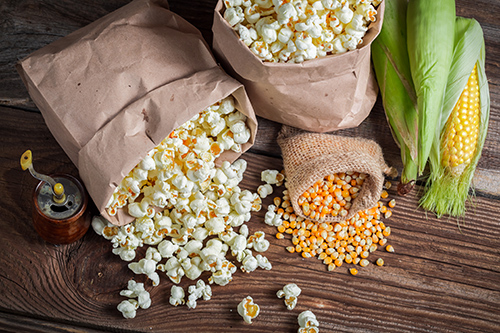
- POPCORN: Popcorn is a fun and healthy way to enjoy this grain. It is made with a unique variety of corn with a tough shell. Water vapor pressure builds inside the kernel when heated, breaking the shell. The starch and proteins “pop,” forming the familiar white mass. Popcorn should be chewed thoroughly and slowly to facilitate digestion.
- CORNSTARCH: This is highly refined defatted corn flour. Therefore, it has very little nutritional value except for calories. It is used in sauces, confectionery, and as a thickener in various food products.
Corn soothes and protects the intestinal mucosa and is well tolerated by those with chronic colitis and irritable bowel syndrome.
DISCLAIMER: All content on this website is presented solely for educational and informational objectives. Do not rely on the information provided as a replacement for advice, diagnosis, or treatment from a qualified medical expert. If you are pregnant, nursing, or have any preexisting medical concerns, talk to your doctor before using any herbal or natural medicines.
REFERENCES
- George D. Pamplona-Roger, M.D. “Encyclopedia of Foods and Their Healing Power.” George D. Pamplona-Roger, M.D. Encyclopedia of Foods and Their Healing Power. Trans. Annette Melgosa. Vol. 2. Chai Wan: Editorial Safeliz, 2005. 238, 239, 240, 241. Print. [health benefits of corn]
- WebMD: https://www.webmd.com/food-recipes/corn-health-benefits
- Medical News Today: https://www.medicalnewstoday.com/articles/324199
- Everyday Health: https://www.everydayhealth.com/diet-nutrition/corn/guide
- Nebraska Corn Board: https://nebraskacorn.gov/cornstalk/food/six-surprising-health-benefits-of-corn
