Understanding modern diet problems helps to avoid them. The diet in the developed world has benefited from the general technical progress the food industry experienced. This affords:
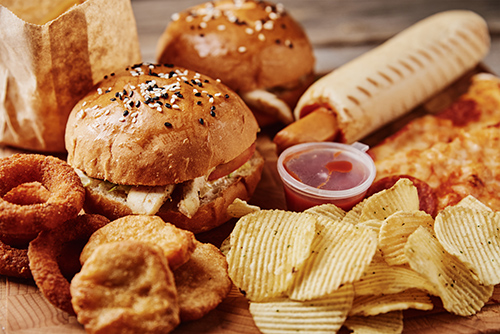
- Availability of all types of foods throughout the year.
- Improved hygiene levels reduce the risk of disease caused by bacteria, viruses, and other microorganisms.
The German physician Ernst Schneider, one of the most eminent proponents of natural medicine, has meticulously analyzed the problems of the contemporary diet in developed countries that are having the most damaging effects on the health of their citizens. The following issues are based on this investigation.
Understanding the problems of the ordinary diet is crucial to improving the choices that can help solve them. Addressing these dietary problems is possibly the most effective measure for preventing the most common diseases in today’s industrialized world.
List of Modern Diet Problems & Solutions
| Problem | Solution |
| Increase consumption of whole grains, cereal flours, bread, and pasta This contributes to preventing the chronic diseases typical of developed societies, the so-called diseases of civilization, such as arteriosclerosis, heart attack, cancer, and diabetes. Some nutritional specialists disapprove of whole-grain products because they contain phytic acid and phytates, which reduce mineral absorption. However, the higher amount of minerals found in whole-grain products compensates for any reduction in absorption. | Increase consumption of whole grains, cereals flours, bread, and pasta This contributes to preventing the chronic diseases typical of developed societies, the so-called diseases of civilization, such as arteriosclerosis, heart attack, cancer, and diabetes. Some nutritional specialists disapprove of whole-grain products because they contain phytic acid and phytates, which reduce mineral absorption. However, the higher amount of minerals found in whole-grain products compensates for any reduction in absorption. |
| The use of soft foods in place of hard or firm ones Eating soft foods weakens the dental structure and jaw support. This can lead to periodontitis, gingivitis, and dental cavities. Soft foods also require less chewing and salivation, which harms digestive processes. | Chew hard foods more Raw carrots are ideal for strengthening children’s teeth. Eating such foods also improves blood flow in the dental structure and provides the vitamin A necessary for their development. Radishes, lettuce, whole-grain bread or toast, and nuts strengthen the teeth. |
| Replacing raw, fresh foods with cooked foods Enjoying good health without eating fresh, raw foods or living foods is impossible. These provide all the active chemical substances involved in the vital processes of the cells, such as phytochemicals and enzymes. Cooking foods ends the activity of the cells forming foods. Cooking destroys and deactivates many chemical substances, reducing the food’s nutritional value and preventative and healing power. Nevertheless, cooking legumes is essential to eliminate the antinutritive substances they contain. | Eat at least five pieces of fruit and a salad of green leafy vegetables or other raw vegetables daily. Whenever possible, always eat plant-based foods raw or cooked as little as possible: – Fruits and vegetables: Practically all, except tubers such as potatoes, can be eaten raw. – Nuts: These can be eaten raw or lightly oven-roasted. – Grains: These can be eaten raw or slightly cooked in flakes, as with muesli. |
| The use of processed foods instead of natural ones Industrial processing of foods such as baked goods, cookies, oils, and canned foods tends to Eliminate part of the beneficial natural ingredients, almost always for commercial purposes, such as: – Prolonging shelf life, as is the case with the germ of grains when they are refined. – Improve their appearance by removing unsaponifiable (non-fat-soluble) substances from vegetable oils. Adding new ingredients such as additives, many of which are potentially dangerous. Altering some natural ingredients improves the product’s appearance, thus forming substances that are detrimental to health. For example, this occurs when unsaturated fatty acids are hydrogenated to make margarine. This process creates harmful trans fatty acids. | Increase the use of unprocessed foods. The fewer industrially prepared food products used, the healthier the diet. Minimally processed fresh fruits, grains, legumes, vegetables, and nuts are preferable to any industrial product. Humans often attempt to improve nature when processing or refining foods, believing they have the necessary scientific knowledge. But these “improvements” often create more health problems, as in today’s developed countries. These two maxims of traditional natural medicine become more pertinent with every passing day: – “The whole is more effective than its parts.” An apple, a grain of wheat, or any other plant-based food, just as it comes from nature, possesses a harmonically balanced combination of vital substances. There is no excess, contrary to what once was thought of as fiber and other non-nutritive substances. Thus, nothing should be removed to “extract” or “purify” them. – “Science has not discovered everything” about the composition of foods. Consequently, the food industry should be more respectful of natural ingredients. Current scientific research is discovering the chemical composition and functions of many substances previously believed to be useless or disposable in foods, such as phytochemicals. |
A strict Unforced Law

The famous United States legislation, the Delaney Clause of 1958, established a zero-tolerance policy for potential carcinogenic additives. It prohibited the use of any additive that, in any amount, might produce cancer in humans or animals. Saccharine, for example, must be removed from the market in the United States because of this law. Today, the Delaney Clause is in the process of being revised.
If strictly applied as written, many more food additives would have to be removed with the attendant economic impact. The European Union does not involve such strict criteria. The financial benefit to the food industry of greater tolerance of additive use outweighs the potential harm to consumers.
The criterion usually applied in developed countries is the so-called GRAS (Generally Recognized as Safe), which leads to the belief that some uncertainty remains regarding the safety of additives, particularly long-term.
Although, theoretically, there are many hurdles and controls to be passed before health authorities approve the use of any food additive, doubts remain regarding its potential long-term carcinogenic effects for two fundamental reasons:
Toxicology and carcinogenic studies are conducted using laboratory animals, usually rats. The results are not transferable to humans. The long-term cumulative effect of many additives is unknown. Some chemical substances take twenty years or longer to produce cancer. It is reasonable to believe that accumulating chemical additives in the human body over the years may have unexpected harmful effects.
Modern Diet Problems & Solutions (continued)
| Problem | Solution |
| Excess sugar Although the harmfulness of sugar has possibly been exaggerated, attributing numerous ills to it, there is evidence that too much sugar consumption provokes dental cavities, increased triglycerides, obesity, and hyperactivity. It is also associated with gallstones, Crohn’s disease, brittle bones, and stomach and colon cancer. | Reduce sugar consumption Avoid, – Adding sugar to foods, and – The sugar hidden in processed foods. Molasses, honey, and brown (raw) sugar are preferable to white sugar, although the healthiest sweets are dried fruits. |
| Excess additives Additives are non-nutritive materials deliberately added to food products, usually in minimal amounts, to modify or “improve” their appearance, flavor, consistency, or storage properties. Although some are of natural origin, most are synthesized chemically. Today, approximately 15,000 chemical substances are used or have been used as food additives. | Reduce sugar consumption Avoid, – Adding sugar to foods, and – The sugar hidden in processed foods. Molasses, honey, and brown (raw) sugar are preferable to white sugar, although dried fruits are the healthiest sweets. |
| Excess animal protein Meat and meat derivatives have gone from being a dietary complement used sporadically, as in the Mediterranean diet, to basic food. Animal proteins are generally of higher biological value than those of vegetable sources. However, there are well-founded suspicions that independent of the effects of other components of animal products, they foster: – Arteriosclerosis and cardiovascular disease (for example, the casein in milk). – Rheumatoid arthritis, – Diabetes, – Cancer. | Increase consumption of legumes and grains The proteins in legumes, particularly soy, have a more excellent biological value than meat, although they are more challenging to digest. Grain proteins, combined with those of legumes, constitute a complete protein. There are many healthful alternatives to meat, such as products derived from soy and labeled “vegetable meat,” whose use reduces animal protein use. |
| Excess animal fats and cholesterol Animal fats, particularly meat, milk, and egg yolk, have characteristics that make them harmful to health. Most notable of these are: – Predominance of saturated fatty acids promotes cholesterol synthesis in the liver and its deposit within the arteries. – Presence of preformed cholesterol also promotes arteriosclerosis. Lack of antioxidant substances such as vitamin E. | Excess animal protein Meat and meat derivatives have gone from being a dietary complement used sporadically, as in the Mediterranean diet, to basic food. Animal proteins are generally of higher biological value than those of vegetable sources. However, there are well-founded suspicions that, independent of the effects of other components of animal products, they foster: – Arteriosclerosis and cardiovascular disease (for example, the casein in milk). – Rheumatoid arthritis, – Diabetes, – Cancer. |
| Excess salt Too much salt fosters high blood pressure, cardiovascular disease, and stomach disease, including cancer, asthma, osteoporosis, and kidney stones. | Reduce salt consumption Do this by avoiding: – Adding table salt to foods – Hidden salt in processed foods There are healthful alternatives to salt. |
| Vitamin deficiency Cooking, canning, and processing generally reduce vitamin content in foods. | Increase consumption of raw fruits and vegetables and whole grains These are reliable sources of provitamin A and B group vitamins and vitamins C and E. |
| Lack of fiber Refining and processing foods tend to reduce their fiber content. This increases cholesterol levels, constipation, diverticulosis, and greater cancer risk. | Increase consumption of fruits, legumes, whole grains, and vegetables These are the best sources of fiber. |
| Lack of vegetable pigments The pigments that give natural color to fruits and vegetables are classified as phytochemicals and other non-nutritive substances in foods. Their lack leaves the body without antioxidants and protection against cardiovascular disease and cancer. | Increase consumption of fruits and vegetables of assorted colors All natural vegetable colors have beneficial effects on health. |
| Enzyme deficiency When plant-based foods are cooked, canned, or processed, the enzymes in their cells are deactivated or destroyed. Enzymes are proteins found in living foods; in other words, they are formed by living cells. They facilitate and regulate cell chemical reactions (bio canalization). A lack of vegetable enzymes halts the digestion and absorption of foods. | Increase consumption of sprouts or other raw foods The following natural foods are reliable sources of enzymes: – Sprouts of grains and legumes. – Fruit, particularly pineapple or papaya. – Vegetables in general. In the digestive tract, the enzymes from vegetable cells aid the digestion and assimilation of foods. |
| Excess chemical contamination in foods Chemistry has invaded the food industry and even agriculture. Today, thousands of toxic substances can be found in food products, such as pesticides, heavy metals (lead, cadmium, mercury), aflatoxins, and traces of hormones and medications used on livestock. Organochlorine pesticides such as DDT, PCBs (polychlorinated biphenyls), and dioxins are among the most dangerous food contaminants because they accumulate in the body’s fatty tissue. There is reason to believe that, among the toxic effects, these may cause: 1. Malignant tumor, particularly non-Hodgkin type lymphoma. 2. Behavioral changes in children (it is known that they affect child brain development). Meat, fish, dairy products, and commercially produced fruits are the primary sources of these pesticides, according to a study conducted at McMaster University in Ontario. According to this report, a vegetarian diet in which the fruit has been organically grown is the most pesticide-free. | Avoid the most potentially contaminated foods; wash fruits and vegetables, peeling them, if possible Most contamination of plant-based foods is exterior and can be removed by washing and peeling. Contaminants in milk, eggs, fish, shellfish, and meat form part of the food and are impossible to extract. |
| Appearance on the market of foods that come from genetically altered sources Genetically modified organisms are created by introducing a gene, called a transgene, from another species into the genetic material of another. Thus, the receiving cell develops the characteristics of the donor of the transgene. For example, a type of transgenic soy was created by inoculating it with specific genes from a flower (the petunia), a bacterium, and a virus. The result is a genetically modified soy strain that resists a potent herbicide’s effect. Thus, destroying all weeds from the field is possible without harming the soy. The same multinational agrochemical corporation distributes modified soy and herbicides. | Choose organically grown foods Foods are continually being altered and adulterated: – In the fields of genetic modification of seeds, chemical fertilizers, herbicides, pesticides, growth regulators, etcetera. – During processing, refining, preserving with chemical products, using all types of additives, etcetera. Fortunately, organic or ecological agriculture is an option that rejects the use of genetically altered plants, respects nature’s cycles, utilizes crop rotation, uses organic fertilizer, and avoids pesticides and other chemical products. Finally, it respects nature and consumer health. |
DISCLAIMER: All content on this website is presented solely for educational and informational objectives. Do not rely on the information provided as a replacement for advice, diagnosis, or treatment from a qualified medical expert. If you are pregnant, nursing, or have any preexisting medical concerns, talk to your doctor before using any herbal or natural medicines.
REFERENCES
- George D. Pamplona-Roger, M.D. “Encyclopedia of Foods and Their Healing Power.” George D. Pamplona-Roger, M.D. Encyclopedia of Foods and Their Healing Power. Trans. Annette Melgosa. Vol. 2. Chai Wan: Editorial Safeliz, 2005. 396, 397, 398, 400, 401, 402. Print. [Modern diet problems]
- American Heart Association – Sugar Consumption: https://www.heart.org/en/healthy-living/healthy-eating/eat-smart/sugar/added-sugars
- American Heart Association – Dietary Fats: https://www.heart.org/en/healthy-living/healthy-eating/eat-smart/fats
- Journal of Nutrition – Food Marketing and Labels: https://academic.oup.com/jn/article/151/1/4/5980355
- WHO – Childhood Obesity: https://www.who.int/news-room/fact-sheets/detail/obesity-and-overweight
