
The health benefits of papaya start with a nutrient profile that is hard to argue with: one cup of ripe fruit delivers more than a day’s worth of vitamin C, a useful dose of folate, a spread of antioxidant carotenoids, and a protein-digesting enzyme, papain, that scientists have studied for over a century. What follows is a straight read of the evidence — what is well supported, what is still preliminary, and what matters if you are pregnant, breastfeeding, or taking certain medications.
Papaya (Carica papaya L.) grows on a fast-growing, herb-like papaya tree native to Mexico and Central America and now cultivated across the tropics. The ripe pulp is what most people eat; the seeds, leaves, and unripe-fruit latex behave differently and carry their own safety notes, covered below.
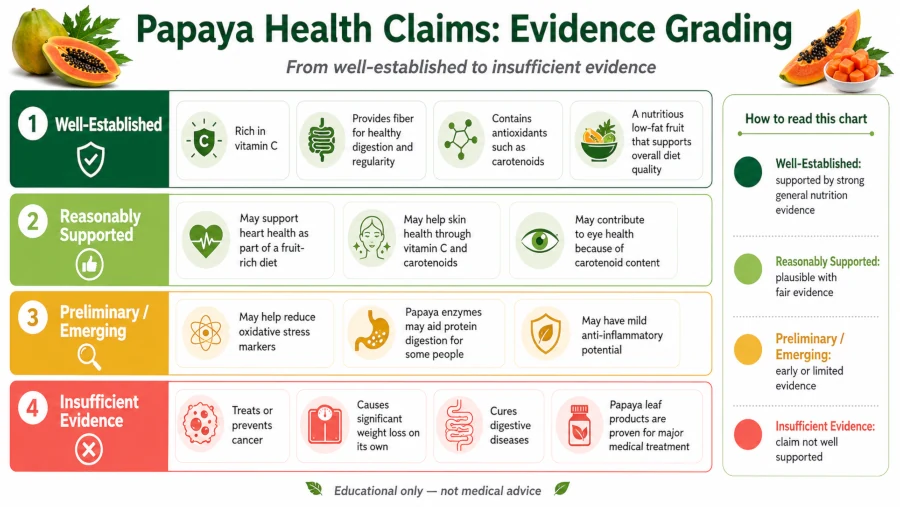
Health benefits of papaya: The evidence at a glance
Not every claim about papaya is equally solid. Here is how the main ones stack up before we get into the detail.
| Claim | How strong is the evidence? |
| High vitamin C and carotenoid content | Well established (USDA food-composition data; human bioavailability trial) |
| Good source of highly absorbable beta-carotene | Strong — one randomised human crossover trial (16 adults) |
| Helps regular digestion / eases constipation | Plausible and modest — one small trial used a concentrated extract, not fresh fruit |
| Supports heart health as part of a varied diet | Supported for the overall dietary pattern, not papaya alone |
| Gut-microbiota and anti-inflammatory effects | Early stage — mostly animal, cell and small-study data |
| Papaya seeds clear intestinal parasites | Mixed — one small pilot trial positive; major clinics remain cautious |
| Prevents eye disease (AMD) | Insufficient for papaya specifically — trial evidence is for supplements |
| ‘Cures’ or reverses disease | Not supported |
Papaya nutrition facts
A 100-gram serving of ripe raw papaya contains roughly:
| Nutrient | Per 100 g ripe papaya | % Daily Value (approx.) |
| Calories | 43 kcal | — |
| Water | 88 g | — |
| Carbohydrates | 11 g | — |
| Natural sugars | 8 g | — |
| Dietary fiber | 1.7 g | 6% |
| Vitamin C | 60.9 mg | ~68% |
| Folate (B9) | 37 mcg | 9% |
| Vitamin A (as beta-carotene) | 47 µg RAE | 5% |
| Potassium | 182 mg | 4% |
| Calcium | 20 mg | 2% |
| Magnesium | 21 mg | 5% |
Source: USDA FoodData Central — Papayas, raw (FDC ID 169926).
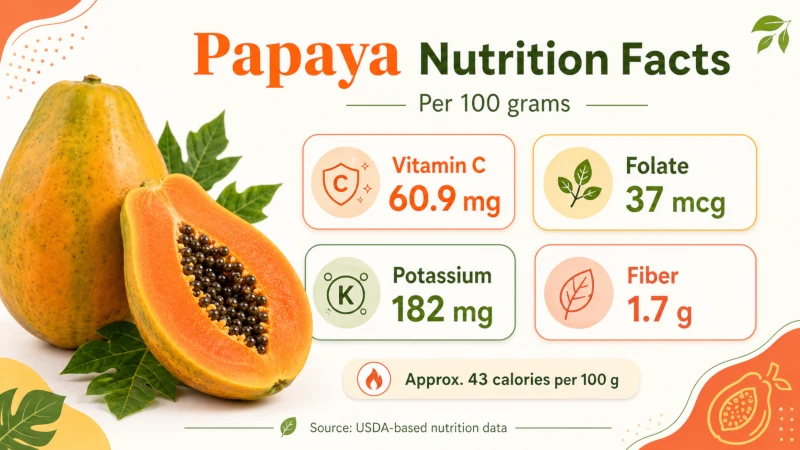
A few numbers stand out. That ~61 mg of vitamin C is roughly two-thirds of an adult’s daily target in a modest serving — gram for gram, ahead of oranges, and among the top vitamin C rich foods you can eat as fresh fruit. Folate is respectable for a fruit, similar to guava and mango, which is worth knowing in early pregnancy. And despite tasting sweet, a medium papaya carries fewer than about 120 calories.
Papaya is also rich in carotenoids — lycopene (in red-fleshed varieties), beta-carotene, and beta-cryptoxanthin. A randomised crossover trial in the British Journal of Nutrition gave 16 healthy adults test meals matched for carotenoid content and found beta-carotene was about three times more available to the body from papaya than from carrots or tomatoes (Schweiggert et al., 2014).
Its minerals are modest. Potassium (~182 mg per 100 g) is the most notable, ahead of calcium and magnesium — for those you are better off leaning on foods high in calcium and magnesium-rich foods. One easy-to-miss detail: papaya contains pectin, a soluble fiber that forms a gel in the gut, slows glucose absorption, and — as part of a fiber-adequate diet — can modestly help with LDL cholesterol.
Papain: the digestive enzyme in papaya
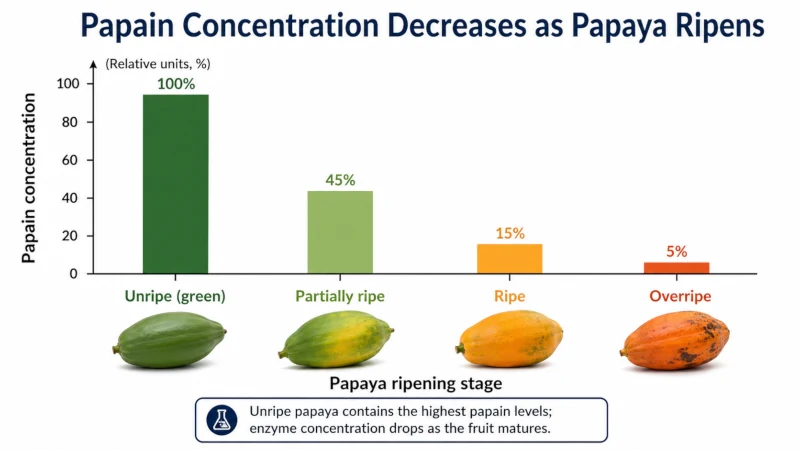
Papain is a proteolytic enzyme: it breaks proteins into smaller peptides and amino acids, much like pepsin does in your stomach. It belongs to the cysteine-protease family and is most concentrated in the latex and unripe fruit; ripe pulp has far less. That protein-cutting action is exactly why papain doubles as a commercial meat tenderizer.
For digestion, the picture is nuanced. A 2013 double-blind controlled trial in Neuroendocrinology Letters reported that a standardized papaya preparation (Caricol) improved constipation and bloating in adults with chronic digestive complaints (Muss et al., 2013) — but it used a concentrated extract, not fresh fruit, and the sample was small. Separately, work in mice and a human reconstructed-tissue model suggests fruit proteases can nudge gut microbiota toward beneficial species such as Akkermansia muciniphila; that finding has not yet been replicated in large human trials (Kostiuchenko et al., Metabolites, 2022).
The honest takeaway: ripe papaya is a reasonable, gentle food for sensitive digestion or occasional constipation, thanks to its fiber, water, and residual papain. The evidence does not support the idea that papaya “cures” digestive disease or rivals medication for conditions like GERD.
Antioxidants and anti-inflammatory properties
Papaya carries a broad mix of antioxidants — vitamin C, vitamin E, beta-carotene, lycopene, and polyphenols such as quercetin and kaempferol. These help neutralize excess free radicals, the reactive molecules that in surplus contribute to cell damage and to chronic conditions including cardiovascular disease and some cancers.
Lycopene content rises noticeably as papaya ripens and is higher in red-fleshed varieties than yellow ones, as chromatography work on ripening “Maradol” papaya has documented (Gayosso-García Sancho et al., 2011). (Exact per-serving lycopene figures vary widely by variety and lab method, so treat any single number with caution.)
Fermented papaya preparations have drawn separate research interest for oxidative stress. A 2022 review in Antioxidants summarised early signals for fermented papaya in conditions marked by inflammation and weakened antioxidant defenses, including small studies alongside standard care in Alzheimer’s disease and in blood disorders such as thalassemia (Kaur et al., Antioxidants, 2022). This is early-stage, small-sample work — not a clinical recommendation — but it does mark papaya as a genuinely bioactive food, not just a vitamin source.
Papaya and heart health
American Heart Association News points to papaya’s potassium and lycopene as relevant to cardiovascular health, quoting a registered dietitian that its potassium “can be really helpful for people who have high blood pressure.” Potassium helps offset sodium, and higher intakes track with lower stroke risk in population studies. Papaya’s ~182 mg per 100 g is modest on its own but adds up within a fruit-and-vegetable-rich diet.
Vitamin C supports the arterial wall and helps protect LDL cholesterol from oxidation, an early step toward atherosclerosis. Eating papaya regularly fits current dietary guidance for heart health — as one contributor to the overall pattern, not a standalone fix for diagnosed heart disease. For more of that pattern, see foods for healthy arteries.
Digestive health: beyond papain
Papaya’s digestive appeal goes past the enzyme. Its mix of water (about 88%), soluble fiber (pectin), and potassium makes it soothing to an irritated gut and a mild aid for constipation — one reason it turns up in lists of foods for healthy digestion.
Several lab and animal studies have shown that papaya extracts can slow the growth of gut pathogens such as E. coli, Salmonella, and Staphylococcus aureus, effects that appear stronger in slightly unripe fruit and are attributed to papain, isothiocyanates, and phenolic compounds. Human trials confirming this are limited, so calling papaya an “antibiotic food” overstates things — but it remains a reasonable choice for general gut health.
Papaya seeds and intestinal parasites: what the evidence really says
This is where sources genuinely disagree, so it is worth being precise. A small pilot trial in the Journal of Medicinal Food gave 60 Nigerian children with stool-confirmed parasites either an air-dried papaya-seed-and-honey elixir or honey alone; about 77% of the seed group cleared parasites at seven days versus 17% for honey (Okeniyi et al., 2007). The parasites cleared were mainly roundworms such as Ascaris and Strongyloides, plus an amoeba — not tapeworm, despite the folk reputation.
Against that, the Cleveland Clinic cautions that a viral “papaya-seed parasite cleanse” is not a reliable fix and that suspected infections need proper diagnosis and medication. The reasonable reading: one small, promising study does not equal an established treatment. Papaya seeds are one of several traditional antiparasitic options in the ethnobotanical record — a specific, doctor-supervised use, not a general recommendation, and no substitute for testing and treatment.
Skin health
Papaya’s provitamin A carotenoids (beta-carotene and beta-cryptoxanthin) support the skin’s epithelial cells and mucous membranes, while vitamin C drives collagen synthesis, which underpins elasticity and wound healing.
Topical papain has been studied as a wound debrider that dissolves dead tissue, and papain-urea ointments were once used clinically in the US before being removed from the market in 2008 over an approval-pathway issue rather than a safety finding. Eating papaya is not the same as topical papain therapy. For skin problems tied to low vitamin A — dry skin, some acne, follicular hyperkeratosis — getting more provitamin A from foods like papaya can genuinely help as part of a good overall diet.
Eye health
Papaya supplies carotenoids relevant to the eye, including beta-carotene and lycopene, with smaller amounts of lutein and zeaxanthin — the pigments that concentrate in the macula and filter high-energy blue light. It is worth being accurate about the landmark trial here: in AREDS2 (NIH/National Eye Institute), adding lutein and zeaxanthin to the original supplement formula produced no additional overall reduction in advanced age-related macular degeneration; its main value was as a safe replacement for beta-carotene (which raised lung-cancer risk in smokers), with more benefit seen in people whose dietary intake of these carotenoids was low.
So the mechanisms are real, but the trial evidence is about supplements, not papaya. For papaya specifically, the eye-health link is associative. Eating carotenoid-rich fruits and vegetables within a varied diet is broadly supported for vision — and papaya fits comfortably in that picture.
How to eat papaya
Fresh ripe papaya — fully yellow-to-orange skin, slightly soft to gentle pressure — tastes best. Fruit shipped to temperate countries is usually picked green, which dulls the flavor; if yours is firm, leave it at room temperature for a few days, then refrigerate once ripe. The black seeds are edible, with a peppery bite, and can be eaten as-is or dried and ground like a spice; they hold more of the benzyl isothiocyanate linked to the antiparasitic research above.
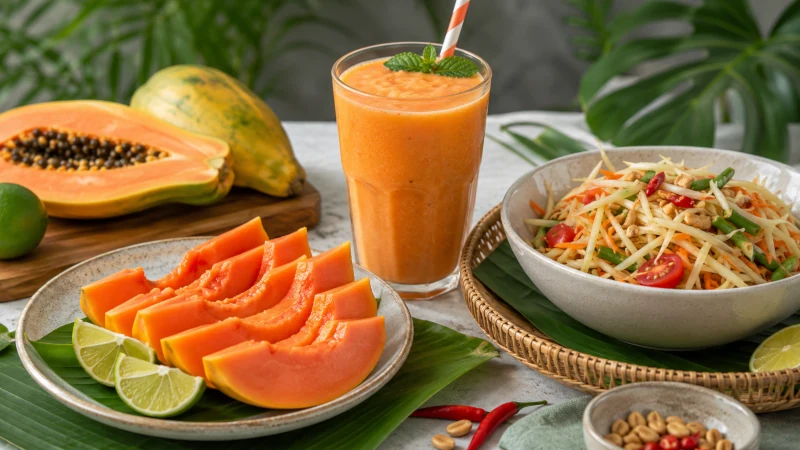
A few easy ways to enjoy it:
- Fresh, with a squeeze of lime — the classic tropical serving, and the one that keeps the most vitamin C
- Blended into a smoothie with yogurt or banana
- In a salad with a sharp, acidic dressing, which plays well against the sweetness
- Green (unripe) papaya shredded into Thai-style som tam — but note the pregnancy caution below
- Canned papaya, when fresh is unavailable — some vitamin C is lost in processing, but fiber and other nutrients largely survive
Safety, side effects, and who should be cautious
Pregnancy
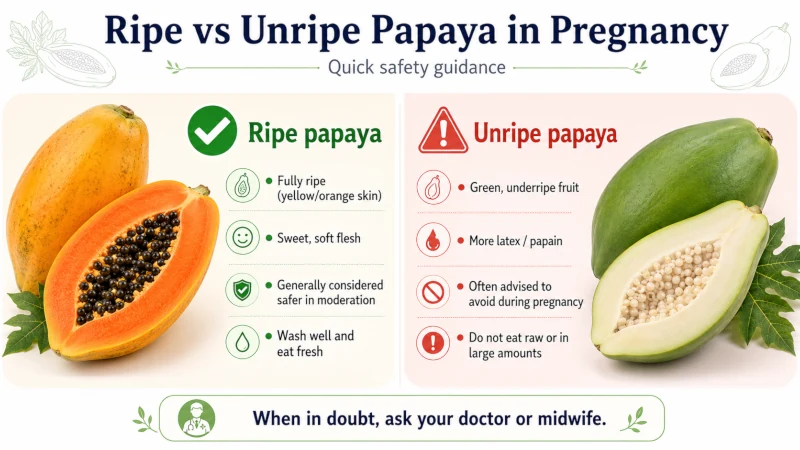
Fully ripe papaya in normal food amounts appears safe in pregnancy. The concern is unripe or semi-ripe fruit, which is high in latex — a sap rich in papain. In a rat-uterus study, crude papaya latex produced contractions comparable to prostaglandin and oxytocin, the hormones used medically to induce labour, while ripe fruit did not raise the same alarm (Adebiyi, Adaikan & Prasad, British Journal of Nutrition, 2002). Practical rule: if you are pregnant, avoid green or semi-ripe papaya and large amounts of seeds; ripe papaya as food is not considered a meaningful risk. The evidence is largely animal-based, so when in doubt, ask your midwife or obstetrician.
Breastfeeding
There is little formal research on papaya during breastfeeding. Ripe papaya eaten as an ordinary food is generally regarded as fine. What lacks safety data is concentrated or medicinal use — unripe-fruit latex, large quantities of seeds, or leaf extracts — so those are best avoided while nursing unless a healthcare professional advises otherwise.
Latex allergy
Papaya proteins can cross-react with natural rubber latex (“latex-fruit syndrome”). If you have a latex allergy you may notice oral allergy symptoms — itching or tingling in the mouth, or lip and throat swelling — and, rarely, a whole-body reaction. If you are latex-allergic, be cautious and check with your allergist before eating papaya regularly. Swelling of the tongue or throat or any trouble breathing is a medical emergency.
Medications: blood thinners, thyroid, and heart-rhythm drugs
Papain may have mild blood-thinning activity at high doses. At normal dietary intake, papaya is unlikely to cause a clinically important interaction with warfarin or other anticoagulants, but mention it to your prescriber if you eat it daily. The Cleveland Clinic also notes that papaya may interact with medicines for thyroid disorders and for heart-rhythm problems such as atrial fibrillation, and that people with asthma may find papain irritating — worth flagging to your doctor if any of these apply to you.
Blood sugar and diabetes
Ripe papaya has a moderate glycemic index (reported roughly 38–60 depending on ripeness) and its sugars are mostly fructose and glucose. For most people with well-managed type 2 diabetes, sensible portions fit a balanced plan. One caveat: fermented papaya preparations can lower blood sugar, which may be a problem if you take insulin or oral diabetes medication, raising the risk of hypoglycemia. If you manage blood glucose, ask a registered dietitian for tailored advice.
Digestive upset
Eating very large amounts of papaya can cause loose stools or cramping in some people, mainly from its fiber and papain. Moderate, regular portions — about one to two cups a day — are well tolerated by most adults.
When to talk to a professional
Speak with a doctor, pharmacist, or dietitian before leaning on papaya (especially seeds, leaves, or unripe fruit) if you are pregnant or breastfeeding, take anticoagulants, thyroid, or heart-rhythm medication, manage diabetes, or have a latex allergy or asthma. Seek prompt care if you suspect an intestinal parasite (it needs testing and proper treatment), and seek emergency care for any sign of a severe allergic reaction such as throat swelling or difficulty breathing.
| Health disclaimer: This article is for general information and education. It is not medical advice and is not a substitute for diagnosis, treatment, or guidance from a qualified healthcare professional. Papaya is a food, not a treatment for any disease. If you are pregnant or breastfeeding, manage a chronic condition, take prescription medication, or plan to use papaya seeds or leaf preparations for a specific problem such as intestinal parasites, talk to your doctor, pharmacist, or a registered dietitian before making changes. If you have signs of a severe allergic reaction — swelling of the lips, tongue, or throat, or difficulty breathing — seek emergency care immediately. |
Frequently Asked Questions
Is papaya good for digestion?
Ripe papaya is a gentle, sensible choice for everyday digestion. It combines papain (a protein-digesting enzyme), soluble fiber, and a high water content. One small controlled trial found a concentrated papaya preparation eased bloating and constipation, but that study used an extract rather than fresh fruit and was small. Fresh papaya can help keep you regular; it is not a proven treatment for conditions like irritable bowel syndrome.
Can papaya cause problems during pregnancy?
Ripe papaya in normal food amounts is generally considered fine in pregnancy. The caution is about unripe or semi-ripe papaya, whose latex is rich in papain and, in animal studies, triggered uterine contractions. Avoid green or semi-ripe papaya and large amounts of seeds while pregnant, and check with your midwife or obstetrician if you are unsure.
What does papain do?
Papain is a cysteine protease — an enzyme that cuts proteins into smaller fragments, broadly similar to the pepsin your stomach makes. It is concentrated in the latex and unripe fruit and drops sharply as papaya ripens, which is why it is best known commercially as a meat tenderizer. In ripe fruit, the small amount left contributes modestly to protein digestion.
How much vitamin C does papaya have?
About 61 mg per 100 g, which is roughly two-thirds of the daily target for adults (90 mg for men, 75 mg for women). A small whole papaya can cover a full day’s requirement. Vitamin C degrades with heat and processing, so fresh papaya delivers the most.
Do papaya seeds get rid of intestinal parasites?
The evidence is genuinely mixed. One small pilot trial in Nigerian children found that an air-dried papaya-seed-and-honey elixir cleared parasites in about 77% of cases versus 17% for honey alone, mainly roundworms. But it was a single small study, and major medical centers caution that it is not a reliable treatment and that suspected parasite infections need proper testing and medication. See a healthcare provider rather than self-treating.
Is papaya a good food for heart health?
Yes, as one part of a varied diet. Its potassium, vitamin C, fiber, and carotenoids such as lycopene each support cardiovascular health through different routes. American Heart Association News highlights papaya as a nutrient-rich fruit relevant to blood pressure and digestion. It supports a heart-healthy eating pattern rather than acting as a standalone remedy.
References
- USDA Agricultural Research Service. FoodData Central — Papayas, raw (FDC ID 169926). U.S. Department of Agriculture. View source (USDA)
- Muss C, Mosgoeller W, Endler T. Papaya preparation (Caricol®) in digestive disorders. Neuro Endocrinol Lett. 2013;34(1):38–46. PMID 23524622. View source (PubMed)
- Schweiggert RM, Kopec RE, Villalobos-Gutiérrez MG, et al. Carotenoids are more bioavailable from papaya than from tomato and carrot in humans: a randomised cross-over study. Br J Nutr. 2014;111(3):490–498. PMC4091614. View source (PMC)
- Gayosso-García Sancho LE, Yahia EM, González-Aguilar GA. Identification and quantification of phenols, carotenoids, and vitamin C from papaya (Carica papaya L., cv. Maradol) fruit determined by HPLC-DAD-MS/MS-ESI. Food Res Int. 2011;44(5):1284–1291. View source (ScienceDirect)
- Kaur M, Kaur A, et al. Clinical and Preclinical Studies of Fermented Foods and Their Effects on Alzheimer’s Disease. Antioxidants (Basel). 2022;11(5):883. View source (MDPI)
- American Heart Association News. Papaya’s milky texture packed with nutrients. October 13, 2023. View source (AHA)
- Adebiyi A, Adaikan PG, Prasad RNV. Papaya (Carica papaya) consumption is unsafe in pregnancy: fact or fable? Scientific evaluation of a common belief in some parts of Asia using a rat model. Br J Nutr. 2002;88(2):199–203. DOI 10.1079/BJN2002598; PMID 12144723. View source (Cambridge)
- Kostiuchenko O, Kravchenko N, Markus J, et al. Effects of Proteases from Pineapple and Papaya on Protein Digestive Capacity and Gut Microbiota in Healthy C57BL/6 Mice and Dose-Manner Response on Mucosal Permeability in a Human Reconstructed Intestinal 3D Tissue Model. Metabolites. 2022;12(11):1027. PMID 36355110; PMCID PMC9696696. View source (PMC)
- Okeniyi JAO, Ogunlesi TA, Oyelami OA, Adeyemi LA. Effectiveness of dried Carica papaya seeds against human intestinal parasitosis: a pilot study. J Med Food. 2007;10(1):194–196. PMID 17472487; DOI 10.1089/jmf.2005.065. View source (PubMed)
- National Eye Institute (NIH). Age-Related Eye Disease Studies (AREDS/AREDS2): major findings. View source (NEI)
- Cleveland Clinic. 6 Reasons To Eat More Papaya. Health Essentials; April 10, 2025. View source (Cleveland Clinic)
