
If you have looked up the best herbs for men, you have probably seen the same short list dressed up with big promises: more energy, better erections, a bigger testosterone number, a healthier prostate. A few of these herbs do have real research behind them. Most of the dramatic claims do not. This guide sorts the two, so you know what a supplement can reasonably do, what it can’t, and when an herb is the wrong tool entirely.
Here is the honest headline. No herb cures erectile dysfunction, reverses an enlarged prostate, or reliably raises low testosterone. What a handful of them may offer is a modest, situation-specific nudge — and for men’s sexual and prostate health, the things with the strongest evidence are not herbs at all, but the same habits that protect your heart.
The short answer, at a glance
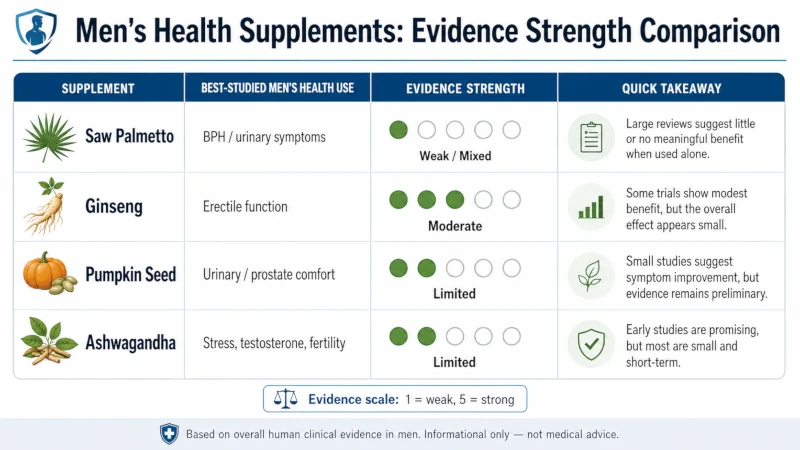
Read the table, then the sections below explain each one and where the evidence is strong, thin, or mixed.
| Herb / food | What men use it for | What the evidence shows |
| Saw palmetto | Urinary symptoms of an enlarged prostate (BPH) | Strong evidence it works no better than placebo for urinary symptoms. Well tolerated. |
| Panax ginseng | Erectile function, energy | Mixed, low-certainty. Possible small benefit; not a substitute for proven ED treatments. |
| Pumpkin seed | Prostate and urinary symptoms | Limited, preliminary. A few small trials; the food itself is safe and nutritious. |
| Ashwagandha | Stress, testosterone, sperm quality | Best for stress/sleep. Limited but promising for testosterone and sperm over 2–4 months. |
| Traditional aphrodisiacs (damiana, maca, etc.) | Libido, sexual performance | Long folk use, thin human evidence. Treat claims with caution. |
Saw palmetto and the enlarged prostate
Saw palmetto (Serenoa repens) is the most popular herb marketed to men, usually for the urinary symptoms of an enlarged prostate — benign prostatic hyperplasia, or BPH: a weak stream, trouble starting, dribbling, and waking up at night to urinate. The pitch is appealing. The evidence is not on its side.
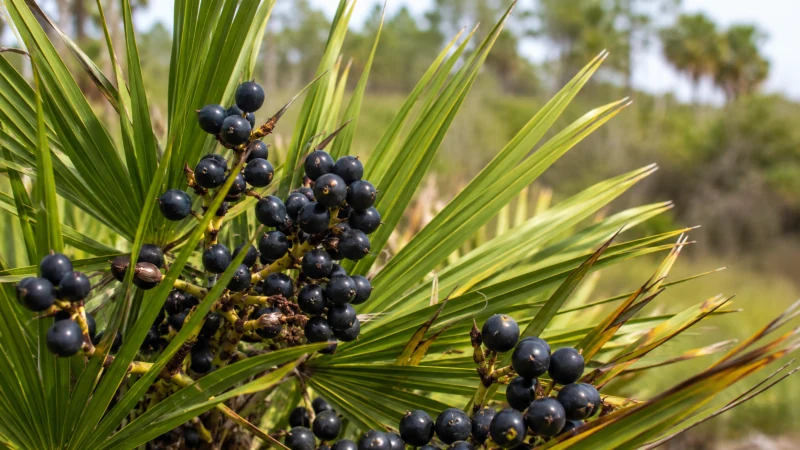
A Cochrane systematic review of saw palmetto for BPH pooled 27 randomized trials in 4,656 men and found that saw palmetto, alone or combined with other plant extracts, did not improve urinary symptoms or quality of life over placebo, in the short or long term [Cochrane, CD001423].
A large year-long trial in the New England Journal of Medicine reached the same conclusion, even at up to three times the usual dose [Bent et al., NEJM, 2006]. The U.S. National Center for Complementary and Integrative Health summarizes it plainly: saw palmetto has not been shown to work better than placebo for BPH symptoms [NCCIH, 2019].
Realistic expectation: If you try saw palmetto, treat any improvement as likely placebo or coincidence rather than a reliable effect. On the plus side, it is well tolerated — side effects are usually mild, such as stomach upset — and it does not appear to lower PSA (the prostate blood test) or interact with common medications [NCCIH, 2019]. You can read more about the plant on our guide to the palmetto shrub.
Panax ginseng for erectile function
Ginseng (Panax ginseng, including Korean red ginseng) is the herb with the most plausible case for erectile difficulties, though the evidence is genuinely mixed. A 2021 Cochrane systematic review concluded that, based on mostly low-certainty evidence, ginseng may have only trivial effects on erectile function or sexual satisfaction when measured with validated questionnaires — though it may improve men’s own reported ability to have intercourse [Cochrane review, 2021]. Earlier reviews were more upbeat: a 2008 systematic review of red ginseng found a statistically significant effect over placebo, but the authors cautioned the trials were small and low quality [Jang et al., 2008].
Realistic expectation: Ginseng is not comparable to prescription ED treatments — the Cochrane authors found no trials testing it head-to-head against them. If your erections have changed, that is a reason to see a doctor (see the red-flags section), not just to buy a supplement. Ginseng can be mildly stimulating and may affect blood sugar and blood pressure, so it is worth checking with a pharmacist if you take medication. Our ginseng health benefits guide covers the plant in more depth.
Pumpkin seed for prostate and urinary comfort
Pumpkin seed (Cucurbita pepo) is a traditional prostate remedy, and unlike most herbs on this list, the food itself is genuinely nutritious — a good source of zinc, magnesium, and healthy fats. The medicinal claims are less settled. A small randomized trial compared pumpkin seed oil with the standard drug tamsulosin in men with BPH and reported symptom improvement, but it was a single-blind study in one clinic, and the broader evidence base is thin and preliminary [Zerafatjou et al., 2021].
Realistic expectation: Eating pumpkin seeds is a healthy habit with no downside for most people. Expecting a handful of seeds to shrink an enlarged prostate is not supported by strong evidence. Our pumpkin plant guide has more on its traditional uses.
Ashwagandha for stress, testosterone, and fertility
Ashwagandha (Withania somnifera) has become the go-to “male vitality” herb, largely on testosterone claims. The evidence is more modest than the marketing. According to NCCIH, there is limited evidence that taking ashwagandha for two to four months may increase testosterone levels and improve sperm quality — promising, but from small studies, many tied to supplement-industry funding, and larger trials are still needed [NCCIH, 2023]. Its best-supported uses are actually stress and sleep, not sex.
Realistic expectation and safety: Any testosterone change is likely small, and ashwagandha is not a dependable fertility treatment. It also carries a real, if uncommon, safety issue: rare cases of liver injury have been linked to ashwagandha supplements [LiverTox, 2024]. It should be avoided in pregnancy and breastfeeding, and by people with thyroid or autoimmune conditions or before surgery; because it may raise testosterone, men with hormone-sensitive prostate cancer should avoid it [NCCIH, 2023]. For the fuller picture, see our evidence-based ashwagandha guide.
The traditional aphrodisiacs: damiana, maca, and the rest
Damiana, maca, tribulus, and a long list of other plants have centuries of use as aphrodisiacs. Tradition is worth respecting, but it is not the same as proof. For most of these herbs the human evidence is thin, the studies are small, and the effects reported are inconsistent. Some show early promise for libido; none has earned a confident recommendation.
The honest way to use them: as low-stakes experiments, not treatments. If a well-labeled product is inexpensive, unlikely to interact with your medications, and you set modest expectations, trying one is reasonable. If a product promises a dramatic transformation, that promise is the tell. Our roundup of herbs for male stamina puts several of these in context.
What actually moves the needle for men’s health
Here is the throughline the old “vitality herb” lists miss: for men, erectile and prostate problems are usually signals from the cardiovascular and metabolic system, not standalone issues an herb can patch. Erectile dysfunction in particular can be an early warning sign of heart disease, because the small arteries of the penis clog before the larger ones do. Mayo Clinic notes that ED and heart disease share the same underlying process of damaged blood vessels [Mayo Clinic]. That is why new or worsening ED deserves a medical check, not just a supplement.
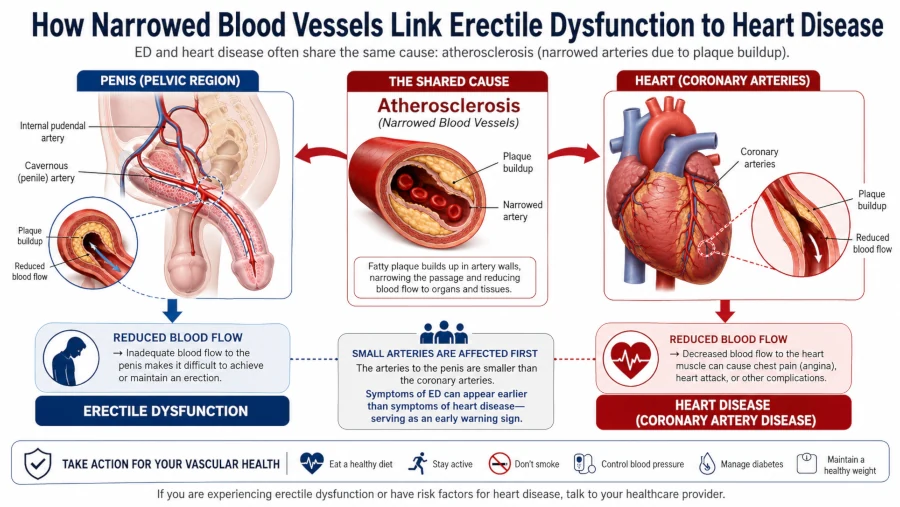
The interventions with the strongest evidence for men’s sexual and general health are unglamorous but powerful:
- Move regularly. Aerobic exercise improves blood-vessel function, which directly supports erections and heart health.
- Reach and hold a healthy weight. Excess weight raises the risk of both ED and BPH; losing weight can improve symptoms.
- Stop smoking and limit alcohol. Both damage the blood vessels erections depend on.
- Manage blood pressure, blood sugar, and cholesterol. Controlling these protects the same vessels — and often improves sexual function too.
- Sleep and manage stress. Both affect hormones and desire. This is the one area where an herb like ashwagandha has decent support — for the stress, not the sex directly.
Safety, side effects, and interactions
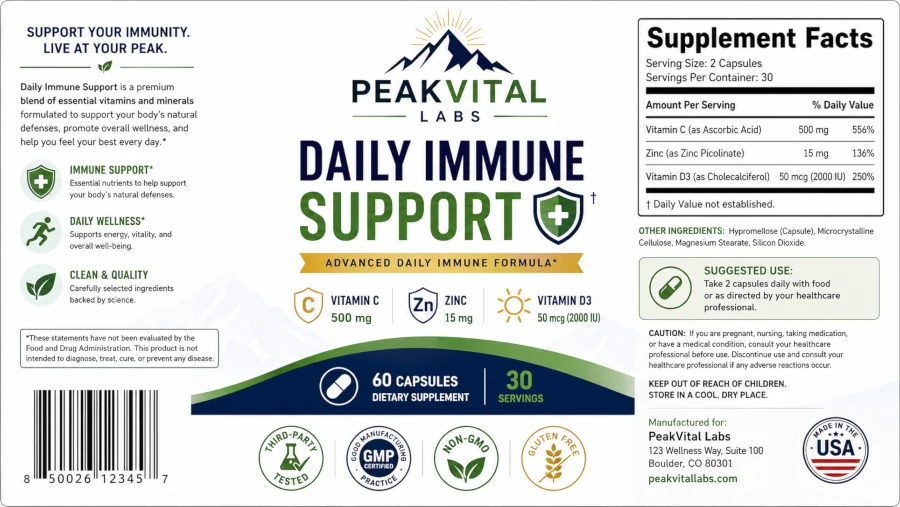
Herbal supplements are not reviewed by the FDA for safety or effectiveness before they are sold, and the dose and purity on the label do not always match what is in the bottle. “Natural” does not mean risk-free or interaction-free.
- Medication interactions matter. Ginseng and ashwagandha may affect blood sugar and blood pressure; ashwagandha can add to sedatives and interact with thyroid medication. If you take any prescription drug, ask a pharmacist before starting.
- Liver risk with ashwagandha. Uncommon but documented; stop and seek care if you notice yellowing skin or eyes, dark urine, or persistent abdominal pain [LiverTox, 2024].
- Not for everyone. These products are formulated for adult men. Ashwagandha should be avoided in pregnancy and breastfeeding, and by people with autoimmune or thyroid disorders — worth knowing if supplements are shared in your household [NCCIH, 2023].
- Quality varies. Choose products with third-party testing (such as USP or NSF) and a clearly labeled extract and dose.
Red flags: when to see a doctor, not reach for an herb
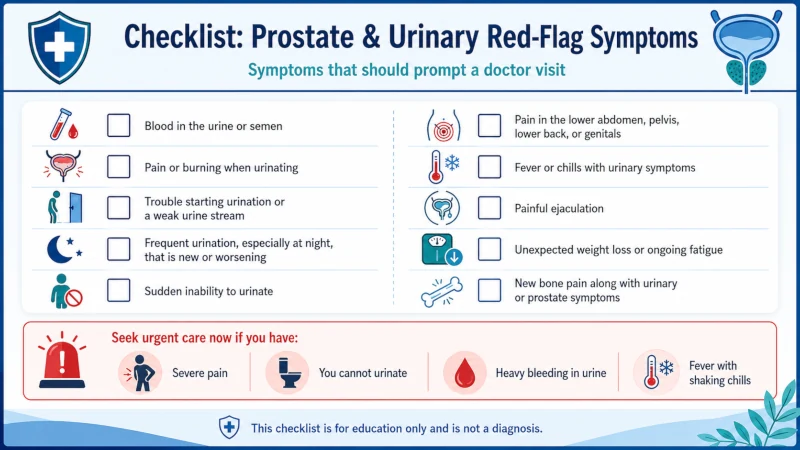
Some symptoms are not candidates for self-treatment. Seek medical care promptly if you have any of the following.
- You cannot urinate at all. Acute urinary retention is a medical emergency that may need catheterization.
- Blood in your urine or semen. This needs evaluation, per Cleveland Clinic [Cleveland Clinic].
- Painful urination with fever, or pain after ejaculating. These can signal a prostate or urinary infection.
- New or worsening erectile dysfunction. Ask whether it could be an early sign of heart disease [Mayo Clinic].
- Trouble conceiving after a year of trying. Fertility deserves a proper medical work-up, not an herbal guess.
An enlarged prostate that is left unmanaged can lead to urinary tract infections, bladder stones, and kidney damage, so ongoing symptoms are worth a doctor’s attention even when they feel minor [Cleveland Clinic].
| Health disclaimer: This article is for general information only. It is not medical advice and is not a substitute for guidance from a qualified healthcare professional. The herbs described here are dietary supplements, not treatments for any disease. Talk to your doctor or pharmacist before starting any supplement — especially if you take prescription medication (including blood thinners, blood-pressure, diabetes, or sedative drugs), have a health condition such as a liver, thyroid, autoimmune, or hormone-sensitive disorder, or are scheduled for surgery. Seek prompt medical care for red-flag symptoms such as inability to urinate, blood in the urine, or signs of a liver problem (yellowing skin or eyes, dark urine, persistent abdominal pain, unusual fatigue). |
Frequently Asked Questions
What is the single best herb for men?
There isn’t one. The herb with the most plausible evidence for a specific male complaint is Panax ginseng for erectile function, and even there the effect is uncertain and modest. For overall wellbeing, ashwagandha has the best support — but for stress, not for sex or testosterone.
Does saw palmetto really shrink the prostate?
No. Large trials and a Cochrane review found saw palmetto works no better than placebo for the urinary symptoms of an enlarged prostate, and it does not reduce prostate size [Cochrane, CD001423; NCCIH, 2019]. It is well tolerated, but don’t expect it to treat BPH.
Can herbs raise testosterone?
At most modestly, and unreliably. Ashwagandha has limited evidence for a small increase over two to four months, mostly from small studies [NCCIH, 2023]. If you suspect low testosterone, get a blood test and talk to a doctor rather than self-treating.
Are these herbs safe to take with my medications?
Not always. Ginseng and ashwagandha can affect blood sugar, blood pressure, and sedation, and ashwagandha interacts with thyroid medication. Check with a pharmacist before combining any supplement with a prescription drug.
Is erectile dysfunction ever serious?
It can be. ED is often an early warning sign of cardiovascular disease because the small penile arteries narrow first [Mayo Clinic]. New or worsening ED is a reason to see a doctor, who can check your heart risk as well.
References
- National Center for Complementary and Integrative Health. “Spotlight on Saw Palmetto: What the Science Says.” NCCIH, 2019. View source
- Tacklind J, MacDonald R, Rutks I, et al. “Serenoa repens for benign prostatic hyperplasia.” Cochrane Database of Systematic Reviews, CD001423. View source
- Bent S, Kane C, Shinohara K, et al. “Saw Palmetto for Benign Prostatic Hyperplasia.” New England Journal of Medicine, 2006. View source
- Lee HW, Lee MS, Kim T-H, et al. “Ginseng for erectile dysfunction (a Cochrane systematic review).” World Journal of Men’s Health, 2021. DOI: 10.5534/wjmh.210071. View source
- Jang DJ, Lee MS, Shin BC, et al. “Red ginseng for treating erectile dysfunction: a systematic review.” British Journal of Clinical Pharmacology, 2008. View source
- Zerafatjou N, Amirzargar M, Biglarkhani M, et al. “Pumpkin seed oil (Cucurbita pepo) versus tamsulosin for BPH symptom relief.” BMC Urology, 2021. DOI: 10.1186/s12894-021-00910-8. View source
- National Center for Complementary and Integrative Health. “Ashwagandha: Usefulness and Safety.” NCCIH, 2023. View source
- LiverTox: Clinical and Research Information on Drug-Induced Liver Injury. “Ashwagandha.” NIDDK, updated 2024. View source
- NIH Office of Dietary Supplements. “Ashwagandha: Is it helpful for stress, anxiety, or sleep?” Health Professional Fact Sheet. View source
- Mayo Clinic. “Erectile dysfunction: A sign of heart disease?” View source
- Cleveland Clinic. “Benign Prostatic Hyperplasia (BPH): Symptoms & Treatment.” View source
