
The main Jerusalem artichoke benefits trace back to a single ingredient: inulin, a fiber your body can’t digest but your gut bacteria thrive on. This knobby tuber — also sold as a sunchoke — was a European staple before the potato pushed it off the plate in the 1700s. It deserves a second look, partly for what it does in the gut, and partly because it has earned a blunt reputation for causing gas. Below is what research actually supports, what it doesn’t, and how to eat sunchokes without regretting it.
What exactly is a Jerusalem artichoke?
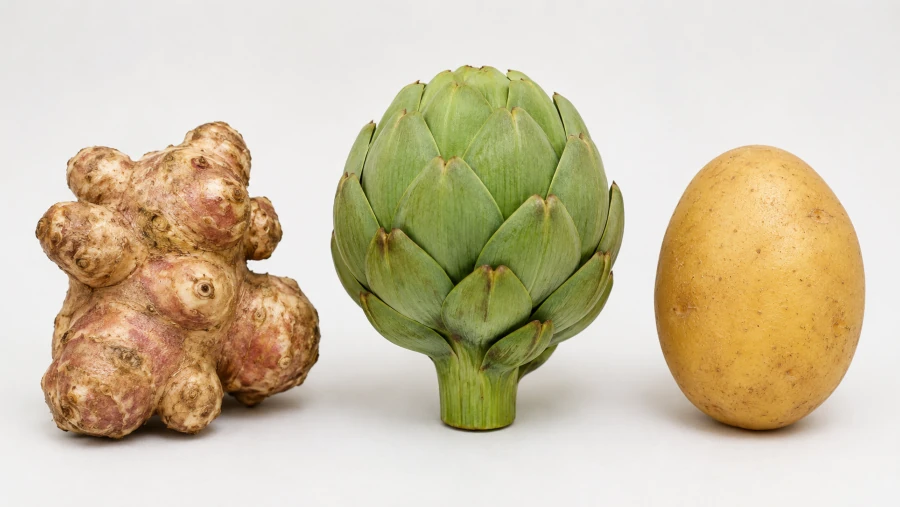
A Jerusalem artichoke (Helianthus tuberosus) is the edible tuber of a North American sunflower. It isn’t from Jerusalem, and it isn’t related to the globe artichoke you pull leaves off of. The name is probably a garbled version of girasole, the Italian word for sunflower. Raw, it’s crisp and faintly sweet, somewhere between a water chestnut and a radish. Cooked, it behaves a lot like a potato — which is exactly what it was, an everyday root crop across Europe until the potato displaced it in the mid-1700s.
Nutrition at a glance
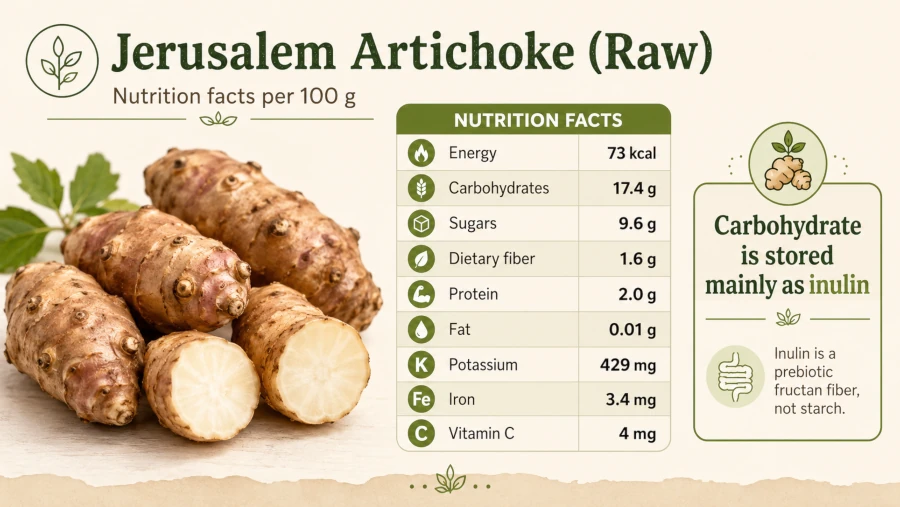
Per 100 grams, raw Jerusalem artichoke is low in fat, modest in calories, and surprisingly high in iron for a vegetable [USDA, FoodData Central].
| Per 100 g, raw | Amount |
| Calories | 73 kcal |
| Carbohydrate | 17.4 g (mostly inulin, not starch) |
| Protein | 2 g |
| Fat | Trace (about 0 g) |
| Fiber | 1.6 g |
| Potassium | 429 mg (about 9% of the daily value) |
| Iron | 3.4 mg (about 19% of the daily value) |
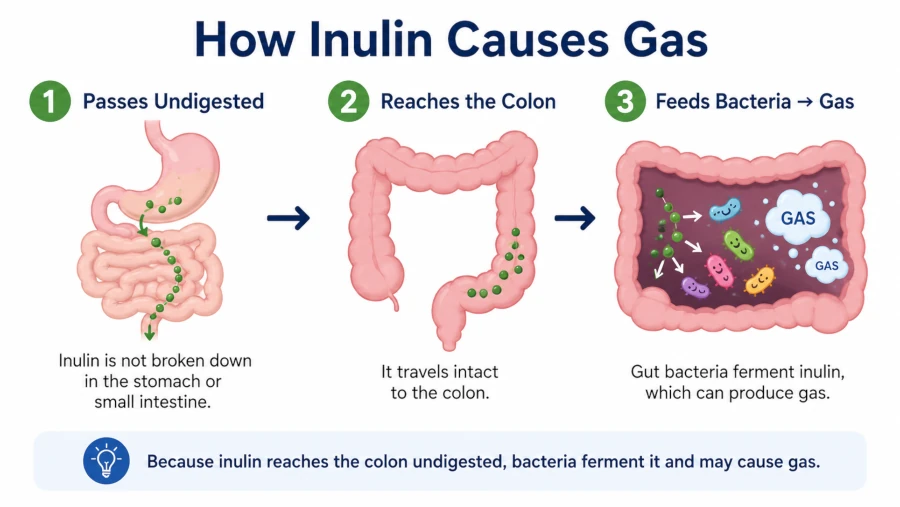
The number that matters most isn’t on the label in bold: most of those carbohydrates are inulin, not starch. Your small intestine lacks the enzyme to break inulin apart, so it travels to the colon largely intact [USDA, FoodData Central]. That one fact explains nearly everything that follows — the gut effects, the gentle blood-sugar profile, and the gas.
The evidence-backed Jerusalem artichoke benefits
It feeds the bacteria in your gut
Inulin is a prebiotic — food for the microbes already living in your colon, especially Bifidobacteria. In a double-blind trial, 66 healthy adults who took 5 grams a day of Jerusalem artichoke inulin saw higher bifidobacteria counts than those on placebo [Ramnani & Costabile, 2010]. As gut bacteria ferment inulin, they produce short-chain fatty acids such as butyrate, which the cells lining your colon use for fuel. This is one of the better-supported claims about sunchokes, because it has been tested in people, not just in dishes and mice.
A gentle effect on blood sugar
Because its carbohydrate is stored as inulin rather than starch, the tuber itself raises blood sugar very little — which is why it was once nicknamed the “diabetic potato.” That part is settled. Separately, concentrated inulin supplements have been studied in people with prediabetes and type 2 diabetes: a meta-analysis of 33 randomized trials (1,346 participants) found modest drops in fasting glucose and HbA1c, on the order of a 0.58% HbA1c reduction in people with type 2 diabetes [Wang et al., 2019].
Read that carefully. Those benefits came from isolated inulin at supplement doses, usually well above what a normal serving of the vegetable delivers. Eating sunchokes fits a blood-sugar-steady plate alongside other low-glycemic foods like hazelnuts, but the vegetable on its own is not a treatment for diabetes.
Potassium, iron, and not many calories
A 100-gram serving brings about 429 mg of potassium, which supports normal blood pressure, and roughly 3.4 mg of iron — high for a vegetable [USDA, FoodData Central]. The catch with plant iron is that it’s non-heme iron, which your body absorbs less efficiently than the iron in meat; pairing sunchokes with a vitamin C source (a squeeze of lemon, some peppers) helps. With little fat and a fair amount of fiber, they’re filling without being heavy.
A reasonable choice if you have gout
Older diet advice told people with gout to avoid “purine-rich” vegetables. That advice hasn’t held up. In a study that followed more than 47,000 men for 12 years, purine-rich vegetables and total protein were not linked to a higher risk of gout, while meat and seafood were [Choi et al., 2004]. Jerusalem artichoke is a low-protein, low-purine vegetable, so it fits comfortably into a gout-aware diet. Some people also lean on foods studied for uric acid, like cherries, and there’s no good reason to fear plant proteins such as soy either.
Worth a note of restraint: claims that sunchokes lower cholesterol, sharply boost calcium absorption, strengthen immunity, or prevent cancer rest on mixed results, early-stage work, or isolated-inulin and animal studies. They aren’t reasons to expect those effects from the food on your plate.
The catch: gas, bloating, and FODMAPs
The same inulin that feeds your microbes is fermented into gas — which is why sunchokes have picked up a cruder nickname than “sunroot.” Inulin is a type of fructan, and fructans are FODMAPs: fermentable carbohydrates that pull water into the gut and ferment in the colon. Monash University, which developed the low-FODMAP system, rates Jerusalem artichoke as high-FODMAP [Monash University, 2024].
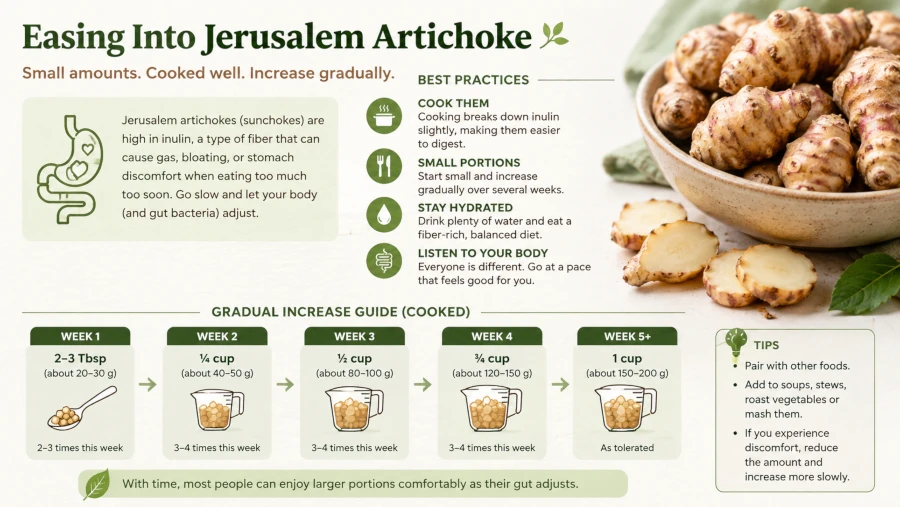
Even people without digestive problems notice it. In the prebiotic trial above, flatulence rose mildly at just 5 grams a day [Ramnani & Costabile, 2010]. People with irritable bowel syndrome (IBS) or small intestinal bacterial overgrowth (SIBO) tend to react more strongly. The practical fix is simple: start with a small portion, cook them rather than eating a big raw pile, and increase the amount slowly over a couple of weeks so your gut bacteria can adjust.
Who should be cautious
- People with IBS, SIBO, or anyone in the elimination phase of a low-FODMAP diet. Jerusalem artichoke is high-FODMAP and is usually best avoided until you know your triggers.
- Anyone allergic to ragweed, sunflower, or other daisy-family (Asteraceae) plants. Cross-reactions are rare but possible, since the tuber comes from a sunflower.
- People on diabetes medication who add concentrated inulin supplements. The blood-sugar-lowering effect can stack with your medication, so check with whoever prescribes it.
- During pregnancy or breastfeeding, the vegetable in normal food amounts is fine; concentrated inulin supplements haven’t been well studied in pregnancy, so ask first.
How to eat them
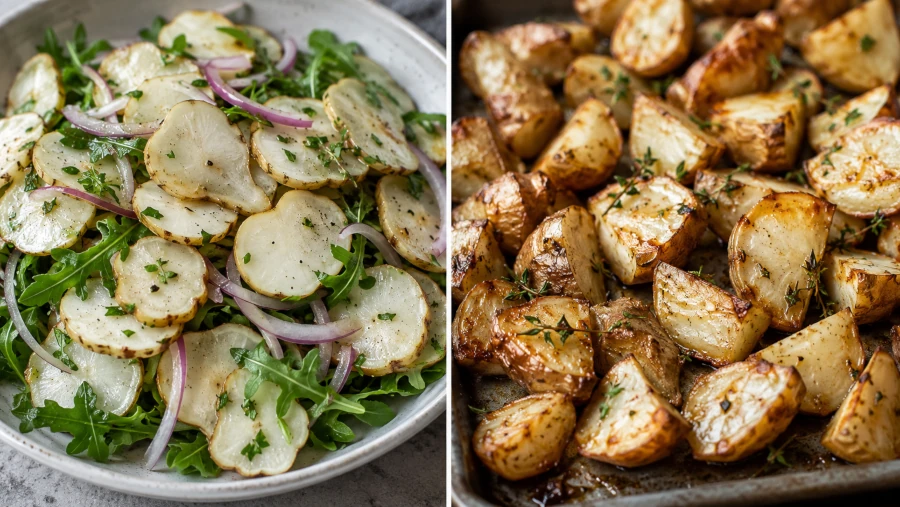
Scrub them well; you don’t need to peel them. Raw, slice thin into salads or slaws for a crisp, nutty bite. Cooked, they roast, boil, mash, or puree like a potato and taste faintly of artichoke heart — just don’t overcook them, or they turn mushy fast. Long cooking and cold storage convert some of the inulin into simpler sugars, which makes them sweeter and a little easier on some stomachs, but they stay high-FODMAP, so portion size still matters. If they’re new to you, a small side is the sensible way to start.
Realistic expectations
Jerusalem artichoke is a genuinely good vegetable and one of the richest food sources of prebiotic inulin, which makes it a smart addition for variety and gut health. What it is not is a remedy. The measurable improvements in blood sugar came from higher, isolated supplement doses, not from a serving of roasted sunchokes. And expect some gas at first — for most people it settles as the gut adapts.
When to talk to a healthcare professional
Gas and mild bloating after a new high-fiber food are normal. These signs are not, and they warrant a clinician rather than a diet tweak: severe or persistent abdominal pain, ongoing diarrhea or constipation, blood in your stool, unexplained weight loss, fever, or vomiting. If you have diabetes and want to change your diet or add a supplement, coordinate it with your care team so any medication can be adjusted. And if you suspect IBS or a food intolerance, see a clinician before committing to a restrictive diet — several serious conditions can mimic IBS, so a diagnosis comes first.
| Health Disclaimer: This article is for general education and information only. It is not medical advice and is not a substitute for diagnosis or treatment from a qualified health professional. Do not use it to self-diagnose or to start, stop, or change any treatment. If you are pregnant or breastfeeding, take medication, or have a health condition such as diabetes, IBS, or kidney disease, talk to your doctor or a registered dietitian before making changes to your diet or adding supplements. If you have severe or sudden symptoms, seek medical care promptly. |
Frequently Asked Questions
Do Jerusalem artichokes really cause that much gas?
For many people, yes. The inulin they’re rich in is fermented by gut bacteria, which produces gas and can cause bloating. Starting with a small, cooked portion and building up gradually usually reduces it.
Are Jerusalem artichokes good for people with diabetes?
The vegetable has very little impact on blood sugar because its carbohydrate is stored as inulin rather than starch, so it’s a reasonable choice. It is not a treatment for diabetes, and anyone on medication who adds inulin supplements should check with their prescriber first.
Are they safe on a low-FODMAP diet?
No. Jerusalem artichoke is rated high-FODMAP, so it’s typically avoided during the elimination phase and reintroduced cautiously, if at all, under guidance.
Can you eat Jerusalem artichokes raw?
Yes. Raw, they’re crisp and nutty, good in salads. Some people digest them more comfortably cooked than raw, and either way a smaller first portion is wise.
Are Jerusalem artichokes the same as globe artichokes?
No. They’re different plants. A globe artichoke is the flower bud of a thistle; a Jerusalem artichoke is the underground tuber of a sunflower.
References
- U.S. Department of Agriculture, Agricultural Research Service. FoodData Central: Jerusalem-artichokes, raw (FDC ID 169236). → View source
- Wang L, Yang H, Huang H, et al. Inulin-type fructans supplementation improves glycemic control for the prediabetes and type 2 diabetes populations: a GRADE-assessed systematic review and dose–response meta-analysis of 33 randomized controlled trials. Journal of Translational Medicine. 2019;17:410. → View source
- Ramnani P, Gaudier E, Bingham M, et al. Prebiotic effect of fruit and vegetable shots containing Jerusalem artichoke inulin: a human intervention study. British Journal of Nutrition. 2010;104(2):233–240. → View source
- Choi HK, Atkinson K, Karlson EW, Willett W, Curhan G. Purine-rich foods, dairy and protein intake, and the risk of gout in men. New England Journal of Medicine. 2004;350(11):1093–1103. → View source
- Monash University. High and low FODMAP foods (fructans, including artichoke and inulin). Monash FODMAP. → View source
