
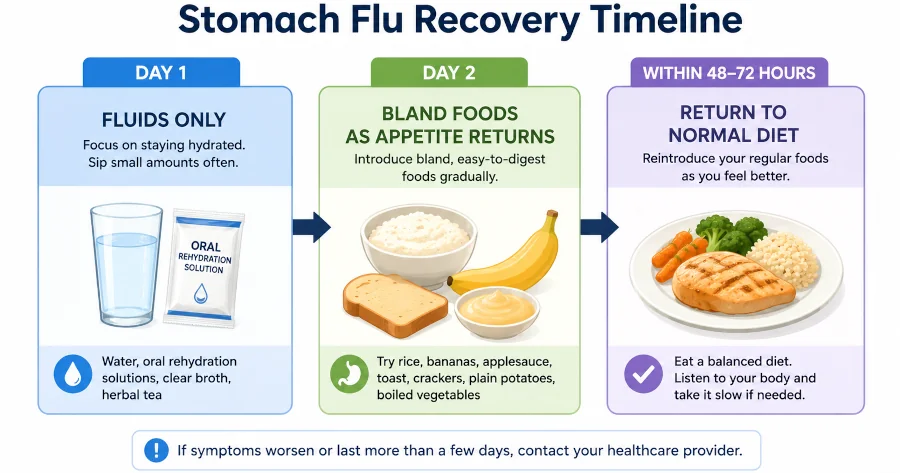
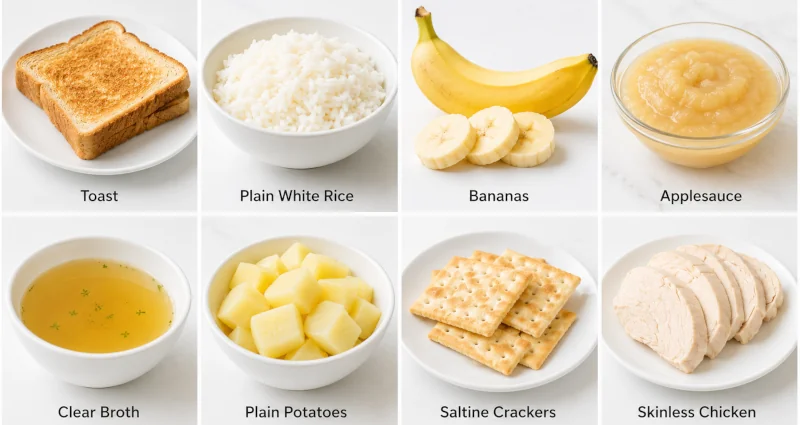
The best foods to eat with stomach flu are small amounts of bland, low-fat, easy-to-digest staples — think plain toast, crackers, white rice, applesauce, bananas, plain potatoes, and clear broth — taken as your appetite returns. The first 12–24 hours are mostly about fluids, not food, because the bigger risk from a stomach bug is dehydration, not hunger ([NIDDK, 2018]). Once you can keep liquids down, an oral rehydration solution (ORS) is the gold standard for replacing what you’ve lost ([WHO, 2006]).
Most healthy adults recover from stomach flu in 1–3 days [Mayo Clinic, 2025]. Older adults, young children, pregnant people, and anyone with a weakened immune system need to watch hydration much more carefully.
What stomach flu actually is (and isn’t)
“Stomach flu” is the everyday name for viral gastroenteritis — an infection that inflames the lining of the stomach and intestines and produces watery diarrhea, nausea, vomiting, stomach cramps, and sometimes a low-grade fever [Mayo Clinic, 2025]. Despite the name, it has nothing to do with influenza, which is a respiratory virus.
In U.S. adults the most common cause is norovirus, which the CDC describes as the leading cause of vomiting, diarrhea, and foodborne illness in the country [CDC, 2024]. Symptoms usually start 12–48 hours after exposure and pass within 1–3 days. There is no antiviral treatment; the goal is to support the body while it clears the infection.
First 12–24 hours: focus on fluids, not food
If you’re still vomiting, eating solid food usually makes things worse. The priority during this window is replacing the water and electrolytes you’re losing. The NIDDK specifically advises drinking plenty of liquids, and — if vomiting is still active — sipping small amounts of clear fluids or sucking on ice chips rather than gulping [NIDDK, 2018]. Small sips every few minutes are better tolerated than a full glass.
Why oral rehydration solution beats plain water
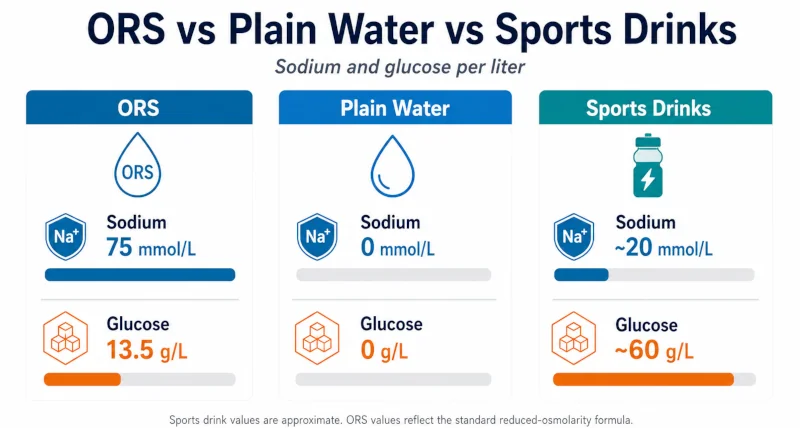
Plain water rehydrates, but it doesn’t replace the sodium, potassium, and chloride you lose through diarrhea and vomiting. Oral rehydration solution (ORS) is a precisely formulated mix of glucose, sodium, potassium, and chloride that uses the gut’s sodium-glucose cotransport system to pull water across the intestinal wall even while the gut is irritated [WHO, 2006]. The WHO low-osmolarity formula, available at any pharmacy as Pedialyte, DripDrop, Hydralyte, or generic ORS sachets, contains roughly 75 mmol/L glucose, 75 mmol/L sodium, and 20 mmol/L potassium per liter.
ORS is the first-line rehydration treatment recommended by the WHO and CDC for diarrheal illness [CDC, 2024]. The CDC notes that over-the-counter oral rehydration fluids are the most helpful option for mild dehydration.
Drinks that help — and ones to skip
Helpful:
- Water, in small frequent sips
- Oral rehydration solution (Pedialyte, DripDrop, generic ORS)
- Clear broths — chicken, beef, or vegetable — for fluid and sodium
- Diluted electrolyte drinks (sports drinks cut 1:1 with water if no ORS is available)
- Ice chips and ice pops if you can’t keep larger sips down
- Weak, room-temperature tea (decaf) or plain herbal infusions
Skip while you’re sick:
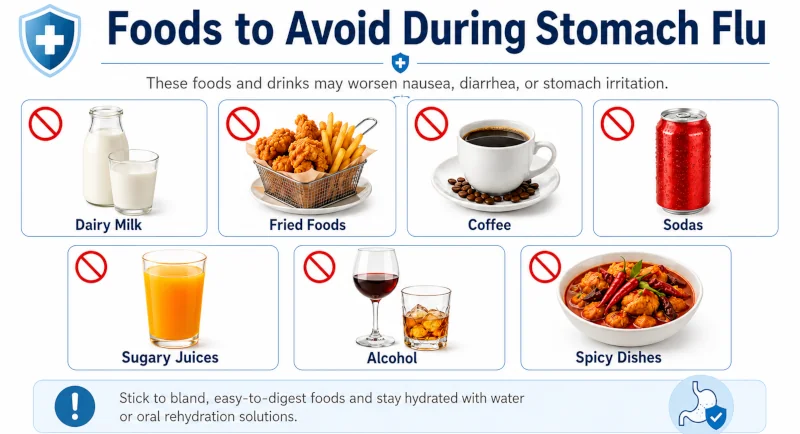
- Undiluted fruit juice and sodas. The NIDDK notes that drinks with large amounts of simple sugars can pull water into the gut and make diarrhea worse.
- Caffeinated drinks — coffee, strong tea, and caffeinated sodas can worsen diarrhea.
- Alcohol of any kind.
- Dairy milk for the first day or two if it triggers your symptoms (some people lose lactase activity temporarily after a gut infection).
Foods to eat with stomach flu as your appetite returns
Once you can keep fluids down without vomiting, start adding small amounts of bland food. You don’t have to wait for diarrhea to fully stop — NIDDK guidance says you can usually return to a normal diet when your appetite comes back, even if you still have some loose stools [NIDDK, 2018]. The Mayo Clinic recommends starting with bland, easy-to-digest foods such as soda crackers, toast, gelatin, bananas, applesauce, rice, and plain chicken [Mayo Clinic, 2023].
Stop and rest if nausea returns. Many people do well with the “small and often” approach — a few crackers, a banana, half a cup of rice — rather than a sit-down meal.
Clear broth and broth-based soups
Clear broth is one of the most useful early foods because it works as both fluid and food. A cup of chicken or vegetable broth provides water, sodium, and small amounts of protein and fat without taxing the gut. It’s recommended as a first food when transitioning back to eating after diarrhea by groups including the American College of Gastroenterology and is widely echoed in patient education from major UK hospitals [NHS inform, 2026]. Choose low-sodium varieties only if you’re on a sodium-restricted diet — otherwise, the salt is actually helpful.
Bananas
Bananas are soft, easy to digest, and rich in potassium — a mineral the body loses through diarrhea. They also contain pectin, a soluble fiber that helps firm stool. Ripe bananas tend to be better tolerated than green ones for most people during acute illness. For more on banana nutrition see our guide to the benefits of eating bananas.
Plain white rice
White rice is bland, low in fat, and low in fiber — exactly the profile a recovering gut tolerates. It also provides quick carbohydrate energy without putting much load on digestion. Boiled or steamed, plain, without butter or heavy seasoning, it has been part of post-illness diets for generations. More on white rice’s profile is in our overview of rice health benefits.
Applesauce
Applesauce keeps the gentle qualities of apples without the harder-to-digest skin. The pectin in apples acts as a mild stool-firming agent, and applesauce is one of the bland foods specifically named by the Mayo Clinic for early refeeding [Mayo Clinic, 2023]. Look for unsweetened jars — added sugar can worsen diarrhea. Our companion piece on apple health benefits covers the fruit’s full nutrient profile.
Toast, dry cereal, and saltine crackers
Dry, plain starches like saltines, dry cereal, and pretzels are easy on a queasy stomach. They’re low in fat, low in fiber, and the salt in crackers helps replace what you lose. The NIDDK specifically lists saltine crackers as a useful way to help replace electrolytes during recovery [NIDDK, 2018]. Skip butter, jam, or peanut butter for now.
Plain potatoes
Boiled or baked plain potatoes — without butter, sour cream, or skin — are gentle, soft, and a useful source of potassium. Mashed potatoes made with a little broth instead of milk are often well tolerated.
Plain chicken or skinless turkey
As you get past the first day, small amounts of poached or boiled skinless chicken give you protein without the fat that can trigger nausea. The Mayo Clinic lists plain chicken as appropriate during gradual refeeding [Mayo Clinic, 2023]. Keep portions small at first.
Ginger (for nausea)
Ginger has reasonable — though not overwhelming — evidence as an anti-nausea aid. A small piece of fresh ginger steeped as a weak tea, or plain ginger candies, may help take the edge off queasiness. Skip strong ginger ale, which is mostly sugar and carbonation.
Gelatin and ice pops
Plain gelatin (like Jell-O) and electrolyte ice pops are easy ways to get fluids in when a glass of water sounds unappealing — especially useful for children. Choose ORS-based pop options (Pedialyte freezer pops, for example) over standard popsicles when possible.
Water with lemon
A slice of lemon in water can make it more drinkable when nothing else sounds good — and plain water is otherwise the simplest, cheapest way to hydrate. Lemon is not a treatment for the infection itself, despite folk claims; its job here is taste, not medicine. For broader background on lemons see health benefits of lemons.
A quick comparison table
| Food or drink | When to use it | Why it helps |
| Oral rehydration solution (ORS) | From symptom onset, especially if vomiting is severe. | Precise ratio of sodium and glucose pulls water across the gut wall; replaces lost electrolytes. |
| Clear broth | Day 1 onward, once vomiting eases. | Combines fluid, sodium, and a little protein in one easy form. |
| Saltine crackers / dry toast | When you can keep small amounts of fluid down. | Low fat, low fiber, mild salt. Easy on the stomach. |
| Bananas | As appetite returns. | Soft, potassium-rich, pectin helps firm stool. |
| Plain white rice | As appetite returns. | Bland, low-fiber carbohydrate; familiar and well-tolerated. |
| Applesauce (unsweetened) | As appetite returns. | Soft fruit, pectin, no skins or seeds. |
| Plain potatoes (no butter/skin) | Day 2 onward. | Soft, mild source of potassium and carbs. |
| Skinless poached chicken | Day 2 onward. | Lean protein once nausea has settled. |
| Plain gelatin / ice pops | Anytime; especially helpful for children. | Easy fluid intake when drinking feels hard. |
Foods to avoid while you’re sick
The NIDDK identifies four categories of food and drink that commonly make symptoms worse [NIDDK, 2018]:
- Caffeine — coffee, strong tea, energy drinks, and some sodas can stimulate the gut and worsen diarrhea.
- High-fat and fried foods — pizza, fast food, deep-fried items. Fat slows stomach emptying and can trigger nausea.
- Sugary drinks and juices — including sweetened sports drinks and apple juice. The osmotic load pulls extra water into the gut.
- Milk and dairy — some people temporarily lose the ability to digest lactose after a gut infection, sometimes for a month or more.
Beyond that, common sense applies. Skip spicy foods, raw vegetables, beans, very high-fiber items, and anything heavily processed or rich until you feel essentially back to normal. Shellfish and undercooked eggs or poultry are also worth avoiding for a few days, both because they’re harder to digest and because they can carry the same pathogens that cause foodborne gastroenteritis in the first place [Mayo Clinic, 2025].
If you usually keep a list of foods that help with diarrhea on hand, that’s a useful follow-on read once you can eat solid food without trouble.
What about the BRAT diet?
“BRAT” stands for bananas, rice, applesauce, and toast — four bland foods doctors used to prescribe routinely for stomach bugs. The foods themselves are still fine. What’s changed is the advice to stick to only those four.
The American Academy of Pediatrics moved away from recommending a strict BRAT diet because it’s too restrictive — low in protein, fat, calories, and several vitamins — and can actually prolong recovery rather than speed it up. As an American Family Physician review on pediatric gastroenteritis puts it, the BRAT diet is too restrictive unless the foods are part of the child’s regular diet, and is not recommended by the AAP [AAFP, 2012]. The NIDDK’s current position is similar for adults: “Research shows that following a restricted diet does not help treat viral gastroenteritis” [NIDDK, 2018].
In practice, the BRAT foods are still fine on day one. As soon as your appetite returns, broaden the menu to include other tolerated foods — plain potatoes, plain chicken, broth-based soups, dry cereal — rather than restricting yourself to four foods for days.
Probiotics: what the evidence actually says
Probiotics for stomach flu are a genuinely mixed story, and you should be skeptical of any source that gives a flat yes or no.
A 2020 Cochrane review of 82 studies in nearly 12,000 people concluded that if probiotics shorten acute infectious diarrhea, the effect is small and the quality of evidence is low [Cochrane, Collinson 2020]. The 2020 American Gastroenterological Association (AGA) clinical practice guideline went further and recommended against routine probiotic use in children with acute infectious gastroenteritis in the United States and Canada, citing two high-quality North American trials that found no benefit [AGA, 2020].
European guidance is more permissive: ESPGHAN (the European pediatric gastroenterology society) suggests certain specific strains — Lactobacillus rhamnosus GG and Saccharomyces boulardii — may modestly shorten illness in children.
For adults: probiotics are generally safe in otherwise healthy people, but they’re not a substitute for fluids and rest, and the benefit is uncertain. If you want to try one, look for a clearly labeled strain like L. rhamnosus GG or S. boulardii, rather than a vague “probiotic blend.” Talk to a clinician first if you’re immunocompromised — there have been rare cases of bloodstream infection in patients with severely weakened immunity.
Feeding children with stomach flu
The general approach is the same as for adults, but a few specifics matter:
- Keep breastfeeding or formula feeding. Mayo Clinic and NIDDK both advise that infants should continue breast milk or formula on the normal schedule [Mayo Clinic, 2025].
- Use an oral rehydration solution, not sports drinks. Sports drinks are too sugary and have too little sodium. Pedialyte, Hydralyte, or generic ORS sachets are designed for children.
- Avoid anti-diarrhea medications in young children unless a doctor specifically tells you otherwise. NHS guidance and the CDC Yellow Book are clear that antidiarrheals and antiemetics are not routinely recommended in children [CDC Yellow Book, 2026].
- Return to a normal age-appropriate diet quickly. The AAP and AAFP both advise resuming the child’s normal diet within about 24 hours, once they’re rehydrated [AAFP, 2012].
Who needs to be more careful
Most people with stomach flu manage at home and recover in a couple of days. Some groups have a higher risk of severe dehydration and should be watched more closely [Mayo Clinic, 2025]:
- Infants and children under 5
- Adults over 65
- People who are pregnant
- Anyone with a weakened immune system — cancer treatment, HIV, organ transplant, biologic medications for autoimmune disease
- People with diabetes, chronic kidney disease, or heart failure (electrolyte shifts can be more consequential)
- Anyone taking diuretics, lithium, or certain blood pressure medications — talk to a pharmacist or doctor about dose timing during illness
Red flags — when to call a doctor or go to the ER
Stomach flu is usually self-limiting, but seek medical care promptly if any of the following apply [Mayo Clinic, 2025]:
Call your doctor if you (an adult) experience:
- Inability to keep liquids down for 24 hours
- Vomiting or diarrhea lasting more than 2 days
- Blood in vomit or stool
- Fever above 104°F (40°C)
- Severe abdominal pain
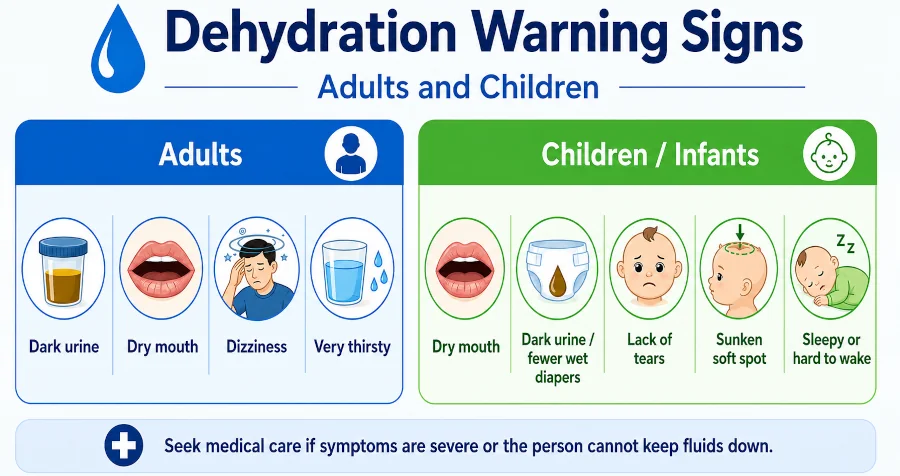
- Signs of dehydration: dark urine, dry mouth, extreme thirst, dizziness, weakness, very little urine output
Seek care right away for a child if they:
- Have a fever of 102°F (38.9°C) or higher
- Are unusually sleepy, very irritable, or hard to wake
- Haven’t had a wet diaper in 6 hours (infants)
- Have bloody diarrhea
- Cry without tears or have a sunken soft spot on the head
- Have any vomiting in an infant under 3 months
| Health Disclaimer This article is for general educational purposes only and is not a substitute for individual medical advice, diagnosis, or treatment. If you are pregnant, breastfeeding, caring for a child under 12 months, immunocompromised, managing a chronic condition, or symptoms last longer than two days or worsen at any point — including any of the red-flag signs listed above — contact your doctor, a registered dietitian, or another qualified healthcare professional. Do not delay seeking care for a stomach bug in an infant, an older adult, or anyone showing signs of moderate to severe dehydration. If you are experiencing severe dehydration, bloody vomit or stool, fever above 104°F (40°C), severe abdominal pain, or fainting — call your doctor, an urgent care line, or local emergency services right away. |
Frequently Asked Questions
How soon can I eat normal food after a stomach bug?
As soon as your appetite returns and you can keep fluids down without vomiting. The NIDDK explicitly says most people can return to a normal diet, even if some loose stools continue [NIDDK, 2018]. Start with small portions of bland foods and build from there.
Are sports drinks as good as Pedialyte?
Not really. Standard sports drinks (Gatorade, Powerade) have about half the sodium and twice the sugar of a true oral rehydration solution. They’re better than soda, and fine for mild thirst, but for actual stomach-flu dehydration an ORS works better. If ORS isn’t available, diluting a sports drink with an equal amount of water is a reasonable stopgap.
Should I take Imodium (loperamide)?
Some adults with mild stomach flu and no fever or bloody diarrhea can take loperamide or bismuth subsalicylate (Pepto-Bismol) to ease symptoms, per NIDDK and Mayo Clinic guidance [Mayo Clinic, 2023]. Don’t use these if you have bloody diarrhea or a fever — both signs of a possible bacterial infection where slowing the gut down can be harmful — and don’t give them to children without medical advice.
Is the stomach flu the same as food poisoning?
They overlap. “Food poisoning” usually means gastroenteritis from a specific contaminated meal — often a bacterial cause like Salmonella, Campylobacter, or E. coli, but also norovirus, which spreads through contaminated food and water. Symptoms are similar; the eating-and-drinking advice in this article applies to most cases. Bloody diarrhea, high fever, or symptoms that worsen past 48 hours should always be evaluated by a clinician.
How long am I contagious?
Norovirus is most contagious while you’re symptomatic and during the first 48 hours after symptoms stop, but you can shed virus in your stool for two weeks or longer [CDC, 2024]. UK NHS guidance is to stay home from work or school until at least 48 hours after the last bout of vomiting or diarrhea [NHS inform, 2026]. Wash hands with soap and water — alcohol-based sanitizer doesn’t reliably kill norovirus.
References
- NHS inform. Gastroenteritis in adults. NHS 24 / Public Health Scotland. Updated 2026. → View source
- National Institute of Diabetes and Digestive and Kidney Diseases (NIDDK). Eating, Diet, & Nutrition for Viral Gastroenteritis (“Stomach Flu”). Last reviewed May 2018. → View source
- National Institute of Diabetes and Digestive and Kidney Diseases (NIDDK). Treatment of Viral Gastroenteritis (“Stomach Flu”). Last reviewed May 2018. → View source
- National Institute of Diabetes and Digestive and Kidney Diseases (NIDDK). Viral Gastroenteritis (“Stomach Flu”). Last reviewed May 2018. → View source
- Centers for Disease Control and Prevention. About Norovirus. Last reviewed June 2024. → View source
- Mirza SA, Vinjé J. Norovirus. In: CDC Yellow Book 2026 — Health Information for International Travel. Centers for Disease Control and Prevention; 2025. → View source
- Mayo Clinic Staff. Viral gastroenteritis (stomach flu) — Symptoms & causes. Mayo Clinic. Last updated April 30, 2025. → View source
- Mayo Clinic Staff. Viral gastroenteritis (stomach flu) — Diagnosis & treatment. Mayo Clinic. → View source
- Mayo Clinic Staff. Gastroenteritis: First aid. Mayo Clinic. → View source
- World Health Organization. Oral rehydration salts: production of the new ORS. WHO/FCH/CAH/06.1. 2006. → View source
- Churgay CA, Aftab Z. Gastroenteritis in Children: Part II. Prevention and Management. American Family Physician. 2012;85(11):1066-1070. → View source
- Su GL, Ko CW, Bercik P, et al. AGA Clinical Practice Guidelines on the Role of Probiotics in the Management of Gastrointestinal Disorders. Gastroenterology. 2020;159(2):697-705. → View source
- Collinson S, Deans A, Padua-Zamora A, et al. Probiotics for treating acute infectious diarrhoea. Cochrane Database of Systematic Reviews. 2020;12:CD003048. → View source
- Cleveland Clinic. Stomach Flu: Symptoms, Causes & Treatment. Last reviewed 2023. → View source
